An instant millet porridge and upma mix manufacturing plant converts nutrient rich grains such as ragi, bajra and jowar into branded, shelf-stable ready to cook mixes for India’s growing breakfast cereals and convenience food market. This project report examines the machinery requirements, capital investment, manufacturing process, project economics, working capital, profitability and financial feasibility for promoters planning a commercially scalable plant.
Key Takeaways
- A commercially viable instant millet porridge and upma mix manufacturing plant in India typically operates at 1–10 tonne/day capacity, with indicative investment ranging from approximately ₹1–2 crore for smaller units to ₹8–10 crore for larger automated facilities, excluding land.
- Heat treatment of millet grains or flour through roasting, hydrothermal processing or extrusion is essential to control lipid oxidation, ensure a shelf life of 9–12 months, and achieve true instant or quick-cooking behaviour.
- A bankable project requires a customised detailed project report, realistic capacity-utilisation assumptions and integrated financial modelling covering profitability, cash flow, DSCR and IRR rather than generic templates.
- Millets are naturally gluten free and well-positioned for health conscious consumers seeking premium breakfast cereals and ready to cook breakfast segments, supported by government initiatives promoting millets under the “Shree Anna” programme.
- Project Report Bank, led by CA Manish Gugliya (FCA, DISA), prepares project-specific DPRs, CMA Data and feasibility studies for bank loans and investor funding for millet based food manufacturing plants.
Executive Summary and Key Takeaways
An instant millet porridge and upma mix plant sits downstream in the millet based products value chain, converting cleaned, dehulled and thermally treated millets into convenient, branded food products. India produced 18.59 million tonnes of millets in 2024-25, accounting for about 38% of global millet output. Under the PLI scheme for food processing, millet product sales among approved beneficiaries increased from ₹35 crore in 2020-21 to ₹814 crore in 2024-25, demonstrating rising consumer demand.
Actionable takeaways for promoters:
- Validate formulations and shelf life through pilot batch trials before committing capital investment.
- Select automation level based on realistic sales volumes, not maximum machinery throughput.
- Plan sourcing strategy for millets and dehydrated vegetables with seasonal price volatility in mind.
- Budget working capital for 30–60 days of inventory and distributor credit.
- Secure institutional contracts or private-label commitments to stabilise early-year capacity utilisation.
- Financial projections should assess capital investment and operating costs across multiple scenarios, with break-even point analysis usually targeting around 45% to 55% capacity utilisation by Year 2.
A project report for this manufacturing plant should include manufacturing process description, plant layout, production capacity planning, cost estimations, projected financial statements, DSCR calculations, sensitivity analysis and risk assessment.
Introduction – Investment Opportunity in Instant Millet-Based Foods
Instant millet porridge and upma premixes transform low-margin bulk millet flour into high-value branded consumer products. The demand drivers for instant millet products include health consciousness and convenience food trends among urban professionals, nuclear families and age groups seeking nutritious breakfast alternatives to wheat and rice-based options. These products are positioned as high-fibre, naturally gluten free and suitable for diabetic-friendly diets, though any health claims must comply with FSSAI advertising and claims regulations.
The opportunity extends beyond new entrants. Existing grain processors and millet processing units can forward-integrate into ready to cook mixes, capturing significantly higher margins than bulk flour sales. Promoters planning diversified millet processing infrastructure should evaluate an Integrated Millet Processing Plant Project Report for shared cleaning and milling capabilities.
Since the International Year of Millets in 2023, government support through “Shree Anna” initiatives has continued. India’s millet production reached 18.59 million tonnes in 2024-25, with Rajasthan producing about 29.9% of India’s millets. Millet exports were 89,164.96 tonnes worth USD 37 million in 2024-25, and APEDA allocated ₹80 crore for millet exports in 2025-26. Industry trends indicate that branded millet based food products command premium pricing over commodity grain, making this a structured investment opportunity for food manufacturing companies, private-label manufacturers and export-oriented producers.
Product Portfolio and Commercial Manufacturing Opportunities
A well-designed plant can manufacture multiple formulations on shared equipment, subject to allergen management and flavour segregation. Key product categories include:
- Instant ragi porridge mix (sweet, malted versions)
- Instant bajra porridge mix and instant jowar porridge mix
- Multimillet breakfast porridge blending 3–5 millet varieties
- Plain millet upma premix and vegetable millet upma mix with dehydrated vegetables
- High-fibre or low-sugar millet breakfast mixes
- Unsweetened, savoury and age-specific variants (baby food, senior nutrition)
Product type differentiation is critical. Instant mixes rehydrate in hot water with minimal cooking. Quick-cooking mixes require 2–5 minutes of further cooking. Simple ready to cook mixes need full stovetop preparation but include pre-blended ingredients. The manufacturing process for instant mixes ensures long shelf life and instant rehydration properties through controlled starch gelatinisation, not mere roasting.
Private-label and contract manufacturing for e-commerce brands, nutrition programmes and corporate wellness represent stable volume opportunities. Promoters considering extended lines such as energy bars, ragi flakes, snacks or bakery products can refer to the Quinoa, Amaranth & Buckwheat Processing Plant Project Report for multi-grain health-food planning.
Plant Capacity Planning and Production Configuration
Plant capacity should be driven by realistic demand estimates and working capital strength, not vendor-quoted maximum throughput. Plant capacity for a small-scale millet processing unit typically ranges from 500 kg to 1,000 kg per day. Annual production capacity for millet plants ranges from 2,000 to 5,000 MT depending on scale.
| Rated Capacity (kg/day) | Annual Output (MT) @ 300 days | Automation Level | Market Positioning | Indicative Investment Range |
|---|---|---|---|---|
| 500 | 150 | Manual / Semi-auto | Local / regional | ₹0.7–1.5 crore |
| 1,000 | 300 | Semi-automatic | Regional / multi-state | ₹1.5–2.5 crore |
| 3,000 | 900 | Automatic | Multi-state | ₹3–5 crore |
| 5,000 | 1,500 | Fully automatic | National / export | ₹5–8 crore |
| 10,000 | 3,000 | Integrated automatic | National / export | ₹8–12 crore |
All figures are illustrative. Assumptions: single 8-hour shift, 300 working days/year.
Capacity-utilisation ramp-up is typically assumed at 40–50% in Year 1, 60–70% in Year 2, and 80% from Year 3. Over-sized plants face higher fixed costs and break-even volumes, while undersized plants lack economies of scale for bulk production and modern-trade listing requirements.
Raw Materials and Ingredient Procurement
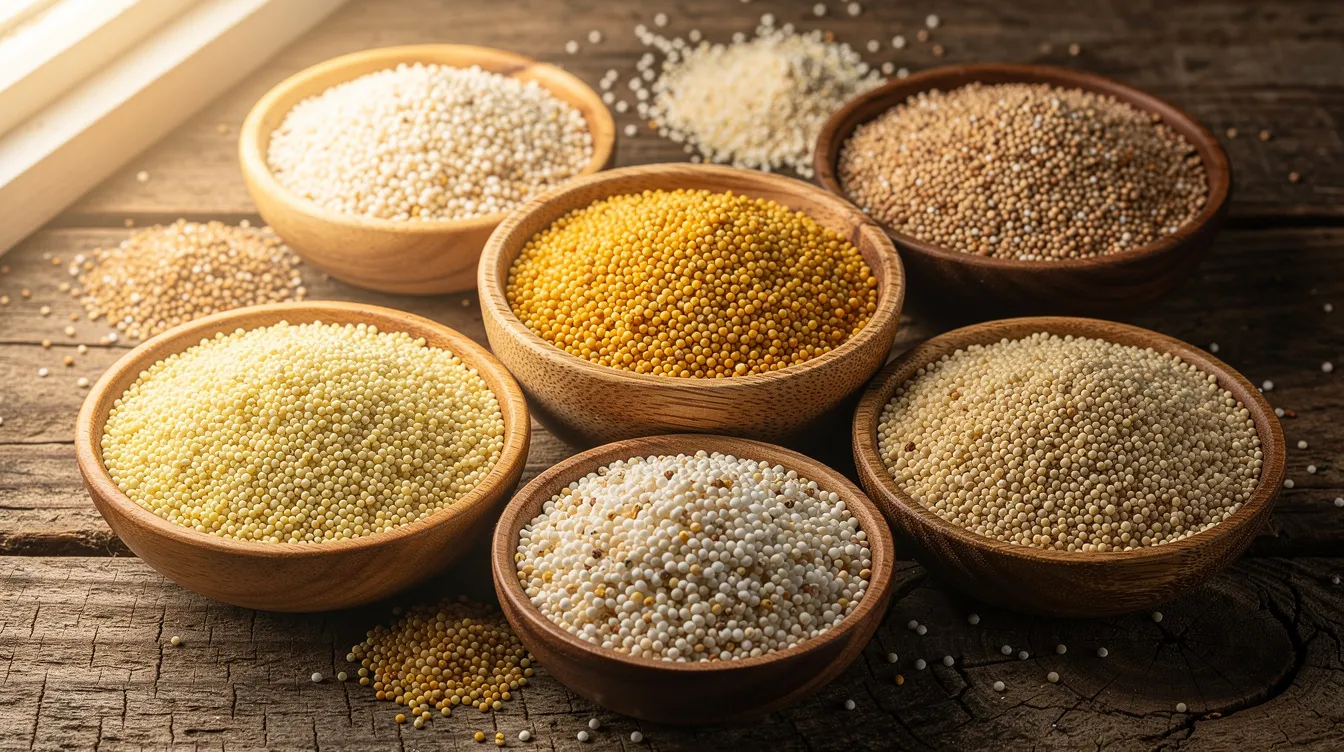
Key raw materials include finger millet (ragi), pearl millet (bajra), jowar and small millets such as foxtail millet, little millet, kodo millet and barnyard millet. Upstream millet processing for these grains is covered in our Ragi Processing Plant Project Report, Bajra Processing Plant Project Report, Sorghum Milling Plant Project Report and Small Millet Processing Plant Project Report.
Sourcing options include whole grain millets from FPOs with in-house milling, or purchasing stabilised millet flour and semolina from specialised processors. Non-millet ingredients include dehydrated vegetables, spices, edible oil, iodised salt and permitted food-grade additives. Packaging material requirements include multi-layer laminates (PET/MPET/PE) with good oxygen and moisture barrier properties for stand-up pouches.
Operating costs are driven by raw material consumption, mainly millets-typically 60–70% of total manufacturing cost. Current MSP benchmarks include bajra at ₹29/kg and ragi at ₹52.05/kg. Millet cultivation patterns and seasonal availability require procurement contracts from producing states such as Rajasthan, Karnataka and Maharashtra. Inventory planning should target 60–90 days for millets and 30–45 days for packaging materials, with direct implications for working capital.
Instant Millet Porridge and Upma Mix Manufacturing Process
Both porridge and upma mixes share similar unit operations-cleaning, size reduction, heat treatment, blending and packing-but differ in particle size, fat addition and seasoning profiles. A millet processing unit cleans, grades and packs millets, while an instant mix plant adds thermal treatment and formulation steps.
Instant Millet Porridge Mix Process:
Raw millet receipt → Quality testing → Cleaning and grading → Dehulling/milling (where required) → Roasting or pre-cooking (dry roasting, drum roasting or extrusion) → Controlled cooling → Grinding to target particle size → Sieving → Batching of sugar/milk solids/flavours → Blending in ribbon blender → In-process QC (moisture, flowability) → Packing in laminated pouches with nitrogen flushing → Cartoning → Dispatch.
Millet Upma Mix Process:
Millet grain/rava receipt → Quality testing → Cleaning and destoning → Milling/granulation to defined rava particle size → Roasting for flavour and fat stabilisation → Cooling → Preparation of dehydrated vegetable and spice mixes → Batching → Blending → Final QC → Filling and sealing → Secondary packing → Dispatch.
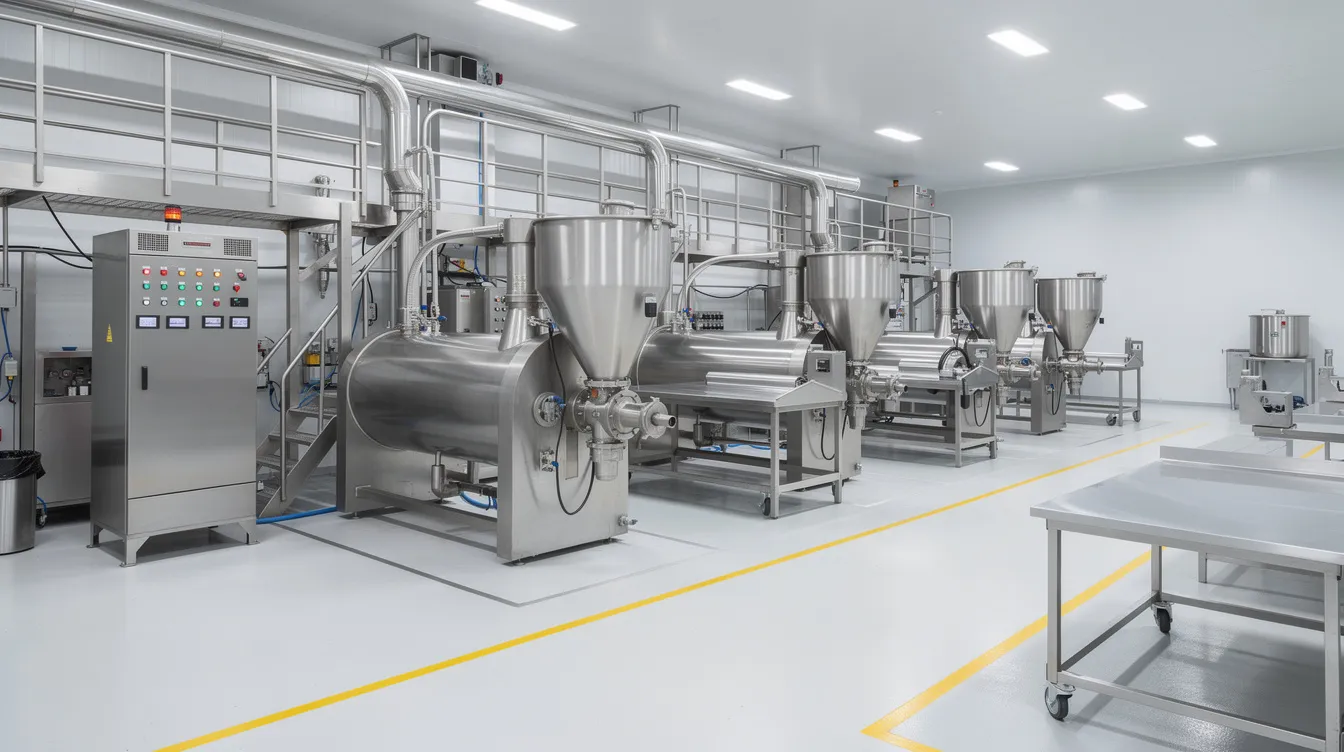
Roasting alone may not create a true “just add hot water” instant product. Instant behaviour depends on the degree of starch gelatinisation, particle size and formulation, which may require extrusion or hydrothermal treatment for certain SKUs. The manufacturing process must be validated with shelf-life and rehydration testing under real packaging conditions before commercial production. Whole grain millets require careful dehulling; dehuller performance affects millet rice recovery and profit significantly.
Plant and Machinery Requirements
Equipment configuration varies with capacity and level of integration. Required machinery for millet processing includes grain cleaners, roasting units and packing machines, along with dehullers and graders for in-house grain preparation. Millet processing requires machines like dehullers and graders as foundational equipment. Key machinery categories include:
- Pre-cleaner and destoner for whole millets
- Dehuller: single-chamber dehullers cost ₹52,000 to ₹1.05 lakh each; double-chamber dehullers range from ₹1.03 lakh to ₹2 lakh; a small millet processing unit’s dehuller costs about ₹1.2 lakh
- Grain roaster (batch or continuous) for lipase inactivation
- Hammer mill/pulveriser with classifier and vibro sifter
- Tray or fluid-bed dryer and cooling systems
- Ribbon blender or ploughshare mixer (food-grade SS)
- Multihead weigh filler or auger filler
- Form-fill-seal pouch packing machine with nitrogen flushing
- Metal detector and online checkweigher
- Dust collection and aspiration system
A complete cleaning-to-milling plant at ~2 tonnes/hr capacity costs approximately ₹31.45 lakh. Semi-automatic lines involve lower capex but higher labour, while fully automatic lines with PLC controls offer better consistency at higher machinery requirements. Promoters should reference our Instant Poha Machinery & Equipment Guide for comparable ready to cook food equipment planning approaches.
Land, Building, Layout and Utility Requirements
A medium-sized 3–5 tonne/day plant typically requires 8,000–15,000 sq. ft. of built-up area. Functional zones include raw material receiving, grain cleaning and grading machines area, roasting and milling section, blending hall, controlled-environment packing room, finished-goods warehouse, QC laboratory, utility room and staff amenities. The plant layout must ensure hygienic zoning with unidirectional product flow, separating raw-grain zones from post-roasting areas. Power load ranges from 20–150 kW depending on scale, with DG backup advisable. Water use is primarily for sanitation rather than processing.
Instant Millet Mix Manufacturing Plant Project Cost and Investment
All figures below are illustrative estimates. Investment for an instant millet porridge plant can range from ₹15 lakhs to ₹5 crores based on capacity, while total millet processing unit costs include machinery and building expenses. Basic millet processing units start with a few lakh rupees of machinery for the simplest configurations.
Illustrative Project Cost – 3 Tonne/Day Plant (Excluding Land):
| Cost Head | Indicative Range (₹ Lakh) |
|---|---|
| Building and civil works | 80–120 |
| Plant and machinery | 150–250 |
| Electricals and utilities | 25–40 |
| QC laboratory | 8–15 |
| Furniture, fixtures, office | 5–10 |
| Preliminary and pre-operative expenses | 15–25 |
| Contingency (5–10%) | 15–25 |
| Working capital margin | 30–50 |
| Total (excl. land) | 330–535 |
CFTRI’s model for a 500 kg/day multigrain rava/upma product plant estimates fixed capital at ₹64.50 lakh with total project cost ~₹69.50 lakh, though instant mixes requiring additional pre-cooking steps will cost more. Costs scale non-linearly: machinery does not double when capacity doubles, but utilities, building and working capital increase notably.
Working Capital Assessment
Even a technically sound plant can face stress if working capital is underestimated. Main components include raw-material inventory (30–45 days), finished-goods buffer (15–20 days), trade receivables (30–60 days), packaging stocks and operating expenses, less trade creditors.
Bank finance typically covers 75–80% of assessed working capital through cash credit facilities, with promoter margin of 20–25%. A detailed project report prepared by Project Report Bank includes year-wise working capital assessment, interest costs and impact on DSCR.
Manufacturing Cost and Unit Economics
Millet processing plant operating costs are typically 60–70% raw materials. Gross profit margins for millet processing range from 40–50% at the factory level, depending on product mix and brand positioning. The first-year operating cost is projected to be significant given lower capacity utilisation.
Illustrative 200 g Porridge Pack Economics:
| Component | Indicative Amount |
|---|---|
| MRP | ₹45–60 |
| Net realisation (ex-factory, after trade margins) | ₹28–36 |
| Material and conversion cost | ₹15–22 |
| Contribution margin | ₹8–14 per pack |
Private-label manufacturing economics differ-lower marketing costs, thinner margins but more stable off-take. These are project-specific figures; financial projections provide insights into ROI and profitability only when customised to actual product mix and distribution structure.
Sales Channels, Branding and Marketing Strategy
Product success depends on route-to-market choices and brand-building investment. Key channels include distributor-based retail, modern trade, e-commerce, institutional buyers (canteens, hospitals), HoReCa, and private-label contract manufacturing. The millet market for ready to eat meals and ready to eat foods continues to expand across age groups and geographies, but trade realities-distributor margins, retailer schemes, listing fees-materially affect net realisation. Many promoters start with institutional and B2B channels before investing in consumer branding, ensuring easy access to stable volumes while plant operations stabilise.
Financial Projections, Profitability and Bankability
A robust project report includes 7–10 year projections covering capacity utilisation ramp-up, net sales revenue, EBITDA, depreciation, interest, profit before and after tax, cash accruals, DSCR, break-even point, IRR, NPV and payback period.
DSCR analysis compares projected cash accruals against annual interest-plus-principal obligations. Lenders generally expect average DSCR above 1.5, though thresholds vary. Base-case, optimistic and downside scenarios should be modelled to account for variability. Project Report Bank’s financial models are customised in Excel with linked assumptions, enabling lenders to test alternative scenarios.
Bank Loan, Project Finance and DPR Requirements
A detailed project report outlines technical feasibility, market viability and financial compliance for lender appraisal. Key regulatory approvals include MSME registration for government subsidies and local trade licenses. Lenders evaluate promoter profile, authentic machinery quotations, evidence of market demand, raw material requirements and availability, realistic projections and DSCR profile. CMA Data ties projected financial statements to term-loan and working-capital appraisal formats. Neither DPR nor CMA Data guarantees sanction-they provide structured support for credit appraisal. For comparable bank finance structuring, see our Bank Loan & Project Finance for Puffed Rice Plant guide.
Government Schemes and Regulatory Compliance
Compliance requirements for food manufacturing include FSSAI licensing and GST registration, Legal Metrology compliance on pack declarations, factory licence and pollution-control consents where applicable. The PLI scheme has ₹800 crore allocated for millet products, with the PLI scheme ending in 2026-27 for fixed beneficiaries. PMFME offers a 35% subsidy up to ₹10 lakh per unit, and 4,612 millet micro units have received PMFME support. FSSAI licence thresholds from April 2026 require registration for turnover up to ₹1.5 crore, state licence up to ₹50 crore, and central licence above ₹50 crore. Promoters should incorporate only confirmed subsidies in DPR assumptions and run separate viability analysis without government support to understand pure commercial strength. The nutritional benefits and nutritional value claims on product labels must satisfy FSSAI advertising and claims regulation thresholds.
Quality Control, Shelf Life and Product Development
Product quality depends on controlling moisture (<10–11%), water activity, microbiological safety and rancidity. Shelf life validation through real-time and accelerated studies on actual product in final packs is essential. Industry practice indicates ambient shelf life of 9–12 months for properly processed instant millet porridge mixes, provided dehulling, conditioning and lipid-oxidation control are adequate. Packaging barrier properties and sealing integrity control oxygen and moisture ingress. Formulation development should include pilot trials, consumer sensory testing, process optimisation and cost validation. Allergen declaration is mandatory when using milk solids or nuts. While millets are naturally gluten free, plants handling wheat must implement robust segregation, especially for bakery items or bakery products manufactured on shared lines. The taste and nutrition profile must be validated before commercial launch.
Major Project Risks and Mitigation Strategies
| Risk | Likelihood | Impact | Mitigation |
|---|---|---|---|
| Raw material price spikes | Medium–High | High | Annual contracts, diversified sourcing, forward purchasing |
| Product rancidity/shelf-life failure | Medium | High | Validated heat treatment, moisture control, nitrogen flushing |
| Low capacity utilisation | Medium | High | Phase-wise scaling, contract manufacturing to fill capacity |
| Distributor receivables | Medium | Medium | Credit limits, dealer documentation, monitoring |
| Regulatory non-compliance | Low | High | Regular audits, qualified food safety professionals |
| Machinery downtime | Low–Medium | Medium | AMC contracts, critical spares inventory |
Sensitivity analysis-testing scenarios such as 10% lower sales or 10% higher material cost-should be integral to every business plan and feasibility study.
Integrated Millet Processing Versus Standalone Instant Mix Manufacturing
A standalone premix plant purchases stabilised flour or grits externally, reducing capital investment and complexity but creating vendor dependency. An integrated facility performs cleaning, dehulling and milling in-house, offering better quality control and potentially lower per-kg costs at scale, but requiring higher capex and management bandwidth. Millet production and sustainable agriculture considerations also favour integrated models that work directly with FPOs. Promoters should model both options to compare operating cost, break-even and margin. Our Integrated Millet Processing Plant Project Report provides detailed analysis for combined milling-and-premix facilities.
What Should a Bankable Instant Millet Mix Manufacturing DPR Include?
A bankable DPR must include: project profile, promoter background, product and formulation description, technical process with flow diagrams, capacity rationale, machinery list with specifications and budgetary quotations, plant setup and layout, raw material availability study, market assessment, project cost with means of finance, implementation schedule, 7–10 year financial projections (P&L, Balance Sheet, Cash Flow), DSCR profile, break-even analysis, IRR, NPV, risk and sensitivity testing. It must align with CMA Data formats for term-loan and working-capital appraisal.
Why Choose Project Report Bank for DPR and Feasibility Study?
Project Report Bank is a Chartered Accountant-led advisory platform specialising in industrial DPRs, financial modelling and project finance documentation. CA Manish Gugliya brings over 20 years of professional experience in preparing feasibility studies for food processing and grain & cereal processing projects. Services include customised DPR preparation, techno-economic feasibility, financial projections, CMA Data preparation, bank loan proposal support and investor-ready documentation. While we prepare bankable proposals, loan sanction depends on lender policies and project merits. Serious promoters planning instant millet based food and breakfast cereals projects are invited to connect via the website’s WhatsApp enquiry facility for a customised proposal.
Frequently Asked Questions
What is the approximate investment required for a commercial instant millet porridge and upma mix plant?
Investment depends on capacity and automation level. A basic millet processing unit can start under ₹1 lakh for minimal equipment, but a commercial instant mix plant requires substantially more. Smaller semi-automatic plants around 1 tonne/day typically fall in the ₹1–2 crore range (excluding land), medium plants at 3–5 tonne/day move into ₹3–6 crore, and larger units at 10 tonne/day can require ₹8–10 crore or more. A project-specific DPR is essential for precise figures, as investment opportunities vary significantly based on plant setup choices.
Can instant porridge mixes and upma premixes be produced on the same manufacturing line?
Yes. Both product types share common equipment-roasters, mills, ribbon blenders, cleaning and grading machines and packing lines. Proper scheduling, cleaning protocols and allergen management between batches ensure product integrity and prevent flavour cross-contamination. This shared-line approach improves capacity utilisation and reduces per-product capital expenditure.
How long does it typically take to implement an instant millet mix manufacturing project?
Subject to timely land availability and machinery delivery, medium-sized plants can typically achieve commercial production within 9–12 months from financial closure. Major milestones include civil construction, machinery ordering and delivery, installation, trial runs, FSSAI licensing and commercial launch. A new window of opportunity exists for promoters who plan systematically.
What information should a promoter share to get a customised DPR prepared?
Key inputs include proposed location, intended plant capacity, product range (porridge, upma or combined), target markets (domestic, export, private label), approximate budget, planned funding mix (equity versus bank loan), and any existing millet processing or marketing experience. This enables Project Report Bank to design an appropriate scope for DPR preparation.
Is millet upma mix manufacturing financially viable as a standalone project?
Millet upma mix manufacturing can be viable, but profitability depends on achieving adequate volumes, controlling operating cost, securing distribution and managing working capital. Gross profit margins for millet processing range from 40–50%, but net margins after marketing, trade schemes and overheads are considerably lower. A feasibility study with sensitivity analysis is strongly recommended before committing capital.
Conclusion
Instant millet porridge and upma mixes sit at the intersection of health, convenience and value addition in the millet based food sector. With India’s millet production at 18.59 million tonnes and growing consumer preference for ancient grains, the commercial opportunity is real-but success depends on validated formulations, sound manufacturing process design, realistic financial projections and effective distribution.
A professionally prepared detailed project report, integrated with CMA Data and sensitivity analysis, converts a business concept into a structured financial proposal that promoters can confidently present to lenders and investors. Serious entrepreneurs, existing grain processors and food brands interested in instant millet porridge and upma mix manufacturing plants are invited to connect with Project Report Bank for customised DPR and project-finance advisory support.
CA Manish Gugliya FCA, DISA (ICAI) www.projectreportbank.com