
Key Takeaways
- Instant poha machinery configuration directly determines production capacity, product quality, moisture control, packaging flexibility and overall project cost.
- An instant poha plant needs additional seasoning, drying, roasting and packaging equipment beyond what a conventional poha making machine line requires for basic rice flakes processing.
- Machinery selection must align with the Detailed Project Report, including chosen capacity (200 kg/hr, 500 kg/hr or 1 TPH), automation grade, utilities and projected turnovers to satisfy bank appraisal.
- Promoters can choose between an integrated line from paddy and a value-addition mini poha plant starting from purchased poha, with very different capex and complexity.
- Project Report Bank, led by CA Manish Gugliya, prepares bankable project reports, CMA data and feasibility studies for instant poha, automatic poha making machine projects and other food processing plants across India.
Introduction: Why Instant Poha Machinery Selection Matters
Machinery is the backbone of any instant poha or ready-to-cook rice products unit. A wrong choice can permanently cap your capacity, compromise product consistency and erode profitability. The operational scale and automation levels are crucial when selecting poha machinery because instant poha machinery enhances throughput and standardizes product quality across every batch.
Your machine configuration affects:
- Production capacity in kg/hr and annual tonnes
- Moisture level, drying time and shelf life
- Energy and fuel consumption, including power consumption of dryers and roasters
- Labour requirement and automation grade
- Packaging speeds and number of SKUs
- Capital investment, operating cost and long-term financial viability
Instant poha and ready-to-cook rice products demand more processing stages (dryers, roasters, seasoning systems, nitrogen-flushed packaging) than a basic machine poha line from paddy. From a DPR and project finance perspective, this article is written to help entrepreneurs understand requirements before approaching banks or finalising quotations.
What Is an Instant Poha & Ready-to-Cook Rice Products Manufacturing Line?
Instant poha machinery refers to an integrated processing line for ready-to-eat or ready-to-cook flattened rice meals. Unlike conventional poha (plain rice flakes sold loose), instant poha is pre-seasoned and requires only hot water or quick sautéing.
Key product categories include:
- Conventional poha: plain rice flakes from paddy
- Instant poha: quick-cooking flakes with premix of salt, spices and oil
- Flavoured instant poha: masala, tomato, lemon or upma-style variants
- Ready-to-eat poha: retort cups or bowl-based instant breakfast products
- Dehydrated rice meal kits: khichdi, lemon rice, biriyani mixes
Key components of instant poha machinery include soaking tanks, roasters, flakers and packaging systems. Integrated poha plants may combine multiple processing stages to streamline production. The instant poha production line blends dried flakes with dehydrated seasonings and spices to create the final product.
Conventional Poha Plant vs Instant Poha Plant Machinery
A traditional poha processing machine line handles soaking, roasting, flaking and basic drying. An instant poha manufacturing machine line adds seasoning, mixing, controlled drying, advanced packaging and often nitrogen flushing.
| Processing Stage | Conventional Poha Plant | Instant Poha Plant |
|---|---|---|
| Raw Material | Paddy | Paddy, rice or purchased poha |
| Soaking/Conditioning | 24–26 hours hot water soak | Controlled hydro-thermal or none if buying poha |
| Roasting | Sand roaster (traditional) | Sandless continuous roaster machine |
| Flaking | Basic poha flaking machine | Industrial rice flaking machine with thickness control |
| Drying & Moisture | Sun/basic drying | Continuous belt or fluidised bed dryer |
| Seasoning & Mixing | None | Ribbon blender, seasoning drum, oil dosing |
| Packaging | Loose bags | FFS pouches, cups, nitrogen flushing |
| Automation Level | Low | Semi-automatic to fully automatic |
| Relative Investment | Low | Medium to High |
Two project routes exist: an integrated line from paddy (higher capex, full rice flakes manufacturing machinery) or a value-addition line from purchased poha (lower capex, focus on seasoning and packaging). From a DPR perspective, banks examine coherence between the chosen route, machinery investment and projected sales volumes.
Complete Instant Poha Machinery List
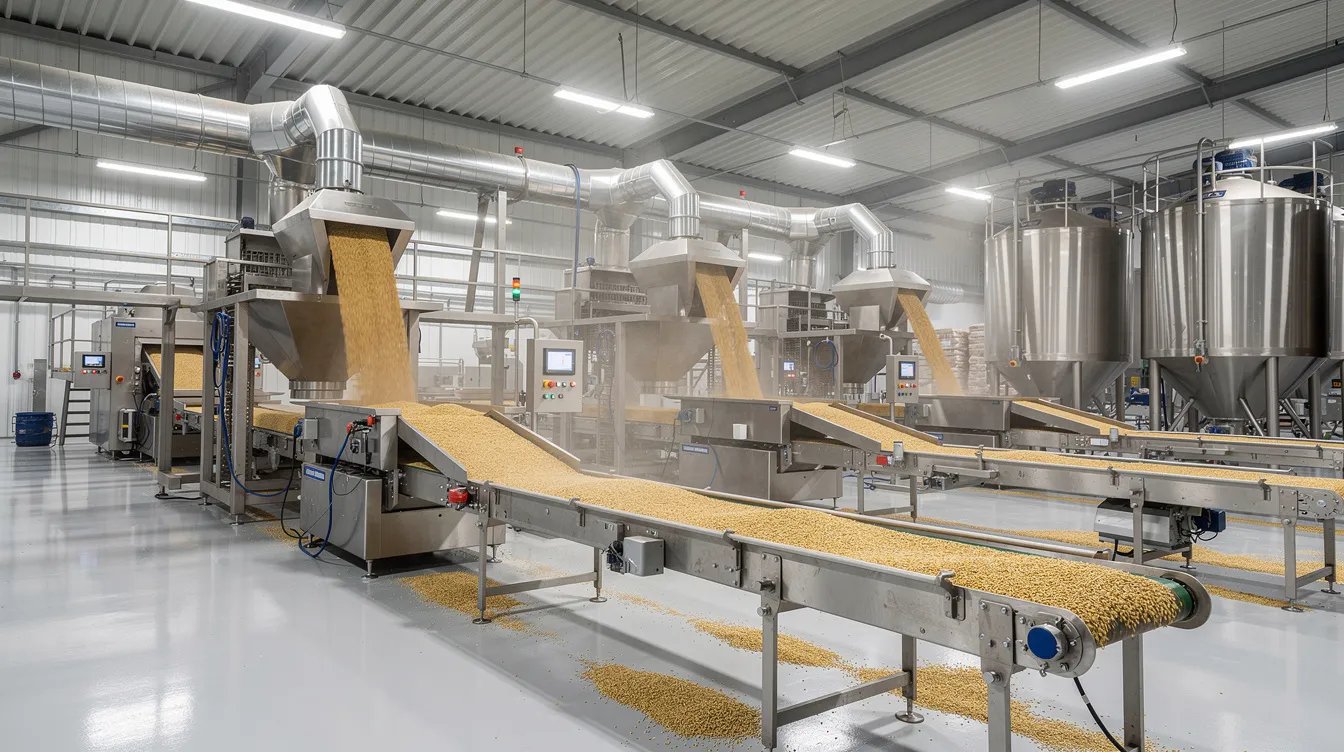
Below is a structured overview of machinery typically considered in an instant poha production line. Poha manufacturing setups include standalone machines for paddy cleaning, roasting, flaking and drying. Industrial instant poha lines automate stages including paddy cleaning, soaking and flattening. Poha making machines are designed for bulk production.
| Machinery | Function | Capacity Range | Essential/Optional | Key Parameter |
|---|---|---|---|---|
| Pre-cleaner & Destoner | Remove debris, stones | 200–1000 kg/hr | Essential | Sieve size, aspiration |
| Soaking Tanks | Hydrate paddy | Batch-based | Essential (integrated) | Mild steel/SS, hot water |
| Paddy Roaster | Gelatinise starch | 200–500 kg/hr | Essential (integrated) | Fuel type, temperature |
| Roller Flaker | Flatten grains to flakes | 200–1000 kg/hr | Essential (integrated) | Roll gap, SS 304 contact |
| Continuous Belt Dryer | Reduce moisture to ≤10–12% | 200–1000 kg/hr | Essential | Fuel load, belt width |
| Roaster/Toaster | Flavour, reduce moisture | 250–1000 kg/hr | Optional/Essential for RTC | Temperature control |
| Seasoning Drum | Coat flakes with premix | 200–500 kg/hr | Essential for instant | Gentle tumbling, dosing |
| Ribbon Blender | Dry premix blending | 50–200 kg batch | Essential for instant | Blade speed, SS grade |
| FFS Packing Machine | Form-fill-seal pouches | 20–60 packs/min | Essential | Multi-head weigher, MAP |
| Metal Detector | Food safety screening | Inline | Recommended | Sensitivity, FSSAI |
Raw Material Cleaning Equipment
The process involves graded and sorted paddy before any downstream processing. Equipment includes pre-cleaners, vibratory cleaners, destoners, magnetic separators and aspiration systems. Even value-addition plants buying poha need vibratory graders to remove breakage and fines.
Paddy/Rice Conditioning Equipment
Poha manufacturing requires soaking paddy for 24–26 hours in hot water before processing. Conditioning tanks with hot water circulation, paddy roasters and steamers are essential in softening grains before flattening. The roaster machine type depends on whether the company uses traditional sand roasting or modern sandless methods. Equipment is typically constructed from mild steel frames with food-grade lining.
Poha Flaking Equipment
A standard poha making machine converts raw paddy into dry flattened rice flakes. Roasted paddy is fed into a flaking machine after sand removal. Roller flakers with adjustable gaps produce thin flakes (0.5–0.8 mm for instant poha) to thick flakes (1.6–2.2 mm). The offered machine capacity in kg/hr is the headline plant rating. For the value-addition model, this equipment may be omitted entirely.
Drying and Moisture-Control Equipment
Moisture control is critical in processing to ensure shelf stability of poha products. Continuous belt dryers or fluidised bed dryers bring moisture below 10–12%. Cooling conveyors and inline moisture meters complete the drying section. Under-sizing the dryer creates bottlenecks and microbial risks.
Roasting Equipment
Five kilograms of paddy is roasted with fine sand per batch in traditional processes, and two to three grains burst during the roasting process to indicate readiness. Modern sandless continuous roasters offer better hygiene. Roasting temperatures range from 180–220°C with controlled residence time.
Seasoning and Mixing Equipment
Spices and dehydrated ingredients contribute significantly to the flavor profile of instant poha products. Equipment includes ribbon blenders, seasoning drums with oil dosing systems and recipe-based control panels. Accurate dosing of salt, spices and dehydrated vegetables ensures taste consistency. Many RTC manufacturers purchase dehydrated vegetables from specialised suppliers rather than manufacturing in-house.
Conveying, Weighing and Packaging Machinery
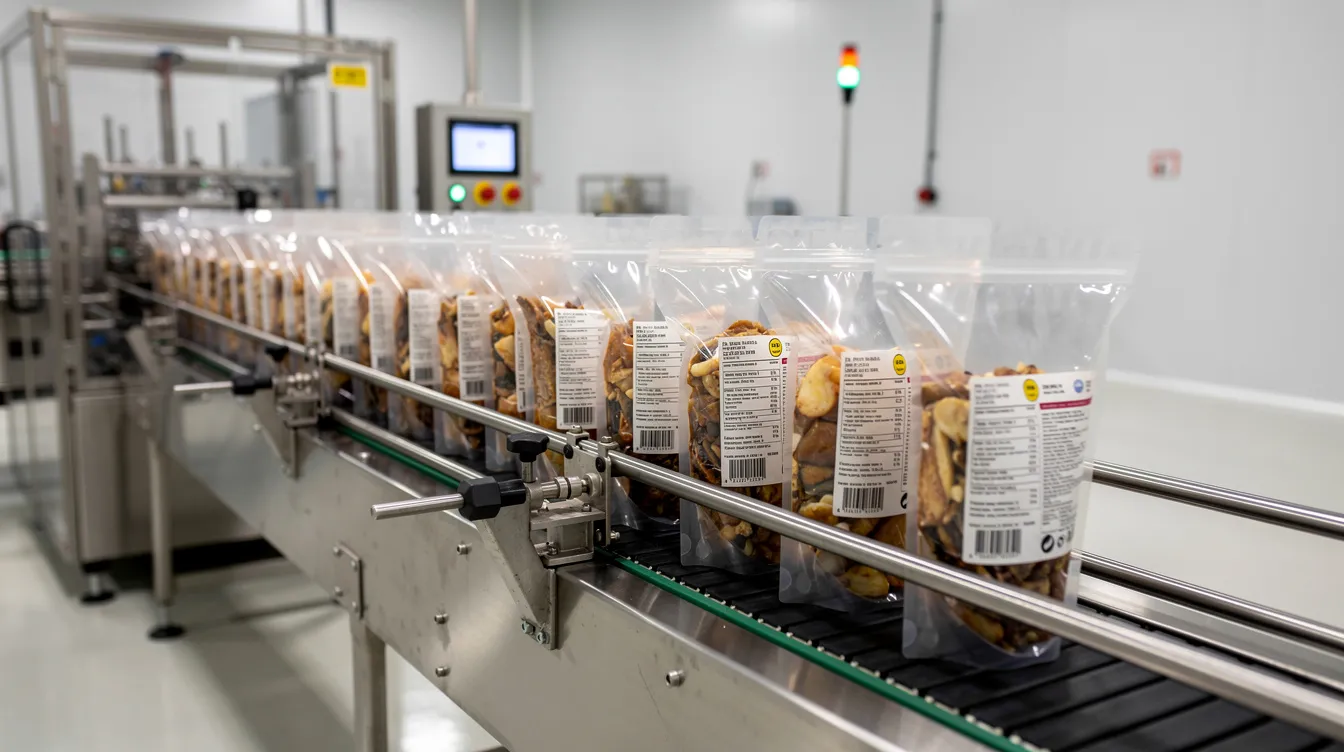
The poha processing line often employs automated weighing and packaging to improve efficiency. Automated packing systems can significantly reduce labor costs while maintaining product quality. Packaging formats vary, with options including pillow pouches and stand-up pouches for retail products. Equipment includes automatic FFS machines, multi-head weighers, nitrogen flushing systems, check weighers, metal detectors and batch coders.
Instant Poha Production Line – Typical Process Flow
Integrated model: Raw Material Receipt → Cleaning & Grading → Soaking (24–26 hours) → Roasting → Flaking → Drying → Cooling → Grading → Seasoning & Ingredient Addition → Blending → Metal Detection → Weighing → Packaging → Cartoning → Storage.
Value-addition model: Poha Receipt → Cleaning/Grading → Drying (if needed) → Seasoning & Mixing → Packaging → Storage.
For detailed process-flow information, refer to our guide on Instant Poha manufacturing process and production line.
Typical Plant Capacity Options
Production capacity should match market demand to optimize operational efficiency. Indicative categories:
- Micro/small: 80–200 kg/hr (semi-automatic poha making machinery)
- Standard MSME: 250–500 kg/hr
- Industrial: 1–2 TPH with continuous drying and automatic packaging
Semi-automatic poha plants require manual labor and typically operate at 80 to 250 kg per hour. Banks normally examine whether proposed poha plant machinery capacity is consistent with projected annual production. Promoters should plan 60–70% utilisation in initial years rather than assuming 100%.
Indicative Instant Poha Machinery Cost
All figures below are indicative ranges developed from market observations, not vendor quotations. Poha processing machines can cost around ₹14,00,000 per piece for mid-range configurations. Automatic poha plants are available for approximately ₹18,00,000 each. A 200 kg automatic poha plant costs approximately ₹17,00,000, while mini poha plants are available for approximately ₹5,65,000. Automatic poha making plants have been observed at approximately ₹14,55,000. A recent government tender in Maharashtra was awarded at approximately ₹13.68 lakh for a fully automatic 500–550 kg/hr unit with supply and installation.
Factors influencing instant poha machinery cost include capacity, automation grade, SS grade, dryer technology, packaging format, number of SKUs and whether imported components or PLC/SCADA controls are specified. Several manufacturers operate in India, including companies like PCK Food Tech Solutions which has been in business since 2012 (12 years of operations). Always get best quote comparisons from multiple suppliers and send your enquiry to at least 2–3 machine leading manufacturer firms before finalising. You can also request callback from suppliers to discuss requirements in detail.
Machinery Cost Items Often Missed in Project Reports
In my experience preparing project reports, many DPRs fail at appraisal because they ignore: freight and transit insurance, erection and commissioning charges, electrical cabling and LT panels, piping for compressed air and fuel, boiler or thermic fluid heater, DG set and transformer, laboratory instruments, fire safety installations, pre-operative expenses and contingencies. These can add 20–40% over ex-works quotations.
Utilities, Food-Grade Construction & Automation
Utilities include electricity (dryers are the largest consumer), LPG/PNG/biomass for roasting, compressed air, process water and ventilation. Energy use, equipment maintenance and vendor reliability are important factors when choosing poha machinery.
Food-grade stainless steel construction is recommended for hygiene and longevity in poha machinery. Use SS 304 for contact parts; SS 316 only where high-salt or acidic seasoning is involved. Compliance with food safety regulations is essential in establishing a poha processing operation. The country of origin for material and components should be verified.
Fully automatic industrial poha plants integrate all production stages from cleaning to packaging with PLC controls, automatic dosing and data logging. Semi-automatic lines suit smaller budgets but carry higher working labour cost per kg and more quality variability.
Supplier Selection & Quotation Details
Promoters should not select machinery only on the basis of the lowest get latest price. Evaluate experience in instant poha or RTC lines, installed references, achievable vs rated capacity, energy consumption data, after-sales support and spare availability. Enter into detailed discussions with suppliers about product trials on your actual raw materials.
A serious quotation must specify: model number, capacity in kg/hr, power load, fuel requirement, materials of construction, automation details, accessories, installation scope, warranty, delivery period, payment terms and exclusions. One-line quotations are insufficient for a DPR.
Machinery Capacity & DPR Financial Projections
From a project finance perspective, machinery capacity feeds into installed capacity, capacity utilisation ramp-up, sales projections, raw material requirements, utilities, manpower, working capital, DSCR and loan repayment schedules. Inconsistencies between instant poha machinery quotations and projected production will be questioned during bank appraisal. Project Report Bank specialises in aligning these into coherent, bank-acceptable documentation.
Should the Promoter Start from Paddy or Purchase Poha?
Model A (Integrated): Full paddy-to-pack line with higher capex, more land, utilities and technical manpower but better control over quality and margins.
Model B (Value Addition): Purchase poha, focus on roasting, seasoning, mixing and packaging. Lower capex, easier MSME entry. Many successful brands begin here and backward-integrate later.
Both models require a professionally prepared Poha Processing Plant Project Report & DPR aligned with machinery choices. For related food processing ventures, also explore the Poha Manufacturing Project Report.
Related Value-Added Rice Processing Opportunities
Once instant poha machinery and packaging infrastructure is operational, entrepreneurs can diversify into puffed rice (murmura), seasoned rice snacks, chivda, fortified breakfast mixes and RTC khichdi kits. Many utilities and packaging machines are common across products, improving capacity utilisation. Explore Puffed Rice and Murmura Plant Machinery Cost and Puffed Rice Manufacturing Process & Process Flow Chart for diversification planning.
Common Mistakes & Pre-Order Checklist
Avoid these errors: finalising machinery before freezing product range; selecting capacity based only on flaker output without checking dryer and packaging speeds; choosing the cheapest instant poha machine price without verifying SS grade or after-sales; not budgeting installation and electrical costs; mismatch between quotation capacity and DPR projections.
Before ordering, confirm: final product list and SKUs, daily capacity target, process route, shift plan, automation level, available power and fuel, water quality, plant layout, at least 2–3 comparable quotations, completed product trials, and alignment with sanctioned loan and own-fund availability. Please wait to place large advance orders until loan sanction is confirmed.
Frequently Asked Questions
What machinery is required for a basic Instant Poha manufacturing plant?
Essential sections include: cleaning and grading equipment, a poha flaking machine (if starting from paddy), dryer and cooling system, roaster, seasoning and mixing equipment, ingredient dosing, conveying systems, and an automatic or semi-automatic packing line with optional nitrogen flushing and metal detector for branded retail packs. The exact list depends on whether you manufacture from paddy or purchase ready poha. The range of machines made in India covers all these categories from multiple manufacturers in Pune and other industrial hubs.
What is the approximate cost of Instant Poha Machinery for an MSME unit in India?
A smaller value-add semi-automatic line based on purchased poha may require machinery investment starting from approximately ₹5–8 lakh, while an integrated automatic poha plant with 200–500 kg/hr capacity and automatic packing can require ₹15–45 lakh or more (approx), depending heavily on automation grade, SS construction and packaging configuration. These are indicative figures developed from market data, not binding quotations.
Can the same plant manufacture other Ready-to-Cook rice products?
Yes. The same roasters, dryers, seasoning mixers and packaging machines can typically handle different recipes such as upma mixes, lemon rice, khichdi and seasoned rice flakes, with appropriate cleaning between changeovers. This flexibility improves capacity utilisation and return on investment.
Is it better to start with a semi-automatic or fully automatic instant poha plant?
This depends on your target capacity, product quality requirements, available capital and business model. Semi-automatic plants suit initial MSME entry with lower capex, while fully automatic lines offer lower per-unit cost and better consistency at scale. The DPR should reflect the chosen automation level in both capex and operating cost projections.
Conclusion
Instant poha machinery selection is a strategic decision affecting capacity, quality, automation, utility requirement and financial viability. Promoters should base decisions on clearly defined product specifications, realistic capacity planning, chosen process route, required automation level, available utilities and total project cost.
Before finalising machinery orders, freeze the technical configuration in a professionally prepared DPR so that machinery investment, capacity assumptions, working capital and repayment projections remain aligned and acceptable to banks. Project Report Bank, under CA Manish Gugliya’s guidance, assists entrepreneurs with detailed project reports, CMA data and feasibility studies for instant poha, poha processing and other ready-to-cook rice products plants across India.