Key Takeaways
- The instant poha market potential in India is strong, driven by rising demand for quick, regional, affordable breakfasts among urban professionals, students, and institutions-but demand alone does not guarantee commercial success.
- A viable instant poha business model must align product positioning, pack sizes, and flavours with clearly defined target customers and sales channels before scaling production.
- Instant poha pricing strategy, distributor margins, and channel mix directly drive profitability, working-capital requirements, and project feasibility assumptions in the DPR.
- MSME promoters should start with focused local or regional distribution, then scale into modern trade, e-commerce, HoReCa, and private label in a phased manner.
- A bankable instant poha project report must integrate market assumptions, capacity utilisation, channel economics, and risk analysis-not just machinery cost and production capacity.
Instant Poha Market Potential in India
Instant poha is a ready-to-cook formulation that combines flattened rice with pre-measured spices, oil, and sometimes dehydrated vegetables into a single pouch or cup. Unlike traditional poha-where you wash rice flakes, heat oil in a pan, add mustard seeds, saute onions, toss in turmeric powder, green chilies, and peanuts from scratch-instant poha mix requires no chopping or measuring ingredients. You need just hot water to prepare instant poha mix, and preparation time is about 5 minutes.
India’s food consumption habits are shifting rapidly. Increasing urbanisation, nuclear families, and dual-income households are creating demand for breakfast options that take under 10 minutes. Instant ready-to-eat foods in India are experiencing significant growth in demand, and the market for ready-to-cook foods is projected to grow significantly-valued at USD 7.1 billion in 2025 with projections to reach USD 12 billion by 2034.
Instant poha is a traditional Indian breakfast staple, and its cultural familiarity makes it easier for consumers to accept a packaged version compared to entirely new product categories. Poha is perceived as light, gluten-free, and rich in iron and carbohydrates-positioning it naturally among health-conscious consumers looking for convenient yet nutritious meal options.
The market potential for instant poha is driven by convenience and health trends. Demand drivers include students, working professionals, hostels, PG accommodations, office cafeterias, travellers, railway and bus catering, and institutional kitchens. The instant poha market is expanding due to urbanization and rising disposable incomes across Tier-2 and Tier-3 cities.
However, while the instant poha business opportunity appears attractive, actual success depends entirely on execution: recipe quality, mix consistency, pricing, branding, and sales coverage. A product that tastes stale or has inconsistent texture will not generate repeat purchase regardless of market size.
- Industry estimates suggest the global poha market is valued at USD 1.8 billion in 2025, with Asia-Pacific contributing approximately 68.7% of demand.
- India’s packaged breakfast market was estimated at roughly USD 3.8 billion in 2024, with per capita breakfast spend projected to nearly double by 2030.
Why Instant Poha Has Commercial Potential
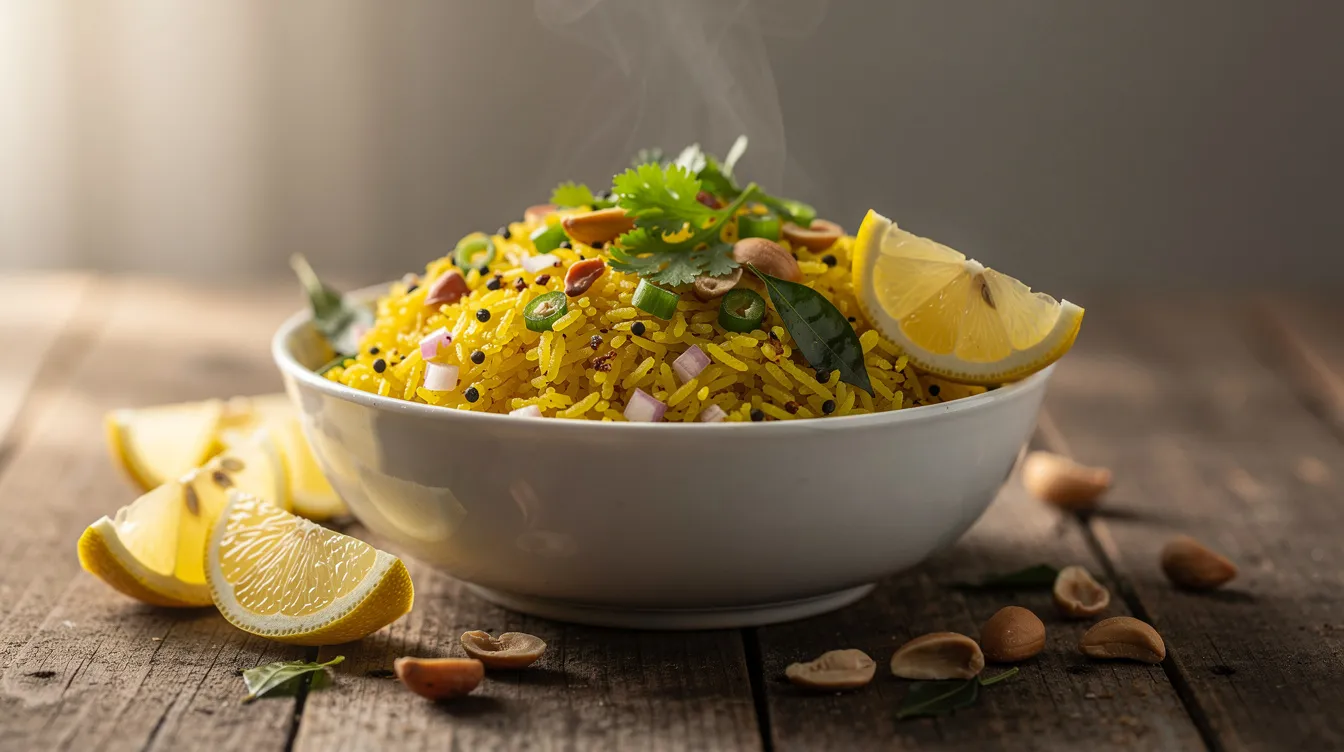
Instant poha sits within the broader ready-to-cook poha market, and financiers increasingly see it as a value-added extension for existing rice and poha mills. For manufacturers already processing flattened rice, adding seasoning and packaging requires lower incremental investment compared to starting from scratch.
Key product attributes that support commercial viability:
- Quick preparation-just add hot water or hot boiling water, stir gently, and serve within 5 minutes
- Simple instant poha recipe that requires no cooking infrastructure beyond a kettle or microwave
- Vegetarian positioning with regional taste appeal
- Travel-friendly single-serve packaging
- Instant poha provides a quick, nutritious breakfast option that is ideal for busy parents and bachelors
- Instant poha can be positioned as an affordable alternative to instant noodles, tapping into a massive existing consumption base
Low entry barriers exist in terms of basic raw material-flattened rice and spices-but commercial success needs strong recipe standardisation and process control. The aroma, taste, and fluffy texture of the final product must be consistent across every batch, or repeat purchase collapses.
Scalability is a genuine strength: from a small MSME unit serving one state to a larger instant poha FMCG brand with pan-India distribution and export to the Indian diaspora. The global demand for authentic ethnic foods is increasing, which benefits poha sales in overseas markets.
From a project feasibility perspective, instant poha works best when integrated with a broader ready-to-cook product basket (upma mix, khichdi mix) to share distribution and branding costs, improving the overall contribution margin.
Target Customers for Instant Poha
Clear instant poha target market segmentation is the foundation for product design, pricing, and sales channel planning. Without this mapping, DPR sales projections become guesswork.
Key segments:
- Working professionals in metros and Tier-2 cities seeking 5-minute breakfast options
- College students and hostel residents with minimal cooking infrastructure
- PG accommodations where residents eat breakfast before commuting
- Young couples and nuclear families preferring convenience over time-intensive cooking
- Travellers, tourists, and commuters at railway stations and bus terminals
- Office and factory canteens, hospitals, and school/college cafeterias
- Corporate cafeterias and caterers managing large breakfast volumes
Instant poha appeals to urban professionals and students seeking quick meal solutions-but each segment has distinct needs. Students expect affordability and mild to medium spice levels. Institutional buyers prefer 1–5 kg bulk packs with consistent recipe. Travellers want single-serve cups they can prepare with boiling water from a thermos.
Single-serve packaging of instant poha caters specifically to office-goers and students, while family packs serve regular household consumers. Pack-size decisions should directly flow from segment priorities: 60–80 g travel sachets, 150–200 g single/dual servings, 500 g–1 kg family packs, and 5–10 kg institutional packs.
An instant poha business plan and DPR should explicitly map these segments, showing expected volume and pricing from each for bankable projections.
Geographic Market Opportunity for Instant Poha
Instant poha demand varies significantly across regions. Traditional consumption is strongest in Western and Central India-Maharashtra, Madhya Pradesh, Chhattisgarh, and Gujarat-where poha is already a daily breakfast staple. North, South, and East India represent growth markets where the product is positioned as a convenient packaged breakfast option rather than a traditional dish.
Geographic approach for new manufacturers:
| Level | Focus | Advantage |
|---|---|---|
| City/District | Local outlets in home city | Lowest freight, fastest feedback |
| State | Distributor network across one state | Builds brand recall, manageable logistics |
| Regional | West + Central India cluster | Leverages cultural demand base |
| Pan-India | All major metros and Tier-2 cities | Requires significant marketing and working capital |
| Export | Indian diaspora in US, UK, Middle East | Higher margins but regulatory complexity |
Building distribution density in limited territories first-say one state and adjoining districts-is far more effective than spreading inventory thinly across India. Opportunities exist in Tier-2 and Tier-3 cities, highway retail (bus stands, railway stations, petrol pumps, tourist spots, and pilgrimage centres) where branded instant poha is still underpenetrated.
E-commerce and quick-commerce platforms allow national reach, but require strong product reviews and ratings for repeat purchase. Export potential exists for countries with sizeable Indian populations, but separate packaging, labelling, and certifications are typically required.
Instant Poha Product Positioning Strategy
Instant poha product positioning links directly to pricing strategy, pack design, distribution channel, and advertising spend. Promoters must choose their positioning before designing packaging or appointing distributors.
Major positioning options:
| Positioning | Ingredients | Packaging | Target MRP Range (illustrative) |
|---|---|---|---|
| Economy | Basic seasoning, no dehydrated veggies | Simple laminated pouch | ₹10–15 per 60–80 g |
| Mass Market | Standard seasoning, peanuts | Printed stand-up pouch | ₹15–25 per 80–150 g |
| Mid-Premium | Better spices, dehydrated onions/veggies | Premium pouch with zip | ₹25–40 per 150–200 g |
| Health/Premium | Organic rice, millet blend, low oil | Modern cup/bowl format | ₹40–60 per serving |
Figures are illustrative only and not standard market rates.
Health-oriented positioning could include low-oil instant poha mix, fortified variants, or added-millet blends. Product innovations in instant poha now include high-protein and millet variations that appeal to fitness-conscious buyers. Consumer preferences are shifting toward clean-label and minimally processed foods, which supports premium positioning.
Regional/traditional positioning like “Indori Poha” or “Maharashtrian Kanda Poha” taps into nostalgic demand and regional authenticity. Office/travel positioning emphasises “just add hot water” in single-serve cups with a spoon for office pantries and hostels.
Promoters should choose 1–2 clear positioning routes initially instead of mixing economy and premium under one brand, which confuses both distributors and consumers.
Product Mix and Flavour Strategy for Instant Poha
Instant poha mix recipe decisions directly affect raw material planning, process design, and working capital. The seasoning blend-whether you roast urad dal and curry leaves for a South-Indian twist or add extra coriander leaves and lemon for a tangy variant-changes both cost per kg and shelf life.
Core variants to consider:
- Classic Poha (standard seasoning with turmeric, salt, and sugar)
- Indori Poha (rich peanut and sev topping, distinctive spice profile)
- Vegetable Poha (dehydrated veggies, carrots, peas)
- Lemon Poha (tangy, light, travel-friendly)
- Masala Poha (stronger spices for those who prefer bold taste)
- Jain-friendly variant (no onion, no garlic)
Regional flavour ideas work well: Maharashtrian style with extra peanuts and coriander; South-influenced variant with curry leaves and coconut; a kids’ variant with mild spice. Poha can be diversified into various flavors and product formats to attract a wider consumer base.
Both thick poha and thin varieties exist as base options across product types, with different hydration and texture characteristics.
SKU rationalisation matters. Launching 3 core SKUs (Classic, Indori, Vegetable) in 2 pack sizes means managing 6 combinations. Launching 10 flavours in 3 sizes creates 30 SKUs-exponentially increasing inventory complexity, slow-moving stock, and expired product risk. Start with 2–3 proven flavours and expand based on actual sales data.
For detailed guidance on how seasoning choices, dehydrated vegetables, and oil content affect cost and shelf life, refer to our guide on instant poha raw material, seasoning and product mix.
Instant Poha Pricing Strategy
Instant poha pricing strategy in India is one of the most critical parts of the business plan and DPR. Lenders assess whether projected selling prices are realistic vis-à-vis competitors, and whether the margin structure can service debt.
Key cost elements:
- Flattened rice (raw poha) cost per kg
- Seasoning blend (spices, turmeric powder, salt, sugar, oil)
- Dehydrated vegetables (if used)
- Packaging material (laminated pouch, cup, carton, lid)
- Labour, utilities, and factory overheads
- Freight and transportation
- Wastage and rejects
Commercial costs layered on top:
- Distributor margin (typically 8–15% of MRP, varies by channel)
- Retailer margin (typically 10–20% of MRP)
- Scheme and discount budget
- E-commerce commissions (15–30% on marketplaces)
- Marketing and sampling expenses
- GST and statutory levies
Illustrative pricing waterfall (for an 80 g retail pouch, illustrative only):
| Component | ₹ (Approx.) |
|---|---|
| Manufacturing cost (materials + labour + overhead) | 6.00 |
| Packaging cost | 2.50 |
| Ex-factory price | 10.00 |
| Freight | 0.80 |
| Distributor margin | 2.50 |
| Retailer margin | 3.50 |
| Promotional schemes | 1.20 |
| GST (5%) | 1.00 |
| MRP | ₹20.00 |
| Net realisation to manufacturer | ~₹9.00–10.00 |
These figures are illustrative only and will vary by geography, scale, and channel.
Pricing must consider competitor MRPs in the local market-including big brands and unbranded loose poha-and consumer willingness to pay extra for convenience and branding. At lower production volumes, fixed cost per kg is higher, so promoters should understand how scaling volumes improves margins over 2–3 years.
How Pack Size Affects Pricing and Demand
Pack size is both a marketing and financial decision, impacting consumer trial, per-kg realisation, packaging cost share, and inventory turnover.
- Small single-serve (60–80 g): Low entry MRP encourages first-time trial. Higher per-kg realisation but packaging cost can be 25–35% of total cost. Ideal for office, hostel, and travel use. These handy packs are what consumers expect to find on quick-commerce apps.
- Mid-size household (150–400 g): Balanced volume and affordability. Suitable for kirana and supermarket shelves where families prepare breakfast regularly.
- Family and value packs (500 g–1 kg): Lower per-kg price, attractive for regular household consumers and modern trade promotions. Fill larger shelf space and improve freight efficiency.
- Bulk institutional (1–5 kg+): Focused on HoReCa and canteens. Lower per-kg price but higher volume and more stable repeat orders.
Pack-size decisions influence freight efficiency (more product per carton), shelf visibility, and retailer willingness to stock multiple SKUs. For DPR projections, pack-size mix directly affects working-capital cycle and expiry risk-larger packs tie up more inventory value but turn slower in retail.
Instant Poha Branding Strategy
Instant poha branding and marketing strategy must communicate taste, convenience, and trust at first glance-whether on a kirana shelf or an e-commerce listing. Instant breakfast food branding in India’s crowded FMCG space leaves you roughly 3 seconds to catch a buyer’s attention.
Brand development checklist:
- Brand name: Easy to pronounce, culturally relevant, hinting at taste or quick preparation. Avoid generic names difficult to trademark.
- Logo and colours: Warm, appetising colours (yellow, green, orange). Iconography like a steaming bowl, clock symbol for “ready in minutes,” or regional motif.
- Tagline: Emphasise “instant”, “homely taste,” or “regional flavour”-for example, “Ghar jaisa poha, sirf 5 minute mein.”
- Trust signals: FSSAI license number, vegetarian symbol, manufacturing date, nutritional information, and relevant certifications printed prominently.
Branding should differ across positioning ladders: economy brands use simpler, bolder design while premium brands adopt a cleaner, modern look with stronger health claims (within regulatory norms).
For regional markets, include local language text while keeping English/Hindi visible for pan-India recall. Brand launch should be phased-heavy national advertising without strong distribution and production capacity can strain working capital severely.
Packaging as a Marketing Tool
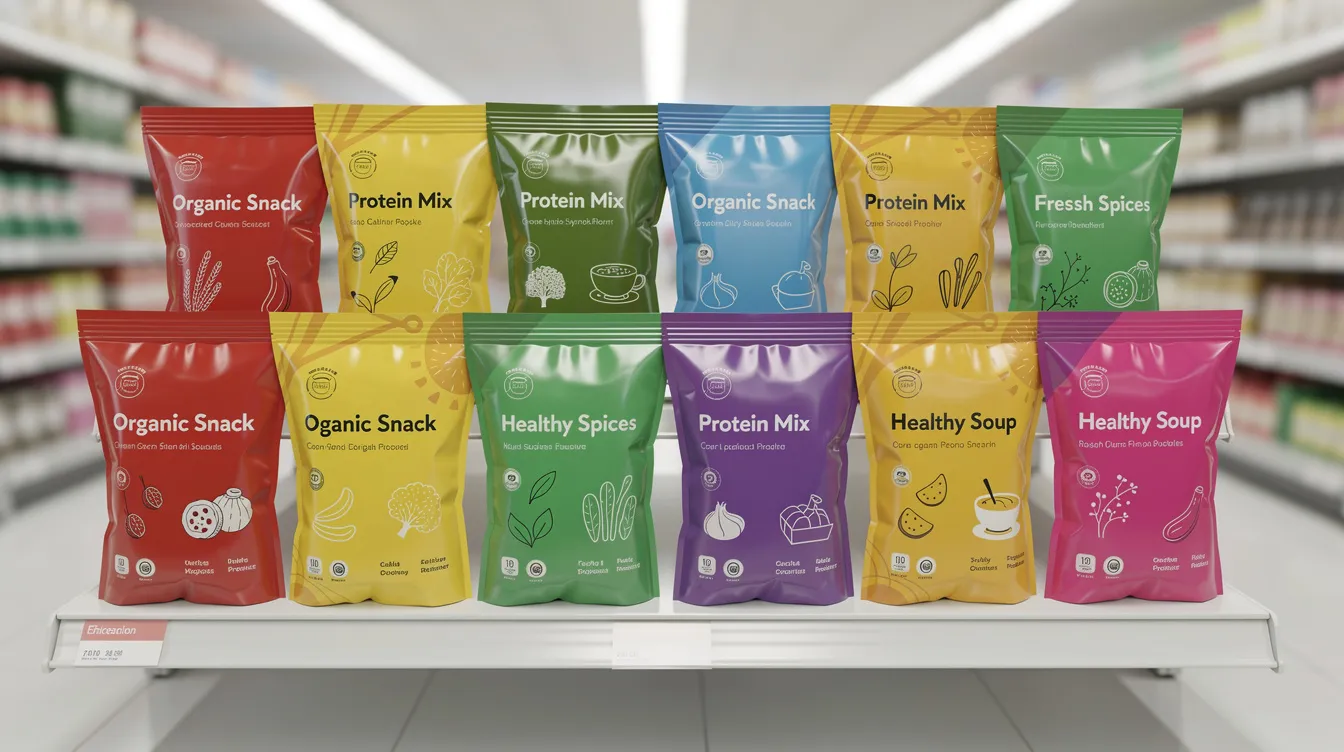
Packaging serves dual roles for instant poha: protecting the product and selling it. Instant poha mix can be stored for 2–3 months without refrigeration-but only if packaging provides adequate moisture barrier to preserve aroma and texture. If consumers open a pack and find soggy, clumped poha with no aroma, no amount of branding will save the product.
Key packaging requirements:
- Protect instant poha mix from moisture (the biggest quality risk-all the water absorbed during storage ruins texture)
- Clear preparation instructions: “Add hot water, cover with lid, rest 5 minutes, fluff gently, serve”
- Front-of-pack clarity: flavour variant, cooking time, number of servings, and serving suggestion photo
- Nutritional values, allergen warnings (peanuts, gluten), batch and expiry details
- FSSAI compliance information
Common packaging options include laminated pouches, stand-up pouches with zip-lock (for store and reuse), cups with lids (premium/travel), and cartons for institutional packs. Each impacts perceived value and cost differently.
For detailed guidance on packaging materials, shelf-life testing, and quality control systems, see our article on instant poha packaging, shelf life, quality control and food safety.
Sustainability trends (recyclable packaging, reduced plastic) are worth noting, but choices must still protect product quality and remain cost-feasible for MSMEs.
Food Labelling and Regulatory Compliance
Instant poha FMCG brands must comply with FSSAI and other applicable food regulations. This is important not just for legality but for brand credibility and loan appraisal-banks expect regulatory compliance as part of project implementation.
Key FSSAI labelling requirements (high-level):
- Product name and ingredients list in descending order by weight
- Vegetarian/non-vegetarian logo
- Nutritional information panel
- FSSAI license number, net quantity, batch number
- MRP, packed-on date, and best-before date
Health claims such as “high fibre,” “fortified,” or “diabetic friendly” must comply with applicable FSSAI standards and should not be printed casually. Institutional and export packs may have additional labelling or language requirements.
For a detailed overview of FSSAI licensing, labelling and regulatory compliance for instant poha plants, promoters should consult updated regulations during implementation. This article does not provide legal guarantees.
Instant Poha Sales Channels
Instant poha sales and distribution strategy should typically use a mix of channels-general trade, modern trade, e-commerce, HoReCa, and private label-evolving in phases rather than all at once. Channel mix influences instant poha selling price, net realisation, and working capital, which must be reflected in the project’s financial model.
General Trade (Kirana and Traditional Retail)
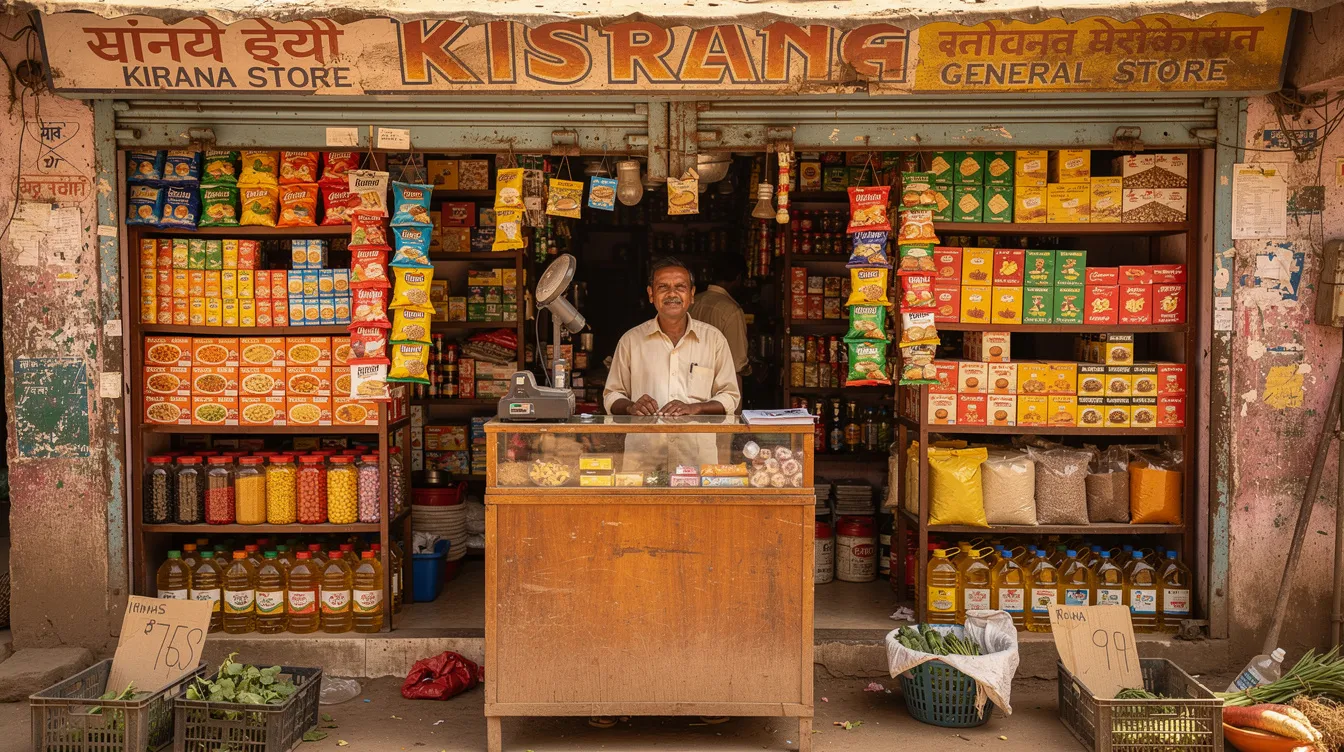
General trade-kirana shops, local supermarkets, provision stores, and wholesalers-remains the backbone of food distribution in India. Distributors buy in bulk, stock in their godowns, and supply retailers in defined territories, often on credit with 15–30 day billing cycles.
For instant poha, general trade offers wide neighbourhood reach, repeat-purchase visibility, and the ability to push economy and mass-market SKUs. Challenges include the need for field sales staff, schemes and cool-off discounts, slower payment cycles, and continuous supply to avoid losing shelf space.
Early-stage MSME brands typically start with general trade in their home city or district before attempting modern trade entry.
Modern Trade (Supermarkets and Hypermarkets)
Modern trade includes organised retailers and chains with centralised buying and shelf-space management. Listing requires approvals, potential listing fees, and commitment to supply across multiple outlets consistently.
Advantages include high visibility, ability to push larger family or multi-packs, and in-store promotions and sampling. Disadvantages include higher retailer margins, longer payment cycles (sometimes 30–60 days), returns and expiry clauses, and requirements for barcoding and supply-chain documentation.
Modern trade generally suits brands that already have stable local demand and adequate manufacturing and working-capital strength.
E-commerce and Online Grocery Sales
E-commerce expansion boosts impulse buying of ready-to-eat meals in urban markets. This channel includes marketplaces (Amazon, Flipkart), grocery platforms (BigBasket, Blinkit, Zepto), and own D2C websites.
Digital grocery delivery platforms enhance the accessibility of instant poha, enabling pan-India reach, niche flavour promotion, and rich content (recipe videos, review recipe sections, preparation guides) that build brand story. Quick-commerce is particularly promising for instant poha in dense urban areas.
However, platform commissions (15–30%), fulfilment charges, warehousing costs, and performance marketing spends can significantly reduce net realisation per pack. DPR financial projections for online sales must use realistic assumptions about commission rates rather than assuming full MRP as revenue.
HoReCa and Institutional Sales
Hotels, restaurants, cafés, hospitals, colleges, offices, industrial canteens, and caterers use instant poha as part of breakfast menus. These buyers typically prefer 1–5 kg bulk packs, sometimes with customised seasoning blends (spice level, onion-free options).
Marketing cost per kg is usually lower in institutional business, but credit periods can be longer and margins per kg smaller compared to branded retail MRP packs. For project feasibility, a balanced portfolio of retail and institutional sales can stabilise capacity utilisation.
Private Label and Contract Manufacturing
Manufacturing instant poha under another company’s brand-retail chains, regional brands, e-commerce brands-is a viable volume strategy. Advantages include faster scale-up, lower marketing expenditure, and predictable offtake. Disadvantages include lower brand-building for the manufacturer’s own label, price pressure, and higher dependence on few key clients.
When preparing an instant poha manufacturing project report, promoters should clearly separate assumptions for own-brand and private-label volumes, pricing, and margins in the financial model.
Instant Poha Distribution Strategy
The typical FMCG distribution flow is: Manufacturer → C&F / Super Stockist → Distributor → Retailer → Consumer. Smaller MSMEs may start with a simplified model (Manufacturer → Distributor → Retailer) or even direct supply to select stores in one city.
Key elements of distribution strategy:
- Territory planning: district-wise, then state-wise expansion
- Distributor appointment criteria: godown capacity, delivery vehicles, existing retail coverage, financial strength
- Minimum order quantity expectations and credit policy (days)
- Secondary sales tracking to ensure product moves from distributor to retailer, not just from factory to distributor
- Managing inventory levels with expiry-sensitive instant poha mix
- Sales-return policy and damaged-goods handling
Risk points include overstocking distributors, weak secondary sales, high returns or damage, and squeeze on working capital. The instant poha distribution strategy should be documented in the DPR so lenders can see how projected volumes will realistically reach the market.
Distributor Margin and Channel Economics
Distributor and retailer margins represent the trade-off between competitive consumer pricing and attractive incentives for channel partners.
Illustrative MRP breakdown (80 g pouch at ₹20 MRP):
| Component | % of MRP (Approx.) |
|---|---|
| Manufacturer net realisation | 45–50% |
| Distributor margin | 10–12% |
| Retailer margin | 15–20% |
| GST | 5% |
| Freight | 3–5% |
| Schemes and promotions | 5–8% |
Actual margins vary by market, product, channel, and negotiating power.
Margins differ significantly by channel: modern trade demands higher margins and listing fees; e-commerce involves commissions; institutional sales offer lower per-unit margins but higher volumes. MSME brands sometimes offer higher initial margins to gain placement.
Overstretching on margins and schemes can quickly erode instant poha profit margin. The DPR should model trade terms conservatively and include sensitivity analysis: what if actual average net realisation per kg is 5–10% lower than planned due to higher trade discounts?
Local Market vs Regional vs National Distribution
| Parameter | Local (City/District) | Regional (State) | National (Pan-India) |
|---|---|---|---|
| Sales potential | Limited but focused | Moderate | High |
| Marketing investment | Low | Medium | Very high |
| Distributor complexity | Simple | Moderate | Complex |
| Freight cost per kg | Low | Medium | High |
| Working capital need | Low | Medium | Very high |
| Management requirement | Owner-managed | Small team | Large organisation |
| Brand-building cost | Minimal | Moderate | Substantial |
| Credit exposure | Controlled | Moderate | High |
From a project feasibility perspective, most new MSME instant poha plants should plan to reach local and regional saturation before attempting national-level FMCG rollout. Local focus improves control, allows faster feedback on mix acceptance, and reduces logistics cost.
Marketing Strategy for a New Instant Poha Brand
Marketing spend should be a defined percentage of projected sales in the instant poha business plan-not an afterthought added after the factory is built.
On-ground trade activities:
- In-store sampling and demo stalls in supermarkets
- Introductory price-offs and retailer schemes
- Display units, wobblers, and danglers at point of sale
Consumer marketing:
- Digital campaigns demonstrating quick instant poha recipe preparation
- Influencer tie-ups with home cooks showing how to prepare poha in under 5 minutes
- Regional language content and recipe videos
Corporate and institutional marketing:
- Sampling in offices and co-branded activities in hostels and PGs
- Tie-ups with caterers for breakfast packs
- Combo packs (instant poha mix plus another ready-to-cook product) for trial via e-commerce
The DPR should include an annual marketing budget-segregated into trade promotions and consumer advertising-and model its impact on EBITDA and cash flows.
Revenue Model of an Instant Poha Manufacturing Business
Revenue is determined by: Installed Capacity × Capacity Utilisation × Saleable Production × Average Net Realisation per kg, adjusted for product mix and channel mix.
Installed capacity is not the same as actual sales. DPRs typically ramp utilisation from 30–40% in year 1 to 60–75% by year 3–4. Assuming 100% utilisation from day one is unrealistic and will not be accepted by any serious lender.
SKU mix matters: selling 80 g premium packs at ₹250/kg net realisation versus 1 kg economy packs at ₹120/kg dramatically changes revenue per ton of production. Channel mix also changes net realisation-general trade yields different margins than e-commerce or institutional sales.
Illustrative example: If a plant produces 500 kg/day at 60% utilisation (300 kg/day saleable output, 300 working days/year = 90 tons/year) at an average net realisation of ₹150/kg, annual revenue would be approximately ₹1.35 crore. A 10% improvement in either utilisation or realisation would increase revenue by ₹13.5 lakh. This is illustrative only.
Relationship Between Pricing and Profitability
Even a small change in instant poha selling price per kg can significantly alter profit at FMCG volumes. Key factors affecting pricing flexibility:
- Raw material (paddy/flattened rice) price volatility
- Seasoning and oil costs (commodity-linked)
- Packaging material inflation
- Freight rate changes
Higher trade discounts and promotions boost initial sales but can squeeze gross margin if not carefully monitored. At low capacity utilisation, fixed overhead per kg is high, making competitive pricing harder. Higher utilisation spreads overheads and improves profitability-which is why the ramp-up plan in the DPR is critical.
For a detailed understanding of margin structure and break-even analysis, see our article on instant poha profitability, financial projections and working capital. Periodic review of pricing and pack sizes based on actual sales and cost trends should be incorporated into DPR scenarios.
Working Capital Impact of Distribution
FMCG distribution-led models like instant poha require significant working capital beyond raw materials and finished goods:
- Inventory of raw poha, seasoning blends, and packaging stock
- Finished goods in factory and with C&F/distributors
- Receivables from distributors and retailers (15–45 days depending on channel)
- Prepaid marketing and promotional spends
Extended credit to distributors or institutions increases top-line but stretches the cash cycle. Banks evaluate this carefully in working-capital appraisal. Rapid sales growth can itself create additional working-capital requirement because more stock and receivables are tied up-even when the business is profitable on paper.
Manufacturing Capacity and Market Absorption
Plant capacity must be aligned with realistic estimates of instant poha demand and distribution reach, not just theoretical production ability.
Key concepts: installed capacity per shift, shifts per day, annual working days, and practical utilisation considering maintenance, changeovers, and seasonal demand patterns. “Market absorption” refers to how many distributors, outlets, and institutions will realistically carry instant poha SKUs in the first 3–5 years and at what average offtake per outlet.
Over-sized capacity without sufficient distribution leads to under-utilisation and lower return on capital. Under-sized capacity may lose scale advantages and larger institutional orders. For detailed capacity planning, land and layout considerations, promoters should assess their target geography’s absorption potential before finalising plant size.
Production Capability and Market Strategy
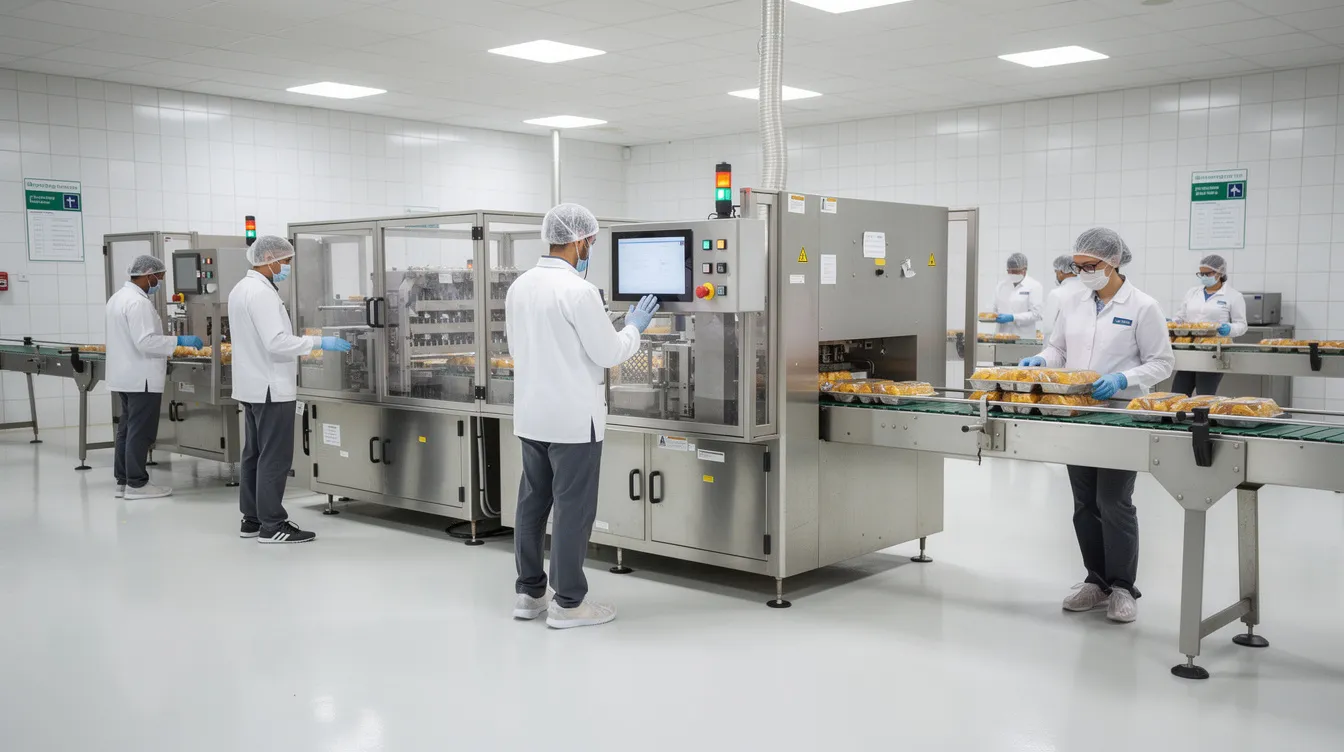
Technical production capability-machinery, process design, and quality systems-directly determines the ability to commit consistent supply to distributors and institutional buyers. The instant poha manufacturing process must ensure uniform hydration, seasoning distribution, and shelf life, as repeat purchase depends heavily on taste consistency.
Promoters planning private-label or institutional orders should ensure enough flexibility in the production line to handle multiple SKUs and recipes efficiently. The choice of mixers, roasters, packing machines, and automation level affects both throughput and the ability to switch between flavours without extended downtime.
Bank appraisals for manufacturing projects also examine technology, supplier credentials, and quality controls-not only sales projections.
Project Cost and Marketing Budget
Project cost has two dimensions: fixed capital investment (land, building, machinery, utilities, pre-operative expenses) and ongoing operating expenses (raw materials, labour, overheads, marketing).
Typical capital cost heads for an instant poha plant:
- Land or lease, civil construction
- Plant and machinery (roaster, mixer, packing line, weighing systems)
- Utilities (steam, power, water, cool storage)
- Quality lab and testing equipment
- Furniture, office equipment, and pre-operative expenses
Promoters must explicitly budget for brand development and launch marketing: packaging design and artwork, trademark registration, launch campaigns, trade promotions, and initial sampling expenses. Working capital-covering inventory, receivables, and operating buffers-is part of total project cost and means of finance.
Marketing budget as a percentage of projected sales typically starts higher in early years (8–12%) and tapers as brand stabilises (4–6%). This trajectory must appear in DPR cash-flow statements.
Bank Finance and Commercial Feasibility
Lenders evaluate instant poha business feasibility beyond technical aspects. They review market assumptions, projected sales, pricing, margins, and DSCR with commercial scepticism.
Key banker focus areas:
- Capacity utilisation ramp-up (is it realistic?)
- Realism of selling price and channel margins versus competitor landscape
- Proposed trade credit terms and their impact on working capital
- EBITDA margins and interest coverage ratio
- Promoter contribution and skin-in-the-game
CMA data and projected financial statements must be consistent with the marketing and distribution strategy described in the DPR. A lender would normally examine whether the promoter has conducted primary market feedback-distributor discussions, sample trials-so that assumptions appear credible.
Sensitivity analysis is essential: impact of lower-than-expected sales volume, higher raw material prices, or delayed capacity utilisation on DSCR and payback period. For a detailed framework, refer to our guide on bank finance, DSCR, feasibility, ROI and sensitivity analysis for instant poha plants.
Key Risks in Instant Poha Marketing and Distribution
Risk identification improves project robustness, and lenders look positively at DPRs that acknowledge and mitigate risks rather than presenting only optimistic scenarios.
Product risks: Poor taste profile, batch inconsistency, packaging failure leading to soggy mix (moisture is the primary enemy), and failure to meet consumer expectations from recipe instructions.
Market/distribution risks: Aggressive competitor discounting, weak distributor motivation, insufficient retail penetration, delayed payments, and high return/expiry rates.
Financial risks: Underestimating marketing spend, over-optimistic volume projections, inadequate working capital, and dependence on one or two large institutional or private-label buyers.
Mitigation strategies:
- Phased geographic roll-out to limit exposure
- Robust quality systems and shelf-life testing
- Conservative credit policy with defined limits per distributor
- SKU rationalisation to reduce slow-moving stock
- Channel and customer diversification
- Regular cost review and combined analysis of price-volume-margin trends
Risk scenario example: If actual trade discounts run 3 percentage points higher than planned (say 11% instead of 8% of gross sales), on a ₹2 crore annual revenue, the margin impact is ₹6 lakh-potentially turning a profitable year into a break-even or loss year for a small MSME.
Practical Market Entry Strategy for a New Instant Poha Manufacturer
A staged approach reduces risk and aligns marketing spend with actual market performance.
Phase 1 – Product Validation (Months 1–4): Product development, lab-scale and pilot trials, local market testing in 20–30 selected outlets. Collect consumer comment and feedback on taste, spice level, texture, and convenience perception. Refine instant poha mix recipe and packaging based on results.
Phase 2 – District-Level Entry (Months 5–12): Structured entry into district and state-level general trade via 3–5 distributors. Focus on core SKUs (e.g., Classic, Indori, Vegetable) in 2 pack sizes. Modest but focused trade promotions.
Phase 3 – Regional Expansion (Year 2): Expansion into regional modern trade chains, stronger digital marketing, trial presence on 1–2 e-commerce platforms. Monitor capacity utilisation and working-capital stress.
Phase 4 – Institutional and HoReCa (Year 2–3): Entry into institutional segment with bulk packs and customised recipes. Requires manufacturing stability and basic brand equity.
Phase 5 – Scale and Diversify (Year 3+): Evaluate private-label contracts, inter-state expansion, and new product lines. Align any capacity additions with stable offtake and available finance.
Project reports should clearly map these phases with timelines and capex/opex implications rather than assuming instant pan-India rollout.
Indicative KPI Dashboard for Instant Poha Sales
Promoters should track a concise KPI dashboard monthly to monitor whether the instant poha business is progressing as per DPR assumptions.
| Category | Metric | Relevance |
|---|---|---|
| Volume | Monthly sales volume (kg and units) | Tracks demand traction |
| Volume | Capacity utilisation (%) | Measures production efficiency |
| Volume | SKU-wise sales mix | Identifies fast vs slow movers |
| Commercial | Average net sales realisation per kg | Core profitability driver |
| Commercial | Gross margin (%) | Monitors cost control |
| Commercial | Trade schemes as % of gross sales | Tracks promotional cost discipline |
| Commercial | Advertising spend as % of sales | Ensures budget adherence |
| Distribution | Number of active distributors | Measures market coverage |
| Distribution | Active retail outlets | Tracks penetration |
| Distribution | Repeat order rate | Indicates product acceptance |
| Working Capital | Receivable days | Monitors cash cycle |
| Working Capital | Finished-goods inventory days | Flags slow-moving stock |
| Working Capital | Return/expiry percentage | Quality and distribution health |
Market Feasibility Before Setting Up an Instant Poha Plant
Before committing capital, promoters should conduct a structured pre-investment market study-especially when seeking term loans and subsidies.
Practical checklist:
- Define target geography (city, district, state)
- Survey competing instant poha and poha mix brands; note MRPs, pack sizes, and flavours
- Observe shelf presence of branded poha in kirana shops and supermarkets
- Discuss with potential distributors and wholesalers about likely margins, credit terms, and interest in selling a new brand
- Conduct limited consumer trials (sampling in housing societies, offices, campuses) to validate taste, spice levels, and convenience
- Estimate projected monthly demand and logistic cost from proposed plant location
- Assess availability of good-quality flattened rice and spices in the region
- Map presence of competing instant poha FMCG brands in the same geography
Findings from this feasibility exercise should feed directly into the market analysis and assumptions section of the DPR.
Role of a Detailed Project Report for Instant Poha Manufacturing
A Detailed Project Report is the backbone document for bank finance, investor evaluation, and internal decision-making for an instant poha manufacturing business.
A robust DPR integrates market analysis-including instant poha market potential in India, competition mapping, and demand estimation-with technical details covering manufacturing process and production line design, machinery selection, and plant capacity and layout.
The financial section includes projected P&L, cash flows, balance sheet, working-capital assessment, DSCR, ROI, IRR, and break-even analysis for 5–7 years with realistic capacity build-up. Critically, it integrates pricing strategy, product mix, distribution expenses, and marketing costs directly into financial projections-rather than using generic assumptions disconnected from the actual go-to-market plan.
Separate scenarios (base, optimistic, conservative) demonstrate to lenders how the project behaves under different sales and margin outcomes, significantly strengthening bankability.
Conclusion
Instant poha offers strong long-term potential within India’s growing ready-to-cook breakfast segment, particularly for MSME manufacturers with access to flattened rice raw material and basic food-processing infrastructure. The product’s cultural familiarity, nutritious profile, and convenience positioning give it a genuine commercial edge.
However, commercial success depends on combining quality product, appropriate pricing strategy, clear product positioning, professional branding, and disciplined sales and distribution execution. From a project feasibility perspective, realistic capacity utilisation, working-capital planning, and risk-awareness are far more important than aggressive top-line projections.
A professionally prepared instant poha manufacturing project report translates these strategic and market decisions into a bankable financial model that withstands lender scrutiny.
Entrepreneurs and MSME promoters planning an instant poha manufacturing project who require assistance with a Detailed Project Report, bank finance DPR, CMA data, financial projections, DSCR analysis, working-capital assessment, or feasibility study may reach out to CA Manish Gugliya and Project Report Bank for professional project finance advisory and documentation support.
FAQ – Instant Poha Market, Pricing and Business Feasibility
Below are answers to specific questions frequently raised by new instant poha entrepreneurs that may not have been fully addressed above.
What minimum scale of instant poha production is practical for a new MSME unit?
A new MSME unit typically starts with a semi-automatic line capable of producing a few hundred kilograms per day, sufficient to serve a local or district-level market. The exact scale depends on target geography, number of distributors planned, and available working capital. Promoters can start modest and upgrade to higher-capacity automated lines as distribution expands and demand stabilises. The Poha manufacturing project report provides a useful reference for understanding capacity benchmarks.
Can instant poha be combined with other ready-to-cook products in one plant?
Yes, and this is often advisable. Producing upma mix, khichdi mix, or other ready-to-cook rice products alongside instant poha shares machinery (mixers, roasters, packing lines), distribution infrastructure, and branding costs. However, promoters must plan for hygiene protocols during changeover between products, separate seasoning storage, and clear batch documentation to avoid cross-contamination or labelling errors.
How long does it typically take for an instant poha brand to break even?
Break-even period varies based on installed capacity, marketing investment, sales ramp-up, and channel mix. As a general industry observation, most small-to-mid food-processing units targeting local and regional markets may expect to approach break-even within 3–5 years, assuming disciplined cost management and steady distribution expansion. Each project is unique and requires detailed financial modelling with realistic assumptions-generic timelines should not be relied upon without project-specific analysis.
Is it necessary to list instant poha on e-commerce platforms from day one?
Not necessarily. A phased digital strategy works better for most MSMEs: start with local offline presence, build production consistency and packaging quality, then pilot on one e-commerce platform with a limited SKU set. Early online entry without adequate reviews, ratings, and fulfilment reliability can lead to poor visibility and high return rates. Once the product has stable offline traction and positive consumer comment and feedback, scaling e-commerce presence becomes more cost-effective and sustainable.
How can Project Report Bank support an instant poha startup?
Project Report Bank, under the guidance of CA Manish Gugliya, provides professional preparation of instant poha project reports and DPRs, CMA data and bank finance documentation, detailed financial projections, working-capital assessment, and guidance on integrating market, pricing, and distribution assumptions into a bankable proposal. The service is designed for entrepreneurs and MSME promoters who need credible, bank-accepted documentation without in-house financial-report writing expertise.
Author: CA Manish Gugliya Practising Chartered Accountant and project finance consultant with extensive experience in preparing project reports, DPRs, CMA data, and financial feasibility studies for food-processing and MSME manufacturing projects across India. Insights in this article are based on practical experience with food-processing clients combined with standard project-finance principles.