Key Takeaways
- Instant poha manufacturing is a formulated, value-added food business, not just packing loose poha. Raw-material planning directly drives cost, margins and bankability of the project.
- Core instant poha raw material requirements include poha flakes, seasoning mix, dehydrated vegetables, nuts, edible oil and packaging materials. Each input affects shelf life, product quality and working capital requirements.
- Seasoning formulation, laminate pouch structure and SKU-wise product mix must be finalized through documented trials before preparing a realistic Instant Poha DPR or instant poha business plan.
- Packaging material for instant poha (laminated pouches, nitrogen flushing, pack sizes) can represent 15 to 35 percent of manufacturing cost for small retail SKUs and must be calculated SKU-wise in the project report.
- Project Report Bank prepares customized instant poha project reports, CMA Data and financial projections based on actual raw-material consumption, product mix and packaging configuration.
Importance of Raw Material Planning in an Instant Poha Plant
The instant poha ingredients list is the backbone of any ready-to-cook poha manufacturing project. Every item on that list, from flattened rice to dehydrated onion flakes, feeds directly into cost of production, product pricing, shelf life and ultimately project feasibility. A promoter who treats raw-material planning as a secondary exercise after buying machinery will face rework, cost overruns and unreliable financial projections.
Consistent raw-material quality, especially poha grade, spice strength and dehydrated vegetable moisture, ensures uniform texture, rehydration and flavour in every batch of instant poha mix. When consumers add hot water to a sachet, the product must become soft and fluffy within five minutes, every single time, regardless of which production batch it came from. That repeatability starts at procurement.
Raw material requirement for instant poha manufacturing must factor seasonality. Paddy prices shift with harvest cycles. Onions and green chilies see price spikes during lean supply windows. Dehydrated vegetable costs mirror fresh-produce volatility with a lag. Storage life and vendor reliability must be built into procurement schedules to avoid production stoppages.
There is a wide gap between household instant poha mix recipe thinking and an industrial ready to cook poha raw material plan. A home recipe tolerates variation in onion size, chilli heat or poha thickness. Commercial production cannot. Specifications, contracts, buffer stocks and incoming quality checks replace the cook’s judgment.
A DPR cannot use a single composite raw-material percentage. Instead, it should calculate consumption per kg based on actual formulation: grams of poha, seasoning mix, nuts, oil, dehydrated vegetables and packaging material per finished kilogram. Each of these feeds into the cost sheet, and from there into break-even, DSCR and loan-repayment capacity.
Formulation also determines machinery selection and plant layout. Thicker poha may need different sieve sizes; oily seasoning may demand ribbon blenders rather than simple tumbling. To understand the complete Instant Poha manufacturing process, promoters should map raw-material form to each processing step.
More SKUs and richer formulations increase inventory across poha mix, spices, printed laminates and finished goods, affecting working capital limits and CMA Data submissions.
Major Raw Materials Required for Instant Poha Manufacturing
This section provides a structured breakdown of instant poha manufacturing raw materials: base poha flakes, edible oils, seasoning ingredients, dehydrated vegetables, nuts and permitted additives. Typical ingredients in instant poha include flattened rice, nuts, spices and dehydrated vegetables.
Exact quantities vary by positioning (economy vs premium), but the categories broadly remain similar across instant poha mix and ready to eat poha variants. Promoters should prepare a detailed instant poha ingredients list and get it validated by a food technologist before freezing financial projections.
Poha / Rice Flakes
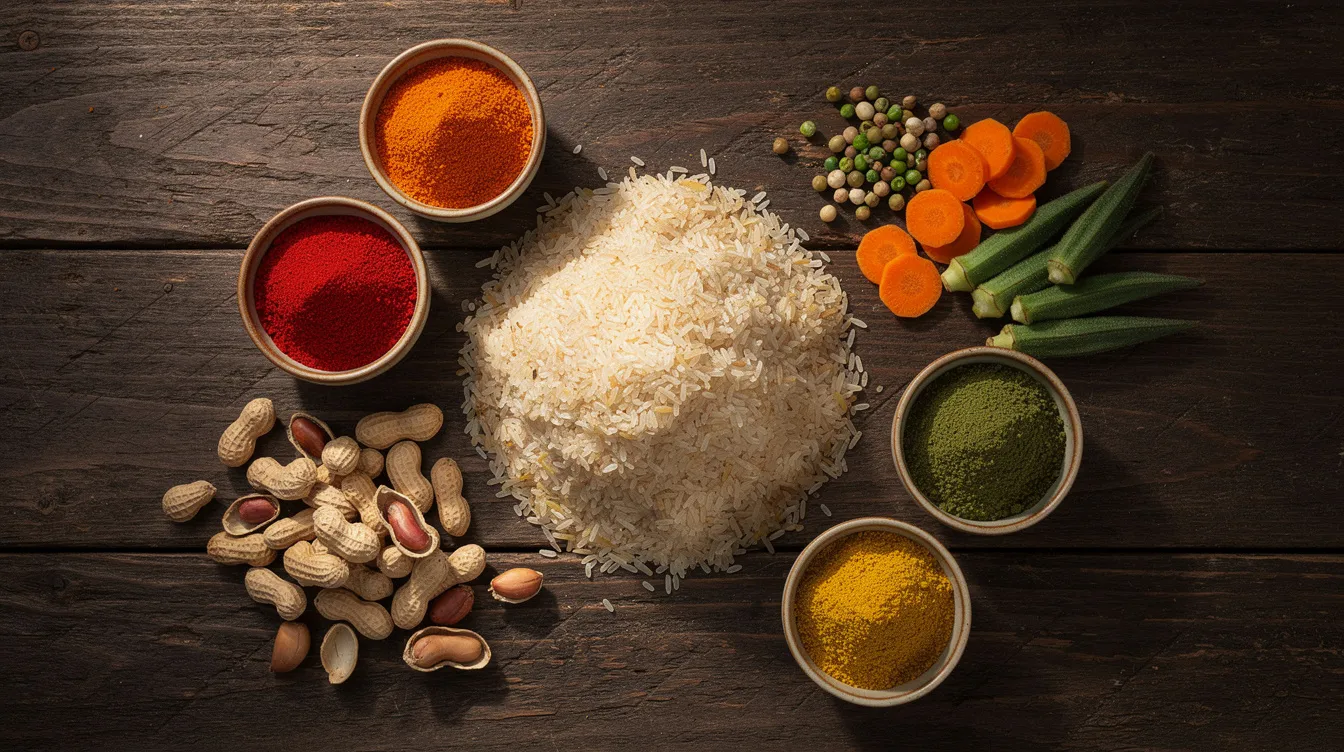
Traditional poha is made from parboiled rice that is flattened and dried for quick cooking. Flattened rice undergoes cleaning, soaking, roasting, flaking and drying in the processing stages. For industrial instant poha, selecting the right grade of poha is the single most consequential raw-material decision.
The Poha Grading and Marking Rules, 2023 define three thickness categories: fine at 0.5 mm (reconstitution time 5 minutes), medium at 0.7 mm (10 minutes) and coarse at 1.0 mm (20 minutes). For ready to cook poha that consumers prepare by simply adding hot water, medium or thick poha is usually preferred because it retains structure without turning mushy. Use roughly half an inch of water above thick poha for best results when testing rehydration behaviour.
Selection parameters include:
- Rice variety (milled vs parboiled)
- Flake thickness and uniformity
- Moisture level (target not exceeding 12 percent for standard grade, 11 percent for premium)
- Broken flake percentage (below 5 percent for premium)
- Colour (creamy white to light yellow; darker indicates overprocessing)
- Cleanliness and absence of foreign matter
The poha purchased for industrial instant poha differs from loose retail poha in uniformity, bulk density and sieve-size consistency. Promoters should request supplier samples, run plant trials and verify that the flakes become soft and fluffy, not sticky, upon rehydration.
Bulk procurement from reliable poha mills in truckload quantities reduces cost per kg. Under dry, insect-free storage conditions, properly packed poha can generally be stored for six to nine months.
Edible Oil Components
Some instant poha formulations are dry mix with minimal oil, while others use oil in the seasoning for better flavour carry and mouthfeel. When the recipe calls for oil, the choice typically falls on refined vegetable oils with neutral flavour and oxidative stability. Oil quality, peroxide value and storage conditions (away from light, heat and air exposure) directly influence rancidity risk and shelf life of ready to eat poha variants.
Higher oil usage increases raw-material cost, susceptibility to oxidation and may demand better barrier packaging and possibly nitrogen flushing. Oil must comply with FSSAI edible oil standards, including acid value limits.
Salt, Sugar and Basic Seasoning Ingredients
Iodised salt, sugar and acidity regulators (such as citric acid) form the core of every instant poha seasoning mix. Common flavour enhancers in instant poha include salt and sugar. Salt provides the base savoury taste, sugar balances and adds mild sweetness, and acidity regulators deliver tanginess for lemon poha instant mix or chatpata variants.
Standardized batch sheets ensure that every 100 g pack delivers the same taste. Poha is a wholesome meal option rich in carbohydrates, and the seasoning exists to make that base appealing and repeatable at commercial scale.
Spices
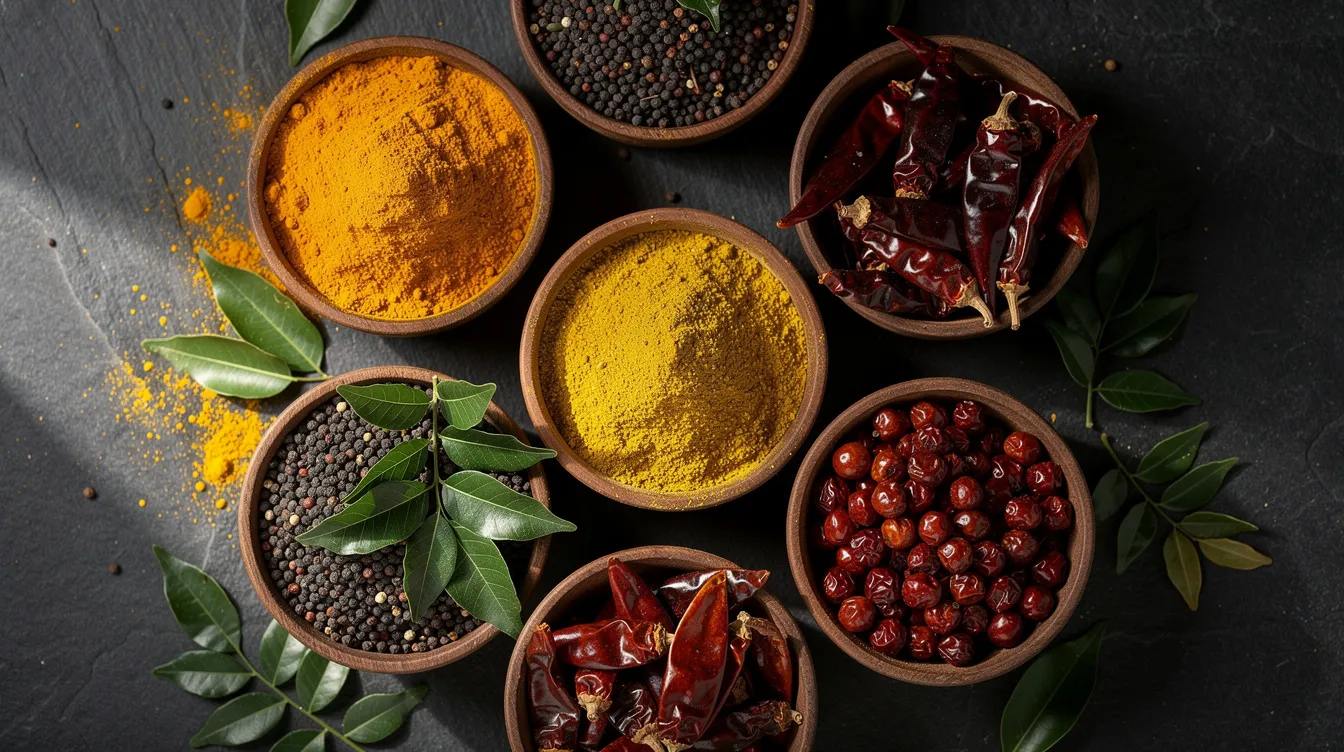
Common spices used in instant poha include turmeric, mustard seeds and cumin. A fuller instant poha spice mix may also contain red chilli powder, coriander powder, asafoetida, curry leaf powder, black pepper and regional masala blends. The poha masala formulation will differ for classic masala instant poha, spicy instant poha, lemon variants and mild breakfast versions; each should have its own seasoning sheet.
Quality parameters include volatile oil content, colour strength, microbial load and authenticity (adulteration risk in turmeric and chilli powder is a documented concern in India). When in-house blending capability is limited, consider standardised seasoning powder for poha from recognised masala and spice manufacturers.
Dehydrated Vegetables
Typical dehydrated ingredients for instant poha production include dehydrated onion flakes and powder, dehydrated green chilli, dried peas, carrot bits, tomato flakes, potato pieces, coriander leaves and curry leaves. Poha can be customized with vegetables for added nutrition, and these dehydrated inclusions make that possible in a shelf-stable format.
Advantages: long shelf life (18 to 24 months under proper storage), no daily chopping or frying, consistent quality and easy dosing in instant poha mix sachets for vegetable instant poha products. Dehydration processes ensure that fresh garnishes prevent microbial growth by reducing moisture to 5 to 6 percent.
Challenges include controlling residual moisture, rehydration behaviour when consumers add hot water, microbial quality (total plate count below 50,000 cfu/g is a typical benchmark) and the need for proper sealed storage away from humidity.
Sourcing options include specialist dehydrated vegetable manufacturers who provide Certificates of Analysis, microbiological test reports and trial batches. These items can be high-cost per kg and materially influence instant poha raw material cost in India, especially for premium products.
Nuts, Pulses and Premium Ingredients
Common add-ons include peanuts, roasted gram (chana dal), cashew pieces, almond slivers and sometimes small lentils for texture and protein. Inclusion of nuts shifts the product towards premium instant poha products, changing MRP, target market and retailer expectations.
Commercial aspects to consider:
- Higher cost per kg
- Risk of rancidity (oil content in nuts)
- Allergen labelling requirements under FSSAI
- Need for controlled roasting and storage
Nuts should remain crisp even after the customer adds hot water to the instant poha mix, which requires selecting appropriate particle sizes and testing rehydration behaviour.
Acidity Regulators, Flavouring and Other Permitted Ingredients
Some ready to cook poha variants may use permitted acidity regulators, natural or nature-identical flavouring agents and anti-caking agents in the seasoning mix. Promoters should work with food technologists to ensure compliance with current FSSAI schedules and maintain proper documentation. This article does not prescribe specific additives or legal limits; manufacturers should always consult updated regulations before finalizing formulations.
Typical Raw Material Composition of Instant Poha
The following table is illustrative, not a fixed legal standard. Each plant must confirm proportions through R&D and product trials.
| Raw Material | Function | Indicative Range (%) | Key Quality Parameter | Cost Sensitivity |
|---|---|---|---|---|
| Poha (flattened rice) | Base cereal | 70 to 80 | Moisture, broken %, thickness | Medium |
| Seasoning and spices | Flavour, colour, aroma | 8 to 12 | Volatile oil, adulterant-free | Medium |
| Edible oil | Mouthfeel, flavour carry | 3 to 5 | Peroxide value, FFA | Medium |
| Nuts and pulses | Texture, protein, positioning | 3 to 8 | Freshness, rancidity | High |
| Dehydrated vegetables | Visual appeal, nutrition | 2 to 5 | Moisture, rehydration ratio | High |
| Salt, sugar, acidity regulators | Taste balance | 2 to 4 | Purity, iodine content | Low |
Changing one element, such as adding more nuts or dehydrated vegetables, increases raw-material cost per kg and may require a different retail price or pack size to maintain margins.
Raw Material Quality Specifications
Clearly written specifications for every input are essential before signing supply contracts:
- Poha: moisture below 12 percent, broken flakes below 5 percent, insect-free, uniform whiteness, absence of husk or stones, consistent thickness for instant rehydration
- Spices and seasoning blends: colour, flavour strength, absence of adulterants, microbial load, consistency between lots; procure against Certificate of Analysis
- Dehydrated vegetables: moisture below 6 percent, particle size suited to the recipe (3 to 10 mm flakes or specified mesh), rehydration performance tested with hot water, packed in moisture-barrier bags
- Oils and nuts: fresh, low peroxide value, stored away from light and heat
- Packaging materials: laminate thickness range, seal strength, print quality, ink adhesion, coefficient of friction (for packaging machine jaws), food-contact compliance
Quality control in poha production includes grading and sieving to remove debris. Incoming inspection protocols should cover visual checks, moisture testing where feasible, sample cooking tests and periodic lab tests for critical items.
Raw Material Procurement Strategy
Procurement channels include direct purchase from mills for poha, specialised spice processors for seasoning components, dehydrated vegetable manufacturers and traders or wholesalers where volumes are smaller.
A multi-vendor approach (at least two approved vendors for critical items) reduces supply risk. Negotiate MOQs, delivery schedules, freight terms and credit days to align with projected production volume and working capital cycle.
Long-term understanding or contracts for major items like poha and laminated pouches are advisable, especially when prices are volatile. Align procurement planning with Instant Poha production line batch sizes to minimise wastage and stock-outs.
Raw Material Storage Requirements
Segregated storage zones are necessary:
- Poha: dry, ventilated godown with pallets, racking and covered bins to protect from floor moisture and infestation; regular fumigation
- Spices and dehydrated vegetables: cool area, low humidity (below 65 percent RH), sealed containers
- Edible oils: away from sunlight and heat, sealed drums
- Nuts: controlled temperature, rotated on FEFO basis
- Packaging materials: clean, dry area away from chemicals and moisture
Instant poha mix should cool completely before storing to avoid condensation inside containers. Store instant poha mix in an airtight container; at household level this preserves freshness for about one month, while instant poha can last two months in the refrigerator. At plant level, finished goods should follow FIFO or FEFO rotation to prevent expiries and write-offs.
Connect storage planning with building design in the instant poha manufacturing plant project report, including covered godown area, ventilation and truck-access for handling equipment.
Seasoning Formulation for Instant Poha
The instant poha seasoning mix is the main differentiator between brands. It converts basic poha into a consistent, repeatable instant poha mix product. The manufacturing process for instant poha involves removing moisture to ensure shelf stability, and the seasoning must remain stable through that process and subsequent storage.
Key formulation dimensions include spice heat level, salt balance, tanginess, aroma, visible spices (mustard seeds, curry leaves) and how they match the targeted consumer segment and region. Standard seasoning batch sheets, calibrated weighing and proper mixing equipment are operational necessities. Separate seasoning formulas for each variant enable accurate costing and raw-material calculations in the DPR.
Shelf-life stability of the seasoning, including resistance to caking, colour loss and off-flavour, must be validated before launch.
Different Instant Poha Seasoning Variants
Product-mix planning usually combines a few core instant poha flavours with limited regional or premium variants. Promoters should select three to five variants based on local taste surveys, competitor mapping and channel feedback before freezing capacity and financial projections.
Classic Masala Poha
The standard masala instant poha with turmeric powder, chilli, mustard seeds, curry leaves and peanuts. Usually the volume driver for mass-market positioning. Keep the formulation cost-effective while ensuring robust flavour, as this SKU will likely account for the largest share of production.
Vegetable Poha
Includes dehydrated peas, carrot, tomato and coriander leaves along with the masala base. More colourful and visually appealing. Higher dehydrated-vegetable content raises cost and requires careful rehydration testing when consumers add hot water.
Lemon Poha
Tangy lemon poha instant mix based on citric acid or other permitted acidity regulators, lemon flavour and mild spices. Popular in parts of western and southern India. Balance sourness with salt and subtle sweetness so taste remains consistent across batches.
Onion Poha
Uses dehydrated onion flakes or powder for onion poha instant mix, avoiding dependency on fresh onion frying each day. Dehydrated onion is relatively expensive and may alter the product’s target price band and pack-size economics.
Spicy / Chatpata Poha
High-chilli or chatpata seasoning blends targeting younger or snack-oriented consumers, often with extra tang and spice complexity. Instant poha is lightweight and portable, ideal for on-the-go meals and travel trips, and bold flavours perform well in that context.
Mild Breakfast Poha
A low-spice, low-oil option targeting health-conscious or family segments, possibly marketed as a light breakfast item. Poha is easy to digest and light on the stomach, making it suitable for busy mornings and as a kids-friendly option. Instant poha is preservative-free and nutritionist-approved, which supports health-oriented marketing.
Premium Nut-Based Poha
An upgraded variant with cashew, almonds or extra peanuts, positioned as premium instant poha for gifting, travel hampers or online D2C audiences. This increases ingredient and packaging cost, requiring careful gross-margin planning.
Regional Taste Variants
Possibilities include Maharashtrian-style kanda poha, Gujarati-style sweet-and-savoury poha, or south-Indian-inspired lemon-curry poha with region-specific masala notes. Start regional variants only after core flavours stabilize in the market to avoid inventory fragmentation.
In-House Seasoning vs Ready-Made Seasoning Premix
This is a strategic choice that affects cost, confidentiality and working capital.
| Criteria | In-House Blending | External Premix |
|---|---|---|
| Recipe confidentiality | Full control | Shared with supplier |
| Flexibility | High; can adjust batch-by-batch | Limited by MOQ and lead time |
| Investment | Grinder, blender, QA lab, trained staff | Minimal additional equipment |
| Quality control | Direct; requires lab capability | Supplier-dependent; COA-based |
| Per-kg cost (long-term) | Potentially lower at volume | Premium over raw-spice cost |
| MOQ risk | Spice-wise MOQs are small | Premix MOQs may be 50 kg or more |
| Working capital | More inventory lines (individual spices) | Fewer lines but higher per-line value |
Many new units start with external premix for one or two flavours and gradually develop in-house capability once steady volumes are achieved.
Packaging Requirements for Instant Poha
Instant poha packaging materials are not merely wrappers. They protect the product against moisture, oxygen, aroma loss, oil migration and physical damage. Instant poha packaging uses moisture-barrier, nitrogen-flushed pouches for shelf life extension where required.
Functional requirements: moisture barrier, oxygen barrier, aroma retention, grease resistance (if using oil), heat-sealability, puncture resistance and attractive printability. For ready to eat poha variants with higher oil and nuts, more advanced laminated structures may be required.
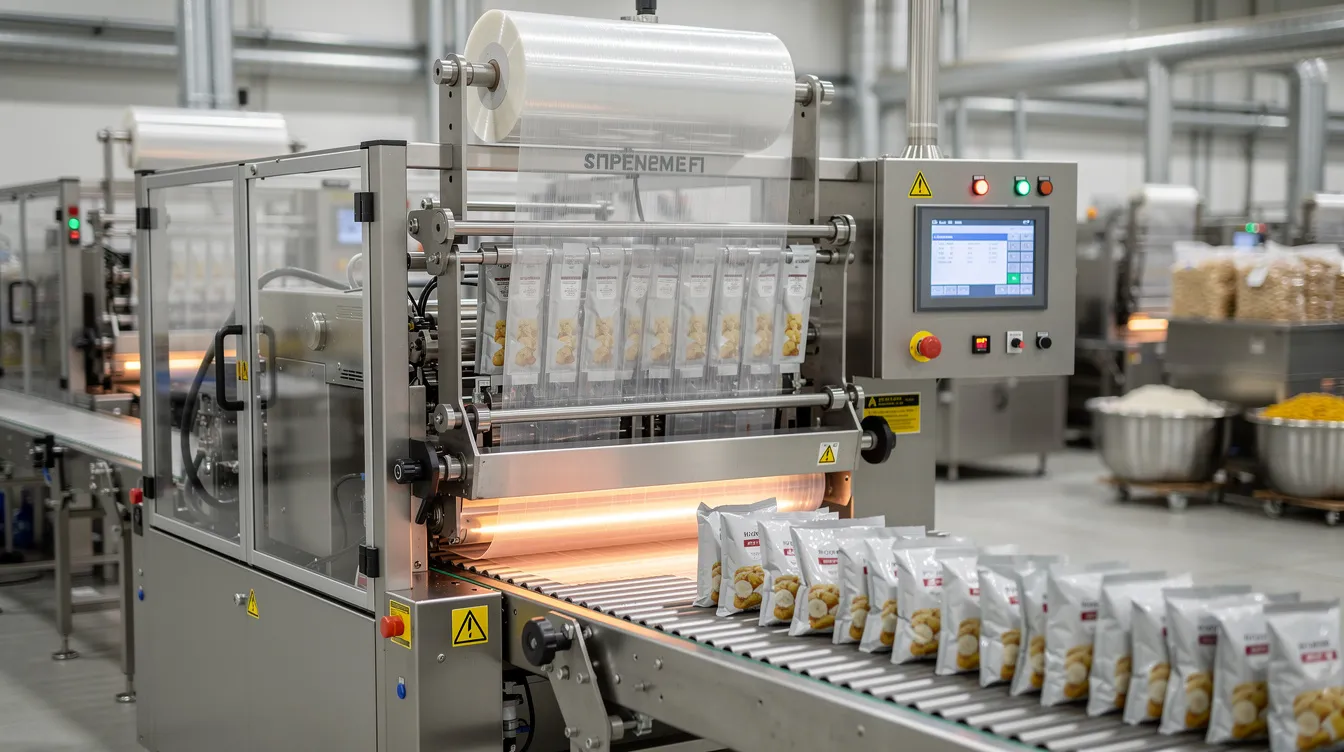
The Instant Poha packaging and processing equipment selection, including VFFS machines and batch coding systems, should align with the chosen packaging format. Packaging cost per kg is strongly influenced by pack size: many small pouches vs fewer large family or institutional packs.
Types of Packaging Suitable for Instant Poha
Laminated Flexible Pouches
Standard three-side or centre-seal laminated pouches widely used for 80 to 250 g instant poha mix and ready to cook poha products. They balance barrier properties, cost and ease of use on VFFS packaging lines.
Stand-Up Pouches
Better shelf visibility, premium image and optional reclosable zippers. More suitable for modern retail and online channels. Higher cost per kg packed and may require appropriate pouch-packaging machinery.
Pillow Packs
Economical pillow packs formed directly on the machine, suited to value-oriented 60 to 100 g single-serve instant poha SKUs. Lower material usage but simpler shelf display.
Single-Serve Sachets / Cups
Small sachets or ready-to-eat poha cups targeted at travel, airlines, railways or office vending where consumers just add hot boiling water. Cups and foil-lids require different packaging material and carry higher per-unit cost. Instant poha mix is ready in just five minutes, and these formats capitalize on that convenience. Instant poha is ideal for travel and quick meals.
Family Packs
Packs of 400 to 500 g or 1 kg aimed at home consumption, with multiple servings from one pack. Family packs reduce packaging cost per kg and may use thicker laminates to handle higher product weight. Products can be stored in a ziplock bag or air tight container after opening.
Institutional / HoReCa Packs
Larger packs (1 to 5 kg) for hotels, hostels, canteens and catering, often in plain or limited-print laminated bags inside cartons. Lower marketing and distribution costs but typically competitive pricing and credit expectations, similar to how namkeen plants handle institutional channels.
Instant Poha Packaging Material Structure
Most instant poha pouch packaging uses multi-layer laminates. A common structure is PET (outer printed layer, 12 microns) plus metallized PET (barrier layer, 12 microns) plus LLDPE (sealant layer, 80 microns). This tri-layer configuration delivers oxygen transmission rate of roughly 0.5 to 2 cc/m² per day and moisture vapour transmission rate of 0.5 to 1.5 g/m² per day, suitable for six to twelve month shelf life.
For premium or export SKUs, PET plus aluminium foil plus PE laminates push OTR and MVTR below 0.1 each, but at higher cost. Promoters should discuss specific laminate structures with packaging suppliers based on targeted shelf life, storage conditions and nitrogen flushing plans. Total laminate thickness typically ranges from 60 to 200 microns.
Nitrogen Flushing and Modified Atmosphere Considerations
Nitrogen flushing replaces part of the oxygen inside the pouch with nitrogen, slowing oxidation and keeping nuts and oil fresh. It may be considered when formulations have higher oil content, include premium nut-based variants, face long distribution chains or encounter hot storage conditions.
Nitrogen flushing is not mandatory for all instant poha products; its adoption should follow shelf-life studies and cost-benefit analysis. Cost implications include nitrogen generation or cylinder supply, modified sealing jaws, slightly lower packing speed and additional leak-testing requirements.
Packaging Sizes and SKU Planning
SKU planning is both a marketing and cost-engineering decision. Number of flavours multiplied by pack sizes equals total SKUs, which directly affects packaging inventory and complexity.
Common pack sizes:
- 50 to 80 g trial packs
- 80 to 100 g single-serve packs (add hot water and eat, ready in five minutes)
- 150 to 250 g home-use packs
- 400 to 500 g family packs
- 1 to 5 kg institutional packs
Smaller SKUs increase per-kg packaging cost and machine changeovers. Printed laminate rolls have MOQs of roughly 300 to 500 kg per design. New units should restrict SKUs initially, for example two to three flavours in 80 to 100 g and 200 to 250 g, to keep printed laminate MOQs and working capital under control. SKU-wise instant poha packaging cost per kg must be calculated in the DPR and CMA Data to estimate realistic margins.
Product Mix for an Instant Poha Manufacturing Plant
Product mix combines flavours (masala, lemon, vegetable, premium), serving sizes and target segments (mass retail, modern trade, institutional, online). The product mix determines average realization per kg, total packaging cost, working capital and plant capacity utilization.
Segment the portfolio into core volume SKUs and supporting or premium SKUs rather than treating all variants equally in the project report.
Suggested Product Mix for a New Instant Poha Business
A practical starting portfolio for a new instant poha manufacturing business in India:
| Product | Pack Size | Target Consumer | Positioning | Indicative Production Share |
|---|---|---|---|---|
| Classic Masala Poha | 80 to 100 g | Mass retail, kirana | Volume driver | 40 to 50% |
| Lemon / Chatpata Poha | 80 to 100 g | Young consumers, quick fix recipes | Flavour variety | 15 to 20% |
| Vegetable Poha | 150 to 200 g | Health-conscious families | Nutrition-led | 15 to 20% |
| Family Pack (Masala) | 400 to 500 g | Regular home users | Value for money | 10 to 15% |
| Institutional Pack | 1 to 5 kg | Hotels, canteens | B2B volume | 5 to 10% |
Benefits of this limited mix: simpler production planning, lower printed-laminate inventory, fewer changeovers and easier sales focus at launch. Keep premium nut-based variants and region-specific flavours for phase two, after initial market acceptance and cash flows are established. Poha is a popular snack and breakfast item across India; the initial mix should capture that demand with minimal complexity.
Mass-Market vs Premium Instant Poha Product Strategy
Mass-market products use lean formulations, basic laminated pillow packs and target price-sensitive channels. They offer lower margin per kg but higher volume and faster rotation, helping achieve better capacity utilization.
Premium products include dehydrated vegetables, nuts, stand-up pouches and target online D2C consumers. They allow higher realization but may move slower, demanding careful inventory and expiry management, especially with costly laminates and nuts.
A balanced portfolio can blend both segments to stabilize plant profitability and cash flows. The product with the highest selling price does not necessarily produce the highest profit.
Retail, Institutional and Private-Label Product Mix
Retail Market
Kirana, modern trade and e-commerce retail for own brand instant poha. Focus on attractive design, smaller packs and marketing spends. Higher promotion and dealer margins but better brand-building potential.
Institutional / HoReCa Market
Bulk supply to hotels, hostels, office canteens and catering firms in larger packs with simpler printing. Institutional SKUs stabilize plant utilization with predictable repeat orders but tighter margins.
Private-Label Manufacturing
The plant manufactures instant poha mix for retailers or other brands under their packaging and specifications. Pros: volume and better capacity utilisation. Cons: lower margins, dependence on few big buyers, high printed-laminate inventory with customer branding.
Online and D2C Packs
Online and direct-to-consumer sales encourage premium packaging (stand-up pouches, boxes, combos) and curated ready to eat poha variants. Consider shipping durability, pack aesthetic and higher individual order processing cost. Instant poha is a delicious and tasty food option for consumers who are simply feeling lazy or need something for busy mornings; online marketing can target that convenience angle.
Raw Material Cost Structure in Instant Poha Manufacturing
Main cost heads per kg of finished product:
- Base poha (roughly 50 to 60 percent of raw-material value)
- Spices and seasoning (15 to 25 percent)
- Edible oil (variable by recipe)
- Nuts and dehydrated vegetables (10 to 20 percent for premium SKUs)
- Primary packaging (pouches: 10 to 25 percent depending on SKU size)
- Secondary packaging (cartons, labels)
- Process wastage
For small 60 to 100 g SKUs, packaging material can form a share of total cost comparable with poha cost itself. For 1 kg packs, packaging cost per kg drops. These are indicative relationships; plant-specific supplier quotations and final formulations should replace them in the DPR.
Raw Material Consumption Calculation
The formula: Annual installed capacity (kg) multiplied by expected capacity utilization (percent) multiplied by per-kg recipe consumption equals annual requirement of each raw material.
Hypothetical example: A plant with 1,000 kg per day capacity, operating 300 days per year at 70 percent utilization, produces 210,000 kg annually. If the recipe uses 750 g of poha per kg of finished product, the annual poha requirement is 157,500 kg. Seasoning at 100 g per kg needs 21,000 kg. Packaging at 80 to 100 g packs requires roughly 2.1 to 2.6 million pouches per year.
Add reasonable process loss factors: 1 to 3 percent for poha cleaning and sieve dust, 2 to 5 percent for seasoning adherence and spillage, 1 to 2 percent for packing rejects.
Packaging Cost Calculation
Annual quantity of each SKU (kg) divided by pack size (kg) equals number of packs, multiplied by pouch cost per pack equals primary packaging cost.
When one ton of product is packed into 100 g pouches, it requires roughly 10,000 pouches. The same ton in 500 g packs requires only 2,000 pouches. This five-fold difference in pouch count changes the packaging cost structure of the project. SKU-wise packaging cost per kg must appear in the instant poha manufacturing plant project report to estimate overall gross margin correctly.
Impact of Product Mix on Plant Profitability
Each SKU has its own selling price, raw-material cost and packaging cost. Average plant profitability depends on the weighted share of each SKU in production and sales. A high-MRP SKU with costly ingredients may deliver lower contribution per kg if its cost structure and trade margins are not carefully designed.
Promoters should simulate different product-mix scenarios (more mass-market vs more premium) in financial projections to understand sensitivity on contribution and DSCR. A balanced mix that maximizes capacity utilization with acceptable average contribution is usually more sustainable than chasing only the highest-MRP products.
Impact of Raw Materials on Working Capital
Inventory categories: poha, spices and seasoning, dehydrated vegetables, oils and nuts, packaging materials (printed laminates, cartons) and finished goods, along with receivables.
Lead times for printed laminates (often three to five weeks including printing) and speciality spices necessitate larger safety stocks than one-week consumption. Maintaining many SKUs forces holding multiple types of printed pouches, raising working capital, especially when MOQs are 300 to 500 kg per design. Instant poha raw material cost and stock levels should be modelled month-wise in CMA Data for bank finance applications.
Wastage and Yield Assumptions
Typical loss points include poha screening and cleaning, seasoning dust, spillage during mixing, filling losses on packaging machines, sealing rejects and expired or slow-moving SKUs.
Assume realistic process loss percentages, segregated by stage, in the DPR rather than a simplistic zero-wastage assumption. Monitor actual yield data once the plant starts and update future projections and costing accordingly.
Food Safety and Quality Control Considerations
Promoters must obtain appropriate FSSAI licences and follow applicable regulations for ready to cook and ready to eat products.
Key QC checks:
- Raw-material identity and moisture
- Physical contamination
- Allergen declarations for nuts and peanuts
- Labelling compliance and best-before dates
- Hygienic handling, pest control, personal hygiene and documented SOPs
Periodic third-party lab testing for microbial safety and chemical parameters is advisable, especially for dehydrated vegetables and oil-rich recipes. Preparing delicious poha at commercial scale demands the same food safety rigour as any processed food.
Shelf Life and Packaging Validation
Shelf life of instant poha depends on raw-material quality, recipe (oil and nut content), moisture ingress, packaging barrier properties and storage temperature. Instant poha mix can be stored for up to two months under normal conditions; commercial targets are typically six to twelve months depending on the laminate.
Formal shelf-life studies are essential: store trial batches at ambient (25 to 35 degrees C) and accelerated (40 degrees C, high humidity) conditions. Conduct periodic tasting, texture assessment and lab testing. Use results to fine-tune formulation and packaging (laminate structure, nitrogen flushing, sealing parameters). Only after shelf life is validated should the promoter print final best-before dates and commit to large quantities of branded laminate.
Product Development and Trial Batches
The product-development journey: small lab trials, pilot-scale batches, consumer tasting and rehydration tests (add hot water, stand time), and packaging-line trials. Test that the product can be prepared in just five minutes. It requires only hot water for preparation, and consumers expect the result to deliver authentic taste every time.
Document final standard recipes, seasoning ratios and batch sizes. These validated norms feed directly into the Instant Poha DPR, costing sheets and instant poha business plan submitted to banks or investors.
Reserve adequate time and budget for R&D iterations. A recipe card or review recipe approach from household cooking does not substitute for commercial-scale validation. Related recipes from the puffed rice manufacturing segment show similar product-development requirements.
Key Raw Material and Packaging Risks
Major risks:
- Fluctuation in poha and oil prices tied to paddy and oilseed markets
- Sudden spikes in onion or dehydrated-vegetable costs
- Inconsistency in spice strength between supplier lots
- Packaging-film price volatility (polymer-linked)
- Receiving poha with wrong moisture or laminates with weak seals
Mitigation strategies: multiple suppliers, annual contracts where possible, incoming QC at every receipt, safety stocks and conservative pricing policies that build in raw-material variance. The specific risk of slow-moving SKUs resulting in obsolete printed laminates and expired finished goods calls for tight SKU rationalization.
How Product Mix Should Be Considered in a DPR
A professional instant poha project report should forecast sales and production by SKU (flavour plus pack size), not just one blended tonnage and average price. SKU-wise modelling allows accurate estimation of raw-material consumption, packaging requirements, contribution margins and logistics costs.
Product mix connects to key DPR outputs: sales value, gross margin, break-even quantity, DSCR, IRR and loan repayment capacity. Copying generic assumptions leads to misleading projections, which bankers will question during appraisal.
Common Mistakes in Raw Material and Product Mix Planning
Frequent errors:
- Choosing poha only on lowest price without testing rehydration
- Finalizing too many flavours and pack sizes at launch
- Ignoring printing MOQs for laminates (300 to 500 kg per design)
- Underestimating seasoning, dehydrated-vegetable and nut costs
- Assuming negligible wastage or rejects during packing
- Using one uniform selling price per kg for all SKUs in projections
- Not allocating enough working capital for packaging inventory
- Preparing a DPR before freezing basic recipes, target pack sizes and channel strategy
Each of these errors produces unrealistic project-feasibility numbers that can compromise bank appraisal and actual plant economics.
Practical Checklist for Entrepreneurs
- Finalize target consumer and price band
- Choose base poha grade(s) and test samples from multiple suppliers
- Work with a food technologist to finalize instant poha mix recipes for two to three core flavours
- Decide which seasoning components to prepare in-house vs buy as premix
- Shortlist dehydrated vegetable and nut suppliers; obtain COA and trial samples
- Freeze pack sizes and likely SKUs
- Obtain quotations for packaging material (laminated rolls, cartons)
- Estimate MOQ and lead times for printed laminates
- Conduct plant-level product and shelf-life trials
- Prepare detailed raw-material and packaging consumption norms
- Collect machinery quotations aligned with product requirements
- Prepare Instant Poha DPR, CMA Data and financial projections for bank or investor discussions
Role of a Detailed Project Report for an Instant Poha Plant
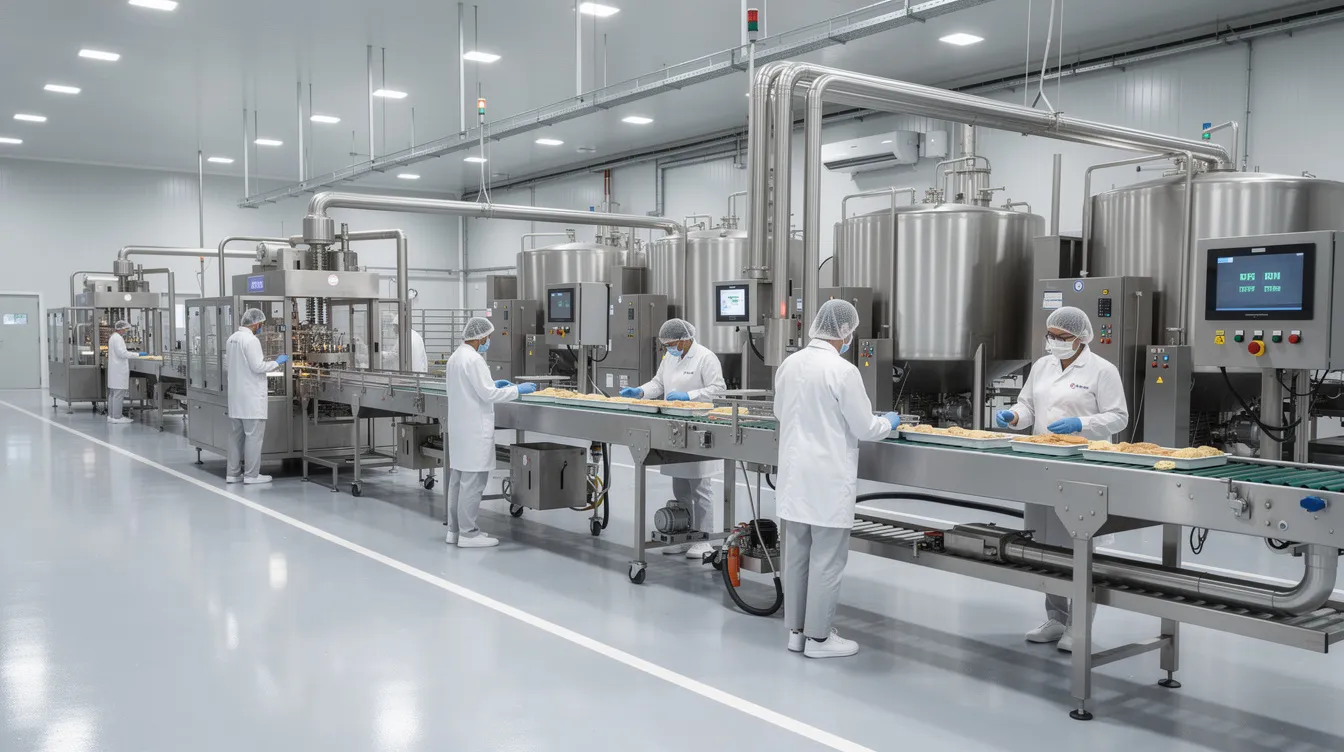
A DPR integrates technical, financial and commercial aspects: capacity, process flow, machinery, utilities, manpower, plant layout and compliance requirements. The report converts instant poha raw material requirements and packaging norms into year-wise cost of production, sales projections and profitability estimates.
Coverage includes project cost, means of finance, working capital assessment, break-even analysis, DSCR, IRR and sensitivity scenarios. Assumptions must be based on specific machinery quotes, chosen product mix, local raw-material availability and target markets, not generic templates.
Professional DPR & Project Finance Advisory
Entrepreneurs planning an instant poha or ready to cook rice products manufacturing project can benefit from a customized DPR based on actual plant capacity, machinery quotations, product mix, packaging configuration, raw-material assumptions, financing structure and market strategy.
Advisory areas include:
- Detailed Project Report and Bank Finance DPR
- Financial projections and CMA Data support
- Working capital assessment and DSCR computation
- Project feasibility and means of finance structuring
- Investor-oriented financial planning where relevant
Project Report Bank provides these services as a specialised consulting and documentation partner for food-processing promoters across India.
CA Manish Gugliya FCA, DISA (ICAI) Project Report, DPR, CMA Data & Project Finance Consultant ProjectReportBank.com
Frequently Asked Questions
What are the main raw materials required for commercial Instant Poha manufacturing?
The main inputs are poha (flattened rice) as the base cereal, edible oil as per recipe, iodised salt, sugar, blended spices (turmeric, chilli, mustard seeds, cumin and others), dehydrated vegetables (onion, chilli, peas, carrot, coriander leaves, curry leaves), nuts or roasted pulses where used, acidity regulators if required, and laminated pouches and cartons as packaging materials. Instant poha mix is made from flattened rice and spices, and the exact proportions depend on the variant and market positioning.
Which type of poha grade is generally preferred for Instant Poha mix?
Medium or thick poha is usually preferred because it retains structure after consumers add hot water, producing a soft and fluffy texture without turning mushy. The exact grade should be chosen after plant trials matching target texture and rehydration time. Fine-grade poha rehydrates faster but risks becoming pasty, which most consumers find unacceptable.
Is nitrogen flushing compulsory for Instant Poha packaging?
Nitrogen flushing is not compulsory. It is considered when formulations have higher oil or nut content and need longer shelf life, or when distribution chains involve hot storage conditions. The decision should follow shelf-life studies and cost-benefit analysis. Many economy-grade dry-mix instant poha products perform adequately with standard laminated pouches without nitrogen flushing.
How many flavours and pack sizes should a new Instant Poha unit launch initially?
New plants typically start with two to three flavours (for example, classic masala, lemon or chatpata, and one vegetable variant) and two pack sizes (single-serve 80 to 100 g and family 200 to 250 g). Additional flavours and sizes should be added only after sales stabilize, to avoid excess packaging inventory, high changeover time and working capital strain from multiple printed laminate rolls.
Why is a customized DPR important before setting up an Instant Poha plant?
A customized instant poha DPR translates the promoter’s actual formulations, machinery choices, packaging formats and product mix into realistic cost, pricing, profitability and working-capital estimates. Banks rely on these numbers for sanctioning term loans and cash credit limits. Generic reports with assumed raw-material percentages and single-price revenue models often fail appraisal scrutiny and lead to flawed investment decisions.