
Key Takeaways
- A flavoured milk manufacturing plant project report is a comprehensive document linking technical design (process flow, machinery, layout, utilities) with financial projections, break-even analysis, DSCR, ROI and sensitivity analysis; banks and investors require it for loan appraisal and investment decisions.
- Flavoured milk converts bulk liquid milk into higher-margin, branded ready-to-drink dairy beverages, but profitability depends on plant capacity, packaging format, milk procurement cost, distribution strategy and capacity utilisation.
- Project cost is driven by installed capacity (5,000 to 100,000+ LPD), automation level, packaging choice (bottle, pouch, cup, carton), cold chain requirement and whether the unit is greenfield or an expansion of an existing dairy plant.
- A bankable DPR must connect technical parameters with detailed financial projections; a comprehensive project report serves as a blueprint for the entire flavoured milk manufacturing venture and is essential for securing bank financing and government approvals.
- CA Manish Gugliya, FCA, DISA (ICAI), prepares customised, data-backed reports and financial models for flavoured milk and other value-added dairy projects in India.
Overview of an Industrial Flavoured Milk Manufacturing Plant
An industrial flavoured milk manufacturing plant is a dairy beverage processing plant that converts raw or standardised milk into ready-to-drink flavoured milk through formulation, homogenisation, pasteurisation or UHT processing and hygienic packaging. The focus here is on commercial-scale plants processing 5,000 to 100,000 litres per day, distinct from a mini dairy plant handling a few hundred LPH for village or regional supply. Mini dairy plants automate milk processing for higher hygiene standards and can produce various products including flavoured milk and yogurt, but industrial-scale operations require a different order of investment, process control and financial planning.
Typical product variants include chocolate milk, coffee flavoured milk, rose milk, badam, kesar, elaichi, vanilla flavoured milk, fruit-flavoured dairy beverages, high-protein and fortified flavoured milk, and low-sugar or premium functional dairy beverages. Flavored milk retains nine essential nutrients found in white milk, making it a nutritional alternative to sugary drinks across age groups. Each variant affects formulation, ingredient cost and process parameters.
The flavoured milk manufacturing plant project report must cover both technical aspects (industrial manufacturing process, dairy processing equipment list, plant layout, utilities) and financial aspects (investment, operating cost, margins, cash flows, bank finance). Flavoured milk is part of the broader value-added dairy product portfolio; promoters may also explore the fermented and value-added dairy products manufacturing plant project report for related opportunities in curd, paneer, butter, ghee and other dairy products.
Flavoured Milk Manufacturing Business Opportunity in India
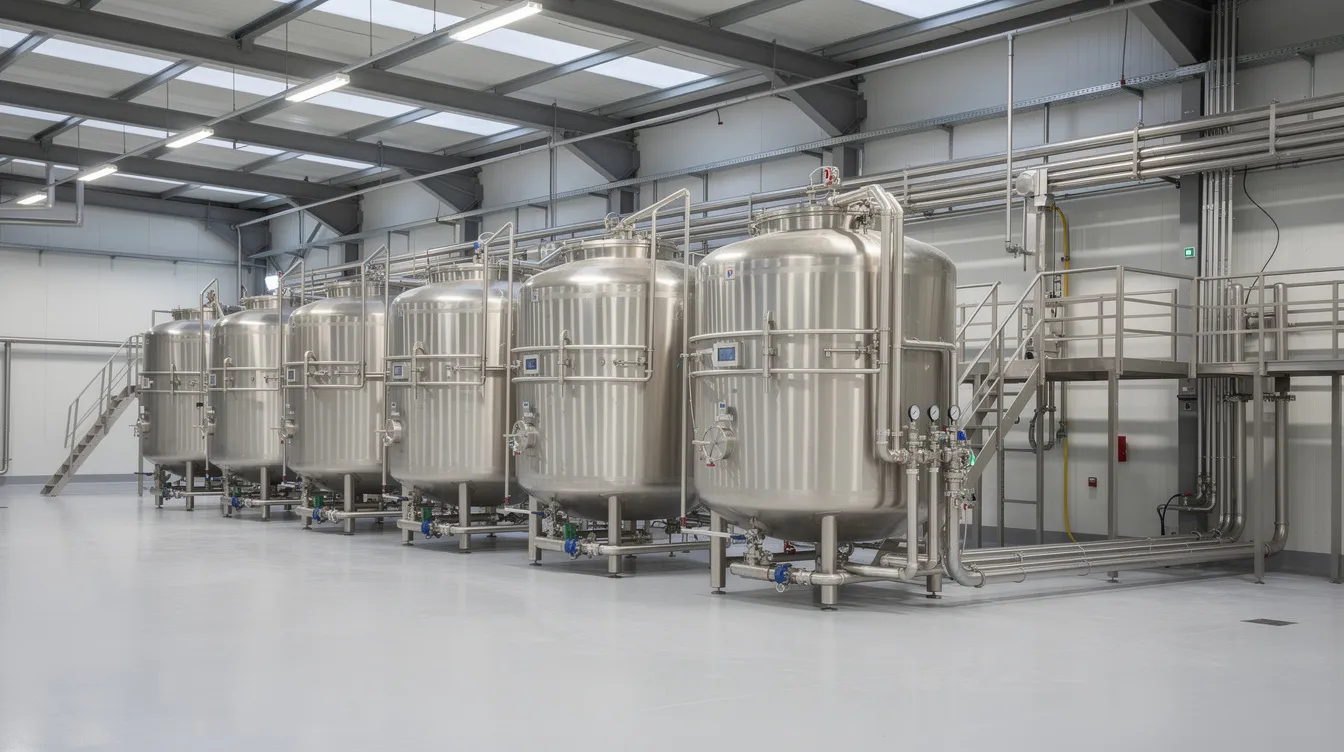
The flavoured milk market in India is expanding as urbanisation, rising incomes and youth preference for convenient ready-to-drink beverages drive demand away from plain milk toward branded, flavoured alternatives. The global flavored milk market was valued at USD 63.75 billion in 2025 and is expected to reach USD 105.17 billion by 2034. Flavored milk production has a booming CAGR of 22.8% in recent years, and the sector is poised for continued growth due to evolving consumer preferences. Market analysis should assess local demand, consumer segments and competitor landscape before committing capital.
Value-added dairy beverage manufacturing helps dairies move from low-margin bulk liquid milk to higher realisation per litre through branding, product differentiation and packaging. Key demand drivers include modern retail, quick-commerce and e-commerce grocery platforms, institutional demand (schools, canteens, railways), food service channels and seasonal chilled beverage consumption in summer. Flavored milk contributes only 4% of total added sugars in children’s diets, giving it a positioning advantage over carbonated soft drinks when marketed on nutritional benefits.
Industrial flavoured milk manufacturing plants can be set up by existing dairy processors as diversification, cooperatives, private dairies, MSME promoters, or beverage companies entering the dairy industry. Each promoter profile needs a tailored flavoured milk plant DPR and business plan.
Product Mix and Capacity Planning
Deciding the product mix is a critical early step before finalising the flavoured milk plant machinery, layout and capacity. Production capacity needs to be defined early in the project for planning machinery and space requirements. Entrepreneurs should define key flavours (chocolate, coffee, strawberry, kesar badam, elaichi, vanilla), fat levels (toned, double toned, full cream), sugar levels (regular, low-sugar) and specialty variants (high-protein, fortified, kids-focused SKUs). Each decision affects recipe, ingredient cost and processing milk complexity.
Pack sizes range from 150-200 ml single-serve bottles for school and youth consumption to 500 ml and 1 litre family packs. Packaging formats for flavored milk can include bottles, pouches, and cartons based on target markets. Plants may produce pasteurised chilled flavoured milk with short shelf life (5-10 days under refrigeration), extended shelf-life products, or aseptic/UHT flavoured milk with ambient longer shelf life (several months). Flavoured milk plant capacity ranges from 10 to 50 million liters annually for industrial operations.
Seasonal demand, milk availability and distribution reach should shape realistic capacity utilisation assumptions. For detailed methodology, refer to the article on value-added dairy plant capacity planning and product mix.
Flavoured Milk Manufacturing Process and Production Line
The typical industrial flavoured milk manufacturing process follows this flow: Raw Milk Reception, Quality Testing, Filtration/Clarification, Standardisation (fat/SNF adjustment), Preheating, Sugar Syrup and Ingredient Preparation, Flavour and Additive Mixing, Blending/Formulation, Homogenisation, Pasteurisation or UHT Heat Treatment, Cooling, Intermediate Storage, Filling and Packaging, Coding, Secondary Packaging, Cold Storage or Finished Goods Storage, and Dispatch.
Milk reception involves temperature checks, fat and SNF analysis, basic microbial checks and adulteration tests. Consistent supply of quality milk is non-negotiable for a dairy beverage processing plant. Standardisation uses cream separation or in-line blending to achieve a consistent fat/SNF level. Sugar syrup preparation units ensure consistent flavor and stability; sugar is dissolved in hot-water kettles, filtered inline, then premixed with cocoa, flavours, stabilisers, emulsifiers, permitted colours, vitamins and minerals as required. Flavored milk processing includes flavor mixing vats for uniform distribution across the batch.
Mixing and formulation use jacketed tanks with agitators or high-shear mixers for smooth, uniform dispersion. The flavoured milk homogenisation process uses a high-pressure homogeniser (typically two-stage) to reduce fat globule size, improve emulsion stability and enhance mouthfeel. Flavoured milk processing requires pasteurization or UHT treatment for shelf life; FSSAI guidance notes HTST pasteurisation as standard for liquid milk processing, while UHT at higher temperatures produces ambient-stable products. Sterilizers extend the shelf life of flavoured milk products for distribution without cold chain.
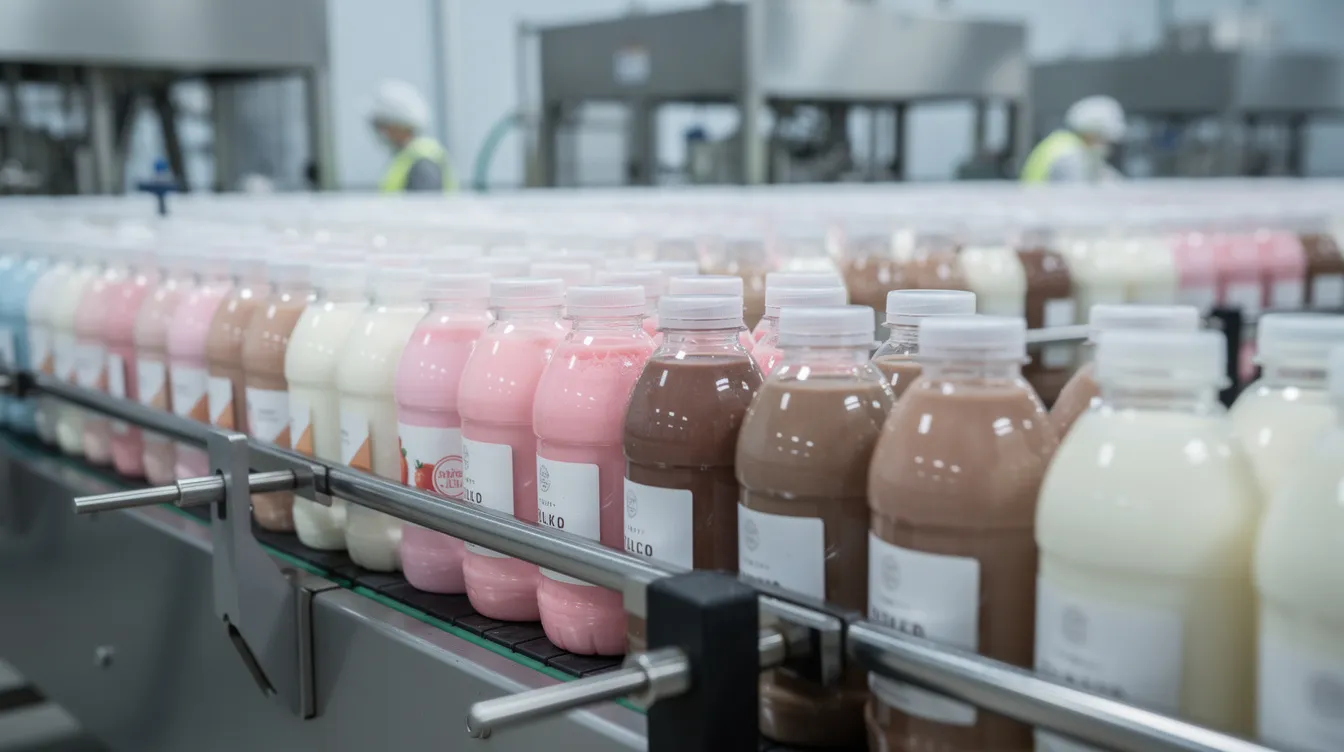
After heat treatment, rapid cooling brings the product to filling temperature. Hygienic filling into PET bottles, glass bottles, pouches, cups or cartons follows, with batch coding and secondary packaging. CIP (Clean-In-Place) systems with caustic and acid wash cycles prevent contamination. For more on the value-added dairy products manufacturing process and production line, see our detailed guide.
Flavoured Milk Plant Machinery, Equipment and Plant Capacity
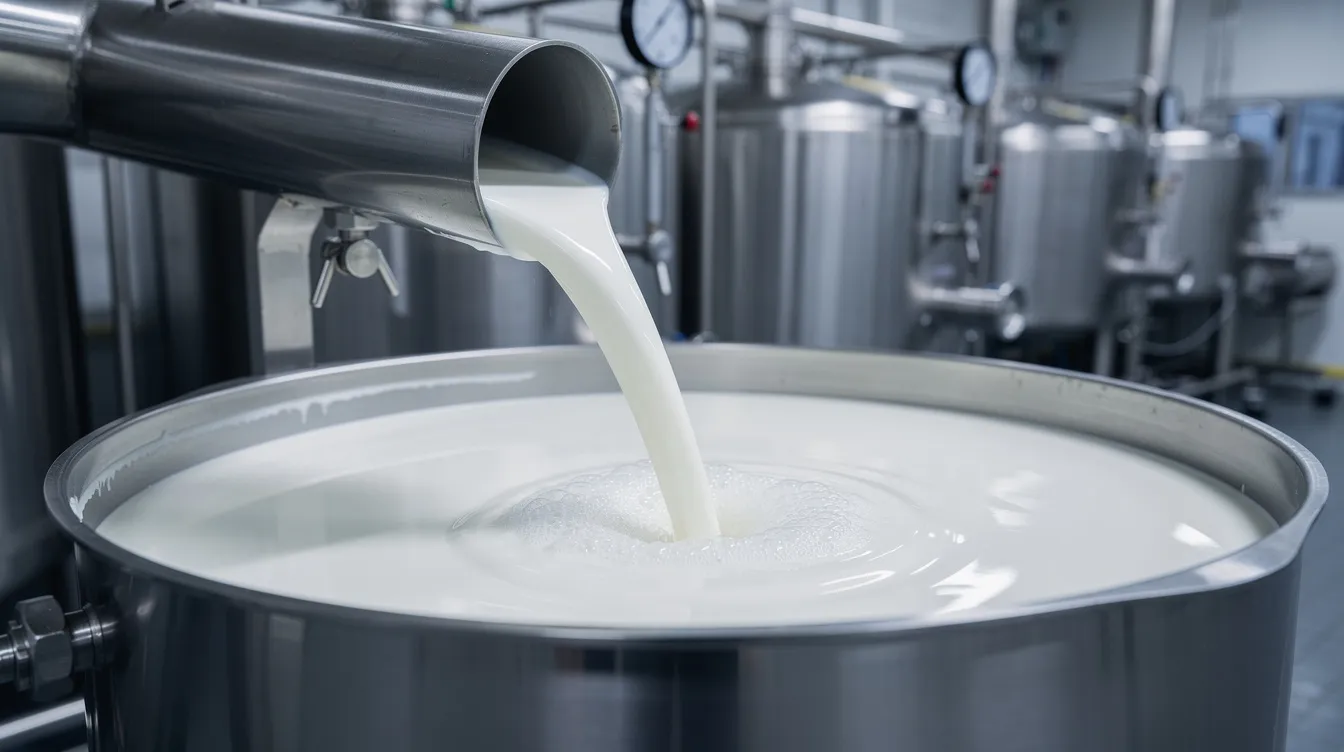
Plant and machinery requirements include equipment like pasteurizers, homogenizers, and filling machines. Flavored milk processing requires automated pasteurization and homogenization equipment, and automated systems enhance hygiene and production speed in dairy plants. Major categories of flavoured milk processing equipment include: milk reception tanks, weighing systems, milk transfer pumps, filters, cream separator or standardisation unit, storage tanks, balance tanks, sugar syrup preparation tanks, ingredient mixing tanks, blending/formulation tanks, high-shear mixer, homogeniser, plate or tubular pasteuriser/UHT unit, plate heat exchanger, intermediate storage tanks, CIP system, boiler/steam generator, refrigeration and chilled water plant, water treatment unit, air compressor, electrical control panels, DG set and effluent treatment system.
Filling and downstream equipment includes bottle rinsing machines, flavoured milk bottle filling machines or pouch/cup/carton filling lines, capping/sealing machines, labelling machines, inkjet coding, conveyors and shrink wrapping machinery. Flavoured milk plant machinery cost varies by capacity, automation level, origin of equipment (imported vs Indian-made), packaging format and inclusion of PLC/SCADA process automation. Detailed cost estimation requires supplier quotations matched to proposed plant capacity; see value-added dairy plant machinery and equipment cost.
Processing line capacity is typically expressed in LPH (1,000 to 15,000 LPH) and total LPD considering number of shifts and planned working days per year. Realistic capacity utilisation ramp-up from 40-50% in Year 1 to 70-80% by Year 3 should be built into the financial projections.
Land, Building, Hygienic Layout, Utilities and Cold Chain
Land and building requirements depend on plant capacity, packaging format and integration with an existing dairy plant. Key functional zones include: raw milk reception bay, ingredient stores, processing hall, packaging material store, filling hall, finished product cold room or ambient warehouse, laboratory, CIP room, utility block (boiler, refrigeration, compressor, water treatment), ETP area, administrative block and staff changing rooms. Hygienic layout requires separation of raw and processed product paths, unidirectional material flow, controlled access to high-hygiene zones, proper drainage and washable finishes. For detailed layout guidance, see land, building, utilities and hygienic layout for a value-added dairy plant.
Utility planning covers electrical load, steam/hot water, refrigeration tonnage, chilled water, compressed air and potable/process water; utilities must be sized based on peak load. Waste management systems and effluent treatment need to be planned for efficient operation. Environmentally sustainable practices should be integrated into the dairy manufacturing process, including water recycling and energy efficiency measures.
Chilled flavoured milk requires rapid post-pasteurisation cooling, finished goods cold room (2-4°C range), refrigerated transportation and reliable refrigeration at distributors. Aseptic/UHT flavoured milk reduces cold chain intensity but demands precise process control and aseptic filling technology. For more, see cold storage and cold chain requirements for value-added dairy products.
Packaging Options and Raw Materials for Flavoured Milk
Packaging is one of the largest non-milk cost components and influences both flavoured milk plant setup cost and ongoing profitability. Common formats include PET bottles (widely used for ready-to-drink flavoured milk), glass bottles for premium positioning, flexible pouches, PP cups with thermosealed lids, and aseptic cartons for ambient UHT products. Packaging choice drives machinery investment: bottle rinsers, filling and capping machines, form-fill-seal pouch machines or aseptic carton lines, plus labelling and shrink-wrapping equipment.
Principal raw materials include raw cow or buffalo milk, sugar, cocoa powder, coffee, permitted flavours and essences, stabilisers and emulsifiers, permitted food colours, vitamin and mineral premixes for fortified variants, specialty ingredients for high-protein beverages, and all packaging materials (bottles, caps, labels, cartons, pouches, shrink film) sourced from food-grade approved suppliers.
Quality Control, Food Safety and Regulatory Considerations
Quality control is crucial in dairy processing for ensuring product safety and compliance standards. Flavoured milk processing plants must comply with food safety standards including applicable FSSAI regulations. Key checkpoints include incoming milk testing (fat, SNF, microbial indicators), ingredient quality certificates, in-process checks (Brix, pH, colour, viscosity) and finished product parameters (fat, protein, sugar, microbiological load, sensory evaluation, fill volume and package integrity).
Food safety systems require GMP, GHP and HACCP principles, documented SOPs, allergen control where applicable, and batch traceability. Regulatory compliance requires licenses like FSSAI, GST, and local municipal trade licenses. Statutory approvals and compliance are necessary prerequisites for legally operating a food manufacturing facility. The DPR should include investment required for a basic laboratory (lactometer, butyrometer, milk analyser, pH meter, incubator) supporting brand reliability and industry standards.
Flavoured Milk Plant Project Cost, Means of Finance and Working Capital
Total flavoured milk plant project cost in India includes: land and site development; civil construction; processing plant and machinery; filling and packaging line; utilities (boiler, refrigeration, water treatment, compressed air, electricals); cold storage; ETP; laboratory equipment; furniture; preliminary and pre-operative expenses; contingency; and margin money for working capital. There is no single flavoured milk manufacturing plant cost in India applicable to every project; investment varies by capacity (a 5,000 LPD multi-product plant may require approximately ₹4.81 crore total, while a 50,000 LPD automatic flavoured milk processing plant with UHT line may need several times that amount), automation, equipment origin and packaging technology.
Means of finance typically combine promoter’s equity, term loan from a bank or financial institution, and eligible subsidy where available. The term loan amount must align with realistic cash flow and repayment capacity. See value-added dairy plant project cost and means of finance for detailed structuring methodology.
Working capital covers inventory of milk, sugar and ingredients; packaging material stocks; finished goods inventory; receivables from distributors and modern trade; and trade payables. Operating costs are driven by raw materials, especially sugar, which accounts for 70-80% of total operating expenses. For projection methodology, refer to working capital requirement for a value-added dairy products plant.
Revenue Model, Profitability, Break-Even and Financial Projections
The flavoured milk business plan must describe revenue streams: own-brand sales through distributors and retailers, institutional supplies, modern trade, online channels and possible contract manufacturing. Revenue modelling defines SKU-wise selling prices (ex-factory), trade margins (distributor, retailer, modern trade), logistics costs and promotional spends, leading to net realisation per litre.
Key profitability drivers include milk procurement cost and seasonal variability, sugar and ingredient costs, packaging cost per litre, plant utilisation, power and fuel, cold chain expenses, labour, marketing expenditure and product returns. Gross profit margins for flavored milk range between 30-40%. A thorough risk analysis helps in identifying market, supply chain, and operational risks that can erode these margins. See value-added dairy plant profitability and break-even analysis.
Break-even analysis separates fixed from variable costs, calculates contribution per litre and determines break-even capacity utilisation. Running below break-even for a prolonged period creates liquidity stress even when gross margins appear healthy.
Financial projections should include capital investment, operating costs, and ROI calculations across 5-10 years: sales volume, capacity utilisation, raw material consumption, operating expenses, depreciation, interest, taxation, projected P&L, cash flow, balance sheet and key ratios. See value-added dairy plant financial projections for DPR.
DSCR, Term Loan Assessment, Bank Loan and Project Feasibility
DSCR (Debt Service Coverage Ratio) tells banks whether the flavoured milk plant can service interest and principal from operating cash flows. Lenders also examine project IRR, flavoured milk plant ROI, payback period and sensitivity analysis. For detailed methodology, see DSCR and loan repayment capacity for a value-added dairy project.
Term loan assessment aligns loan tenure, moratorium and repayment schedule with project cash flows and ramp-up time. Over-leveraging with inadequate promoter contribution is a common risk. See term loan assessment for a value-added dairy manufacturing plant and bank loan and project finance for a value-added dairy products plant.
Project feasibility is assessed under four angles: technical feasibility (process technology, flavoured milk processing line, utilities, raw material sourcing and logistics), market feasibility (demand, competition, product positioning, distribution, pricing), financial feasibility (profitability, DSCR, IRR, break-even) and operational feasibility (milk procurement, skilled manpower, cold chain, maintenance). Technical feasibility assessments include evaluating raw material sourcing, processing, and logistics. See value-added dairy plant feasibility and project viability. An advanced DPR should also include sensitivity analysis for milk price, selling price, capacity utilisation and interest rate; see ROI, IRR, payback and sensitivity analysis of a value-added dairy plant.
Illustrative Project Economics and DPR Information Checklist
The following table presents illustrative assumptions for a 20,000 LPD flavoured milk plant. These are illustrative assumptions only, not industry benchmarks or guarantees. Actual numbers change by location, capacity and technology.
| Parameter | Illustrative Value |
|---|---|
| Installed Capacity | 20,000 LPD |
| Capacity Utilisation (Year 1) | 50% |
| Annual Production | ~33 lakh litres |
| Net Sales Realisation per Litre | ₹20 |
| Annual Revenue | ₹660 lakh |
| Raw Milk Cost | ₹330 lakh |
| Ingredient and Sugar Cost | ₹66 lakh |
| Packaging Cost | ₹99 lakh |
| Utilities, Labour, Overheads | ₹99 lakh |
| EBITDA | ₹66 lakh |
| Depreciation | ₹20 lakh |
| Interest | ₹18 lakh |
| Profit Before Tax | ₹28 lakh |
A well-prepared project report answers market viability, production feasibility, and return on investment. To prepare a customised DPR, the following information is required: promoter background; proposed location and land/building status; installed capacity and product mix; flavours and packaging formats; target markets and channels; selling price assumptions; expected capacity utilisation ramp-up; machinery supplier quotations; estimated project cost; proposed means of finance (equity and term loan); working capital assumptions; and implementation timeline.
Role of a Detailed Project Report and How CA Manish Gugliya Can Assist
A Detailed Project Report for a flavoured milk manufacturing plant is a decision-support document linking technical design with financial feasibility. It helps promoters internally evaluate project viability and present a structured proposal to banks, financial institutions or investors for term loan and working capital facilities. The project report is essential for securing bank financing and government approvals.
CA Manish Gugliya, FCA, DISA (ICAI), supports clients in preparing customised flavoured milk plant DPRs, building detailed financial projections, assessing project cost and means of finance, estimating working capital, performing DSCR, break-even, ROI, IRR and payback analysis, preparing CMA data and bank loan project reports, and conducting feasibility studies. All projections are based on agreed assumptions and do not represent guaranteed performance. Entrepreneurs considering an industrial flavoured milk manufacturing plant in India are invited to reach out via ProjectReportBank.com for customised DPR and project finance support.
Conclusion
An industrial flavoured milk manufacturing plant can be an attractive value-added extension for dairies and beverage businesses, provided it integrates product formulation, appropriate plant capacity, reliable milk procurement, efficient dairy processing, suitable packaging, robust quality control and a realistic distribution strategy. Careful evaluation of flavoured milk plant setup cost, machinery cost, project cost, working capital requirement, profitability, break-even, DSCR, ROI and IRR is essential before committing capital.
A well-prepared flavoured milk manufacturing plant project report, tailored to the specific plant capacity, product mix, technology and location, enables promoters to make informed decisions and improves the quality of discussions with lenders and investors. For related opportunities in the broader value-added dairy sector, see the fermented and value-added dairy products manufacturing plant project report.
Frequently Asked Questions (FAQ)
How do I start a flavoured milk manufacturing plant in India from a bank’s perspective?
Define capacity, product mix and target market first. Obtain preliminary quotations for machinery and utilities, then estimate project cost and working capital. Engage a professional to prepare a flavoured milk plant DPR and financial projections. Apply for entity incorporation, PAN, GST and FSSAI licence. Submit the project report with financial statements and KYC documents to banks for term loan and working capital assessment.
What is the typical payback period for a flavoured milk manufacturing project?
Payback varies depending on capacity utilisation, selling price, milk procurement cost and packaging format. Many well-structured medium-scale projects aim for a payback of roughly 4-7 years, but this must be calculated from project-specific financial projections rather than a generic benchmark.
Can an existing dairy plant add a flavoured milk line with limited investment?
Existing plants with milk reception, pasteurisation, refrigeration and utilities may focus new investment on formulation tanks, homogeniser capacity, flavour dosing systems and a dedicated filling and packaging line, along with incremental cold storage. A DPR should clearly separate new CapEx from already available infrastructure and assets.
Is a cold chain mandatory for every flavoured milk project?
Chilled pasteurised flavoured milk requires continuous cold chain from factory to retailer, increasing both CapEx and operating cost. Aseptic or UHT flavoured milk reduces cold chain dependence but requires more sophisticated processing and packaging technology. The choice depends on target markets, distribution reach and available capital.
How detailed should the flavoured milk project report be for a medium-size bank loan?
Lenders typically expect a technical note on process and machinery, plant capacity and layout summary, itemised project cost and means of finance, 5-7 year financial projections, break-even and DSCR analysis, working capital assessment, promoter profile and risk discussion. CA Manish Gugliya structures reports to address these specific requirements for each company and project.