Setting up a multi-product rice processing facility in India requires more than assembling machines side by side. This article, written from my experience as CA Manish Gugliya preparing Detailed Project Reports and bank finance proposals for food-processing ventures, explains exactly how Poha, puffed rice and rice snacks production lines can be engineered within a single integrated facility, what can be shared, what must remain separate, and how to plan the project for commercial and financial viability.
Key Takeaways
This article covers the full scope of designing an integrated Poha puffed rice manufacturing process and rice snacks production line in India, from raw-material receipt to finished-goods dispatch.
- An integrated plant shares common upstream sections (cleaning, grading, storage, material handling) and downstream sections (seasoning, packaging, QC, warehousing) while maintaining dedicated core equipment for Poha flaking and Murmura puffing.
- Integrated Poha manufacturing combines cleaning, conditioning, roasting, flattening and packaging on a continuous or semi-continuous production line; puffed rice follows a separate route involving high temperature puffing or roasting.
- Integration allows rice millers and MSMEs to diversify into value added products such as Chivda, masala Murmura, instant Poha and cup Poha without duplicating land, utilities and administration.
- A bankable DPR with realistic product-mix planning, capacity assumptions, line balancing, DSCR and sensitivity analysis is essential before committing capital to a multi-product rice snacks manufacturing plant.
Commercial Logic of an Integrated Poha, Puffed Rice & Rice Snacks Plant
India produces over 100 million tonnes of rice annually, yet only about 10 percent of rice is processed into puffed rice and similar products. This gap represents a significant opportunity. Entrepreneurs and rice millers across Madhya Pradesh, Maharashtra, Chhattisgarh, Telangana, Odisha and West Bengal are increasingly shifting from bulk paddy trading toward processing rice into value added products because margins on plain rice remain compressed while demand for branded Poha, Murmura and snacks continues to expand.
The core idea behind a poha puffed rice rice snacks manufacturing plant is straightforward: share what can be shared and dedicate what must be dedicated. Common raw-material procurement, cleaning, grading, storage, material handling, utilities, quality control, seasoning and packaging infrastructure serve both Poha and Murmura lines. The core transformation machines, however, remain separate because Poha is made by flattening conditioned rice grains while puffed rice is made by high temperature puffing or roasting at controlled moisture and pressure.
Puffed rice consumption is increasing due to health benefits, and the puffed rice market has better prospects with changing consumer tastes across India and the world. Puffed rice is considered a healthy snack option, and it lowers total cholesterol levels. It also contains the antioxidant γ-oryzanol. These health attributes, combined with its status as a ready-to-eat food item, make Murmura an expanding product category.
Can Poha and puffed rice be manufactured in the same plant? Yes. They can be produced within one integrated facility using separate process routes for flaking and puffing inside a common infrastructure envelope. Can rice snacks be made from the same integrated line? Yes, plain Poha and Murmura serve as intermediate inputs for downstream roasting, frying, seasoning and mixture-processing sections within the same plant.
A professionally prepared Puffed Rice Manufacturing Plant Project Report & DPR or an integrated project report helps present this commercial logic credibly to banks and investors.
Product Portfolio in an Integrated Rice Snacks Manufacturing Plant
An integrated facility can manufacture a graded product ladder ranging from basic staples to premium convenience products:
Primary processing outputs (plain Poha and Murmura):
- Thick Poha, medium Poha, thin Poha and nylon Poha, each differentiated by roller gap and grading
- Conventional puffed rice (plain Murmura) and premium puffed rice with uniform expansion and light colour
Value-added downstream products:
- Masala Murmura and flavoured puffed rice, seasoned with spices, salt and sometimes jaggery
- Puffed rice is a popular ingredient in Indian street foods and a key ingredient in Bhel Puri, which drives retail demand
- Roasted rice snacks and seasoned rice flakes for the namkeen market
- Chivda and Poha-based namkeen mixtures incorporating peanuts, nuts, sev and pulses
- Puffed-rice mixtures with recipes tailored to regional taste preferences
- Instant Poha with dehydrated vegetables and seasoning premixes
- Cup Poha & Single-Serve Instant Poha Manufacturing, Packaging & Business Model for on-the-go customers
- Ready-to-Cook Rice Breakfast Mixes Manufacturing for the cereal and breakfast segment
The chosen product portfolio directly affects machinery selection, plant layout, working-capital cycle, shelf life planning and packaging material demands. Rice crackers, for instance, may require an extruder and different raw-material inputs including rice flour, corn flour or wheat flour, expanding the equipment list further.
Raw Materials & Consumables Planning for Poha, Puffed Rice & Snacks
Even within one integrated rice processing plant, raw-material specifications differ for Poha versus puffed rice. Paddy selection for Poha uses short-grain parboiled rice varieties for better yield, while raw rice for puffing requires high-expansion varieties with appropriate starch composition and minimal broken grains.
Key raw materials and consumables include:
- Paddy and/or raw rice (separate grades for Poha and for puffing)
- Edible oil for roasting, frying and seasoning application
- Spices, salt, seasoning premixes, turmeric, chilli
- Peanuts, chana dal, sev, pulses, dry fruits, nuts
- Dehydrated vegetables for instant and cup Poha
- Packaging laminates, cups, trays, cartons
- Corn starch or wheat-based ingredients if producing crackers or extruded puffed food
Procurement planning must account for seasonal paddy availability (bulk purchase during harvest for cost advantage) versus staggered purchase of spices and laminates. Suppliers of packaging material, seasoning premixes and oil should be evaluated for delivery time reliability. For detailed Poha-specific input specifications, refer to Instant Poha Raw Material, Seasoning & Product Mix.
Integrated Upstream Production Process: Common Sections
The first step in an integrated rice snacks production line is common upstream processing:
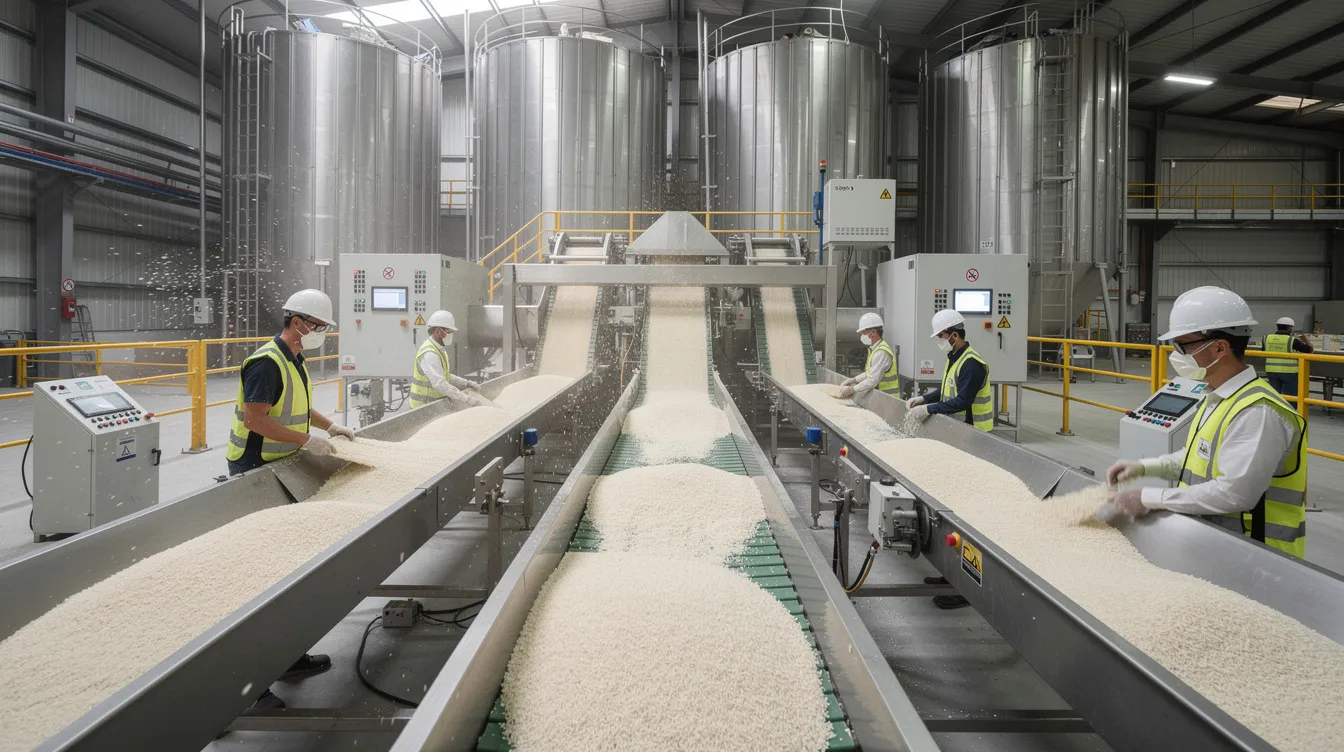
Raw Material Receiving → Weighbridge → Sampling & Inspection → Pre-Cleaning → Fine Cleaning → Destoning → Grading → De-husking (if starting from paddy) → Storage Silos/Bins → Dispatch to Poha or Murmura Route
This entire rice processing plant process flow section is virtually identical for both Poha and puffed rice, allowing use of a common machinery set: grain cleaners, destoners, graders, bucket elevators, screw conveyors and storage bins. An integrated material handling system using belt and screw conveyors can feed both production lines from a central raw-material area, reducing manual handling and dust exposure. Moisture targets at the end of upstream processing should be documented and monitored, as both downstream processes have strict moisture requirements for successful conditioning.
Poha Manufacturing Route: Industrial Rice Flakes Production Process
Rice Poha is manufactured through cleaning, soaking, roasting and mechanical pressing. Commercial Poha production typically features continuous or semi-continuous lines. The manufacturing process can be broken down as follows:
- Paddy/rice selection – graded, cleaned raw rice or paddy is dispatched from common storage
- Soaking/conditioning – soaking the cleaned paddy typically lasts 3 to 24 hours depending on the variety; soaked paddy absorbs moisture to soften the hard outer kernel for processing, raising moisture to approximately 20–24 percent
- Roasting – the paddy is roasted to temperatures between 150°C and 220°C to reduce moisture; heat application in manufacturing gelatinizes starch and prepares grain for flattening
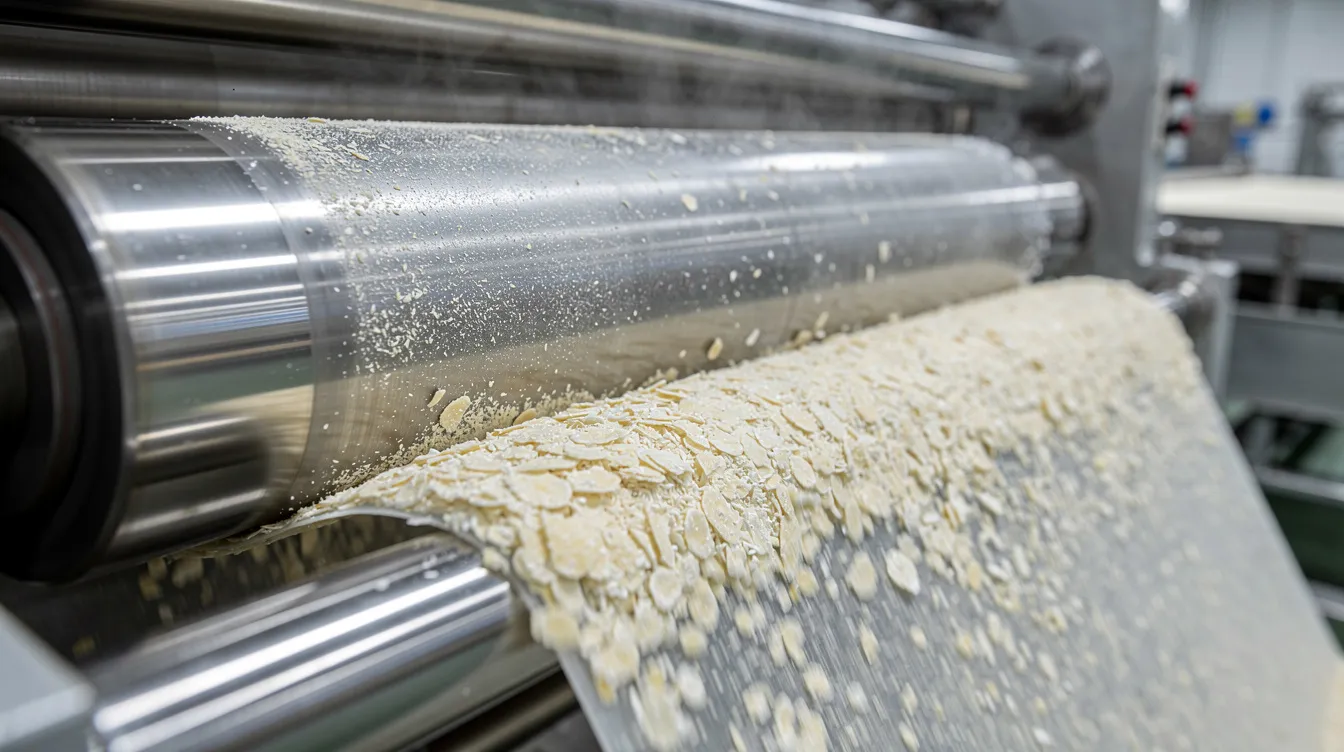
- Flaking – hot paddy is fed into roller mills to produce thin or thick Poha flakes; roller gap and pressure determine thickness
- Cooling – cooling is essential to stabilize moisture content in Poha after flattening
- Sieving and grading – vibratory sieves filter out broken flakes and classify Poha by thickness; screening sorts Poha into commercial grades based on thickness and size
- Drying – Poha retains moisture around 8 percent to ensure product quality during storage
- Sorting and bulk storage
- Packaging
Technical parameters such as soaking duration, bed depth in the roaster, machine speed and roll gap directly impact breakage, yield and texture. Traditional methods yield approximately 62–64 percent flakes from cleaned paddy, while well-controlled modern plants can improve this to 70–75 percent. Quality control checks include moisture content, thickness and aroma of Poha. For a deeper dive into instant Poha variants, see Instant Poha Manufacturing Process & Production Line.
Puffed Rice / Murmura Manufacturing Route: Puffed Rice Manufacturing Process
The puffed rice manufacturing process differs fundamentally from the Poha flaking route. Moisture conditioning optimizes puffing and allows better grain expansion. While Poha requires high moisture before flaking, Murmura requires dried rice grains typically at 10–14 percent moisture before puffing.
The typical Murmura manufacturing process sequence:
- Raw rice selection – high-expansion varieties with minimal broken percentage
- Cleaning and grading (shared with Poha upstream)
- Washing, soaking and salt treatment where applicable
- Partial parboiling or steam pre-gelatinisation – some processes use high pressure steam impregnation at 10–14 atm for 3–5 minutes
- Drying to target moisture
- Puffing/roasting – traditional sand roasting at approximately 200–300°C, gun puffing, or modern hot-air roasters; recent studies report roasting durations of 12–16 minutes under optimised conditions achieving puffing efficiency around 89 percent
- Separation and cooling – rapid cooling prevents moisture reabsorption
- Grading by size and density
- Inspection and packing
Puffed rice production lines can produce 120 kg to 1200 kg per hour depending on technology and automation level. Manufacturers have the option of traditional sand-based roasting units or modern gas-fired continuous puffing systems. Modern equipment reduces labour dependence, improves food safety and lowers fuel consumption, though CAPEX is higher. Puffed rice production can also use rice flour as an ingredient in extruded puffed food variants and rice crackers, processed through an extruder, broadening the product range further.
For project-level analysis, refer to the Puffed Rice Plant Feasibility, ROI, IRR & Payback Analysis.
Rice Snacks Value Addition Route: From Poha & Murmura to Ready-to-Eat Products
This downstream rice snack production line transforms plain Poha and puffed rice into branded, higher-margin products inside the same integrated plant. The generic sequence:
Poha/Murmura → Roasting or Frying → Oil Drainage → Ingredient Addition (peanuts, sev, pulses, spices) → Seasoning & Tumbling → Cooling → Metal Detection → Weighing → Packaging → Cartoning → Finished Goods Store
Product-specific notes:
- Poha Chivda: Poha is roasted or fried in oil, mixed with roasted peanuts, curry leaves, turmeric and chilli; some recipes add jaggery for sweet variants
- Masala Murmura: puffed rice is lightly coated with liquid seasoning oil spray and dry spice premix
- Instant Poha: seasoned Poha with dehydrated vegetables packed in stand-up pouches or cups; customers simply add hot water to prepare
- Rice crackers: extruded pellets from rice flour, corn or wheat flour are fried or roasted and seasoned
The Rice Cracker Machine integrates multiple processes for high efficiency. Seasoning drums, mixers and packing lines can be designed to handle multiple SKU changeovers. For packaging design insights, see Instant Poha Packaging, Shelf Life, Quality Control & Food Safety.
How Poha, Puffed Rice & Rice Snacks Production Lines Can Be Integrated
The essence of poha puffed rice line integration lies in designing an integrated rice snacks production line layout that shares infrastructure where technically safe while keeping dedicated equipment where process parameters diverge sharply.
Which machinery can be shared between Poha and puffed rice production? Cleaning, grading, storage, material handling, selected utilities, quality-control facilities and potentially packaging systems subject to engineering compatibility can all be common.
| Plant Section | Poha Line | Puffed Rice Line | Rice Snacks | Can Be Shared? | Remarks |
|---|---|---|---|---|---|
| Grain cleaners & destoners | ✓ | ✓ | – | Yes | Common upstream |
| Bucket elevators & conveyors | ✓ | ✓ | ✓ | Yes | Integrated material handling |
| Storage silos/bins | ✓ | ✓ | ✓ | Yes | Segregated bins per grade |
| Soaking/conditioning tanks | ✓ | Sometimes | – | Partially | Different soak durations |
| Poha roaster | ✓ | – | – | No | Dedicated to flaking route |
| Poha flaking machine | ✓ | – | – | No | Core Poha equipment |
| Puffing/roasting unit | – | ✓ | – | No | Core Murmura equipment |
| Fryers/continuous roasters | – | – | ✓ | Sometimes | Snack-specific |
| Seasoning drums | Optional | Optional | ✓ | Yes | With changeover cleaning |
| Metal detectors | ✓ | ✓ | ✓ | Yes | Common QC line |
| FFS packing machines | ✓ | ✓ | ✓ | Yes | If pack format compatible |
| Boiler/thermic fluid heater | ✓ | ✓ | ✓ | Yes | Central utility |
| DG set & compressor | ✓ | ✓ | ✓ | Yes | Central utility |
| QC lab | ✓ | ✓ | ✓ | Yes | Common facility |
For machinery specifications and configuration options, refer to Instant Poha Machinery & Ready-to-Cook Rice Equipment Guide.
Common vs Dedicated Machinery in an Integrated Rice Processing Plant
Optimising CAPEX in a multi product rice processing plant depends on correctly classifying machinery as common or dedicated without compromising product quality or food safety.
Common machinery: pre-cleaners, destoners, graders, bucket elevators, screw and belt conveyors, storage bins, weighbridges, automatic weighing systems, seasoning drums (with changeover protocols), cooling conveyors, metal detectors, check weighers, FFS packing machines, compressors, boilers, DG sets and control panels.
Dedicated for Poha: soaking/conditioning tanks with temperature and time controls, Poha roaster, Poha flaking machine, flake grader and aspiration systems.
Dedicated for Murmura: rice conditioning units, sand or hot-air puffing roasters, puffed rice separators, Murmura cooling and dust-removal units, and optional iron-fortification or coating systems for fortified puffed rice.
Dedicated for rice snacks: continuous or batch fryers, oil filtration units, seasoning oil spray systems, multi-ingredient feeders, high-shear mixers for masala blends, and specialised cup filling and sealing machines.
Trying to over-integrate incompatible equipment merely to reduce capital cost often leads to production bottlenecks, cross-contamination risks and quality inconsistency. Each machine must stick to its designed production process.
Integrated Process Flow Diagram (Text-Based) & Plant Layout Considerations
Integrated Process Flow:
Rice/Paddy Receiving → Cleaning & Grading → Raw Material Storage
    ├─ (A) Poha Line: Soaking → Roasting → Flaking → Drying/Cooling → Grading → Basic Poha Storage
    ├─ (B) Puffed Rice Line: Conditioning → Drying → Puffing/Roasting → Cooling/Separation → Murmura Storage
    └─ Common Downstream: Roasting/Frying → Seasoning & Mixing → Cooling → Metal Detection
         → Weighing & Packing → Cartoning → Finished Goods Warehouse → Dispatch
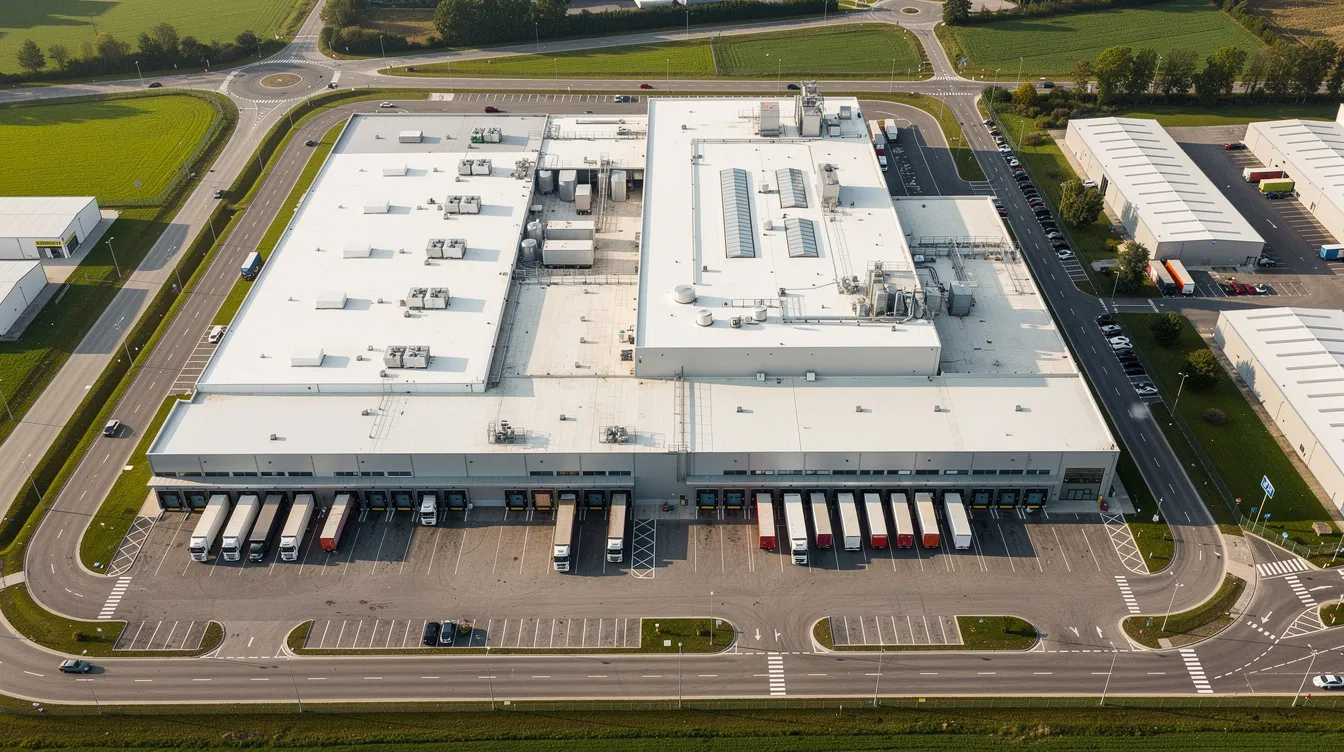
The integrated rice processing line layout should follow a linear or L-shaped product flow with separate raw and finished goods corridors. Key zones include: raw-material warehouse, pre-processing area, Poha section, puffed rice section, frying/roasting area, seasoning zone, packaging hall, packaging-material store, finished-goods warehouse, utility block, QC lab, staff facilities and waste-handling area. Dusty operations such as roasting and flaking must be separated from the packing hall with proper ventilation and exhaust ducts.
For detailed land and layout planning principles, see Instant Poha Plant Capacity, Land, Layout & Utilities.
Capacity Planning, Line Balancing & Automation Levels
Production capacity planning starts with determining annual tonnage of Poha, Murmura and snacks, then deriving tonnes per day and kg per hour for each line. Assuming 300 working days per year and realistic utilisation of 60–70 percent initially (rising to 75–80 percent by year three), a facility with a 5 TPD Poha line, 3 TPD Murmura line and 2–3 TPD snacks section would require upstream cleaning and grading capacity sized for the combined input.
Line balancing matters more than peak machine capacity. Even if a Poha flaker handles 1,000 kg/h, if the seasoning drum manages only 500 kg/h or the packing machine only 300 kg/h, effective production capacity is capped by the slowest section. Packaging capacity is a frequent bottleneck, especially with multiple SKUs and grammages.
Three automation tiers are common:
- Semi-automatic: manual feeding, basic conveyors, lower investment; suited for initial MSME-scale operations
- Automatic: integrated conveyors, PLC controls, automatic FFS packing; mobile monitoring dashboards possible
- Highly automated: SCADA, data logging, automatic moisture and temperature monitoring, ingredient dosing, multi-head weighers and central utility control
Higher automation increases CAPEX but reduces per-kg operating cost, labour dependence and quality variation, which strengthens DSCR in the project report.
Utilities, Packaging Integration, Shelf Life & Food Safety
An integrated rice processing plant can centralise utilities: electrical power (motors, heaters, packing machines), steam or thermic fluid for roasters and dryers, LPG or PNG for direct-fired systems, compressed air, process water, ventilation and DG backup.
Packaging integration can use multi-head weighers paired with vertical FFS machines for pillow pouches across Poha, Murmura and snacks. Nitrogen flushing enables extended shelf life for oil-based snacks. Poha is packed in moisture-proof packaging to maintain shelf stability, typically achieving 3–6 months for plain products and shorter periods for oil-fried variants. Cup Poha and ready-to-eat rice snack formats require dedicated cup-sealing machines.
Quality control encompasses incoming grain inspection (moisture, foreign matter, infestation), in-process monitoring (temperature, moisture, oil quality via TPC and FFA checks), seasoning uniformity, metal detection, seal integrity and periodic microbial testing. Compliance with FSSAI License, Labelling & Regulatory Compliance requirements is essential for any food processing business selling to retail customers in India. Products such as masala Murmura and Chivda may also be exported to markets where puffed rice is valued for its use in salads and light snacking.
Project Cost, Working Capital & Financial Viability for an Integrated Plant
Major cost heads in an integrated Poha puffed rice plant project include land and site development, civil construction, plant and machinery (Poha line, Murmura line, snacks line, common utilities), electrical and automation systems, QC lab, storage, packing machinery, pre-operative expenses, contingency and margin for working capital. Machinery typically represents 40–60 percent of total fixed capital investment.
Integrated rice products manufacturing project cost depends heavily on installed capacity, automation level, number of SKUs and site conditions. A small semi-automatic integrated unit may fall in a very different range compared to a mid-size automatic plant; figures vary project to project.
Working capital demands are driven by bulk paddy procurement at harvest, inventory of multiple seasoning premixes and packaging materials, finished goods stock across different SKUs and debtor cycles with distributors. Product diversification increases sales opportunities but also inventory complexity.
Key viability metrics include contribution per kg, break-even tonnage per month, DSCR, ROI and IRR, all computed using realistic yield assumptions (62–75 percent for Poha, 60–70 percent for Murmura) rather than assuming 100 percent conversion. For detailed financial structuring approaches, see Instant Poha Profitability, Financial Projections & Working Capital and Bank Finance, DSCR, Feasibility, ROI & Sensitivity Analysis for Instant Poha Plant.
DPR Preparation, Bank Finance & Risk Assessment Perspective
From my experience preparing project reports and CMA data for food-processing ventures, I can say that a professional integrated Poha puffed rice plant DPR must clearly establish the proposed product mix, manufacturing process routes, machinery configuration, integrated layout, capacity planning, project cost, means of finance and working-capital assessment.
A bankable DPR should include: market study for Poha, Murmura and rice snacks; raw-material availability; technology selection; process-flow diagrams; civil and utility assumptions; manpower planning; projected production and sales volumes; cost of production; projected P&L and cash-flow statements; break-even; DSCR; ROI; IRR; and sensitivity analysis on price, capacity utilisation and raw-material cost.
Banks evaluate overall economic viability, promoter background, financial ratios and risk-mitigation strategy rather than equipment quotations alone. Typical risks include demand uncertainty (mitigated by product diversification), raw-material price volatility, operational complexity in multi-product lines and working-capital strain. Conservative assumptions and phased capacity ramp-up are advisable.
For structured DPR examples, promoters can explore the Instant Poha Manufacturing Plant Project Report & DPR and Bank Loan & Project Finance for Puffed Rice Plant. The success of any integrated project depends on disciplined financial planning rather than optimistic assumptions.
Commercial Benefits vs Risks of an Integrated Poha, Puffed Rice & Rice Snacks Facility
| Parameter | Integrated Plant | Separate Plants |
|---|---|---|
| Capital cost | Higher total, but lower per-product | Lower individually, higher combined |
| Land requirement | Consolidated | Multiple sites |
| Utilities | Shared, more efficient | Duplicated |
| Labour | Cross-trained teams | Separate teams per unit |
| Material handling | Centralised | Independent |
| Packaging infrastructure | Potentially shared | Duplicated |
| Management complexity | Higher | Simpler per unit |
| Product flexibility | High (switch product mix) | Limited per plant |
| Future expansion | Easier on same site | Requires separate expansion |
Integration should be a strategic business decision based on feasibility analysis rather than simply the attraction of adding more machines to produce more SKUs. Well-designed poha puffed rice line integration, when supported by a market that demands both products, can be a sustainable competitive advantage for rice-based FMCG manufacturers in India.
Conclusion: Structuring a Scalable Integrated Rice Snacks Manufacturing Platform
An integrated Poha, puffed rice and rice snacks manufacturing process is about intelligently sharing infrastructure, utilities, handling and downstream processing while maintaining dedicated core technologies where product technology requires it. The critical planning checkpoints remain clear: finalise the product mix, establish realistic production capacity, correctly separate Poha flaking and Murmura puffing routes, balance seasoning and packaging sections, plan adequate utilities, implement robust QC and food-safety systems, and prepare conservative financial projections with proper DSCR and sensitivity analysis.
Entrepreneurs, rice millers and food-processing companies should freeze plant configuration only after site visits to machinery suppliers, consultation with process engineers and preparation of a bankable integrated rice snacks manufacturing plant project report. At Project Report Bank, we support promoters with DPRs, CMA data and financial modelling for such integrated value-added rice projects. This support is advisory; loan sanctions, subsidy approvals and commercial success ultimately depend on project execution, market conditions and promoter capability.
Frequently Asked Questions (FAQs)
The following FAQs address common practical doubts entrepreneurs have about integrated Poha, puffed rice and rice snacks production lines.
Can Poha and Murmura be manufactured in one integrated plant?
Yes. Poha and puffed rice can be produced within the same integrated facility by using common cleaning, grading, storage, handling, seasoning, packaging and utilities infrastructure. However, they require separate core process machinery: a Poha flaker and roaster for rice flakes, and a dedicated puffing unit for Murmura. The upstream and downstream sections can be shared, but the core transformation equipment cannot be interchanged because Poha involves flattening conditioned grains while Murmura involves high temperature puffing at controlled moisture and pressure.
Is the same machinery used for Poha and puffed rice manufacturing?
No. Only upstream equipment (cleaners, destoners, elevators, storage bins) and downstream equipment (seasoning drums, metal detectors, packing machines) can potentially be shared. The main transformation machines are fundamentally different. Poha requires soaking tanks, a Poha roaster and a flaking machine, while puffed rice requires conditioning units and a puffing or sand/hot-air roasting system.
Can one packaging line handle Poha, Murmura and rice snack mixtures?
A suitably designed packing line with a multi-head weigher and compatible vertical FFS machine can handle multiple products and grammages. However, changeover time between products, cleaning protocols between allergen-containing variants (for example, products with peanuts versus those without), pack-size limitations and required barrier properties of packaging material must all be considered. Some facilities maintain two parallel packing lines to avoid bottlenecks.
What determines plant capacity for an integrated facility?
Installed capacity is determined by the rated output of core machines (flaker, puffing unit, fryers), but effective capacity is determined by the slowest section in the production line, which is often the packaging or seasoning stage. Promoters should define product-wise capacity allocation, account for changeover losses and seasonal demand variation, and plan packaging and downstream capacity to match or exceed core processing output.
How is financial viability assessed for an integrated rice snacks project?
Financial viability is assessed through a detailed project report covering realistic capacity utilisation (typically 60–70 percent in year one, rising gradually), actual process yields (not 100 percent conversion), raw-material cost assumptions, energy and labour costs, revenue projections based on achievable selling prices, working-capital requirements, break-even analysis, DSCR, ROI and IRR. Sensitivity analysis on key variables such as raw-material price, selling price and capacity utilisation is essential to demonstrate robustness of the project to lending institutions.