Key Takeaways
- Raw material procurement for an integrated rice plant is far more complex than for a standalone rice mill because multiple product lines (poha, puffed rice, snacks, ready-to-cook mixes) need different grades of paddy, rice, broken rice, seasonings and packaging-all procured and managed simultaneously.
- Raw material costs account for 75%–80% of total expenses in a value-added rice processing plant, making procurement strategy the single largest lever for profitability and DSCR.
- Every product requires a separate Bill of Materials and consumption matrix to derive accurate monthly and annual procurement quantities for DPRs and CMA data.
- Rice plant inventory planning must balance the price advantage of seasonal paddy stocking against inventory carrying cost, storage capacity, quality deterioration and bank-funded working-capital limits.
- Project Report Bank, under the guidance of CA Manish Gugliya, helps promoters integrate procurement assumptions, inventory norms, capacity planning and financial projections into bankable value-added rice plant project reports.
Introduction – Why Raw Material Procurement Matters in an Integrated Value-Added Rice Plant
Rice is a staple food with continuous consumer demand, and local rice processing can increase product value by 20–40% when raw paddy is converted into finished, branded products. An integrated value-added rice processing plant-producing poha, puffed rice, murmura, instant poha, ready-to-cook mixes and snacks from multiple lines-operates at a level of complexity that a traditional single-line rice mill never encounters.
Raw material procurement for an integrated rice plant is not simply about buying paddy at the cheapest rate. It is a strategic function that directly affects plant utilisation, product quality, process yield, wastage, working capital and, ultimately, profitability. Consider a 100 TPD integrated plant: on any given day, it may need flattened-rice grade paddy for its poha line, small-grain rice for puffed rice, broken rice for its flour mill, edible oils and spice premixes for seasoning, and multiple SKUs of printed laminates for packaging. Misalignment in any one input can halt an entire production line.
The lowest purchase price does not necessarily produce the lowest manufacturing cost. Paddy bought cheaply but with 2% higher moisture or excessive breakage can reduce finished-product recovery, increase drying costs, raise energy consumption and degrade shelf life. A sound procurement and inventory strategy is therefore a core part of any credible DPR, CMA data and rice processing plant feasibility study-and banks in India examine these assumptions closely during appraisal.
Understanding the Raw Material Requirements of an Integrated Rice Processing Plant
Raw material planning for a rice processing plant must begin with a complete list of finished products and their grade-wise input requirements. Without this foundation, procurement quantities become guesswork, inventory levels become arbitrary, and DPR assumptions lose credibility.
The main categories of value-added rice plant raw materials include: (a) paddy and rice grades, (b) broken rice, grits and flour, (c) ingredients and seasonings, (d) edible oils and permitted additives, (e) packaging materials, and (f) consumables. Each category has distinct specifications, supplier channels, lead times and storage needs. Wrong raw material selection can reduce product recovery by 2–3 percentage points, significantly impacting rice processing raw material cost and project viability.
Paddy and Rice
An integrated rice processing plant uses several types of paddy and rice:
- Long-grain non-basmati paddy for polished rice
- Medium-grain paddy for poha and general milling
- Parboiled paddy for parboiled rice lines
- Poha-grade paddy with suitable hardness, hull characteristics and grain size
- Broken rice and rice grits (often generated in-house) for flour and snacks
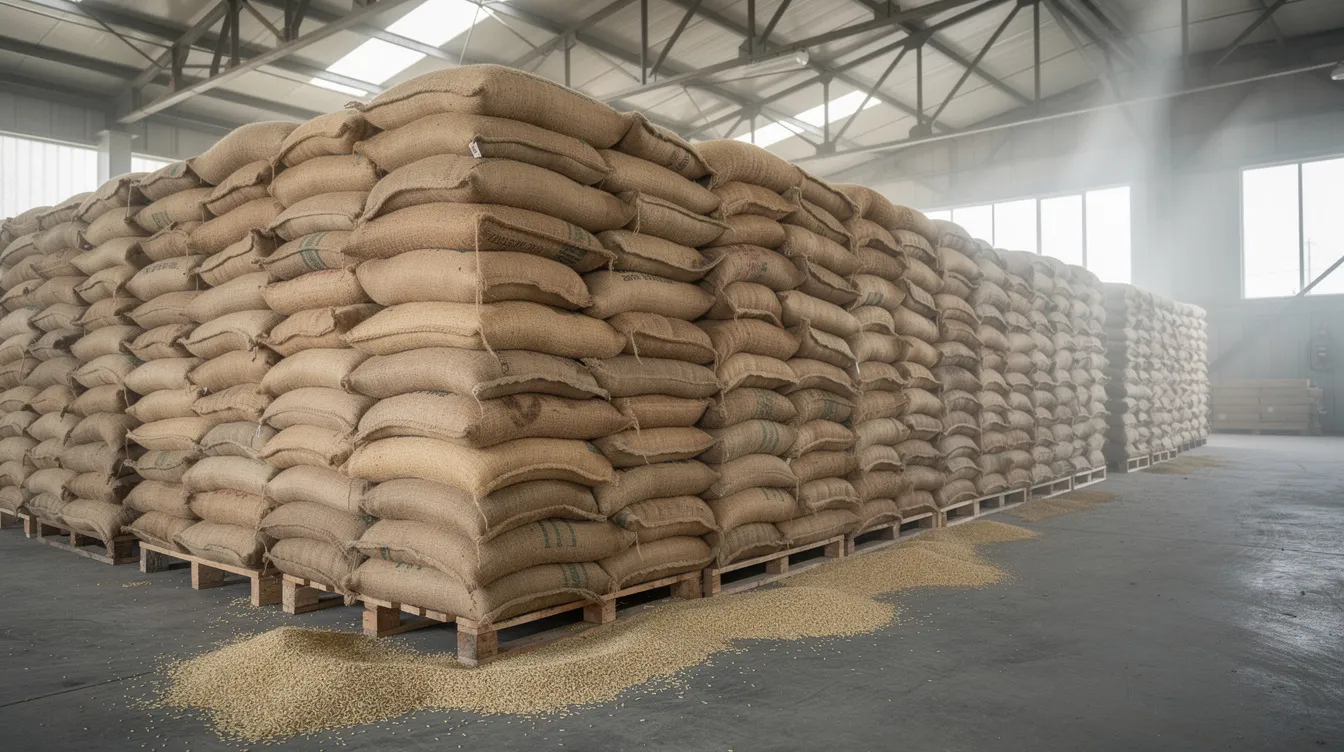
Specifications differ sharply by end product. Moisture content for incoming paddy should generally be 12–14% for safe processing and storing. Government procurement norms in states like Chhattisgarh and Odisha set maximum acceptable moisture at 17% wet basis, with limits of approximately 5% for damaged or discoloured grains and 1% for foreign matter. Grain size (short, medium, long), ageing period (fresh crop vs 6–12 months aged), broken percentage and chalkiness all influence process behaviour.
Within the entire process of rice milling, cleaning equipment removes impurities from paddy before milling, hulling machines dehull the paddy during processing, and polishing machines improve the smoothness of rice grains. Rice whitening improves quality and reduces breakage, while rice polishing can significantly increase market price. Broken rice from in-house milling can be a key input for snacks and flour, improving overall plant utilisation.
| Use Case | Paddy/Rice Type | Key Quality Focus |
|---|---|---|
| Polished rice | Long/medium grain raw paddy | Low breakage, colour uniformity |
| Parboiled rice | Parboiled paddy | Gelatinisation, hardness |
| Poha / rice flakes | Medium-thick grain, poha-grade paddy | Hardness, hull quality, moisture ~13% |
| Puffed rice / murmura | Small-medium grain rice | Starch structure, expansion ratio |
| Rice flour / snacks | Broken rice, grits | Particle size, moisture |
Raw Materials for Poha / Rice Flakes
Poha requires specific medium- to thick-grain paddy with suitable hull characteristics, correct hardness and optimum moisture (~13%) to obtain uniform flattened flakes with minimal breakage during roasting and flattening. Target product recovery from poha-grade paddy is typically 72–75%.
Variety preferences in central and western India (Madhya Pradesh, Chhattisgarh, Maharashtra) favour local medium-grain cultivars with amylose content around 24–25% and moisture at receipt of 11–12%. Research from industry data shows that a difference between 72% and 68% recovery on the same paddy cost can increase raw material cost by approximately ₹1.79 per kg of finished poha-translating to nearly ₹89.5 lakh additional cost annually for a 5,000 MT plant.
Procurement planning must differentiate between plain poha (bulk, unbranded) and branded flavoured or instant poha, which need additional seasoning and packaging material planning. For a detailed discussion on ingredient selection and recipe design, refer to Instant Poha Raw Material, Seasoning & Product Mix.
Raw Materials for Puffed Rice / Murmura
Puffed rice or murmura requires small to medium grain rice with a particular starch structure and controlled moisture for proper expansion during puffing. Consistent grain size and variety are essential to achieve even puffing, low husk residue and good mouthfeel. Unsuitable grain results in dense, under-puffed product and higher wastage.
Moisture conditioning-pre-soaking, drying and tempering-is integral to puffed rice manufacturing. Procurement must factor in typical moisture losses during conditioning when calculating net rice requirement. Paddy procurement planning for puffed rice may focus on specific regional varieties traditionally used in West Bengal, Bihar or Odisha, depending on plant location and target market.
By-products and rejected kernels from puffed rice processing need to be factored into rice plant inventory management and by-product sales planning, as they affect net material cost.
Raw Materials for Rice Snacks and Ready-to-Cook Products
The main bases for rice snacks and breakfast products include rice flour, broken rice, rice grits, pre-gelatinised rice flour and blends for extruded snacks, chakli-type products, instant idli-dosa mixes or breakfast cereals. Deep-processed rice products like these expand profit margins significantly compared to selling plain milled rice.
Associated ingredients cover edible vegetable oils, spice powders, seasoning premixes, salt, sugar, dehydrated vegetable powders, stabilisers and permitted food additives conforming to FSSAI standards. Rice snacks raw material planning should ensure consistent functional properties (viscosity, expansion, crispness) by standardising flour particle size and moisture.
Many integrated plants use in-house broken rice to manufacture rice flour, which influences internal transfer pricing and rice processing plant procurement planning for additional external broken rice. For a deeper look at breakfast-product formulations, see Ready-to-Cook Rice Breakfast Mixes Manufacturing.
Ingredients and Seasoning Materials
Typical seasoning ingredients include chilli, turmeric, coriander, cumin, mustard, curry leaves, onion and garlic powders, tomato powder, dehydrated vegetables, citric acid, acidity regulators, natural flavours and permitted flavour enhancers. Supplier selection for seasoning premixes must focus on flavour consistency, batch-wise lab test reports and adherence to FSSAI and Codex specifications.
Key procurement considerations for seasonings:
- Minimum order quantities and standard pack sizes
- Lead times of 7–30 days for custom blends
- Shelf life typically 6–12 months; FEFO inventory control is essential
- Alignment with product development trials and marketing plans to avoid dead stock
Supplier documentation checklist: Certificate of Analysis (COA), allergen declarations, MSDS where applicable, FSSAI licence copy and pesticide residue reports for high-end retail or export lines.
Packaging Materials
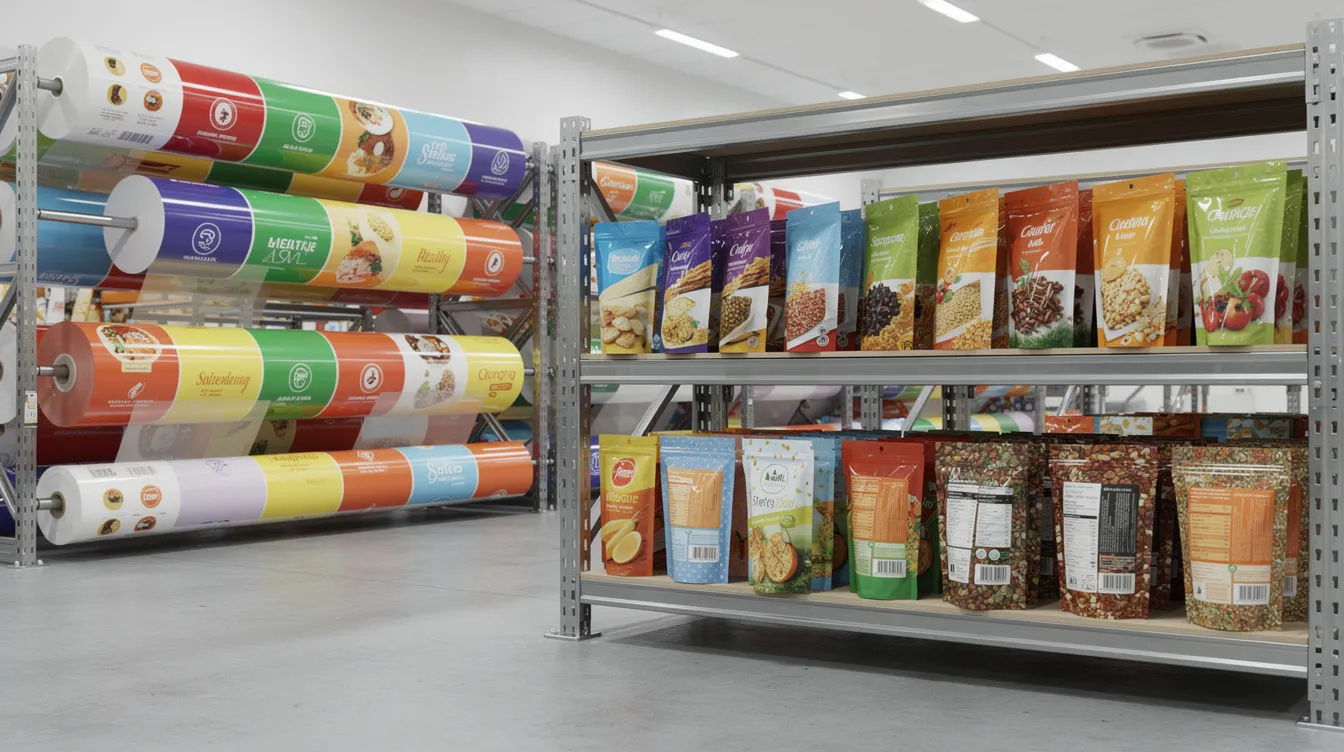
Key packaging materials for a value-added rice plant include BOPP/LDPE/LLDPE laminates, PET/PE pouches, HDPE woven bags for bulk, duplex board cartons, HIPS or PP cups, foil lids, labels, corrugated master cartons and stretch film. The final step in rice processing is packaging before market entry, and packaging quality directly influences shelf life and brand perception.
Flexible packaging laminates in India are currently priced at approximately ₹160–₹220 per kg for food-grade printed films. Pre-made pouches for a 1 kg SKU may cost around ₹2.16 per pouch at medium scale. Printed packaging must be procured carefully because any change in FSSAI labelling norms, MRP, GST rate or branding may render existing stock obsolete-a real obsolescence risk that many promoters underestimate.
Rice plant raw material storage planning should include a separate, dry packaging store with racking and protection from dust, rodents and insects. For packaging barrier requirements and shelf-life design, refer to Instant Poha Packaging, Shelf Life, Quality Control & Food Safety.
Product-Wise Raw Material Mapping
An integrated value-added rice plant must develop a product-wise Bill of Materials (BOM) linking each finished SKU to its exact primary raw materials, ingredients and packaging components. Rice grading is essential for meeting market price levels, and this mapping ensures the right grade reaches the right line.
| Product | Principal Raw Material | Important Quality Parameter | Supporting Ingredients | Packaging Requirement |
|---|---|---|---|---|
| Plain poha | Poha-grade paddy | Moisture ~13%, low breakage | None | Bulk HDPE bags or basic laminate pouch |
| Instant poha (masala) | Poha-grade paddy | Uniform flake size | Seasoning premix, oil, dehydrated veg | High-barrier printed laminate or cup |
| Puffed rice (loose) | Small-medium grain rice | Starch structure, expansion | None | Transparent poly bags |
| Branded murmura | Small-medium grain rice | Uniform puffing, colour | Salt, flavouring | Printed laminate pouch, N₂ flush |
| Ready-to-cook lemon rice mix | Parboiled rice, broken rice | Grain integrity after cooking | Lemon seasoning, oil, peanuts | Multi-layer laminate, carton |
| Rice flour snacks | Broken rice, rice flour | Particle size, moisture | Oil, spices, stabilisers | BOPP/PE laminate, corrugated box |
This mapping supports rice processing plant inventory management, yield tracking and cost sheet preparation for DPR and CMA data. ERP systems use these BOMs to auto-calculate raw material requirement based on monthly production plans.
Raw Material Procurement Strategy for Integrated Rice Plant
Integrated rice processing plants manage procurement based on production and sales plans, not on ad-hoc spot buying. The principal sourcing channels are:
- Direct from farmers or FPOs: Better traceability, potential cost savings (no trader margin), but requires collection centres, grading infrastructure, drying capacity and more transportation management.
- APMC mandis: Transparent price discovery, immediate availability, but quality variation is higher and control over moisture and damage is limited.
- Aggregators, traders and rice mills: Faster procurement, pre-graded supply, but higher price due to intermediary margins.
Framework contracts or long-term supply agreements are important for critical inputs-poha-grade paddy, seasoning premixes and flexible laminates. A procurement strategy for rice processing plant should always include contingency planning: alternate suppliers, buffer stock and pre-approved quality substitutes to avoid production stoppages.
Seasonal Paddy Procurement and Inventory Planning
Indian paddy procurement follows kharif (harvest October–January) and rabi (April–June in some regions) cycles. During harvest, supply abundance depresses prices, making it tempting to buy 6–9 months of stock. Government regulations can influence procurement practices and pricing dynamics, particularly through MSP mechanisms and state-level procurement norms.
However, bulk seasonal stocking inflates inventory carrying cost. Moisture content affects drying costs and storage stability of paddy. Consider the trade-off:
| Scenario | Paddy Stock | Purchase Price Advantage | Annual Interest Cost (at 12% on ₹3 Cr inventory) | Storage & Quality Risk |
|---|---|---|---|---|
| Full-season bulk (6 months) | 6,000 MT | ~5–8% lower | ~₹18 lakh | High (pest, moisture loss) |
| Staggered (2–3 months + monthly top-up) | 2,500 MT | ~2–3% lower | ~₹7.5 lakh | Moderate |
A balanced approach is to buy 3–4 months of stock during harvest at lower prices, then top-up monthly based on market demand, cash flow and bank-funded working-capital limits.
Procurement Planning Based on Production Capacity
Rice plant inventory planning must start from installed capacity, realistic capacity utilisation and planned product mix. A 300-ton-per-day rice processing line outputs 12–15 tons per hour, and a 300-ton-per-day rice plant needs 1,050 tons of paddy daily (at typical milling ratios). At an average paddy purchase price of approximately RMB 3,000 per ton, even small inefficiencies in procurement multiply into substantial costs.
Sample calculation for a mid-size integrated plant:
- Monthly finished product target: 1,000 MT
- Average conversion yield: 85%
- Primary raw material requirement: 1,000 ÷ 0.85 ≈ 1,176 MT
- Add 2–3% for handling and process loss: ~1,212 MT
Adjustments are needed for seasonal demand products (festival-time murmura, Diwali snacks) and for export vs domestic mix assumptions. For capacity and scheduling logic, refer to Integrated Rice Processing Plant Capacity Planning & Product Mix.
Preparing a Raw Material Consumption Matrix
Demand forecasting begins by analyzing market demand and existing inventory levels. A raw material consumption matrix lists, for each product, the input-output ratio and monthly consumption.
| Product | Monthly Production (MT) | Main Raw Material | Consumption Ratio | Monthly Requirement (MT) | Safety Stock (MT) | Total Procurement |
|---|---|---|---|---|---|---|
| Plain poha | 400 | Poha-grade paddy | 1:0.73 | 548 | 55 | 603 |
| Puffed rice | 200 | Small-grain rice | 1:0.80 | 250 | 25 | 275 |
| Rice snacks | 100 | Broken rice + flour | 1:0.85 | 118 | 12 | 130 |
| Instant poha | 150 | Poha + seasoning | 1:0.75 + seasoning | 200 + 22 | 20 + 5 | 220 + 27 |
This matrix helps reconcile product-wise yields with total annual procurement volume, ensuring DPR assumptions are internally consistent. Banks and financial institutions routinely check whether procurement quantities match installed capacity and expected process losses, and this data feeds directly into CMA cost-of-goods-sold calculations.
Inventory Classification for a Value-Added Rice Plant
Classify inventory into: primary raw materials (paddy, rice, broken rice), ingredients and seasonings, packaging material, process chemicals, consumables (gunny bags, stitching thread), maintenance spares, work-in-process and finished goods.
ABC analysis for control intensity:
- A-class (high value, high impact): Paddy, seasoning premixes, printed laminates → tight control, weekly review, multiple vendors
- B-class (medium value): Edible oils, rice flour bags, corrugated boxes → periodic review, reorder-level based
- C-class (low value): Spares, consumables, stitching materials → simple min-max, quarterly review
Proper classification aids rice plant stock management and guides ERP-based reorder configuration, ensuring that control effort is proportional to financial impact.
Determining Optimum Inventory Levels
Optimum inventory levels for each major category should balance consumption, lead time and supply risk. Key terms in practice:
- Minimum stock: Lowest level before a reorder is triggered
- Reorder level: Minimum stock + (lead time × daily consumption)
- Safety stock: Buffer against supply uncertainty
- Maximum stock: Upper limit constrained by warehouse capacity and working capital
- Seasonal stock: Additional harvest-period paddy stock
The economic order quantity concept provides a useful starting point. EOQ minimises total ordering plus carrying cost. For example, if annual requirement for printed pouches is 5,00,000 units, ordering cost is ₹2,000 per order, and carrying cost is ₹0.50 per unit per year, EOQ ≈ √(2 × 5,00,000 × 2,000 ÷ 0.50) ≈ 63,246 units per order. However, for paddy, textbook EOQ must be constrained by harvest season, warehouse capacity and working-capital limits.
Safety Stock Planning
Safety stock provides a buffer against uncertain consumption and supplier delays. It should differ by material category:
- Paddy/rice: Seasonal stock itself acts as buffer; excessive accumulation locks working capital
- Seasoning premixes: Higher safety stock if only one supplier with 21-day lead time
- Packaging: Moderate buffer; printed laminates have 15–30 day lead times and custom printing delays
- Commodity ingredients (salt, sugar): Low safety stock; widely available
Key factors: supplier lead time, number of approved vendors, historical demand variability, price volatility, import dependence and rejection rate at incoming QC. Safety stock norms (in days of consumption) should be fixed jointly by production, procurement and finance teams, then documented in the DPR and internal SOPs.
Supplier Selection and Vendor Development
Vendor evaluation parameters for integrated rice processing plant procurement include quality consistency, past performance, delivery reliability, capacity, financial strength, certifications (FSSAI, ISO, HACCP) and traceability. Supplier diversification secures traceability and reduces intermediary costs. Establishing long-term supplier relationships can improve supply reliability and quality consistency.
Maintain 2–3 approved suppliers for each critical category (paddy, broken rice, seasoning premixes, laminates) to reduce procurement risk. A good procurement system should link price to quality to incentivize better delivery-vendors supplying lower moisture paddy or higher purity seasoning premixes should receive preference, not just those quoting the lowest price.
For paddy and rice raw material procurement, location and logistics cost (freight, handling, transit losses) can materially influence landed cost per MT. Develop long-term relationships with reliable FPOs and rice mills rather than chasing lowest spot rates every time.
Quality Parameters to Verify Before Procurement
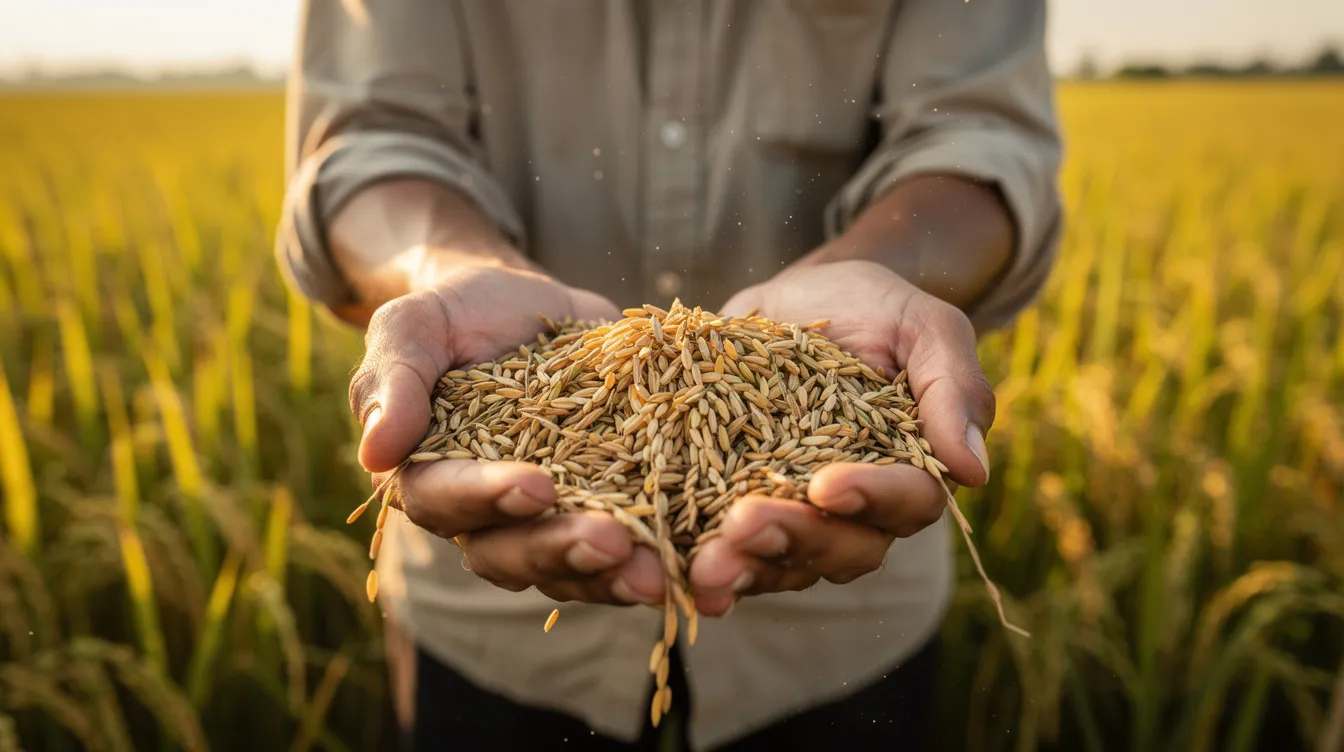
Procuring raw paddy requires a quality-driven approach to ensure high milling recovery. Moisture management impacts milling performance and grain yield. Key checks include:
- Moisture percentage (target 12–14% at receipt)
- Broken grains (below 3–5% for most products)
- Foreign matter (organic and inorganic, below 1%)
- Damaged, discoloured, sprouted or weevilled grains (below 5%)
- Grain size and variety verification through sampling
- Infestation (zero tolerance for live insects)
- Pesticide residues, mycotoxins and heavy metals for modern retail or export
Quality inconsistency complicates the grading and sorting stages of procurement. Sorting equipment separates rice grains of different qualities, but incoming material should already meet defined acceptance limits. Purchase specifications must include rejection criteria with linked commercial clauses (price deductions or lot rejection) in purchase orders.
Incoming quality directly influences yield; even 1% additional broken or foreign matter can substantially reduce recoverable finished product and increase reprocessing cost.
Raw Material Testing and Quality Control System
Incoming raw material lots should be sampled using standardized testing methods to ensure quality across suppliers. Implementing strict testing protocols upon arrival of paddy is crucial for fair pricing. The system should include:
- Sampling as per standard sampling plans (e.g., IS or FSSAI norms)
- In-house testing for moisture (digital moisture meter), grain size (sieves), broken percentage, foreign matter and visual inspection
- Batch coding and GRN (Goods Receipt Note) referencing
- Quarantine areas for untested material
- Defined rejection or rework procedure
- Traceability: ability to track each finished batch back to specific raw material lots
MSME plants can realistically implement a basic lab with a moisture meter, sieves and limited external lab support, then scale up QC capability as volumes grow.
Storage Infrastructure Required for Raw Materials
Typical storage infrastructure for an integrated rice plant includes covered godowns for paddy and rice, silos or bins where viable, separate seasoning and ingredient rooms, dry storage for packaging materials and chilled storage for sensitive ingredients.
Moisture levels for safe storage should ideally be between 13% and 14%. Strict moisture control is essential to prevent fungal growth in stored paddy. Using scientific storage methods helps prevent pest infestations and maintain grain quality. Inventory practices should include FIFO to manage aging inputs effectively.
Maintaining segregation among different rice varieties is critical for efficient milling recovery. Layout must ensure separation of raw paddy from finished products, pest control zones, fumigation chambers, ventilation and provision for FIFO movement. For holistic plant design guidance, see Integrated Rice Processing Plant Land, Building & Multi-Line Plant Layout.
Material Handling and Internal Movement
Efficient material handling from godown to the rice processing plant-through cleaning, milling, flaking, puffing, blending and packing-is essential for production efficiency and to minimise spillage, damage and contamination. Rice processing equipment must meet production quality standards at every stage.
Typical equipment includes belt conveyors, bucket elevators, screw conveyors, pneumatic systems, bins, hoppers, weighing systems, forklifts and pallet trucks. Well-designed internal movement reduces manual handling, lowers labour cost, prevents cross-contamination and supports batch-wise traceability.
Typical material flow in a 50–100 TPD integrated plant:
- Receiving and weighbridge → 2. Cleaning and grading → 3. Drying (if needed) → 4. Raw material godown (FIFO) → 5. Issue to production lines → 6. Processing (milling / flaking / puffing / blending) → 7. Seasoning and packing → 8. Finished goods godown → 9. Dispatch
For process-flow specific guidance, refer to Integrated Poha, Puffed Rice & Rice Snacks Manufacturing Process & Line Integration. Also see Common Utilities, Warehousing, Packaging & Material Handling for Integrated Rice Plant for detailed material-handling design.
Raw Material Procurement and Working Capital Requirement
Raw material inventory is usually the largest component of working capital for a rice processing plant. Initial investment for raw materials alone can be around RMB 3,150,000 (approximately ₹3.6 crore at current exchange rates) for a medium-scale plant.
Working Capital Requirement = Inventory (Raw Materials + WIP + Finished Goods) + Receivables + Cash/Expenses – Trade Credit
Illustrative example:
| Parameter | 45-Day Stock | 90-Day Stock |
|---|---|---|
| Monthly raw material consumption | ₹3 crore | ₹3 crore |
| Inventory investment | ₹4.5 crore | ₹9 crore |
| Interest cost (at 12% p.a.) | ₹54 lakh/year | ₹1.08 crore/year |
| Additional storage & insurance | Moderate | High |
Doubling inventory days from 45 to 90 nearly doubles working-capital borrowing and interest expense. Banks test whether projected inventory days are reasonable for rice plant inventory management, and excessively high stock days will raise questions during appraisal. For detailed financial modelling, see Instant Poha Profitability, Financial Projections & Working Capital.
Impact of Procurement Strategy on Project Cost and Profitability
Raw material costs account for 75%–80% of total expenses in a value-added rice plant. Even small percentage changes materially affect margins. Rice processing plants can generate annual profits of approximately RMB 32,400,000 at optimal scale, while the average profit in the rice processing industry runs RMB 200–400 per ton. Daily profit for processing 300 tons of rice is approximately RMB 90,000-but these numbers are achievable only when procurement is managed with discipline.
Margin impact example: If paddy price increases by ₹1/kg on a product where raw material is 75% of cost and selling price is ₹40/kg:
- Raw material cost increase per kg of output (at 75% consumption): ~₹0.75/kg
- Contribution margin reduction: from ₹4.80/kg to ₹4.05/kg (~15.6% drop)
Unreliable supply can also lead to under-utilisation of expensive machinery, increasing per-unit fixed cost. Well-planned raw material procurement for integrated rice plant improves DSCR, IRR and payback, while poor planning can make an otherwise technically sound project financially stressed.
Raw Material Price Sensitivity Analysis
Sensitivity analysis assesses the impact of changes in key variables on profitability and DSCR. Price volatility can compress milling margins unpredictably, so DPRs for value-added rice plants should test scenarios with raw-material cost increases of 5%, 10% and 15%.
Example: If raw material accounts for 75% of operating cost and base EBITDA margin is 12%:
| Paddy Price Increase | EBITDA Margin Impact | Approximate New Margin |
|---|---|---|
| +5% | –3.75% | ~8.25% |
| +10% | –7.50% | ~4.50% |
| +15% | –11.25% | ~0.75% (near breakeven) |
Lenders frequently review such sensitivity tables during project appraisal. For a template approach to handling sensitivity within DPRs, see Bank Finance, DSCR, Feasibility, ROI & Sensitivity Analysis for Instant Poha Plant.
Procurement Planning and Bank Finance DPR
Banks expect to see the following regarding raw-material planning in a bank loan DPR for rice processing plant:
- Local paddy and rice availability with distance from sourcing points
- Procurement channels (mandis, FPOs, traders) with supplier names where possible
- Historic price trends backed by APMC mandi data for 2–3 years
- Realistic price assumptions with documented sources
- Defined inventory days for each category (paddy, seasoning, packaging)
- Warehouse and godown capacity aligned with planned stock levels
- Vendor diversification and contingency arrangements
Over-optimistic low purchase prices or understated inventory days artificially inflate projected profits and invite queries or rejection during appraisal. Promoters should align procurement assumptions with ground realities and planned supplier contracts.
Technology and ERP-Based Inventory Control
ERP systems tailored to rice mills and food-processing plants can integrate procurement, production, quality and dispatch modules for real-time inventory tracking. Key features include item-wise stock ledgers, batch and lot tracking, barcode or QR code support, automated reorder alerts and integration with financial accounting.
Benefits include fewer stock-outs, reduced excess inventory, more accurate costing and better data for rice plant supply chain management. Larger integrated plants should consider implementing ERP from commissioning, while smaller units can start with simpler software and upgrade. ERP data also supports preparation of monthly stock statements and CMA data required by banks for ongoing working-capital assessment.
Common Procurement Mistakes to Avoid
Do:
- Verify moisture and quality before accepting every lot
- Maintain 2–3 approved suppliers for critical inputs
- Plan godown capacity before deciding seasonal stock levels
- Include interest cost of inventory in landed-cost calculations
- Match paddy variety to product mix requirements
- Implement fumigation and pest-control schedules for stored paddy
Don’t:
- Buy solely on lowest price without checking quality parameters
- Depend on a single paddy supplier and ignore transport risks
- Overstock seasonal paddy beyond warehouse capacity
- Neglect packaging material planning, causing production holds
- Underestimate process loss and shrinkage in procurement planning
- Ignore supplier credit terms when calculating working-capital needs
- Use unsuitable grain varieties for poha or murmura lines
Procurement Checklist for a New Integrated Value-Added Rice Plant
- ☐ Final product list and target capacities frozen
- ☐ Product-wise BOM completed for all SKUs
- ☐ Annual and monthly raw material consumption calculated and validated
- ☐ Paddy procurement planning aligned with kharif and rabi harvest seasons
- ☐ Approved quality specifications drafted with acceptance and rejection limits
- ☐ Potential suppliers (farmers, FPOs, rice mills, traders, spice and laminate suppliers) identified
- ☐ Quotations collected and compared on landed-cost basis
- ☐ Warehouse and godown capacity finalised and matched to stock norms
- ☐ Safety stock norms approved by production, procurement and finance teams
- ☐ Inventory days for DPR and CMA data finalised
- ☐ Basic ERP or inventory system selected
- ☐ Quality testing facilities planned (moisture meter, sieves, lab access)
- ☐ SOPs for incoming inspection and batch coding drafted
- ☐ Working-capital requirement for raw materials quantified and discussed with banker
Integrated Rice Processing Plant DPR and Financial Planning
Raw material procurement and inventory decisions cannot be taken in isolation. They must align with machinery selection, line configuration, layout, utilities and overall project cost. Building a rice processing plant costs approximately RMB 4–6 million, equipment procurement costs range from RMB 1.8 million to 2.85 million, and the rice milling machine alone costs approximately RMB 800,000–1,200,000. The initial investment for a rice processing plant is about RMB 9.85–13.2 million including land, building, equipment and working capital.
Machinery selection and automation level influence yield, wastage and therefore raw-material requirement. For equipment selection and cost details, refer to Integrated Value-Added Rice Plant Machinery & Equipment Cost. Production capacity, product mix, building design, warehousing and utilities all interact with procurement strategy-none can be planned in isolation.
CA Manish Gugliya and Project Report Bank integrate these aspects into bankable project reports, feasibility studies and CMA data tailored to Indian lenders’ requirements for value-added rice plants.
Conclusion – Building a Financially Viable Procurement & Inventory Strategy
Successful raw material procurement for integrated rice plant involves balancing quality, price, availability, supplier reliability, storage infrastructure and working capital. Rice is one of the most important staple foods globally, and India’s rice processing industry offers significant opportunities-but only for promoters who approach procurement as a strategic, data-driven function rather than a transactional afterthought.
Procurement and rice plant inventory planning should be embedded from the DPR stage itself. Ad-hoc decisions after commissioning inevitably lead to cash-flow stress, utilisation shortfalls and margin erosion. A disciplined approach to rice plant inventory management-covering safety stock norms, supplier contracts, ERP-based monitoring and working-capital alignment-can significantly improve profitability and project stability.
CA Manish Gugliya, through Project Report Bank, supports entrepreneurs, MSMEs and food companies with value-added rice plant project reports, integrated DPRs, CMA data, financial projections and bank-finance documentation. If you are planning an integrated value-added rice processing plant and need expert assistance in raw-material planning, feasibility analysis or bankable DPR preparation, reach out to Project Report Bank for professional, finance-aligned guidance.
Frequently Asked Questions (FAQ)
The following questions address practical doubts promoters often have about rice plant procurement and inventory that are not fully covered in the main article.
What is a realistic inventory holding period for paddy in an integrated value-added rice plant?
Many Indian plants work with 30–60 days average paddy stock plus additional seasonal stock immediately after harvest. The exact number depends on harvest pattern, distance from source, warehouse capacity and bank working-capital limits. Holding more than 90 days of paddy stock generally requires strong justification in DPRs, considering the added interest cost, pest risk and quality deterioration that accumulate over extended storage periods.
Can an MSME integrated rice plant start without owning large godowns for paddy?
Yes. Small and medium units can begin with rented warehouses or shared cold/dry storage facilities, or rely on staggered procurement from nearby mandis and rice mills instead of seasonal bulk stocking. In such cases, the procurement strategy must focus on reliable short-lead-time suppliers, and DPRs should clearly describe this model so bankers understand how production continuity will be maintained without large owned godowns.
How should a promoter estimate raw-material prices for DPR and CMA data?
Use the last 12–24 months of mandi and market data for paddy and rice, average the prices and add a reasonable escalation factor (for example, 3–5% per year). Cross-check with current quotations from traders and mills. Assumptions must be documented and conservative enough to satisfy lender scrutiny-avoiding unrealistic underestimation of raw-material cost that would inflate projected profitability in the rice processing plant feasibility study.
Is it necessary to have separate suppliers for paddy, broken rice and rice flour?
While many integrated plants generate broken rice and rice flour internally from their own milling operations, it is wise to approve external suppliers for these intermediates to handle demand peaks or internal quality issues. DPRs and contracts should define whether the plant will be self-sufficient in broken rice and flour or will depend partially on external sourcing for operational flexibility.
When should an integrated rice plant invest in a full ERP for inventory management?
Micro and very small plants may begin with spreadsheets and basic accounting software. However, once monthly throughput crosses approximately 1,000–1,500 MT or the number of SKUs grows beyond a manageable level, a dedicated ERP becomes essential for accurate inventory control, costing and reporting. Lenders also view structured ERP-based inventory control positively in larger projects, as it improves transparency and risk management for bank-financed working capital.