Key Takeaways
- Integrated rice plant utilities are not support functions-they directly determine real capacity utilisation, cost per tonne and bankability of a rice processing project in India.
- In a modern integrated rice processing plant infrastructure, common utilities must simultaneously support rice mills, poha, puffed rice, instant poha and ready-to-cook product lines without becoming bottlenecks.
- Correct planning of rice plant warehousing for paddy, in-process goods, finished products and packaging materials directly influences working capital, food safety and loan eligibility.
- An efficient rice plant material handling system and rice plant packaging system together reduce broken rice losses, labour cost and truck turnaround time.
- This article by CA Manish Gugliya on behalf of Project Report Bank focuses on how these technical choices convert into realistic DPR numbers, integrated rice plant utility cost and bankable financial projections.
Introduction: Why Utilities & Infrastructure Decide the Success of Integrated Rice Projects
For integrated rice plants combining rice mills, poha, puffed rice, instant products and snacks, utilities and infrastructure are core production assets. They shape capacity utilisation, unit economics and the viability of every product line under one roof. Integrated rice plant utilities combine processing machinery and energy systems into a cohesive ecosystem-not a collection of afterthoughts.
An integrated rice plant utilities plan covers electrical power distribution, water supply and treatment, steam and boiler systems, compressed air, HVAC, dust extraction, firefighting, effluent handling and backup power. Integrated rice processing plant infrastructure also includes rice plant warehousing, the rice plant packaging system, the rice plant material handling system, loading bays and internal roads-all of which must appear in the DPR and project cost.
In India, medium-to-large integrated units in 2026 are typically planning 40–120 TPD of paddy with value-added lines in states like Chhattisgarh, Madhya Pradesh, Odisha, West Bengal, Telangana and Haryana. At Project Report Bank, CA Manish Gugliya integrates technical utility system design with financial feasibility and CMA Data for MSME and industrial projects.
Understanding Common Infrastructure in an Integrated Rice Processing Plant
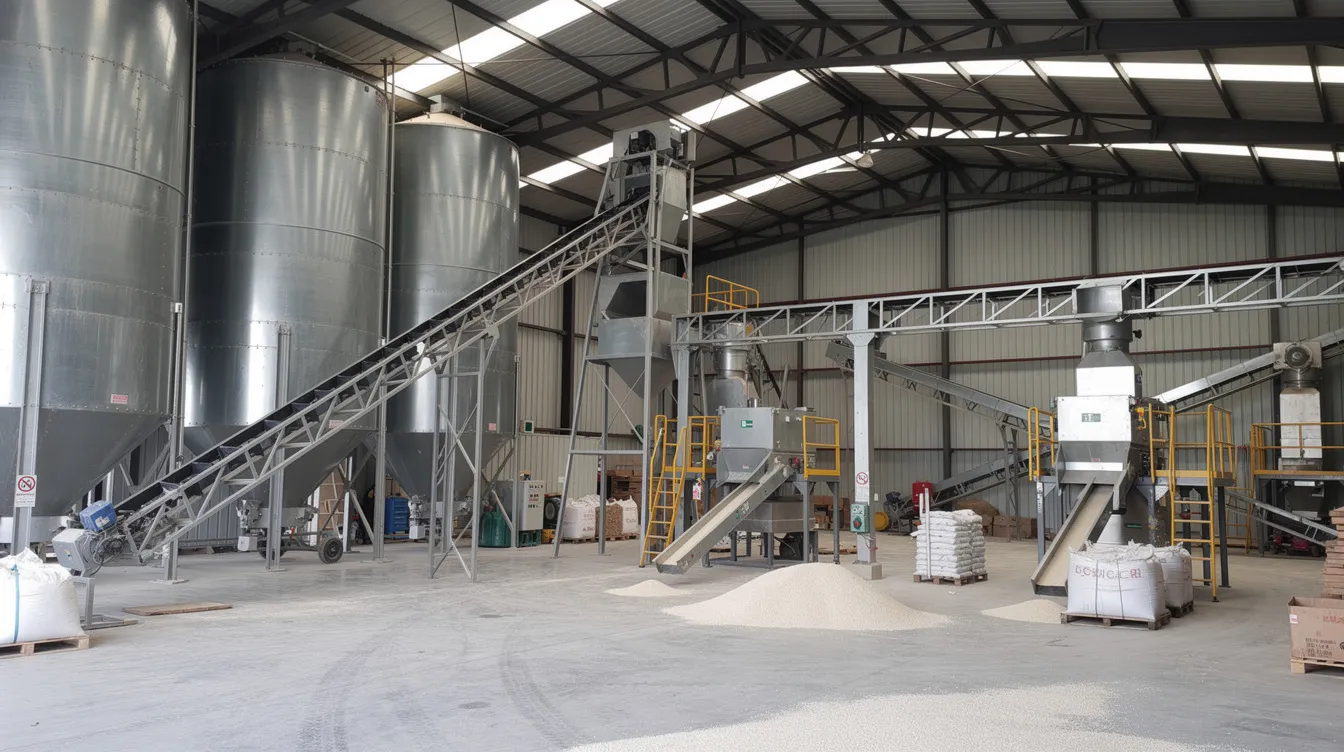
Common infrastructure means one industrial complex sharing utilities, warehouses, packaging and logistics between rice milling, grading, poha, puffed rice, instant poha, rice snacks and ready-to-cook products. Shared systems serve:
- Conventional rice mill operations: paddy pre-cleaning and de-stoning removes impurities before processing, followed by dehusking, whitening and polishing
- Grading, optical color sorting (which separates discolored grains and foreign matter using cameras), and length grading
- Poha/rice flakes and puffed rice/murmura lines
- Instant poha, RTC cups and snack lines using rice as base
Advantages include reduced capex by avoiding duplication of transformers, boilers and compressors; lower integrated rice plant utility cost through better load factor; and centralised quality control. Coordinated utility planning can yield 15–25% efficiency gains in such facilities. Integrated rice mills can reduce operating costs by utilising by-products efficiently-rice husk constitutes roughly 20% of paddy weight and can power biomass boiler systems, while rice bran can be processed into rice bran oil, a value-added product. Unused broken rice can be milled into rice flour for additional revenue, and proper by-product utilisation can transform conventional mills into resource-efficient complexes. Globally, rice milling produces approximately 134 million tons of rice husk annually, which can generate 2,129 billion MJ of energy.
Common utilities must be sized with a diversity factor so that simultaneous operation of all lines at peak load is realistically considered in the DPR. For details on how to plan capacity planning and product mix and integrated rice plant land and building requirements, refer to the linked guides.
Major Common Utilities Required for an Integrated Rice Plant
This section lists each major utility with its role in rice processing, typical equipment and what promoters should discuss with machinery vendors. Actual figures depend on the final machinery list, chosen capacity and operating hours-DPRs must use vendor data, not generic thumb rules.
Electrical Power Requirement for Integrated Rice Plant Utilities
Connected load is the sum of all motor ratings; operating load is the average running kW during daily operation; maximum demand is the peak kVA recorded by the DISCOM. Main electricity consumers include rice mill machinery (pre-cleaners, de-stoners, shellers, whiteners, polishers, graders), poha and murmura roasters, parboiling or drying units, colour sorters, automatic weighing and bagging, FFS/VFFS packaging machines, conveyors and elevators, compressors, dust collectors, laboratory, office, lighting and fans.
A 20 TPD rice milling plant requires 55 to 75 kilowatts of power. A 50 TPD rice mill requires 160 to 220 kilowatts at peak operation. Power consumption per ton of milled rice typically runs between 25 and 40 kilowatt-hours. Power costs for a 30 TPD rice mill range from USD 8 to USD 14 per ton.
Infrastructure includes HT/LT panels, transformer sizing (kVA), APFC panel for power-factor correction and sub-panels for each major block. Rice processing plant electrical load requirement must consider future expansion-keeping 20–25% spare transformer capacity avoids repeated infrastructure replacement.
DG Set and Backup Power Planning
Backup power is critical in many Indian states to avoid stoppage of paddy drying, partial parboiling cycles, continuous puffing lines and packaging operations during grid failures. On-site power generation reduces reliance on grid electricity in rice milling.
DG set capacity is typically sized to run critical loads-dryers, boiler auxiliaries, key conveyors, critical packaging lines and emergency lighting-rather than the entire plant, to reduce capex and fuel cost. Maximum demand data, expected outage hours and diesel price assumptions should be documented in DPR financial projections.
Water Requirement for Integrated Rice Plants
Main water uses include soaking/conditioning for parboiled rice or poha making (soaking water is approximately 1.25 times the weight of paddy), boiler feed water, wet polishing or washing where applicable, cleaning, sanitation, domestic use and firefighting storage. Water quality is essential-softening or RO may be needed where boiler manufacturers prescribe particular TDS and hardness limits.
Promoters should estimate rice mill water requirement in m³/day based on vendor data with a safety margin and assess borewell yield or industrial water connection feasibility during project planning. Optimized resource management lowers total water intake and minimizes waste.
Boiler and Steam Requirement
Steam boilers provide thermal energy for parboiling paddy before milling. Steam is also used in poha steaming, roasting/coating systems and some instant poha manufacturing processes. Typical steam requirement for parboiling is approximately 200 kg of steam per tonne of paddy. For a BEE sectoral report, parboiling and drying together account for roughly 90% of total energy consumption in parboiled rice mills.
Boiler capacity (TPH) should be based on simultaneous steam demand of all lines working in peak mode, plus allowance for losses. Husk-fired boilers are cost-effective given abundant husk from the mill, but husk storage, ash-handling and combustion control must be planned. Co-generation plants burn waste husks to generate steam and electricity, and energy self-sufficiency through co-generation drastically cuts electricity bills.
Compressed Air System
Main users include pneumatic gates and actuators, colour sorter jets, FFS/VFFS packaging machines, carton erectors, checkweighers with pneumatic pushers and cleaning guns. Compressors are usually centralised with air receiver tanks and distribution headers; dryers and filtration are required for sensitive equipment. Separate compressed air circuits for food-contact and utility uses help maintain food safety.
HVAC, Ventilation and Dust Extraction
Good ventilation in paddy cleaning, milling and grading sections controls temperature, grain moisture content variations and operator comfort. Dust extraction systems include aspiration channels, cyclone separators, bag filters and ducting connected to high-efficiency blowers, particularly near huskers, polishers and bagging points. Design should comply with local pollution norms and improve housekeeping, reduce explosion risk and maintain product hygiene.
Fire-Fighting Infrastructure
Typical elements include underground or above-ground fire-water tanks, jockey and main fire pumps, hydrant network, hose reels, fire extinguishers, sprinklers in high-risk areas and smoke detectors in warehouses. Requirements depend on building area, covered warehouse volume and applicable state fire regulations. DPR should include fire-fighting capex as a separate infrastructure cost head.
Effluent, Wastewater and Drainage
Dry rice mills generate limited liquid effluent, but integrated plants with soaking, parboiling or seasoning sections may require ETPs or settling and reuse systems. Utility costs for paddy drying can contribute to 55% of operating costs, and wastewater from parboiling adds to this burden. Storm-water and floor-drainage systems must keep grain and bag storage areas dry and avoid backflow into processing zones during monsoon.
Illustrative Common Utility Planning Table
| Utility | Main Use | Key Sizing Basis | Major Equipment |
|---|---|---|---|
| Electrical Power | All motors, packaging, lighting, HVAC | Connected load + diversity factor + 20% expansion | Transformer, HT/LT panels, APFC, sub-distribution |
| Steam/Boiler | Parboiling, poha steaming, RTC cooking | Simultaneous peak demand of all steam users | Husk-fired boiler, fuel feeder, chimney, condensate system |
| Water Supply | Soaking, boiler feed, cleaning, firefighting | Process water + domestic + fire reserve in m³/day | Borewells/tankers, softener/RO, overhead tanks |
| Compressed Air | Sorters, pneumatic valves, packaging machines | CFM requirement of all pneumatic equipment | Screw compressor, air dryer, receiver tank, headers |
| HVAC & Dust Extraction | Dust control, ventilation, temperature management | Air-change rate + dust load at each source | Cyclone separators, bag filters, blowers, ducting |
| Fire-Fighting | Fire protection for warehouses & process areas | Building area, risk category, local norms | Fire pump set, hydrant ring, hose reels, extinguishers |
This table is illustrative. Actual sizing must be based on final machinery specifications and vendor guarantees.
Utility Planning for Multiple Rice Processing Lines
Integrated rice plant utilities must accommodate several lines running together or in staggered shifts. Diversity factor, coincident load and peak demand analysis allow smaller yet safe sizing of transformer, boiler and compressors without under-designing. Integrated utilities manage systems as a coordinated utility network for rice processing.
Plan for phased capacity utilisation-starting at 60–70% plant loading in the first 1–2 years and ramping up gradually. This affects DPR projections and DSCR. Keep utility corridors, pipe racks and cable trenches accessible for maintenance and future expansion. Installing sub-meters for each major block (rice mill, flakes, puffed rice, instant products) enables product-wise costing and efficiency monitoring. A unified data collection system supports predictive maintenance and optimization across the facility. Centralized PLC control rooms enhance monitoring and reduce manual intervention.
Rice Plant Warehousing Requirements in an Integrated Facility
Rice plant warehousing is a critical part of integrated rice processing plant infrastructure. It covers paddy, brown rice, finished milled rice, poha, puffed rice, instant products and all packaging/ingredients. Separate and clearly demarcated warehouses or zones are needed for food safety, inventory control, insurance and audit, as well as efficient material flow. For detailed silo and storage planning, see the guide on paddy storage and warehouse requirements.
Paddy and Raw Rice Storage Planning
Paddy warehouse requirements for a rice mill include covered godowns with RCC or structural sheds, pucca flooring, ventilation, pallets or dunnage, fumigation arrangement and protection from moisture ingress. FCI godown specifications require a minimum plinth height of 0.9 m above highest flood level, stack height of 5.5 m and adequate cross ventilation. Options include traditional bag storage, bulk bins and silos-silos require higher initial capex but offer better moisture control and mechanised handling. Many integrated plants in India plan 3–6 months of paddy inventory based on procurement season, which significantly affects warehouse area and working capital.
Raw Materials for Value-Added Products
Beyond paddy, raw materials include rice grits for poha, puffing-grade rice, spices and seasoning blends, edible oil, salt, permitted food additives and premixes for instant products. Storage needs include dry, cool, pest-free rooms with shelving or pallets, bund walls for oil drums and segregation of allergens or strong-odour ingredients from plain rice storage.
Packaging Material Warehouse
Packaging materials include BOPP or PET/PE laminates, LDPE or PP bags (10 kg, 25 kg, 50 kg), small retail pouches, duplex cartons, corrugated shippers, labels, BOPP tapes, jars and containers for instant poha or RTC products. These should be stored on pallets or racks, away from floor and walls, in a humidity-controlled area to prevent curling, ink smudging or loss of sealing properties. FEFO handling is important for printed laminates due to labeling changes over time.
Intermediate Product Storage
Buffer storage between processing stages-bins for semi-milled or graded rice, poha before flavouring, puffed rice before seasoning and bulk ready rice before final packaging-smoothens operations. Use food-grade silos, bins or covered bunkers rather than random bag heaps to maintain a hygienic environment and traceability.
Finished Goods Warehouse
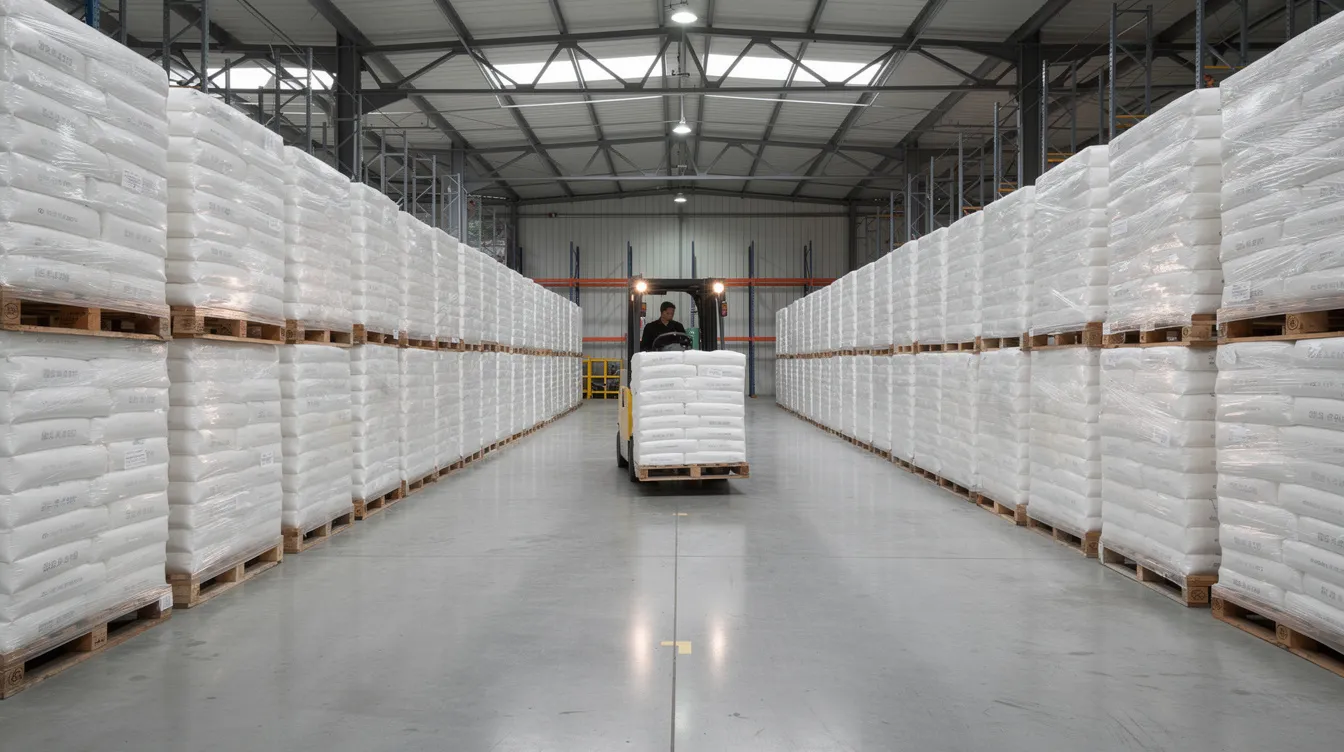
Finished rice warehouse design requires segregation by SKU, bag size, brand, milling date and moisture content with clear stack cards. Adherence to FIFO or FEFO principles ensures safe shelf-life management. Puffed rice and instant poha require cooler, drier conditions. Plan for export pallets, container-stuffing areas and compatibility with forklifts or hand pallet trucks.
Warehouse Planning Table
| Storage Area | Material Stored | Typical Planning Basis | Key Considerations |
|---|---|---|---|
| Paddy Godown | Raw paddy in bags or bulk | 2–4 months of peak-capacity intake | Ventilation, fumigation, moisture protection, plinth height |
| Semi-Processed Store | Brown rice, graded rice, poha pre-seasoning | 2–5 days of process buffer | Food-grade bins, covered, FIFO |
| Ingredients Store | Spices, oil, salt, additives, seeds | 15–30 days of consumption | Dry, pest-free, allergen segregation |
| Packaging Material Store | Laminates, bags, cartons, labels | 15–30 days of consumption | Humidity control, FEFO, off-floor storage |
| Finished Goods Warehouse | Packaged rice, poha, puffed rice, RTC | 15–20 days of output | SKU segregation, FIFO/FEFO, forklift access |
How to Estimate Warehouse Capacity for an Integrated Rice Plant
The basic formula: daily production = annual production ÷ operating days; warehouse capacity (tonnes) = daily production × desired inventory days. This converts into floor area using assumptions for stacking height, weight per bag, pallet pattern and aisle width.
For example, a plant producing 50 TPD finished rice and 10 TPD value-added products with 15 days of finished-goods inventory needs approximately 900 tonnes of finished storage space. At 5 m stacking height with aisles and clearances, this may require roughly 600–800 m² of covered warehouse-depending on palletisation, rack systems and fire-safety norms. A 50 TPD rice mill plant may require 900 to 1,400 square meters overall, while a 20 TPD rice milling plant requires 400 to 600 square meters of space.
Rice processing plant warehouse capacity planning directly affects working capital requirement for rice mill and interest cost. More inventory days mean higher funding and storage costs.
Rice Plant Packaging System for Different Product Categories
The rice plant packaging system must address bulk rice, consumer rice, poha, puffed rice and instant or RTC SKUs. Packaging design must consider moisture content of the product, shelf-life target, distribution distance, market positioning and protection during transport.
Bulk Rice Packaging (Wholesale & Institutional)
Common formats: 25 kg and 50 kg PP or BOPP woven bags with inner liners for packaged rice supplied to wholesalers and HORECA buyers. Features include stitching or heat sealing, space for batch coding, weight marking, and FSSAI details with proper labeling.
Retail Rice Packaging (Consumer Packs)
Popular Indian retail sizes: 1 kg, 2 kg, 5 kg and 10 kg in stand-up or pillow pouches with printed laminates. Premium SKUs use transparent windows for grain visibility, zip-lock or reclosable features, and nitrogen flushing for speciality rice-meeting both durability and branding needs.
Poha and Puffed Rice Packaging
Poha and puffed rice are light, fragile and sensitive to moisture pickup. They need low-density pouches with adequate headspace. Typical SKUs: 500 g and 1 kg for poha; 200 g, 400 g and 1 kg for puffed rice, with LDPE/PP or laminate structures giving moisture barrier. For a detailed puffed rice manufacturing plant project report, refer to the linked DPR guide.
Instant Poha and Ready-to-Cook Rice Products
Options include high-barrier laminates for single-serve pouches, multi-layer cups with foil lids, combo packs with separate seasoning sachets and oil sachets. Nitrogen flushing, proper sealing integrity and oxygen/moisture barrier requirements target 6–9 months shelf life. For food safety and packaging details, see the guide on instant poha packaging and shelf life.
Secondary and Tertiary Packaging
Cartons, stretch-wrapped or shrink-wrapped pallets protect small packs during transport and stacking. Carton design must support stacking of rice bags or cups on pallets with strapping and corner protectors for durability.
Packaging System Table
| Product | Typical Packaging Format | Packaging Equipment | Key Packaging Requirement |
|---|---|---|---|
| Bulk Rice (25–50 kg) | PP/BOPP woven bags with liner | Weigh filler, bag placer, stitcher, bag conveyor | Accuracy, sealing, batch coding |
| Retail Rice (1–10 kg) | Printed laminate pouches | VFFS/FFS machine, multi-head weigher, coder | Moisture barrier, branding, precision fill |
| Poha (500 g–1 kg) | LDPE/PP laminate pouches | VFFS machine, cup filler, sealer | Fragility protection, moisture barrier |
| Puffed Rice (200 g–1 kg) | Laminate pouches with headspace | VFFS machine, volumetric filler | Light fill, cushion, moisture seal |
| Instant Poha/RTC | Multi-layer cups, foil lids, sachets | Cup filler-sealer, sachet machine, N₂ flush | High barrier, sealing integrity, shelf life |
Packaging Machinery for an Integrated Rice Processing Plant
The rice plant packaging system must handle combined output of all product lines without creating end-of-line bottlenecks. Selection between manual, semi-automatic and fully automatic lines depends on labour cost, capacity, product mix and scale of operations.
Bulk Bagging and Weigh-Fill Systems
Automatic rice bagging machines for 25–50 kg bags include weigh hoppers, spouts, bag clamps, stitching machines and bag conveyors. The rice plant bagging system must match the throughput of the milling section to ensure smooth operations.
FFS and VFFS Pouch-Packing Machines
Form-fill-seal (FFS) and vertical form-fill-seal (VFFS) machines handle 500 g–10 kg pouches for rice, poha and puffed rice. Integration with multi-head weighers ensures accurate weighing, controlling giveaway and cost. Label applicators and printers are typically in-line.
Cup Filling and Special Format Packaging
Cup-filling and sealing lines for instant poha and RTC products often feature multi-station feeding for rice base, dehydrated vegetables and seasoning sachets. For specialised instant poha machinery and equipment, detailed specifications should be obtained from vendors.
End-of-Line Inspection and Coding
Checkweighers, metal detectors, X-ray inspection (for export lines), inkjet or TIJ coders for batch, MRP and FSSAI licence, and carton-sealing machines support compliance and reduce product recalls. Automated grading ensures uniform outputs meeting export standards.
Rice Plant Material Handling System
The rice plant material handling system is the backbone linking receipt, cleaning, milling, value addition, packaging, warehousing and dispatch. Multi-stage milling progressively removes husks and bran layers to reduce broken grains. Streamlined material flow prevents bottlenecks in rice processing operations. Poor design leads to higher broken rice quantity, spillage and labour cost-proper calibration keeps broken rice below 3 to 5 percent, and automated feedback loops prevent over-polishing, optimizing head-rice yield.
Grain Handling: Elevators, Conveyors, Bins and Silos
Bucket elevators are the most common rice plant bucket elevator solution for vertical lifting, designed to minimise grain breakage. Belt conveyors handle short horizontal movement, screw conveyors move fine bran and husk to the boiler house, and chain conveyors suit heavier loads. A pneumatic conveying system is used where dust-tight handling is needed for clean rice or ingredients. Intermediate storage bins and silos for paddy, brown rice and finished rice smoothen material flow. Husking efficiency should reach 85 to 90 percent per pass, and automated transitions in processing minimize mechanical stress on grains. Integrated rice milling systems reduce grain damage during processing.
Handling of Bags and Packed Products
Equipment includes gravity chutes, powered roller conveyors, belt conveyors from bagging machines to warehouses, forklift trucks, stackers, hand pallet trucks and palletisation systems for rice bags. Forklift requirement for rice warehouse depends on warehouse height, pallet system and loading style. Most medium-to-large integrated plants should include at least 1–2 forklifts.
Material Handling Equipment Table
| Equipment | Application | Suitable Material | Key Advantage |
|---|---|---|---|
| Bucket Elevator | Vertical grain lifting | Paddy, brown rice, milled rice | Gentle handling, high lift |
| Belt Conveyor | Horizontal/inclined transfer | Grain, packed bags | Continuous, low breakage |
| Screw Conveyor | Short horizontal transfer | Bran, husk, fine material | Enclosed, dust-free |
| Pneumatic Conveying | Dust-tight transfer | Clean rice, flour, ingredients | Enclosed, flexible routing |
| Forklift (1.5–3 T) | Warehouse stacking, loading | Palletised bags, cartons | Fast, handles heavy loads |
| Hand Pallet Truck | Short warehouse movement | Pallets, small lots | Low cost, flexible |
| Wooden/Plastic Pallets | Stacking, storage, dispatch | All bagged products | Standardised, stackable |
Material Flow from Raw-Material Receipt to Finished-Goods Dispatch
The logical flow runs: truck unloading → weighbridge → raw material inspection → paddy or raw rice warehouse → cleaning and milling → grading and sorting → value-add lines (poha, puffed rice, instant products) → packaging → finished-goods warehouse → dispatch.
Plant layout should avoid reverse flow and cross-movement of raw materials and finished goods, minimizing contamination risk and forklift congestion. A well-designed layout can increase production capacity by 30% and optimized layouts reduce operational costs by 20%. Proper layout design minimizes bottlenecks in rice milling operations. For layout planning, see the guide on multi-line rice processing plant layout. Key checkpoints include moisture content checks at intake, segregation of lots, sampling of broken rice and bran, and quality clearance before packaging.
Loading, Unloading and Dispatch Infrastructure
External logistics infrastructure includes approach roads for 16–20 tonne trucks, turning radius, security gate and weighbridge placement. Loading bays and unloading platforms need dock levellers or ramps, covered loading areas for protection from rain, and staging zones for order-wise preparation.
The integrated rice plant storage and dispatch system should align warehouse doors, conveyors and truck positions, reducing truck waiting time and loading labour cost. Peak-season dispatch capacity should be the design basis rather than average monthly volumes.
Automation in Warehousing and Material Handling
Automation levels range from manual handling with trolleys, to semi-automatic conveyors and pallet trucks, to higher automation with conveyorised palletising, barcode or QR-based tracking and basic warehouse management systems. Centralized control reduces the need for manual intervention in processing. Labor requirements for a semi-automated rice mill average four to six operators per shift.
Automation becomes commercially attractive beyond certain TPD throughput or where product-mix and SKU complexity demand digital tracking. Evaluate payback of automation investments within the DPR using realistic productivity improvements and maintenance costs, not only headline labour savings.
Food Safety and Hygiene Considerations in Utilities & Infrastructure
Key food safety aspects include zoning of raw vs processed areas, pest-proofing warehouses, dust control, regular clean schedules and avoiding water stagnation near grain storage. Moisture control in warehouses through proper ventilation and avoiding roof leakage prevents mould growth and quality deterioration-mechanical dryers reduce moisture content, preventing cracking and fungal growth. Hydrothermal units improve nutritional value and head-rice recovery rates.
Traceability and batch identification through simple coding systems, rack or stack maps and documentation practices allow quick recall if issues arise. Promoters must ensure safe compliance with FSSAI, BIS and state pollution-control norms; seek specific legal/regulatory guidance for the chosen product mix. Promoters should be equipped with the right documentation from the outset.
Energy Efficiency Opportunities in Common Utilities
Key measures include high-efficiency IE2/IE3 motors, VFDs on major drives (elevators, blowers), LED lighting in warehouses and processing areas, and proper insulation of steam lines and dryers. Condensate recovery reduces fresh-water consumption in rice milling and saves boiler fuel. Optimal compressor selection and leak control in compressed air piping are essential. Integrated systems improve energy management and sustainability in rice plants.
Optional solar power integration (rooftop PV) can partially offset rice processing plant power consumption; financial viability depends on tariff, net metering policy and capex. Energy efficiency directly lowers production cost per tonne, improving profitability and DSCR-a point appreciated by lenders during project appraisal. Examples of integrated utility benefits include improved product quality and scalability across all product lines.
Utility, Warehouse and Material Handling Cost in Integrated Rice Plant DPR
In an integrated rice plant DPR, infrastructure cost heads include electrical infrastructure (transformers, panels, cabling), DG sets, boilers and fuel-handling, compressors, water systems and tanks, fire-fighting system, civil works for warehouses, internal roads, silos, conveyors and elevators, forklifts and pallets, packaging machinery, weighing systems and laboratory equipment. Prices vary widely by capacity and vendor; promoters should obtain budgetary quotations and integrate them into a consolidated rice mill project cost and means of finance estimate. For machinery details, also see integrated value-added rice plant machinery and rice mill machinery and equipment cost.
| Infrastructure Component | Cost Category | Factors Affecting Cost |
|---|---|---|
| Transformer & Electrical Panels | Electrical Infrastructure | kVA rating, HT/LT, APFC, cable length |
| DG Set | Backup Power | kVA capacity, fuel tank size, acoustic enclosure |
| Boiler (Husk/Biomass) | Steam Generation | TPH capacity, fuel handling, chimney, ash system |
| Compressor & Air System | Compressed Air | CFM, dryer type, piping network length |
| Water Treatment & Tanks | Water Supply | Source, TDS, RO/softener, fire-reserve tank volume |
| Warehouse Buildings | Civil Works | Area (m²), height, flooring, roofing, ventilation |
| Conveyors & Elevators | Material Handling | Type, length, capacity, food-grade requirement |
| Forklifts & Pallets | Warehouse Handling | Tonnage, fuel type, pallet count |
| Packaging Machinery | Packaging Line | Machine type, speed, SKU range, automation level |
| Weighbridge & Lab Equipment | Quality & Logistics | Capacity, precision, location of lab |
Working Capital Impact of Warehousing and Inventory
Warehousing capacity, inventory levels and working capital are directly connected: more months of paddy or finished stock mean higher funding and interest costs. Key inventory categories include paddy inventory (often 3–6 months), milled rice and broken rice, bran and husk, raw materials for value-added products, packaging material, work-in-process and finished goods awaiting dispatch.
DPR working capital assessment should be consistent with realistic inventory days for each item, aligned with storage infrastructure. Avoid over-optimistic or inflated days that mislead lenders. A technically oversized warehouse can also result in excessive inventory assumptions and higher funding requirements. For bank-assessed working capital norms, see the guide on working capital requirement for rice mill.
Utility and Warehouse Planning in Bank Finance–Ready DPR
Bankers expect an integrated rice plant DPR to show clear capacity descriptions, rice mill capacity planning basis, product mix, utility requirements, land and building area, warehouse capacities, and material flow diagrams. Financial components include total project cost, means of finance (term loan, promoter’s margin, subsidy where applicable), working capital, projected P&L, cash flow, DSCR, break-even, IRR/ROI and simple sensitivity analysis.
Projections are estimates based on assumptions and vendor data-they are not guarantees of profit or loan sanction. Lenders apply their own appraisal standards. Project Report Bank prepares integrated rice plant DPRs connecting machinery selection, utilities, warehousing and packaging infrastructure with robust financial modelling and CMA Data formats demanded by Indian banks. For bank loan and project finance for rice mill, early engagement with a DPR consultant ensures proper structuring.
Practical Example: Illustrative Integrated Rice Plant Utility & Warehouse Plan
Consider a hypothetical integrated plant in central India: 80 TPD paddy rice mill, 10 TPD poha line, 5 TPD puffed rice line and 3 TPD instant poha/RTC products, operating 300 days per year in two shifts. A rice milling production line in such facilities typically processes 20 to 50 tons daily per section.
- Combined electrical demand would be estimated from motor lists and packaging lines, then adjusted using diversity factor. The milling section alone at 80 TPD may have a connected load in the range of 300–400 kW before adding value-add and packaging lines.
- Peak steam requirement is calculated by adding simultaneous demands: parboiling (80 TPD × 200 kg steam/ton = 16,000 kg/day), poha steaming and RTC cooking. A boiler of 2–3 TPH capacity with reasonable margin would be proposed based on this process.
- Warehouse segregation: separate paddy godown sized for 3–4 months (80 TPD × 90 days = 7,200 tonnes), smaller raw-material and packaging stores, intermediate bins, and finished-goods warehouse for 15–20 days of mixed finished products.
- Packaging capacity: combined packaging lines for bulk rice and consumer packs must handle daily output of both straight rice and value-added products in one or two shifts.
- Material movement: truck unloading at one side, linear flow through cleaning, milling, value-add building, then routing to finished warehouse and covered loading docks. A well-engineered line of this scale can reasonably return capital within 24 to 36 months, subject to actual market conditions and price realisation.
All figures in this example are illustrative. Promoters must use actual vendor quotations and process data for their own DPR.
Conclusion: Integrating Utilities, Storage, Packaging and Material Flow into One Coherent System
An integrated rice processing project cannot be treated as a set of disconnected machines. Utilities, warehouses, packaging and rice plant material handling system must be engineered together for reliability and low unit cost. The zero-waste circular economy approach-where husk fuels the boiler, bran generates oil revenue, and broken rice feeds snack lines-repurposes waste into secondary revenue streams.
Good planning of integrated rice processing plant infrastructure at the DPR stage helps promoters avoid under-sized transformers or boilers, congested warehouses, over-labour-intensive material movement and unrealistic working capital estimates. As CA Manish Gugliya, the advisory focus is to align technical design with financial viability and bankability, so that project loans and investor assessments are grounded in realistic utility and infrastructure assumptions.
If you are planning an integrated rice, poha, puffed rice, rice snacks or instant poha project, you can approach ProjectReportBank.com for detailed project reports, feasibility studies, financial projections, CMA Data assistance and structured bank finance proposals. We help connect your engineering choices with credible financial numbers-without offering any guarantee of loan sanction or assured profitability.
Frequently Asked Questions (FAQ)
These FAQs address practical doubts promoters often raise while planning utilities, warehousing and material handling for integrated rice plants in India.
What is the main purpose of integrating utilities across rice mill, poha and puffed rice lines?
The main purpose is to share electrical, steam, compressed air and dust-extraction systems efficiently so that capex and operating costs per tonne are lower than running separate standalone units for each product. Integrated utilities also simplify maintenance, spares and energy monitoring while improving overall plant reliability. Solutions like centralised boilers and transformers avoid duplication and allow better load-factor utilisation.
How do I factor moisture content and drying into my utility and warehouse planning?
Paddy with higher moisture content needs more drying energy and longer storage stabilisation. Power and steam demand for dryers as well as paddy warehouse ventilation requirements must be sized based on local harvest moisture levels. Include realistic assumptions about incoming paddy moisture-for example, 15–18% during kharif season-in the DPR and seek dryer vendor inputs for load estimates.
Can broken rice, bran and husk be integrated into the utility and revenue model?
Yes. Broken rice can feed snack or value-add lines, bran can be sold for oil extraction, and husk can be used as boiler fuel, reducing external fuel purchases. The DPR should treat these by-products as separate revenue streams or cost offsets and reflect them transparently in profitability projections.
How detailed should my warehouse and material handling description be in a bank DPR?
Include clear storage capacities (in tonnes and approximate days of stock), basic layouts or block diagrams, and a list of key handling equipment like conveyors, elevators, forklifts and pallets. Lenders usually do not need micro-level engineering drawings, but they expect to see that utilities and warehouses are adequate for the proposed capacity and not under-sized.
When should I approach a DPR consultant for integrated rice plant planning?
Approach a DPR and project-finance consultant as soon as you have preliminary ideas about capacity, location and product mix-ideally before finalising machinery orders or land purchase at the location stage. Early involvement helps align integrated rice plant utilities, land and building, rice plant warehouse requirements and packaging systems with realistic project cost and funding structure from the beginning.