Key Takeaways
- Integrated rice processing plant capacity planning in India must balance paddy availability, market demand, financial limits and future expansion; selecting the wrong TPH can permanently weaken DSCR, ROI and profit margins.
- Rice processing plant capacity is not just rated TPH on a machinery brochure. It includes annual production capacity, realistic capacity utilization ramp-up and a planned product mix between raw rice, parboiled rice, steamed rice and value added rice products.
- Optimum rice processing unit capacity should be decided after a feasibility study, market research, raw material mapping and preliminary financial projections, not on machinery vendor quotes alone.
- By-product planning (broken rice utilization, rice bran utilization, rice husk utilization) can shift overall rice processing plant profitability by 10-25% when integrated into the revenue model.
- Project Report Bank, led by CA Manish Gugliya, helps promoters with integrated rice processing plant project reports, feasibility reports, CMA data and bankable DPRs for MSME loans and term loans.
Introduction: Why Capacity Planning Is Critical in an Integrated Rice Processing Plant
As a practising Chartered Accountant and project consultant, I have reviewed dozens of rice processing projects where the single costliest mistake was made before a single machine was installed: choosing the wrong capacity. Integrated rice processing plant capacity planning determines everything downstream, from machinery purchase and civil construction costs to projected turnover, DSCR and loan repayment ability. Capacity planning for integrated rice processing involves balancing raw material availability and market demand simultaneously.
- Under-sized rice processing plant capacity restricts sales growth, prevents economies of scale and limits brand building in target markets.
- Over-sized capacity leads to low capacity utilization, inflated fixed and operational costs, stressed working capital and a DSCR that worries every banker who reads the project report.
- The planning process must consider raw paddy availability, market demand, financial capacity, power requirements, storage infrastructure, number of shifts and future expansion, all evaluated together.
In every DPR I prepare, capacity planning directly shapes projected turnover, profitability, break-even and the promoter’s ability to service debt.
What Is an Integrated Rice Processing Plant in India?
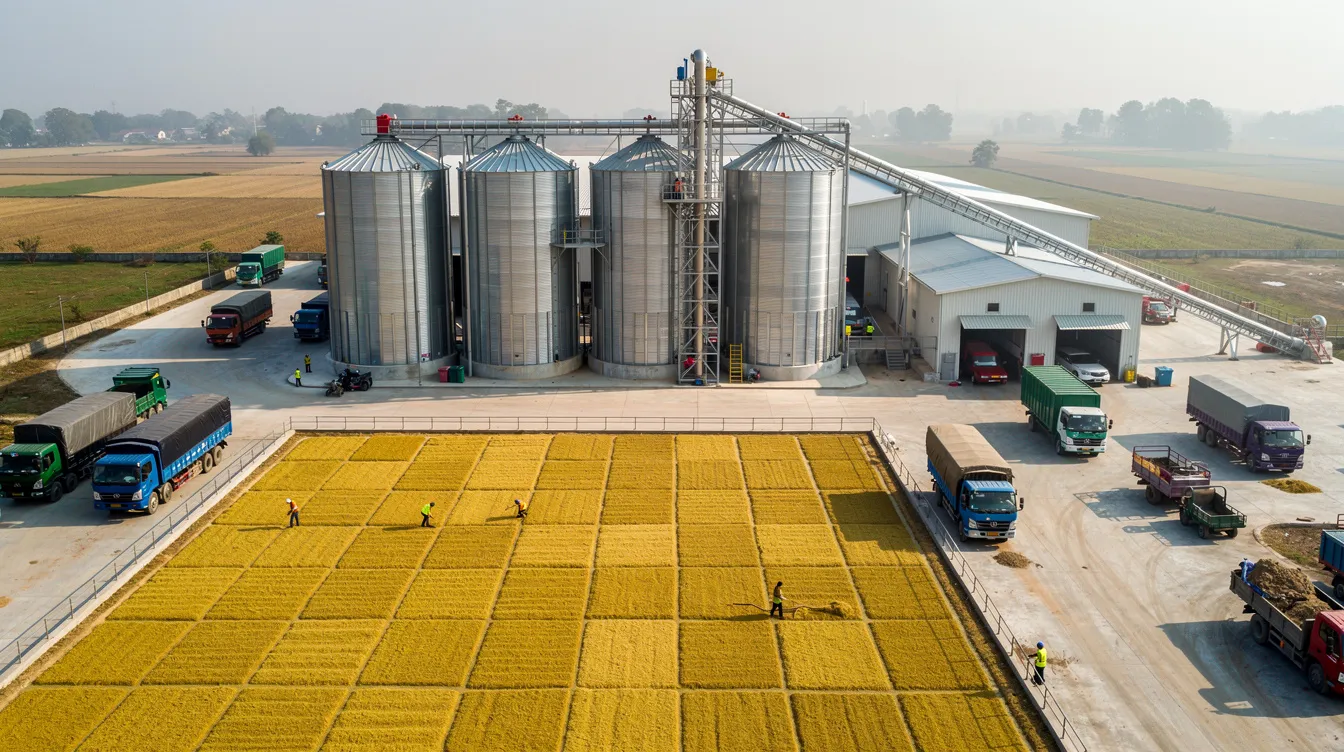
An integrated rice processing plant combines multiple operations on one campus: paddy cleaning, drying, parboiling (where applicable), dehusking, rice milling, rice polishing, grading, colour sorting, automatic packaging and dispatch. Integrated rice processing plants typically handle multiple stages including pre-cleaning, drying, milling, and packaging. The rice milling process includes eight essential steps from raw paddy intake through to the final product.
Beyond core milling, integration can extend to poha (rice flakes) production, puffed rice production, rice snacks, rice bran utilization (feed or oil extraction), broken rice utilization (flour, feed, brewery, starch) and rice husk utilization (boiler fuel, briquettes, biomass power). Traditional milling often results in higher grain wastage and post harvest losses; modern rice milling reduces grain loss during processing through better equipment and process control. When product mix is planned properly, integration stabilizes cash flows, improves raw material utilization and increases rice processing plant profitability. For serious promoters, an integrated rice processing plant feasibility study is almost mandatory before finalising such a configuration.
Understanding Rice Processing Plant Capacity: Installed, Rated and Practical
“Capacity” in a rice processing mill has multiple meanings. Confusing them in a DPR is a common reason for bank queries during appraisal.
Installed or rated capacity is the maximum hourly throughput stated by the machinery manufacturer under standard conditions, say 8 TPH of paddy input. Design capacity may differ slightly based on plant configuration. Practical operating capacity is typically 80-90% of installed capacity after accounting for maintenance, cleaning, changeovers and moisture variation. Modern rice milling can improve recovery rates by 3-5% over older setups, and a well-designed rice milling line reduces broken grains by 3-5% compared to conventional equipment. Modern rice milling improves recovery rates and product quality while the milling recovery rate in modern plants generally ranges from 65% to 70% depending on paddy variety and process.
Annual production capacity is calculated using this formula:
Annual Paddy Processing Capacity (tonnes) = Plant Capacity in TPH × Operating Hours per Day × Working Days per Year
For an 8 TPH plant operating 16 hours/day and 300 working days/year: 8 × 16 × 300 = 38,400 tonnes of paddy per year. For a 10 TPH plant under the same assumptions: 10 × 16 × 300 = 48,000 tonnes. These numbers are purely illustrative; actual figures depend on plant configuration and local conditions.
How to Select Optimum Rice Processing Plant Capacity (TPH)
How should promoters select TPH capacity for an integrated rice processing plant in India? The answer lies not in a machinery catalogue but in a systematic evaluation of paddy availability, market demand, financial strength, utilities and land. Rice processing plants can be expanded incrementally with moderate investment, so oversizing on day one is rarely the best strategy.
Key factors driving rice processing plant size selection:
- Paddy availability and procurement radius
- Market demand and expected sales volume for each product
- Working days and number of shifts
- Technology level and equipment selection for modern rice mills
- Power, water and steam availability
- Storage infrastructure and land requirement
- Financial capacity, including working capital availability and DSCR tolerance
- Future expansion plan
In practice, I evaluate 2-3 alternative TPH scenarios through financial projections and sensitivity analysis. A technically attractive capacity may still be financially unsuitable if the DSCR drops below 1.3 or working capital becomes unmanageable.
Paddy Availability, Procurement Radius and Raw Material Planning
Raw material availability is usually the first constraint on rice processing plant capacity in India. Before freezing any TPH number, promoters must quantify how much paddy can be reliably procured.
Map paddy-growing districts within a 50-120 km procurement radius. Study the past 3-5 years of production data, mandi arrivals and competition from existing mills. Longer procurement distances increase transportation costs and can affect raw paddy quality. High moisture content in freshly harvested paddy can exceed 20% and must be reduced to about 13-14% for milling; moisture content above 14% increases rice breakage. Seasonal bulk purchase during harvest months (typically 4-5 months) means the plant needs paddy storage godowns or silos covering 3-6 months of buffer stock. Storage capacity should align with harvest profiles and milling schedules to ensure efficient operation.
Bankable DPRs should quantify annual paddy requirement based on chosen rice processing unit capacity and targeted product mix. A missing or weak raw material plan is among the top reasons bank appraisers flag project reports for revision.
Market Demand, Product Portfolio and Rice Processing Plant Product Mix
Market demand and market price realities should decide the rice processing plant product mix strategy, not the reverse. Forecasting demand and market requirements is crucial for effective capacity planning in rice processing.
Distinct demand assessments to evaluate before freezing product mix:
- Bulk demand from wholesalers for raw rice and parboiled rice in local and regional markets
- Demand for premium, sortex and high quality rice in modern retail, institutional and international markets; high-quality rice meets export standards and fetches better prices
- Regional demand for steamed rice (specific to southern and eastern markets)
- Demand for poha, rice flakes, puffed rice, breakfast mixes and other value added rice products
- By-product markets: broken rice (feed, starch, brewing), rice bran (feed, oil extraction), rice husk (biomass, boiler fuel)
Market research should cover institutional buyers, export potential, e-commerce and HoReCa channels. Inconsistent output quality leads to rejected shipments, so quality control and rice quality standards must be factored into product planning. By-product realization influences overall profit margins and the optimum product mix. Market demand, working capital cycle and sales credit terms together determine feasible capacity utilization assumptions in financial projections.
Working Days, Shifts and Annual Production Capacity Planning
Installed capacity in TPH reflects hourly capability, but bankers always look at annual production capacity and realistic utilization. Establishing a demand-driven target capacity involves defining daily and seasonal throughput for rice production. Modern mills can process 20 to 50 tons of paddy daily depending on scale and configuration.
Typical assumptions for working days in Indian rice mills range from 270-330 days after deducting maintenance shutdowns, festivals, monsoon disruptions and paddy non-availability periods. Most DPRs use 300 days as a practical baseline.
| Parameter | Single Shift (10 hrs) | Two Shifts (16 hrs) | Three Shifts (22 hrs) |
|---|---|---|---|
| 6 TPH Annual Capacity | 18,000 t | 28,800 t | 39,600 t |
| 10 TPH Annual Capacity | 30,000 t | 48,000 t | 66,000 t |
Based on 300 working days. Illustrative only.
Moving from one to two shifts nearly doubles annual capacity without increasing core machinery cost. In project reports, capacity utilization is generally ramped up: Year 1 at 50-60%, Year 2 at 65-75%, and Year 3 onward at 75-85%, justified by raw material ramp-up and market development.
Illustrative Capacity Planning Table for Different TPH Levels
| Rated Capacity (TPH) | Daily Paddy Throughput (tonnes/day, 16 hrs) | Annual Paddy Processing (tonnes/year, 300 days) |
|---|---|---|
| 2 | 32 | 9,600 |
| 4 | 64 | 19,200 |
| 6 | 96 | 28,800 |
| 8 | 128 | 38,400 |
| 10 | 160 | 48,000 |
| 15 | 240 | 72,000 |
| 20 | 320 | 96,000 |
All figures are illustrative. Actual throughput depends on paddy variety, moisture, machinery condition and operational efficiency.
Tables like this help entrepreneurs quickly relate machinery TPH to annual volume and raw material requirement during the feasibility study stage. Cross-check optimum capacity against land, power, water and financial assistance availability before committing.
Capacity Utilization Planning and Financial Impact
In a DPR, installed capacity and capacity utilization are the two assumptions that drive every financial output. Proper capacity planning prevents grain backup and quality issues across the processing plant.
Assuming 100% utilization from Year 1 is unrealistic and will be questioned by any experienced banker. Field surveys of modern mills in India show Year 1 typically at 50-65%, Year 2 at 65-75%, and steady state at 75-85%. Capacity utilization percentage directly affects sales volume, gross profit, fixed cost absorption, EBITDA, interest cover, DSCR and payback period. In my project reports, I prepare at least two utilization scenarios (base and conservative) so bankers can see repayment capacity even under stress.
A slightly lower but well-utilized capacity can sometimes deliver better DSCR than a very high, under-utilized one where fixed costs and debt service overwhelm thin margins.
Understanding and Planning the Product Mix in an Integrated Rice Processing Plant
Product mix in this context means the allocation of total paddy processed and installed capacity across different final products and by-products. The rice processing plant product mix strategy should be driven by contribution margins, stable demand, processing complexity and raw material type, not just the selling price of any single product.
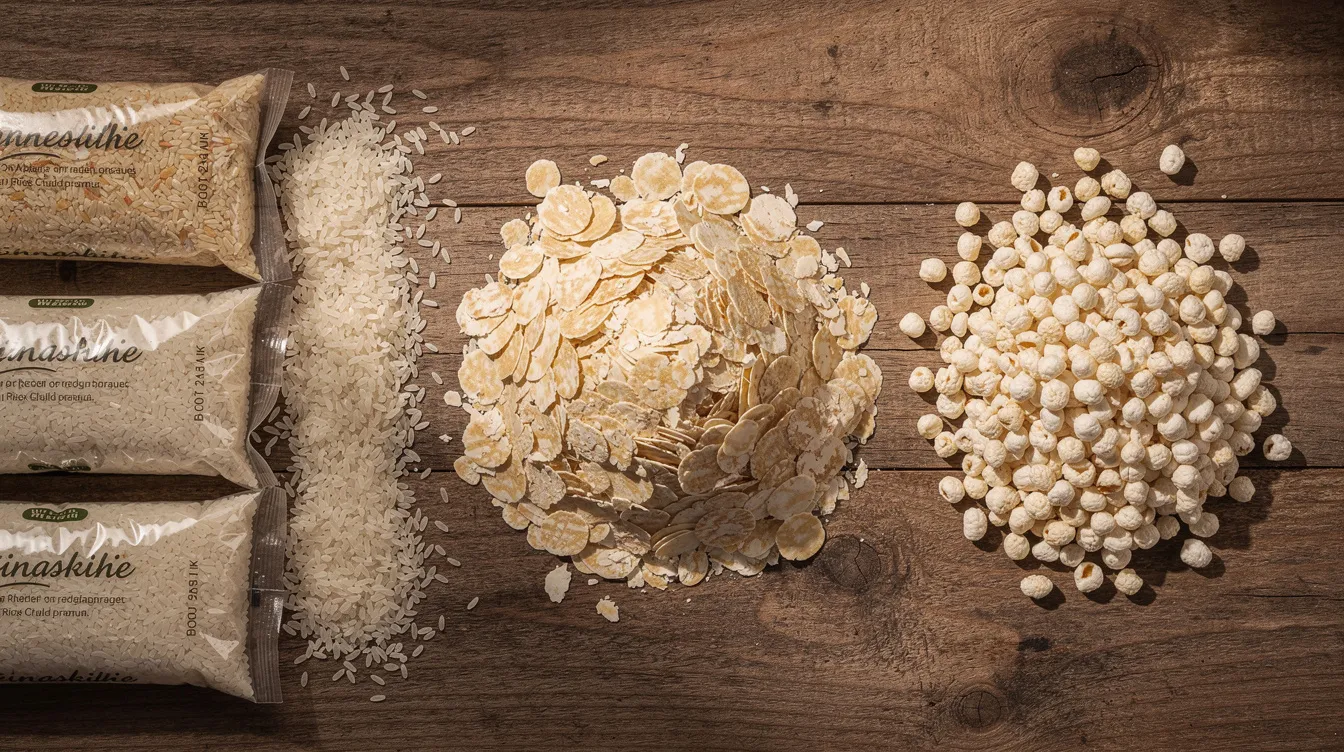
Products to evaluate: raw rice production, parboiled rice production, steamed rice production, premium/sortex rice, poha (rice flakes), puffed rice (murmura), ready-to-cook mixes, cup poha and rice snacks. Product mix also affects packaging line capacity, branding budget, distribution setup and working capital requirement.
Key Product Streams: Raw Rice, Parboiled, Steamed and Premium Rice
Most integrated plants derive major volume from core segments. Raw white rice serves wholesale and institutional buyers with moderate margins but stable demand. Parboiled rice production requires additional soaking tanks, steam generation, dryers and water treatment; parboiling introduces additional requirements for water and heat capacity. High broken rice percentage should stay below 3 to 5 percent for premium grades. Steamed rice serves specific regional markets with distinct positioning.
Plant capacity may be shared between products; for example, 60% raw rice and 40% parboiled based on market demand, with allocation reflected in the DPR’s production planning tables. Better quality rice with controlled grain length, low broken grains and proper brown rice removal through whitening machines commands higher prices. Energy consumption in rice processing plants can vary between raw and parboiled rice operations, directly impacting operational costs and feasibility.
Value-Added Rice Products: Poha, Puffed Rice and Ready-to-Cook Lines
Many modern rice mill owners now consider adding value added rice products to improve margins and utilize broken rice more profitably. Poha / rice flakes production requires a separate processing line with specific paddy varieties and flaking roasters; promoters considering this module should review the Instant Poha Manufacturing Plant Project Report & DPR.
Puffed rice / murmura needs dedicated puffing equipment and serves large snack and breakfast markets across India. A detailed Puffed Rice Manufacturing Plant Project Report & DPR covers the technical and financial considerations. Ready-to-cook breakfast mixes represent an advanced stage of integration; cup poha and single-serve convenience packs add branding and packaging cost but capture higher market reach. Integrated snack manufacturing using poha and puffed rice as base ingredients can further diversify revenue.
Integrated Product Mix Models and Strategic Choices
There is no single ideal product mix. Promoters choose based on risk appetite and market strength.
| Model | Main Products | Marketing Complexity | Working Capital Intensity | Risk Level |
|---|---|---|---|---|
| Conventional Rice Mill | Raw/parboiled rice, broken, bran, husk | Low | Moderate | Lower |
| Value-Added Model | Premium sortex rice, poha, puffed rice, packaged rice, by-products | Medium-High | Higher | Moderate |
| Diversified Integrated | Milling + value-added + breakfast mixes + by-product optimization | High | High | Higher but diversified |
The conventional model offers simpler operations but moderate margins. The value-added model targets higher profitability but needs distribution and brand investment. The diversified integrated model smooths cash flows but requires stronger capital, advanced machinery and experienced management. A well-planned Poha Manufacturing Project Report can help evaluate the value-added route specifically.
Yield and Material Balance: From Paddy Input to Outputs and By-Products
Rice processing plant capacity is specified on a paddy input basis, while sales are expressed in finished rice and by-products. Yield assumptions are therefore central to every DPR. A 30 TPD rice milling line yields approximately 19 to 21 tons of milled rice from paddy input.
According to government diagnostic data, typical output streams from paddy at standard 14% moisture:
| Output Stream | Indicative % from 100 t Paddy | Illustrative Tonnes |
|---|---|---|
| Head rice (milled rice) | 65-68% | 65-68 |
| Broken rice | 2-5% | 2-5 |
| Rice bran (bran layer) | 8% | 8 |
| Rice husk (outer husk) | 21-22% | 21-22 |
| Process/handling losses | 1-2% | 1-2 |
Illustrative only. Recovery varies with paddy variety, moisture, milling technology and operator efficiency.
Over-optimistic yield assumptions can make a DPR look attractive on paper but will be challenged by experienced bankers and technical appraisers. Automating moisture control in rice processing is key to maintaining quality and yield consistently.
By-Product Revenue: Broken Rice, Rice Bran and Rice Husk Utilization
In integrated rice processing plant capacity and product mix planning, by-product treatment is a major lever for improving profit margins. Broken rice utilization includes flour milling, starch extraction, brewing ingredients, cattle/poultry feed and extrusion snacks. Rice bran utilization covers its sale as feed ingredient and, at larger scales, integration with rice bran oil extraction; storage must address rancidity within hours of milling.
Rice husk utilization as boiler fuel for parboiling and dryers offsets power and fuel costs. Excess husk sells to biomass power plants or briquette makers. Utilizing by-products like rice husk for energy can enhance the economic viability of rice processing plants. All by-product quantities and prices should be separately shown in the revenue model and financial projections, not hidden inside average rice prices.
Capacity Planning, Project Cost and Investment Implications
Higher rice processing plant capacity in TPH directly drives up rice processing plant project cost across every head: machinery, civil construction, utilities, material handling, storage and working capital. Rice processing plant setup costs range from USD 120,000 to USD 600,000 depending on scale and configuration. A detailed breakdown of Integrated Rice Mill Plant Setup Cost in India covers these components for different TPH ranges.
For reference, a 1 TPH raw rice mill had a project cost of approximately ₹0.80 crore with DSCR ~2.56 and IRR ~19%. A 6 TPH parboiled plant had total investment of approximately ₹34.25 crore with break-even at ~50%. In practice, I evaluate at least two capacity options in project reports to show promoters the difference in project cost, required equity, term loan and DSCR.
Plant Capacity, Land, Layout and Utilities
Rice processing plant capacity planning cannot be separated from land, rice mill layout and utilities. A rice processing plant typically requires 400 to 1,400 square meters; a 50 TPD rice mill plant requires 900 to 1,400 square meters of space. A 20 TPD rice milling plant requires 55 to 75 kilowatts of connected load. How much land is needed depends on TPH capacity, storage godowns, truck yard, utility blocks and provision for future expansion bays.
Plant layouts should facilitate logical material flow to reduce material handling costs and cross-traffic delays. Higher capacities need stronger electrical infrastructure, often a dedicated high-tension connection. Environmental clearances and food safety compliance become more demanding at larger scales. A well planned layout accommodates site development, paddy separation areas and construction costs proportional to capacity. Flexibility in facility design allows for adaptation to variable paddy quality and processing requirements.
Paddy Procurement, Raw Material Storage and Working Capital Linkage
Plant capacity decides how many tonnes of raw paddy must be procured and stored at peak season. In most Indian states, heavy seasonal buying during harvest creates large inventory peaks requiring godowns or silos covering 3-6 months. Higher storage and procurement volumes substantially raise working capital requirement, which must be factored into term loan plus cash credit planning and CMA data.
Details on Paddy Procurement & Raw Material Planning for Rice Mill and storage sizing should be part of every bankable DPR. Operating costs are primarily driven by raw material consumption, accounting for 80-85% of total operating cost in most rice processing mills.
Balancing Capacity Across Process Sections and Production Planning
In integrated rice processing plant production planning, all major sections must be capacity-balanced. The process begins at paddy cleaning and flows through drying, milling, grading, paddy separation, colour sorting and packaging. Effective capacity must consider each processing stage’s throughput to avoid bottlenecks in operations.
Common bottleneck spots: dryers (must handle moisture load), boilers (steam capacity for parboiled lines), colour sorters and packaging lines. A 20 TPD rice milling plant processes about 20 metric tons of paddy daily, but only if every section can handle that throughput. Implementing a preventive maintenance culture helps reduce unplanned downtime in rice processing operations. Proper roller calibration is essential for husking efficiency and maintaining higher efficiency across the milling process.
Machinery Selection for Integrated Value-Added Rice Processing
Machinery should be selected around the intended product mix, not just headline paddy TPH. Core rice mill equipment includes cleaners, destoners, dehuskers, polishers, whitening machines, graders and colour sorters. Product-specific advanced machinery covers parboiling tanks, poha roasters, puffing units and consumer packaging systems.
Automation reduces operational costs in rice milling plants and ensures consistent output, but over-automation at medium scale can inflate project cost. Promoters evaluating Instant Poha & Ready-to-Cook Rice Products Machinery & Equipment should ensure the investment is justified through their feasibility study. Equipment selection must match the rice mill business goals, not just vendor availability.
Linking Capacity Planning to Revenue Model and Product Mix
Every tonne of planned capacity must appear transparently in the sales and revenue model:
Sales Volume (per product) = Available Capacity × Capacity Utilization × Allocation % in Product Mix
Each major product, whether processed rice, packaged rice, poha, bran or husk, should carry separate selling prices and volume assumptions. Gross profit margins for rice processing typically range between 15-25%. Bank appraisers take a hard look at the realism of product mix and price assumptions, especially for value-added products where market reach is unproven.
Operating Cost, Working Capital and Capacity Decisions
Every increase in capacity impacts both operating cost structure and working capital block. Major cost heads include raw paddy cost, power costs (for a 30 TPD rice milling plant, power costs range from USD 8 to USD 14 per ton), fuel, labor costs, repairs, packaging, transportation costs, logistics and quality control overheads. Labor availability, transportation networks and power requirements all vary by location.
Bigger plants tie up more working capital in paddy inventory, WIP and finished goods. The Working Capital for Puffed Rice Plant guide illustrates similar working capital dynamics applicable to integrated rice projects.
Impact on Profitability, Break-Even, DSCR and Project Feasibility
Final selection of rice processing plant capacity and product mix must be validated through financial projections, break-even and DSCR analysis. A well-engineered rice milling line can achieve ROI within 24 to 36 months under reasonable utilization assumptions. The Puffed Rice Plant Feasibility, ROI, IRR & Payback Analysis demonstrates how such analysis is structured for value-added rice products.
DSCR is sensitive to both capacity utilization and product mix. In one sample DPR for a 2 TPH plant in Odisha, average DSCR was 1.97 against a benchmark of 1.75; over-optimistic assumptions would have inflated this number and risked rejection during appraisal. Break-even typically falls near 50% capacity utilization for well-structured projects.
Bank Finance Perspective: Capacity Planning, Term Loan and DSCR
From a bank finance perspective, capacity planning has to look reasonable compared to paddy availability, promoter experience and projected turnover. Banks evaluate proposed rice processing plant capacity by comparing it with regional norms, the promoter’s track record, technical reports and paddy catchment area.
Term loan size is aligned to project cost, projected cash accrual and DSCR. Many lenders look for financial assistance eligibility tied to realistic utilization, not aspirational numbers. The Bank Loan & Project Finance for Puffed Rice Plant page illustrates how project finance proposals are structured. Realistic capacity utilization assumptions are critical for sustainable DSCR projections that ensure long term success with lending institutions.
Feasibility Study, Sensitivity Analysis and Risk Management
An integrated rice processing plant feasibility study should test capacity and product mix against adverse scenarios: lower utilization, lower selling prices, higher paddy prices, higher power/fuel rates, less favourable recovery and delayed market acceptance. A 10% increase in paddy purchase cost can drop DSCR from 1.5 to approximately 1.2 under leaner utilization.
Do not finalise capacity or place machinery orders until at least one round of sensitivity analysis has been completed on the DPR assumptions. This step is non-negotiable in any serious project report.
Parboiled Rice Capacity as Part of Integrated Product Mix
Adding parboiled rice production changes the entire project configuration. It requires soaking tanks, steam generation via boilers, dryers, water treatment and effluent systems. Construction costs and land cost increase. The proportion of TPH allocated to parboiled vs raw rice should reflect local market demand and paddy characteristics.
Parboiling impacts project cost, working capital and DSCR. Assess these before committing to this module. Competitive advantage in parboiled rice comes from operational efficiency in steam and drying sections, not just milling.
Deciding the Optimum Product Mix: A Practical Framework
Capacity and product mix decisions must be taken together. Changing one without adjusting the other makes projections unrealistic.
| Criterion | Raw Rice | Parboiled Rice | Premium Sortex | Poha/Puffed Rice |
|---|---|---|---|---|
| Market demand clarity | High | Medium-High | Medium | Medium |
| Machinery compatibility | Standard | Needs boiler/dryer | Needs sorters | Separate line |
| Working capital intensity | Moderate | Higher | Moderate | Lower per unit |
| Profit margins potential | Moderate | Moderate-High | Higher | Higher |
| Promoter experience needed | Lower | Medium | Medium | Higher |
For larger integrated projects, engaging a professional DPR consultant to run detailed product mix simulations is advisable before freezing machinery.
Common Capacity Planning and Product Mix Mistakes
Over the years, many rice processing projects in India underperform because of recurring mistakes:
- Buying machinery first, then searching for the market
- Selecting capacity purely on vendor recommendations without market research
- Assuming 100% utilization from Year 1 with no justification
- Ignoring paddy seasonality and storage needs
- Underestimating working capital requirements for seasonal procurement
- Overestimating recovery percentages beyond what paddy variety and technology support
- Offering too many SKUs from the start without ensuring compliance on packaging and branding
- Ignoring packaging capacity as a bottleneck
- Not planning utilities (power, water, steam) for the chosen TPH
- Neglecting by-product monetisation in the revenue model
In my consulting experience, I have seen plants where 10 TPH machinery was installed in districts producing barely enough paddy for 5 TPH utilization; corrections required expensive procurement from distant mandis, wiping out margins.
Structuring a Professional DPR for an Integrated Rice Processing Plant
Banks, investors and subsidy authorities expect a data-backed DPR for medium and large integrated rice processing projects. A bankable DPR should cover: installed capacity (TPH), annual operating capacity, working days and shifts, capacity utilization ramp-up, raw material requirement, yield and material balance, finished goods and by-products, product mix, selling prices, operating cost, project cost, working capital, profitability, break-even, DSCR, IRR, sensitivity analysis and necessary licenses.
At Project Report Bank, DPRs are prepared to be bankable: aligned with bank norms, CMA data requirements and practical assumptions that withstand appraisal. Vendor quotations, rice mill layout drawings and process flow diagrams should support the proposed capacity. Promoters planning integrated rice processing plants above ₹1-2 crore investment should seek professional help rather than relying on generic templates. A Comprehensive Rice Mill Project Report covers the full scope of documentation needed.
Practical Example: Illustrative Integrated Rice Processing Capacity and Product Mix
Consider an 8 TPH integrated rice processing plant in a rice-growing district of Eastern UP, operating 16 hours/day and 300 days/year. The plant’s production capacity on paddy input basis: 38,400 tonnes/year. At 75% utilization (Year 3), actual paddy processed: 28,800 tonnes.
| Output | Yield % | Quantity (t) | Allocation | Indicative Revenue Share |
|---|---|---|---|---|
| Head rice | 67% | 19,296 | 50% raw, 30% parboiled, 20% premium | ~82% |
| Broken rice | 3% | 864 | Feed/flour | ~3% |
| Rice bran | 8% | 2,304 | Feed/oil | ~5% |
| Rice husk | 21% | 6,048 | Boiler fuel + sale | ~2% |
| Losses | 1% | 288 | – | – |
Illustrative. Not a promise or guaranteed result. Actual yields, prices and profitability depend on paddy variety, technology, market and management.
With this volume, indicative annual turnover from all products falls in a range that comfortably supports a term loan with DSCR above 1.5, provided paddy procurement is consistent and operating cost is controlled. Working capital requirement for 3-4 months paddy stock at this scale demands careful cash credit planning and safety protocols around storage.
Conclusion: Aligning Capacity, Product Mix and Finance Before Investing
There is no single “best” rice processing plant capacity. The optimum capacity is the level where raw paddy can be procured consistently, machinery can be utilized efficiently, products can be sold without excessive inventory, working capital remains manageable, project debt remains serviceable, adequate profitability and cash accrual can be generated, and future expansion remains possible.
Integrated rice processing plant capacity planning must always be done alongside product mix planning, by-product strategy, project cost estimation, working capital assessment and risk analysis. In my consulting practice, I advise promoters to freeze capacity only after a structured feasibility study and DPR have been prepared and discussed with bankers. Actual results depend on local conditions, paddy quality, technology, management capability, business goals and market behaviour.
Entrepreneurs planning an integrated rice processing plant in India can approach Project Report Bank for customised project reports, feasibility reports, CMA data, financial projections and bank loan documentation tailored to their specific capacity and product mix. Professional preparation of these documents is the difference between a new plant that secures finance smoothly and one that struggles through repeated appraisal cycles.
FAQ: Integrated Rice Processing Plant Capacity Planning & Product Mix
What is a reasonable starting capacity for an integrated rice processing plant in a district-level town?
In many Indian districts, 4-8 TPH is a common starting range for commercial integrated plants. A 20 TPD rice milling plant processes about 20 metric tons of paddy daily, which translates to roughly 2.5 TPH on a single shift. The right choice depends on paddy catchment area, competition from existing mills and the promoter’s financial capacity. Validate any number through a structured feasibility study and financial projections before ordering machinery.
Can I start with raw rice only and later add parboiled, poha or puffed rice lines?
This is feasible and often advisable. Design land, layout and utilities from day one for future integration, but invest in additional modules only after raw rice operations and cash flows stabilise. This approach reduces initial project cost, limits debt exposure and gives promoters time to build distribution and market understanding for higher profitability products.
How often can I change my product mix once the plant is commissioned?
Within core milling, the split between raw and parboiled rice can be adjusted seasonally as long as machinery, boilers and dryers are sized and scheduled suitably. Value-added products like poha and rice snacks need more stable planning because they involve branding, packaging SKUs, distribution commitments and ensure compliance with food safety and quality standards.
Is it viable to operate an integrated rice processing plant only during harvest season?
Purely seasonal operation is usually not ideal because machinery depreciation, loan EMIs and fixed costs run year-round. Some plants operate at higher load during 4-6 peak months and lower load in off-season. Such patterns must be built explicitly into capacity utilization and cash flow planning in the DPR so that bankers can evaluate annual debt service ability accurately.
Do banks in India insist on a minimum DSCR for rice processing plant loans?
While norms vary by bank and scheme, many lenders look for an average DSCR of around 1.3-1.5 over the loan tenure. A sample 2 TPH project in Odisha showed average DSCR of 1.97, well above the 1.75 benchmark required by that lender. DSCR is driven by realistic capacity utilization and product mix assumptions, which must be well-supported in the project report prepared by a qualified consultant.