
India’s café industry is experiencing a shift that goes well beyond coffee. With over 5,339 branded coffee shop outlets operating across the country and the segment growing at roughly 12.7% year-over-year, the opportunity for new entrants has never been stronger. Millennials aged 25-34 drive India’s cafe industry, and their preference for quality experiences over simple transactions is reshaping how cafés operate. Remote working culture, premium coffee demand, and the rise of experiential dining have turned the humble coffee shop into a serious business opportunity.
Urban areas show a 10.15% annual growth in coffee retail chains, and this momentum is spreading into Tier-2 and Tier-3 cities. Young professionals prefer premium coffee offerings, and they are willing to spend money on great coffee served in a well-designed physical space. Innovative café business ideas for 2026 focus on unique experiences and technology-from co working cafes to cloud kitchens.
Whether your initial investment budget is ₹2 lakh or ₹60 lakh, there is a cafe business concept that fits. In this guide, I have covered 35 profitable café startup ideas with real investment figures, profit margins, licensing requirements, and financing options to help you make an informed decision.
How We Chose the Best Cafe Business Ideas
As a practicing Chartered Accountant who has prepared project reports for dozens of food business ventures, I evaluate every café concept against these parameters:
- Investment feasibility – Startup costs from low cost kiosk formats (₹2-5 lakh) to premium specialty setups (₹25 lakh+)
- Market demand – Target customer density, footfall patterns, and spending habits in Indian cities
- Profit margins – Beverage margins of 70-80% versus food margins of 30-45%, and how each concept leverages them
- Scalability – Can the business model be replicated or franchised?
- Break even timelines – Kiosks often reach the break even point in 6-9 months; larger formats take 12-18 months
- Skills required – From basic operations to barista-level expertise
- Location flexibility – Fixed premises versus mobile or cloud-based operations
- Compliance ease – Licensing complexity varies significantly between formats
Your business plan must define your unique selling proposition clearly, because in a crowded market, the concept alone does not guarantee success-execution and financial management do.
Table of Contents
Top 35 Profitable Cafe Business Ideas for India
1. Traditional Coffee Cafe
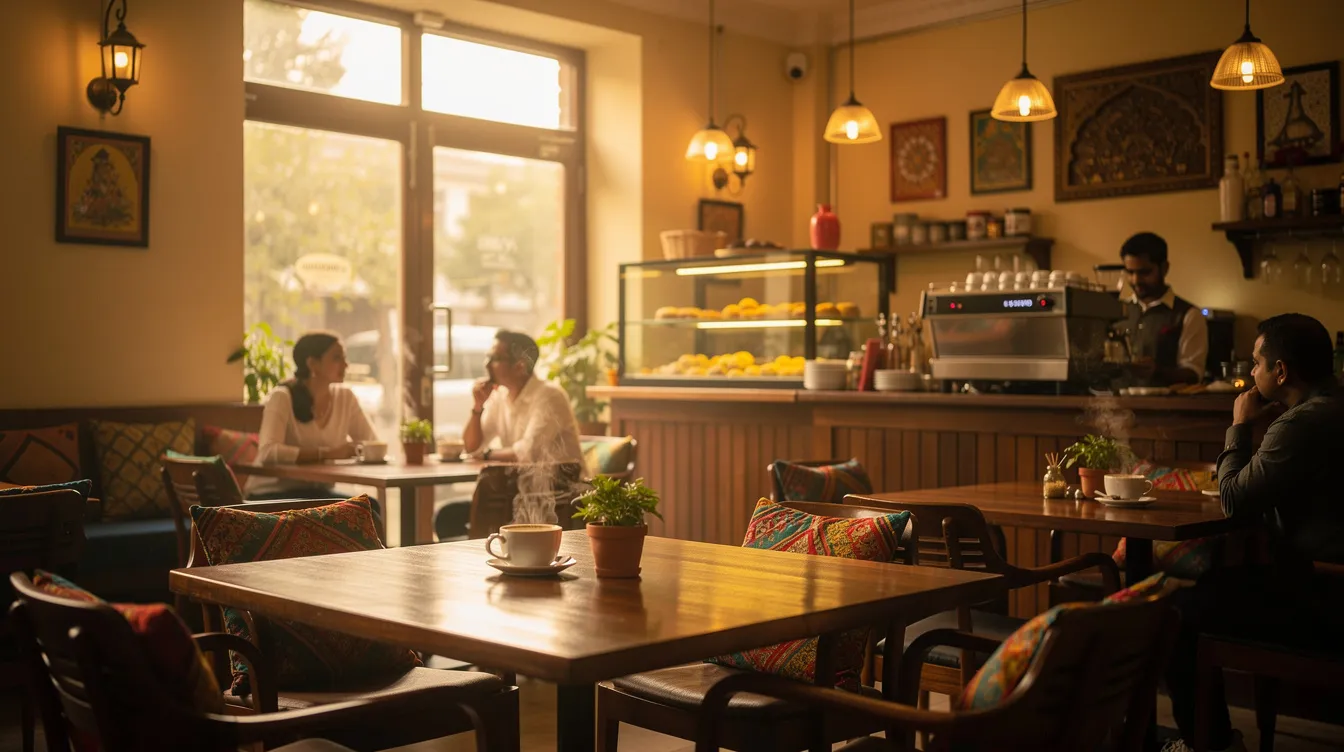
A classic espresso-based café serving cappuccinos, lattes, filter coffee, cold brew, and signature drinks with light snacks. This is the proven business model that anchors India’s café industry.
Why It Stands Out: Universal appeal with steady demand across demographics. A cappuccino costing ₹20-25 in raw materials sells for ₹150-180 in urban cafés-that is a gross margin of 70-80%.
Best For: First-time entrepreneurs in urban and semi-urban areas.
- Investment: ₹8-25 lakhs depending on city and scale
- Space: 500-1,200 sq ft ideal
- Target customers: Office workers, students, couples
- Profit potential: Net margins of 12-20% when well-managed
- Strengths: Proven demand, repeat visits, multiple menu expansion possibilities
- Limitations: Intense competition from large chains; location determines up to 50% of cafe success
2. Chai-Coffee Hybrid Cafe
Combines traditional Indian chai culture with modern coffee offerings, cold pressed juices, and regional beverages. This business concept appeals to both tea and coffee drinkers under one roof.
Why It Stands Out: Lower average ticket size attracts more customers in price-sensitive markets. The menu flexibility keeps food costs manageable.
Best For: Tier-2 and Tier-3 cities with traditional preferences.
- Investment: ₹10-18 lakhs
- Revenue streams: Beverages, snacks, seasonal specials, delivery
- Strengths: Broader customer base, lower ingredient costs
- Limitations: Brand positioning can feel diluted without a clear identity
3. Takeaway Coffee Kiosk
Compact grab-and-go format with minimal seating, targeting office districts, railway stations, and transit hubs. Takeaway kiosks can start with ₹2-5 lakh investment.
Why It Stands Out: Lowest investment with the fastest breakeven among all café formats-typically 6-9 months.
Best For: Entrepreneurs with limited capital near high foot traffic zones.
- Investment: ₹2-5 lakhs
- Space: 50-150 sq ft
- Operational efficiency: 1-2 staff, focused menu of 8-12 items
- Strengths: Minimal rent, high beverage margins, quick ROI
- Limitations: Revenue ceiling without seating; entirely dependent on location and footfall
4. Book Cafe
Coffee service combined with a curated reading space, book sales, or library-style membership. Cafés can increase customer dwell time by offering interactive workshops or craft experiences alongside books.
Why It Stands Out: Longer customer stay duration increases per-customer revenue. Book cafes typically require an investment of ₹15-30 lakh.
Best For: Areas near universities, colleges, and residential neighborhoods. Cafes near colleges attract more customers.
- Target demographics: Students, readers, remote workers
- Revenue model: F&B sales + book sales + membership fees + latte art workshops and reading events
- Strengths: Strong loyal customer base, community engagement
- Limitations: Higher interior investment, slower table turnover
5. Co-working Cafe
Provides workspace with high-speed Wi-Fi, charging stations, meeting corners, and quality coffee. Co-working spaces provide high-speed Wi-Fi and charging stations to attract remote workers.
Why It Stands Out: Dual revenue from workspace rental and F&B sales. Coworking cafes have increased flexible workspace leasing by 43%.
Best For: Freelancers and remote workers in metro and Tier-1 cities.
- Investment: ₹20-40 lakhs
- Membership models: Daily, weekly, monthly passes alongside regular café billing
- Technology: POS systems, booking software, high-speed internet infrastructure
- Strengths: Predictable revenue through subscription models in cafés that can guarantee steady income
- Limitations: Higher setup cost for furniture, comfortable seating, and connectivity infrastructure
6. Gaming Cafe
Combines PC/console gaming setups with coffee and snacks. Experiential cafés encourage interactive elements to increase customer dwell time.
Why It Stands Out: High engagement-customers stay 2-4 hours, spending on beverages and food throughout.
Best For: Youth-centric areas near colleges; gaming enthusiasts aged 16-30.
- Investment: ₹25-45 lakhs (gaming equipment is capital-intensive)
- Strengths: High per-customer revenue, increasingly popular among Gen Z
- Limitations: Equipment maintenance, rapid technology obsolescence, niche market
7. Pet-Friendly Cafe
Welcomes pets with dedicated seating areas, pet-safe treats, and play zones. Pet-friendly cafés can attract animal lovers and drive social media engagement.
Why It Stands Out: Emotional connection with pet owners creates loyalty and word-of-mouth marketing. Reimagined café spaces can create buzz on social media by transforming unusual buildings into cozy spots.
Best For: Metropolitan areas with high pet ownership.
- Investment: ₹20-40 lakhs
- Strengths: Viral social media potential, strong loyal customers
- Limitations: Additional hygiene protocols, separate pet and non-pet zones needed, specialized licensing
8. Health & Organic Cafe
Focuses on organic coffee, plant-based foods, sugar free desserts, cold pressed juices, and health-conscious options. Artisanal cafes focus on sustainability and locally sourced products to attract eco-conscious consumers.
Why It Stands Out: Premium pricing justified by health-focused urban customer base. Health-focused cafes can cost between ₹15-25 lakh to start.
Best For: Health-conscious customers in upscale urban areas.
- Supplier requirements: Reliable organic supply chain, potentially eco friendly packaging certification
- Strengths: Higher ticket sizes, growing health awareness market
- Limitations: Higher ingredient costs, need for verified local suppliers and certifications
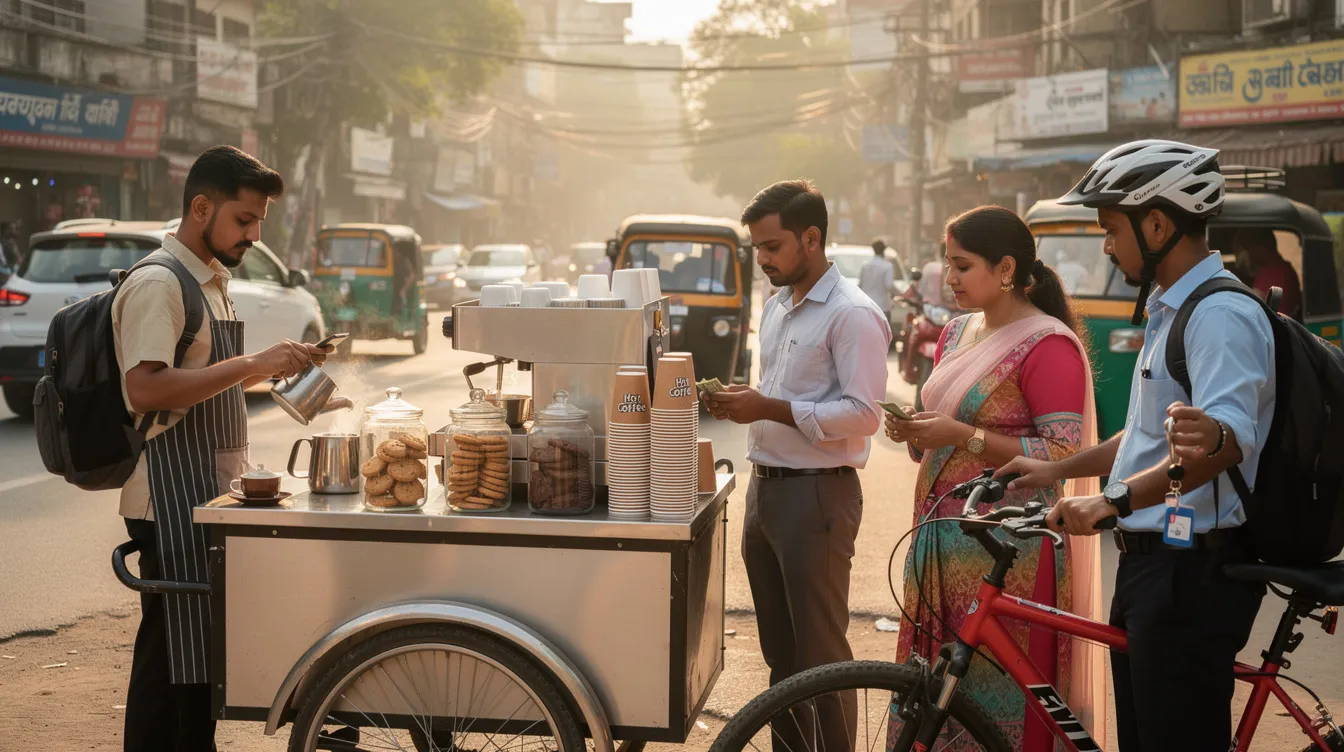
9. Mobile Coffee Van/Cart
A moveable coffee service targeting events, corporate offices, and festival circuits. This is similar to the food truck business model but focused specifically on beverages.
Why It Stands Out: No rental costs and flexibility to target different locations daily.
Best For: Event coverage, corporate tie-ups, weekend markets.
- Investment: ₹3-8 lakhs
- Licensing: Mobile vendor permits, parking permissions, FSSAI
- Strengths: Low fixed costs, ability to test multiple locations, event-based revenue
- Limitations: Weather dependency, limited menu, regulatory complexity for mobile operations
10. Cloud Kitchen Cafe
Delivery-only café operating through Swiggy, Zomato, and direct ordering without dine-in space. Cloud kitchens in India are projected to reach ₹3,200 crore by 2025. Cloud kitchen cafes require ₹5-12 lakhs to start.
Why It Stands Out: Lowest real estate costs. Digital platforms help cafes reach more customers through delivery services.
Best For: Dense residential areas with high delivery app usage.
- Platform partnerships: Commission rates of 18-25% on aggregator platforms
- Kitchen optimization: Focused menu of 15-20 high-margin items
- Strengths: Low overhead, data-driven daily operations, scalable
- Limitations: Zero brand visibility offline, complete platform dependency, pricing changes by aggregators affect margins
11. Rooftop Cafe
Open-air dining with city views, ambient lighting, and an Instagram-friendly setup. Investment ranges from ₹20-40 lakhs including structural modifications.
Why It Stands Out: Unique ambience commands premium pricing. Perfect location for couples, groups, and social gatherings.
Best For: Tourist areas, metro cities with pleasant weather seasons.
- Strengths: High social media appeal, event hosting potential
- Limitations: Weather dependency, structural safety approvals, seasonal revenue fluctuation
12. Highway Cafe
Located on national highways catering to travelers and truckers with quick-service food and beverages. Similar to models seen in fast food restaurant setups.
Why It Stands Out: Captive customer base with minimal competition in specific highway stretches.
Best For: Highway-adjacent locations between major cities. Investment: ₹15-30 lakhs.
- Strengths: 24/7 revenue potential, lower rental costs outside cities
- Limitations: Remote location logistics, staffing challenges, requires parking space
13. Art & Music Cafe
Cafés can serve as cultural hubs by displaying local artwork and hosting live music. This coffee shop concept blends cultural experience with food and beverage service. Cafés that exhibit local art can attract foot traffic and enhance community ties.
Why It Stands Out: Creates a distinctive coffee shop experience. Community engagement through local events can enhance café visibility and customer loyalty.
Best For: Creative neighborhoods, cultural districts, college towns. Investment: ₹15-35 lakhs.
- Strengths: Multiple revenue streams (events, art sales, F&B), strong local community following
- Limitations: Music license requirements, variable event revenue, needs creative curation
14. Dessert & Ice Cream Cafe
Specialty dessert-focused café combining artisanal desserts, ice cream, and coffee. Seasonal and pop-up concepts keep café menus fresh and Instagrammable.
Why It Stands Out: High impulse-purchase potential and family-friendly appeal.
Best For: Mall locations, tourist areas, family neighborhoods. Investment: ₹12-25 lakhs.
- Strengths: High margins on desserts (50-65%), family and youth customer base
- Limitations: Seasonal demand variations, cold chain requirements
15. Franchise Cafe (CCD, Starbucks, Barista)
Operate under an established coffee shop franchise brand with proven systems and marketing support. Franchise options for cafes start from ₹3 lakhs for smaller brands, though premium brands require significantly more.
Why It Stands Out: Eliminates brand-building risk. A successful café often combines a unique identity with memorable experiences and multiple revenue streams-franchises provide this ready-made.
Best For: Investors who prefer established systems over creative risk-taking.
- Investment: ₹10 lakhs (regional brands) to ₹50+ lakhs (international brands)
- Strengths: Built-in customer base, supplier networks, training support
- Limitations: Royalty payments (5-8% of revenue), limited menu flexibility, strict operational guidelines
Beyond these 15, other profitable concepts include: Vegan Cafe, Breakfast Cafe, South Indian Filter Coffee Cafe, Juice & Smoothie Bar, Kids Cafe, Couple Theme Cafe, Village Theme Cafe, Cultural Cafe, Luxury Cafe, Container Cafe, Railway Station Cafe, Airport Cafe, College Campus Cafe, Chocolate Cafe, Bakery Cafe, Office Cafeteria, and Specialty Coffee Roaster (₹25-60 lakhs investment). Each of these shop business ideas follows the same evaluation framework discussed above. Specialty coffee roasters need an investment of ₹25-60 lakh.
Quick Comparison of Top Cafe Business Ideas
| Cafe Concept | Investment Range | Best For | Break Even |
|---|---|---|---|
| Takeaway Kiosk | ₹2-5 lakhs | High foot traffic, low budget | 6-9 months |
| Chai-Coffee Hybrid | ₹10-18 lakhs | Tier-2/3 cities | 10-14 months |
| Book Cafe | ₹15-30 lakhs | University/residential areas | 12-18 months |
| Co-working Cafe | ₹20-40 lakhs | Metro cities, dual revenue | 14-20 months |
| Gaming Cafe | ₹25-45 lakhs | Youth, extended stays | 15-24 months |
| Pet-Friendly Cafe | ₹20-40 lakhs | Metro pet owners | 14-20 months |
| Health Cafe | ₹15-25 lakhs | Premium health-conscious | 12-18 months |
| Mobile Coffee | ₹3-8 lakhs | Events, flexibility | 6-10 months |
| Cloud Kitchen | ₹5-12 lakhs | Delivery-focused | 8-12 months |
| Franchise | ₹10-50+ lakhs | Brand recognition | 12-24 months |
How to Choose the Right Cafe Concept for Your Business
Choose Based on Available Investment Capital
- Low budget (₹2-8 lakhs): Takeaway kiosks, mobile carts, cloud kitchens. These formats let you save money on real estate while testing the market. Self funding is often sufficient.
- Medium budget (₹10-25 lakhs): Traditional cafés, book cafés, health cafés. Starting a cafe in India costs between ₹5-25 lakhs for most standard formats.
- High budget (₹25+ lakhs): Gaming cafés, specialty roasters, franchise options. Consider working capital needs beyond setup costs-most new cafés underestimate this.
Choose Based on Location and Target Market
High-traffic locations boost foot traffic significantly. Ground floor cafes have better visibility and access. Rental costs vary widely based on location type.
- Metro cities: Co-working cafés, specialty coffee concepts, pet-friendly formats
- Tier-2 cities: Chai-coffee hybrids, traditional cafés, gaming cafés
- College areas: Book cafés, gaming cafés, budget-friendly options
- Office districts: Takeaway kiosks, quick-service formats
- Highway/tourist spots: Highway cafés, rooftop formats
Choosing the right location and the best location within that area is critical-this is analogous to choosing the right business in the service industry.
Choose Based on Your Skills and Experience
- No prior F&B experience: Franchise options, simple takeaway formats with limited menu
- Hospitality background: Full-service cafés, specialty concepts
- Tech-savvy entrepreneurs: Cloud kitchens, co-working spaces. Tech-integrated cafés use technology for streamlined ordering and payment processes.
- Creative background: Art cafés, themed concepts, experiential spaces
Which Cafe Business Idea Is Best for You?
- Choose Takeaway Kiosk if you have limited capital and want quick ROI near offices
- Choose Book Cafe if you want longer customer engagement near educational institutes
- Choose Co-working Cafe if you can invest in dual revenue and target metro locations
- Choose Franchise if you prefer established systems and brand recognition
- Choose Mobile Coffee if you want flexibility without rental commitments
- Choose Health Cafe if targeting premium customers willing to pay more money for organic options
Cafés that focus on experiential hooks attract repeat customers by providing more than just coffee. Cafés are moving beyond just selling coffee and focusing on immersive experiences. A positive attitude toward customer satisfaction and continuous improvement matters more than the concept itself.
Investment Requirements and Profit Analysis
Monthly operational costs include rent, utilities, and salaries. Here is a realistic breakdown:
| Cost Head | % of Revenue | Example (₹3L/month revenue) |
|---|---|---|
| Food & Beverage (COGS) | 28-35% | ₹84,000-₹1,05,000 |
| Staff & Labour | 20-30% | ₹60,000-₹90,000 |
| Rent & Occupancy | 8-20% | ₹24,000-₹60,000 |
| Utilities & Marketing | 5-10% | ₹15,000-₹30,000 |
| Net Profit | 15-20% | ₹45,000-₹60,000 |
Food costs typically run about 30-40% of menu prices. Beverage margins remain the strongest profit driver at 70-80% gross margin. Bakery items yield 50-65%, while full meals bring 30-45%.
Break even period: Simple takeaway formats achieve breakeven in 6-9 months. Full-service cafés typically need 12-18 months. Your cafe business plan should include detailed cash flow projections to compare prices, forecast revenue, and plan for seasonal variations.
Essential Equipment and Setup Requirements
| Equipment | Budget Range | Notes |
|---|---|---|
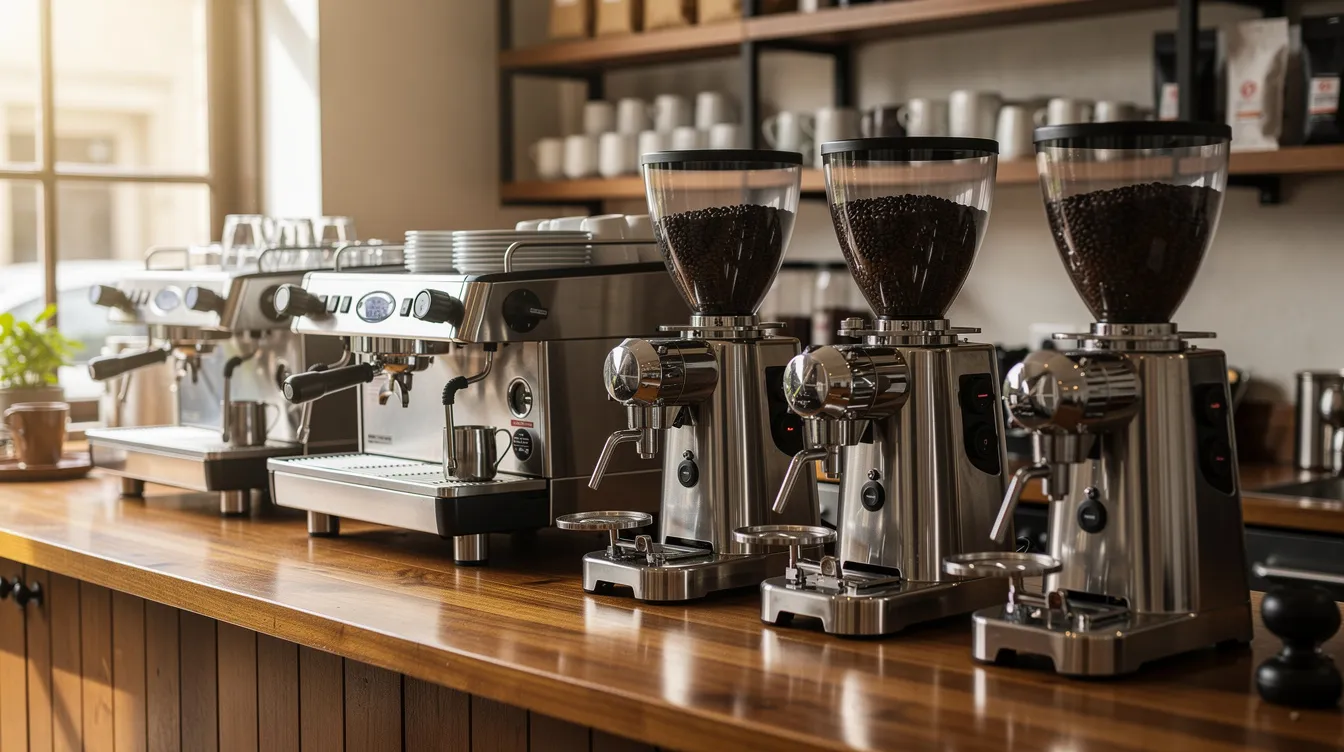
| Coffee Machine (Manual) | ₹25,000-₹80,000 | Suitable for kiosks and small cafés |
| Coffee Machine (Automatic) | ₹1-3 lakhs | For medium to premium cafés |
| Grinder | ₹10,000-₹50,000 | Essential for quality coffee |
| Refrigerator/Freezer | ₹15,000-₹60,000 | Based on menu requirements |
| Display Counter | ₹20,000-₹80,000 | For bakery and dessert items |
| Oven | ₹15,000-₹1 lakh | If serving baked food items |
| POS Software & Billing | ₹10,000-₹30,000/year | Digital payment integration |
| Furniture & Lighting | ₹1-5 lakhs | Defines the ambience and customer experience |
| AC & Ventilation | ₹30,000-₹1.5 lakhs | Climate control for dine-in |
| CCTV | ₹10,000-₹30,000 | Security and operations monitoring |
Procurement tip: Compare prices between new and used equipment. For first-time operators, leasing coffee machines can reduce startup costs significantly.
Legal Compliance and Licensing
Every café in India requires these licenses. As per updated FSSAI thresholds effective April 2026, basic registration now covers businesses with turnover up to ₹1.5 crore.
- FSSAI Registration: ₹100/year for basic; ₹2,000-₹5,000 for state license
- GST Registration: Mandatory once turnover crosses ₹20 lakh/year
- Shop & Establishment Act: State-specific; covers premises and employees
- Trade License: From municipal authority for hygiene and facility standards
- Fire NOC: Required if cooking equipment or gas cylinders are used
- MSME Registration: Optional but provides access to government schemes and benefits
- Music License (PPL/IPRS): Mandatory if playing copyrighted music in art/music cafés
- Signage License: For exterior branding and display boards
Total licensing cost for a small-to-mid café (without liquor): ₹35,000 to ₹1.5 lakh. Most licences can be obtained in 30-60 days if applied simultaneously. Networking is essential for attracting local customers and navigating local regulatory requirements.
Financing Your Cafe Business
A strong business plan helps secure funding and guides operations. A coffee shop business plan outlines startup costs and marketing strategy. Your business plan should include financial projections and market analysis. Most coffee shop business plans should be concise, around 20-30 pages.
Loan Options for Café Entrepreneurs
- Mudra Loan: Up to ₹10 lakh under Shishu/Kishor/Tarun categories. No collateral required. Ideal for kiosks and small cafés.
- MSME Term Loan: For larger setups; requires a detailed project report with DSCR calculations and cash flow analysis.
- CGTMSE Scheme: Collateral-free credit guarantee for loans up to ₹5 crore for eligible MSMEs.
- Working Capital Loan: For inventory procurement, salary management, and daily operations funding.
Collaborating with local businesses boosts visibility and customer traffic, and having local partnerships and a clear marketing strategy strengthens your loan application.
Why a detailed project report matters: Banks evaluate café loan applications based on financial projections, market analysis, break even analysis, and profitability estimates. A professionally prepared DPR significantly improves approval chances. The business structure, revenue model, and competitive market positioning must be clearly documented.
Final Thoughts
India’s café market is growing at 12-15% annually, and the opportunity extends from ₹2 lakh takeaway kiosks to ₹60 lakh specialty roasters. Success depends on matching the right cafe business concept with your available capital, location realities, and personal skills.
Do not skip the market analysis phase. Study your target customer, understand the competitive market in your area, and create a realistic cafe business plan before committing capital. Loyalty programs encourage repeat visits and customer retention-plan these from day one. Social media marketing can showcase your coffee shop menu and engage customers effectively, especially in a competitive market.
For first-time entrepreneurs, I always recommend starting with proven formats-a traditional coffee cafe, takeaway kiosk, or a well-researched franchise. The perfect location combined with a focused menu and disciplined financial management will create more value than an exotic concept in the wrong market.
Cafés can host workshops and events to drive revenue and community engagement. Local events and collaborating with local partnerships around your local coffee shop will help attract customers and build the customer base that sustains long-term profitability.
If you need a professionally prepared Bankable Project Report, Mudra Loan DPR, CMA Report, or customized financial projections for your café venture, feel free to reach out to CA Manish Gugliya. Whether it is a ₹5 lakh kiosk or a ₹50 lakh franchise café, a detailed project report with cash flow projections, DSCR analysis, and break even calculations is what separates approved loan applications from rejected ones.
Frequently Asked Questions
Is cafe business profitable in India in 2026?
Yes. Beverage gross margins of 70-80% and net margins of 15-20% for well-managed cafés make this among the more profitable food business ideas. Quality experiences matter to cafe customers willing to pay more.
What is the minimum investment required to start a cafe?
A takeaway kiosk can start from ₹2-5 lakhs. A mid-sized café requires ₹10-25 lakhs. Starting a cafe in India costs between ₹5-25 lakhs for most formats.
Which cafe concept gives the highest profit margins?
Beverage-focused formats (takeaway kiosks, specialty coffee shops) yield the highest margins due to 70-80% gross margins on coffee.
Can I get a Mudra Loan for my cafe business?
Yes. Mudra Loans under Shishu (up to ₹50,000), Kishor (up to ₹5 lakh), and Tarun (up to ₹10 lakh) categories are available for café startups with a proper project report.
How much space do I need for a small cafe?
50-150 sq ft for a kiosk; 500-1,200 sq ft for a mid-sized café with seating.
What licenses are mandatory for opening a cafe in India?
FSSAI registration, GST, Shop & Establishment Act, Trade License, and Fire NOC are the core requirements.
Should I buy or lease equipment for my cafe?
Leasing reduces initial capital outlay. For first-time operators, leasing espresso machines and ovens can save money and reduce risk.
How long does it take to break even in the cafe business?
Kiosks: 6-9 months. Mid-sized cafés: 12-18 months. Premium formats: 18-24 months.
Which cities are best for opening cafes in India?
Bangalore, Mumbai, Delhi-NCR, Pune, and Hyderabad lead in café density. Tier-2 cities like Jaipur, Indore, Lucknow, and Chandigarh are emerging rapidly.
Can I run a cafe from home legally?
Yes, with FSSAI registration and local municipal approvals. Cloud kitchen or home-bakery models work well for delivery-focused operations.
What is the average monthly revenue of a small cafe?
A well-located small café generates ₹1.5-4 lakh/month. Premium formats in metro cities can exceed ₹8-10 lakh/month.
How do I choose between franchise vs independent cafe?
Franchise suits risk-averse investors with higher capital. Independent cafés offer better margin retention and creative freedom but require building everything from scratch.
What are the biggest challenges in the cafe business?
High rental costs, food wastage, staffing issues, and intense competition from established chains are the primary challenges.
Do I need prior experience to start a cafe?
Not necessarily. Franchise models and simple takeaway formats are designed for beginners. However, understanding coffee business fundamentals and basic financial management is essential.
How important is location for cafe success?
Location determines up to 50% of cafe success. High-traffic areas, ground floor visibility, and proximity to offices or colleges directly impact revenue.
What digital marketing strategies work best for cafes?
Google Business Profile optimization, Instagram marketing, influencer collaborations, Swiggy/Zomato presence, WhatsApp marketing, and loyalty programs work best. Offering free coffee samples during launches drives initial awareness.
Can mobile coffee vans be profitable in India?
Yes, with investment of ₹3-8 lakhs, mobile vans eliminate rent and can target high-footfall events, corporate parks, and weekend markets.
What food safety certifications do I need?
FSSAI registration is mandatory. For organic cafés, additional certifications from recognized bodies (APEDA, India Organic) may be required.
How do I calculate the right menu pricing?
Apply a 3x-4x multiplier on food cost and 5x-6x on beverage cost. Keep overall COGS under 35% of revenue. Regularly review pricing changes based on ingredient cost fluctuations.
What are common mistakes to avoid in cafe business?
Over-investing in interiors while underestimating working capital, choosing a poor location, ignoring online presence, weak menu planning with too many items, and not tracking daily breakeven sales are the most common mistakes I see entrepreneurs make.
- Pulse Cleaning Plant Feasibility Study: ROI, IRR, DSCR and Bank Finance


- Pulse Cleaning & Grading Plant Working Capital & Cash Credit Requirements in India

- Pulse Cleaning & Packing Plant Financial Projections, CMA Data & DSCR

- Pulse Cleaning & Grading Processing Cost, Recovery, Wastage & Profitability in India

- Pulse Cleaning, Grading & Packing Plant Setup Cost & Investment in India

- Pulse Cleaning & Packing Plant Capacity, Land, Building & Layout Requirements

- Pulse Cleaning, Grading, Sorting & Packing Process Flow Explained

- Optical Colour Sorter for Pulses: Technology, Capacity, Price & Selection

- Pulse Cleaning, Grading & Sorting Machinery: Equipment List, Specifications & Cost

- Pulse Cleaning, Grading & Packing Job-Work Business Model & Project Report in India

- Export-Grade Pulse Cleaning, Colour Sorting & Packing Plant Project Report & DPR in India

- Integrated Multi-Pulse Cleaning, Grading & Packing Plant Project Report & DPR in India

- Pulse Protein, Starch & Advanced Ingredients Manufacturing Project Report & DPR

- Pulse Protein Manufacturing Feasibility, ROI & Bank Finance

- Pulse Protein Plant Financial Projections, CMA Data & DSCR