
Key Takeaways
- A pulse cleaning and packing plant handles cleaning, grading, optical sorting and packaging of whole pulses such as chickpeas, lentils, moong, urad and peas – it is fundamentally different from a dal mill that involves dehusking, splitting and polishing.
- Plant capacity (1, 2, 5 or 10 TPH) directly determines machinery configuration, land requirement, shed dimensions, warehouse sizing, project cost and bank finance eligibility.
- Indicative land ranges span roughly 8,000 sq ft for a 1 TPH unit to 2–3 acres for a 10 TPH facility, with built-up processing and storage areas forming 40–60% of total plot area.
- An efficient pulse cleaning and packing plant layout follows a linear material flow from raw material receiving to finished goods dispatch, minimising double handling and maintaining food safety compliance.
- A well-prepared DPR with realistic capacity, infrastructure and financial assumptions is essential for project viability and bank loan approval.
Introduction – Pulse Cleaning and Packing Plant vs Dal Milling
A pulse cleaning and packing plant is a facility designed for cleaning, grading, optical sorting and packaging of whole pulses – chickpeas, tur, masoor, moong, urad, beans, peas and similar grains – without dehusking or splitting. The pulse cleaning and packing plant layout, land allocation, plant capacity planning and storage design directly affect material flow, power consumption, food safety and overall bankability of the project.
This is distinct from a conventional dal mill where dehulling machines remove the outer seed coat, followed by splitting and polishing – operations that require different machinery, higher building height and more complex by-product handling. While pulse processing broadly includes cleaning, dehulling and sorting, a cleaning and packing plant focuses only on the first and last steps, resulting in lower processing losses, simpler machinery and faster throughput.
This article, written from the perspective of CA Manish Gugliya at Project Report Bank, covers capacity options from 1 TPH to 10 TPH, land and building requirements, layout principles and DPR considerations for Indian entrepreneurs planning such investments. For a comprehensive project overview, refer to our integrated multi-pulse cleaning, grading and packing plant project report.
Understanding Pulse Cleaning and Packing Plant Operations
Pulse processing in this context covers cleaning, grading and packing of whole pulses – not dehulling or splitting. The key steps in an efficient pulse-processing line follow a strict sequence from raw intake to final product:
- Raw pulse receiving – truck unloading, weighbridge, sampling for moisture content and impurities
- Pre-cleaning and aspiration – removal of dust, chaff and light contaminants via vibrating sieves and aspirators; modern pulse cleaning machines remove dust and foreign materials effectively
- Destoning and magnetic separation – gravity destoners remove stones; magnets remove metal pieces
- Grading and size separation – cylindrical graders, screens and indented cylinders ensure uniform size; sorting ensures uniform size and quality of processed pulses
- Optional gravity separation – mechanical cleaning uses pre-cleaners and gravity separators for density-based separation
- Optical colour sorting – advanced colour sorters inspect each grain via cameras, rejecting discoloured or damaged grains; pulse cleaning machines can achieve 99.99% purity
- Weighing and packaging – semi-automatic or automatic weighing, sealing and batch coding
- Finished goods storage and dispatch – palletised bags, loading area, FIFO stock rotation
Precision cleaning enhances sorting performance and minimises product loss at each stage. A basic cleaning plant uses only a pre-cleaner, destoner and simple grader, while an export-oriented facility adds multiple optical colour sorters, metal detection and strict hygiene controls. For the detailed pulse cleaning, grading, sorting and packing process flow, refer to our dedicated article.
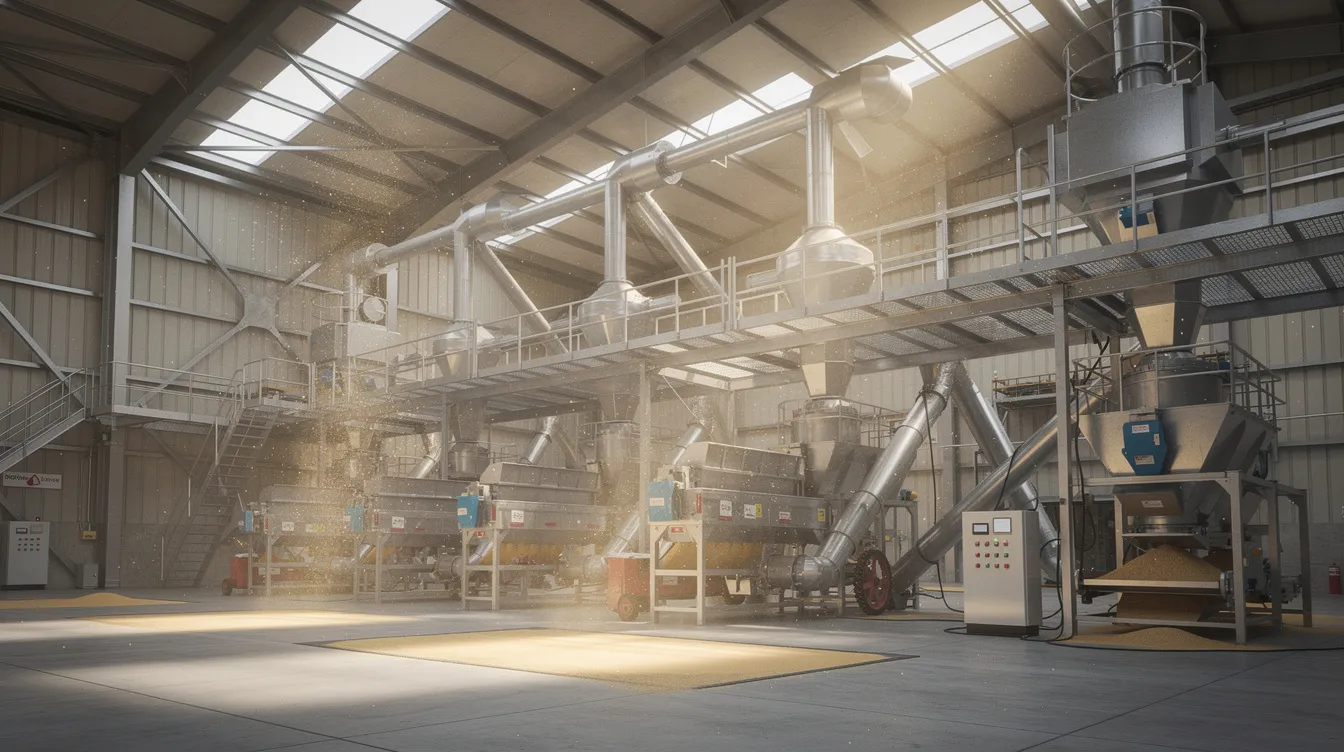
Pulse Cleaning and Packing Plant Capacity Planning (1, 2, 5 & 10 TPH)
Nominal capacity in TPH (tons per hour) translates into daily and annual throughput based on operating hours and shifts. Actual output varies depending on impurity levels, moisture content, product changeovers and maintenance downtime. A vibro cleaner can process pulses at 1 ton per hour, setting a practical benchmark for small-capacity lines. Pulses processing plants can have capacities from 2 to 20 tons per day depending on configuration.
Installed equipment must match production capacity to prevent bottlenecks – a colour sorter rated at 1.5 TPH will constrain a 2 TPH line unless a second unit is added. Automated systems help maintain high throughput in pulse processing, particularly at 5 TPH and above. The capacity choice should factor in whether the unit will run captive operations, merchant processing or contract job-work, seasonal raw material availability, working capital limits and available power supply.
| Capacity | Daily Volume (1 shift / 2 shifts) | Annual Capacity (300 days) | Year-1 Utilisation | Typical Business Profile | Expansion Path |
|---|---|---|---|---|---|
| 1 TPH | 8 / 16 MT | 2,400–4,800 MT | 60–70% | Local job-work, small brands | Add second shift, reserve space for sorter |
| 2 TPH | 16 / 32 MT | 4,800–9,600 MT | 60–70% | Regional brands, aggregators | Upgrade packing line, add colour sorter |
| 5 TPH | 40 / 80 MT | 12,000–24,000 MT | 65–75% | State-level distribution, some export | Parallel lines, bigger storage |
| 10 TPH | 80 / 160 MT | 24,000–48,000 MT | 65–75% | Corporate scale, exporters | Multiple sorters, silos, PLC/SCADA |
For guidance on how capacity determines pulse cleaning, grading and sorting machinery specifications and cost, refer to our equipment article.
Land Requirements for Pulse Cleaning and Packing Plants
Land requirement is capacity-dependent and must consider future expansion, utilities, internal roads and statutory setbacks. All figures below are preliminary planning estimates for India, not rigid standards. Pulse processing plants require ample space for processing and storage. Allocate extra buffer space for future expansion of production lines.
| Capacity | Plot Area (approx.) | Built-Up Area (approx.) | Key Inclusions |
|---|---|---|---|
| 1 TPH | 800–1,200 sq m (8,600–13,000 sq ft) | 370–465 sq m (4,000–5,000 sq ft) | Compact shed, small raw/finished godowns, office |
| 2 TPH | 1,500–2,500 sq m (16,000–27,000 sq ft) | 930–1,400 sq m (10,000–15,000 sq ft) | Larger shed, separate raw/finished storage, truck bay |
| 5 TPH | 1,600–4,000 sq m (0.4–1.0 acre) | 1,500–3,000 sq m (16,000–32,000 sq ft) | Spacious processing shed, warehouses, packing hall, QC lab |
| 10 TPH | 8,000–12,000 sq m (2–3 acres) | 4,000–6,000 sq m (43,000–65,000 sq ft) | Multiple lines, silos, dispatch bays, admin block, heavy utilities |
Typically 40–60% of the plot remains open for circulation, green buffer and truck manoeuvring. Agro-processing parks or industrial estates in states like Madhya Pradesh, Rajasthan and Gujarat offer better power, road connectivity and zoning suitable for pulse processing.
Building and Industrial Shed Requirements
Pre-engineered buildings (PEB) are the most common choice for pulse cleaning plant sheds because they allow clear spans, faster erection and flexibility for tall equipment like elevators and colour sorters. Recommended clear height ranges from 8–10 metres for smaller plants to 10–12 metres for 5–10 TPH units accommodating gravity hoppers and multi-level conveyors. Utilize gravity to move pulses through cleaning stages to reduce damage.
PEB vs RCC comparison:
- PEB – faster construction, lighter structure, flexible spans, cost-effective for 1–10 TPH processing plant sizes; suitable for the main processing shed
- RCC – higher thermal mass, better durability for offices and mezzanine labs, but slower and more expensive for large-span sheds
Civil foundations must handle vibration from destoners, graders and elevator motors. Industrial flooring should be M20-grade concrete or higher with anti-dust hardeners and a smooth, non-slippery finish. Proper zoning in a plant layout can enhance hygiene and prevent contamination. Ensure safety and hygiene through ergonomic design and maintenance access – sealed wall-floor joints, mesh on ventilation openings and adequate pest-control provisions are essential. Fire safety requirements include hydrant points, extinguishers and clearly marked emergency exits per National Building Code norms.
Pulse Cleaning and Packing Plant Layout Design
Designing an efficient pulse cleaning and packing plant requires logical material flow. A linear process flow design minimises handling and contamination risks in pulse processing. The plant layout must comply with food safety standards throughout.
Material flow sequence (block layout):
Raw material receiving yard → intake hopper → bucket elevator → pre-cleaner with aspiration → destoner and magnetic separator → grader/sieve sections → optional gravity separator → optical colour sorter → buffer bins → automatic weighing and bagging → finished goods warehouse → dispatch loading bay
Planning considerations:
- Place receiving and dispatch zones on opposite sides – keep raw and finished products physically separate to prevent re-contamination
- Maintain 1 metre or more clearance around each machine for maintenance access and future upgrades
- Route conveyors in straight or L-shaped paths to reduce spillage; dust collection systems must be positioned to maintain food-grade packaging hygiene
- Separate pedestrian pathways from forklift movement areas
- Reserve space for a future colour sorter addition with controlled dust and lighting conditions
Capacity-Wise Layout Comparison – 1, 2, 5 and 10 TPH
While the basic process sequence remains similar, layout complexity and automation differ significantly across capacities. Modern milling machinery enhances efficiency in pulse processing plants at every scale.
| Parameter | 1 TPH | 2 TPH | 5 TPH | 10 TPH |
|---|---|---|---|---|
| Main machines | 1 pre-cleaner, 1 destoner, 1 grader | 1–2 of each, small sorter optional | Parallel units, 1–2 colour sorters | Multiple lines, 2–4 sorters |
| Packing points | 1 manual | 1 semi-auto | 2 semi-auto or 1 auto | 2–3 automatic lines |
| Manpower/shift | 5–8 | 8–12 | 12–18 | 20–30 |
| Control system | Simple panels | Basic panels | PLC-based | PLC/SCADA |
| Shed dimensions (indicative) | 15×10 m | 20×15 m | 30×20 m | 45×30 m |
Pre-planning for expansion – such as reserving one side of the shed for a second cleaning line – can significantly reduce future civil modification costs. Final layout design should be coordinated with machinery suppliers and structural designers once equipment makes are shortlisted.
Raw Material and Finished Goods Warehouse Planning
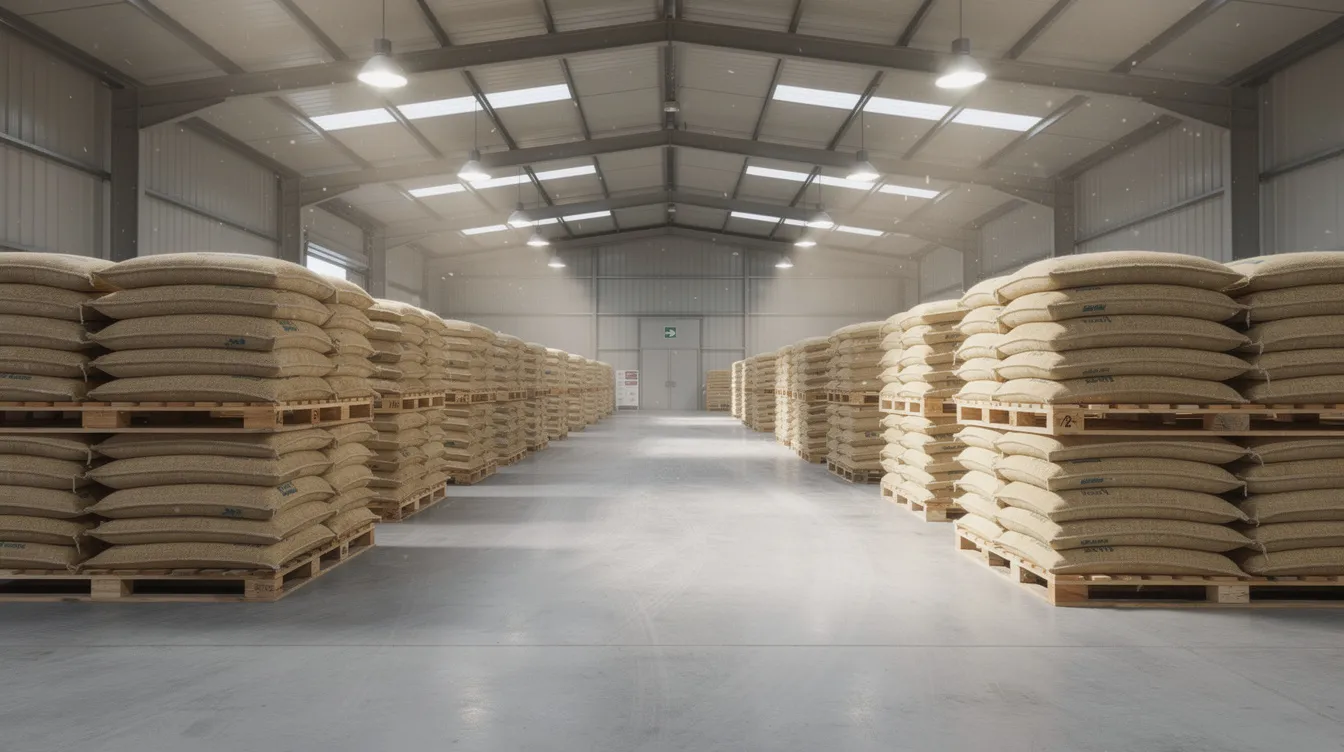
Inventory holding days drive warehouse sizing. A 2 TPH plant operating 16 hours per day processes approximately 32 MT daily; maintaining 15 days of raw material inventory requires storing about 480 MT. At 6–8 bags high, this needs roughly 3,500–4,500 sq ft of covered godown.
Pulses are prone to breakage and moisture sensitivity. Pulses should ideally be stored at a moisture content of 10% to 12% to prevent spoilage. Use wooden or plastic pallets, ensure ventilation, and establish fumigation points. Effective waste management is crucial in pulse processing to reduce losses from infestation or quality degradation.
Finished goods warehouses should segregate different SKUs and bag sizes (25 kg vs 50 kg), follow FIFO stock rotation, and maintain direct access to loading bays. Proper warehouse planning is often underestimated, leading to bags stored in passages – which affects quality, insurance compliance and overall operation of the plant.
Utilities and Supporting Infrastructure
Utilities for a pulse cleaning plant are moderate compared to wet food processing units, but power supply and dust management are critical.
- Electrical – connected loads range from approximately 15–20 kW (1 TPH) to 150–200 kW (10 TPH); a full 1 TPH or higher line typically requires three phase supply. Standalone pulse cleaning machines of a few hundred kg/hr may operate on single phase, but integrated plants cannot. Energy efficiency improvements through VFDs and IE3 motors reduce long-term operating costs.
- Compressed air – required for colour sorter ejectors and some packaging machines; oil-free air with dryer recommended for food-contact applications
- Dust collection – bag filters and cyclones positioned near pre-cleaners, graders and sorters; duct routing must align with the overall plant layout
- Water – minimal for dry-process plants; mainly domestic use and QC
- Backup power – DG set essential in areas with unreliable grid; transformer sizing must consider peak loads
- Solar integration – rooftop panels can partly offset electricity consumption; financial feasibility should be evaluated project-wise
Land, Building and Infrastructure Cost Considerations
Infrastructure cost for a pulse cleaning and packing plant – covering land, building, roads and utilities – can form 35–55% of total project cost depending on location, land price and level of automation. Effective project planning involves accurate assessment of project costs and financial viability.
Major cost heads include land acquisition or lease, site development, PEB fabrication and erection, civil foundations for heavy pulse processing machinery, warehouses, internal roads, electrical installations, dust collection systems, water supply and contingencies. Construction cost per square foot varies widely by location and material – the article avoids quoting fixed rupee values since these must come from local contractor quotations.
A detailed project report derives total infrastructure cost based on finalised plant capacity, selected layout, local authority norms and actual quotations. Promoters should validate assumptions with on-ground data and provide these to their project advisor for realistic DSCR and IRR calculations.
Layout Planning for Export-Grade Pulse Processing
Export-grade pulse cleaning and packing plants targeting customers in Europe, North America or premium Middle East markets require higher standards in layout, hygiene and traceability. Advanced plants ensure 99.99% purity in processed pulses through multi-pass colour sorting and metal detection.
Additional layout features include dedicated zones with controlled access, all-weather covered loading docks, provision for in-house laboratory sampling and documented lot-wise traceability from receiving to container stuffing. Track production metrics to identify areas for operational improvement. The distinction between statutory requirements (FSSAI registration) and voluntary certifications (HACCP, ISO 22000, BRC) matters – the latter may require hand-wash stations, gowning rooms and enhanced pest-proofing details that influence layout and construction cost. Compliance with buyer-specific palletisation and packaging instructions adds further requirements to the packing area.
Common Mistakes in Capacity and Layout Planning
Aggressive capacity assumptions without realistic layout planning create long-term operational bottlenecks:
- Selecting 5–10 TPH capacity based on machinery offers rather than confirmed demand, land size or power availability
- Underestimating warehouse space, leading to outdoor storage and quality deterioration
- Ignoring truck movement paths, causing congestion at gates and loading bays
- Compressing machinery too tightly, leaving inadequate maintenance and cleaning clearance
- Not budgeting for effective dust extraction, resulting in non-compliant working conditions
- Overestimating capacity utilisation (e.g. assuming 90% from year one without accounting for seasonality and changeovers)
Regular maintenance of equipment is essential to prevent breakdowns and maintain efficiency – layout must facilitate easy access. Engaging professional advisors early avoids costly redesigns.
DPR, Financial Projections and Bank Finance Considerations
Banks evaluate not only machinery but also plant capacity justification, land and building adequacy and realistic utilisation assumptions when assessing a pulse cleaning and packing plant project report for term loan approval. Pulse cleaning involves mechanical separation and grading techniques that must be clearly documented.
A bankable DPR should include:
- Justification for chosen capacity based on market demand and job-work potential
- Land and building schedule with plotted areas
- Pulse processing plant layout summary with machinery quotations – leading manufacturers and suppliers should be identified and their quote price documented
- Project cost and means of finance (term loan, promoter contribution, working capital)
- Multi-year projections with DSCR, break-even, ROI, IRR and sensitivity analysis covering lower utilisation, raw pulse price variations and construction cost overruns
- CMA Data aligning projected capacity in TPH and annual MT with realistic sales volumes
Frequently Asked Questions
The following FAQs address common practical questions about pulse cleaning and packing plant capacity, layout and infrastructure.
What plot area is generally sufficient for a 1 TPH pulse cleaning and packing plant?
Many 1 TPH units in India can start within roughly 8,000–10,000 sq ft of industrial land, with about 4,000–5,000 sq ft built-up for the processing shed and a small warehouse, assuming 7–15 days of inventory and scope for modest expansion. The exact requirement will vary depending on local bylaws, storage strategy, provision for future machinery and whether the unit plans to add a colour sorter later. These are planning-level estimates and should be validated through site-specific design.
Can a small pulse cleaning plant run on single phase power?
Standalone pulse cleaning machines rated at a few hundred kg/hr are often available in single phase versions suitable for very small rural units. However, a full 1 TPH or higher cleaning and packing line with multiple motors, elevators and dust collectors typically requires three phase supply. Power availability should be confirmed at the planning stage and included in DPR assumptions, as upgrading electrical infrastructure can add significant cost and delay.
How is a pulse cleaning and packing plant different from a dal mill?
A pulse cleaning and packing plant focuses on removing impurities, grading and packing whole pulses. A dal mill also includes dehulling machines that remove the outer seed coat, splitting operations and sometimes polishing – requiring different machinery, higher power, more complex by-product handling and usually greater building height. Layout complexity and project cost are correspondingly higher for an integrated dal mill compared to a cleaning and packing unit.
How many months does it typically take to set up a pulse cleaning and packing plant?
Once land is finalised and statutory approvals begin, many 1–2 TPH plants can be erected and commissioned in roughly 5–8 months, while 5–10 TPH export-oriented plants may require 9–12 months depending on building construction, machinery delivery from suppliers and utility connections. A realistic project implementation schedule is an important component of a good DPR and affects cash flow projections and the development timeline.
Does every pulse cleaning plant need a colour sorter from day one?
Basic domestic-grade cleaning plants may initially operate without an optical colour sorter, relying on mechanical cleaning and grading to achieve acceptable quality for local markets. However, export-focused units and premium brands almost always require a sorter to achieve consistent visual quality and processed pulses meeting buyer specifications. The layout should always reserve space and compressed air provision for a future sorter even if the initial investment is deferred, as this avoids costly civil modifications later. Explore the latest technology options from leading manufacturers before finalising the machinery list.
Professional DPR and Bank Finance Advisory – Project Report Bank
CA Manish Gugliya is a practising Chartered Accountant (FCA, DISA) with more than 20 years of professional experience in project finance, DPR preparation and financial modelling for manufacturing and agro-processing projects across India, including the growing demand segment of pulse processing.
Through Project Report Bank, we support promoters of pulse cleaning, grading, sorting and packing plants with customised Detailed Project Reports tailored to chosen capacity (1–10 TPH), detailed land and building planning assumptions, financial projections with IRR and DSCR analysis aligned with bank requirements, and CMA Data preparation for term loan and working capital applications. All DPRs are built on project-specific assumptions, actual quotations and realistic utilisation scenarios – not generic templates.
Serious entrepreneurs and clients planning a pulse processing plant investment may share their proposed location, plant capacity and business model via WhatsApp for an initial discussion on DPR scope, timelines and professional fees. Engineering design and structural drawings are coordinated with technical consultants and machinery suppliers, while our focus remains on financial feasibility, projections and bank finance advisory. Videos and other resources on the food industry and related projects are available free on our website for those who wish to search and explore further details before reaching out to contact us.