
Key Takeaways
- Pulse cleaning, grading, and sorting machinery is used to process raw legumes into market-ready products; correct machine selection controls impurity removal, saleable recovery, labour cost and overall project viability.
- Configuration ranges from basic air-screen cleaners for domestic wholesale to advanced optical colour sorters for export-grade pulses; the right mix depends on pulse variety, throughput (TPH) and target market.
- Indicative machinery investment in India runs from about ₹35-60 lakh for a small semi-automatic 1 TPH unit to several crore for a fully automatic export-grade plant, excluding land and building.
- A bankable DPR, CMA Data and realistic financial projections are essential before committing capital to pulse processing machinery.
- This article approaches machinery planning from a project finance, DSCR and bank-loan readiness perspective, aiming to help promoters make informed investment decisions.
Introduction: Why Pulse Cleaning, Grading & Sorting Machinery Matters
Raw pulses often contain impurities such as dust, stones, and discoloured grains. The processing line removes these unwanted materials to enhance the market value of the final product. The same lot of chana or moong can fetch 15-30% higher prices per quintal when cleaned to less than 0.5% foreign matter and graded for uniform size, compared to loosely cleaned mandi output.
Pulse processing includes stages of cleaning, grading, and sorting to improve product quality. Each stage contributes to consistent output, reduced labour and lower rejection rates. Machinery selection directly affects production capacity, operating cost, processing loss and the financial return on the entire project.
Pulse varieties (tur, chana, urad, moong, masoor, rajma, yellow peas), raw material quality and target output (bulk cleaned pulses, branded retail packs, export consignments) all drive equipment configuration. This article covers Indian conditions, typical throughputs of 1-10 TPH, and realistic capital budgeting for entrepreneurs, supported by the detailed economics covered in the Integrated Multi-Pulse Cleaning, Grading & Packing Plant Project Report.
Understanding Pulse Cleaning, Grading & Sorting Machinery
Cleaning refers to removal of dust, chaff, straw, stones, mud balls, iron particles and other foreign matter using pre-cleaners, air-screen cleaners, vibro cleaners and destoners. Typical impurity content at farm-gate ranges from 3-8% for pulses like moong or urad; effective cleaning and sorting enhance food safety by removing contaminants and defective pulses, bringing foreign matter below 1%.
Grading ensures that pulses are separated into uniform sizes for consistent cooking and market acceptability. Rotary graders, sieves and indented cylinders sort whole pulses from broken or undersized grains. Uniform size and grading improve processing efficiency and product acceptability in the market; buyers in organised retail and export pay premiums for well-graded lots.
Density separation uses gravity separators to remove light, damaged and immature grains based on specific gravity, while optical sorting employs camera-based colour sorters to reject discoloured, spotted or mouldy grains. Not every project requires all stages. A small domestic plant may stop at cleaning and basic grading, while export units add gravity separators and optical sorters. Operational efficiency of well-configured lines can reach 99%.
A pulse laser cleaning machine is a technology used in other industries for metal surfaces, mold cleaning, rust removal and treating substrates in aerospace and precision parts applications across various industries. Pulsed laser systems clean coatings from copper and other materials in narrow spaces. Pulse processing, by contrast, relies on air-screen, mechanical separation and optical equipment rather than laser technology.
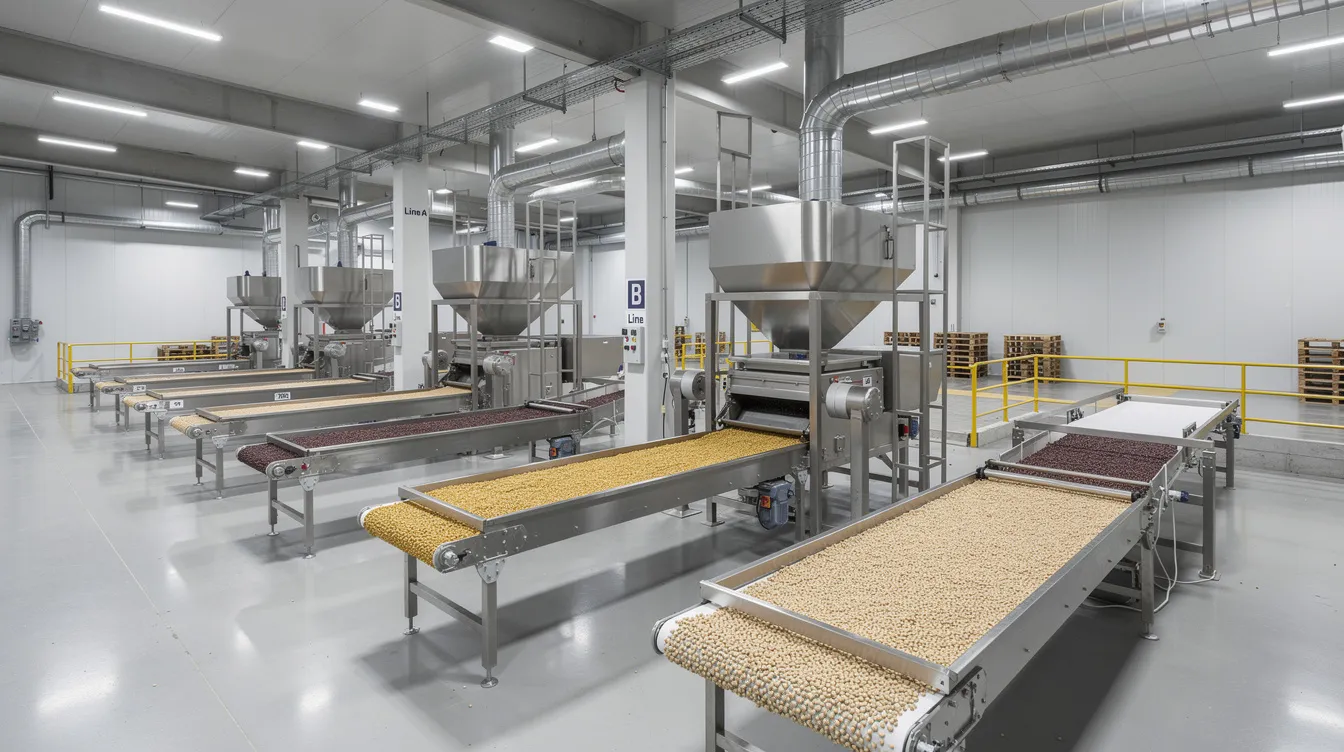
Complete Pulse Cleaning, Grading & Sorting Machinery List
- Raw Pulse Receiving Hopper & Feeding System: Intake hopper with pit, belt/chain conveyors or screw feeders, level sensors. Handles 2-10 TPH; ensures steady, controlled feed for downstream machines.
- Pre-Cleaner / Air-Screen Cleaner: Removes large and fine impurities using top/bottom screens and aspiration fan. Automatic pulses pre-cleaner machines use three screens for cleaning. Common capacities 2-10 TPH; key parameters include air volume and screen area (~2-3 m²).
- Vibro Cleaner & Grader: Fine cleaning and preliminary grading via adjustable sieve decks and vibration motor (2-5 kW). Typical 1-5 TPH operation. Pulse cleaning machines can process up to 800 kg/hr in smaller configurations.
- Magnetic Separator: Inline removal of iron filings and ferrous contamination. Low power; essential before rotary equipment to prevent damage and ensure food safety compliance.
- Destoner Machine: Gravity selector cum destoners remove stones and heavy impurities using vibrating deck and air. Capacities 2-8 TPH; deck area and air requirements are primary selection parameters. Models like Star Trace STBD-3 operate at 3 TPH with 4.75 kW.
- Gravity Separator: Separates light, immature, insect-damaged grains by specific weight. Pulses sorting machines remove impurities based on weight at 2-6 TPH. Deck size, inclination control and air adjustment determine performance.
- Size Grader / Rotary Grader: Grades into large, medium, small and broken fractions using rotary cylindrical sieves. Sieve combinations are specific to each pulse type; 2-6 TPH typical.
- Length Grader / Indented Cylinder: Separates long vs short grains; more common for masoor and rajma.
- Optical Colour Sorting Machine: Optical sorters use cameras to detect and eject defective grains based on colour. Channel counts range from 40-60 for 0.4-1 TPH units to 256-640 channels for 4-8 TPH throughput. Essential for export-grade output, as detailed in the Export-Grade Pulse Cleaning, Colour Sorting & Packing Plant project report.
- Bucket Elevators & Belt Conveyors: Gentle vertical and horizontal conveying between machines; 3-15 TPH; rubber or plastic buckets with speed control to reduce breakage.
- Dust Collection & Aspiration System: Cyclones, bag filters, blowers and ducting maintain air quality and facilitate compliance with pollution norms.
- Weighing, Bagging & Sealing: Electronic weighers (10-50 kg), stitching machines, band sealers; typical output 100-300 bags/hour.
- Electrical Control Panels, Motors, VFDs & Automation: MCC panels, PLC control, VFDs for frequency and speed control, level sensors and interlocks for efficient operation.
- Supporting Structures & Accessories: Platforms, chutes, silo bins, flow control valves. These items add 10-20% to basic machinery cost and are often underestimated.
Pulse Cleaning, Grading & Sorting Machinery Specifications
Specifications vary by vendor, design and pulse variety. The table below uses indicative ranges suitable for Indian MSME and mid-size plants equipped for domestic and export processing. Pulse processing machinery has a capacity range up to 4 TPH for several machine types listed below.
| Equipment | Function | Capacity (TPH) | Power (kW) | Core Specs | Indicative Cost (₹ lakh, ex-works) |
|---|---|---|---|---|---|
| Pre-Cleaner / Air-Screen | Remove large/fine foreign matter | 2-6 | 3-10 | 3-screen deck, fan aspiration, screen area 2-3 m² | 2.5-5.0 |
| Vibro Cleaner & Grader | Fine cleaning, size grading | 1-4 | 2-5 | Adjustable sieve decks, rubber suspension | 2.0-5.0 |
| Destoner | Stone and heavy impurity removal | 3-6 | 4-10 | Vibrating deck, blowing/suction type | 3.0-8.0 |
| Gravity Separator | Density-based separation | 1-4 | 5-15 | Multi-outlet decks, adjustable inclination | 5.0-12.0 |
| Optical Colour Sorter (small) | Colour-based rejection | 0.4-1.0 | ~3 | 40-60 channels, touchscreen, air ejectors | 6.0-10.0 |
| Optical Colour Sorter (large) | High-throughput colour sorting | 4-8 | 8-15 | 256-640 channels, AI-assisted, high-speed ejectors | 25.0-40.0+ |
| Bucket Elevator | Vertical conveying | 0.5-10 | 1-8 | Belt width 100-400mm, discharge height variable | 0.7-5.0 |
| Weighing & Bagging | Final packing | – | 1-3 | Electronic weigher, stitcher/sealer | 1.5-5.0 |
Pulses fine grading machines have a capacity of 4 TPH. Actual specifications depend on pulse variety, impurity load and desired output quality. Heavier pulses like chana may need larger destoner decks; lighter moong may require gentler vibration to avoid breakage.
For readers exploring colour sorter and grading machinery in detail, the Dal Mill Colour Sorter, Grading, Polishing & Packaging Machinery guide provides additional context on sorting channels, sensor types and selection criteria.
Pulse Cleaning, Grading & Sorting Machinery Cost in India
Pulse cleaning machine prices range from Rs 95,000 to Rs 25,00,000 depending on capacity, build quality, automation level and imported components. Prices fluctuate with exchange rates for optical sorter cameras and sensors, which are often priced in USD. The ranges below reflect the 2024-2026 Indian market based on published vendor data and are illustrative for DPR preparation.
Specific price references from the market: an Automatic Pulses and Grain Pre Cleaner Machine costs approx Rs 3,25,000; a Pulses Fine Grading Machine costs Rs 4,60,000; a Pulses Sorting Machine costs Rs 3,60,000; a Rajma Cleaning Machine is priced at Rs 2,90,000; and a Pulses Cleaner Machine is available for Rs 2,80,000. Small-channel optical sorters (40-60 chutes) from manufacturers like Swan Sorter Systems start around ₹7-10 lakh, while high-channel models (256-640 chutes) from vendors like Orange Sorting Machines run ₹25-40 lakh or more.
Additional cost heads usually excluded from basic machinery quotations: GST (18%), freight and insurance, civil foundation, structural platforms, electrical cabling, earthing, compressor (for colour sorters, often 8 Bar), and initial spares. These can add 15-25% to the ex-works machinery price. Serious investors should obtain written quotations with clear scope of supply. During DPR and CMA preparation, conservative cost assumptions reduce the risk of funding gaps.
Machinery Configuration for Different Plant Capacities
Machinery configuration should match realistic throughput, working hours per day and expected operating days per year. Using a combination of machines often yields better results in pulse processing than single machines, owing to specialised impurity removal at each stage. Pulse processing plants require 6,000 to 15,000+ sq. ft. of space depending on capacity.
| Plant Type | Capacity (TPH) | Key Machinery | Automation Level | Indicative Machinery Cost |
|---|---|---|---|---|
| Small / Semi-Automatic | 0.8-1 | Pre-cleaner, vibro cleaner, destoner, simple grader, elevators, manual bagging | Semi-automatic | ₹35-60 lakh |
| Medium / Partially Automated | 3-4 | Pre-cleaner, vibro cleaner, magnetic separator, destoner, rotary grader, gravity separator, elevators, aspiration, semi-auto packing | Partial PLC control | ₹80 lakh-₹1.75 crore |
| Large / Export-Grade | 5-10+ | Full cleaning line, gravity separator, optical colour sorter (256+ channels), automated packing, dust collection, full PLC/SCADA | Fully automatic | ₹2-4+ crore |
The chosen configuration should reflect the business model. Entrepreneurs exploring contract processing or job-work operations can review the Pulse Cleaning, Grading & Packing Job-Work Business Model for revenue and capacity planning suited to that model.
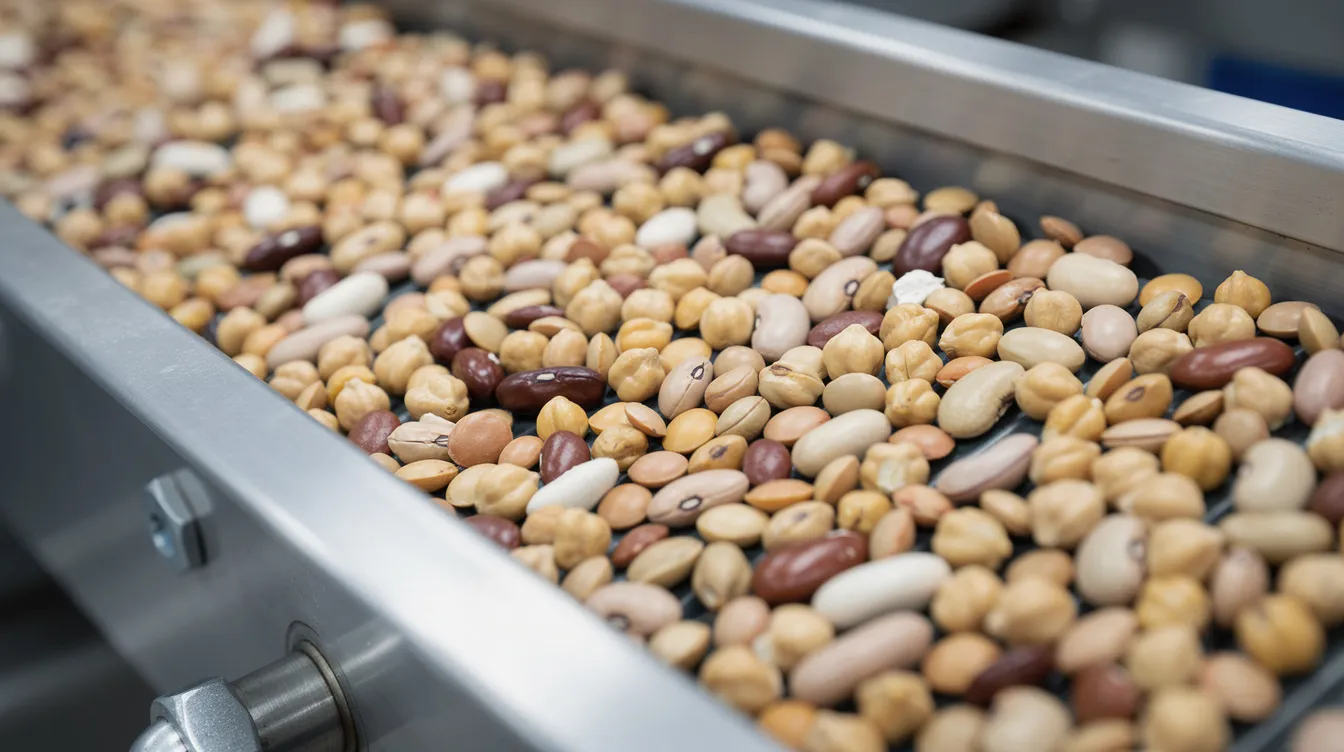
Automatic vs Semi-Automatic Pulse Cleaning Machinery
Semi-automatic plants use manual bag feeding, limited sensors and basic control panels. Automatic lines feature mechanised conveying, PLC controls, interlocks and automated bagging. Automation in pulse processing reduces manual labour and improves operational efficiency; batch consistency is achieved through automated workflows in pulse cleaning and sorting.
| Parameter | Semi-Automatic | Automatic |
|---|---|---|
| Capex | Lower (₹35-60 lakh for 1 TPH) | Higher (₹1-4+ crore for 3-10 TPH) |
| Manpower per TPH | 8-12 workers | 3-5 workers |
| Product Consistency | Operator-dependent | High; sensor-controlled |
| Skill Requirement | Basic; team of semi-skilled workers | Requires skilled professionals for PLC operation |
| Scalability | Limited; major rework needed | Modular; add machines without redesign |
| Ideal For | Small entrepreneurs, low-volume domestic sales | Export, retail chains, high-volume processing |
Full automation is not always optimal. Small entrepreneurs in regions with low labour costs may start semi-automatic and phase in automation as volumes and client requirements justify the investment.
Pulse Cleaning, Grading & Sorting Process Flow
The typical sequence from raw receiving to packed output:
- Raw Pulse Receiving: Hopper intake, initial sampling for moisture and impurity assessment.
- Pre-Cleaning: Air-screen cleaner removes large foreign material, straw and dust.
- Magnetic Separation: Inline unit removes ferrous particles.
- Destoning: Vibrating deck separates stone and heavy contaminants.
- Fine Cleaning / Vibro Cleaning: Removes remaining fine impurities and undersized grains via sieve separation.
- Size Grading: Rotary or screen graders sort by diameter; sieve openings adjusted per pulse variety (wheat-basis ratings need correction for pulse-specific dimensions).
- Gravity Separation (where required): Removes immature, oil-stained or insect-damaged grains.
- Optical Colour Sorting (for premium/export): Camera-based rejection of discoloured, spotted or mouldy grains.
- Final Weighing & Packing: Electronic weigher, bag stitching or sealing.
Compliance with food safety standards ensures the processed pulses are safe for consumption. In export-grade plants, an additional re-sorting pass may run for high-value pulses like kabuli chana or rajma. Quality control points include periodic sieve inspection, monitoring reject ratios from optical sorters, and laboratory checks for moisture and foreign matter percentage.
Factors Affecting Machinery Selection
Machinery should be tailored to site-specific conditions. Copying another plant’s layout without studying your raw material, application requirements and target market leads to either over-investment or under-performance.
- Raw material: Impurity levels (3-8%), stone content, moisture at intake and seasonal variation determine destoner capacity, aspiration power and pre-cleaning stages.
- Throughput and utilisation: Designed TPH vs realistic average TPH based on 8-16 operating hours; motor sizing and elevator capacity should match actual, not theoretical, feed rates.
- Product mix and changeovers: Multiple pulse varieties need machines with easy sieve and deck changes.
- Finished product specs: Wholesale loose sales vs branded retail vs export contracts dictate whether gravity separators and optical sorters are needed.
- Power and energy: Energy consumption for pulse processing ranges from 100 to 250 kW for full-line plants. The Dal Mill Power Consumption & Utility Requirements guide covers electrical load planning in detail.
- Labour and maintenance: Availability of local service support, frequency of sieve and belt replacement, and oil/lubrication schedules for bearings and fan motors.
- Future expansion: Designing structures and electrical systems to allow later addition of a colour sorter or extra graders without major rework is a financially prudent approach.
Machinery Investment, Operating Cost & Financial Feasibility
Pulse cleaning, grading and sorting machinery is typically the largest fixed-asset block after land and building. It determines DSCR, break-even utilisation and payback period.
Total project cost includes: land and site development, building and civil works, plant and machinery, electrification, miscellaneous fixed assets, preliminary and pre-operative expenses, and margin money for working capital. Operating costs cover raw material procurement, power (kWh/tonne), labour, repairs and maintenance (belts, bearings, ejector valves), packing material and overheads. High efficiency machinery can reduce processing loss from 15% to 8-10%, improving saleable recovery.
Revenue models include own trading-cum-processing, contract cleaning for clients, and job-work charges per tonne. The table below shows how capacity utilisation affects ability to service debt:
| Utilisation | Processed Volume (3 TPH, 300 days, 8 hrs) | Revenue Position | Loan Servicing |
|---|---|---|---|
| 50% | ~3,600 tonnes/year | Break-even zone | Tight DSCR |
| 65% | ~4,680 tonnes/year | Moderate surplus | Adequate DSCR (1.3-1.5x) |
| 80% | ~5,760 tonnes/year | Healthy margin | Comfortable repayment |
A bankable DPR should evaluate the complete project investment with sensitivity analysis on processing charges, utilisation and interest rates, not rely solely on machinery supplier brochures.
Machinery Supplier Selection & Technical Due Diligence
The cheapest quotation is not always the most economical over a machine’s life. Delivery time, installation quality, spares availability and after-sales support affect long-term cash flows. A leading manufacturer with an established position in pulse processing machinery may charge more but provide customers with better uptime and lower maintenance costs across various industries.
Practical evaluation checklist:
- Number of installations in India for the same pulse varieties
- Trial runs at supplier’s test facility with your samples to check cleaning efficiency and breakage
- Make and rating of motors, bearings, cameras and ejector valves
- Steel grade, thickness, surface treatment and coating quality for food-contact parts
- Delivery schedule, installation and commissioning responsibility
- Operator training (on-site, duration, team size)
- Performance guarantees: TPH, cleaning/grading efficiency, high performance targets
- Warranty terms (typically 1 year), spare parts pricing and AMC options
- Electrical load, foundation requirements and layout drawings to facilitate building design before construction
Project Report, CMA Data & Bank Finance for Pulse Processing Machinery
Banks examine pulse processing proposals for project cost realism, means of finance, DSCR, collateral coverage and promoter credentials. A professional DPR for this industry should cover technical configuration, capacity planning, process flow, detailed machinery cost, projected sales, raw material sourcing via seasonal inventory planning, and risk analysis. CMA Data prepares the banking case by summarising historical and projected financials, working capital assessment and key banking covenants.
CA Manish Gugliya & Company assists entrepreneurs with Bank Finance DPR and Loan Proposal preparation (starting from approx ₹25,000 depending on scope), financial projections, cash flow modelling and DSCR analysis. The company does not guarantee loan sanction; projections are estimates based on stated assumptions, not assured outcomes. Promoters should align technical offers from machinery suppliers with their financial model so that both capacity and repayment obligations remain realistic. Serious entrepreneurs can explore this service by reaching out via WhatsApp through the ProjectReportBank.com website.
Frequently Asked Questions
What is the typical investment for a small 1 TPH pulse cleaning and grading unit in India?
As of 2024-2026, a 0.8-1 TPH unit with pre-cleaner, vibro cleaner, destoner, simple grader, elevators and manual bagging requires roughly ₹35-60 lakh for plant and machinery alone. Building, electrification, civil works and working capital add to total project cost. Traditional cleaning methods at this scale are being replaced by these mechanised setups for consistent quality.
Do I need an optical colour sorter for domestic sales?
Wholesale and traditional domestic markets often accept well-cleaned, gravity-separated pulses without colour sorting. Organised retail chains and export buyers increasingly require colour sorting to control discoloured or spotted grains. The decision should be based on target customers and the price premium achievable from sorted output.
How do I decide between a single combined machine and a full modular line?
Compact combined machines suit micro and small units with limited space and lower budgets. Modular lines offer better flexibility, higher throughput, easier maintenance and scope for upgrading (adding a grader or gravity separator) as business grows. For most plants above 2 TPH, a modular approach provides customers with better long-term returns.
What are the main running costs besides electricity and labour?
Key running costs include maintenance (belts, bearings, sieves, nozzles), packing material, periodic service visits, insurance, spares for colour sorters (ejector valves, lamps, filters), interest on term loans and working capital for raw material stocking.
Can Project Report Bank help me compare machinery quotations from different suppliers?
CA Manish Gugliya & Company, as part of DPR and project finance advisory, can help entrepreneurs interpret quotations, map them to required capacity and process flow, and assess overall project viability through financial modelling. The final technical selection, based on manufacturing quality and supplier capability, remains the client’s responsibility.