Key Takeaways
- A large scale millet processing plant feasibility study must integrate technical setup, market validation, capital requirements, financial analysis, risk assessment, and investor readiness – not merely describe the opportunity.
- The focus here is on industrial-scale millet processing plants with capacities of 20–100+ TPD (approximately 10,000–20,000 MT per year), not home-scale or theoretical models.
- Attractive millet market growth and nutritional benefits do not automatically make every millet processing project viable; rigorous feasibility and risk analysis are essential before committing capital.
- Project Report Bank, led by CA Manish Gugliya, FCA, DISA (ICAI), prepares customised industrial millet processing plant feasibility reports and investor-ready DPRs for bank finance and equity funding.
- Promoters should validate raw material sourcing, processing yields, working capital requirements, DSCR and sensitivity scenarios before finalising plant setup or placing machinery orders.
1. Introduction – Why a Large Scale Millet Processing Plant Feasibility Study Matters in India
Since the UN’s International Year of Millets in 2023, India has witnessed renewed interest in millets as staple food crops supporting sustainable agriculture and climate-resilient diets. India’s total millet production reached approximately 18 million tonnes in 2024–25, making it a significant base for industrial processing. This has triggered serious promoters to evaluate large-scale millet processing facility investments.
Conducting a feasibility study requires evaluating technical, operational, and financial viability – not just presenting an optimistic industry overview. Key steps in a feasibility study include market demand analysis and raw material sourcing assessment, validated through primary data collection that should include field surveys and commercial quotations. A generic millet processing plant project report provides broad information but limited financial depth. An industrial millet processing plant feasibility report, by contrast, stress-tests capacity selection, millet procurement planning, processing yields, working capital needs and debt-servicing capacity before a promoter commits crores of rupees.
2. Executive Summary and Key Takeaways for Promoters and Investors
This section serves as a high-level briefing for promoters and investors evaluating millet processing plant investment feasibility.
- The processed millets market in India was valued at approximately USD 520 million in 2025, with projected growth toward USD 857 million by 2031 – a genuine commercial opportunity.
- Raw material security is non-negotiable: a successful millet processing plant depends on a secure, consistent raw material pipeline across multiple sourcing regions.
- Plant capacity must be matched with realistic market absorption; a mid-sized millet processing plant has a capacity of 15,000 MT/year, while larger plants can target 20,000 MT or more – but bigger is not always better.
- DSCR, IRR and NPV cannot be generalised; they must be modelled project-specifically using up-to-date prices and realistic utilisation ramps across a detailed financial model developed for at least 10 years.
- Working capital stress from seasonal procurement is often underestimated and can undermine even profitable operations.
- Investors and banks expect documented risk assessment, sensitivity analysis and credible market validation before committing funds.
Project Report Bank can convert this type of executive summary into an investor-facing brief once detailed analysis is complete.
3. Understanding Large-Scale Millet Processing Projects and Plant Scope
In practical terms, “large scale” refers to illustrative raw millet intake capacities such as 20, 50 and 100 tonnes per day – a millet processing plant can have an annual production capacity ranging from 10,000 to 20,000 MT or more. The target daily processing capacity of a millet processing plant affects plant design, machinery selection and infrastructure requirements. Actual optimal plant capacity depends on location, raw material availability and market strategy.
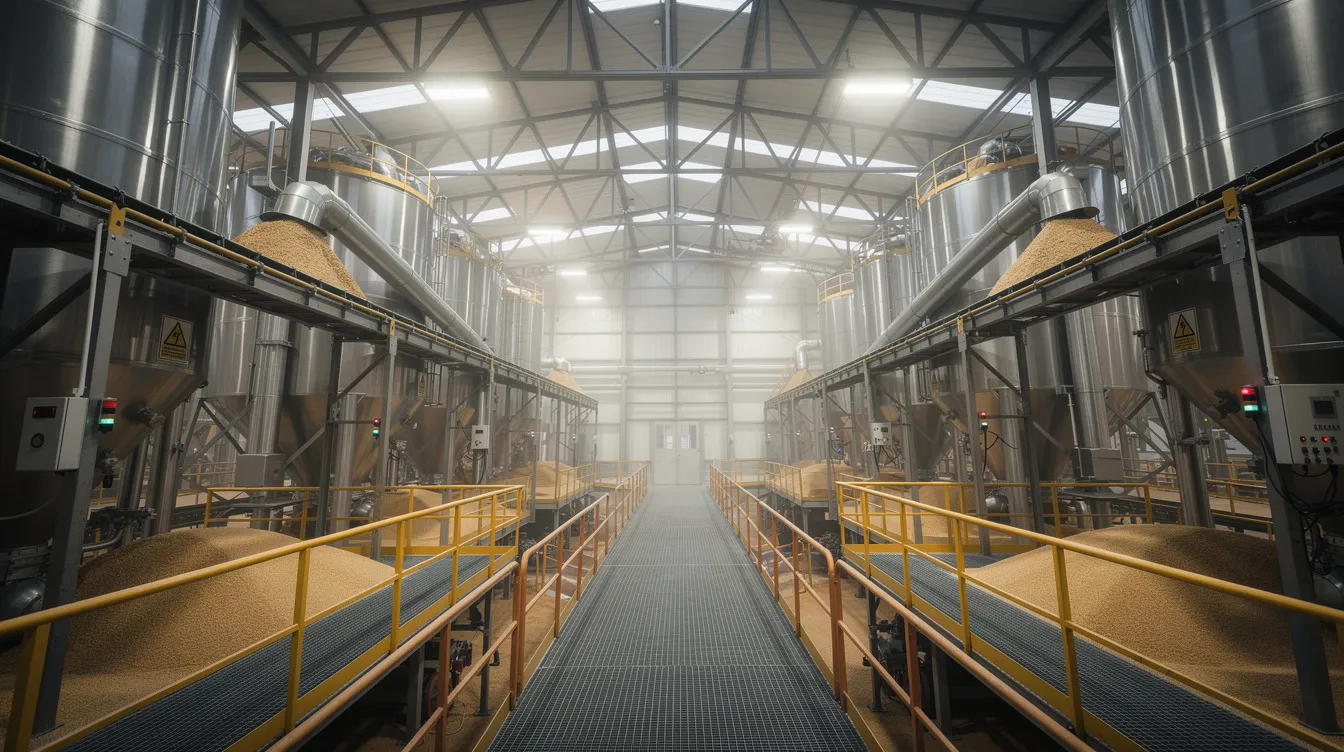
Millet processing involves various steps including cleaning, grading, dehusking, and milling. The core unit operations in an industrial processing unit include:
- Raw millet reception, pre-cleaning, destoning and grading
- Dehulling, decortication and pearling/polishing
- Milling into millet flour, semolina and grits
- Colour sorting, sieving and quality control
- Bulk storage and automated packaging of millet products
Primary processing yields dehusked grain, flour and grits. Integrated value-added manufacturing extends into nutritious millet value addition – instant mixes, extruded snacks, ready mixes and millet breakfast cereals. This distinction matters because product mix, processing yield and capacity utilisation directly affect saleable output and revenue. Installed plant capacity is not the same as stable commercial capacity, especially during ramp-up. Promoters comparing small-capacity models with industrial-scale plants should review the small millet processing plant project report for perspective on scaling decisions.
4. Technical Feasibility Assessment – Raw Material, Process and Machinery
Technical feasibility combines grain characteristics, processing technology, plant layout and utilities to ensure stable millet processing operations at target capacity. Millets possess unique physical properties influencing processing techniques – small seeded cereal grains like foxtail millet and barnyard millet require different dehulling approaches compared to pearl millet or finger millet.
Variety selection and sourcing: Core raw materials include pearl millet, finger millet, and foxtail millet, along with sorghum, kodo millet and proso millet. Millet cultivation is concentrated in Rajasthan (approximately 27% of India’s millet production), Maharashtra and Karnataka. Sourcing strategy should prioritise suppliers close to the plant, and site selection should prioritise proximity to raw materials. Long-term contracts stabilise pricing and ensure supply continuity across harvest seasons. While India dominates global production, millet varieties such as proso millet are also cultivated in regions like eastern Colorado in the United States, underscoring the crop’s global adaptability – though Indian feasibility studies naturally focus on domestic sourcing.
Machinery and equipment: Millet processing plants typically require grain cleaning and grading machines, de-husking and milling systems essential for millet processing, sorting and sieving equipment necessary for quality control, blending and processing units, and packaging and sealing machines required for finished products. Conventional processing equipment required for extensive processing capacities includes destoners, gravity separators, impact hullers, scourers, roller and hammer mills, plansifters, magnetic separators and colour sorters. For detailed EPC and technology considerations, refer to the guide on automatic millet dehulling and milling machinery.
Plant layout and compliance: Plant layout must optimise workflow efficiency and safety through linear material flow, separation of raw and finished zones, QC laboratory placement, by-product handling (bran, husk for animal feed or biomass), hygiene zoning and waste management systems. Statutory approvals are required for food processing plants to ensure compliance with regulations. Food safety compliance is crucial – plants must meet FSSAI standards, and for exports, HACCP and ISO 22000 certification. Supplier quotations, capacity guarantees and grain-specific trial runs should be appended to the feasibility report.
Essential utilities include connected electrical load (often requiring distribution transformers), DG backup, compressed air, water for cleaning and domestic use, ETP/STP for effluents, and dust-control systems.
5. Market Feasibility, Millet Products and Commercial Viability
The health food sector growth drives demand for millet products, supported by rising consumer preference for gluten-free foods and dietary fiber benefits. The global millet market was valued at USD 13.93 billion in 2025 and is projected to reach USD 19.70 billion by 2034, with the millet market expected to grow at a CAGR of 3.9% from 2026 to 2034. The global millet industry and the global millet market size figures referenced by more than one global management consulting firm confirm sustained market growth. Millet processing supports sustainable agriculture and environmentally sustainable food systems.
Feasibility reports should include a market demand and competitor analysis. Market analysis should differentiate between primary and secondary processing of millets. An industrial millet processing facility can supply:
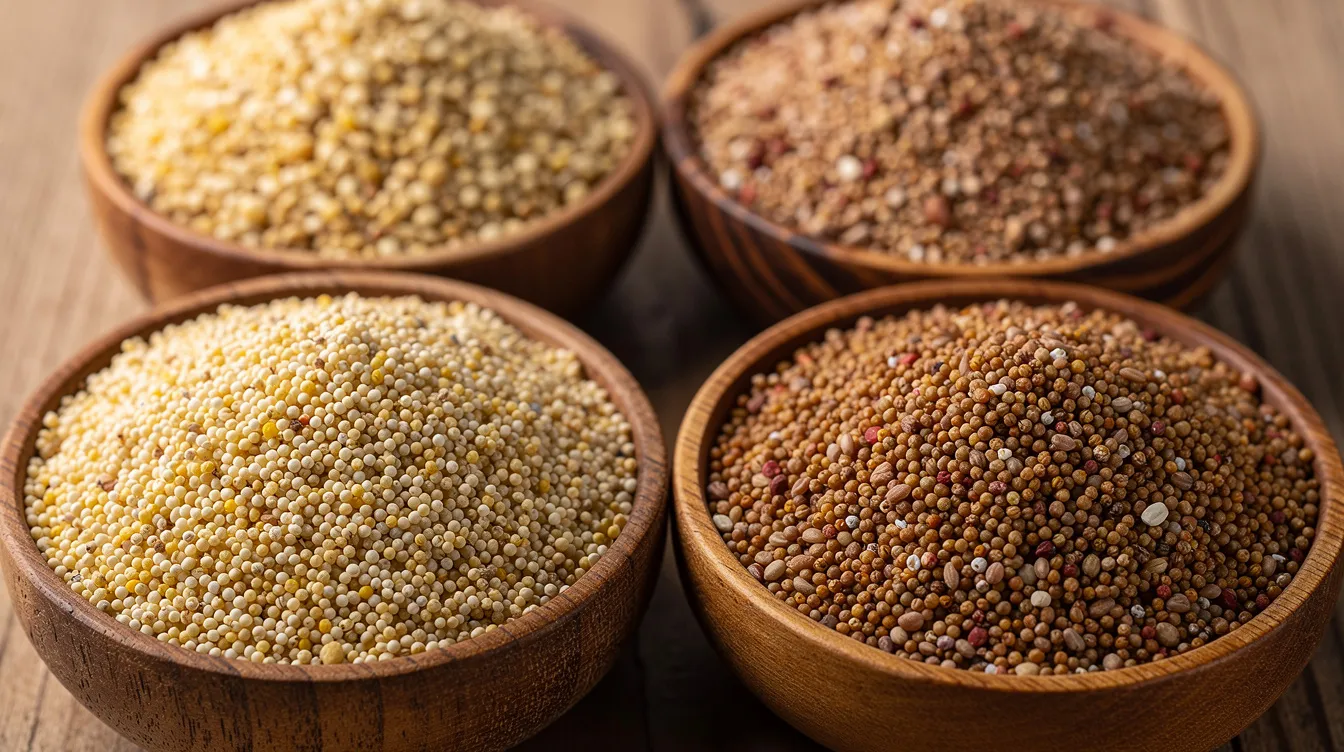
- Cleaned and dehusked grain, millet rice and standardised cereal materials for the convenience food industry
- Millet flour, semolina and multigrain blends for bakery and nutrition and wellness products
- Ingredients for millet-based processed foods, addressing anti nutrient concerns through appropriate heat treatment
- Products that simplify millet consumption and strengthen nutritious millet adoption in the retail consumption segment
Key customer segments include leading millet processors, large food manufacturers, FMCG brands, HoReCa suppliers, restaurant and cafe owners, food service establishments, online D2C brands, institutional buyers and exporters. Rising retail availability of healthy and quick foods is expanding distribution. Downstream value addition opportunities include millet-based extruded snacks manufacturing plant products and millet breakfast cereals manufacturing project formats.
Customer concentration risk must be analysed – dependence on one large buyer creates vulnerability. Selling-price assumptions should be validated through buyer meetings, pilot orders and written expressions of interest, not assumed from published industry averages.
6. Capital Investment, Plant Capacity and Project Cost Feasibility
Capex planning for a millet processing plant setup must convert engineering designs into structured cost heads acceptable to banks and investors. Capital expenditure includes costs for land acquisition, civil construction, and machinery. Machinery costs are the largest component of capital expenditure, followed by civil works and utilities.
Key fixed-asset categories include:
- Land purchase or lease and site development
- Factory buildings, warehouses, silos and raw material storage infrastructure
- Main processing machinery and material-handling equipment
- Utility systems (electricals, transformers, DG, compressors)
- Quality-control laboratory and packaging lines
- Office and staff amenities
Intangible and pre-operative costs include design and engineering, project management, interest during construction, trial run expenses, initial marketing, statutory approvals and contingencies. The distinction between fixed capital investment, total project cost and total funding requirement (including working capital margin) must be clearly established. For reference, setting up a small-scale millet processing plant costs around USD 4,830, while industrial plants of 20–50 TPD scale may require ₹5–10 crore or more. Readers seeking capacity-wise cost illustrations should review the detailed guide on millet processing plant setup cost and capital investment.
Contemporary quotations for machinery, construction and utilities should always be obtained rather than relying on outdated model reports.
7. Financial Feasibility, Modelling and Investment Appraisal
Financial feasibility converts technical and commercial assumptions into structured millet processing plant financial projections and DSCR analysis covering 7–10 years. A detailed financial model should be developed for at least 10 years in feasibility studies.
The financial model must incorporate:
- Installed capacity, assumed operating days (typically 300–330) and capacity utilisation ramp-up
- Detailed process flow and product mix with processing yield assumptions
- Raw millet procurement cost – raw materials account for 70–80% of total operating expenses
- Energy costs, human resource requirements and overheads – utilities contribute around 10–15% of total operating costs
- Transportation, packaging and distribution costs as part of other operating expenses
- Operating cost structure adjustments, since operating costs increase due to inflation and market fluctuations, often significantly by year five
Gross profit margins for millet processing typically range between 25–35%, while net profit margins for millet processing typically range from 10–15%. The feasibility study should contain projected Profit & Loss, Balance Sheet and Cash Flow statements.
| Financial Indicator | Purpose | How Lenders/Investors Interpret It |
|---|---|---|
| EBITDA Margin | Operational profitability | Ability to cover fixed costs and debt |
| Break-even Volume | Minimum viable output | Risk buffer above break-even |
| DSCR | Cash available vs. debt repayment | Banks typically look for ≥ 1.25 |
| IRR | Project return over its life | Compared against cost of capital |
| Net Present Value | Value created above required return | Positive NPV indicates value creation |
| Payback Period | Capital recovery timeline | Shorter is preferred but context matters |
Business valuations and investor-ready documentation are crucial for project financing. The difference between accounting profitability and cash-flow-based feasibility must be understood – strong profits are meaningless if cash cannot service term-loan instalments. Costs, project economics and financial analysis must tell a coherent story.
8. Working Capital Feasibility and CMA Data
Seasonality of millet procurement, raw material storage needs and credit terms make working capital a critical feasibility dimension. Reliable feedstock supply is crucial for millet processing plants, and seasonal bulk buying of raw millet grains (which account for 70–80% of operating expenses) creates large inventory requirements.
- Storage duration affects quality – moisture and pest-related deterioration risks increase with longer holding periods
- Realistic debtor-creditor cycles in B2B sales determine the cash conversion cycle
- Longer receivable periods strain cash despite nominal profits
- Working capital facilities (cash credit, overdraft, bill discounting) must be planned alongside CMA Data preparation
For bank-format projections and detailed working capital assessment, refer to the guide on millet processing plant bank loan DPR and CMA Data. Working capital feasibility should be stress-tested under scenarios of slower collections, lower utilisation and higher inventory.
9. Millet Processing Plant Risk Assessment – Practical Risk Matrix
A millet processing plant risk assessment is central to any serious feasibility exercise. Risk assessment should identify factors affecting profitability and operations in projects, presented in a structured format.
| Risk Category | Potential Problem | Impact | Mitigation | Monitoring Indicator |
|---|---|---|---|---|
| Raw material shortage | Supply chain disruptions from weather or policy | Production stoppage, revenue loss | Multi-state sourcing contracts; FPO tie-ups | Weekly procurement vs. plan |
| Price volatility | Raw millet cost spikes post-harvest | Margin erosion | Forward contracts; buffer inventory | Monthly cost vs. budget |
| Yield variation | Lower dehulling yield on certain varieties | Higher unit cost, lower output | Variety-specific trial runs; machine calibration | Batch yield tracking |
| Machinery breakdown | Downtime on critical equipment | Lost production days | Preventive maintenance schedule; spares inventory | Downtime hours per month |
| Underutilisation | Demand or supply below target | Higher fixed cost per unit | Phased capacity; diversified customer base | Monthly utilisation rate |
| Demand uncertainty | Market or selling-price decline | Revenue shortfall | Buyer MOUs; diversified product mix | Order pipeline tracking |
| Working capital stress | High inventory, slow receivables | Cash shortfall despite profit | Adequate CC limits; strict credit policy | Cash conversion cycle |
| Quality rejection | Contamination, moisture, foreign matter | Customer returns, brand damage | HACCP SOPs; metal detection; lab testing | Rejection rate per batch |
| Capex overruns | Construction delays, cost escalation | Funding gap, delayed commissioning | Fixed-price contracts; contingency provision | Actual vs. budgeted spend |
| Receivable delays | Customer payment beyond terms | Liquidity pressure | Credit insurance; advance payment terms | Ageing analysis |
| Regulatory non-compliance | FSSAI, environmental violations | Penalties, shutdown risk | Compliance calendar; periodic audits | Licence renewal status |
| Interest rate changes | Higher borrowing cost | Reduced DSCR | Fixed-rate options; interest sensitivity in model | Quarterly interest review |
| Management gaps | Weak execution capability | Operational inefficiency | Experienced plant manager; advisory support | KPI dashboard review |
| Climate/supply risk | Drought, crop failure in sourcing region | Procurement disruption | Geographic diversification; millet cultivation data tracking | Crop forecast monitoring |
10. Sensitivity Analysis and Scenario-Based Feasibility
Even a well-prepared base-case industrial millet processing plant feasibility report can be misleading if not stress-tested. A project’s viability should be tested under various sensitivity scenarios. Sensitivity analyses test how changes in raw grain prices affect profitability and overall feasibility.
| Parameter | Base Case | Downside Case | Severe Stress |
|---|---|---|---|
| Raw millet cost | Current market rate | +10% | +15% |
| Average selling price | Validated buyer price | –5% | –10% |
| Capacity utilisation (Year 3) | 80% | 65% | 55% |
| Capital expenditure | Budgeted | +10% | +15% |
| Debtor realisation period | 30 days | 60 days | 75 days |
Under downside scenarios, EBITDA margins compress, free cash flow weakens, DSCR may approach or breach lender thresholds, and working capital requirements increase. The variables most critical to millet processing plant investment feasibility are typically raw material cost and capacity utilisation. Lenders and equity investors expect to see such downside analyses before making commitments.
11. Investor Readiness Assessment
Millet processing plant investor readiness goes beyond a purely technical DPR. Banks and investors typically assess:
- Promoter track record, net worth and execution capability
- Clarity of business model – B2B ingredient supplier versus building a retail millet brand
- Realistic capital structure with adequate promoter contribution
- Documented market validation through buyer meetings and pilot orders
- Enhancing income generation potential through diversified product lines
Core components of an investor-ready dossier include the detailed feasibility study, audited financial statements, machinery quotations, land documentation, structured financial model and governance framework. For promoters considering equity capital, the guide on equity funding eligibility and investor readiness in India provides a complementary framework.
Banks focus on repayment capacity, security and DSCR. Equity investors focus on scalability, growth potential, exit horizons and internal controls. Neither approach is universally applicable – the financing mix must match the project.
12. Bank Finance Versus Equity Funding
Large-scale millet processing projects usually require a balanced mix of promoter equity, term loans, working capital finance and sometimes strategic equity partners.
| Parameter | Bank Term Loan | Promoter Equity | Strategic Equity | Blended Structure |
|---|---|---|---|---|
| Ownership impact | None | Full control | Dilution | Partial dilution |
| Risk-sharing | Limited to collateral | Fully borne | Shared | Distributed |
| Repayment | Fixed schedule | No obligation | No fixed repayment | Mixed |
| Decision-making | Covenants apply | Full autonomy | Board-level input | Negotiated |
| Return expectations | Interest rate | Full upside | IRR-driven | Varied |
Promoters evaluating institutional funding should refer to the practical guides on how to get investors and raise equity funding in India and how to approach investors in India. The optimal structure must be derived from project-specific cash flows and DSCR analysis rather than generic rules.
13. Documentation for an Investor-Ready Millet Processing DPR
Banks and investors rely heavily on documentation quality. A complete millet processing business proposal requires:
- Land title, building plans, layout drawings and utility load estimates
- Machinery quotations and specifications from credible suppliers
- Environmental and food safety clearance progress
- Promoter KYC, audited financials and net worth statements
- Market documentation: demand assessment, competitive landscape mapping, sample contracts or MOUs, and raw material requirements with sourcing agreements
- Financial documentation: detailed project report, means-of-finance statement, 7–10 year projections, sensitivity analysis, working capital assessment and DSCR calculations
Incomplete or copy-paste DPRs significantly reduce confidence compared to custom-built feasibility reports.
14. Common Reasons Millet Processing Plant Proposals Fail Appraisal
Many millet processing investment proposals are declined due to avoidable planning gaps, not because millets lack potential:
- Inflated capacity utilisation in year one (assuming 90%+ without buyer commitments)
- Underestimation of millet procurement costs and seasonal price swings
- Unsupported selling-price assumptions disconnected from buyer validation
- Insufficient working capital planning for seasonal raw material storage
- Over-dependence on government subsidies in the base-case financial model
- Technical mismatches – wrong conventional processing equipment for targeted millet varieties
- Weak accounting systems and inadequate governance documentation
- Excessive leverage without realistic DSCR coverage
Preventive measures include updating assumptions with current market quotes, conducting pilot runs, securing preliminary buyer feedback, and engaging professional feasibility and DPR support before approaching lenders. The emphasis should be on course-correction rather than proceeding with flawed assumptions.
15. Role of a Professional Feasibility Study in Strengthening Millet Investment Decisions
A professional feasibility study serves as a decision tool rather than a funding brochure. It enables:
- Choosing optimal plant capacity matched with annual production capacity, market absorption and supply logistics
- Comparing alternative technologies and plant configurations for supporting sustainable agriculture objectives
- Planning by-product utilisation (bran, husk) to improve overall project economics
- Structuring phased expansion and aligning repayment schedules with realistic ramp-up
- Identifying whether the millet processing plant depends on assumptions that are fragile under stress
A robust large scale millet processing plant feasibility study can legitimately recommend scaling down, redesigning or postponing the project when underlying economics are unattractive. This protects promoters from future stress and is treated by lenders as evidence of seriousness.
16. Professional DPR, Feasibility and Financial Advisory by Project Report Bank
CA Manish Gugliya, FCA, DISA (ICAI), through Project Report Bank, provides Chartered Accountant-led project finance and feasibility advisory with over 20 years of experience across manufacturing and food processing industry projects in India.
Services relevant to setting up a millet processing plant include:
- Customised industrial millet processing plant feasibility studies and bankable detailed project reports
- Investor-ready DPR preparation with structured financial projections
- Project cost and means-of-finance structuring
- DSCR, IRR, NPV and profitability assessment
- CMA Data and working capital analysis for bank loan proposals
- Sensitivity and risk analysis tailored to millet processing projects
- Investment proposal and financial presentation support for equity fundraising
Project Report Bank improves the quality of analysis and presentation but cannot guarantee loan sanction or investor participation. Serious promoters – including those planning diversification into snacks and cereals – should consider professional support before finalising capacity or placing machinery orders.
17. Frequently Asked Questions
What exactly does a large scale millet processing plant feasibility study include beyond a basic processing plant project report?
A feasibility study goes beyond general project descriptions. It validates technical capacity with supplier quotations and trial data, models financial viability over 10+ years with sensitivity analysis, assesses raw material risk across seasons, evaluates market demand through primary data, and stress-tests DSCR and working capital under adverse scenarios. A basic plant project report typically provides indicative costs and process descriptions without this depth of financial and risk analysis.
How do promoters decide between focusing on primary millet processing versus value-added millet products from day one?
This depends on capital availability, market access and technical complexity. Primary processing (dehusked grain, flour, grits) has lower capex and simpler operations but thinner margins. Value-added products generate higher realisation but require additional machinery, R&D, branding investment and longer market development. Many feasibility studies recommend starting with primary processing and phasing value addition as the millet processing business stabilises.
Can an existing small millet unit realistically upgrade to a 50–100 TPD plant?
Technically yes, but the feasibility work differs significantly. Expansion requires reassessing site capacity, structural adequacy of existing buildings, power and utility upgrades, additional machinery integration, and a fresh financial model covering incremental capex and revised operating costs. Banks will appraise the expansion as a standalone project with its own DSCR and repayment schedule.
How do government schemes and subsidies feature in financial feasibility?
Subsidies under MoFPI, National Millet Mission or state-level schemes can improve project economics, but the base-case feasibility should demonstrate viability without subsidy. Treating subsidy as additional upside rather than a prerequisite protects the project from policy changes or disbursement delays.
At which stage should I approach Project Report Bank?
Ideally before finalising land purchase or placing machinery orders. Early engagement allows capacity optimisation, technology comparison and financial structuring before commitments are made. However, promoters at any stage – pre-land, post-machinery-order or during expansion – can benefit from a professionally prepared feasibility study and DPR.
18. Conclusion and Call to Action
Before committing crores of rupees to a millet processing plant, the quality of feasibility analysis determines the quality of the investment decision. Millet consumption is growing, the global millet market size presents genuine opportunity, and India’s raw material base is substantial. But none of this automatically makes an individual project financially sustainable.
Robust millet processing plant investment feasibility analysis – covering technical setup, market validation, financial modelling, working capital planning and structured risk assessment – protects promoters, lenders and investors from avoidable surprises.
If you are a serious entrepreneur or industrial promoter planning a large-scale millet processing facility, consider engaging Project Report Bank for a customised feasibility study, industrial millet processing plant feasibility report or investor-ready DPR. You can share basic project details through the website contact form or WhatsApp enquiry facility at ProjectReportBank.com for an initial professional discussion.