
Key Takeaways
- This article explains how to plan, cost, finance, and evaluate an industrial lassi manufacturing plant in India, written from the perspective of CA Manish Gugliya, FCA, DISA (ICAI).
- An Industrial Lassi Manufacturing Plant Project Report (DPR) is essential for bank finance, investor evaluation, and practical implementation; it must cover market potential, technical processes, and financial viability.
- The article covers product mix strategy, lassi manufacturing process, lassi processing plant machinery, project cost structure, working capital, profitability, DSCR, break-even, ROI, IRR, and risk analysis.
- All examples are India-focused, with reference to dairy value-add strategies, cold-chain realities, and actual cost benchmarks from government norms and industry data.
- There are no guaranteed returns or automatic bank approvals; financial viability depends on realistic assumptions and sound execution across milk procurement, production, distribution, and financial structuring.
Introduction: Industrial Lassi Manufacturing and the Need for a DPR
Lassi has moved well beyond the clay kulhad at a roadside stall. Packaged lassi in cups, bottles, and pouches now sits in refrigerated shelves across supermarkets, quick-service restaurants, airline catering kitchens, and e-commerce platforms. Current consumer demand is for packaged, ethnic, and probiotic dairy beverages, and the organized lassi segment is growing fast enough to attract serious industrial investment.
Several forces are driving this shift: urbanization, rising disposable incomes, preference for ready-to-drink dairy beverages, expansion of refrigerated distribution networks, and a growing appetite for flavoured lassi in mango, rose, elaichi and kesar variants. For dairy processors, converting bulk milk into packaged lassi and other value added dairy products improves overall realization per litre of milk, often by 30-50% compared to selling liquid milk alone.
Starting a commercial lassi processing plant, however, is not a matter of purchasing a machine and switching it on. Promoters must assess milk procurement economics, culture management, product formulation, packaging selection, cold chain reach, shelf life validation, distribution margins, capacity utilization ramp-up, working capital cycles, and debt-servicing capability. A project report for an industrial lassi manufacturing plant must cover market potential, technical processes, and financial viability in a single structured document.
That document is the Industrial Lassi Manufacturing Plant Project Report, also called a Lassi Manufacturing Plant DPR. A project report should include executive summaries, technical specifications, manufacturing processes, financial metrics, and statutory compliance details. It tests feasibility before capital is committed and gives bankers a basis for term loan appraisal. This article walks through each component of such a DPR. I have written it based on my experience preparing Detailed Project Reports, CMA Data, and bank-finance assessments for industrial dairy projects across India.
Industry Overview and Product Mix Strategy for Lassi Manufacturing
The Indian lassi market was valued at approximately INR 65.5 billion in 2025. Forecasts by IMARC project it will grow to roughly INR 264.9 billion by 2034, a CAGR of 16.29%. Growth is coming from organized dairy brands, institutional demand from HORECA, QSR chains, airlines, and railways, and the expansion of modern trade retail. North India accounts for approximately 57% of consumption, followed by West and Central India at 28%.
The gap between a local fresh lassi outlet and a commercial lassi manufacturing plant is substantial. A packaged lassi plant is integrated into a larger dairy processing plant or operates as a standalone industrial dairy beverage plant. It handles standardized inputs, controlled fermentation, hygienic filling, and cold-chain storage, producing consistent taste, texture, and shelf life batch after batch. Many such lassi processing plants have two production lines for lassi and yogurt, enabling product diversification from a shared fermentation and cold-chain infrastructure.
Lassi can be produced in sweet, salted, flavored, and masala varieties. A Lassi Manufacturing Plant DPR should clearly define the proposed product mix, expected sales share of each variant, and its impact on milk solids, sugar, flavours, stabilizers, and packaging cost. Not all lassi variants share the same costing and contribution margin.
Typical Product Range for an Industrial Lassi Plant
- Sweet lassi (plain sugar-based, the highest-volume SKU in most markets)
- Salted lassi (lower sugar cost, popular in North and West India)
- Masala lassi (with cumin, pepper, salt blends)
- Mango lassi, rose lassi, elaichi lassi, kesar lassi (premium flavoured variants with higher ingredient cost and realization)
- Low-fat and diet lassi (targeting healthier consumer segments)
- Premium thick lassi in small cups (80-200 ml, positioned as desserts or snacks)
- Bottled lassi in PET and HDPE bottles (200-500 ml for modern trade)
- Institutional bulk packs (5-20 litre tubs or cans for hotels and caterers)
Promoters should consider starting with 2-3 core SKUs, for example plain sweet, salted, and mango lassi, and adding flavours once demand stabilizes. Diversification into allied fermented dairy products like dahi and yogurt is a natural extension; promoters familiar with dahi can consult a curd and dahi manufacturing plant project report for detailed process and financial benchmarks.
Technical Side: Raw Materials, Manufacturing Process, Fermentation and Machinery
An Industrial Lassi Manufacturing Plant Project Report must accurately capture the technical process, key raw materials, and lassi processing plant machinery, because these drive both product quality and cost structure. The sections below cover each element.
Raw Materials and Inputs for Industrial Lassi Production
Key raw materials for lassi production include fresh milk, sugar, starter cultures, and food-grade packaging materials. Beyond these basics, a full input list includes:
- Raw milk or standardized milk (fat and SNF levels directly affect yield and product consistency)
- Skimmed milk powder or cream for SNF and fat adjustment
- Starter cultures suitable for making lassi (selected for acidity, flavour development, and bacterial activity control)
- Sugar, salt, permitted sweeteners
- Stabilizers and emulsifiers (approved food-grade)
- Fruit preparations, pulp, permitted flavours and colours
- Potable process water
- Packaging materials: multi-layer plastic cups, PET bottles, HDPE bottles, laminated pouches, foil lids, labels, shrink sleeves, secondary cartons
Milk procurement price, fat content, and seasonal variation materially influence gross margins. A 10-20% swing in raw milk cost can compress contribution margins enough to change the break-even picture. These variables must be modeled carefully in the Lassi Manufacturing Plant DPR.
Industrial Lassi Manufacturing Process and Fermentation Control
The manufacturing process for lassi involves milk reception, pasteurization, fermentation, and packaging. Here is the step-wise industrial lassi manufacturing process:
- Milk reception and quality testing (fat, SNF, adulteration, microbial load)
- Filtration to remove physical impurities
- Chilling or preheating as required
- Fat and SNF standardization
- Homogenization (improves smooth texture and consistency)
- Pasteurization (HTST or batch; milk is pasteurized before being inoculated with starter cultures for lassi)
- Cooling to incubation temperature (typically 37-42°C depending on culture strain)
- Culture inoculation
- Fermentation under controlled time-temperature for curd formation
- Breaking and agitation (gravity is used in lassi production to reduce foam formation during this stage)
- Addition of sugar, salt, flavours, or fruit preparations
- Viscosity standardization and mixing
- Final cooling
- Hygienic filling and packaging into cups, bottles, or pouches
- Cold storage at 2-4°C until dispatch
Regular quality control checks must include raw milk testing, microbial analysis, and pH testing at multiple stages. Common defects include whey separation (syneresis), over-sourness from extended fermentation, and inconsistent texture from poor culture performance. These defects lead to batch rejection and erode profitability.
Process parameters differ between sweet, salted, masala and fruit-flavoured lassi, and between cup, bottle, and pouch packaging formats. Each variant should be specifically documented in the Lassi Production Plant Project Report. Promoters familiar with yogurt manufacturing can compare fermentation protocols with those used in an industrial yogurt manufacturing plant.
Key Lassi Processing Plant Machinery and Automation Choices
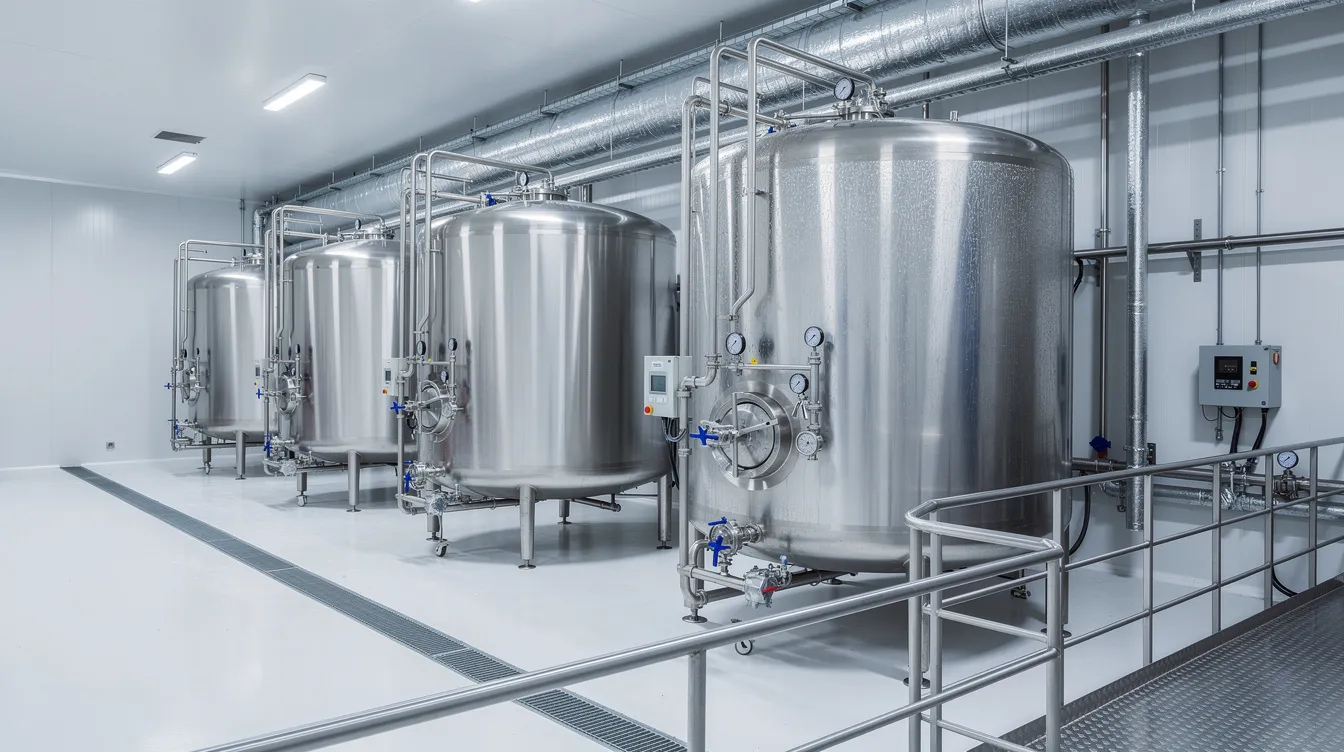
Lassi manufacturing equipment is designed for hygienic operation and reliability. All dairy equipment in contact with product must be stainless steel AISI 304/316 grade, with CIP systems for automated cleaning. Core lassi processing plant machinery includes:
| Equipment Category | Examples |
|---|---|
| Reception and storage | Milk reception tank, storage tanks, balance tank |
| Pre-processing | Milk filter, cream separator (if used) |
| Thermal processing | Pasteurizer (plate heat exchanger or batch), homogenizer |
| Fermentation | Insulated fermentation tanks with temperature control |
| Mixing and blending | Mixing tanks with agitators, sugar-syrup preparation tank |
| Cooling | Plate heat exchanger, chilled water system |
| Filling and packaging | Cup filling and sealing machine, bottle filling and capping line, pouch filler, coding and labelling machines, shrink-wrapping |
| Utilities | Boiler or steam generator, refrigeration plant, cold room, water treatment plant, compressed air, ETP |
| Quality control | Lab equipment for pH, acidity, fat, SNF, microbial counts |
Lassi processing machinery supports mixing, blending, cooling, and storage across all variants. Lassi machines can produce 4 liters of lassi at a time at the small-batch scale, while industrial lines handle thousands of litres per hour. Lassi processing plants support hygienic handling and controlled processing across the entire production chain.
Lassi plant machinery cost varies widely. A fully automatic lassi making plant unit from a domestic supplier can start at around INR 5.9 lakh for a smaller semi-industrial line, while a 10,000 LPD multi-product plant with automation, CIP, and integrated cold chain can run into several crores. The choice between an automatic lassi manufacturing plant and a semi-automatic setup comes down to:
- Labour requirement and cost
- Consistency and hygiene standards
- Wastage and filling accuracy
- Scalability for future expansion
- Maintenance and durability
For MSME-scale ventures, a semi-automatic line with manual oversight at critical steps can be cost-effective. For larger industrial dairy beverage plants targeting modern trade and institutional customers, full automation becomes commercially justified.
Plant Layout, Infrastructure, Utilities, Packaging and Cold Chain
A bankable Industrial Lassi Plant Project Report must go beyond machinery lists. A plant layout must facilitate efficient flow from raw material reception to processing, packaging, and cold storage. Land, building, utilities, and cold-chain infrastructure become major cost heads, often exceeding machinery investment.
Land, Building and Hygienic Layout Planning
Typical sections in a lassi processing plant include:
- Milk reception dock
- Raw milk chilling and storage area
- Processing and pasteurization hall
- Fermentation room (temperature-controlled)
- Mixing and flavouring area
- Filling and packaging hall
- Finished-goods cold room (2-4°C)
- Dry store for packaging material
- Utilities block (boiler, refrigeration, water treatment)
- Quality-control lab
- Administrative and amenity areas
- Dispatch and loading dock
Even a medium commercial lassi plant of 5,000-10,000 LPD requires well-planned RCC structures with segregation of clean and non-clean areas as per hygienic production norms. Government cost norms assume technical civil work in dairy plants at INR 15,000 per sq m for RCC structures, with walls up to 5 ft in glazed tile and acid and alkali resistant flooring.
The DPR should include an indicative site layout, covered area estimates, and civil construction cost assumptions adjusted for location. Industrial areas in Gujarat, Maharashtra, Punjab, Tamil Nadu, or Karnataka each have different land rates and construction costs. Regulatory approvals for a dairy project vary based on site-specific requirements and capacity metrics. Licenses required for dairy processing in India include FSSAI registration and pollution control board clearances. Food safety compliance in dairy production requires adherence to regulations such as HACCP and FSSAI standards.
Utilities, Services and Supporting Infrastructure
Key utilities for an industrial lassi production line include:
- Reliable electrical power with DG backup
- Steam for pasteurization (boiler capacity sizing based on throughput)
- Chilled water and process water systems
- Hot water for CIP
- Compressed air for pneumatic valves and packaging machines
- Refrigeration systems sized to storage volume and ambient climate
Refrigeration load is particularly important because lassi is stored, transported, and sold through cold chain. The DPR should quantify expected kW/Ton requirements and estimate monthly electricity cost. Cold-chain infrastructure data indicates that even a 25,000 L/day chilling centre can cost INR 35-60 lakh excluding civil works; finished-goods cold rooms add to this.
Effluent treatment plant requirements for process wastewater and CIP effluent add to the project cost. A 50 KLD capacity dairy ETP using DAF plus MBBR technology costs approximately INR 35-70 lakh. Under-sizing utilities leads to production interruptions; over-sizing burdens fixed costs. Balanced design is needed in the Lassi Plant Detailed Project Report.
Packaging Formats and Cold-Chain Strategy
Proposed packaging options for lassi include PET bottles, HDPE bottles, cups, and pouches.
| Format | Positioning | Capex Impact | Unit Cost |
|---|---|---|---|
| Plastic cups (80-200 ml) | Retail, impulse purchase | Higher (form-fill-seal or pre-formed cup fillers) | Moderate |
| PET/HDPE bottles (200-500 ml) | Modern trade, premium | Higher (bottle filling and capping line) | Higher |
| Laminated pouches | Price-sensitive markets | Lower | Lower |
| Institutional packs (1-5 L) | Hotels, caterers, canteens | Lower per litre | Lower per litre |
Cups and bottles support premium brand positioning and better shelf display but require higher lassi plant machinery cost for filling and sealing. Pouches allow competitive MRP but need high volumes and efficient cold-chain rotation.
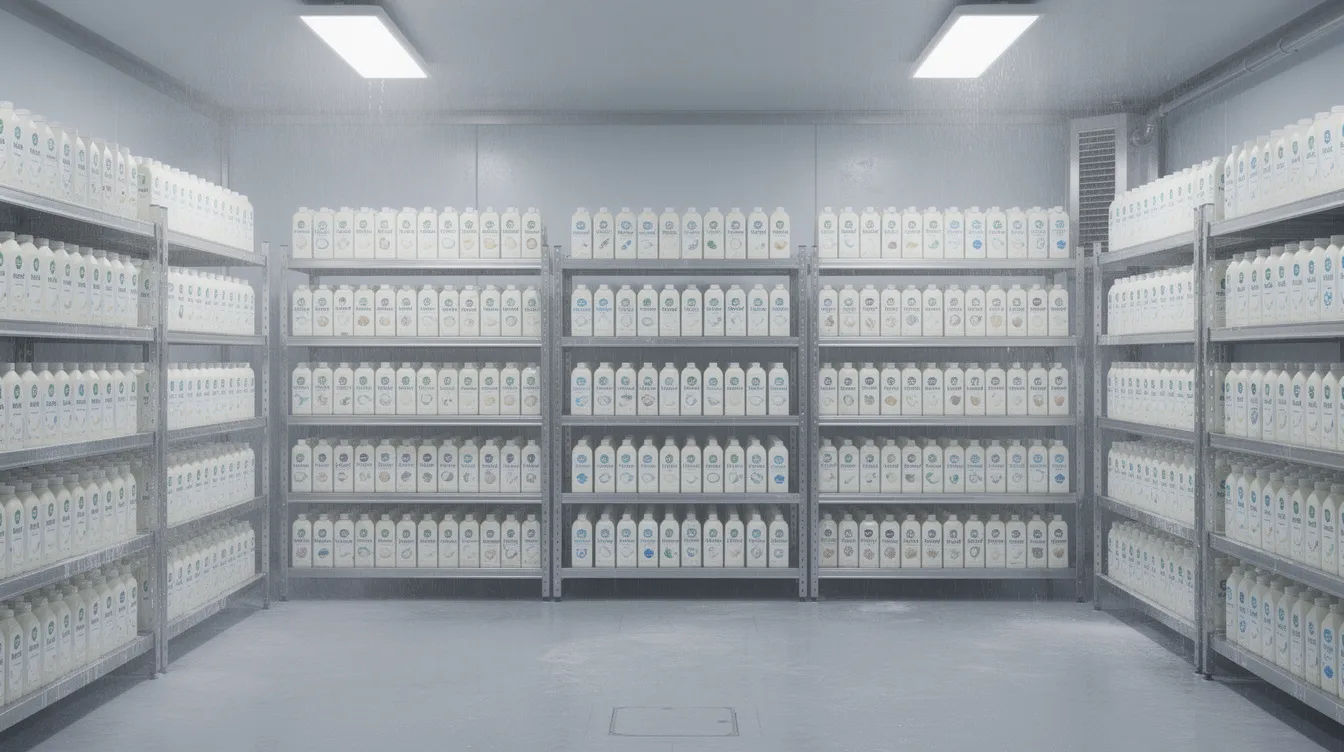
Cold chain infrastructure is mandatory for perishable products like lassi, requiring uninterrupted refrigeration from production to dispatch. The cold-chain strategy in the DPR must cover:
- Post-filling blast chilling or tunnel cooling for freshness
- Finished-goods cold room capacity (number of days of stock)
- Reefer vehicles or insulated vans for delivery
- Distributor and retailer refrigeration norms
- Realistic assumptions for product returns and expiries
The commercial lassi manufacturing plant feasibility depends on realistic cold chain assumptions. Spoilage from cold-chain breaks erodes both margins and brand reputation.
Financial Structuring: Project Cost, Means of Finance, Working Capital and Profitability
This section converts technical assumptions into a bankable financial model. A sound financial model should account for both fixed and working capital investments along with operational costs. The lassi manufacturing plant cost in India is sensitive to capacity, automation level, building specifications, and depth of cold-chain investment. Promoters should avoid relying on generic per-litre thumb rules.
Project Cost Components for a Lassi Manufacturing Plant
Major project cost heads in a Lassi Manufacturing Plant DPR:
| Cost Head | Remarks |
|---|---|
| Land and site development | Varies by state and industrial zone |
| Civil construction and building | RCC structures, cold room panels, flooring, tiling |
| Dairy processing and fermentation machinery | Pasteurizer, homogenizer, fermentation tanks, mixing tanks |
| Filling and packaging lines | Cup, bottle, pouch filling; labelling; coding |
| Refrigeration and cold rooms | Compressors, evaporators, insulated panels |
| Utilities | Boiler, water treatment, electrical, compressed air |
| Lab equipment | pH meters, fat analyzers, incubators, microbial testing |
| ETP | DAF, MBBR or suitable treatment system |
| Preliminary and pre-operative expenses | Licensing, consultancy, trial runs |
| Contingencies | Typically 10-15% of machinery and civil cost |
| Margin money for working capital | Usually funded partly from term loan, partly from equity |
For indicative scale: a 10 KLPD integrated dairy processing plant may require INR 5-7.5 crore excluding land. A dedicated lassi line within an existing plant has a lower CAPEX footprint.
Project cost estimates in the DPR should be backed by actual vendor quotations and budgetary offers, not arbitrary numbers. This is especially important when submitting a lassi manufacturing plant bank loan project report.
Means of Finance, Term Loan and DSCR Considerations
A typical funding structure includes:
- Promoter equity contribution (typically 25-40% of project cost)
- Term loan from a bank or financial institution
- Possible unsecured or subordinated loans from promoters
- Separate working-capital limits (cash credit, overdraft)
Debt-equity ratios in dairy processing projects typically range from 1.5:1 to 2:1, depending on lender norms and promoter strength. Adequate promoter contribution demonstrates commitment and absorbs risk.
DSCR (Debt Service Coverage Ratio) measures the ratio of annual cash available for servicing debt to total debt obligation (interest plus principal) in that year. Lenders look for average DSCR projections comfortably above 1.25-1.5 over the loan tenure. Aggressive assumptions on selling price, capacity utilization, and receivable cycles can artificially inflate DSCR. A responsible Lassi Manufacturing Plant DPR uses conservative, defendable assumptions.
Working Capital Requirement and Revenue Model
Working-capital components for a packaged lassi manufacturing business include:
- Raw milk and ingredients inventory (daily procurement before processing)
- Packaging stock (cups, bottles, foil lids, labels, pouches)
- Finished-goods inventory in cold room and in transit
- Receivables from distributors and modern trade channels
- Less supplier credit on milk, sugar, and packaging materials
Though the production cycle is short, the FMCG distribution model with distributor and retailer credit, schemes, and returns often leads to a sizeable lassi plant working capital requirement, especially during peak summer months when sales volumes spike and receivable cycles stretch.
Financial projections for a lassi plant should include capital investment estimates, working capital requirements, and profitability analysis. The revenue model follows this logic:
Installed capacity (litres/day) x Operating days x Capacity utilization x Net realization per litre = Annual turnover
Sales forecasts should consider multiple scenarios for capacity utilization and market demand. Phased ramp-up is realistic: perhaps 40% utilization in Year 1, 55% in Year 2, and 70% by Year 3. Lassi manufacturing plant profitability depends on contribution margin per litre (selling price minus variable cost of milk, ingredients, packaging, direct power, and freight) multiplied by actual volume sold, less fixed costs, interest, and depreciation.
Bankability, Risk Analysis and Role of a Professional DPR
Bankers and investors evaluate a complete business case, not just a concept. A robust lassi manufacturing plant feasibility report integrates technical, commercial, and financial analysis.
Break-Even, ROI, IRR and Payback in a Lassi Plant DPR
- Break-even: the level of capacity utilization at which total contribution equals total fixed costs. Many lassi plants break even at 60-70% utilization due to fixed costs in cold rooms, packaging lines, depreciation, and interest.
- ROI (Return on Investment): net profit after tax divided by total capital employed. Used as a high-level profitability measure.
- IRR (Internal Rate of Return): the discount rate at which net present value of project cash flows equals zero. Captures timing of inflows; useful for comparing dairy projects with different gestation periods.
- Payback period: time required to recover initial investment from net cash inflows. Smaller lassi plants with established markets may target 18-30 months; larger plants with brand-building phases take longer.
These metrics in the lassi plant financial projections are estimates based on assumptions, not guaranteed returns.
Loan Appraisal, DSCR and Term Loan Assessment
Banks reviewing a lassi manufacturing plant bank loan project report examine:
- Promoter background and financial track record
- Project cost and funding pattern with customized solutions for each lender’s norms
- Technical details of lassi processing plant machinery and process
- Milk procurement arrangements and supplier relationships
- Market strategy, distribution network, and sales channels
- Projected financial statements (P&L, balance sheet, cash flow)
DSCR and cash-flow projections are central to assessing lassi project loan repayment capacity. Lenders prefer steady cash flows that comfortably cover EMI obligations even under slightly adverse conditions. No project is automatically eligible for finance; banks also examine security, collateral, statutory approvals, and implementation schedule before sanctioning a lassi plant term loan.
Risk Factors, Sensitivity Analysis and Professional DPR Support
Key risks in industrial lassi manufacturing:
| Risk | Mitigation Approach |
|---|---|
| Milk price volatility | Long-term procurement contracts; multi-source milk supply from dairy farms |
| Seasonal demand (summer-heavy sales) | Product diversification; institutional supply agreements |
| Cold-chain failures | Redundant refrigeration; temperature monitoring systems |
| Competition from established brands | Differentiated product range; regional market focus |
| Fermentation inconsistency | Trained production team; standardized culture protocols |
| High packaging and logistics costs | Volume negotiations with supplier partners; route optimization |
| Product returns near expiry | Efficient distribution; FIFO stock rotation |
| Under-utilization of capacity | Phased investment; realistic production goals |
A good lassi plant IRR analysis includes sensitivity checks: higher milk prices (+10-20%), lower selling prices, higher distributor margins, slower capacity build-up, and increased electricity and refrigeration costs. A robust lassi manufacturing plant CMA data set should reconcile projected sales, raw material consumption, stock levels, and receivables with bank working-capital norms.
Comparison with Curd, Yogurt and Greek Yogurt Manufacturing
Lassi belongs to a broader family of fermented dairy products. Many dairies in India plan integrated plants covering more than one product. Lassi processing plants can produce yogurt, cheese, and lassi from shared fermentation and packaging infrastructure.
| Parameter | Lassi | Curd / Dahi | Yogurt | Greek Yogurt |
|---|---|---|---|---|
| Viscosity | Pourable, thinner | Set, moderate | Thicker than lassi | Very thick, spoonable |
| Flavouring | Commonly flavoured | Usually plain | Often fruit-added | Often plain or lightly flavoured |
| Processing complexity | Moderate | Lower | Comparable to lassi | Higher (straining/UF required) |
| Packaging | Cups, bottles, pouches | Cups, tubs, bulk | Individual cups, bottles | Premium cups |
| Per-unit realization | Moderate | Lower | Higher | Highest |
| Curd processing link | Curd is broken and blended | Set in container | Fermented, then stirred | Fermented, then strained |
Promoters considering diversification can explore a curd and dahi manufacturing plant or a Greek yogurt manufacturing plant project for detailed process and financial guidance. Integrated production lines help produce multiple fermented dairy products and spread fixed costs.
Role of CA Manish Gugliya and Conclusion
Industrial lassi manufacturing can be a profitable value-added dairy opportunity when product quality, cold chain, and financial structure are aligned. A comprehensive Industrial Lassi Manufacturing Plant Project Report must bring together product mix, technical design, project cost, means of finance, working-capital planning, profitability projections, DSCR, IRR, and risk analysis into a single coherent document.
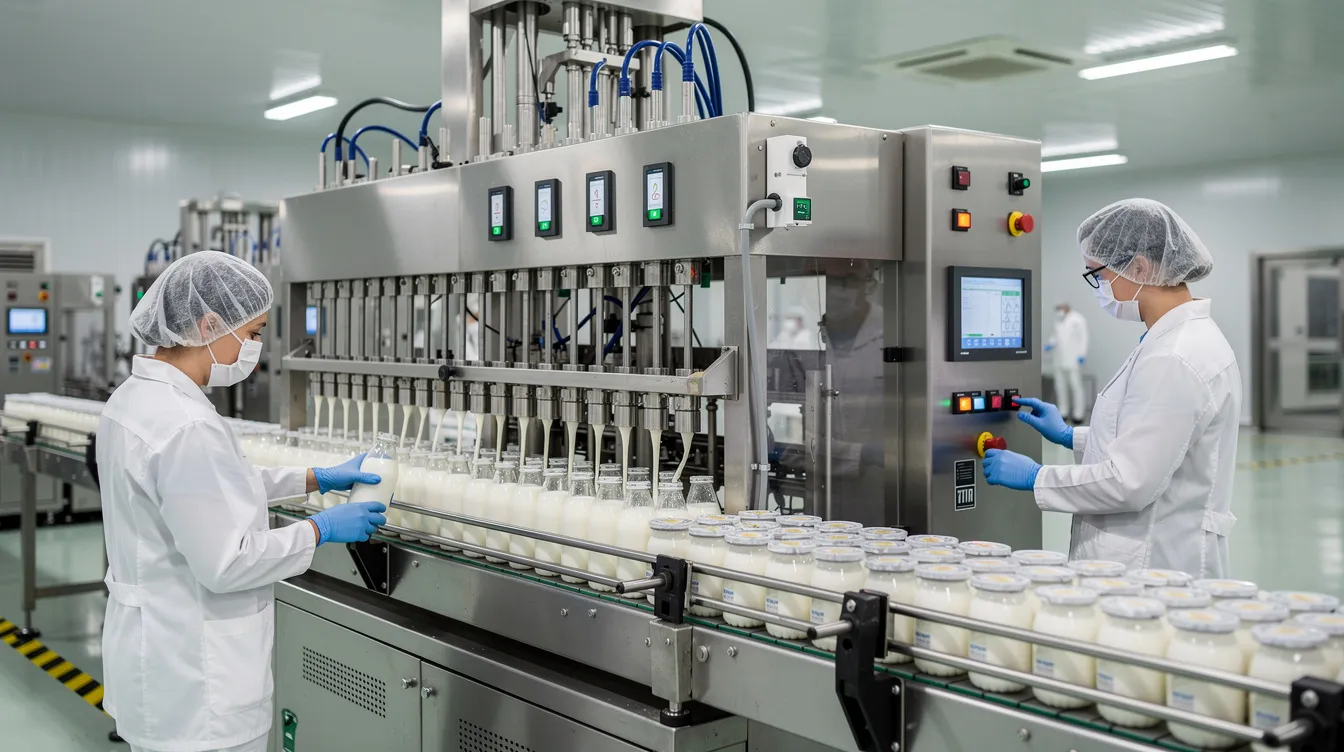
CA Manish Gugliya assists entrepreneurs and businesses in preparing:
- Detailed Project Reports (DPR) for bank finance and investor evaluation
- Financial projections and CMA Data preparation
- DSCR analysis and term loan assessment
- Working capital assessment and break-even analysis
- ROI and IRR analysis with sensitivity scenarios
- Project feasibility evaluations for dairy and other manufacturing ventures
ProjectReportBank.com provides structured, bank-focused DPR preparation and financial analysis support for lassi processing plants and related fermented dairy ventures across India, covering MSME-scale through large industrial dairy beverage plants, with customized solutions for each project’s requirements, market context, and compliance needs.
Before committing capital, approaching banks, or finalizing lassi processing plant machinery orders, promoters and existing dairy units should engage a professional for realistic financial modeling and project assessment. A well-prepared DPR is not a formality; it is the foundation for sound investment decisions.
Frequently Asked Questions
How long does it typically take to commission an industrial lassi manufacturing plant?
Realistic timelines from finalizing land and building plans to machinery installation, trial runs, and commercial production range from 9 to 15 months, depending on project size, permitting timelines in the specific state (such as Hyderabad, Chennai, or cities in Tamil Nadu and Maharashtra), and vendor lead times for equipment. The DPR should include a milestone-based implementation schedule.
What type of team is required to run a commercial lassi plant?
A typical team includes a plant manager with dairy-processing experience, production supervisors, quality-control staff trained in raw milk testing and microbial analysis, operators for pasteurization and filling lines, maintenance technicians for machine upkeep, store and logistics personnel for cold-chain management, and basic accounts and administration support. Manpower cost must be included in the DPR under salaries and wages, and the team size scales with plant capacity and automation level.
Can existing milk or dahi plants be upgraded to add lassi production?
Many existing curd, dahi, or milk-processing plants can add a lassi production line by upgrading mixing tanks, expanding fermentation capacity, and installing suitable filling and packaging lines. A focused technical and financial assessment is needed to ensure utilities, refrigeration, and cold-chain infrastructure can handle the additional load without compromising efficiency of existing production.
What shelf life can be expected for packaged lassi under cold chain?
Shelf life depends on formulation, culture selection, processing conditions, hygiene during filling, and packaging integrity. Many industrial lassi products in India target a refrigerated shelf life typical for fresh dairy beverages, generally in the range seen for similar fermented products stored at 2-4°C. Actual shelf life must be validated through lab testing, pilot batches, and stability studies before being incorporated into DPR assumptions or printed on packaging.
How should an entrepreneur choose between cup, bottle and pouch packaging for lassi?
The choice depends on target market segment, brand positioning, investment capacity, and distribution model. Cups and bottles support premium pricing, better brand visibility, and modern trade presence, but carry higher capex and unit cost. Pouches allow competitive MRP in price-sensitive markets but need high volumes and efficient cold-chain rotation. Lassi plants can produce sweet, salted, flavored, and masala lassi in any of these formats; the packaging decision should align with the overall lassi manufacturing business plan and market strategy rather than being treated as an afterthought.