Key Takeaways
- India imports over 6 million metric tonnes of crude palm oil annually, fulfilling nearly 96% of its palm oil requirement through imports; refining this crude into edible oil is a large-scale industrial opportunity.
- The crude palm oil refining process converts CPO into RBD palm oil, and refining yield, PFAD recovery and processing losses directly determine profitability far more than installed capacity alone.
- Most Indian CPO refineries use physical refining of crude palm oil, though chemical refining remains relevant for certain feedstock conditions.
- Properly engineered CPO refining plant technology with good energy efficiency and steam optimisation can materially reduce refining cost per tonne.
- Project Report Bank, led by CA Manish Gugliya, prepares customised, bankable DPRs and financial models for edible oil and palm oil refinery projects across India.
Introduction: CPO Refining Opportunity and Context in India
India is one of the world’s largest importers of crude palm oil. In 2024, India imported approximately 6.53 million metric tonnes of CPO, worth about US$6.56 billion. Palm oil alone contributed roughly 47% of India’s total edible oil imports. Nearly 96% of India’s palm oil requirement is fulfilled by imports, with domestic oil palm production accounting for only about 4%.
Crude palm oil arriving at Indian ports cannot be sold directly as cooking oil. It must undergo an industrial palm oil refining process to produce refined, bleached and deodorised (RBD) palm oil, and further into palm olein and palm stearin. Effective refining achieves desired sensory properties and food safety compliance. Refining improves palm oil’s shelf life and stability, and refined palm oil attracts higher prices in the global market.
Refining plants located near ports such as Kandla, Mundra, Kakinada, Krishnapatnam and Haldia convert imported crude oil into marketable edible oil products and palm fatty acid distillate. Logistics and location strongly affect palm oil refining economics.
The real determinants of profitability are:
- Refining margin per tonne and free fatty acid content of feed CPO
- PFAD recovery and total refining losses
- Steam, power and fuel consumption per MT processed
- Financing cost on CPO inventory and working capital
Readers interested in capital investment and plant setup budgets can refer to palm oil refinery setup cost and capital investment. The rest of this article is written from the perspective of CA Manish Gugliya, focusing on both technology and refining economics for bankable projects.
What Is Crude Palm Oil (CPO) Refining?
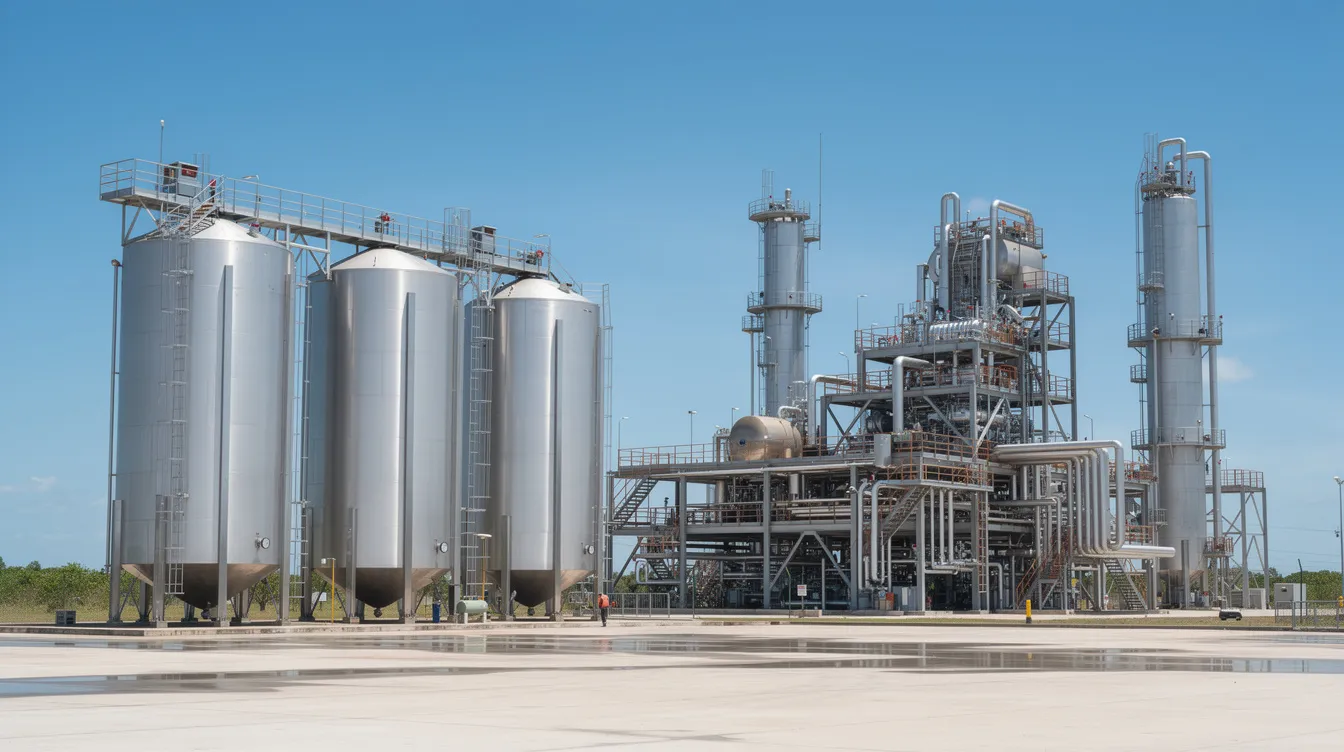
Crude palm oil is a reddish-orange semi-solid edible oil extracted from the mesocarp of oil palm fruit, typically produced in South East Asia – primarily Indonesia, Malaysia and Thailand – and shipped to India as crude oil. It has a deep orange red color from carotenoid pigments.
Key crude palm oil characteristics include higher free fatty acid content (often 3–5% or more), presence of phospholipids (gums), pigments, moisture, insoluble impurities, odour-causing volatile compounds, trace metals and oxidation products. Refining removes impurities like free fatty acids and gums, transforming crude palm oil into refined oil meeting FSSAI standards. The refined palm oil has a pleasant aroma and clear color suitable for consumer and industrial use.
- CPO: unrefined crude palm oil with high FFA and colour
- RBD palm oil: refined bulk oil used in food manufacturing and soaps, and also serves as a base for oleochemicals and lubricants; refined palm oil is also utilized in biodiesel production
- RBD palm olein: the liquid fraction after fractionation, used for frying and cooking oils
- RBD palm stearin: the solid fraction with a higher melting point, used in margarine and shortening
Fractionation separates palm oil into olein and stearin components and is a downstream process after refining – it should not be confused with the oil refining process itself.
| Product | Typical FFA | Appearance | State at 25°C | Primary Uses |
|---|---|---|---|---|
| Crude palm oil (CPO) | 3–5%+ | Deep orange-red | Semi-solid | Feedstock for refining |
| RBD palm oil | <0.1% | Light yellow, clear | Semi-solid | Food manufacturing, soaps, biodiesel |
| RBD palm olein | <0.1% | Clear, pale yellow | Liquid | Cooking oil, frying oil |
| RBD palm stearin | <0.2% | White to pale yellow | Solid | Margarine, shortening, confectionery fats |
CPO Refining Plant Technology – Physical vs Chemical Refining
Palm oil refinery plants can use either physical refining or chemical refining. Physical refining is preferred for palm oil due to lower costs, lower effluent generation and better neutral oil recovery. Chemical refining is more suitable for oils with high free fatty acids or elevated phospholipid content. A detailed technical comparison is available in our guide on physical vs chemical refining of edible oils.
Physical Refining Technology
Physical refining uses steam distillation to remove free fatty acids under deep vacuum rather than chemical neutralisation. The route involves acid conditioning and degumming, bleaching with bleaching earth, filtration, then high-vacuum deacidification and deodorisation where FFA and volatile components are stripped by live steam at 240–260°C and 2–5 mbar pressure. Physical refining produces palm fatty acid distillate as a saleable byproduct.
Feedstock quality evaluation – CPO sampling for FFA percentage, moisture, phosphorus content, colour and peroxide value – determines achievable yields and required bleaching earth dosage. The degummed oil is mixed with activated clay and possibly activated carbon under vacuum during the bleaching process, then filtered through pressure leaf filters. After deodorisation, oil undergoes controlled cooling through heat recovery systems and polishing filters before transfer to storage tanks.
Key control points include vacuum level, deodoriser temperature profile, residence time (typically 45–75 minutes), stripping steam rate (approximately 1–2% of oil weight) and bleaching earth dosage.
Chemical Refining Technology
In chemical refining, free fatty acids are neutralised with caustic soda, forming soap stock which is separated by centrifuge. The neutralized oil then undergoes washing to remove residual soap, vacuum drying to eliminate residual moisture, followed by bleaching and deodorisation. Chemical refining generates more liquid effluent and soap stock requiring separate processing, which must be factored into project economics.
| Parameter | Physical Refining | Chemical Refining |
|---|---|---|
| FFA removal mechanism | Steam distillation under vacuum | Alkali neutralisation with NaOH |
| Main by-product | Palm fatty acid distillate (PFAD) | Soap stock |
| Typical refining losses | Lower (better neutral oil recovery) | Higher (neutral oil entrainment in soap) |
| Chemical consumption | Lower (acid only for degumming) | Higher (caustic soda, wash water) |
| Effluent generation | Lower | Higher (wash waters, high COD/BOD) |
| Suitability for CPO | Preferred for standard-quality CPO | Used when FFA or phospholipids are high |
Neither route is universally superior. A techno-commercial evaluation is required for each project.
Crude Palm Oil Refinery Process Flow – Step-by-Step
This section describes a modern continuous physical refining line – the reference model for industrial CPO refining plant technology in India. For broader context on edible oil refinery process flow and manufacturing stages, see our detailed process guide.
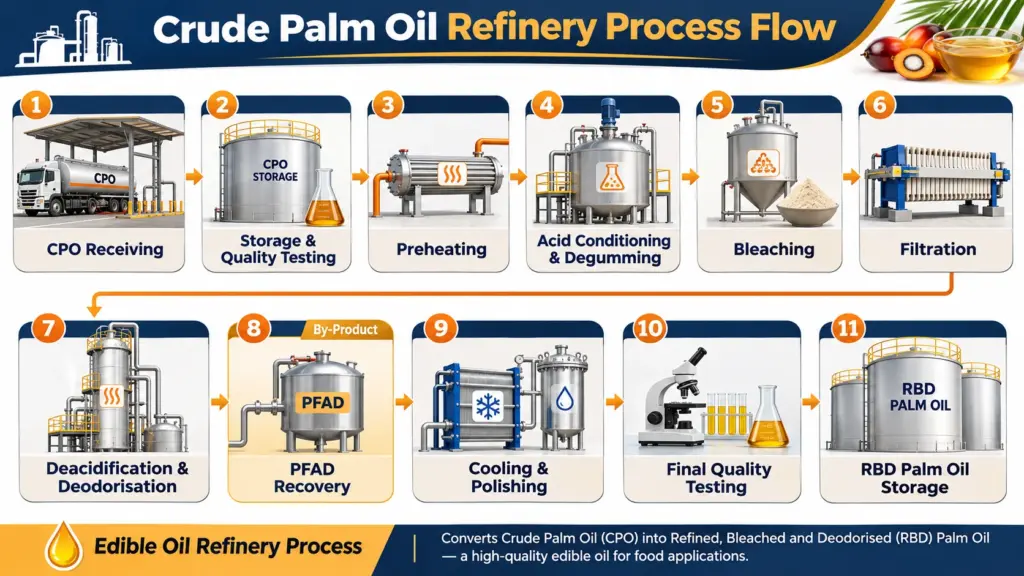
CPO Receiving → Storage & Quality Testing → Preheating → Acid Conditioning & Degumming → Bleaching → Filtration → Deacidification & Deodorisation → PFAD Recovery → Cooling & Polishing → Final Quality Testing → RBD Palm Oil Storage
- Receiving & Storage: CPO is unloaded from tankers into heated storage tanks maintained at 40–50°C to prevent solidification and oxidation. Quality testing confirms free fatty acid content, moisture and other impurities.
- Preheating: Heat exchangers recover thermal energy from hot refined streams, improving energy efficiency and reducing fuel consumption.
- Acid Conditioning & Degumming: Degumming removes phospholipids using water or acid (phosphoric acid or citric acid). Dosing pumps and static mixers ensure consistent contact.
- Bleaching: Bleaching uses activated clay to remove pigments and trace metals. The bleached oil is held under vacuum before filtration.
- Filtration: Pressure leaf filters or a filter press remove spent bleaching earth. Filtration efficiency affects both quality and yield since spent earth retains residual oil.
- Deacidification & Deodorisation: Deodorization removes free fatty acids through steam distillation at normal atmospheric pressure well below standard – typically 2–5 mbar of low pressure – and 240–260°C. The dried oil enters packed columns where live steam strips FFA and unwanted components.
- PFAD Recovery: Vapour condensation and scrubbers collect PFAD as a saleable by-product in separate storage.
- Cooling & Polishing: Plate heat exchangers cool the oil; polishing filters ensure clarity. The final product is bright, stable RBD palm oil.
- Quality Testing & Storage: Laboratory verification of FFA, colour, peroxide, moisture confirms the refined oil meets specifications before dispatch.
Major Machinery and Equipment Required for a CPO Refining Plant
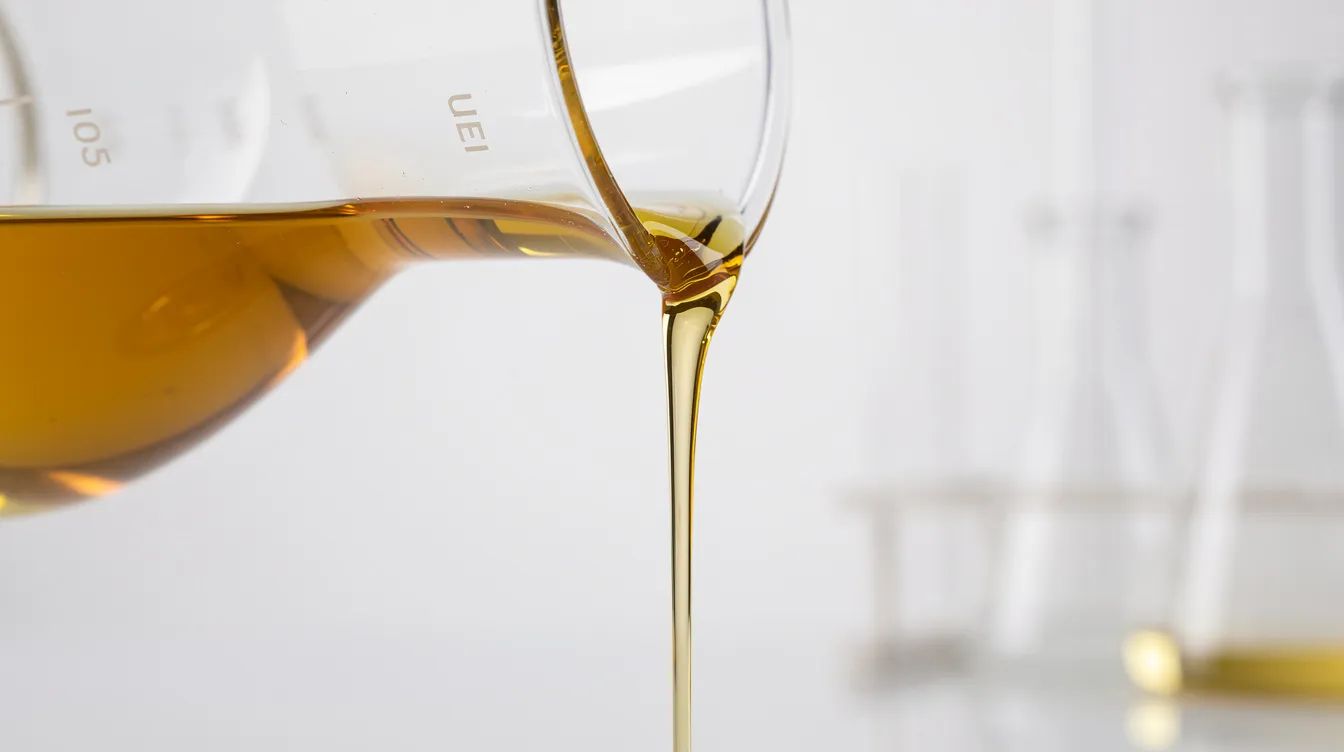
Correct sizing and integration of palm oil refining plant machinery is essential for process stability and targeted recovery. Detailed guidance on edible oil refinery machinery, technology and EPC selection helps promoters evaluate vendor proposals critically.
| Equipment | Function | Impact on Yield & Cost |
|---|---|---|
| CPO storage tanks (heated, insulated) | Bulk storage, quality segregation | Working capital, crude quality preservation |
| Heat exchanger (plate/shell-and-tube) | Preheating, heat recovery | Reduces steam and fuel consumption |
| Acid dosing & degumming system | Phospholipid removal | Affects downstream bleaching load |
| Bleaching vessels | Colour and metal removal | Bleaching earth cost, oil retention losses |
| Filtration system (pressure leaf/filter press) | Spent earth separation | Direct impact on neutral oil loss |
| Deodorisation column/tower | FFA stripping, odour removal | Core yield and quality determinant |
| Vacuum system (ejectors or mechanical) | Maintains deep vacuum for D&D | Energy cost, deodoriser performance |
| PFAD recovery system | Captures distillate by-product | By-product revenue |
| Boiler / thermic fluid heater | Steam and heat generation | Major operating cost component |
| PLC/SCADA automation | Process control, safety interlocks | Consistency, quality assurance |
| Laboratory instruments | Quality control testing | Compliance and customer acceptance |
Modern refineries from international manufacturers and domestic suppliers alike must provide consumption guarantees. Project Report Bank DPRs align machinery configuration with projected capacity and targeted CPO to RBD palm oil conversion yield.
Crude Palm Oil Refining Losses and Yield Calculation
Oil refining losses are the single most critical technical parameter for palm oil refining economics. When processing hundreds of tonnes daily, even a 0.5% yield improvement translates into substantial additional revenue annually. Free Fatty Acid (FFA) value is monitored during refining at every critical stage.
Main loss components:
- FFA removed as PFAD (saleable by-product, not a true loss)
- Neutral oil entrained with PFAD or soap stock (true economic loss)
- Bleaching earth oil retention – spent bleaching earth carries residual oil that may be partially recoverable
- Handling, tank-bottom and filtration losses
- Moisture and impurities removal (mass reduction, not neutral oil loss)
Illustrative Material Balance – 1,000 kg CPO (Physical Refining)
| Component | Quantity (kg) | Category |
|---|---|---|
| RBD palm oil output | ~940 | Saleable finished product |
| PFAD | ~40 | Saleable by-product |
| Spent bleaching earth + retained oil | ~12 | Non-saleable loss |
| Moisture, impurities, handling losses | ~8 | Non-saleable loss |
| Total | 1,000 | – |
These figures are illustrative only, not guaranteed industry standards. Actual yields depend on crude quality, process control and technology.
Formulas:
- RBD Palm Oil Yield (%) = (RBD Palm Oil Output ÷ CPO Input) × 100
- Total Refining Loss (%) = (Non-product, Non-saleable Material Losses ÷ CPO Input) × 100
For a 200–500 TPD refinery, improving yield from 93.5% to 94.0% can add several crores of rupees annually to contribution margin. Detailed yield modelling should use actual lab data of crude oil and vendor guarantees, which Project Report Bank incorporates into DPR financial models. Solid waste management practices to recover residual oil from spent earth and reuse bleaching earth byproducts also contribute to yield optimisation.
Palm Fatty Acid Distillate (PFAD) Recovery and Economics
PFAD is the condensed distillate obtained during physical refining, consisting mainly of fatty acid (typically >85% FFA) with small amounts of neutral oil and volatile components. Higher FFA in crude palm leads to higher PFAD quantity.
Major PFAD applications include soap and detergent manufacture, oleochemicals, animal feed formulations and biodiesel feedstock. PFAD is an important component of palm oil refining economics – not a waste product.
Illustrative PFAD Revenue (per MT CPO):
Assuming 40 kg PFAD per 1,000 kg CPO at an illustrative realisation of ₹45/kg, PFAD revenue equals ₹1,800 per MT CPO processed. This partially offsets processing cost but should not be the primary justification for project viability. PFAD prices are volatile, and conservative assumptions are essential in feasibility studies.
Steam, Power, Water and Other Utility Requirements
Energy efficiency is crucial in modern palm oil refineries. Utility optimisation directly reduces CPO refining cost per tonne. Waste heat recovery systems reduce fuel use in refining, and low-emission boilers control air pollution during the refining process. Detailed utility design norms are covered in our guide on edible oil refinery steam, power, water and utility requirements.
| Utility | Main Consumption Points | Cost Impact |
|---|---|---|
| Steam | Deodoriser, ejectors, heating | Largest utility cost driver |
| Electricity | Pumps, automation, compressors | Continuous operational cost |
| Cooling water | Condensers, oil coolers | Equipment sizing dependent |
| Boiler fuel | Steam generation | Depends on fuel type and availability |
| Bleaching earth | Bleaching vessels | Recurring consumable cost |
| Process chemicals | Degumming (phosphoric acid, citric acid) | Relatively small but quality-critical |
Proper insulation, condensate recovery, heat recovery systems between crude and hot refined streams, and efficient boilers reduce specific steam consumption per MT processed.
Palm Oil Refining Economics – Cost Per Metric Tonne
Palm oil refining economics are driven by landed CPO procurement cost, variable refining cost per MT, yield of RBD palm oil and PFAD, and realisation from sale of the final product. For comprehensive profitability analysis, refer to our article on edible oil refinery feasibility study, ROI, IRR and profitability.
| Cost Component | Illustrative ₹/MT CPO |
|---|---|
| Degumming chemicals | 40–80 |
| Bleaching earth and filtration aids | 250–450 |
| Steam and boiler fuel | 400–700 |
| Electricity | 150–300 |
| Direct labour | 50–100 |
| Repairs and maintenance | 80–150 |
| Quality control and laboratory | 20–40 |
| Factory overheads and ETP | 100–200 |
| Waste handling | 30–60 |
| Gross processing cost | 1,120–2,080 |
| Less: PFAD credit (net) | (1,500–2,000) |
| Net variable processing cost | Approximately ₹500–1,200 |
All values are purely illustrative. Actual operating costs must be derived from current market data and vendor quotations.
Effective cost per MT of saleable RBD output is higher than cost per MT of CPO input because yield is below 100%. Separating raw materials cost from processing cost helps promoters understand whether their advantage lies in procurement, refining efficiency or marketing margins.
How to Calculate CPO Refining Margin and Profitability
Refiners earn from the difference between sale value of outputs and landed cost of inputs plus variable costs. The core formula:
Net Refining Contribution = (Revenue from RBD Palm Oil + Revenue from PFAD) − (Landed CPO Cost + Variable Refining and Selling Costs)
Key financial terms for palm oil processors:
- Gross price spread: RBD selling price minus landed CPO cost, ignoring processing costs
- Processing contribution margin: net of variable refining cost and by-product credits
- EBITDA: contribution minus fixed operating costs (before depreciation, interest and tax)
Fixed costs (salaries, administration, insurance), depreciation, interest on term loans and working capital, and income tax further reduce contribution to net profit. Variability in refining margin requires sensitivity analysis – modelling covered in edible oil refinery financial projections, CMA Data and DSCR.
Refining Economics for 100 TPD, 200 TPD and 500 TPD Plants
Capacity selection impacts unit processing cost, capital intensity and market risk. For detailed guidance, see edible oil refinery capacity planning for industrial projects.
| Parameter | 100 TPD | 200 TPD | 500 TPD |
|---|---|---|---|
| Operating days/year | 330 | 330 | 330 |
| Utilisation | 80% | 80% | 80% |
| Annual CPO processed (MT) | 26,400 | 52,800 | 132,000 |
| RBD output (MT, ~94% yield) | 24,816 | 49,632 | 124,080 |
| PFAD output (MT, ~4%) | 1,056 | 2,112 | 5,280 |
| Variable cost/MT CPO (₹) | ~1,100 | ~950 | ~800 |
| Annual fixed costs (₹ crore) | ~3.5 | ~5.0 | ~8.0 |
Illustrative assumptions only. Small scale operations below 100 TPD face significantly higher per-unit costs.
Larger plants benefit from lower specific utility consumption, better labour productivity and stronger procurement leverage. However, they also require higher total project cost, larger working capital and assured crude supply logistics.
Working Capital Requirements in CPO Refining
Working capital is often underestimated in palm oil processing projects. CPO and refined palm oil are high-value commodities, and even a few days of inventory represents substantial locked capital.
Major components include CPO inventory at refinery tanks, in-transit cargo, finished RBD palm oil and palm olein inventory, PFAD stock and receivables, trade receivables from bulk buyers, and trade payables to suppliers. Import duties, GST and port handling charges add to landed CPO cost and must be financed upfront.
Price risk is significant: falling RBD prices while holding high-priced CPO inventory can erode margins and strain liquidity. Banks require detailed CMA Data and projection statements for sanctioning working capital limits.
Financial Feasibility and Bankability of a CPO Refinery
Lenders and investors focus on DSCR, IRR, ROI and robustness of assumptions around crude palm oil refining process economics. For detailed investment planning, refer to edible oil refinery project cost and capital investment. The broader advisory framework is covered in our large-scale edible oil refinery project report and DPR.
Key stress scenarios every DPR should address:
- Scenario A: Landed CPO cost increases while RBD prices remain flat – margin compression
- Scenario B: Lower RBD selling price due to competition – EBITDA erosion
- Scenario C: Lower RBD yield than assumed – reduced contribution per MT and weakened DSCR
- Scenario D: Higher steam/power tariffs or lower capacity utilisation in initial years
Break-even utilisation, payback period and cash flow adequacy for loan repayment must be modelled with careful engineering of assumptions rather than optimistic projections.
Quality Control, Food Safety and Regulatory Considerations
Crude palm oil refining is not just about yield. RBD palm oil meets international quality standards after refining, and compliance with FSSAI norms is mandatory. Quality parameters of refined palm oil include free fatty acids and moisture. Peroxide Value indicates oil freshness and shelf life. Moisture content is tested to ensure oil stability. Color and odor analysis ensures product quality meets standards, while smoke point tests assess oil stability during cooking.
Refined palm oil meets international food safety standards set by FSSAI and Codex Alimentarius. Process-control concerns include 3-MCPD esters and glycidyl esters potentially formed at high deodoriser temperatures – modern refineries optimise temperature-time profiles and control precursors.
Regulatory requirements include factory and boiler licences, pollution control board consents, and food safety management systems (HACCP, ISO 22000). Effluent Treatment Plants treat wastewater before discharge, and low-emission boilers are increasingly mandated.
Major Technical and Financial Risks in CPO Refining
Risk analysis is essential in any bankable DPR for commodity-refining businesses.
| Risk | Impact | Mitigation |
|---|---|---|
| Inconsistent CPO quality (variable FFA, moisture) | High | Diversified sourcing, strict quality specifications |
| Excessive refining losses | High | Careful engineering of process controls, vendor guarantees |
| Vacuum system underperformance | Medium | Preventive maintenance, redundancy in vacuum generation |
| Energy cost escalation | Medium | Heat recovery systems, fuel flexibility |
| Narrow refining spreads | High | Hedging, product diversification, cost control |
| Currency and duty volatility | High | Forward contracts, conservative financial modelling |
| Working capital strain | High | Adequate bank limits, inventory discipline |
| Product quality non-compliance | Medium | Robust quality assurance systems, trained operators |
Expert Recommendations from CA Manish Gugliya
Based on my experience advising industrial project promoters, I offer these practical recommendations:
- Define your crude palm oil sourcing strategy – imported vs domestic, long-term contracts vs spot – before freezing capacity and location.
- Evaluate physical versus chemical refining after modelling crude-quality scenarios and effluent-treatment costs, not solely on theoretical preference.
- Insist on detailed technical proposals and guarantees from technology suppliers for neutral oil loss, bleaching earth consumption and specific steam usage per MT.
- Use conservative assumptions on RBD yield, PFAD realisation and capacity utilisation in financial models, especially during the first two to three years.
- Prepare detailed monthly cash-flow projections covering at least the first two operating years to understand working capital peaks and DSCR behaviour.
- Conduct downside sensitivity for lower refining margins, higher energy tariffs and delays in achieving rated capacity.
- Do not approach banks only with machinery quotations; approach them with a comprehensive DPR, financial model and CMA Data prepared professionally.
Professional DPR, Financial Modelling and Project Finance Advisory
ProjectReportBank.com is a Chartered Accountant–led professional advisory platform specialising in industrial project documentation. For CPO refinery promoters, we offer:
- Customised Detailed Project Reports tailored to specific capacity, technology and location
- Technical-commercial feasibility studies integrating mass balance, yield and utility consumption
- Project cost estimation alongside edible oil refinery project cost and capital investment planning
- Financial projections, CMA Data, DSCR analysis and bank loan documentation
- Investor-ready DPRs for equity fundraising
Serious promoters considering commercial-scale CPO refining projects are welcome to contact Project Report Bank through the website enquiry form or WhatsApp for customised analysis. We do not promise automatic loan approvals or guaranteed profitability – we provide defensible financial analysis that supports informed investment decisions.
Frequently Asked Questions
What is the complete crude palm oil refining process from port to final product?
The end-to-end crude palm oil refining process involves: CPO import and unloading at port → transport to refinery and storage → preheating and crude testing → degumming and acid conditioning → bleaching with bleaching earth → filtration → deacidification and deodorisation under deep vacuum → PFAD recovery → cooling and polishing → optional fractionation into palm olein and palm stearin → dispatch. Quality checks occur at multiple stages throughout palm oil processing.
How much RBD palm oil can be produced from one tonne of CPO?
Actual yield depends on crude quality, free fatty acid content, phospholipids, process control and technology. Well-operated continuous physical refining plants typically target RBD yields in the range of 90–95%, with yields around 94% being common for standard-quality CPO. However, promoters should not treat any single percentage as a guaranteed standard – yield assumptions in bankable DPRs must be supported by vendor guarantees and laboratory test data on actual raw materials.
How is palm oil refining cost per tonne different from refining margin?
Refining cost per tonne refers to variable and fixed processing cost (chemicals, bleaching earth, utilities, labour, overhead, waste handling) per MT of CPO input, sometimes netted for PFAD credit. Refining margin measures the difference between total revenue from RBD and by-products and the sum of landed crude cost plus all variable and fixed costs. A plant can have competitive refining costs yet earn low margins if crude palm procurement prices are unfavourable or if the oil stability requirements of the market demand costly additional processing.
Why is working capital so critical for CPO refineries?
CPO refineries process high-value commodities in large volumes. Even a few days of CPO inventory at current landed costs can represent tens of crores of rupees. Import payment terms, duties and port charges must be financed upfront. Falling refined oil prices while holding high-cost inventory directly erodes margins. Banks assess working capital needs rigorously using CMA Data and projection statements – underestimating this component is one of the most common errors in palm oil industry project planning.
What financial metrics do lenders prioritise when evaluating a CPO refinery DPR?
Lenders focus on DSCR (Debt Service Coverage Ratio), project IRR, break-even capacity utilisation, cash flow adequacy for loan repayment, and sensitivity of these metrics under adverse scenarios. They examine whether projected refining margins and capacity utilisation assumptions are realistic and whether the promoter has adequate equity contribution. A comprehensive DPR integrating crude palm oil refining process economics with robust financial modelling significantly improves bankability.
Conclusion
Commercial success in crude palm oil refining depends on:
- Appropriate selection of CPO refining plant technology for the intended feedstock
- Control of crude palm oil refining losses and maximisation of RBD yield
- Efficient PFAD recovery and energy optimisation across utilities
- Robust working capital management and realistic refining margin assumptions
A technically sophisticated plant alone does not guarantee profitability. Integration of process design, procurement strategy, marketing and financial planning – supported by careful engineering and disciplined execution – is essential.
Serious entrepreneurs and industrial groups considering a commercial-scale CPO refinery project in India should engage professional advisory support for customised DPR preparation, financial modelling and project finance documentation before committing major capital. Project Report Bank is available to assist with technically grounded, financially defensible project evaluation.