Key Takeaways
- A palm oil refinery project report in India must integrate technology selection (physical vs chemical refining), import-based crude palm oil sourcing, fractionation, bulk storage and port logistics into a single techno-economic and financial assessment.
- Typical capital investment ranges from ₹5 crore for smaller refining units to ₹100 crore and above for integrated refining-fractionation-storage complexes, with capacity bands spanning 100 to 1,000 TPD.
- Profitability is driven primarily by refining margin, fractionation margin, working capital cycle efficiency and crude palm oil price volatility-not by capacity alone.
- A bankable DPR with robust CMA Data, DSCR analysis, sensitivity testing and working capital assessment is essential before committing capital or approaching lenders.
- Project Report Bank, led by CA Manish Gugliya (FCA, DISA), prepares customised palm oil refinery DPRs, integrated financial models and bank-finance documentation for Indian promoters and investors.
Introduction – Palm Oil Refinery Project Report & DPR in India
India remains one of the world’s largest importers of edible oil. In the oil year 2023–24, the country imported approximately 15.96 million tonnes of edible oils, with palm oil (crude, refined and derivatives) constituting roughly 55–56% of that volume. Domestic crude palm oil production stood at only about 3.95 lakh tonnes in FY 2023–24-under 5% of palm oil category consumption. This structural gap creates a large and ongoing opportunity for downstream palm oil refining and fractionation within India.
A palm oil refinery project report evaluates the feasibility of establishing a refining plant by examining technology, capacity, capital investment, raw material sourcing, process economics, financial viability and risk. For medium and large integrated palm oil processing plants handling 100 to 1,000 TPD, this document is not a formality-it is the foundation for every investment decision, bank loan application and investor discussion.
This guide covers the industry overview, project configurations, palm oil refinery setup cost and capital investment frameworks, crude palm oil refining process and technology, fractionation, import-based sourcing, financial projections, profitability, regulatory requirements and how CA Manish Gugliya supports promoters through Project Report Bank in structuring financeable industrial projects.
Overview of the Palm Oil Refining and Integrated Processing Industry in India
Palm oil holds the dominant share in India’s edible oil consumption, driven by its cost advantage compared to soybean oil, sunflower oil and other vegetable oil alternatives. The global palm oil market was valued at USD 59.15 billion in 2025 and is expected to reach USD 80.05 billion by 2034, supported by rising global population and urbanisation. Within India, palm oil demand spans cooking oil, vanaspati, bakery fats, confectionery and the oleochemical industry, which is supporting increased utilisation of palm oil derivatives.
Indian refineries primarily process imported crude palm oil into RBD palm oil, which is then fractionated into liquid palm olein (used as cooking and frying oil) and solid palm stearin (used in bakery fats, confectionery, vanaspati and oleochemicals). The difference between crude palm oil, RBD palm oil and palm olein is central to understanding value addition in this sector. Oil palm cultivation within India-concentrated in Andhra Pradesh, Telangana and parts of the North-East-remains limited, making import-based refining the dominant model for the foreseeable future.
Strategically located integrated palm oil processing plants near major ports such as Kandla, Kakinada, Krishnapatnam, Haldia, Mumbai and Chennai benefit from reduced logistics cost, access to bulk unloading infrastructure and proximity to consumption centres. Key factors influencing long-term feasibility include import duty policy (which changes frequently), global crude palm oil price cycles, INR–USD currency movements, sustainability concerns and government support through initiatives like the National Mission on Edible Oils – Oil Palm (NMEO-OP).
This guide focuses specifically on downstream palm oil refining and fractionation plants-not on upstream oil palm plantations or fresh fruit bunches (FFB)-based palm oil milling.
Types of Palm Oil Refinery and Integrated Processing Projects
Project configuration has a direct impact on capital investment, operating margins, logistics cost, working capital requirements and bankability. Promoters must select a model that matches their supply chain access, market position and financial capacity.
The main project types include:
- Standalone CPO refinery producing RBD palm oil without fractionation-simpler operations, lower capital intensity, but limited value addition.
- Integrated palm oil refining and fractionation plant producing RBD palm oil, palm olein and palm stearin-higher margins but greater complexity.
- Dedicated fractionation unit attached to an existing refinery-suitable for edible oil processing businesses expanding their product slate.
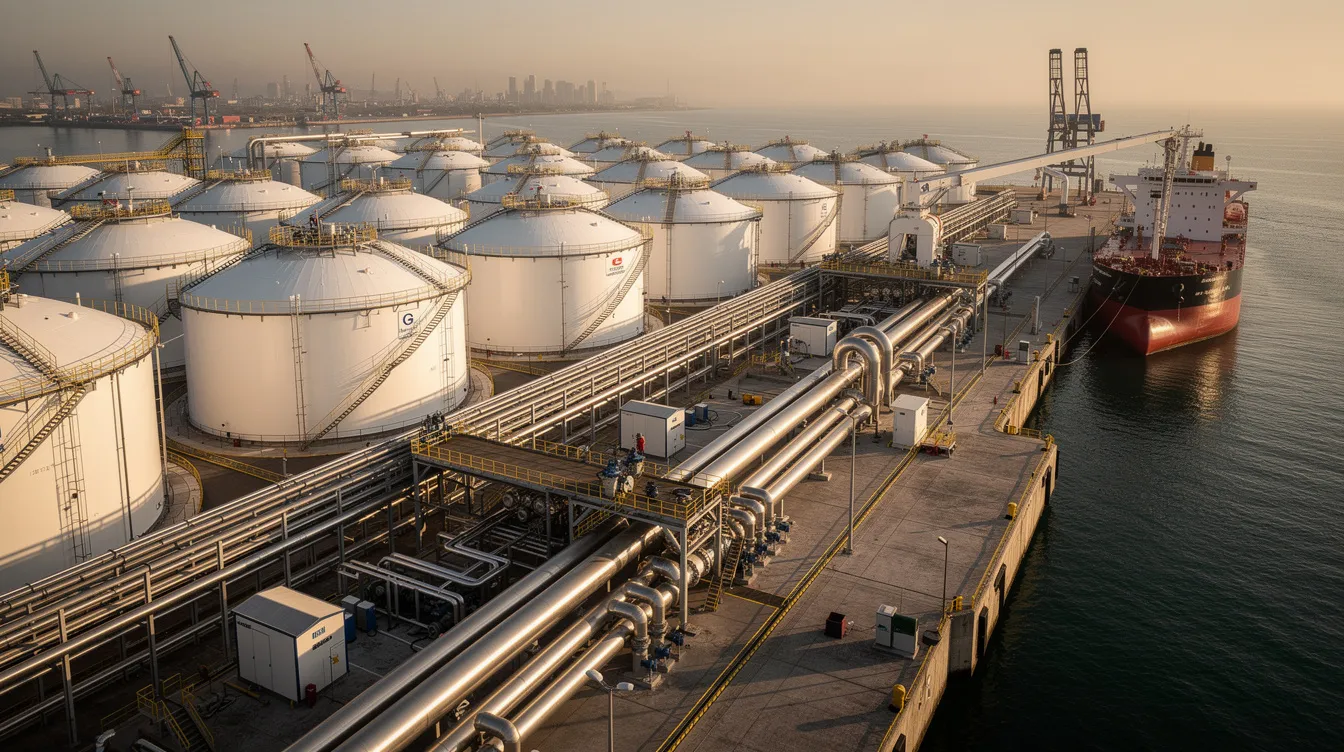
- Import-based palm oil refinery located near a port with tank farms, pipeline connectivity and ship-unloading facilities.
- Integrated refinery with storage terminal, tanker loading gantries and potentially rail siding-large-scale infrastructure projects.
- Refinery with downstream packaging (consumer packs, jerry cans) and distribution-targeting retail and branded edible oil markets.
It is important to distinguish CPO refining plants (which process imported crude oil) from palm oil milling plants. Palm oil processing facilities are critical for converting fresh fruit into crude oil at the plantation stage, where large-scale palm oil plants handle 3 to 60 tonnes of FFB per hour. Extraction rates of palm oil can reach 23–24% per bunch in such mills, with hydraulic presses achieving extraction efficiencies of 67–78% and screw presses extracting 76–90% of oil from palm fruit. Batch presses vary in size from 5 kg to 30 kg capacity. These upstream operations are fundamentally different from the downstream refining projects covered in this article, where the raw material is already crude palm oil.
When comparing project types, the DPR should evaluate each configuration across main processing steps, typical capacity ranges (100–1,000 TPD), capital intensity per TPD, logistics and land requirements (port-based versus inland), and target customers (bulk industrial buyers versus own-brand retail). Banks assess risk and cash flows very differently for each model.
Palm Oil Refinery Project Cost, Capacity & Capital Investment in India
Capacity selection-whether 100, 250, 500 or 1,000 TPD-must be grounded in confirmed or contractable supply volumes, market access, port proximity and promoter financial strength. Theoretical economies of scale are meaningful, but an oversized plant running at low utilisation destroys returns faster than a right-sized plant operating efficiently.
Annual production capacity for medium-to-large refineries can range from 100,000 to 300,000 MT depending on configuration and operating days. The key capital cost components that a palm oil refinery project report should break down include:
- Land purchase or long-term lease near a port or industrial area
- Site development, internal roads, boundary wall and drainage
- Factory building, pipe racks, structural steel and control room
- Palm oil refinery machinery-degumming vessels, bleaching earth handling and dosing systems, pressure filtration, deodoriser columns, heat exchanger units, vacuum system, pumps and instrumentation
- Fractionation machinery-crystallisers, membrane filter presses, controlled cooling circuits
- Storage tanks (vertical or horizontal) for CPO, RBD palm oil, palm olein and stearin
- Pipelines, unloading arms, tanker loading arrangements and flow metering
- Boiler, thermic fluid heater, power distribution, DG sets, air compressors and water treatment
- Quality control laboratory for testing free fatty acids, moisture, impurities and colour
- Effluent treatment plant and environmental infrastructure
- Pre-operative expenses including engineering consultancy, interest during construction and statutory fees
- Contingency margin and price escalation provision
For scale reference, an integrated complex with mill and refinery at approximately 720 TPD capacity has been estimated at around ₹300 crore, with plant and machinery typically representing 50–60% of total cost. Larger import-based refinery-fractionation plants of 1,000–2,000 TPD can require ₹300–600 crore when including port connectivity, tank farms, pipelines and utilities. Per-TPD fixed cost tends to decrease with scale-comparative data for edible oil refineries shows fixed cost per tonne falling from approximately ₹1,099 at 50 TPD to around ₹272 at 1,000 TPD.
For a deeper analysis of equipment costs and cost components, refer to the detailed guide on palm oil refinery setup cost and capital investment. Promoters evaluating broader edible oil projects may also find the edible oil refinery project cost and investment framework useful for comparison.
Each palm oil refinery DPR prepared by Project Report Bank is built on project-specific technical configuration, location, capacity and financing assumptions-not generic templates.
Crude Palm Oil Refining Technology & Process Flow
Most Indian palm oil refineries handling imported CPO use physical refining, which removes free fatty acids through steam distillation rather than chemical neutralisation. Chemical refining, which produces neutralised oil and soap stock from crude oil using caustic soda, is more common for certain seed oils but generates higher effluent loads for palm oil.
The main process flow for physical refining follows these key steps:
- CPO receipt at jetty or road tanker bay and transfer to insulated storage tanks
- Sampling and testing for FFA, moisture, impurities, DOBI and colour-quality control parameters include free fatty acid levels and impurities in crude palm oil
- Preheating and coarse filtration to remove impurities
- Degumming using phosphoric acid or citric acid treatment followed by water washing to remove gums and phospholipids
- Bleaching with bleaching earth or activated carbon to remove impurities and pigments, followed by pressure filtration
- Deodorisation under high vacuum at high temperature (crude palm oil is processed at temperatures of 240°C to 260°C during refining) with steam injection-physical refining uses steam to remove odors and colours from palm oil
- PFAD recovery through condensation of the fatty acid distillate stream
- Cooling and polishing filtration followed by final quality checks
- Transfer to RBD palm oil storage and, where applicable, to fractionation
Palm oil refining removes impurities like free fatty acids and pigments, and refining palm oil can improve its shelf life and quality for edible use. The refining process economics are influenced significantly by crude oil quality-FFA content in incoming CPO typically ranges from 3.5% to 5%, directly affecting refining loss and PFAD yield. Total refining losses (bleaching plus deodorisation) typically fall in the range of 4.5% to 6.5% of input CPO. Steam, power and fuel consumption benchmarks and the effectiveness of heat exchangers for energy recovery must be modelled carefully in the DPR’s financial projections.
For detailed coverage of process engineering and technology selection, see the guide on crude palm oil refining process and technology. Promoters comparing refining equipment across oil types may also consult the edible oil refinery machinery, technology and EPC selection guide.
Simplified Process Flow: CPO Storage Tank → Degumming → Bleaching → Filtration → Deodoriser → PFAD Recovery → RBD Palm Oil Storage → Fractionation (if integrated)
Palm Oil Fractionation Plant – Palm Olein & Palm Stearin Production
Fractionation is essential for Indian palm oil processing because it separates liquid palm olein (the primary cooking and frying oil sold in India) from solid palm stearin (used in bakery fats, vanaspati, confectionery and oleochemical applications). Without fractionation, the refinery sells only RBD palm oil-a product with narrower market applications and lower realisation flexibility.
The basic fractionation steps are:
- Controlled cooling of RBD palm oil in crystallisers to initiate crystal nucleation
- Crystal growth and maturation under carefully managed agitation and temperature profiles
- Separation through membrane filter presses or vacuum filtration, dividing the liquid olein from the solid stearin cake
Typical single-stage dry fractionation yields approximately 70–80% palm olein and 20–30% palm stearin by weight, though exact splits depend on iodine value targets, cooling parameters and separation technology. Small changes in fractionation yield and product pricing can materially affect EBITDA and IRR in the palm oil refinery project report.
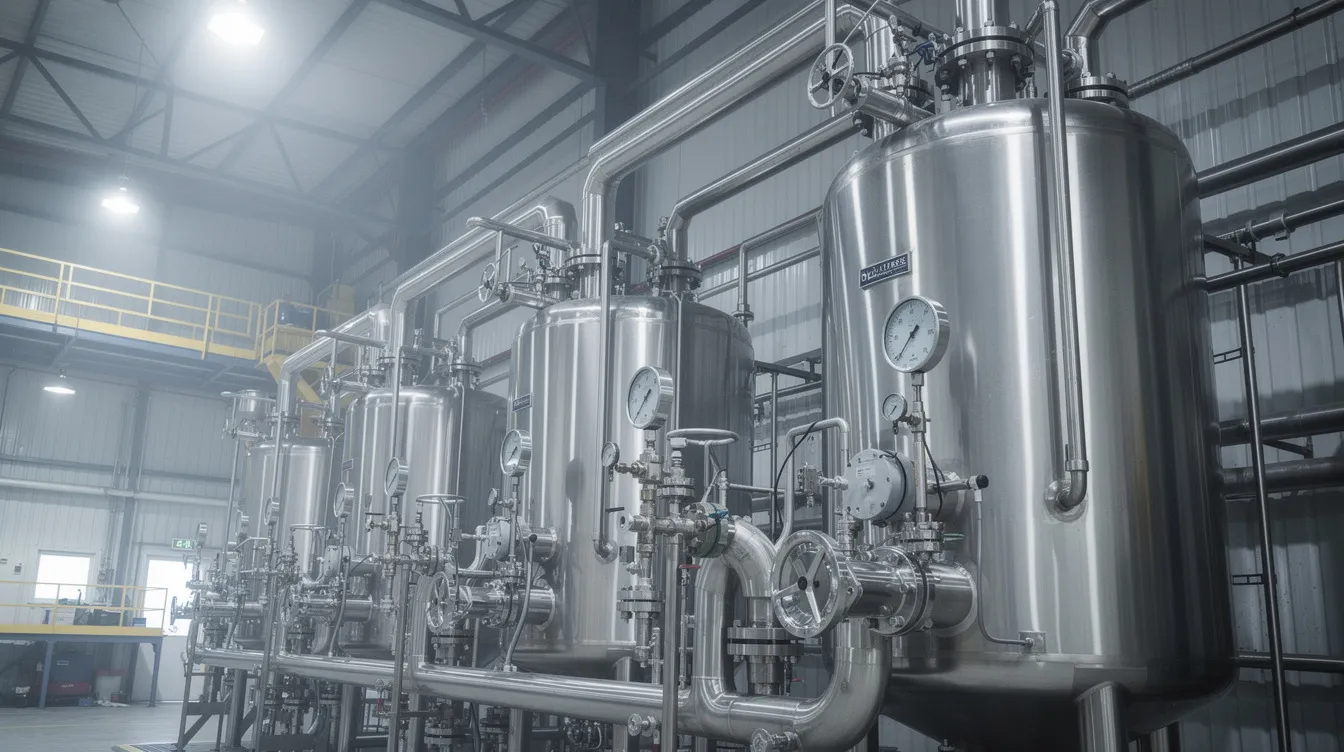
Fractionation machinery includes crystallisers with precise temperature control, membrane filter presses, chilled water plants, refrigeration compressors and insulated pipelines. The choice between membrane press and vacuum filtration affects olein purity, stearin entrainment and capital cost.
Product comparison at a glance:
| Parameter | RBD Palm Oil | Palm Olein | Palm Stearin |
|---|---|---|---|
| Physical state (ambient) | Semi-solid | Liquid | Solid |
| Iodine value (typical) | ~52–55 | ~56–60 | ~30–45 |
| Primary uses | Industrial, blending | Cooking oil, frying | Bakery fats, vanaspati, oleochemicals |
| Pricing behaviour | Base refined price | Close to or slightly below RBD | Varies with industrial demand |
For fractionation-focused project analysis, refer to the palm olein and palm stearin fractionation plant project report.
Integrated Palm Oil Refinery, Storage Terminal & Bulk Handling Infrastructure
Many large Indian palm oil projects are not standalone refineries. They are integrated palm oil refinery projects combining jetty or port connectivity, CPO tank farms, refining and fractionation units, product storage, tanker loading bays and sometimes rail siding-all within a single facility.
Key infrastructure elements include:
- CPO receiving systems through ship-unloading arms or pipeline from common-user port facilities
- CPO storage tank farm with heating coils, insulation and level instrumentation to prevent solidification
- Intermediate and final product tanks for RBD palm oil, palm olein and palm stearin
- Pipeline network connecting jetty, tanks, refinery, fractionation unit and tanker loading gantries
- Truck loading and unloading systems with flow meters, weighbridges and safety interlocks
- Fractionation integration with dedicated storage for multiple fractions
Storage infrastructure, logistics and inventory investment materially affect total cost and working capital. Maintaining minimum days of CPO stock to cover import lead times (often 30–45 days), and finished goods inventory for dispatch scheduling, requires substantial tank farm capacity. The ability to time purchases against price movements adds strategic value.
Safety and loss-prevention systems-fire protection (foam, hydrants, DCP/CO₂), dyke walls around tanks, leak detection, overfill protection and standard operating procedures for hot work and bulk loading-are non-negotiable for both regulatory compliance and insurance.
For infrastructure-heavy integrated projects, see the integrated palm oil refinery and storage terminal project report.
Import-Based Palm Oil Refinery – Landed Cost, Import Duty & Procurement Risks
Most palm oil refining projects in India are import-based. The landed cost of crude palm oil is the single largest cost driver-operating expenses are primarily driven by raw material costs, accounting for 70–80% of total operating costs.
The DPR must itemise landed cost components:
- FOB price at origin (Indonesia, Malaysia)
- Ocean freight and marine insurance (CIF valuation)
- Customs duty: as of May 2025, Basic Customs Duty on CPO was reduced from 20% to 10%, while BCD on refined edible oils remains higher at approximately 32.5%, maintaining a differential of approximately 19.25% to protect domestic refiners
- Port charges, wharfage, stevedoring, survey and pipeline fees
- Local transport from port to refinery
- Finance cost during transit and storage period
An illustrative landed cost framework might assume CPO CIF at approximately USD 1,045 per tonne (April 2024 reference), converted at the prevailing INR–USD rate, with customs duty, IGST and handling charges layered on top. All such numbers in the DPR must be clearly labelled as assumptions-import duty rates and policy changes must always be cross-checked against current Government of India notifications at the time of investment.
Procurement risks include international price volatility (significant swings were observed during 2020–2024), foreign exchange exposure, supplier concentration risk, shipping delays and sudden duty revisions. Mitigation strategies include forward contracts, forex hedging, supplier diversification and maintaining flexibility in the product slate.
For deeper analysis, refer to the guide on import-based palm oil refinery feasibility and landed cost analysis.
Plant Machinery, Utilities & Technical Infrastructure Requirements
Machinery configuration depends on selected capacity, refining route, degree of automation and integration with fractionation and storage.
Core refinery equipment includes CPO unloading pumps and strainers, plate heat exchangers, degumming and bleaching vessels with agitators and chemical dosing, bleaching earth handling and spent earth conveying systems, pressure leaf or filter-press filtration, deodoriser column with barometric condenser, vacuum system and steam ejectors, and PFAD condenser with fatty acid storage.
Fractionation equipment includes crystallisers with precise temperature control, membrane filter presses or vacuum filters, chilled water plant and refrigeration compressors, agitators, insulated pipelines and dedicated pumps. Continuous systems minimise operational interruptions in processing and are preferred for larger capacities.
Support utilities and infrastructure:
- Boiler and steam distribution network sized for deodorisation and process heating
- Electrical substation, LT/HT panels and DG backup
- Water sourcing, softening, demineralisation and treatment
- Compressed air system for instrumentation and control valves
- Cooling towers and chilled water circuits
- Effluent treatment plant and spent earth management
- Quality testing laboratory
Machinery selection should evaluate reputed domestic and international suppliers, compare EPC versus multiple-vendor procurement strategies, and secure performance guarantees covering throughput, refining loss, steam and power consumption. Commissioning support, operator training and long-term maintenance contracts are practical considerations that affect efficient operation and should be budgeted in the DPR.
Palm Oil Refinery Financial Projections, Working Capital, CMA Data & DSCR
Even a technically sound refinery can face severe cash-flow stress if financial projections, working capital and CMA Data are not planned professionally. Financial projections include capital investment and operating costs, and investment analysis determines the return on investment and payback period for the refinery project.
Capital structure in the DPR must define:
- Total project cost (including margin for working capital)
- Promoter contribution (typically 25–30% equity)
- Term loan requirements, repayment tenure and moratorium period
- Working capital limits-cash credit, buyers’ credit, LC and BG lines
- Any proposed equity funding from investors or strategic partners
Financial projections over 7–10 years should include:
- Capacity utilisation ramp-up (realistically 60–70% in year 1, stabilising at 85–90% by year 3)
- Input-output norms, refining losses and fractionation yields
- Sales mix-bulk RBD, palm olein, stearin, PFAD and any packaged products
- Raw material cost based on landed CPO assumptions
- Utility, labour, maintenance, packaging and administrative expenses
- EBITDA, interest, depreciation, tax, PAT and free cash flow
The project report should outline production capacity and expected yield from refining operations. Financial projections assess ROI and long-term sustainability.
Working capital assessment deserves particular attention:
- CPO inventory cover for 30–45 days to account for import transit times
- Finished goods inventory norms by product type (15–30 days)
- Credit periods to customers and from suppliers
- Bank drawing power calculation based on stock and receivables
- Impact of commodity price movements on required working capital limits
Key bankability indicators:
| Indicator | Purpose for Lenders |
|---|---|
| DSCR (average and minimum) | Measures ability to service term loan from operating cash flow |
| Break-even capacity utilisation | Shows minimum throughput needed to cover fixed costs |
| Project IRR / Equity IRR | Evaluates return relative to cost of capital |
| Payback period | Estimates time to recover initial investment |
| NPV | Assesses project value in present-term money |
| Sensitivity of DSCR | Tests resilience to margin, utilisation and interest changes |
Lenders typically expect minimum DSCR of approximately 1.25x in each year, with average DSCR over the loan term of 1.3–1.5x. For detailed financial structuring, refer to the guide on palm oil refinery financial projections, CMA Data and DSCR.

Palm Oil Refinery Profitability, Feasibility & Investment Returns
Profitability in a palm oil refinery is primarily a function of gross refining margin per tonne of CPO processed, incremental margin from fractionation (the olein-stearin price differential), operating efficiency, capacity utilisation and working capital cost. Gross profit margins for palm oil processing can range from 20–30%, though this varies significantly with market conditions and scale.
Operating costs increase significantly by the fifth year of operations as maintenance, replacement parts and regulatory compliance expenditures accumulate. The feasibility study must scrutinise:
- Refining margin assumptions (difference between refined oil product sales and landed CPO cost)
- Fractionation margins and by-product realisations (PFAD contributes meaningfully to revenue)
- Refining and fractionation losses
- Utility cost per tonne (steam, power, water, fuel)
- Fixed overheads and manpower cost structure
- Finance cost on both term loan and working capital
A practical sensitivity analysis framework should test:
- ±5–10% change in CPO purchase price
- ±5–10% change in refined oil selling price
- Profitability at 60%, 75% and 90% capacity utilisation
- Impact of higher or lower working capital interest rates
- Effect of changes in refining loss percentages
- Variation in fractionation yield and product mix
No guaranteed profit figures should be presented. Project-specific assumptions and ranges must be transparently documented. CA Manish Gugliya typically uses conservative, stress-tested assumptions when advising promoters on investment decisions in the palm oil industry.
Bank Finance, Project Funding & Investor-Ready DPR Requirements
Indian banks and financial institutions appraise palm oil refinery project finance proposals by evaluating several interconnected factors:
- Promoter profile, net worth and track record in the edible oil or related sectors
- Technical feasibility, machinery and EPC selection
- Location, land title, infrastructure readiness and port connectivity
- CPO sourcing strategy-import contracts, supplier diversity and consistent supply arrangements
- A detailed market analysis identifies key customer segments and the competitive landscape for refined palm oil
- Market analysis within the report assesses local and global demand for palm oil products
- Detailed project cost and means of finance, including promoter margin money
- Working capital requirement and security structure
- DSCR, average coverage and stress-case analysis
- The report must include a project implementation schedule outlining key milestones
Documentation levels differ based on the financing objective:
- Preliminary project concept note profiling the opportunity for initial discussions
- Detailed Project Report (DPR) with technical, market and financial chapters
- Bankable DPR with CMA Data formatted per banking norms for term loan appraisal
- Investor-ready DPR and financial model with equity returns, dilution scenarios and exit analysis
Regulatory Approvals, Environmental Compliance & Project Risks
Regulatory and environmental requirements vary by state, capacity, coastal versus inland location and local authority conditions. The DPR should include a project-specific approvals roadmap.
Typical registrations and approvals potentially relevant to a palm oil refinery include:
- Company or LLP incorporation and Udyam/MSME registration where eligible
- Land-use conversion or industrial land allotment approvals
- Building plan sanctions from local authorities
- Factory licence under the state Factories Act
- FSSAI licence for edible oil processing and packaging
- Consent to Establish (CTE) and Consent to Operate (CTO) from the State Pollution Control Board
- Fire safety NOC and boiler inspector approvals
- Power and water connection sanctions
- Import Export Code (IEC) and customs registration for import-based operations
- GST registration and applicable indirect tax registrations
Environmental compliance is critical in palm oil refining due to emissions and waste management requirements. Spent bleaching earth disposal, effluent treatment, air emissions from deodorisation and boiler operations require investment and ongoing compliance management that must meet environmental regulations and industry standards.
Risk assessment in the report evaluates factors like market volatility and regulatory compliance costs. A practical risk matrix should address:
| Risk Category | Key Risk | Mitigation |
|---|---|---|
| Technical | Process technology, machinery performance shortfall | Reputed vendors, performance guarantees, commissioning support |
| Commercial | Margin volatility, competition from imported refined oil | Hedging, long-term supply/offtake contracts, product diversification |
| Operational | Downtime, maintenance disruptions | Redundant equipment, preventive maintenance schedules |
| Regulatory | Sudden import duty changes, policy shifts | Scenario analysis, flexible product slate, policy monitoring |
| Environmental | Waste, emissions, community concerns | ETP investment, proper disposal protocols, CSR initiatives |
Not all approvals apply uniformly to every project. Promoters must cross-check current state and central requirements at the time of planning.
How CA Manish Gugliya & Project Report Bank Help with Palm Oil Refinery Project Reports & Bankable DPRs
Project Report Bank is a Chartered Accountant–led advisory specialising in customised DPRs and financial modelling for palm oil refining, fractionation and integrated storage terminal projects across India.
The typical engagement follows a structured approach:
- Initial discussion to understand promoter objectives, location options, tentative capacity and market strategy
- Feasibility screening based on indicative margins, landed cost assumptions and investment appetite
- Detailed project cost estimation covering machinery, civil works, storage tanks, utilities and pre-operative expenses
- Integrated financial projections including working capital assessment, CMA Data, DSCR, break-even, IRR, payback period and sensitivity analysis under multiple scenarios
Deliverables in a full palm oil refinery DPR include technical process description, machinery sizing, market and supply-side analysis, detailed project cost and means of finance, profitability and cash-flow projections, risk analysis, mitigation strategies and implementation schedule.
Project Report Bank also supports bank loan DPR preparation, lender query resolution, project finance structuring and investor-ready documentation where projects seek strategic or PE investors. All analysis is tailored to the proposed project-no generic off-the-shelf reports are used for serious bank or investor submissions.
Frequently Asked Questions (FAQ) – Palm Oil Refinery Project Reports & DPRs
The following FAQs address practical concerns commonly raised by promoters planning palm oil refinery and fractionation projects in India.
How long does it typically take to prepare a bankable palm oil refinery DPR in India?
Typical timelines range from 4 to 8 weeks depending on capacity, complexity (refining only versus integrated refinery–fractionation–storage terminal), availability of vendor quotations and how quickly promoters provide required inputs. Time is also influenced by the need to validate technical options, obtain preliminary machinery offers and align financial projections with likely bank or investor expectations. Larger integrated projects with port infrastructure may require additional coordination.
What information and data does a consultant need from the promoter to start a palm oil refinery project report?
Key inputs include preferred location or shortlisted port sites, proposed capacity range, target products (RBD, olein, stearin, packed oil), promoter background and track record, tentative equity contribution, existing banker relationships and any preliminary supplier or EPC discussions. Access to prior market studies, offtake MOUs or internal business plans helps refine assumptions and improves the quality of the financial model.
Can an existing edible oil refinery be expanded or converted to handle crude palm oil and fractionation?
Many solvent extraction or multi-seed refineries can be upgraded with palm-specific refining and fractionation equipment, subject to layout constraints, utility capacity and existing process design. A dedicated feasibility note and modification plan are needed to assess incremental capital investment, utility changes, expected margins and additional working capital before banks agree to finance such expansion.
How frequently should a palm oil refinery feasibility study and DPR be updated?
Due to volatility in crude palm oil prices, import duties and interest rates, key assumptions should be revisited at least before financial closure and again before major capex decisions or capacity expansions. Lenders may request updated projections and CMA Data when sanction is delayed or when significant duty or price movements occur. Flexible, model-based DPRs are preferable to static documents for this reason.
Is it possible to start with a smaller refinery and later scale up capacity economically?
Modular design, provision for additional deodoriser and bleacher capacity, oversized utilities and room for extra storage tanks can allow phased expansion-for example, from 100–250 TPD to 500–1,000 TPD. Such decisions should be engineered at the planning stage and evaluated through a multi-phase investment plan within the DPR. Retrofitting without advance planning typically results in costly redesign and operational disruption. Small scale operations have substantially higher fixed cost per tonne, so scale-up planning is a critical component of the initial feasibility study.