Key Takeaways
Capacity planning for an edible oil refinery plant directly affects project cost, working capital, profitability and the ability to service bank loans over the full tenure. A comprehensive financial assessment aids in determining project viability and profitability before capital is committed.
- Edible oil refinery capacity planning is not purely a technical exercise. It must balance crude oil availability, market demand, utilities, storage infrastructure and financing capacity into a single coherent decision.
- This article compares the 100 TPD edible oil refinery plant, 500 TPD edible oil refinery plant and 1000 TPD edible oil refinery plant with illustrative calculations for Indian conditions.
- Incorrect capacity selection can lock promoters into persistently low capacity utilisation, elevated per-tonne conversion costs and weak DSCR across the entire loan repayment period.
- The analysis is presented from the professional perspective of CA Manish Gugliya (Project Report Bank), focusing on financial feasibility, Detailed Project Reports, project finance and investment risk analysis.
Introduction: Why Edible Oil Refinery Capacity Planning Matters
Selecting the processing capacity of an edible oil refinery is a foundational investment decision. Whether the project involves a palm oil refinery plant, a multi-seed oil refinery or a dedicated soybean oil or sunflower oil refining facility, the chosen capacity determines the scale of every subsequent commitment: land, machinery, utilities, storage, working capital and debt.
Over-sizing creates idle refinery sections, underutilised utilities, higher interest during construction and a large EMI burden that the project may struggle to service, particularly if the promoter cannot achieve 75–85 per cent capacity utilisation within the first few years. Under-sizing, on the other hand, leads to lost sales opportunities, frequent debottlenecking, inability to serve bulk buyers and higher per-tonne fixed conversion costs.
Capacity planning for an edible oil refinery balances production capabilities with market demand. Effective capacity planning enhances equipment utilization and prevents waste. The practical capacity band considered for industrial edible oil refinery projects in India typically ranges from 100 to 1,000 TPD of crude oil input.
From a project finance perspective, the technically largest refinery is not always the financially optimal one. The decision must integrate realistic demand projections, crude sourcing logistics, capital expenditure, working capital requirements and the promoter’s risk appetite into a single, defensible investment thesis.
What Is Edible Oil Refinery Capacity Planning?
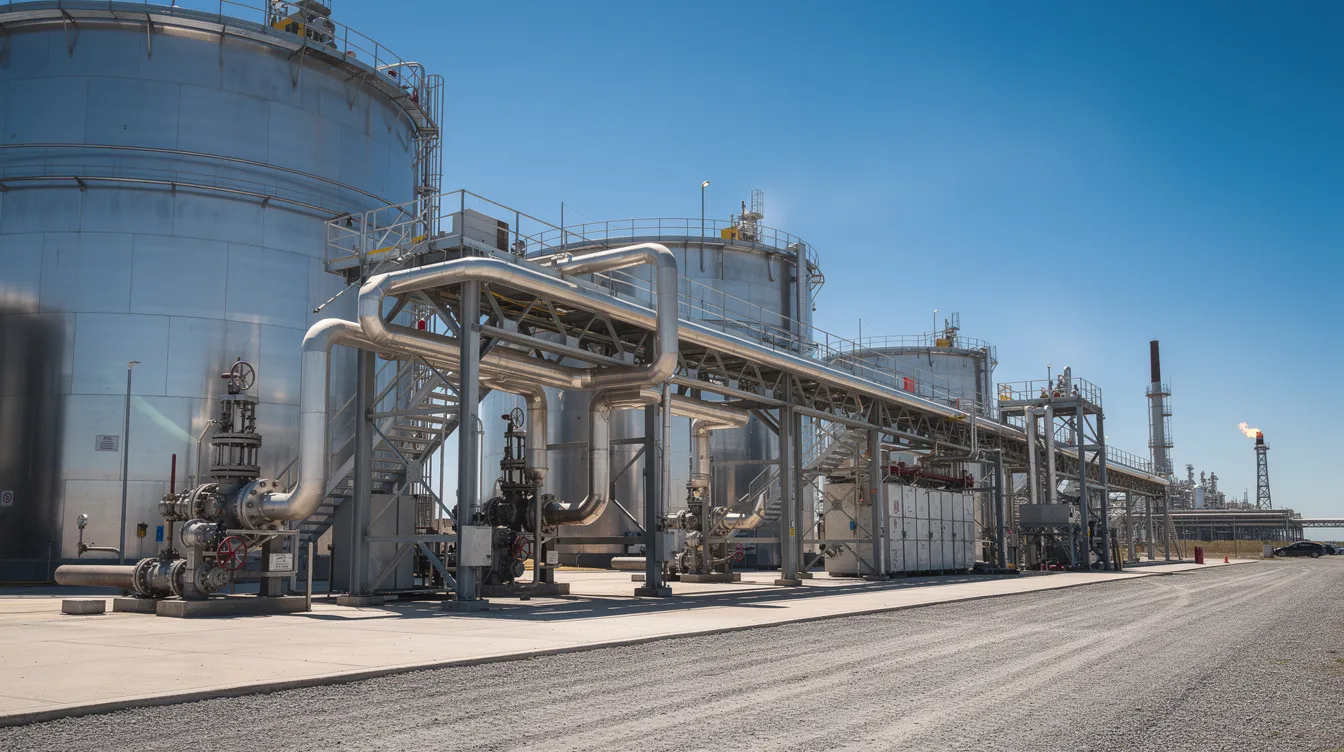
Edible oil refinery capacity planning is the process of determining the appropriate scale of crude edible oil processing for a proposed or existing refinery, based on technical, commercial and financial parameters. Production throughput is based on the processing rate measured in metric tons per day.
- Installed or design capacity refers to the maximum crude oil input the refinery can process per day under ideal, continuous operation – for example, 500 TPD crude input.
- Rated capacity adjusts for practical vendor efficiencies and crude quality constraints.
- Effective operating capacity accounts for maintenance, cleaning, changeovers and supply disruptions.
- Actual daily throughput is what is achieved after all losses, downtime and utilisation shortfalls.
- Annual production capacity depends on operating days per year, typically assumed at 330–350 days in India after planned maintenance and holidays.
- Refining losses typically account for 3% to 5% of the total input mass, arising from removal of free fatty acids, gums, moisture, and other impurities, producing by-products such as soap stock and fatty acid distillates.
- Capacity utilisation is measured as actual crude processed divided by design capacity and is a critical input for DPR projections.
The key formulas are:
Annual Crude Oil Processing = Daily Crude Input Capacity × Operating Days × Capacity Utilisation
Annual Saleable Refined Oil = Annual Crude Oil Processing × Net Refining Yield
For a 500 TPD edible oil refinery plant operating 330 days at 80 per cent utilisation and 97.5 per cent yield: annual crude processed = 500 × 330 × 0.80 = 132,000 tonnes; annual refined oil output = 132,000 × 0.975 ≈ 128,700 tonnes.
Lenders in India typically assume 60–70 per cent utilisation in year one, rising gradually to 80–90 per cent in later years for DPR and CMA Data purposes.
Understanding 100, 200, 300, 500 and 1,000 TPD Edible Oil Refinery Capacities
Promoters usually shortlist a broad capacity band – 100–300 TPD, 300–500 TPD or 500–1,000 TPD – before finalising. Edible oil refinery plants process capacities ranging from 5 to 500 TPD and beyond. Continuous refining systems can handle higher capacities than batch systems, and palm oil refinery plants are available in capacities starting from 50 TPD. The table below summarises key parameters at each scale, assuming 330 operating days and 85 per cent utilisation.
| Parameter | 100 TPD | 200 TPD | 300 TPD | 500 TPD | 1,000 TPD |
|---|---|---|---|---|---|
| Daily crude input (tonnes) | 100 | 200 | 300 | 500 | 1,000 |
| Annual crude input at 85% CU | 28,050 | 56,100 | 84,150 | 140,250 | 280,500 |
| Annual refined output (~97.5%) | ~27,350 | ~54,700 | ~82,050 | ~136,750 | ~273,500 |
| Procurement complexity | Regional | State-level | Multi-state/import | Import-heavy | Large-scale import |
| Distribution requirement | Regional | State-wide | Multi-state | National | National/export |
| Project complexity | Moderate | Moderate-high | High | High | Very high |
These capacities refer to crude edible oil input – soybean oil, sunflower oil, rice bran oil, palm oil, mustard or groundnut oil – entering the refining line, not bottled output.
100 TPD Edible Oil Refinery Plant
A 100 TPD oil refinery plant typically serves regional edible oil brands, or operates as an integrated unit alongside a 150–200 TPD oil expeller or solvent extraction facility. At 330 days and 85 per cent utilisation, annual crude requirement is approximately 28,050 tonnes. Storage of 7–15 days of crude cover is generally manageable at this scale.
Batch refining is suitable for processing less than 30 tons of oil daily, while a 100 TPD plant usually employs semi-continuous or continuous processing for better efficiency. Benefits include lower fixed capital, simpler utilities, manageable working capital and easier achievement of 85–90 per cent utilisation. Limitations include higher per-tonne utility and manpower costs compared to 300–500 TPD plants, and limited ability to serve very large institutional buyers.
200–300 TPD Edible Oil Refinery Plants
At 200–300 TPD, continuous refining becomes more attractive than a batch process, especially for seed oils like soybean oil and sunflower oil. Continuous refining is used for capacities ranging from 30 TPD to 500 TPD, making this the natural operating range for such technology. Both physical refining and chemical refining routes can be deployed.
Crude sourcing at this scale typically involves a combination of imported crude palm oil or crude sunflower oil and domestic crude rice bran oil or peanut oil, depending on the region. These plants can serve multiple states with blended edible oil products, pouches and loose tanker sales. Promoters processing cottonseed oil, rapeseed oil or corn oil often find this range commercially viable.
Civil, tank farm and utility infrastructure is frequently designed with provision to reach 500 TPD later by adding parallel degumming, bleaching and deodorisation trains, making refining economically scalable without full redesign.
500 TPD Edible Oil Refinery Plant
A 500 TPD refinery fundamentally differs from a 100 TPD plant in procurement, utilities and risk profile. Daily crude requirement is 500 tonnes; at 80 per cent utilisation and 330 operating days, annual crude processed is 132,000 tonnes. If the promoter holds 20–30 days of imported crude oil inventory, the tank farm alone represents substantial capital and space.
Infrastructure requirements include railway siding or strong road connectivity, large boiler and thermic fluid systems for steam generation, high-capacity power intake, bigger effluent treatment plant and advanced automation. A steam generator of significant capacity is necessary for continuous operation of deodorisation and other high temperature process stages.
Working capital for crude inventory alone can reach multiple crore rupees. DSCR sensitivity to capacity utilisation is high. A 500 TPD edible oil refinery plant is typically justified where there is assured crude sourcing, an existing strong distribution network, long-term institutional contracts or integrated upstream and downstream linkages.
1,000 TPD Edible Oil Refinery Plant
A 1000 TPD edible oil refinery plant processes approximately 280,000–330,000 tonnes of crude oil annually. This demands structured import logistics, long-term supply contracts and sophisticated hedging strategies for crude palm oil, crude sunflower oil and other vegetable oil feedstocks.
Plant design mandates fully continuous refining, maximum heat recovery systems, advanced deodorisation columns operating under high vacuum, and strong energy integration. Low steam consumption and low power consumption per tonne become critical competitive differentiators at this scale, alongside customizable solutions from technology vendors.
Financing structures typically require a consortium of lenders, careful means of finance planning, strong promoter contribution and conservative utilisation assumptions in DPR and CMA Data. Even a 10–15 per cent shortfall in planned capacity utilisation can significantly impact EBITDA, DSCR and project IRR. Confirmed market access and robust sales contracts are essential.
Key Factors Determining the Optimal Edible Oil Refinery Capacity
A DPR or feasibility study for an edible oil refinery must analyse the following capacity-selection drivers:
- Crude oil availability: assess historical and projected availability of crude soybean oil, crude palm oil, crude sunflower oil, crude rice bran oil, mustard or groundnut oil in the region and through imports. Seasonal fluctuation in raw materials can lead to logistical challenges in supply.
- Refining route: physical refining vs chemical refining, batch refining vs continuous refining influence achievable capacity, yields, free fatty acids tolerance and capital cost per TPD.
- Market demand: market demand should always be assessed to determine refinery capacity needs. Evaluate current and projected demand for refined oils, blended oils, specialty oils and by-products. Market seasonality influences raw material availability and storage requirements.
- Storage and logistics: review port access, highway connectivity, crude and refined oil tank farms and weighbridges. Different oils require unique refining processes affecting capacity planning.
- Utilities and power: capacity planning should consider energy consumption per ton of processed oil. Assured power, steam, water, fuel and effluent handling must be sized for the chosen scale.
- Land and expansion: examine whether industrial land allows future expansion of the edible oil refinery, fractionation plant and packaging units.
- Capital investment capacity: align capacity with promoter equity, acceptable term-loan size and collateral. Project finance includes financial projections and business valuation for investment decisions.
- Working capital strength: check whether promoters can sustain volatile crude prices, import lead times and debtor cycles without liquidity stress.
- Competitive landscape: assess existing edible oil refinery capacity in India and identify gaps where new capacity adds value.
- Regulatory requirements: ensure proposed capacity meets zoning, pollution control norms and can accommodate ETP, boiler stack and fire safety requirements.
- Future expansion: clarify the long-term objective so that utilities, tank farm and buildings are sized intelligently from day one.
Promoters should score each factor across shortlisted capacities (100, 300, 500, 1,000 TPD) as part of the Detailed Project Report process.
100 TPD vs 500 TPD vs 1,000 TPD Edible Oil Refinery – Detailed Comparison
| Parameter | 100 TPD | 500 TPD | 1,000 TPD |
|---|---|---|---|
| Annual crude throughput (85% CU) | ~28,050 T | ~140,250 T | ~280,500 T |
| Storage tanks (crude) | 3–5 tanks | 8–15 tanks | 15–30+ tanks |
| Crude stock days | 7–15 days | 15–30 days | 20–30+ days |
| Boiler/steam capacity | Small-medium | Large | Very large |
| Power load | Moderate | High | Very high |
| Manpower | 30–60 | 80–150 | 150–300+ |
| Automation level | Semi-auto | Fully automated | Advanced SCADA |
| Fixed capital per TPD | Higher | Moderate | Lower |
| Working capital intensity | Moderate | High | Very high |
| Break-even utilisation | ~40–55% | ~55–65% | ~60–70% |
| DSCR sensitivity | Lower | Moderate | High |
| Expansion flexibility | Good | Moderate | Limited |
Lower per-tonne fixed cost, better energy efficiency and improved bargaining power on crude purchases represent genuine economies of scale at larger capacities. However, larger plants carry greater exposure to crude price swings, higher inventory valuation risk and the possibility that an underutilised 1,000 TPD facility performs worse financially than an optimally utilised 200–300 TPD refinery.
Crude Oil Availability and Feedstock Planning
Realistic edible oil refinery capacity planning must begin with a crude oil sourcing strategy for at least 7–10 years. A promoter who cannot secure reliable crude supply at acceptable prices will face chronic underutilisation regardless of installed capacity.
Key feedstocks include crude soybean oil, crude palm oil, palm olein, crude sunflower oil, crude rice bran oil, crude groundnut oil, cotton seed oil and palm kernel oil. Chemical refining is widely used for vegetable oils with low FFA content such as soybean and sunflower. Physical refining uses lower boiling points to remove free fatty acids via steam distillation and is common for palm oil and rice bran oil with higher FFA.
Raw material variability can affect effective line capacity by 20 to 30 per cent. Different feedstocks affect refining losses, degumming requirements, dewaxing or winterisation needs, deodorisation parameters and achievable net refining yield. Dewaxing plants improve clarity and stability of vegetable oils, particularly for sunflower and rice bran. A multi-feedstock 500 TPD refinery processing 40 per cent crude palm oil, 30 per cent crude sunflower oil and 30 per cent crude rice bran oil must plan separate tank farms, process scheduling and utility loads for each crude type.
The choice between physical and chemical refining of edible oils directly influences capital cost, yield, utility sizing and product quality. Establishing a detailed mass balance is crucial for capacity planning in refineries. Actual DPR preparation should use laboratory test reports of crude oil quality from likely vendors rather than generic textbook values.
Edible Oil Refinery Process Configuration and Capacity Constraints
Edible oil refining includes degumming, neutralization, bleaching, and deodorization as the principal unit operations. In chemical refining, neutralizers remove free fatty acids from crude oils using caustic soda, while bleachers eliminate color pigments and impurities using bleaching earth. Deodorizers remove odors and enhance oil shelf life through high temperature, high vacuum stripping. Degumming plants remove phospholipids from crude oils, typically using phosphoric acid or hot water.
Refining technology choice affects utilities and overall throughput speed. Refinery capacity is constrained by the slowest or most capacity-limited operation in the chain. Bottleneck analysis identifies the slowest unit operation that constrains total throughput – this could be the deodoriser, winterisation chiller, filter area using vertical pressure leaf filters with filter leaves, or even steam and cooling water supply.
Proper scheduling reduces unnecessary stoppages and improves equipment availability. Preventive maintenance reduces the risk of unexpected equipment failures during operations. Capacity planning must account for cleaning cycles, filter cake discharge from centrifugal separator units, changeover between different oils and planned shutdowns rather than assuming continuous operation at nameplate rating. Readers seeking a detailed description of each refining step may refer to the edible oil refinery process flow guide.
During DPR and EPC selection, promoters should ask vendors to identify bottleneck equipment capacities and expected throughput reductions when switching crude type or FFA level.
Machinery Capacity, Technology and EPC Planning
Machinery selection and EPC design directly influence long-term capacity, scalability and operating cost of an oil refinery.
- Main process equipment includes degumming reactors, neutralisers, bleachers, filter presses or vertical pressure leaf filters, deodorisers, heat exchangers, chillers for dewaxing and fractionation equipment. Any leading manufacturer should provide written performance guarantees on capacity, specific utility consumption and product quality.
- Equipment sizing affects steam consumption, energy recovery and maximum sustainable throughput. Operating close to optimal design capacity maximizes efficiency in heat recovery systems.
- Utility systems must have a safety margin of 15 to 20 per cent over peak load. A utility audit calculates required loads for steam, cooling water and fuel. Integration of boilers, thermic fluid heaters, cooling towers, chilled water plants, air compressors and power distribution panels must be planned at a suitable temperature and pressure specification for each process stage.
- Plant layout should provide space for parallel future lines, additional storage tanks and utility expansion so that 100–300 TPD plants can scale towards 500–1,000 TPD.
- Continuous refining plants can cost up to ₹30,000,000 each, while batch refining plants are available for approximately ₹4,500,000 each, depending on configuration. Vegetable oil refinery equipment costs about ₹1,50,00,000 per unit for mid-range capacities.
A detailed discussion of edible oil refinery machinery, technology and EPC selection covers these aspects comprehensively. A CA-led DPR should reconcile vendor technical offers with financial modelling rather than accepting optimistic sales brochures at face value.
Land, Building, Storage and Industrial Infrastructure Planning
Land and civil design for an oil refinery plant must be aligned with both current and future planned capacity. Site planning elements include the refinery process block, crude oil tank farm, refined oil tank farm, packaging hall, finished goods warehouse, utility block, administrative building, laboratory, internal roads and fire-safety infrastructure.
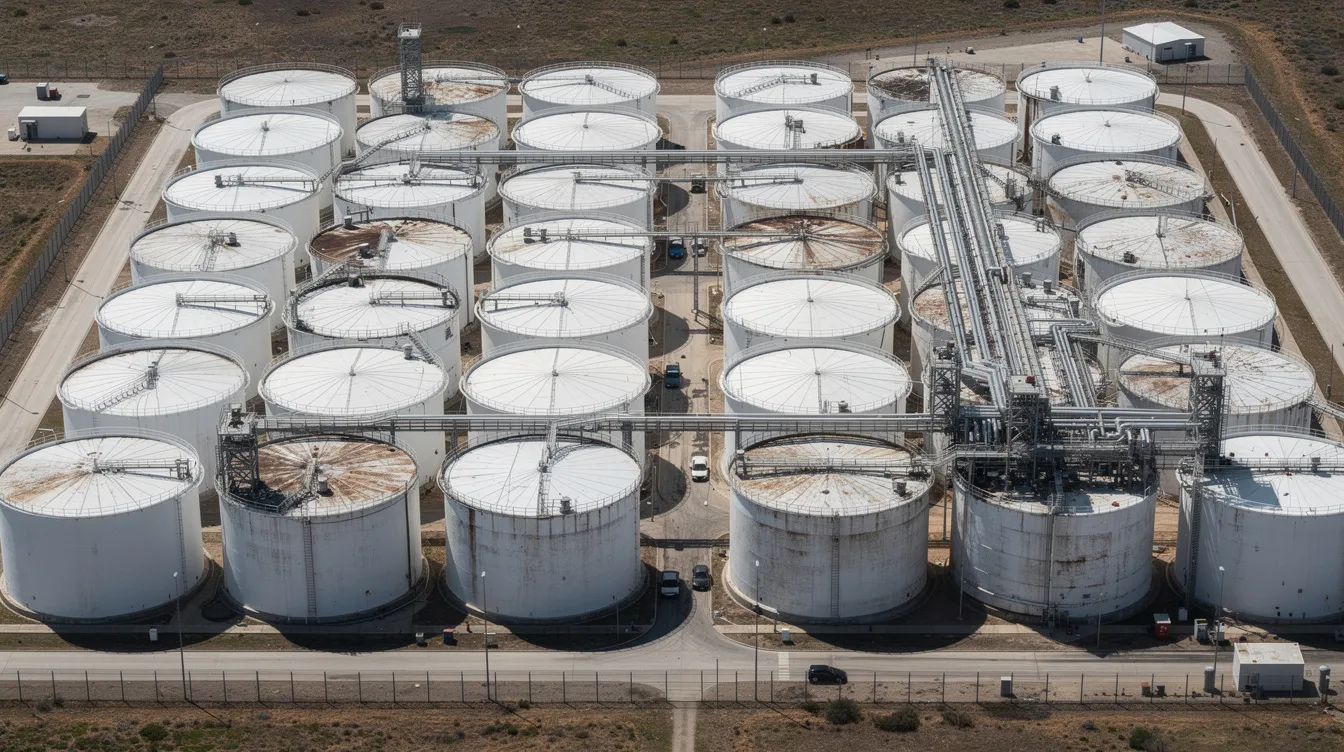
Tank storage must accommodate a minimum of 7 to 10 days of processing volume for crude oil. Land requirements and tank-farm footprint scale non-linearly from 100 TPD to 1,000 TPD: more and larger tanks, greater fire-safety distances, wider roads for tanker movement and additional space for future expansion.
Promoters should insist on preliminary layout drawings from project consultants and EPC vendors before locking land purchases. Proper land and infrastructure planning at DPR stage helps avoid costly relocation or major re-construction when scaling from 200 to 500 TPD in later years.
Capital Investment Planning for 100–1,000 TPD Edible Oil Refineries
Capital investment structure for an edible oil refinery includes land and site development, civil works, refinery process equipment, storage tanks, utilities, laboratory, ETP, fire-fighting systems, engineering fees and contingency. Pre-operative expenses and interest during construction for projects of 18–24 months are significantly influenced by plant size.
Edible oil refinery plants cost approximately ₹2,00,00,000 for basic configurations, while palm oil refinery plants are priced around ₹1,10,00,000 per unit at smaller scales. Cooking oil refinery plants are priced around ₹1,25,00,000 each for entry-level setups. At industrial scale, machinery cost per TPD ranges from approximately ₹4.5–8 lakh for 100 TPD down to ₹2.8–4.4 lakh for 500 TPD, reflecting economies of scale in equipment procurement.
It is important to distinguish between Fixed Capital Investment (excluding working capital), Total Project Cost (fixed capital plus margin for working capital) and Total Funding Requirement (including IDC and contingency). Present-day capital cost is best estimated through updated quotations and recent project benchmarks rather than outdated thumb rules.
Promoters should work with a CA-led advisory team to structure means of finance and ensure that debt levels are consistent with realistically achievable capacity utilisation.
Working Capital Planning for Large Edible Oil Refinery Projects
Working capital can become the most underestimated investment component in large-capacity refineries. The main elements include:
- Crude oil inventory – the single largest working capital item. Import lead time of 30–60 days for crude palm oil or sunflower oil forces larger crude stocks.
- Refined oil inventory – 7–10 days of good quality oil ready for dispatch.
- Packing materials, stores and spares.
- Receivables from distributors and institutional buyers (15–30 days).
- Less trade creditors and other current liabilities (15–30 days payable).
For an illustrative 500 TPD refinery operating 330 days at 80 per cent utilisation with 20 days of crude stock, the crude inventory alone represents thousands of tonnes valued at prevailing market prices, potentially running into tens of crore rupees. Finished goods, receivables and packaging materials add further.
Sharp increases in crude price – say 20–30 per cent – directly inflate inventory value and working capital requirement. This sensitivity must be tested in financial modelling stress scenarios. The difference between margin money funded by promoters and sanctioned working capital limits from banks must be built into DPR projections.
Capacity Utilisation, Break-Even and Operating Economics
Monitoring capacity utilization improves efficiency and operational performance. Fixed operating costs – salaries, repairs, insurance, minimum order quantity commitments, administrative overheads – do not fall when throughput declines, creating significant per-tonne cost pressure at low utilisation.
| Utilisation | Annual Crude (500 TPD) | Illustrative Annual EBITDA Impact |
|---|---|---|
| 50% | 82,500 T | Below break-even for many projects |
| 60% | 99,000 T | Marginal; DSCR potentially below 1.2 |
| 75% | 123,750 T | Viable; DSCR likely 1.3–1.5 |
| 85% | 140,250 T | Comfortable; stable cash flows |
| 90% | 148,500 T | Strong returns; near optimal |
At low utilisation, the absolute break-even tonnage becomes critical. A refinery with higher installed capacity pushes the break-even point upward in absolute tonnes, even though per-tonne fixed cost is lower when fully utilised. Lenders evaluate DSCR across projected years; over-optimism on early achievement of 80–90 per cent utilisation at a new refinery can make projections fragile.
Crude-oil-linked turnover figures can appear large, but processing margins per tonne may be modest at around 5–12 per cent. Profitability depends on throughput, cost control, oil loss minimisation and yield management.
Economies of Scale – Does a Larger Refinery Always Offer Better Returns?
Genuine economies of scale include lower capital cost per TPD for equipment, reduced manpower per tonne, improved energy efficiency and better crude procurement bargaining at 300–500+ TPD capacities, making refining economically attractive at scale.
However, diseconomies emerge: greater working-capital lock-up, more sophisticated management requirements, harder ramp-up to optimum capacity and vulnerability to demand shocks. A well-run 200–300 TPD refinery at 90 per cent utilisation, producing neutral oil and good quality oil consistently, can generate more stable returns and better DSCR than a 1,000 TPD refinery stuck at 50–60 per cent utilisation. Industry data confirms that many older large refineries operate at only 35–40 per cent utilisation, significantly eroding their theoretical scale advantages.
Optimum capacity is project-specific and should be chosen after financial modelling of at least two or three alternative capacities under multiple utilisation and margin scenarios.
Phased Capacity Expansion vs Full-Capacity Investment
Promoters face three strategic options:
- Option A – Start at 100 TPD, expand later: Lower initial capex and risk, easier bank funding, valuable learning period. Batch refining is suitable for processing less than thirty tones daily in initial phases. However, later expansion requires additional civil work, possible process interruptions and higher total capex per TPD across phases.
- Option B – Start at 300–500 TPD, modular design: Balanced approach. Initial phase sized for firm demand; civil infrastructure, utilities and tank farm oversized for future debottlenecking to 700–1,000 TPD with minimal disruption. Modular design allows for partial operations during maintenance in oil refineries.
- Option C – Direct 1,000 TPD: Suited only where strong long-term demand, secured crude supply, deep financial capacity and robust distribution exist. Offers best long-run economies of scale but highest early-stage risk. Continuous refining plants process up to 500 TPD of oil per line, so capacity beyond this typically requires parallel lines.
The decision framework should compare NPV, IRR, Equity IRR and DSCR of phased versus single-shot investment, factoring realistic ramp-up curves over the first 3–5 years. A professional DPR should explicitly document the phasing rationale.
Financial Feasibility and Investment Appraisal
A robust financial model underpins edible oil refinery investment decisions across the 100–1,000 TPD range. Key projection components include monthly or annual production schedules by oil type, refining yields, utility and chemical consumption norms, manpower costs, sales mix and by-product revenues.
Capital structure planning must address promoter contribution, term loan quantum, repayment period, moratorium, interest rates and IDC integration. Evaluation metrics should include projected Profit and Loss, Cash Flow, Balance Sheet, DSCR, break-even point, Project IRR, Equity IRR, NPV and payback period under both base-case and downside assumptions.
Stress test scenarios – lower utilisation, lower refining margins, higher utility costs via advanced technology changes, longer debtor days, delayed commissioning – must be modelled. Generic profitability assumptions such as “5 per cent margin on turnover” are inadequate. A Chartered Accountant should construct a refinery-specific financial model using realistic technical and commercial parameters, considering that edible oil processing margins are thin and refining losses during processing are essential for accurate capacity calculations.
Common Mistakes in Edible Oil Refinery Capacity Planning
Relying solely on EPC vendor suggestions for capacity without independent market and financial analysis is among the most frequent errors. Vendors naturally recommend configurations that maximise equipment sales. An external DPR cross-checked against realistic demand provides a necessary counterbalance.
Overestimating demand or assuming immediate full utilisation inflates revenue projections. Phased utilisation assumptions – 60–65 per cent in year one, rising to 80–90 per cent – should be validated against realistic sales plans and distribution timelines.
Ignoring crude procurement constraints such as import logistics, port capacity, inland transport and seasonal availability of rice bran, mustard or groundnut oils creates supply-side risk that no amount of refining capacity can solve.
Underestimating working capital and foreign-exchange exposure, especially for palm oil and sunflower oil imports, is a viable proposition for financial stress. Separate working-capital assessment and CMA Data preparation are essential.
Overlooking refining losses and using textbook yields rather than technology-supplier data adjusted for actual crude quality leads to inflated output and revenue projections. Selection of refining technology – physical refining process vs chemical refining, batch vs continuous – without detailed feedstock analysis results in sub-optimal economics at different stages of the project. Less oil loss and low maintenance designs should be evaluated based on specific crude quality, not generic claims.
Underestimating utilities and storage – boilers, thermic fluid heaters, tank farm fire protection and ETP – frequently creates bottlenecks that limit actual throughput. Failure to allow for future expansion in land and layout increases long-term cost per TPD. Short circuit in utility planning at low temperatures or high temperature operations can constrain entire process lines.
Not performing sensitivity and downside scenario analysis, and ignoring regulatory and environmental approval timelines, remain common oversights that affect project viability through increased IDC and delayed commissioning.
How a Detailed Project Report Helps Select the Right Refinery Capacity
A professionally prepared DPR for an edible oil refinery integrates market study, technical configuration, capacity planning, plant layout, machinery selection, utility sizing, manpower planning, implementation schedule and risk analysis into a single document.
The financial section models alternative capacities – 100 vs 300 vs 500 vs 1,000 TPD – and different refining technologies under multiple demand scenarios to identify the most bankable option. From the perspective of a practising Chartered Accountant, the DPR must focus on DSCR, cash-flow robustness, working-capital cycles and the promoter’s ability to sustain the project until stabilisation.
Investor-ready DPRs and financial models allow equity partners, lenders and promoters to transparently discuss trade-offs between capex, capacity, risk and expected returns before committing large capital. Project Report Bank specialises in such customised DPRs and feasibility studies for MSME and mid-large edible oil refinery and palm oil refinery plant projects across the industry in India.
Frequently Asked Questions
The answers below provide general guidelines. Final capacity and investment decisions should always be based on project-specific DPR analysis with realistic assumptions.
What is the ideal capacity for an edible oil refinery in India?
There is no universal ideal capacity. A 100–200 TPD refinery often suits first-time industrial promoters and regional brands. A 300–500 TPD plant suits established processors with multi-state distribution. A 1,000 TPD refinery generally suits large corporates with strong procurement and sales networks. Optimum size depends on assured crude supply, realistic sales potential, capital strength and risk appetite. Evaluating at least two or three capacities through a comparative DPR is recommended before finalising.
How much crude oil is required annually for a 100 TPD refinery?
At 100 TPD crude input, 330 operating days and 85 per cent utilisation, annual crude requirement is 100 × 330 × 0.85 = 28,050 tonnes. Actual requirements vary with operating days and utilisation. A safety margin in procurement planning covers start-ups, quality variations and possible higher throughput in peak months.
Can a 100 TPD edible oil refinery be expanded to 500 TPD later?
Expansion is feasible if land, tank farm and utilities were planned in advance for higher ultimate capacity. Process equipment can be upgraded by adding parallel refining lines or replacing bottleneck units with higher-capacity versions. Designing for modular expansion should be consciously built into the initial DPR and EPC contracts. Continuous refining plants can handle thirty tones and above per day, so scaling involves adding parallel continuous lines.
What capacity utilisation do banks expect for refinery project appraisal?
Many term-loan appraisals assume conservative ramp-up: 60–65 per cent in the first year, 70–80 per cent in the second year, stabilising at 80–90 per cent thereafter. Assumptions vary by bank and project. Over-aggressive utilisation projections may be challenged by lenders. DPR projections should align with realistic commissioning and market-development timelines.
Why is a CA-led DPR important before finalising refinery capacity?
A Chartered Accountant combines financial-modelling expertise with practical understanding of banking norms, DSCR expectations, working-capital assessment and risk analysis. A CA-led DPR integrates vendor offers, process-engineering data, realistic market assumptions and funding structure into a coherent capacity-selection framework. Such DPRs also support CMA Data preparation, term-loan proposals and investor discussions, reducing the risk of costly capacity misalignment. Essential fatty acids of a good DPR include defensible assumptions, transparent calculations and stress-tested financial projections.
Conclusion and Professional Advisory Note
Edible oil refinery capacity planning for 100–1,000 TPD projects is a multi-dimensional decision involving technology selection, crude sourcing strategy, market assessment, capital expenditure, working capital management and risk analysis. No single capacity is universally optimal. The right choice emerges from integrated technical and financial evaluation under realistic – not optimistic – assumptions.
Independent, data-driven DPR preparation and financial modelling should precede any commitment to specific refinery capacity, especially when the project involves term loans or equity funding.
CA Manish Gugliya, FCA, DISA (ICAI) and Project Report Bank provide professional assistance in preparing industrial Detailed Project Reports, feasibility studies, financial projections, CMA Data and investor-ready documentation for edible oil refinery and palm oil refinery plant projects in India. Interested promoters can visit www.projectreportbank.com or contact through the website or WhatsApp to discuss proposed capacity, project location, estimated investment and financing requirements.