Introduction
India’s water industry is one of the fastest-growing sectors in the country right now. The packaged drinking water market alone is valued at roughly ₹32,040 crore in 2025, and the bottled water industry in India is expected to reach INR 403 billion by 2026. The Indian bottled water market is expected to grow by 12-15% annually, driven by urbanization, health awareness, and water shortages across urban and rural areas.
The government has also stepped in heavily. Rs. 67,000 crores have been allocated for the Jal Jeevan Mission in 2025-26, and government schemes support rural water supply businesses at multiple levels. The Jal Jeevan Mission aims for tap connections by 2028, creating massive infrastructure demand.
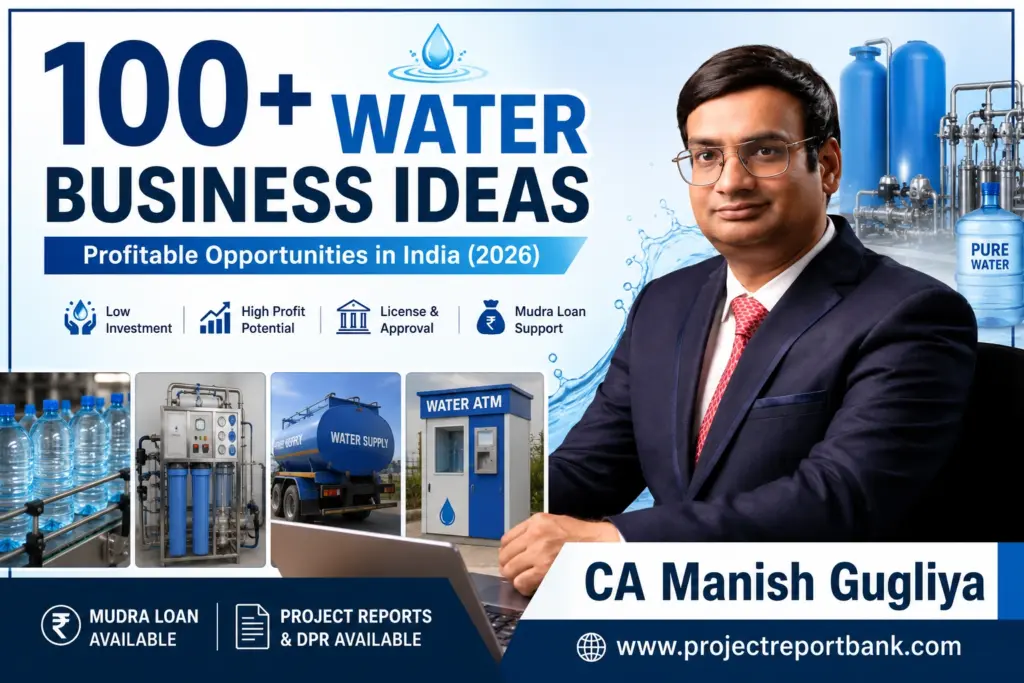
The water sector offers numerous innovative business opportunities – from packaged drinking water plants and RO systems to water recycling, ice manufacturing, and smart water monitoring. In this guide, I have shortlisted seven water business ideas that I believe offer the best combination of profitability, scalability, and market demand for Indian entrepreneurs in 2026.
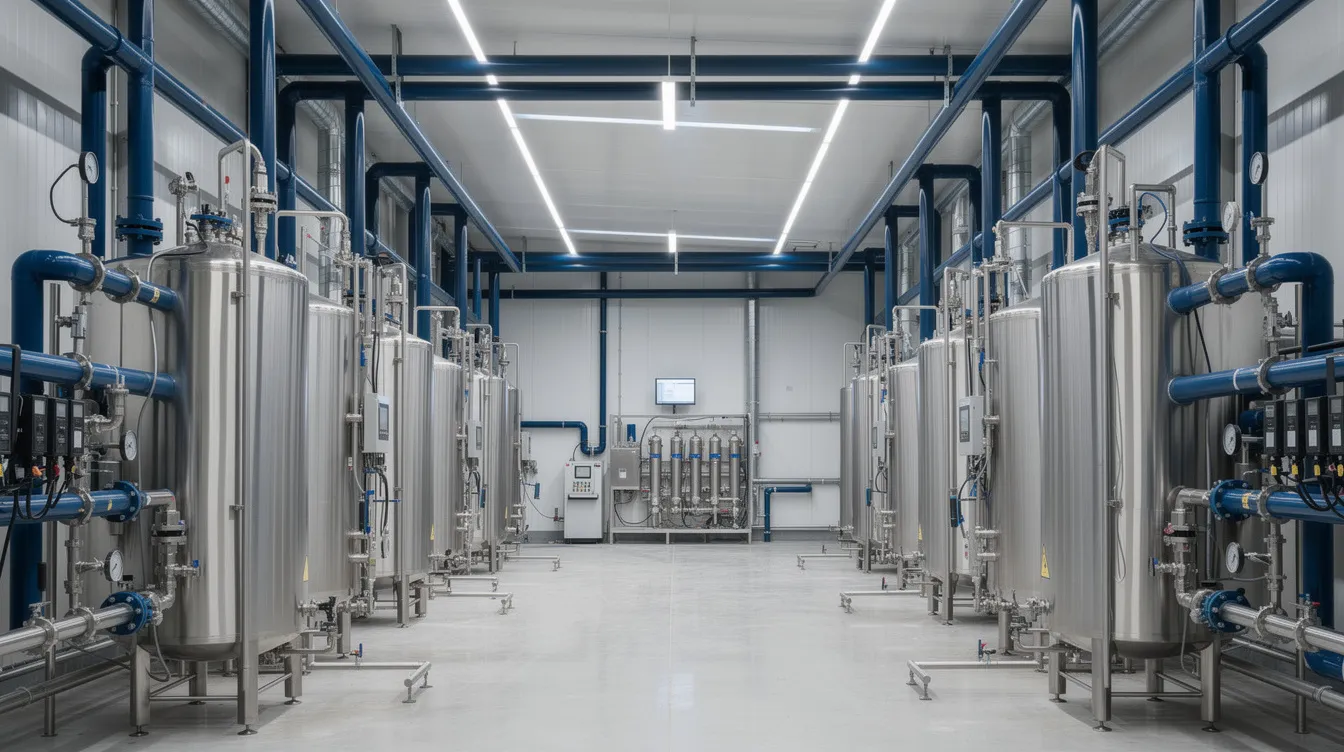
Table of Contents
How We Chose the Best Water Business Ideas
After working with hundreds of entrepreneurs on project reports and bank loan documentation over the past two decades, I have developed clear criteria for evaluating business ideas. Here is what I used to filter these water business ideas:
- Investment requirements: Startup costs ranging from minimum investment models to significant investment operations
- Profit margins: Realistic return on investment based on actual project data, not theoretical numbers
- Market demand: Current and projected growing demand in the local market and beyond
- Licensing complexity: Number of necessary licenses and regulatory hurdles involved
- Scalability: Ability to expand operations, add product lines, or enter new markets
- Equipment needs: Machinery costs, maintenance services requirements, and technical infrastructure
- Target market accessibility: Whether the business serves commercial clients, households, or industries
- Competition levels: How highly competitive the segment is and whether differentiation is possible
Each business idea below was evaluated against these parameters. The goal is to help you match the right opportunity with your budget, skills, and local demand.
Top 7 Water Business Ideas for Indian Entrepreneurs
1. Packaged Drinking Water Plant
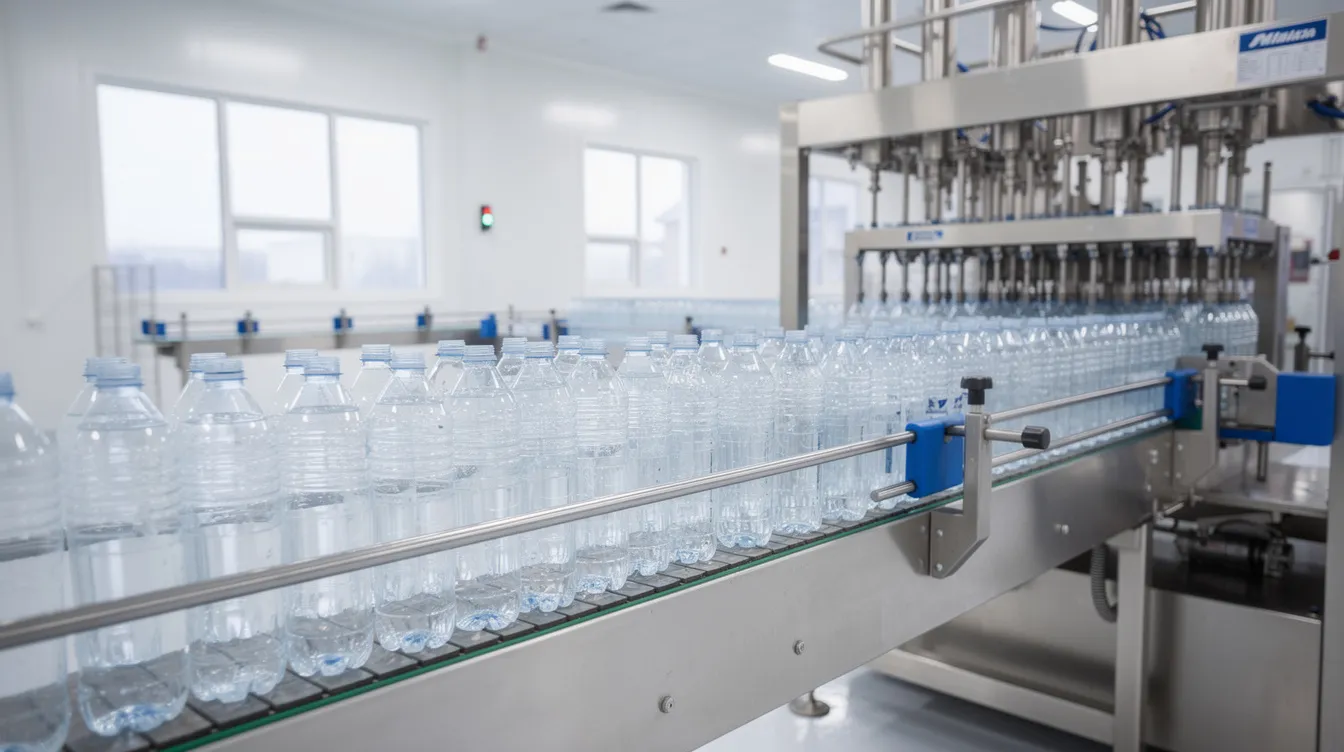
A packaged drinking water business involves sourcing raw water, treating it through multi-stage purification (filtration, reverse osmosis, UV sterilization, ozonation), and packaging it in small bottles, 1-litre packs, or 20-litre jars for human consumption.
Why it stands out: Consistent demand across seasons and demographics. You can build a regional brand that competes effectively in Tier-2 and Tier-3 cities where national brands have weaker distribution.
Best for: Entrepreneurs with ₹15-25 lakh investment capacity who want to build a consumer-facing brand. Setting up a mineral water plant costs between 15–50 lakhs INR depending on capacity and automation level.
Key strengths:
- High profit margins (10-15% at scale), repeat customers, and eligibility for Mudra Loan financing
- Local, high-quality packaged drinking water with strict quality controls is in demand
- Small-scale mineral water plants serve localized markets with lower capital
Required licenses and compliance:
- BIS Certification is mandatory for packaged drinking water
- FSSAI License is required for food safety compliance
- Pollution NOC is needed from the local Pollution Control Board
- Water Extraction Permission is required from the CGWA
- GST Registration is necessary for legal and tax compliance
- A mineral water plant requires BIS and FSSAI certifications
Key machinery: Water treatment plants include filtration, UV, RO, and ozonation systems. Filling and capping machines can be semi or fully automatic. A capping machine, water storage tanks that maintain supply during peak demand hours, and UV sterilizers that eliminate 99.99% of harmful microorganisms are essential. Quality testing equipment ensures compliance with BIS and FSSAI standards.
Possible limitations: Heavy legal requirements, competition from established brands like Bisleri and Kinley, and managing packaging materials and plastic waste compliance under EPR norms.
If you are planning this venture, download a detailed Packaged Drinking Water Plant Project Report to understand the full cost breakdown.
2. RO Water Purification Plant
An RO water purification plant serves industries, hospitals, hotels, and commercial establishments by providing purified water through industrial-grade RO systems. This is a water treatment business with strong B2B potential.
Why it stands out: Industries like pharmaceuticals, textiles, and food processing cannot operate without water filtration systems. RO machines remove dissolved salts and impurities from water, making this an essential service.
Best for: Entrepreneurs with a technical background targeting industrial clients. Investment ranges from ₹1-20 lakh depending on capacity – a 500 LPH system costs around ₹80,000-1.5 lakh, while a 10,000 LPH unit runs ₹12-22 lakh.
Key strengths:
- Recurring revenue from maintenance services and RO AMC contracts
- An ro system generates steady demand regardless of economic cycles
- Water quality testing services are vital for ensuring safety in domestic and industrial use
- Decentralized water treatment systems are becoming essential due to urbanization
Possible limitations: Requires technical expertise for membrane replacement and system calibration. Operational expenses for electricity and consumables can be substantial.
For a complete step by step guide, refer to the RO Drinking Water Project Report.
3. Water Delivery Service
A water supply business that delivers purified water in 20-litre jars or tankers directly to homes, offices, and local businesses. This model works well in areas where tap water quality is unreliable.
Why it stands out: Quick market entry with low startup costs. You can start serving your local area within weeks.
Best for: Small-scale entrepreneurs with a local market focus. A small-scale water supply business can require an investment of Rs. 10 to 20 lakhs, including vehicle, inventory, and basic infrastructure.
Key strengths:
- Subscription-based revenue creates predictable cash flow
- Water supply businesses can benefit from GST exemptions
- Government programs fuel demand for integrated water distribution networks
- Community water kiosks encourage the use of reusable containers over single-use plastics
- Building a distribution network in underserved areas creates a natural monopoly
Possible limitations: Limited scalability beyond a geographic radius. Transportation costs and competition from app-based delivery platforms can squeeze margins. In today’s competitive market, you need reliable logistics to retain customers.
4. Water Treatment Chemicals Manufacturing
This business involves producing chemicals used in water purification – coagulants, flocculants, pH adjusters, anti-scalants, and disinfectants used by industrial water treatment plants, municipal bodies, and commercial water systems.
Why it stands out: A B2B water industry model with steady demand from industries that legally cannot discharge untreated waste water.
Best for: Entrepreneurs with a chemistry background and industrial connections. Investment needed ranges from ₹10-30 lakh for a small manufacturing setup.
Key strengths:
- High margins on bulk orders with long-term supply contracts
- Export opportunities to neighbouring countries
- Sustainable water management is driven by increasing water scarcity and stricter regulations, pushing demand upward
- Water efficiency solutions are valuable in agriculture due to high freshwater consumption
Possible limitations: Environmental regulations for chemical storage and handling. Requires pollution control approvals and technical knowledge of production processes. Purchasing raw materials requires reliable supplier relationships.
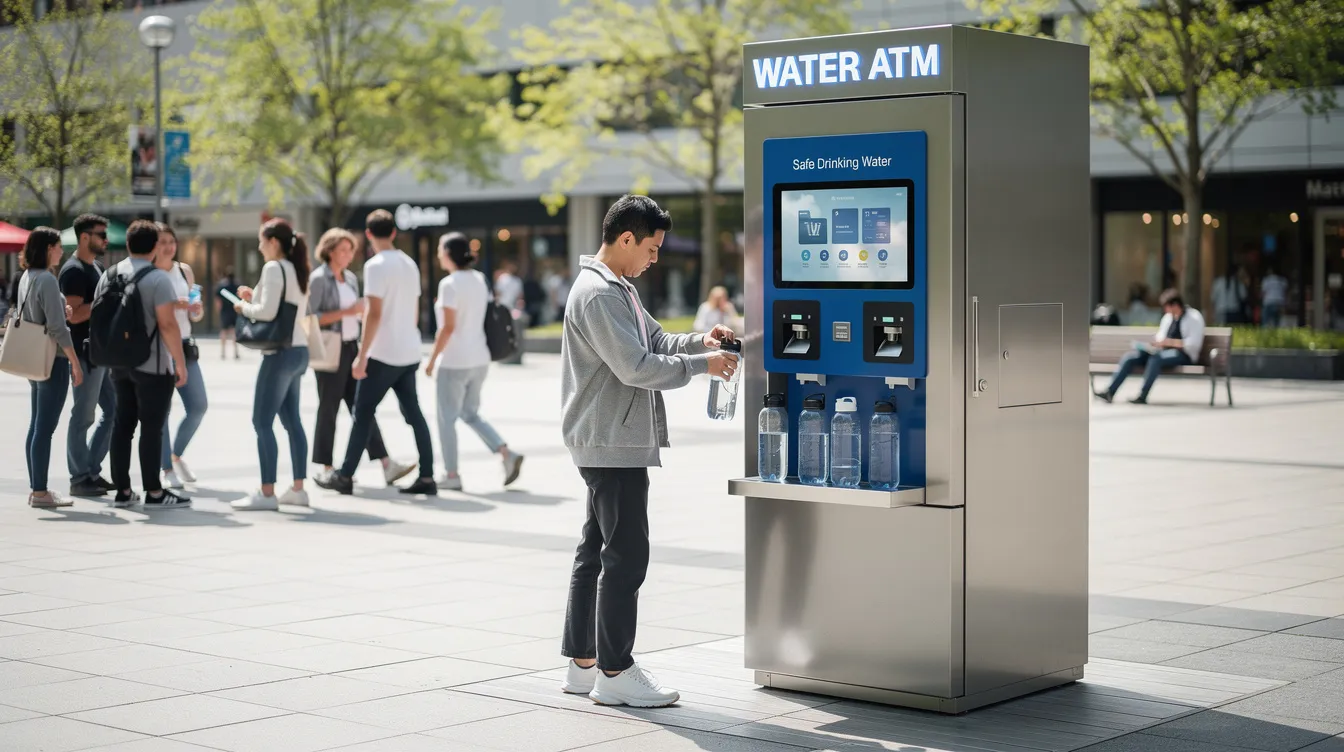
5. Water ATM/Vending Machine Business
Automated water dispensing machines installed in public spaces, railway stations, bus terminals, and residential colonies that dispense clean drinking water at affordable rates per litre.
Why it stands out: Technology-driven passive income potential with minimal staffing requirements.
Best for: Tech-savvy entrepreneurs targeting urban areas with high footfall. Each unit costs ₹50,000 to a few lakhs including installation.
Key strengths:
- 24/7 operation with minimal staff and operational costs
- Smart water monitoring integrates IoT-based systems for water quality management
- Smart water monitoring solutions can track usage and detect leaks in real time
- Digital platforms are emerging for managing water infrastructure and services
- AI and IoT technology are being integrated into water management for predictive maintenance
Possible limitations: Location dependency is critical – a poorly placed unit will not generate returns. Regular maintenance and water testing are non-negotiable for safety standards compliance.
6. Wastewater Treatment Plant
Setting up and operating sewage treatment plants (STPs) or effluent treatment plants (ETPs) for industrial clusters, gated communities, and municipalities. The Indian wastewater treatment market is valued at US$10.4 billion in 2025.
Why it stands out: Environmental compliance regulations make this a mandatory service for industries. Legal compliance drives demand – industries cannot operate without proper waste water treatment.
Best for: Experienced entrepreneurs with substantial investment capacity (₹50 lakh to several crores).
Key strengths:
- Long-term government contracts and industrial agreements
- Water recycling businesses can treat and reuse water for beneficial purposes
- Wastewater treatment systems can recycle greywater for non-potable uses
- Greywater recycling systems are gaining attention as water reuse becomes more attractive
- Rainwater harvesting systems help reduce reliance on municipal water – often offered as an add-on service
Possible limitations: High investment, complex regulatory approvals, and lengthy project timelines. Requires skilled technical staff for operations and sludge management.
7. Ice Manufacturing Plant
Producing packaged ice – blocks, cubes, and crushed ice – for hotels, restaurants, fish markets, hospitals, and event caterers.
Why it stands out: Year-round demand from hospitality and food industries, with seasonal demand spikes during summer and festivals.
Best for: Entrepreneurs located near hotels, restaurants, and event venues. Investment ranges from ₹5-20 lakh depending on scale.
Key strengths:
- Simple technology with quick ROI
- Raw materials are essentially potable water and electricity
- High quality drinking water standards ensure product safety and premium pricing
- End to end services from production to delivery build customer loyalty
- Atmospheric water generation extracts drinking water from humidity in the air – an emerging complementary technology
Possible limitations: Cold storage logistics, high electricity costs, and the perishability of the product create operational challenges.
For detailed financials, download the Ice Manufacturing Project Report.
Quick Comparison of the Best Water Business Ideas
| Business Idea | Investment Range | Profit Margin | Best For | Difficulty | Loan Eligible |
|---|---|---|---|---|---|
| Packaged Drinking Water Plant | ₹15-50 lakh | 10-15% | Brand building, retail market | Medium-High | Yes (Mudra/MSME) |
| RO Water Purification Plant | ₹1-22 lakh | 15-20% | B2B industrial clients | Medium | Yes |
| Water Delivery Service | ₹2-10 lakh | 12-18% | Quick startup, local focus | Low | Yes (Shishu/Kishore) |
| Water Treatment Chemicals | ₹10-30 lakh | 20-30% | Technical entrepreneurs | Medium-High | Yes |
| Water ATM/Vending | ₹0.5-5 lakh/unit | 15-25% | Passive income seekers | Low-Medium | Yes |
| Wastewater Treatment Plant | ₹50 lakh-5 crore | 10-15% | Large-scale projects | High | Yes (CGTMSE) |
| Ice Manufacturing | ₹5-20 lakh | 15-25% | Hospitality markets | Low-Medium | Yes |
How to Choose the Right Water Business for You
Choose Based on Investment Capacity
Your budget is the first filter. If you have under ₹5 lakh, a water delivery service or a single water ATM unit makes practical sense. With ₹15-50 lakh, a packaged drinking water plant or an RO plant becomes viable – these require significant investment but offer stronger market reach and brand potential. Above ₹50 lakh, wastewater treatment and large-scale industrial RO plants offer the highest long-term returns.
The bottled water industry in India is expected to reach INR 403 billion by 2026, so even a small entry into the bottled water business or bottled water industry can yield results if your business plan and market research are sound.
Choose Based on Target Market
B2B models (RO plants, treatment chemicals, wastewater treatment) offer larger contract values but longer sales cycles. B2C models (packaged water, delivery, water ATM) generate faster cash flow from your target market.
Consider whether your local area has stronger demand from industries or consumers. Rural areas benefit from village drinking water projects and government tenders, while urban areas favor premium bottled water, water softeners, and swimming pools maintenance. The Jal Jeevan Mission aims to provide tap connections to every rural household by 2028, creating opportunities in both segments.
Choose Based on Technical Expertise
Running an RO plant or wastewater treatment facility demands knowledge of water systems, membrane technology, and environmental sustainability compliance. If you lack technical training, start with a delivery service or distribution model where operational efficiency matters more than engineering expertise. You can always scale into more complex water business ideas as you gain experience.
Which Water Business Option Is Best for You?
- Choose Packaged Drinking Water if you want to build a consumer brand in your region and have ₹15-25 lakh ready. Focus on quality standards, clean water delivery, and safe drinking water compliance.
- Choose RO Water Plant if you have a technical background and want to serve industries. The renewable water treatment market is expanding rapidly.
- Choose Water Delivery if you prefer a low-risk startup with a strong local focus. Purified water delivery requires minimal licensing and serves both domestic and commercial clients.
- Choose Water ATM if you want technology-driven passive income. IoT-enabled machines reduce staffing needs and improve water usage tracking.
For entrepreneurs exploring Mudra Loan options for startups, most of these water business models qualify under Shishu (up to ₹50,000), Kishore (₹50,000-5 lakh), or Tarun (₹5-10 lakh) categories.
Final Thoughts
The water industry in India is not slowing down. Whether you are looking at a ₹2 lakh delivery service or a ₹50 lakh treatment plant, the increasing demand for clean drinking water, environmental sustainability compliance, and industrial water treatment ensures that the growth curve remains strong.
Your best choice depends on three things: your investment capacity, the market focus in your local area, and your willingness to handle technical complexity. Government support through Mudra Loans, MSME schemes, and programs like Jal Jeevan Mission make financing accessible for first-time entrepreneurs.
If you want a free consultation on choosing the right water business, preparing a detailed DPR or CMA report, or securing bank financing, reach out to me directly. A well-prepared business plan and project report are often the difference between loan approval and rejection.
- Pulse Cleaning & Grading Plant Working Capital & Cash Credit Requirements in India

- Pulse Cleaning & Packing Plant Financial Projections, CMA Data & DSCR
- Pulse Cleaning & Grading Processing Cost, Recovery, Wastage & Profitability in India
- Pulse Cleaning, Grading & Packing Plant Setup Cost & Investment in India
- Pulse Cleaning & Packing Plant Capacity, Land, Building & Layout Requirements
- Pulse Cleaning, Grading, Sorting & Packing Process Flow Explained
- Optical Colour Sorter for Pulses: Technology, Capacity, Price & Selection
- Pulse Cleaning, Grading & Sorting Machinery: Equipment List, Specifications & Cost
- Pulse Cleaning, Grading & Packing Job-Work Business Model & Project Report in India

- Export-Grade Pulse Cleaning, Colour Sorting & Packing Plant Project Report & DPR in India
- Integrated Multi-Pulse Cleaning, Grading & Packing Plant Project Report & DPR in India
- Pulse Protein, Starch & Advanced Ingredients Manufacturing Project Report & DPR
- Pulse Protein Manufacturing Feasibility, ROI & Bank Finance
- Pulse Protein Plant Financial Projections, CMA Data & DSCR
- Pulse Protein Production Cost, Recovery Yield & Profitability in India