Introduction
India’s transport industry is one of the most reliable wealth-creation engines available to entrepreneurs today. The Indian logistics sector, valued at approximately USD 318 billion in 2024, is projected to reach USD 484 billion by 2029 – growing at a CAGR of 8.8%. That kind of growth means one thing: massive opportunity for anyone willing to start their own venture in transportation.
I’m CA Manish Gugliya, and over 20+ years of advising MSMEs, preparing project reports, and helping entrepreneurs secure bank financing, I’ve seen transport businesses consistently outperform many other sectors. The e-commerce surge has increased demand for rapid parcel delivery, manufacturing output is climbing, Dedicated Freight Corridors are reshaping cargo movement, and PM GatiShakti is connecting India’s supply chain like never before. The transport sector is adapting to meet rapidly growing digital commerce demands, and Electric Vehicle adoption is increasing across fleet operations.
This guide covers the 15 most profitable transportation business ideas for 2026 – each evaluated on realistic investment requirements, actual profit margins, market demand, and financing feasibility. Whether you have ₹3 lakh or ₹25 lakh, there’s a lucrative business waiting in this list.
How We Chose the Best Transport Business Ideas
Not every transport business is equally viable. Here’s the evaluation framework I used to rank these profitable transportation business ideas:
- Investment accessibility: Categorized into low (≤₹5 lakh), medium (₹5–₹15 lakh), and high (₹15+ lakh) brackets – aligned with Mudra Loan categories (Shishu, Kishore, Tarun, Tarun Plus)
- Profit margins: Profit margins in the transport sector typically range from 10% to 20%, with specialized services earning more. I prioritized ideas with proven, sustainable margins over speculative ones
- Market demand: Businesses tied to growing sectors – e commerce, cold chain logistics, infrastructure – ranked higher
- Licensing ease: Simpler compliance and permit structures scored better for first-time entrepreneurs
- Scalability: Can you go from one vehicle to ten without rebuilding the entire model?
- Financing suitability: Ideas where startup costs fall within Mudra Loan or MSME loan ranges were preferred
Starting a transport business requires significant upfront capital, so each idea below includes realistic expense estimated cost figures rather than vague ranges.
Table of Contents
Top 15 Most Profitable Transport Business Ideas for 2026
1. Last-Mile E-commerce Delivery Service
The backbone of India’s online shopping revolution runs on last-mile delivery fleets. Every order placed on Flipkart, Amazon, Meesho, or Zepto needs someone to move it from a warehouse to a doorstep. Last-mile delivery services support e-commerce and local retailers alike, making this the most consistently demanded transport business in India today.
Why It Stands Out
Urbanization raises the need for last-mile mobility services, and courier and delivery services are booming due to online shopping growth. With India’s e-commerce market expanding rapidly, the daily volume of packages needing delivery is staggering – and growing.
Best For
- Entrepreneurs with ₹3-8 lakhs investment capacity
- Those preferring technology-integrated businesses with mobile apps and GPS tracking
- Urban and semi-urban area operators near fulfillment centers
Key Strengths
- High daily demand and recurring revenue from platform partnerships
- Low entry barriers – start with mini trucks or pickup vehicles
- Scalable: add vehicles and riders as volume grows
- Partnership opportunities with established platforms reduce marketing costs
Possible Limitations
- High competition in metro cities creates a competitive market
- Platform commission cuts into margins (15-25% typical)
- Fuel price sensitivity directly affects profitability
A fleet of 5 delivery bikes can generate approximately ₹75,000/month in revenue with ~50 deliveries per day at ₹50 each. Net profit depends on fuel, rider salaries, and maintenance.
2. Cold Chain and Refrigerated Transport
Cold chain logistics is critical for transporting food and pharmaceuticals safely. India’s cold chain market was valued at approximately USD 12,775 million in 2025 and is projected to hit USD 74,502 million by 2033 – a CAGR of roughly 25%. Specialized refrigerated transport is used for perishable goods including dairy, frozen foods, vaccines, and biologics.
Why It Stands Out
- Premium pricing: reefer transport charges significantly more than standard goods transport
- Limited competition compared to general freight
- Growing demand from pharma (vaccine distribution), e-grocery, and frozen food logistics
Best For
- Investors with ₹15-25 lakhs capital (small reefer trucks start around ₹14-15 lakh)
- Those targeting pharmaceutical and food industries
- Entrepreneurs near agricultural or manufacturing hubs
Key Strengths
- Profit margins of 15-25% when utilization is managed well
- Long-term contracts with manufacturers and pharma companies
- Essential service with consistent year-round demand
- Government subsidies available for cold chain infrastructure
Possible Limitations
- Higher initial investment for refrigerated vehicles (mid-sized 14-ft units cost ~₹26 lakh)
- Technical maintenance requirements for refrigeration units
- Specialized handling skills needed – temperature compliance risk is real
3. Inter-City Goods Transport with Medium Trucks
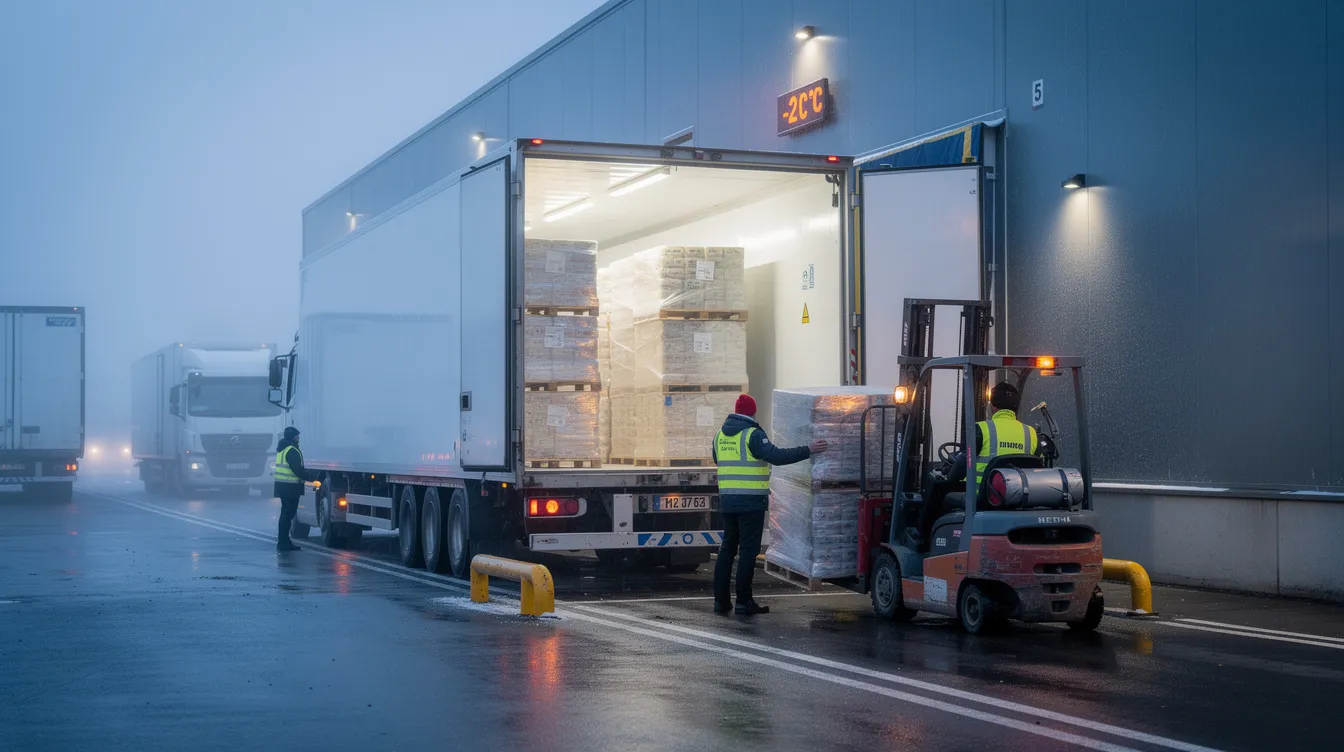
Goods transport businesses handle logistics for products and materials across India’s manufacturing corridors. This is the traditional truck business that has built fortunes for generations – and with India’s 12.5 million trucks generating average annual revenue of approximately ₹16 lakh per vehicle, the model remains proven.
Why It Stands Out
- Logistics and freight transportation is highly profitable due to e-commerce growth and industrial demand
- Established model with clear revenue benchmarks: operating margins of 10-12% for organized players in FY2025-26
Best For
- Entrepreneurs with ₹10-20 lakhs investment
- Those with logistics industry connections and B2B network
- Operators near industrial corridors (Delhi-NCR, Mumbai-Pune, Chennai-Bangalore)
Key Strengths
- Monthly income for logistics companies can reach INR 5 lakh with proper fleet utilization
- Multiple cargo types across all the industries
- Good resale value of commercial vehicles
- Fleet expansion is straightforward
Possible Limitations
- Operating costs include vehicle maintenance, fuel, and insurance – fuel alone is 50-60% of total costs
- Empty return trips erode margins (return legs often earn only 30-40% of onward rates)
- Truck drivers are increasingly hard to recruit and retain
- Highway permit and documentation requirements add complexity
4. Construction Material Transport
India’s infrastructure boom under Bharatmala, Smart Cities Mission, and urban housing projects drives massive demand for cement, steel, sand, and aggregate transport. Specialized transport services can command higher rates for heavy and oversized cargo.
Why It Stands Out
- Government capex on roads, bridges, and housing provides steady order flow
- Higher payload capacity with heavy duty trucks means better per-trip economics
Best For
- Investors with ₹12-25 lakhs for tipper trucks and heavy-duty vehicles
- Those in developing towns and smart cities
- Entrepreneurs comfortable with B2B sales to builders and contractors
Key Strengths
- Long-term contracts with construction companies
- Recession-resistant: infrastructure development continues regardless of economic cycles
- High-value cargo with good profit margins per trip
Possible Limitations
- Heavy vehicle licensing and permit complexity
- Higher insurance and maintenance costs
- Seasonal slowdown during monsoon months
5. School and Corporate Staff Transport
Passenger transport businesses focus on moving individuals on fixed routes – and bus transport for schools and corporate staff is one of the most predictable revenue models in the transport industry. You ensure safety, maintain schedules, and collect monthly payments.
Why It Stands Out
- Fixed monthly income with advance payments reduces cash flow uncertainty
- Growing corporate transportation outsourcing trend
Best For
- Entrepreneurs with ₹8-15 lakhs investment
- Those near educational institutions or corporate hubs
- Operators preferring passenger transport over goods
Key Strengths
- Annual contracts with monthly revenue of ₹50,000-₹1,50,000 per vehicle
- Lower fuel costs with optimized, repetitive routes
- Safety-focused business builds strong reputation and repeat business
- Customer satisfaction drives referrals to other institutions
Possible Limitations
- Passenger vehicle licensing, fitness certificates, and safety compliance are stringent
- School transport goes idle during vacations (2-3 months/year)
- Higher insurance costs for passenger vehicles
6. Packers and Movers Service
India’s internal migration – driven by job mobility, education, and urbanization – fuels consistent demand for household and office relocation. This is a transport services business where add on services like packing, unpacking, and furniture assembly create premium pricing.
Why It Stands Out
- Low entry barrier: start with one vehicle and a small crew
- High-margin service – customers pay for careful handling, not just transport
Best For
- Entrepreneurs with ₹3-8 lakhs starting capital
- Those in metros with high migration (Bangalore, Hyderabad, Pune)
- Operators comfortable with exceptional customer service
Key Strengths
- Quick setup with minimal infrastructure – invest in quality vehicles to ensure service reliability
- Premium pricing for careful handling of valuables
- Referral-driven business with strong repeat business potential
- Flexible scheduling keeps the business flowing year-round
Possible Limitations
- Established players create a competitive market
- Insurance liability for customer goods requires proper coverage
- Seasonal demand peaks during academic and financial year transitions
7. Water Tanker Supply Service
In water-scarce regions across Rajasthan, Maharashtra, Karnataka, and Tamil Nadu, water tanker delivery is an essential service with guaranteed demand. This is one transport business where customers come to you.
Why It Stands Out
- Essential daily requirement for residential complexes, construction sites, and commercial properties
- Limited competition in many semi-urban and peri-urban areas
Best For
- Entrepreneurs with ₹6-12 lakhs investment
- Those in water-scarce regions at strategic locations
- Operators seeking consistent daily demand
Key Strengths
- Daily recurring revenue from regular customers
- Higher margins during summer months (April-June)
- Resistant to economic downturns – water is non-negotiable
- Hire licensed drivers with experience for safe tanker operation
Possible Limitations
- Water source permits and municipal approvals required
- Vehicle maintenance costs are higher due to water weight and corrosion
- Seasonal variation – monsoon reduces demand significantly
8. Agricultural Produce Transport
Farm-to-market logistics for fruits, vegetables, grains, and dairy forms the backbone of India’s agricultural supply chain. With FPOs (Farmer Producer Organizations) and cooperatives growing, this segment is becoming more organized.
Why It Stands Out
- Government support through agricultural schemes and subsidies
- Essential for food security – demand never disappears
Best For
- Entrepreneurs with ₹5-12 lakhs investment
- Those in agricultural states (Punjab, Haryana, UP, MP)
- Operators with farming community connections
Key Strengths
- Government subsidies available for agricultural logistics
- Partnership opportunities with cooperatives and mandis
- Seasonal peak income during harvest periods can be substantial
- Conduct thorough market research before launching your business to identify high-demand crop corridors
Possible Limitations
- Seasonal nature of agricultural cycles creates income variability
- Payment delays from some agricultural buyers
- Rural road conditions increase vehicle wear
9. Courier and Express Delivery
Beyond e-commerce packages, there’s a thriving business in document delivery, legal courier, medical sample transport, and B2B express logistics. Logistics software development offers tools for route optimization and management that make even small courier operations efficient.
Why It Stands Out
- Premium pricing for time-sensitive, same-day delivery services
- Multiple revenue streams: B2B contracts, B2C express, specialized document handling
Best For
- Entrepreneurs with ₹2-5 lakhs starting capital
- Those in commercial and business districts
- Operators who want to leverage technology for operational efficiency
Key Strengths
- Low entry barriers – start with two-wheelers or small vehicles
- Technology integration (GPS tracking, delivery apps) creates competitive advantage
- Serves local businesses, law firms, hospitals, and corporate clients
- Scalable through franchise or hub-and-spoke model
Possible Limitations
- Established players (DTDC, Delhivery, BlueDart) dominate market share
- Technology investment for tracking and management is ongoing
- Insurance services for valuable items add to costs
10. Waste Collection and Recycling Transport
India’s Swachh Bharat Mission and growing environmental awareness have created a genuine market for waste transport. Niche logistics services can include reverse logistics and mobile repairs, and sustainable packaging solutions are increasingly important in logistics operations.
Why It Stands Out
- Municipal contracts provide stable, long-term revenue
- Less competition compared to traditional freight
Best For
- Entrepreneurs with ₹4-10 lakhs investment
- Those interested in environmental services and recycling businesses
- Operators near industrial areas and municipalities
Key Strengths
- Government contracts and municipal partnerships
- Multiple revenue streams: municipal waste, industrial waste, e-waste, construction debris
- Social impact alongside profit potential
- Growing environmental compliance requirements drive demand
Possible Limitations
- Environmental permits and NOCs required
- Specialized vehicles needed for different waste categories
- Health and safety protocols increase operating costs
11. Medical and Healthcare Transportation
Specialized non-emergency medical transport is growing due to an aging population and expanding healthcare infrastructure. Non-Emergency Medical Transportation focuses on non-emergency patient transport – dialysis visits, medical appointments, rehabilitation sessions, and inter-hospital transfers. Ambulance services for emergency response represent the higher-investment tier.
Investment: ₹8-20 lakhs | Profit Margin: 15-25% | Best For: Entrepreneurs near hospitals and healthcare clusters
Healthcare transportation requires proper licensing, trained staff, and vehicle modifications. The target market includes hospitals, elderly care facilities, and insurance companies offering cashless transport benefits.
12. Vehicle Towing and Recovery Service
Specialised transport businesses cater to unique transport needs, and vehicle recovery is a prime example. With India’s vehicle population crossing 350 million, breakdowns and accidents create consistent demand.
Investment: ₹8-15 lakhs | Profit Margin: 20-35% per call | Best For: Operators along highways and in metro cities
Key advantage: low competition in most Tier-2 and Tier-3 cities. Partner with insurance companies and highway authorities for steady business.
13. Fuel and LPG Distribution Transport
Fuel tanker and LPG cylinder delivery remains a high-barrier, high-reward transport business. Freight brokerage connects shippers and carriers without owning trucks – but in fuel distribution, owning compliant tankers is the entry ticket.
Investment: ₹15-30 lakhs | Profit Margin: 8-15% | Best For: Entrepreneurs with oil company dealership connections
Compliance requirements are strict (PESO license, hazardous goods permit), but contracts are long-term and revenue is predictable. This is a shipping business where volume determines everything.
14. Luxury Car Rental and Limo Service
The car rental market in India is growing with corporate travel, weddings, and tourism. You can provide limo service or personal limo service for high-end clients, or run a taxi service fleet for airport transfers. Taxi services are a popular choice in urban areas for convenience, and even a bike rental service can cater to eco-conscious urban commuters through bicycle rental options.
Investment: ₹10-45 lakhs (initial investment for a taxi business ranges from INR 10,000 to INR 45,000 for app-based models; luxury vehicles cost significantly more) | Profit Margin: 15-30% | Best For: Entrepreneurs in tourist cities and metro areas with access to rental business models
Bike taxi services provide faster transport alternatives in densely populated areas and can complement a car rental fleet.
15. Mobile Food Truck and Frozen Food Logistics
Food truck logistics and frozen food distribution combine transport with the booming food service industry. Shared logistics platforms help small businesses reduce shipping costs through consolidation, making this viable even for smaller operators.
Investment: ₹5-15 lakhs | Profit Margin: 12-20% | Best For: Entrepreneurs near food processing zones, business ideas for men looking for a hands-on operation
Air cargo business for perishable exports and livestock transportation for the dairy/meat sector are adjacent opportunities worth exploring as your fleet grows.
Quick Comparison of Top Transport Business Ideas
| Business Idea | Investment Range | Profit Margin | Best For |
|---|---|---|---|
| Last-Mile E-commerce Delivery | ₹3-8 lakhs | 10-18% | Tech-savvy urban entrepreneurs |
| Cold Chain Transport | ₹15-25 lakhs | 15-25% | High-capital pharma/food operators |
| Inter-City Goods Transport | ₹10-20 lakhs | 10-15% | Logistics-connected operators |
| Construction Material Transport | ₹12-25 lakhs | 12-20% | B2B-focused entrepreneurs |
| School/Corporate Transport | ₹8-15 lakhs | 15-22% | Service-oriented operators |
| Packers and Movers | ₹3-8 lakhs | 15-25% | Customer-service driven entrepreneurs |
| Water Tanker Supply | ₹6-12 lakhs | 15-25% | Essential service providers |
| Agricultural Produce Transport | ₹5-12 lakhs | 10-18% | Rural/agricultural area operators |
| Courier and Express Delivery | ₹2-5 lakhs | 12-20% | Low-budget, tech-integrated startups |
| Waste Collection Transport | ₹4-10 lakhs | 10-18% | Environment-focused operators |
| Medical Transport | ₹8-20 lakhs | 15-25% | Healthcare-adjacent entrepreneurs |
| Vehicle Towing | ₹8-15 lakhs | 20-35% | Highway/metro city operators |
| Fuel/LPG Distribution | ₹15-30 lakhs | 8-15% | Compliance-ready, high-volume operators |
| Luxury Car Rental | ₹10-45 lakhs | 15-30% | Tourism/corporate travel markets |
| Food Truck Logistics | ₹5-15 lakhs | 12-20% | Food industry-connected operators |
How to Choose the Right Transport Business for You
Choose Based on Investment Capacity
Your investment capacity should be your first filter:
- ₹2-8 lakhs: Courier delivery, last-mile e-commerce, packers and movers. These work well under Mudra Loan Shishu and Kishore categories. Startup costs are manageable and breakeven is faster.
- ₹8-15 lakhs: School transport, water tanker, vehicle towing, waste collection. Tarun category Mudra Loans cover this range. You need adequate capital for vehicle purchase plus 3-4 months of working capital.
- ₹15-25 lakhs+: Cold chain, construction material, fuel distribution, luxury rental. These typically require MSME term loans or NBFC financing beyond Mudra limits. Higher risk, but higher reward.
Unlike mutual funds where you can start small and add systematically, transport vehicles require lump-sum capital. Plan your financing before you plan your routes.
Choose Based on Market Location
Location determines everything in transport:
- Metro cities: Last-mile delivery, courier, luxury car rental, taxi service thrive. But competition is fierce and operating costs (parking, fuel, congestion) are higher.
- Tier-2 and Tier-3 cities: Construction transport, water tanker, school transport, and agricultural logistics face less competition with strong demand. Smart parking platforms help transport operators manage parking needs efficiently in growing cities.
- Industrial corridors: Inter-city freight, container transport, and logistics and freight services near manufacturing zones offer steady B2B contracts.
- Agricultural belts: Farm produce transport and cold chain logistics near mandis and FPOs.
Research your local market trends before committing. Insufficient market research is a common mistake that kills transport startups before they gain traction.
Choose Based on Service Type Preference
- Passenger transport: School buses, corporate staff, taxi, healthcare transportation – requires higher safety compliance, passenger insurance, and trained drivers. Hire qualified staff who understand passenger protocols.
- Goods transport: Freight, courier, construction materials – simpler licensing but heavier operational demands. Digital freight brokerage uses technology to match loads with transporters efficiently, reducing empty runs.
- Specialized services: Cold chain, medical, hazardous goods – command premium rates but demand technical expertise. Emerging transport solutions are focusing on AI, electrification, and urban delivery.
Which Transport Business Is Best for You?
Here’s a quick decision framework:
- Choose Last-Mile Delivery if you want quick setup with technology integration and don’t mind platform dependence
- Choose Cold Chain Transport if you have higher capital, want premium margins, and can manage technical operations
- Choose Construction Transport if you prefer B2B industrial clients and long-term contracts in a growing infrastructure market
- Choose School/Corporate Transport if you want predictable monthly income with fixed routes and annual contracts
- Choose Water Tanker if you want an essential service with daily repeat customers in water-scarce regions
- Choose Courier/Express if you’re starting with minimal capital and want to leverage logistics services mini truck or two-wheeler operations
- Choose Medical Transport if you want to serve the healthcare sector with growing, recession-proof demand
A solid business plan is essential for transport startups – regardless of which idea you choose. Before approaching any bank, prepare a detailed transport business plan covering market analysis, route planning, vehicle selection, revenue projections, and risk mitigation.

Final Thoughts
The transportation industry in India offers one of the widest spectrums of opportunity for entrepreneurs – from a ₹2 lakh courier operation to a ₹30 lakh cold chain fleet. Every idea in this list is backed by real market demand, and the transportation sector’s growth trajectory through 2030 and beyond gives you a long runway.
But let me share what I’ve seen go wrong in 20+ years of consulting:
- Overlooking rules and regulations leads to permit cancellations, fines, and legal headaches. Get your GST registration, commercial permits, fitness certificates, PUC, and insurance sorted before your first trip.
- Neglecting maintenance causes unexpected vehicle breakdowns – and in transport, downtime is lost revenue.
- Ignoring customer feedback prevents service improvement. The businesses that survive long-term are those that listen and adapt.
- Ineffective financial strategy creates cash flow problems that can sink even a thriving business. Track every rupee.
Conduct thorough industry research before committing capital. Study market trends in your specific region. The shipping services market, the increasing demand for EV infrastructure (battery swapping stations enhance the efficiency of electric vehicle operations), and the rise of hybrid vehicles all point to a transport industry that rewards those who plan ahead.
The transport industry is focusing on sustainability and efficiency. Whether you’re exploring car business ideas or a full-scale logistics startup, the fundamentals remain the same: secure funding for vehicle purchases and operational costs, build a solid business plan, and focus on customer satisfaction from day one.
Start with one vehicle. Master one route. Build one relationship. Then scale.
Need a Bank-Ready Project Report for Your Transport Business?
Before applying for a Mudra Loan, MSME loan, or any business loan from a bank, you need a professionally prepared Project Report with CMA Data, DSCR calculations, cash flow projections, and break-even analysis.
CA Manish Gugliya (FCA) provides:
- Customized Project Reports and DPRs for transport businesses
- CMA Data preparation for bank loan applications
- Mudra Loan documentation and project reports
- Financial projections and business valuation
- Startup India registration support
- MSME consultancy and Udyam registration guidance
Whether you’re starting a last-mile delivery fleet or a cold chain logistics company, get your documentation right the first time.
Visit ProjectReportBank.com to get started, or contact CA Manish Gugliya directly for a consultation tailored to your transport business startup.
- Besan Plant Land Requirement, Building & Factory Layout – Practical Planning Guide


- Besan Plant Capacity Planning: Selecting the Right Production Scale

- Besan Manufacturing Process: Cleaning, Grinding, Sieving & Packing

- Besan Manufacturing Machinery: Equipment Selection & Automation Guide
- Besan Manufacturing Plant Setup Cost in India

- Bulk Supply vs Branded Retail Besan: Business Model & Profitability Comparison

- Purchased Chana Dal vs Whole Gram Processing for Besan: Cost & Viability Comparison

- Multiproduct Pulse Flour Manufacturing Plant Project Report: Setup Cost, Machinery, Process and Profitability

- Integrated Gram Processing & Besan Manufacturing Plant Project Report
- Besan Manufacturing from Chana Dal: Plant Setup, Investment & Business Plan

- Dal Mill & Integrated Pulse Processing Plant Project Report & DPR in India

- Dal Mill Modernisation, Capacity Expansion & Automation Project Report
- Own-Stock vs Job-Work Dal Milling – Business Model, Working Capital & Profitability
- Dal Mill Licence Requirements: Approvals, FSSAI Registration & Pollution Control in India

- Dal Mill Subsidy, Bank Loan & Government Schemes in India