Key Takeaways
- India’s plastics market is valued at USD 46.77 billion in 2025 and projected to reach USD 79.99 billion by 2034, with high demand in packaging, construction, agriculture, FMCG, and healthcare creating strong business opportunities.
- Entrepreneurs can start profitable plastic manufacturing businesses with investments starting from ₹10–15 lakh for micro units (household items, injection molding job work) up to ₹5 crore+ for medium plants (PVC pipes, PET preforms, medical disposables).
- The best plastic business ideas in 2026 include PET bottles and preforms, PVC pipes and fittings, plastic recycling, disposable plastic syringes and IV bags, plastic packaging products, and industrial or automotive components.
- Bank loans under Mudra, MSME term loans, and CGTMSE are available for viable plastic projects, but banks insist on a strong project report, CMA data, and realistic financial projections.
- As CA Manish Gugliya (FCA), with 20+ years of experience, I recommend entrepreneurs do detailed financial planning, understand machinery and raw materials, and use professional project reports to secure finance and improve profitability.
Introduction: Plastic Business Opportunities in India (2026)
India’s plastic manufacturing industry is on a growth trajectory that few sectors can match. The country’s plastics consumption crossed 24 million tonnes in 2023 and the indian plastic industry is expected to double polymer consumption in the coming years. With packaging, infrastructure, automotive, and healthcare sectors all expanding, the demand for plastic products continues to climb.
A plastic manufacturing business offers options at every investment level. You can start with a small injection molding unit producing household items from a rented shed, or set up a large-scale PVC pipe factory or PET bottle plant. The flexibility of scale is one reason plastic consistently appears in lists of the best manufacturing business ideas for Indian entrepreneurs.
India’s export potential for plastic products is real and growing. Manufacturers are shipping packaging materials, household items, and plastic furniture to the middle east, Africa, and southeast asia. Government initiatives like Make in India, PLI incentives across related sectors, and MSME-friendly schemes indirectly support new businesses entering plastic manufacturing and the plastic recycling business.
As a practising Chartered Accountant (FCA) with 20+ years helping MSMEs set up plastic manufacturing plants and arrange bank loans, I will share practical, numbers-based guidance in this article. Every investment figure, margin estimate, and machinery recommendation comes from my direct experience with hundreds of plastic business project reports and bank appraisals.
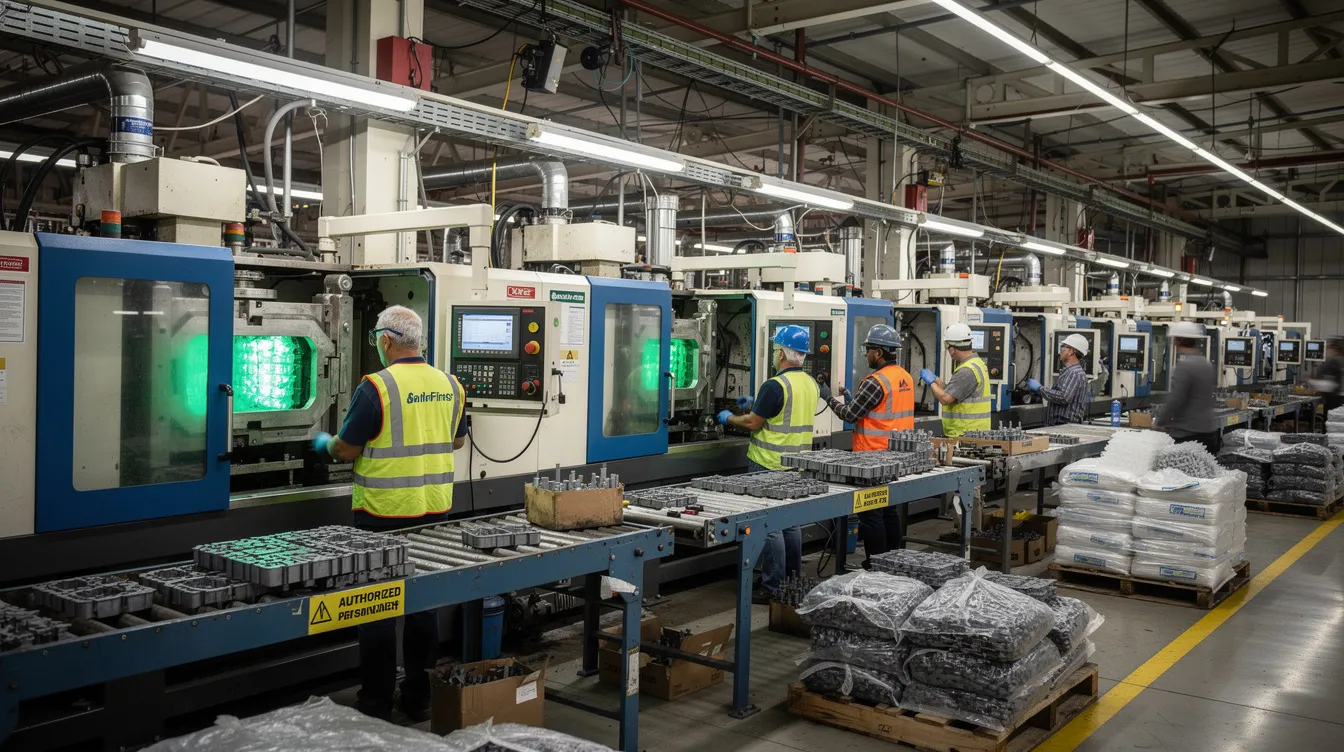
Table of Contents
Why Start a Plastic Manufacturing Business in 2026?
Plastic remains a versatile material essential across various industries despite sustainability debates. India’s per-capita plastic consumption is still about 15–20 kg per year, well below developed nations. This gap means significant room for growth.
- Packaging demand: About 49% of India’s plastics consumption goes into packaging. The plastic packaging market in India stands at roughly USD 22.44 billion in 2025, driven by FMCG, e-commerce, and food delivery services. Flexible packaging, plastic films, pouches, and wraps remain in high demand.
- Agriculture: Mulch films, drip irrigation pipes, greenhouse films, water tanks, and tarpaulins see growing demand thanks to government irrigation programs like PM-KUSUM and Jal Jeevan Mission. Plastic footwear, including affordable sandals and slippers, is also popular in both rural and urban markets, and the demand for plastic footwear remains stable across various regions.
- Automotive and EVs: India’s auto plastics market was around USD 1.5 billion in 2025, projected to double by 2033. Modern passenger vehicles use 90–140 kg of lighter plastic components, and the growth of electric vehicles creates rising demand for plastic automotive components like battery enclosures and thermal management parts.
- Healthcare and pharma: Disposable plastic syringes, IV bags, vials, and pharmaceutical packaging form a recession-resistant segment. The market for plastic medical disposables is rapidly growing, boosted by rising healthcare spending, vaccination drives, and exports.
- Export opportunities: Plastic furniture, crates, household products, and PET products are increasingly exported to Africa and Asian markets thanks to India’s low-cost manufacturing advantages. The plastic packaging market is expected to grow significantly in Asia.
The diversity of end-use industries reduces risk and makes plastic business ideas relatively resilient to any single sector’s downturn.
Advantages of Starting a Plastic Manufacturing Business
Plastic manufacturing often attracts first-time entrepreneurs and MSMEs because of its accessible entry points and steady demand fundamentals.
- High demand and repeat orders: Products like buckets, containers, pipes, crates, and syringes are daily staples with constant replenishment needs. Everyday plastic household items have a consistent market across India.
- Scalable investment: You can begin with a home-based injection molding job-work unit or small blow molding setup and expand by adding molds, machines, and product lines gradually.
- Wide choice of plastic business ideas: From packaging and industrial components to household goods, automotive parts, disposable products, and plastic recycling, you can select the best idea based on local market demand, your capital, and technical comfort.
- Good margins if managed well: Typical gross profit margins range from 20–35% depending on product and scale. Value-added products like printed plastic packaging, medical disposables, and branded consumer goods command better prices.
- Government incentives: MSME benefits include interest subvention schemes, state industrial subsidies, and easier credit under Udyam registration. The PLI scheme with its ₹1.91 lakh crore outlay supports investment in auto components, medical devices, and other high-value segments.
- Job creation and cluster benefits: Locating in plastic clusters in Gujarat, Maharashtra, or Tamil Nadu brings shared supplier networks, skilled labour, and lower input costs.
Investment Required for Plastic Manufacturing: From Micro to Medium Units
Exact investment varies by product, capacity, location, and machinery choice (new versus used). Here are realistic ranges for 2025–2026:
| Parameter | Micro/Home-based | Small Scale | Medium Scale | Export-oriented/Advanced |
|---|---|---|---|---|
| Total Investment | ₹10–20 lakh | ₹25–75 lakh | ₹1–5 crore | ₹5–15 crore+ |
| Built-up Area | 500–1,000 sq ft | 1,000–3,000 sq ft | 3,000–10,000 sq ft | 10,000+ sq ft |
| Key Machinery | 1 small injection molder, basic molds, grinder | 2–3 injection/blow molders, multiple molds, packing setup | Extrusion lines, rotomolders, multi-cavity injection molders | High-speed multi-cavity machines, cleanrooms, quality labs |
| Working Capital/Month | ₹1–2 lakh | ₹3–8 lakh | ₹10–30 lakh | ₹30 lakh–₹1 crore |
| Typical Products | Small containers, stationery, caps | Buckets, mugs, small packaging | PVC pipes, PET bottles, crates, dustbins | PET preforms, auto parts, medical disposables |
| Expected Net Margin | 20–25% | 25–30% | 20–35% | 30–40%+ |
Banks generally expect a debt-equity ratio of about 70:30 for medium-scale projects. Promoters need at least 30% equity. A realistic project report and CMA data are mandatory to justify the investment and secure term loans and working capital facilities.
Top 25 Profitable Plastic Business Ideas in India (2026)
This is the core section of the article. Each idea below includes a brief overview of the product, demand, manufacturing process, approximate investment, and profit potential.
1. Plastic Injection Molding Job Work and Components
Injection molding is the core manufacturing process used to produce a wide range of plastic products – caps, containers, automotive clips, electrical fittings, consumer goods, and more. The process involves feeding plastic granules into a heated barrel, injecting the molten material into a mold cavity, cooling, ejection, trimming, and quality checks. Mold design is critical for product quality and cycle time.
FMCG, auto, electronics, and consumer goods companies commonly outsource molded parts, creating steady demand for job-work units. A starter MSME unit with 1–2 injection molding machines, molds, chiller, grinder, and basic infrastructure typically requires ₹25–70 lakh. Gross margins range from 20–30%, and capacity utilisation directly drives profitability. Bank term loans and working capital facilities are available when backed by a solid plastic injection molding project report.
2. Plastic Recycling and Granule Manufacturing
The plastic recycling business processes waste plastic into cleaned, sorted, and reprocessed granules used as raw material by many plastic manufacturers. Recycling plastic waste offers profitable business opportunities and aligns with sustainability trends. Plastic waste recycling addresses environmental concerns while providing low-cost raw materials for downstream users.
The basic process includes collection, sorting, washing, shredding, drying, extruding, pelletizing, and bagging. Producing high-quality recycled plastic pellets can command premium prices. Beyond granules, plastic recycling can create tiles, furniture, and fibers. The plastic recycling market aligns with sustainability trends and growing EPR norms.
Investment for a small to medium recycling plant runs ₹40 lakh–₹2 crore depending on capacity and automation. Key risks include fluctuating scrap prices, inconsistent waste quality, and compliance with Pollution Control Board norms. A detailed plastic recycling project report helps in securing bank loans and PCB consent.
3. PET Bottle and Jar Manufacturing
Manufacturing PET bottles for beverages remains a highly profitable plastic industry segment. PET bottles are commonly used for drinks, cooking oil, and medicine, and they are lightweight and recyclable. The PET bottle market is projected to reach $12 billion by 2030, making pet bottle production one of the most attractive business opportunities in the packaging field.
Production of PET bottles involves injection and blow molding processes – first manufacturing preforms via injection molding, then shaping them into pet bottles through stretch blow molding. Smaller blowing-only units start at ₹30–80 lakh, while integrated preform plus bottle plants cost ₹1.5–4 crore.
Key machinery includes PET preform injection molding machines, blow molding machines, compressors, chillers, mold sets, leak testers, and packing lines. Competition is intense, so securing tie-ups with local beverage and water plants is essential. For detailed financial planning, refer to the PET bottle project report and PET jar project report.
4. PET Preform Manufacturing
PET preforms are intermediate products used by many small blow molding units, making this a B2B plastic factory business with steady demand. Manufacturing uses high-speed injection molding machines with multi-cavity molds, requiring robust power and cooling infrastructure.
Investment ranges from ₹2–6 crore for a competitive preform unit. Quality control – IV value, clarity, and weight consistency – and long-term contracts with beverage and water bottling companies are crucial. Due to high fixed costs, DSCR analysis and capacity planning are essential, as detailed in the PET preform project report.
5. PVC Pipe and Fittings Manufacturing
India’s plastic pipes and fittings market is expanding due to urbanization, and the plastic pipes market will grow at 10% CAGR. Extrusion of PVC and HDPE pipes meets consistent demand in infrastructure projects including water supply, agriculture irrigation, plumbing, and sewerage. Plastic pipes are essential for water management in urban areas, and PVC pipe demand is increasing for various applications. Manufacturing PVC pipes offers steady business opportunities in construction and irrigation.
The manufacturing process uses polyvinyl chloride resin processed through extrusion for pipes and injection molding for fittings. BIS/ISI certifications are mandatory for certain grades. A small PVC pipe unit costs ₹1–3 crore with 1–2 extrusion lines, mixer, cutter, printing machine, and testing lab.
Key machinery includes PVC extruders, vacuum tanks, haul-off units, cutters, mixers, and testing equipment. Target customers range from dealers and builders to farmers and government contractors under Jal Jeevan Mission. See the PVC pipe project report for detailed costing and BIS requirements.
6. Plastic Household Products (Buckets, Mugs, Basins, Dustbins)
Plastic household products include buckets, mugs, and basins – items with consistent demand in local markets across rural and urban India. These are evergreen consumer goods with stable repeat purchases.
Manufacturing uses injection molding or blow molding with PP or HDPE granules and colour masterbatch. Investment is relatively low at ₹25–75 lakh for a small unit with 1–3 machines, molds for multiple SKUs, and simple packing setup, making this an attractive first plastic business.
Distribution works through wholesalers, kirana shops, hardware stores, and institutional buyers. Seasonal spikes occur during festivals. For bankable projections, refer to the plastic bucket project report.
7. Plastic Packaging Materials: Films, Pouches, and Air Bubble Sheet
Around 40% of plastic in India is used for packaging. Plastic films, pouches, and wraps are in high demand, and plastic packaging is driven by e-commerce and food delivery services. The manufacturing process involves extrusion of plastic films, slitting, printing, pouch making, and in the case of air bubble sheets, extrusion with bubble-forming rollers.
Investment for smaller film and pouch units runs ₹40 lakh–₹1.5 crore, while air bubble sheet units cost ₹60 lakh–₹2 crore. E-commerce growth and logistics demand drive strong consumption, and there is export potential for air bubble sheets and packaging films to protect fragile items during transit.
Commodity films have thinner margins, while niche or high-barrier packaging delivers premium pricing. Explore the air bubble sheet project report for detailed feasibility and financial analysis.
8. Disposable Plastic Syringes and Medical Disposables
Manufacturing disposable plastic syringes is a high-precision, regulated plastic manufacturing business serving hospitals, clinics, and domestic and export markets. Disposable plastic syringes are popular due to low cost. Plastic medical units include syringes and iv tubes.
The manufacturing process involves injection molding of the barrel and plunger, assembly, sterilization by ETO or gamma radiation, and sterile packaging, all in a cleanroom environment. Ballpark investment for a small-to-medium plant is ₹3–10 crore depending on product range and automation, with strict regulatory compliance requirements including ISO 13485 and CDSCO approvals.
Demand drivers include rising healthcare spending, medical tourism, vaccination drives, and exports. See the disposable plastic syringes project report for compliance planning and financial modelling.
9. Plastic IV Bags and Medical Fluid Containers
India is becoming a hub for medical supply exports, and IV bag manufacturing using medical-grade PVC or alternative polymers is a high-value opportunity. Demand comes from hospitals, blood banks, and export markets focused on single-use sterile disposables.
Key equipment includes IV bag forming machines, welding and sealing units, printing, sterilization units, and quality testing labs under strict sterile manufacturing conditions. Investment runs ₹4–12 crore, with challenges including regulatory approvals, quality assurance, and long customer approval cycles. See the plastic IV bags project report for detailed DPR guidance.
10. Plastic Molded Toys
The Indian toy industry is projected to reach USD 3 billion by 2028, and most of the Indian toy market will consist of plastic toys. Government import restrictions boost local production of plastic toys, making this a high-potential segment.
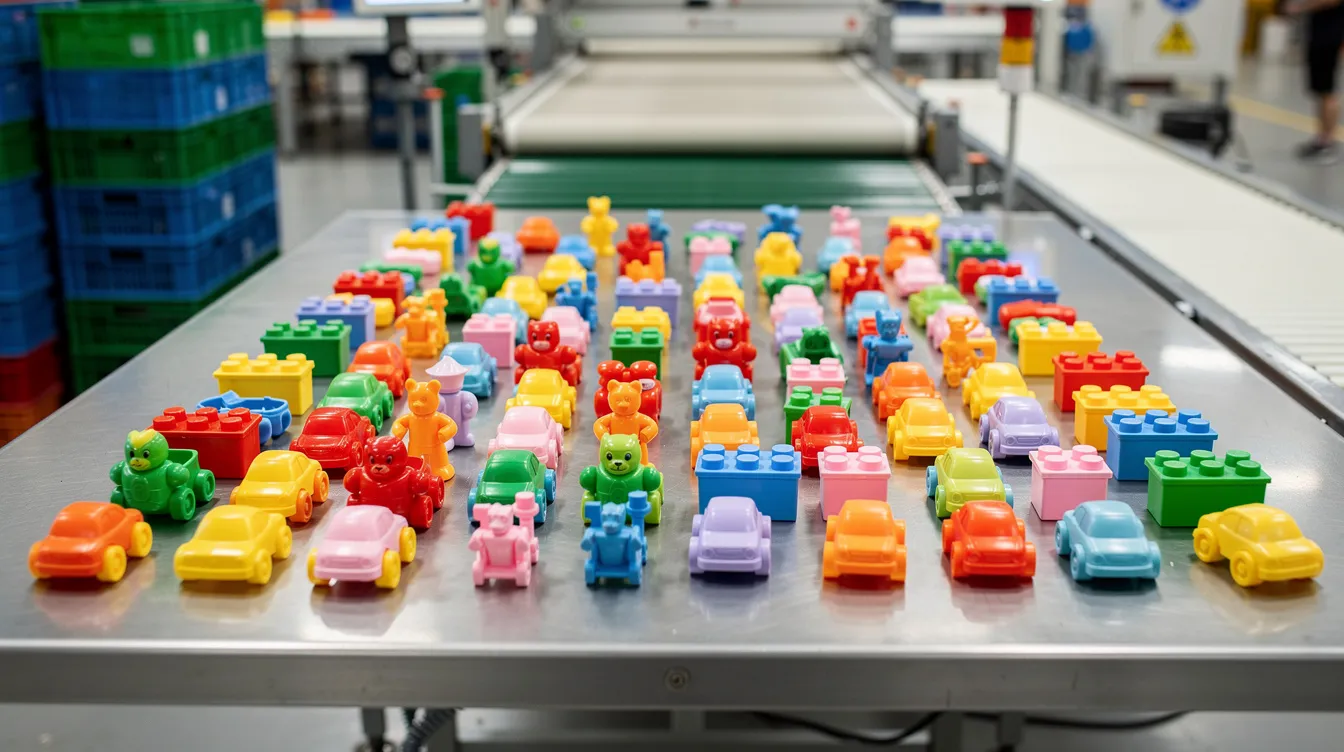
Manufacturing plastic toys uses injection molding and blow molding covering items like cars, blocks, outdoor toys, and educational products. Safety standards (BIS toy norms) require non-toxic, child-safe materials and colours. Investment ranges from ₹30 lakh–₹1.5 crore for a small unit.
Distribution works through wholesalers, modern retail, and online marketplaces. Branding and design innovation are key differentiators. Explore the plastic molded toys project report for detailed numbers.
11. Plastic Crates and Industrial Storage Solutions
Permanent plastic crates for logistics are highly profitable due to constant demand. Plastic crates are popular in logistics and agriculture, used extensively in dairies, FMCG distribution, e-commerce warehouses, and automotive supply chains. This segment has high repeat demand and export potential.
Manufacturing uses injection molding with HDPE or PP, requiring robust molds and high-tonnage presses. Options include stackable and foldable designs. Investment runs ₹60 lakh–₹3 crore, depending on machine size and number of crate sizes.
Long-term contracts with dairies, beverage companies, and logistics players provide stable B2B revenue streams.
12. Plastic Furniture Manufacturing
Durable plastic furniture remains a profitable manufacturing sector. Plastic furniture is affordable and durable, popular in homes, offices, and public places. Rural demand for plastic furniture is increasing, and plastic furniture exports are growing in Africa and southeast asia.
Manufacturing uses large-tonnage injection molding machines, sometimes with gas-assisted molding for premium designs. Investment ranges from ₹1.5–5 crore. Molds are expensive, but high volumes compensate. Design and brand building are key to commanding better margins.
13. Plastic Water Tanks
Rotational molding (rotomoulding) produces seamless construction in plastic water storage tanks, typically made from LLDPE with capacities from 500 to 10,000 litres. Plastic water tanks are valued at over $1.5 billion in India, with strong rural and urban demand.
Plastic tanks offer greater impact strength than steel tanks. Plastic water tanks resist rust and corrosion effectively, and they are lightweight compared to traditional steel tanks. Investment runs ₹70 lakh–₹3 crore, with branded distribution through hardware dealers offering strong returns.
14. Plastic Films, Sheets, and Agricultural Mulch
LDPE and LLDPE films and sheets serve packaging, greenhouse covering, pond lining, and mulch films in agriculture. Value addition through UV-stabilized films and coloured mulch allows higher pricing. The extrusion-based manufacturing process is relatively straightforward, and investment runs ₹80 lakh–₹2.5 crore. Quality control on thickness and strength and timely supply during crop seasons are critical.
15. Plastic Tarpaulins and Silo Covers
HDPE and LDPE tarpaulins serve agriculture, transport covers, warehouses, and construction, with strong rural market demand. Manufacturing involves lamination lines, weaving for HDPE fabric, and stitching with eyelet fixing. Seasonal demand peaks during monsoon. Investment runs ₹1–4 crore, and distribution through agri input dealers and transport hubs is effective.
16. Plastic Automotive Components
Components like bumpers, dashboards, trims, grills, door panels, small clips, and electrical housings are manufactured using injection molding and sometimes blow molding. The growth of electric vehicles creates rising demand for plastic automotive components. OEMs require engineering plastics like ABS, PP compounds, and PC/ABS for producing products that reduce vehicle weight.
Investment is higher at ₹2–8 crore due to strict quality standards, tooling costs, and PPAP or IATF certifications. Margins can be good with long-term OEM or Tier-1 vendor relationships, but require strong technical and quality management.
17. Plastic Electrical Fittings and Conduits
Plastic electrical fittings include switches, sockets, and conduit tubes. Demand for plastic electrical fittings is driven by electrification projects. The market for plastic electrical fittings is growing in rural areas, and plastic electrical fittings are essential for urban electrification projects. These components play a vital role in house wiring, internal wiring, and lighting circuits, where materials with superior conductivity and superior resistance to heat are essential. Specialized PVC compounds are also used in ship wiring applications.
Manufacturing involves injection molding for fittings and extrusion for conduits using FR (flame retardant) PVC and specialized compounds. Investment runs ₹40 lakh–₹2 crore. BIS/ISI standards are mandatory, and tie-ups with electrical wholesalers drive distribution. See the PVC tape project report for related electrical product feasibility.
18. Plastic Packaging Crates and Pallets
Unlike smaller produce crates, heavy-duty industrial plastic packaging crates are popular in logistics and agriculture at warehouse scale. Plastic crates are increasingly used for transport and storage in cold chains and export logistics. Higher tonnage machines and robust molds are needed for these larger items, and demand for hygienic plastic pallets in food and pharma logistics is growing. Investment runs ₹1–5 crore, with B2B marketing and rental or buy-back models as revenue strategies.
19. Plastic Disposable Products and Tableware
The evolution from banned single-use plastics has created opportunities in recyclable, reusable, or biodegradable alternatives. Manufacturing biodegradable or reusable cutlery provides significant market opportunities. Demand for biodegradable plastic cutlery is increasing, and plastic cutlery and tableware are gaining popularity in eco-friendly markets. However, plastic cutlery faces pressure due to single-use plastic restrictions, so new firms can create eco-friendly plastic cutlery designs using approved materials.
Thermoforming and injection molding processes are used for disposable products like disposable cups and disposable plastic cups. Investment runs ₹30 lakh–₹1.5 crore, but entrepreneurs must stay current with changing government regulations. Blending with compostable materials or PP-based reusable containers is a smart approach.
20. Biodegradable and Compostable Plastic Bags
Many states have restricted conventional plastic carry bags, creating demand for certified compostable bags. Focusing on reusable or biodegradable products aligns with environmental trends. Demand for biodegradable plastic products is increasing as businesses aim for sustainability. Producing biodegradable packaging from renewable resources aims to replace single-use plastics, and manufacturing compostable packaging presents a lucrative business model under regulations against single-use plastics.
Manufacturing uses biopolymer granules (PLA, PBAT blends) on modified blown film lines. Raw material costs are higher, but premium pricing is achievable. Investment runs ₹50 lakh–₹2 crore. Redesigning packaging to meet sustainability requirements is an increasingly profitable direction. CPCB and State PCB approvals are mandatory – see the biodegradable plastic bags project report for certification and costing details.
21. Plastic Rope and Twine
PP plastic rope is used in agriculture, fisheries, transport, and household applications, with steady rural demand. The extrusion and twisting process is a simple process with investment running ₹25–80 lakh for a small rope unit. Low product complexity means volume sales through distributors in agri belts are essential for profitability.
22. Plastic Stationery and Office Products
Pens, markers, rulers, files, folders, clips, acrylic buttons, and other stationery items see constant demand from schools, colleges, and offices. Manufacturing uses small injection molding machines and simple assembly lines with printing and branding as value additions. Investment runs ₹15–60 lakh, making this suitable on a small scale basis for new entrepreneurs and women-led MSMEs looking to start their own business.
23. Plastic Kitchenware and Food Storage Containers
Plastic kitchenware includes lunch boxes, cutting boards, and plates, all seeing high domestic and export demand. Plastic storage containers are popular in kitchens and industries for organized storage. Products also include airtight containers, bowls, chopping boards, and microwave-safe dishes.
Manufacturing uses injection molding with food-grade PP or HDPE, focusing on design, quality, and BPA-free materials. Investment runs ₹30 lakh–₹1.5 crore. There is strong export potential to the middle east and Africa via merchant exporters for water bottles, containers, and other kitchen items.
24. Plastic Insulation and Engineering Components
Plastics like ABS, PC, PA, and special grades serve insulation parts in electronic goods, appliances, and engineering equipment. Thermoset plastics also find use in high-temperature applications. This is a niche manufacturing business, often serving as job-work vendors for OEMs, with higher technical requirements and tooling costs. Investment runs ₹50 lakh–₹3 crore depending on complexity and testing lab requirements.
25. Plastic Waste to Fuel / Pyrolysis Units
Converting non-recyclable plastic waste into fuels through pyrolysis is a growing industry. This specialized recycling-based manufacturing business converts certain plastic waste streams into fuel oil, gas, char, and fuel additives through thermal decomposition. Advanced chemical recycling breaks down contaminated plastics into original monomers. Chemical recycling can handle mixed plastics that are difficult to recycle mechanically.
Investment runs ₹3–10 crore with the need for detailed DPR, environmental clearance, and bank appraisal. This is suitable for experienced entrepreneurs, not absolute beginners. The plastic waste to fuel project report covers regulatory mapping, environmental compliance, and financial projections. Also see related scrap business ideas for complementary opportunities.
Most Profitable Plastic Businesses: Comparative View
Profitability depends on local demand, scale, and management. The most profitable plastic business ideas target high-demand sectors and sustainability regulations. Here is a comparative view:
| Business Idea | Approx. Investment | Demand Level | ROI Potential | Competition | Risk Level | Scalability |
|---|---|---|---|---|---|---|
| PET Bottles/Jars | ₹30L–4Cr | Very High | High | High | Medium | High |
| PVC Pipes | ₹1–3Cr | Very High | High | Medium-High | Medium | High |
| Medical Disposables | ₹3–10Cr | High | Very High | Low-Medium | High | High |
| Household Goods | ₹25–75L | High | Medium | High | Low | Medium |
| Plastic Recycling | ₹40L–2Cr | High | High | Medium | Medium | High |
| Plastic Crates | ₹60L–3Cr | High | High | Medium | Low | High |
| Plastic Toys | ₹30L–1.5Cr | High | Medium-High | Medium | Medium | Medium |
| Biodegradable Bags | ₹50L–2Cr | Growing | Medium-High | Low | Medium | Medium |
| Automotive Parts | ₹2–8Cr | High | High | Low-Medium | High | High |
Beginners do well starting with household goods, stationery, or small packaging. Medical disposables, automotive parts, and waste-to-fuel suit experienced teams who can handle regulatory and technical complexity. Always balance higher margins against higher regulatory risk when choosing a profitable venture.
Key Plastic Industry Trends in India by 2026
Understanding trends before investing in a plastic manufacturing plant is essential for production planning.
- Recycling and circular economy: EPR norms are pushing brands toward recycled content. The strongest growth areas in the plastic industry include sustainable and recycled products. AI-assisted plastic recycling and sorting aligns with industry trends for growth opportunities. Plastic waste management consulting helps manufacturers comply with environmental regulations.
- Sustainable and biodegradable plastics: Bans on certain single-use plastics are driving demand for compostable bags, reusable tableware, and bio-based materials. Innovations in sustainability and advanced materials are becoming key opportunities in the plastic industry.
- Automation and Industry 4.0: Modern injection molding and extrusion lines use sensors, data analytics, and servo drives to reduce waste, improve energy efficiency, and cut per-unit costs.
- Export growth: Increasing exports in packaging, household items, and medical disposables to export markets where India leverages low production costs. Foamed polymer manufacturing creates specialized products that reduce raw material usage and opens niche export channels.
- Regulatory tightening: Stricter quality and safety standards in food contact plastics, medical devices, and plastic toys require better compliance and testing.
Essential Machinery for Plastic Manufacturing
Machinery choice is central to any plastic manufacturing business plan, influencing capacity, quality, and bank loan eligibility.
- Injection molding machines: Core equipment for manufacturing plastic products. Small machines (<100 ton) cost ₹15–45 lakh; mid-range (100–400 ton) ₹45 lakh–₹1.5 crore. Selection depends on clamping force, shot weight, and product size.
- Blow molding machines: Used for bottles, containers, and drums. Includes extrusion blow and injection stretch blow molding for PET bottles and HDPE containers.
- Extrusion lines: For pipes, profiles, plastic films, and sheets. Components include screw/barrel, die, cooling system, haul-off, and cutter.
- Rotational molding machines: For water tanks and large containers. Slower cycle times but ideal for large hollow seamless items.
- Ancillary equipment: Crusher/grinder, mixer, hopper dryer, chiller, air compressor, printing and packing machines, molds, and quality testing instruments.
Expert Tip: Always budget 10–15% extra for installation, electrification, and unforeseen plant and machinery expenses. These are commonly missed in project reports and cause cash flow stress during setup.
Major Plastic Raw Materials and Additives
Understanding raw material choices is fundamental for any plastic business plan.
- PP (Polypropylene): Used in household items, furniture, automotive parts, and stationery. Low density, chemical resistance, and good processability.
- HDPE and LDPE/LLDPE: HDPE goes into containers, pipes, and tanks. LDPE and LLDPE serve plastic films, pouches, and tarpaulins.
- PVC (Polyvinyl Chloride): Rigid PVC for pipes and profiles; flexible PVC for cables, IV bags, and footwear. Requires stabilisers and plasticisers.
- PET: Used for bottles, jars, and preforms. Food-grade and pharma-grade resins where applicable.
- ABS and Engineering Plastics: For automotive and electronics applications in higher-value plastic factory business segments. These offer superior resistance to impact and heat.
- Masterbatch and additives: Colour masterbatch, UV stabilisers, impact modifiers, and slip agents affect product performance and cost.
CA Insight: Polymer prices fluctuate with crude oil and naphtha. Plan working capital limits to handle 2–3 months of raw material inventory. Forward contracts and bulk purchasing help stabilise costs.
Licenses and Approvals Required for Plastic Manufacturing Units
Banks examine license status before approving a plastic business loan. Here is what you need:
- Business registration and GST: Choose between proprietorship, partnership, LLP, or company. PAN and GST registration for sales and input tax credit.
- Udyam Registration: Unlocks MSME schemes, collateral-free loans under CGTMSE, and vendor registration advantages.
- Factory licence and labour laws: Required under the Factories Act. ESIC and EPF registrations when employment crosses thresholds.
- Pollution Control Board consent: Consent to Establish (CTE) and Consent to Operate (CTO) from State PCB – particularly critical for recycling and large extrusion units.
- Fire NOC and trade licence: Fire safety NOC from fire department and local municipal trade licence.
- BIS/ISI certification: Mandatory for PVC pipes, water storage tanks, some plastic toys, and medical devices. Non-negotiable for marketability.
- IEC (Import Export Code): Needed for import of plastic manufacturing machinery, resins, and export of finished products.
Can You Get a Bank Loan for a Plastic Manufacturing Business?
Banks actively finance viable plastic manufacturing projects when documentation and financials are strong.
- Mudra Loan: Suitable for micro units up to ₹10 lakh – small injection molding, stationery, or micro packaging plants.
- MSME term loans: For plant and machinery, factory building. Typical tenure 5–7 years with interest rates starting around 7–9% p.a. for Udyam-registered MSMEs.
- CGTMSE: Collateral-free loans for eligible MSMEs, guaranteeing a portion of the loan to the bank. Available up to ₹5 crore for eligible units.
- Working capital: CC/OD facilities based on stock and debtor levels, critical for managing polymer granule inventory.
- Key bank parameters: DSCR (Debt Service Coverage Ratio), projected profitability, promoter’s capital contribution, and past banking track record. Realistic CMA data and a proper plastic business project report are mandatory.
Documents Required for Plastic Business Loan
Incomplete documentation is the most common reason for loan delays or rejection.
- KYC and entity documents: PAN, Aadhaar, proof of address, partnership deed or MOA/AOA, registration certificates.
- Project report: A bankable DPR including market analysis, technical details, cost of project, means of finance, profitability, break-even, and DSCR.
- CMA data: Detailed working capital analysis, projected balance sheets, P&L accounts, and fund flow statements for 5–7 years.
- Financials and tax: Last 2–3 years’ ITRs, audited financial statements, GST returns, and bank statements (6–12 months).
- Quotations: Machinery quotations, building cost estimates, and raw material rate justifications.
- Net worth and collateral: CA-certified net worth statement, property documents, and valuation reports.
Common Mistakes New Plastic Entrepreneurs Make
From handling hundreds of plastic project files, I see these mistakes repeated:
- Underestimating working capital: Many focus on machine cost but ignore cash needed for raw materials (2–3 months), wages, power bills, and credit given to customers.
- Choosing wrong product for local market: Starting high-end products in low-demand areas or ignoring competition. A pre-feasibility study prevents this.
- Over-investing in machinery: Buying oversized or advanced machines initially leads to low capacity utilisation and heavy EMI burden.
- Ignoring quality and certification: Skipping BIS or quality systems in segments where these are non-negotiable means losing big customers.
- Weak costing and pricing: Not understanding fixed versus variable costs leads to underpricing. Detailed cost sheets and contribution analysis per product are essential.
Common Mistake Alert: I have seen entrepreneurs invest ₹2 crore in a PET bottle plant without securing any tie-up with local water or beverage plants. The machines sat idle for 8 months. Always validate demand before buying machinery.
How to Improve Profitability in a Plastic Manufacturing Business
Once your plant is running, profitability improvement comes from both technical and financial decisions.
- Optimise product mix: Combine high-volume low-margin products with niche high-margin items on a medium scale basis to stabilise earnings.
- Reduce waste and rejection: Tight process control, preventive maintenance, and proper use of regrind. Even a 2% improvement in rejection rate significantly impacts profits.
- Energy efficiency: Servo-controlled machines, VFDs, proper insulation, and power factor correction cut electricity costs, which can be 10–20% of manufacturing cost.
- Better raw material sourcing: Bulk buying, forward contracts, and negotiating credit terms protect margins from polymer price swings.
- Branding and packaging: In consumer products (household, kitchenware, plastic toys), better branding justifies higher prices and builds repeat orders.
- Explore exports: Work with merchant exporters or export promotion councils to tap markets in Africa, middle east, and neighbouring countries.
Expert Tip: Implement a monthly MIS (Management Information System) tracking cost per kg produced, rejection percentage, and machine-wise profitability. Most successful plastic manufacturers I work with review these numbers every 30 days.
Best States in India for Starting a Plastic Manufacturing Business
Choice of state affects logistics cost, raw material availability, incentives, and skilled labour access.
- Maharashtra: Strong industrial infrastructure, major ports, automotive clusters, and established plastics hubs in Pune and Mumbai region.
- Gujarat: Petrochemical complexes at Jamnagar and Dahej, polymer producers, and active plastic clusters in Ahmedabad and Rajkot. West and Central India account for roughly 32% of India’s plastics consumption.
- Tamil Nadu: Engineering and automotive ecosystem around Chennai and Coimbatore, ideal for automotive parts, packaging, and household goods.
- Telangana: Hyderabad as pharma and FMCG hub creating demand for PET bottles, medical disposables, and packaging.
- Rajasthan: Emerging industrial parks, lower land costs, and improving logistics make this state increasingly viable for plastic manufacturing.
- Madhya Pradesh: Growing industrial zones with competitive land and labour costs, suitable for medium-scale plastic units.
- Uttar Pradesh: Large population base and industrial corridors with attractive MSME incentives support plastic household and packaging businesses.
- Uttarakhand: Niche opportunities in plastic recycling and small-scale manufacturing supported by improving infrastructure.
- Kerala: Strong environmental awareness and demand for biodegradable plastics, small packaging, and consumer goods.
- Manipur: Emerging market for small-scale plastic units and recycling businesses with government support.
- Karnataka: Bangalore and Mysore offer opportunities in plastic automotive components and high-value engineering plastics.
- Andhra Pradesh: Focus on agro-based plastic products, packaging, and industrial plastic components.
- Arunachal Pradesh: Small-scale plastic manufacturing and recycling units supported by state incentives.
- Goa: Tourism-driven demand for disposable plastics and packaging materials.
- Chhattisgarh: Industrial growth zones favorable for plastic pipe and packaging manufacturing.
- Jharkhand: Mineral-rich state with opportunities in plastic packaging and industrial components.
- Haryana: Proximity to Delhi NCR fuels demand for plastic household products and packaging.
- Odisha: Growing industrial parks supporting plastic recycling and packaging businesses.
- Bihar: Emerging market with potential for small-scale plastic household and packaging units.
- Kashmir: Opportunities in plastic packaging and consumer goods for local consumption.
- Assam: Demand for plastic packaging and household products driven by tea and agriculture sectors.
- Himachal Pradesh: Focus on eco-friendly plastics and small-scale manufacturing with tourism-related packaging needs.
Compare power tariff, land cost, labour availability, and state subsidies before finalising your location.
Explore Plastic Business Opportunities in Your State
Every state in India has distinct demand patterns, infrastructure strengths, and MSME incentive structures. Evaluate plastic manufacturing ideas based on your own state’s capabilities.
- A plastic household unit works well in Uttar Pradesh with its massive consumer base.
- A PET bottle plant near beverage clusters in Telangana can secure quick tie-ups.
- A plastic recycling plant in industrial zones of Tamil Nadu benefits from feedstock availability.
- A biodegradable bag unit in Kerala taps into the state’s strong environmental awareness.
ProjectReportBank.com has dedicated state-wise business idea resources for Maharashtra, Tamil Nadu, Telangana, Rajasthan, Kerala, Madhya Pradesh, Uttar Pradesh, Uttarakhand, and Manipur to help you shortlist suitable projects.
How ProjectReportBank.com Supports Plastic Manufacturing Entrepreneurs
Over the past two decades, I have prepared financial documents for plastic manufacturing projects across India – from ₹15 lakh injection molding setups to ₹10 crore+ medical disposable plants.
- Bankable project reports: Cover technical details, market analysis, cost of project, profitability, DSCR, and break-even charts tailored to specific plastic business ideas.
- CMA data and financial modelling: Detailed CMA data for term loan and working capital, cash flow projections, and stress testing for polymer price fluctuations.
- Customized DPRs: In-depth Detailed Project Reports for specialized projects like plastic recycling, IV bags, plastic waste to fuel, and medical disposables with regulatory mapping.
- Loan documentation support: Help with application forms, ratio analysis, justifying projections to bank officials, and responding to queries during appraisal.
- Manufacturing cost and pricing analysis: Accurate costing per kg and per piece helps in quoting to buyers and negotiating better margins.
These reports serve banks, NBFCs, Mudra loan applications, MSME loans, startup funding rounds, and private investor presentations.
Our Premium Manufacturing Business eBooks for Plastic Entrepreneurs
Many first-time entrepreneurs prefer structured learning resources before investing lakhs into a plastic manufacturing plant.
- Comprehensive coverage: Feasibility studies, market research, machinery selection guidance, and process flow diagrams for different plastic segments.
- Financial projections: Detailed 5–7 year financial models with sensitivity analysis for changes in polymer prices, interest rates, and capacity utilisation.
- Practical checklists: Factory setup, licensing, quality systems, and bank documentation tailored to plastic manufacturing business requirements.
- Loan and project report guidance: Understand key financial terms like DSCR, IRR, and break-even point to prepare reports that banks actually approve.
These resources help reduce mistakes and improve your chances of building a successful, bankable plastic business.
Conclusion: Turning Plastic Business Ideas into a Bankable Project
India’s plastic industry offers multiple profitable manufacturing business ideas – from simple household products and packaging to advanced medical disposables and automotive components. The market size is massive and growing, but success depends on choosing the right product, scale, and location.
Conduct a thorough market study, understand your machinery and raw materials, and prepare realistic financial projections before committing capital. Whether you plan to start on a small scale basis or build an export-oriented plant, the fundamentals remain the same: demand validation, proper costing, and adequate working capital planning.
Proper documentation – project reports, CMA data, licenses – makes the difference between smooth bank loan processing and months of delays. A well-prepared DPR not only secures finance but also serves as your operational roadmap.
If you are serious about starting a plastic manufacturing business, I invite you to reach out to ProjectReportBank.com for customised project reports, CMA reports, financial planning, and manufacturing consultancy. Professional guidance at the planning stage saves both time and money in the long run.

FAQs on Plastic Business Ideas and Manufacturing in India
What is the minimum investment to start a small plastic manufacturing business in India?
A realistic minimum for a micro unit is ₹10–15 lakh, covering one small or used semi-automatic injection molding machine, a few basic molds, electrical work, initial raw material stock, and minimal working capital. This suits producing simple items like containers, caps, or small stationery components. The exact figure varies by city and whether machinery is new or second-hand – a tailored project report refines the estimate based on your specific product and location.
Which plastic business idea is safest for a complete beginner?
Relatively safer options include plastic household products, stationery, small kitchenware, or basic packaging items where regulatory burden is lower and market demand is well-established. These contrast sharply with medical disposables, automotive components, or waste-to-fuel projects that require deeper technical expertise and regulatory compliance. My advice: start with a small-scale project, learn the manufacturing process and market dynamics, then expand into advanced segments after 2–3 years of operational experience.
How long does it usually take for a plastic manufacturing unit to break even?
Well-planned small to medium units typically break even within 2–4 years, assuming reasonable capacity utilisation (60–70%+) and adequate market access. Key factors include investment size, interest rate on loans, product margins, machine utilisation, and marketing effectiveness. A proper financial model with DSCR calculation shows the expected payback period before you invest, reducing risk significantly.
Is plastic manufacturing still viable with increasing environmental regulations?
While some single-use disposable products face restrictions, many plastic applications – pipes, medical disposables, automotive parts, durable goods, and recycling – remain in high demand and are gaining popularity. Moving towards recyclable materials, biodegradable products, and environmentally friendly manufacturing actually opens new business opportunities. Choose segments aligned with current and future regulations, and follow pollution control norms from day one.
How do I choose between new and second-hand plastic machinery?
New machines offer better energy efficiency, lower breakdown risk, vendor warranty, and easier bank financing. Used machines cost less upfront but carry risks of hidden repair expenses, lower precision, and difficulty in sourcing spares. For beginners, I recommend one good new machine for critical production plus a carefully inspected used machine if budget is tight – always account for refurbishment cost in your project budgeting. Banks strongly prefer financing new machinery, which is another practical consideration.
- Integrated Value-Added Rice Products Processing Plant Project Report & DPR
- Integrated Rice Plant Bank Loan, Feasibility, ROI, IRR, Payback & Sensitivity Analysis

- Integrated Rice Processing Plant Financial Projections, Working Capital & DSCR
- Integrated Rice Products Revenue Model, Market Strategy & Profitability
- Integrated Value-Added Rice Plant Project Cost & Means of Finance
- Raw Material Procurement & Inventory Planning for Integrated Value-Added Rice Plant
- Common Utilities, Warehousing, Packaging & Material Handling for Integrated Rice Plant
- Integrated Rice Processing Plant Land, Building & Multi-Line Plant Layout – A Practical Guide for DPR & Bank Finance
- Integrated Rice Processing Plant Capacity Planning & Product Mix
- Integrated Value-Added Rice Plant Machinery & Equipment Cost – A Practical DPR-Oriented Guide
- Integrated Poha, Puffed Rice & Rice Snacks Manufacturing Process & Line Integration
- Instant Poha Manufacturing Plant Project Report & DPR – Bankable Guide by Project Report Bank
- Ready-to-Cook Rice Breakfast Mixes Manufacturing: Products, Process & Plant Setup
- Cup Poha Manufacturing, Packaging & Business Model – A Practical Guide for Entrepreneurs in India
- Instant Poha Market Potential, Pricing, Branding, Sales Channels & Distribution Strategy