
India is witnessing one of its strongest entrepreneurial waves. More men than ever are stepping away from the “safe job” mindset and building businesses that match their skills, ambitions, and financial capacity. The numbers back this up. The MSME sector now contributes over 30% to India’s GDP. Digital infrastructure has reached every district. Government schemes like Mudra Loan and PMFME have made startup capital accessible even to first-generation entrepreneurs. And the market itself-from food delivery to digital services-is expanding rapidly enough to absorb new entrants.
Whether you have ₹50,000 or ₹5 lakh to invest, whether you want a manufacturing setup, a trading operation, a service business, or an online venture, the right business ideas for men exist across every investment bracket. Business opportunities for men often focus on skilled trades services and technology, but the landscape today is far broader.
This guide doesn’t list random ideas. As a practicing Chartered Accountant who has prepared hundreds of project reports and helped entrepreneurs secure bank finance, I’ve selected each business based on real financial viability, actual market demand, and practical execution potential. Let me walk you through how I made these selections, followed by the eight best business ideas you should seriously consider in 2026.
Key Takeaways
- All 8 business ideas require between ₹25,000 and ₹10 lakh in startup capital
- Profit margins range from 15% to 70% depending on the business type
- Most ideas qualify for Mudra Loan, MSME registration, and government subsidies
- Each idea includes realistic investment, margin, and growth data for 2026
- The right choice depends on your skills, risk tolerance, and location-not just profit potential
Table of Contents
How We Chose the Best Business Ideas for Men
Listing business ideas is easy. Listing ones that actually work for Indian men in 2026-with realistic capital, genuine demand, and bankable financials-requires a structured approach. Here’s the framework I used.
Investment Requirement
Every idea in this list requires between ₹50,000 and ₹5 lakh in startup capital. This range aligns directly with the Mudra Loan categories: Shishu (up to ₹50,000), Kishor (₹50,001–₹5,00,000), and Tarun (₹5,00,001–₹10,00,000). If a business falls in this bracket, getting bank finance becomes realistic.
Profit Potential
I selected businesses with 25–40% profit margins as a baseline. According to industry benchmarks for 2026, typical net profit margins are: Retail 5–15%, Food & Café 10–20%, Services 20–40%, and Manufacturing 15–25%. The ideas here lean toward the higher end of their respective categories.
Market Demand
Each idea has proven demand in the Indian market. No speculative bets. Market research helps identify demand and competition-and every business here has clear evidence of growing customer bases, either through government data, industry reports, or observable market trends.
Scalability
A good small business should have room to grow into a medium enterprise. I specifically chose models where you can start lean and expand-whether by adding products, hiring staff, or opening new locations.
Skills Required
These are matched with typical male skill sets and interests-technical aptitude, sales ability, mechanical knowledge, digital literacy, and service orientation. No business here requires an MBA or specialized degree to start.
Bank Loan Eligibility
Every business in this list qualifies for either Mudra Loans or MSME funding. Under the current MSME classification, Micro enterprises can have investment up to ₹1 crore and turnover up to ₹5 crore. All our ideas fall well within this bracket. Additionally, from April 2026, the collateral-free MSME loan limit has been proposed to double from ₹10 lakh to ₹20 lakh-making financing even more accessible.
Competition Level
I avoided oversaturated markets while ensuring viable demand. Each business has healthy competition (which validates demand) but enough room for a well-run new entrant to carve out a profitable niche.
Future Growth Prospects
Every business on this list has strong 2026–2030 growth potential, backed by macroeconomic trends, consumer behaviour shifts, or government policy support.
Expert Tip by CA Manish Gugliya: Before committing to any business, prepare a basic financial projection covering at least 12 months. Calculate your break-even point, working capital needs, and monthly cash flow. This single exercise eliminates 80% of bad business decisions.
Top 8 Best Business Ideas for Men in India
1. Manufacturing Business – Food Processing Unit
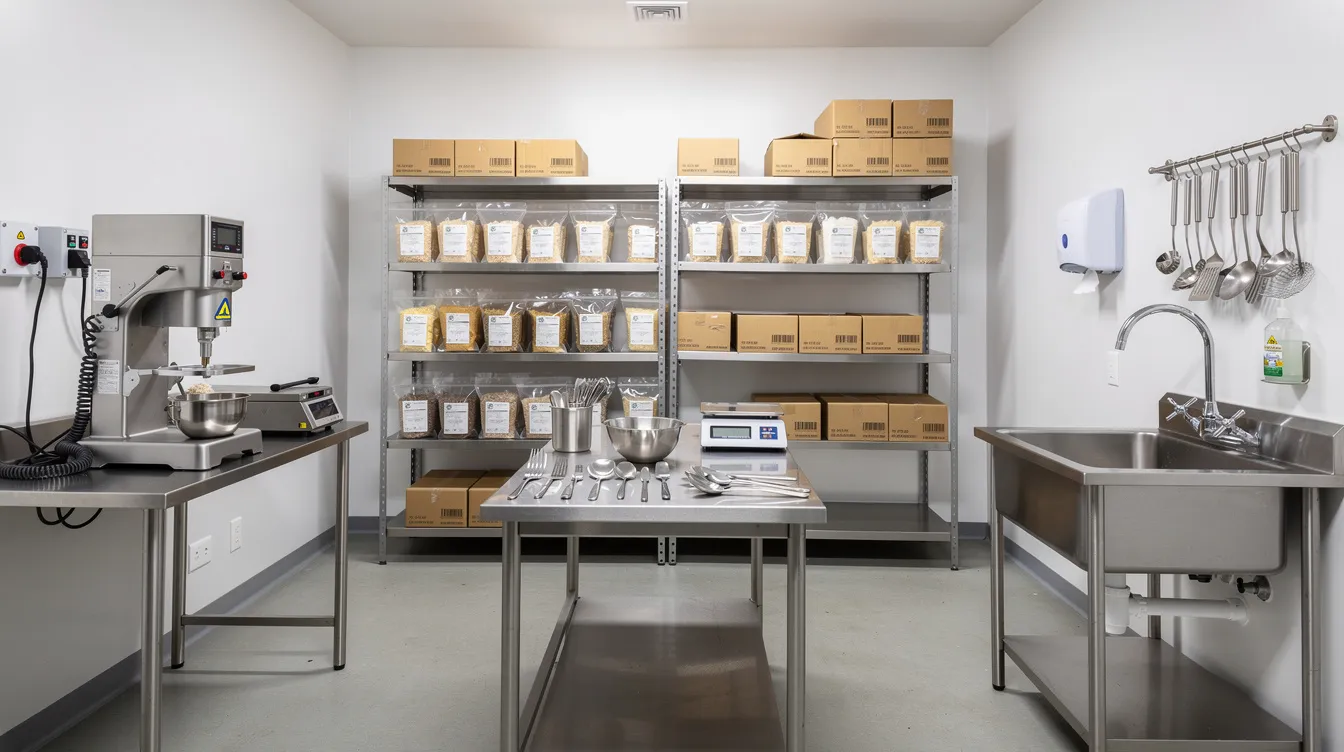
Why It Stands Out
The Indian processed food market is one of the most recession-proof sectors in the country. With 15–20% annual growth, it serves a population that eats every day, regardless of economic cycles. The Indian restaurant industry is worth Rs. 337,500 crores, and the demand for packaged, processed, and ready-to-eat food continues to climb. Selling health and hygiene products is a profitable niche, and food processing units can easily branch into health-focused snacks and beverages.
Government support is strong. The PMFME scheme provides a 35% credit-linked subsidy on eligible project costs, capped at ₹10 lakh per individual micro unit. This is one of the most generous subsidies available for any manufacturing business in India today.
Specialty beverage brands can target consumer trends toward healthier drink options, and the sober curious movement is driving growth in non-alcoholic beverage options-both viable product lines for a food processing unit.
Best For
- Men with a technical background or willingness to learn food processing
- Entrepreneurs seeking a stable, recession-proof business
- Those with access to raw material suppliers in their region
Key Strengths
| Parameter | Details |
|---|---|
| Investment Range | ₹2–5 lakh |
| Profit Margins | 30–40% (gross), 20–30% (net) |
| Subsidy Available | 35% under PMFME (max ₹10 lakh) |
| Sales Channels | Local markets, e-commerce, retail stores |
| Startup Location | Can start from home kitchen with FSSAI license |
You need necessary licenses depending on your business type, and for food processing, FSSAI registration is mandatory. Multiple product options exist-pickles, spice powders, snacks, ghee, biscuits, ready-to-eat meals. Men-focused meal kits or subscription services can cater to specific dietary preferences, which is an emerging sub-niche worth exploring.
Under the PMFME scheme, several micro food units producing pickles, powder spices, and biscuits have availed the ₹10 lakh subsidy to upgrade machinery and packaging, resulting in 25–30% increases in sales.
Possible Limitations
- Requires FSSAI registration and compliance with food safety norms
- Seasonal fluctuations in raw material prices can squeeze margins
- Proper packaging and branding needed for market penetration
- Cold chain and storage costs for perishable products
Can It Get Mudra Loan?
Yes. Food processing qualifies under manufacturing/micro enterprise. You can apply under Kishor or Tarun categories. A Detailed Project Report (DPR) is strongly recommended-banks almost always ask for one.
Expert Tip by CA Manish Gugliya: Under PMFME, weak project reports are the most common reason for subsidy rejection. Invest in a professionally prepared DPR with proper capacity utilization projections, DSCR calculations, and realistic cost estimates.
2. Service Business – Digital Marketing Agency
Why It Stands Out
India’s digital advertising market reached approximately ₹1,55,105 crore in 2025, with digital channels growing at 22% year-on-year. Digital’s share has risen to around 60% of total advertising expenditure. Digital marketing agencies are increasingly relied upon by businesses of all sizes-from local shops to national brands. Digital marketing services are increasingly sought after by businesses looking to build their online presence.
This is one of the most profitable business ideas for men who are tech-savvy. Social media marketing services alone represent a massive and growing sub-market. E-commerce ad spends jumped over 40% in 2025, and FMCG digital spends grew nearly 15%. The demand isn’t slowing down.
Tailored coaching services are popular among men seeking to adopt new technologies, and digital consulting for small businesses has grown in importance as technology advances. AI integration services are needed by businesses to optimize operations-a natural add-on for any digital marketing agency.
Best For
- Men with computer skills and marketing aptitude
- Working professionals seeking side business ideas and additional income streams
- Tech-savvy entrepreneurs wanting a scalable business model
Key Strengths
| Parameter | Details |
|---|---|
| Starting Investment | ₹25,000–50,000 |
| Profit Margins | 40–60% |
| Revenue Model | Monthly retainers + project fees |
| Scalability | Hire freelancers, expand service offerings |
| Location | Work from anywhere with internet connection |
Graphic designers create logos, business cards, and website designs-services you can bundle into your agency offerings. You can offer services ranging from SEO and social media management to content marketing and PPC advertising. Specialized services in high demand can lead to high recurring revenue potential.
Online courses can be sold on platforms like Udemy and Skillshare-another revenue stream if you build expertise in a specific niche and want to create educational content alongside your agency.
Possible Limitations
- Requires continuous learning due to rapidly changing digital platforms and social media platforms
- High competition from established agencies
- Client acquisition challenges in the initial phase
- Billing delays and managing client expectations
Can It Get Mudra Loan?
Yes, under the service category. However, since initial investment is very low, many entrepreneurs bootstrap this business. If you need funds for tools, subscriptions, or marketing, Mudra Kishor is available.
Does It Need a Project Report?
For Mudra Loans above ₹50,000, yes. Even for smaller amounts, a basic business plan that outlines your goals and strategies helps banks process your application faster.
3. Trading Business – Wholesale Electronics Distribution
Why It Stands Out
India’s e-commerce market is projected to reach $33 billion, and e-commerce in India is expected to grow at 51% annually. While much of this growth happens online, offline wholesale and distribution remain the backbone of electronics supply chains, especially in Tier-2 and Tier-3 cities.
Smartphone penetration continues to accelerate. Mobile accessories, chargers, earphones, smart home devices, and laptop peripherals have quick inventory turnover and steady cash flow. E-commerce niche stores should focus on well-defined audiences rather than generic products-and the same principle applies to wholesale distribution. Pick a product category and dominate it locally.
Best For
- Men with sales background and market understanding
- Entrepreneurs with strong networking and negotiation skills
- Those seeking a proven business model with modern products
Key Strengths
| Parameter | Details |
|---|---|
| Investment | ₹3–10 lakh (depending on product range and stock) |
| Profit Margins | 15–25% with volume-based incentives |
| Finance | Easy to get trade finance and working capital loans |
| Product Range | Mobile accessories, home appliances, computing peripherals |
Dropshipping allows selling products without managing inventory-a model you can layer onto your wholesale operation for online sales without additional stock risk. You can set up an online store alongside your physical distribution to capture both local markets and digital buyers.
Possible Limitations
- Requires significant working capital for inventory management
- Market volatility affects pricing and demand cycles
- Competition from online marketplaces impacting retail margins
- Credit risk when extending payment terms to retailers
Can It Get Mudra Loan?
Yes. Trading businesses qualify under PMMY. Working capital loans are also available through MSME channels. A business bank account keeps finances organized and is mandatory for any loan application.
Expert Tip by CA Manish Gugliya: In trading, cash flow is everything. Maintain a strict credit policy-never extend more than 15–30 days to retailers. Track your receivables weekly. The businesses I’ve seen fail in trading didn’t fail because of demand-they failed because of poor cash flow management.
4. Automobile Service – Car Wash and Detailing Center

Why It Stands Out
Vehicle ownership in India is growing at 8–10% annually. More importantly, car owners are increasingly willing to pay premium prices for detailing, ceramic coating, and interior restoration. Mobile detailing is a high-demand business with minimal startup costs. Automotive detailing services are increasingly in demand in urban areas.
This is a daily cash flow business-customers pay on the spot. There’s no accounts receivable problem, no billing cycles, and no waiting 60 days for payment. Mobile car detailing is a growing business opportunity with low startup costs.
There is increasing demand for men’s grooming products tailored for specific routines, and the same premiumization trend applies to how men care for their vehicles. Mobile grooming services that cater to urban lifestyles are becoming increasingly popular-and car detailing fits perfectly into this trend.
Best For
- Men passionate about automobiles and customer service
- Entrepreneurs seeking a location-based business with steady footfall
- Those with mechanical aptitude and attention to detail
Key Strengths
| Parameter | Details |
|---|---|
| Setup Cost | ₹1.5–3 lakh for basic equipment and facility |
| Profit Margins | 40–50% on premium services |
| Cash Flow | Daily collection, immediate revenue |
| Add-ons | Ceramic coating, PPF, interior restoration, accessories |
You can start as a single-bay operation and scale to multiple bays. Franchise opportunities with established brands are also available. The business can serve both residential and commercial clients, including fleet operators and real estate agents who need their vehicles maintained for client meetings.
Possible Limitations
- High dependency on location and local competition
- Seasonal fluctuations during monsoon periods reduce footfall
- Labour management challenges for maintaining quality service
- Water and electricity costs can be significant
Can It Get Mudra Loan?
Yes. Service businesses qualify under Mudra. Equipment financing is straightforward with a proper project report and Udyam registration.
5. Construction Business – Interior and Civil Contracting
Why It Stands Out
India’s real estate and infrastructure sectors are booming. Government projects, housing schemes, and commercial development are creating consistent demand for contractors. High-demand home improvement services include handyman and maintenance operations-and a contracting business can offer the full spectrum from interior fitouts to structural work.
Trade skill boot camps address the shortage of skilled labor in various industries, and construction is one of the most labour-starved sectors. If you can build and manage a skilled team, you have a significant competitive advantage.
If you have a civil engineering background, you’ll want to explore top civil engineering business ideas for more specialized opportunities in this sector.
Best For
- Men with civil engineering or construction background
- Entrepreneurs with project management and team leadership skills
- Those with local connections in real estate and government sectors
Key Strengths
| Parameter | Details |
|---|---|
| Investment | ₹2–8 lakh for tools, equipment, and initial working capital |
| Profit Margins | 20–30% on completed projects |
| Financing | Eligible for MSME loans and contractor financing |
| Specializations | Residential, commercial, interior fitout, renovation |
Eco-friendly landscaping, including solar panel cleaning services, is a growing sector that construction contractors can add as a service line. A landscaping business can complement your contracting work, especially for residential and commercial clients in housing societies and corporate campuses.
The handyman business model also works well as a feeder service-smaller maintenance jobs keep your team busy between large contracts and encourage repeat business from satisfied clients.
Possible Limitations
- Requires contractor license and compliance with building regulations
- Project-based income with irregular cash flows
- High competition and frequent payment delays from clients
- Managing skilled labour and subcontractor quality
Does It Need a Project Report?
For MSME loans and contractor financing, yes. Banks want to see your project pipeline, estimated revenues, and working capital cycle. Even for a new contractor, a well-prepared DPR significantly improves loan approval chances.
Did You Know? Under the MSME classification, even sole proprietor contractors qualify for micro enterprise registration if their investment and turnover meet the thresholds. This opens doors to lower interest rates, priority sector lending, and government tender preferences.
6. Fitness Business – Gym and Personal Training Studio
Why It Stands Out
Health consciousness in India has surged post-pandemic, and it’s not slowing down. The fitness sector generated over $1.5 billion in revenue in 2022, and growth continues into 2026. Recurring revenue models, such as subscriptions for services, are valuable for business stability-and gym memberships are one of the cleanest recurring revenue models available.
Online fitness classes cater to a growing demand for home workouts, meaning you’re not limited to your physical location. Personal training can be conducted from home or online, expanding your market reach beyond your city. Personalized wellness services are gaining popularity among men, and men’s mental health and holistic wellness markets are significantly underserved-a gap a modern fitness studio can fill.
High-performance coaching focuses on optimizing time management and stress levels, which you can offer as a premium add-on alongside physical training.
Best For
- Fitness enthusiasts with certified training credentials
- Men passionate about health and helping others achieve fitness goals
- Entrepreneurs seeking community-based business with loyal clientele
Key Strengths
| Parameter | Details |
|---|---|
| Investment | ₹3–6 lakh for equipment, rent deposits, and certification |
| Profit Margins | 35–45% on memberships and training |
| Revenue Streams | Memberships, personal training, nutrition counseling, supplements |
| Digital Extension | Online classes, fitness apps, YouTube content |
The online education industry is projected to grow to $325 billion by 2025, and online courses are projected to grow to $325 billion by 2025-fitness education is a significant slice of this pie. You can create and sell online courses on platforms like Udemy and Skillshare, turning your expertise into passive income.
Possible Limitations
- Requires fitness certifications and ongoing education
- High fixed costs for equipment and facility rental
- Member retention challenges affecting long-term sustainability
- Seasonal dips (summer holidays, festivals) impact attendance
Can It Get Mudra Loan?
Yes. Fitness studios qualify as service enterprises under MSME. Equipment financing through Mudra Tarun (up to ₹10 lakh) is feasible with proper documentation.
7. Technology Business – Mobile and Laptop Repair Center
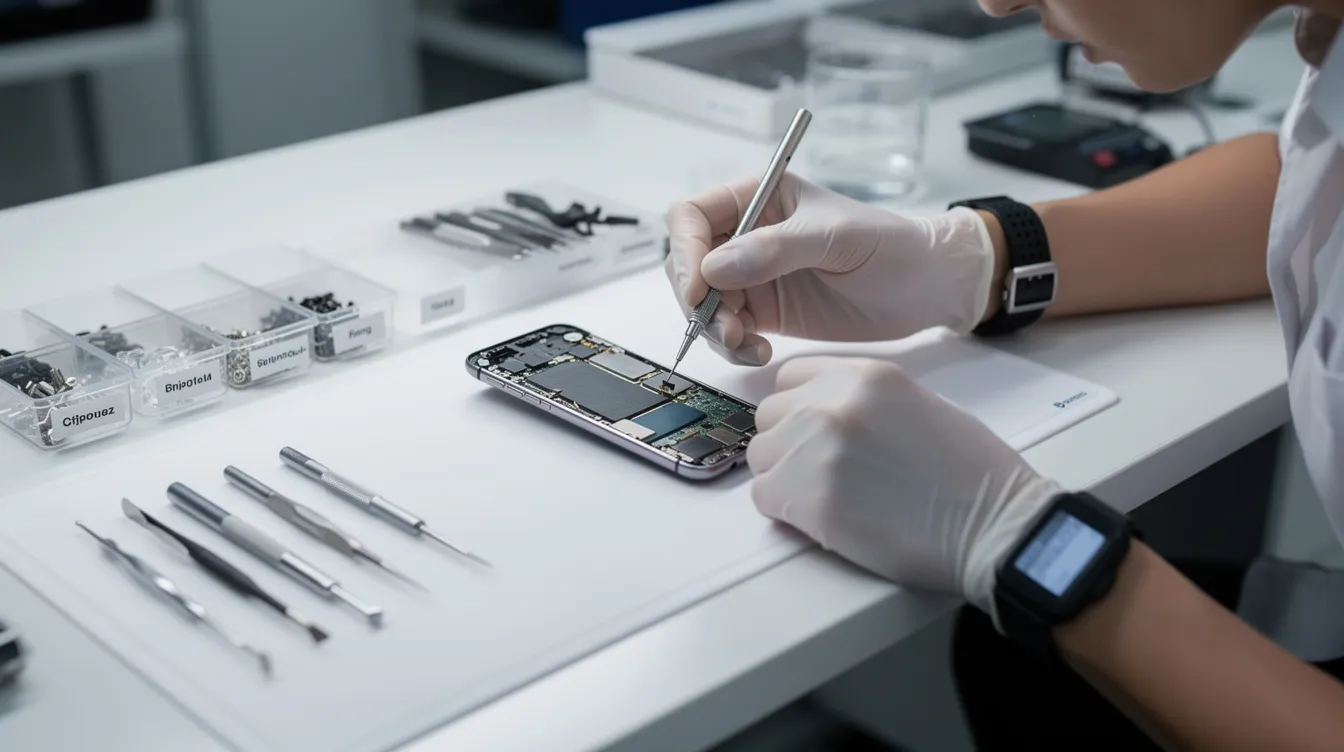
Why It Stands Out
The electronics repair industry was worth $21.1 billion in 2022, and it continues to grow as devices become more expensive and consumers prefer repair over replacement. With over 750 million smartphone users in India and growing laptop adoption, the demand for skilled repair technicians far outstrips supply.
This is a skill-based business where your expertise is the moat. Large authorized service centers are expensive and slow-independent repair shops that offer fast, affordable service capture loyal customers quickly.
Best For
- Tech-savvy men with electronics repair skills or willingness to learn
- Entrepreneurs seeking a high-margin, skill-based business
- Those wanting flexible business with work-from-home potential
Key Strengths
| Parameter | Details |
|---|---|
| Startup Investment | ₹50,000–1.5 lakh for tools, spare parts, and setup |
| Profit Margins | 50–70% on repair services |
| Cash Flow | Immediate payment collection |
| Expansion | Refurbished device sales, accessories retail |
This is a solid business idea for younger entrepreneurs. If you’re a student or young professional, explore more business ideas for students that match this low-investment, skill-based profile.
Possible Limitations
- Requires technical training and continuous skill updates as devices evolve
- Warranty concerns and customer service challenges with complex repairs
- Competition from authorized service centers offering brand-backed guarantees
- Sourcing genuine spare parts can be difficult
Can It Get Mudra Loan?
Yes. A small repair center qualifies under Mudra Shishu or Kishor. Registering your business adds credibility and access to benefits including MSME schemes and GST input credit.
Does It Need a Project Report?
For loans above ₹50,000, a basic project report helps. For a repair center, the report is straightforward-equipment list, monthly revenue projection, and break-even analysis.
8. Food Business – Cloud Kitchen and Delivery Service
Why It Stands Out
India’s cloud kitchen market was valued at approximately $1.24 billion in 2025 and is expected to reach $3.69 billion by 2034, growing at a CAGR of 12.28%. Independent cloud kitchens hold about 60.8% market share-meaning there’s massive room for small operators.
A food truck business costs less than a restaurant startup, and a cloud kitchen costs even less than a food truck. The food truck industry offers flexibility and low overhead compared to restaurants, and cloud kitchens strip costs down even further by eliminating dine-in space entirely. The food and beverage industry remains one of the most accessible sectors for first-time entrepreneurs with culinary skills.
Best For
- Men with culinary skills or passion for food business
- Entrepreneurs seeking a modern food business model
- Those wanting to leverage food delivery platform growth
Key Strengths
| Parameter | Details |
|---|---|
| Investment | ₹1–3 lakh for kitchen setup and initial inventory |
| Profit Margins | 25–35% with volume scaling |
| Customer Acquisition | Zomato, Swiggy, ONDC provide ready customer base |
| Flexibility | Test multiple cuisines, pivot quickly based on demand |
You can start a cloud kitchen as a home based business with proper FSSAI licensing. The catering business model-serving corporate events and private parties-can run alongside your delivery operations, diversifying revenue. Event planning business operators often need reliable catering partners, creating B2B opportunities.
A food truck can serve as a mobile extension of your cloud kitchen, reaching local markets and events that delivery platforms don’t cover.
Possible Limitations
- FSSAI licensing and food safety compliance requirements
- High commission rates (25–30%) charged by food delivery platforms
- Intense competition and customer acquisition costs
- Consistency and quality control challenges during scaling
Can It Get Mudra Loan?
Yes. Cloud kitchens qualify as micro food enterprises. If you process food (not just cook-to-order), you may also be eligible for the PMFME scheme’s 35% subsidy.
Expert Tip by CA Manish Gugliya: Many cloud kitchen operators I’ve worked with overlook platform commissions when projecting profits. On a ₹300 order, Swiggy or Zomato takes ₹75–90 in commission. Factor this into your pricing from Day 1. Your food cost should ideally stay below 30% of selling price to maintain healthy margins after commissions.
Quick Comparison of the Best Business Ideas for Men
| Business Idea | Investment | Profit Margin | Best For | Loan Available | Risk Level |
|---|---|---|---|---|---|
| Food Processing Unit | ₹2–5 lakh | 30–40% | Stable, government-backed manufacturing | Yes (Mudra + PMFME subsidy) | Low-Medium |
| Digital Marketing Agency | ₹25K–50K | 40–60% | Tech-savvy, scalable service business | Yes (Mudra Kishor) | Medium |
| Electronics Distribution | ₹3–10 lakh | 15–25% | Traditional traders, proven business model | Yes (Working capital + Mudra) | Medium-High |
| Car Wash Center | ₹1.5–3 lakh | 40–50% | Automobile enthusiasts, location-based | Yes (Mudra Tarun) | Medium |
| Construction Contracting | ₹2–8 lakh | 20–30% | Technical skills, high-value projects | Yes (MSME loans) | Medium-High |
| Gym & Training Studio | ₹3–6 lakh | 35–45% | Fitness enthusiasts, community-based | Yes (Mudra Tarun) | Medium |
| Mobile Repair Center | ₹50K–1.5 lakh | 50–70% | Tech-skilled, immediate cash flow | Yes (Mudra Shishu/Kishor) | Low |
| Cloud Kitchen | ₹1–3 lakh | 25–35% | Food lovers, modern delivery model | Yes (Mudra + PMFME) | Medium |
Manufacturing vs Trading: Manufacturing (food processing) offers higher margins and government subsidies but requires more compliance. Trading (electronics) offers faster cash cycles but thinner margins and higher working capital needs.
Online vs Offline: Digital marketing is the only purely online business here with minimal investment and maximum scalability. All other businesses benefit from having both offline presence and online marketing.
Low vs High Investment: Mobile repair and digital marketing are the most accessible under ₹1 lakh. Construction and electronics distribution need ₹3+ lakh to start meaningfully.
How to Choose the Right Business for You
Choosing the right business isn’t about picking the one with the highest margins on a comparison table. It’s about matching the opportunity to your specific situation. Here’s how to think about it systematically.
Choose Based on Your Investment Capacity
Low investment (₹50,000–₹1 lakh): Mobile repair center, digital marketing agency. These are best small business ideas for men with limited capital. Freelance writing can be started with an initial investment of Rs. 2,000–Rs. 3,000 if you want to begin even smaller. Online tutoring is a low-investment business idea worth considering alongside these options.
Medium investment (₹1–3 lakh): Food processing unit, cloud kitchen, car wash and detailing center. These profitable small business ideas require moderate capital but offer strong returns and subsidy support.
Higher investment (₹3–8 lakh): Construction contracting, gym setup, electronics distribution. These require more capital but deliver higher absolute returns. Most qualify for Mudra Loan Tarun category (up to ₹10 lakh collateral-free).
If your spouse is also interested in entrepreneurship, certain businesses work well as family ventures. Explore business ideas for housewives that can complement your own business.
Choose Based on Your Skills and Background
Technical skills: Mobile repair, construction contracting, food processing. These reward hands-on expertise and can become a full time business with sustainable competitive advantage.
Sales and marketing: Digital marketing agency, electronics distribution. If you can sell, these models amplify your earnings through client relationships.
Service orientation: Gym and personal training, car wash and detailing, cloud kitchen. These require customer-facing skills and quality consistency.
Selling handmade goods on Etsy can start as a side hustle for men with creative skills-an option worth considering if none of the above categories match your interests.
Choose Based on Risk Tolerance
Lower risk: Food processing (FMCG demand is constant), mobile repair (skill-based with low overhead costs). House cleaning services have consistently high demand-the demand for cleaning services is consistently high, making a house cleaning business another lower-risk option.
Moderate risk: Digital marketing (client acquisition is the variable), car wash (location-dependent), gym business (member retention). The craft brewery industry is growing as consumers seek unique brews, but requires higher investment and licensing-suitable only for men with higher risk appetite.
Higher risk/reward: Construction contracting (project-based, irregular cash flows), electronics trading (inventory and credit risk). Event planning can be a lucrative business for organized individuals, but income is project-based and seasonal. An event planner serving corporate events needs strong networks and upfront costs.
If you’re a working professional exploring part-time business ideas, start with lower-risk options that don’t require full-time commitment initially.
Choose Based on Location
| Location Type | Best Business Ideas |
|---|---|
| Urban/Tier-1 | Digital marketing, cloud kitchen, gym, car detailing |
| Tier-2/Semi-urban | Food processing, electronics trading, mobile repair |
| Rural | Food processing, construction contracting |
| Online (location-independent) | Digital marketing, online courses, freelancing |
Conduct Thorough Market Research
Before finalizing, do thorough market research. Visit your target market area. Talk to potential customers. Study existing competition. Understand local pricing. A great business idea in Mumbai might be oversaturated in your specific neighbourhood-and a small scale business idea that seems ordinary might have zero competition in your town.
Expert Tip by CA Manish Gugliya: I always tell my clients-don’t fall in love with a business idea before you fall in love with the numbers. Run a simple 12-month cash flow projection. If the business can’t cover your personal expenses and loan EMI by month 6–8, reconsider the model or the location.
Which Business Is Best for You?
Let me simplify the decision:
- Choose Food Processing Unit if you want a government-backed, stable manufacturing business with subsidy support and you’re willing to handle compliance. It’s a tried and tested idea in India’s food economy.
- Choose Digital Marketing Agency if you’re tech-savvy and want a location-independent, scalable business with minimal investment. Social media management alone can generate ₹50,000–₹2 lakh monthly with the right clients. A social media manager with even basic skills can start earning within weeks.
- Choose Mobile Repair Center if you have technical skills and want immediate cash flow with high margins. This is a small scale business venture that can grow into a multi-location operation. A small scale business idea that’s proven across every Indian city.
- Choose Car Wash Center if you prefer a location-based business with daily revenue and premium service potential. It’s a great business idea for men who are hands-on and customer-oriented.
- Choose Construction Business if you have industry connections and want high-value contracts with 20–30% margins. Your consulting business can evolve into a full contracting firm as your reputation grows.
- Choose Gym and Training Studio if fitness is your passion and you want a community-based business with multiple revenue streams. This is a profitable business venture with strong retention potential.
- Choose Cloud Kitchen if you have culinary skills and want to ride the food delivery wave without the overhead costs of a traditional restaurant.
- Choose Electronics Distribution if you have strong sales skills and want a successful business in traditional trading with modern product categories. This is a solid business idea for men who understand supply chain dynamics.

Top Mistakes Men Make While Starting a Business
After working with hundreds of entrepreneurs, here are the most common mistakes I see:
- Starting without a project report. Even a simple financial projection would have saved many businesses from running out of cash.
- Ignoring compliance. Skipping GST registration, FSSAI license, or Udyam registration costs you subsidies, bank loans, and credibility.
- Overestimating revenue in Month 1. Most businesses take 3–6 months to stabilize. Plan your personal expenses and loan EMIs accordingly.
- Mixing personal and business finances. Open a separate business bank account from Day 1.
- Underspending on marketing. Your target market won’t find you automatically. Budget 10–15% of projected revenue for marketing.
- Copying someone else’s business without understanding their economics. What works for your neighbour may not work for you-different location, skills, and capital.
- Avoiding digital presence. Even a car wash needs a Google Business Profile. Your business online presence matters, regardless of the industry. Use social media to reach customers where they already spend time.
- Not building a team early enough. Trying to do everything yourself limits growth and burns you out. Offer services that complement your core skill and hire for the rest.
- Ignoring working capital needs. Many men budget for setup but forget about the 3–6 months of operational expenses before revenue stabilizes.
- Skipping market research. Passion for a business idea doesn’t equal demand. Validate before investing. Dropshipping allows starting an online store without holding inventory-a way to test product demand before committing capital.
Government Schemes Worth Knowing
| Scheme | Benefit | Who Should Apply |
|---|---|---|
| Mudra Loan (PMMY) | Up to ₹10 lakh collateral-free; 7–12% interest | Any non-farm micro/small business |
| PMFME | 35% subsidy on project cost (max ₹10 lakh) | Micro food processing units |
| CGTMSE | Collateral-free loans up to ₹2 crore | MSMEs needing larger financing |
| Startup India | Tax benefits, compliance simplification | Innovative/tech startups |
| Stand-Up India | ₹10 lakh–₹1 crore loans | SC/ST/Women entrepreneurs |
Future Trends: Business Ideas in India for 2026–2030
Several trends will shape profitable business ideas over the next five years:
- Digital economy expansion. Mobile platforms now account for 70–80% of digital ad spend. India’s digital advertising market is projected to grow at 15% annually to hit $19 billion by 2029. Every business-online or offline-needs a digital marketing strategy.
- Cloud kitchen innovation. Shared commissary kitchens, ONDC-enabled lower-commission channels, and corporate meal subscriptions are emerging models. The industry will likely triple in value by 2034.
- MSME formalization. With easier access to Udyam registration, higher collateral-free loan limits, and scheme awareness, more small businesses will formalize-creating advantages for those who register early.
- Skill-based services. As India’s population grows and urbanizes, demand for repair services, maintenance, cleaning services, and other businesses providing skilled labour will continue outpacing supply.
- Online business growth. Selling digital products, offering online services, and running a dropshipping business or an online business will become even more mainstream. The online education industry is projected to grow to $325 billion by 2025, and this momentum carries into 2026 and beyond. Online courses represent one of the best ways to monetize expertise.
Final Thoughts
Each business idea on this list offers unique advantages depending on your skills, investment capacity, and local market conditions. There are no universally “best” business ideas-only the right fit for your situation.
Here’s what I’d emphasize after 20 years of working with entrepreneurs:
- Start small and scale gradually rather than investing everything initially. A low initial investment approach reduces risk while you learn the business.
- Get your documentation right. Ensure proper business registration, MSME certification, Udyam registration, and bank loan documentation before approaching lenders. Business plans should be realistic, not optimistic.
- Focus on businesses with genuine market demand rather than following trends. A successful business is built on solving real customer problems, not on hype.
- Financial discipline matters more than the business idea itself. Maintain proper bookkeeping, separate personal and business expenses, control overhead costs, manage cash flow, and build reserves.
- Leverage government schemes. Too many entrepreneurs don’t know about or don’t apply for schemes they’re eligible for. PMFME, Mudra Loans, and CGTMSE can meaningfully reduce your financial burden.
The path to a successful future business starts with honest self-assessment, thorough planning, and disciplined execution. Every successful business I’ve seen started not with a grand vision, but with a man who understood his numbers, served his customers well, and reinvested smartly.
Your own business is waiting. The question isn’t whether opportunities exist-they clearly do. The question is whether you’ll do the work to pick the right one, plan properly, and execute consistently.
Frequently Asked Questions
Q1: Which business has the highest profit margin with low investment? Mobile and laptop repair offers 50–70% profit margins with just ₹50,000–₹1.5 lakh investment. Digital marketing agencies can achieve 40–60% margins with under ₹50,000.
Q2: Can I start a business with just ₹50,000? Yes. Mobile repair, freelance writing (which requires a minimal investment of Rs. 2,000–Rs. 3,000), digital marketing services, and online tutoring are all viable at this level.
Q3: Which business idea is best for working professionals as a side business? Digital marketing agency, online classes and coaching, and mobile repair (weekends) work well as low cost business ideas for side income. A side business should complement your schedule, not conflict with it.
Q4: Do I need GST registration for a small business? If your annual turnover exceeds ₹20 lakh (₹10 lakh for special category states), GST registration is mandatory. Even below threshold, voluntary registration helps with input credit and credibility.
Q5: How do I get a Mudra Loan for my business? Prepare a project report, register on Udyam portal, open a business bank account, and approach any scheduled bank or NBFC. Mudra Loans up to ₹10 lakh are collateral-free with interest rates of 7–12%.
Q6: Which food business is most profitable? Food processing units with PMFME subsidy support and cloud kitchens both offer strong margins. The key differentiator is whether you prefer manufacturing (processing) or service (cooking-to-order) operations.
Q7: Can I run a business from home? Yes. Food processing (with FSSAI home kitchen license), digital marketing, online store operations, mobile repair, and online coaching can all be run as a home based business.
Q8: What documents do I need to start a business? At minimum: PAN card, Aadhaar, business registration (proprietorship/partnership/LLP), Udyam registration, bank account, and sector-specific licenses (FSSAI for food, Shop & Establishment Act for retail/service).
Q9: How much can I earn from a cloud kitchen? A well-run cloud kitchen in a Tier-2 city can generate ₹1–3 lakh monthly revenue with 25–35% net margins. Mature operations achieving ₹5–10 lakh monthly are common in metro cities. You can also explore the catering business or a food truck to diversify revenue.
Q10: Is construction contracting a profitable business venture for beginners? If you have technical knowledge or prior experience, yes. Start with small residential projects, build a portfolio, and scale to commercial clients. Margins of 20–30% are achievable with disciplined project management.
Q11: What is the best online business to start in 2026? For men, a digital marketing agency or an online business selling courses/digital products has the best risk-reward ratio. Both have a low startup costs profile with high scalability potential.
Q12: How important is a project report for bank loans? Critical. Banks assess loan applications primarily through your project report-it demonstrates viability, repayment capacity, and seriousness. Weak or missing project reports are the single most common reason for loan rejection.
About the Author
CA Manish Gugliya is a Fellow Chartered Accountant with over 20 years of experience in project report preparation, business finance, startup advisory, MSME consulting, business valuation, CMA reports, and bank loan documentation. Through ProjectReportBank.com, he has helped entrepreneurs across India prepare bank-ready project reports, financial projections, and business plans for manufacturing, trading, and service businesses.
Ready to Start Your Business?
If you are planning to start any of the businesses discussed above and require professional assistance, our team can help you with:
- Bank Loan Project Reports
- Mudra Loan Project Reports
- Detailed Project Reports (DPR)
- CMA Data Preparation
- Startup Financial Projections
- Business Valuation Reports
- Investor Pitch Deck Preparation
- Feasibility Reports
- Custom Business Plan Preparation
- Industry-Specific eBooks and Business Guides
Every project report we prepare is banker-friendly, financially realistic, and tailored to your specific business model and location.
Visit ProjectReportBank.com to get started with a professionally prepared project report for your own small business.
- Dal Mill Power Consumption, Dryers & Utility Requirements – Complete Guide


- Dal Mill Colour Sorter, Grading, Polishing & Packaging Machinery – Types, Capacity, Cost & Selection Guide

- Pulse Conditioning, Dehusking & Splitting Process – Improving Dal Recovery

- Dal Mill Recovery Ratio, Dal Yield, Broken Percentage & Milling Losses

- Masoor Dal Processing Plant Project Report & DPR in India

- Chana Dal Manufacturing Plant Project Report & DPR in India

- Urad Dal Mill Project Report & DPR in India

- Moong Dal Processing Plant Project Report & DPR in India
- Toor Dal (Arhar Dal) Mill Project Report & DPR in India

- Fully Automatic vs Semi-Automatic Dal Mill – Cost, Efficiency & Investment Comparison

- Dal Mill Land, Building & Plant Layout Requirements in India

- Dal Mill Capacity Planning – 5 TPD, 10 TPD, 20 TPD & 50 TPD Plants
- Dal Milling Process & Flow Chart – Cleaning, Dehusking, Splitting & Packaging
- Dal Mill Machinery, Equipment & Cost – Complete Plant Guide

- Dal Mill Plant Setup Cost in India – Investment & Cost Breakdown