Introduction
India’s construction industry is experiencing a generational infrastructure boom. The National Infrastructure Pipeline now covers over 14,500 projects worth approximately ₹213 lakh crore. Smart Cities Mission, national highways expansion, railways modernization, PMAY housing, renewable energy installations, and industrial development are creating demand across every aspect of civil engineering.
Starting a civil engineering company in 2026 offers opportunities in sustainability and technology that simply didn’t exist five years ago. If you’re a civil engineer weighing employment against running your own business, the math has shifted decisively toward entrepreneurship. Many viable opportunities require under ₹5 lakh to start, while others can scale into multi-crore enterprises with the right business plan.
I’m CA Manish Gugliya, and over 20 years of preparing project reports and advising engineering services firms, I’ve seen which civil engineering business ideas actually produce results-and which ones drain money. This guide covers the 10 strongest opportunities based on real market data, financial feasibility, and current trends shaping the industry in 2026.
How We Chose the Best Civil Engineering Business Ideas
Not every business ideas for civil engineers deserves your capital and time. We evaluated each opportunity against five criteria:
- Market demand: Is there sustained, growing need driven by government spending or private development?
- Investment requirements: What’s the realistic capital needed, including working capital buffers?
- Profit potential: What are actual margins after accounting for costs, delays, and competition?
- Scalability: Can the firm expand without proportionally increasing fixed costs?
- Skill alignment: Does the business leverage core civil engineering expertise?
We also weighted government support (NIP tenders, MSME schemes, green building incentives), recurring revenue potential, and competition intensity. Ideas were selected based on the Union Budget 2026-27’s ₹12.2 trillion infrastructure allocation and verified market growth data.
Table of Contents
Top 10 Civil Engineering Business Ideas for 2026
1. Structural Design Consultancy
Structural design services ensure safety and durability of buildings across residential, commercial, and industrial categories. Structural engineers analyze and design components for various infrastructures-from apartment complexes to flyovers. Services include evaluating structures against wind and earthquake forces, which is critical given India’s seismic zoning requirements. Structural design is crucial for bridges, tunnels, and towers, making this a broad-market consultancy.
Why It Stands Out: You can start under ₹5-10 lakh (software licenses for STAAD/ETABS, office setup, registrations). Margins run 30-50% with minimal inventory.
Best For: Experienced civil engineers with structural analysis certification and knowledge of IS codes and NBC.
Key Strengths:
- High demand from real estate developers, contractors, and government agencies
- Recurring clients across various projects
- Scalable by adding draftspeople and engineers
- Can serve clients nationally through remote delivery
Possible Limitations: Professional liability if designs contain errors. Project-based income can be irregular. Competition from low-cost consultancies puts pricing pressure on smaller firms.
2. Ready Mix Concrete (RMC) Plant
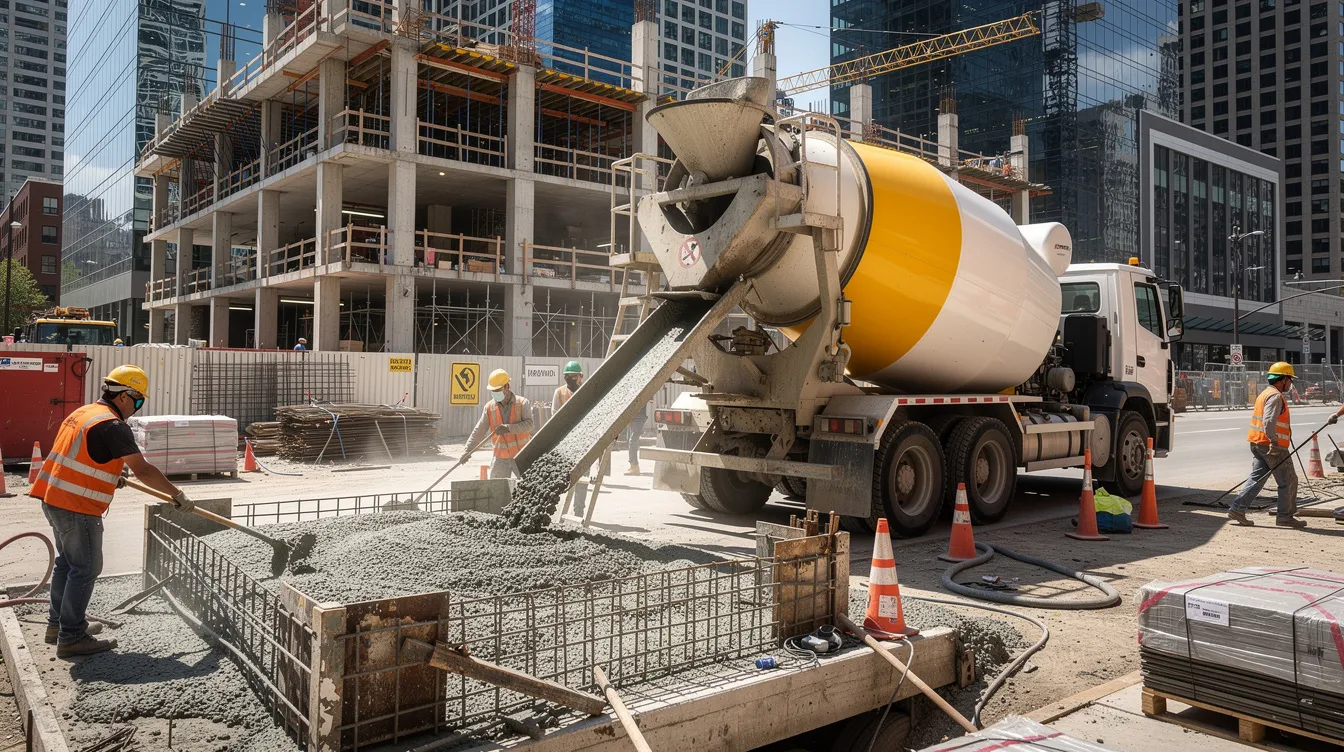
An RMC plant centrally mixes concrete to precise grades and delivers it to construction sites via transit mixers. The construction materials supply business ensures timely access to materials-and RMC is the backbone of modern construction. Construction materials supply includes concrete, steel, and bricks, but concrete alone represents a ₹52,908 crore market in FY2026, projected to reach ₹1,00,000 crore by 2033.
Construction materials supply can include advanced composite materials and admixtures as your product line matures.
Why It Stands Out: Essential building materials with consistent demand from every construction company and contractor.
Best For: Engineers with ₹2-4 crore (small plant, 30 m³/hr) to ₹9-20 crore (large plant) and logistics knowledge.
Key Strengths:
- Recurring revenue from ongoing construction projects
- Raw materials constitute ~65-75% of cost; net margins of 15-25% at 60-70% utilization
- Government project opportunities via NIP tenders
- Break-even typically within 3-5 years
Possible Limitations: High initial investment in batching plant, silos, mixer fleet. Equipment maintenance costs are ongoing. Raw material price volatility (cement, aggregates) can squeeze margins.
3. Quantity Surveying Services
Quantity surveying covers cost estimation, bill of quantities preparation, tender documentation, and project cost management. This engineering business is closely linked to land surveying-land surveyors create detailed maps and plans for projects, and surveying is essential before construction crews begin work. Professional surveyors use advanced techniques for accurate measurements. Land surveying services support real estate development projects across all scales.
Why It Stands Out: Every construction project needs accurate cost control. Margins of 25-40% with very low investment.
Best For: Civil engineers with cost estimation skills, procurement knowledge, and familiarity with local supply rates.
Key Strengths:
- Start with under ₹2-3 lakh (software, office, databases)
- High demand across developers, contractors, government departments
- Relationship-based business with strong repeat potential
Possible Limitations: Requires precision-inaccurate estimates destroy trust. Competitive market with price undercutting. Payment delays from public sector clients need careful cash flow management.
4. Precast Concrete Manufacturing
Precast concrete manufacturing involves producing structural components (wall panels, slabs, beams, modular rooms) in controlled factory conditions, then transporting them to site for installation. Suppliers can focus on eco-friendly construction materials by incorporating fly ash, recycled aggregates, or sustainable admixtures. Recycling construction materials can significantly lower environmental impact in the manufacturing process. Wholesale services can expand the customer base for suppliers beyond local markets.
The prefabricated green building market grew from USD 6.8 billion in 2024 to a projected USD 12.9 billion by 2032 (CAGR ~9.6%). Additionally, 3D printing technology enables rapid prototyping in construction, which some precast manufacturers are integrating into their production lines.
Why It Stands Out: Faster construction delivery, better quality control, and growing demand from government housing schemes like PMAY.
Best For: Engineers with manufacturing experience and ₹1-10 crore capital depending on scale.
Key Strengths:
- B2B contracts with developers provide steady volume
- Standardized production reduces waste and improves margins
- Payback in 4-6 years with good utilization
Possible Limitations: Factory setup costs are significant. Heavy components create transportation logistics challenges. Requires skilled labor for mold management and quality assurance.
5. Building Approval Consultancy
This small business helps clients navigate building plan approvals, DTCP permissions, municipal corporation clearances, environmental NOCs, and fire safety approvals. Niche permitting consulting aids in navigating complex regulatory environments that many traditional contractors lack expertise in. Licensing is required for starting a civil engineering business, and your clients need guidance through the same complexity.
Building retrofits are often necessary for existing structures to meet codes, creating additional consulting demand. Sustainable infrastructure design is increasingly mandated by city regulations, adding another layer where your expertise earns money.
Why It Stands Out: Mandatory service with a knowledge barrier that limits competition. Every residential and commercial project needs regulatory clearance.
Best For: Engineers familiar with local building codes, zoning laws, and government procedures.
Key Strengths:
- Recurring demand regardless of market cycles
- Knowledge-based service with minimal overhead
- Particularly strong in Tier-2/3 cities where developers lack regulatory expertise
Possible Limitations: Regulatory changes can shift requirements unexpectedly. Revenue tied to local property market cycles. Government dependency creates unpredictable timelines.
6. Construction Equipment Rental
Renting excavators, transit mixers, concrete pumps, mini cranes, scaffolding, and earthmoving equipment to contractors who prefer rental over purchase. Drone technology aids in assessing and repairing aging infrastructure, and offering drone-equipped inspection alongside traditional rental business equipment creates a differentiated service. Infrastructure inspection services utilize drones and AI for efficiency, adding high-margin services to your fleet.
Why It Stands Out: Asset-based recurring income with high utilization in areas with dense construction projects.
Best For: Engineers with capital for equipment purchase and maintenance knowledge.
Key Strengths:
- Growing construction sector means increasing number of contractors needing equipment
- Maintenance expertise gives civil engineers an advantage over pure financial investors
- Can start with 2-3 machines and expand based on demand
Possible Limitations: High initial invest required. Equipment depreciation is relentless. Downtime, repair costs, insurance, and theft risk need active management.
7. Project Management Consultancy (PMC)
Project management consultancies manage complex construction projects from planning through completion. They align diverse stakeholders and minimize project risks across budgets, timelines, and quality parameters. These consultancies oversee budgets and manage project timelines with precision. They ensure projects are delivered on time and within budget. Project management consultancies provide expert guidance for successful outcomes across highways, commercial complexes, and residential townships.
Why It Stands Out: Fees often run 2-5% of total project cost. On a ₹50 crore project, that’s ₹1-2.5 crore in revenue.
Best For: Senior engineers with project management experience, team leadership, and contract law knowledge.
Key Strengths:
- High-value contracts across diverse project types
- Scalable team model-add PMs as you win more work
- Software tools (Primavera, MS Project) enable efficiency
Possible Limitations: Requires an experienced team you can trust. Long payment cycles from government clients strain working capital. Reputational risk if projects face delays outside your control.
8. Paver Block and Kerb Stone Manufacturing
Manufacturing paver blocks, kerb stones, and concrete pipes for roads, walkways, landscaping, and municipal infrastructure. This business also intersects with construction waste management, which is crucial for sustainability. Effective waste management reduces disposal costs for construction companies. Construction waste management services are increasingly in demand as regulations tighten. Proper waste disposal is essential for compliance with environmental regulations. Waste management facilities support recycling and a circular economy-and manufacturers who integrate recycled aggregates gain both cost and compliance advantages.
Why It Stands Out: Urban road construction and Smart Cities Mission drive steady demand. Government tenders provide volume.
Best For: Engineers interested in manufacturing with ₹15-50 lakh capital for block-making machinery, molds, and curing infrastructure.
Key Strengths:
- Local market focus reduces competition from national players
- Established technology with low learning curve
- Municipal and government tenders provide recurring orders
Possible Limitations: Raw material costs (cement, aggregates) fluctuate. Seasonal demand variations in some regions. Freight costs for heavy items limit your delivery radius.
9. Green Building Consultancy
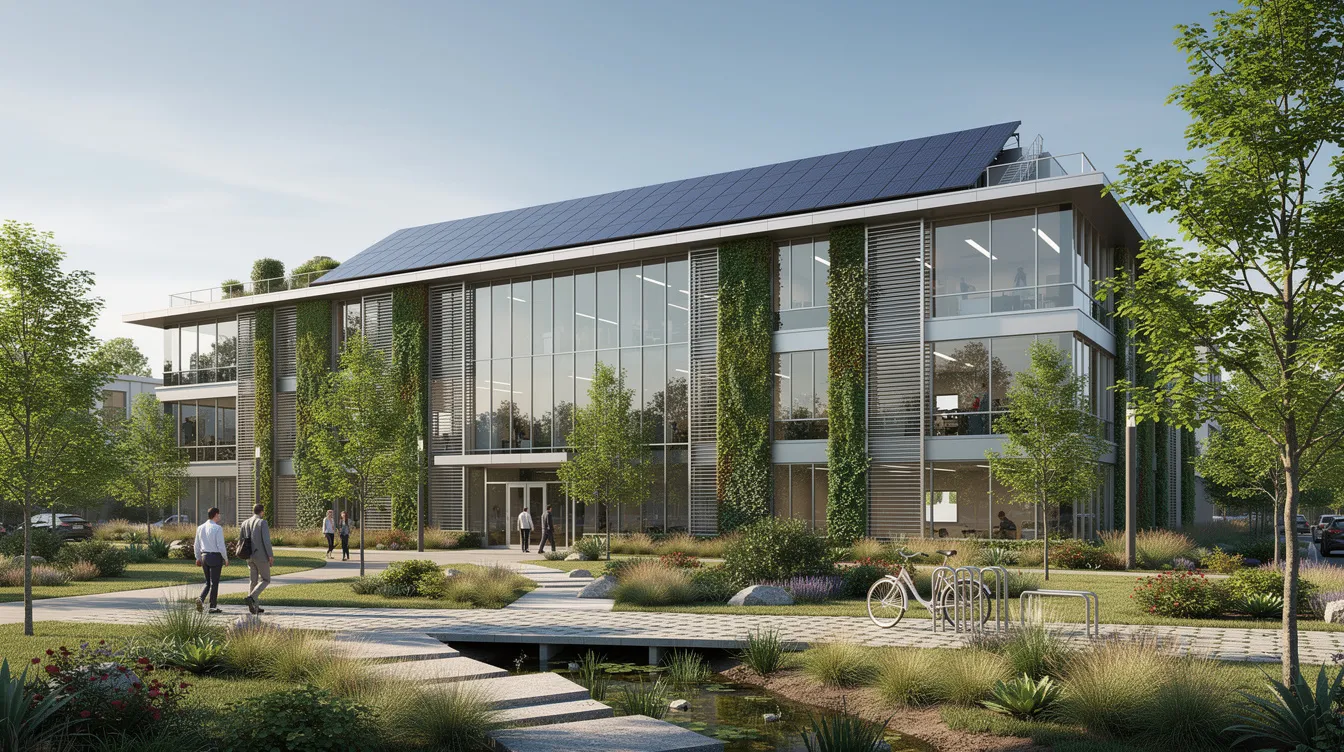
Green building consulting supports energy-efficient infrastructure projects and focuses on sustainable construction practices. This consultancy helps clients meet environmental standards through design optimization, material selection, and certification. Sustainable building certifications include LEED and BREEAM-consultants help achieve LEED certification for sustainable projects across commercial and residential segments.
Green building consulting addresses the demand for eco-friendly development that’s accelerating in India. Sustainable building practices reduce environmental impact during construction. Energy efficiency consulting is required to meet modern building codes like ECBC. The green building market is forecast to reach USD 85 billion by FY2032, with certified supply running three times higher than non-certified over the past 5.5 years.
This domain also connects to other areas of sustainable construction: water resources management is essential for utility asset optimization, flood control systems can mitigate risks in flood-prone areas, solar farms require specialized engineering solutions for design and installation, and coastal engineering provides plans for construction in challenging environments.
Why It Stands Out: Premium pricing, government push via incentives and tax benefits, and differentiated positioning in a market where most competitors offer generic services.
Best For: Engineers with sustainability knowledge, LEED/GRIHA certification expertise, and energy simulation capabilities.
Key Strengths:
- Clients earn back investment through energy savings and faster approvals
- Margins of 25-40%+ once reputation is established
- Can expand into energy auditing, solar structure installation, and carbon footprint estimation
Possible Limitations: Longer sales cycles with some developers. Requires specialized knowledge that takes time to build. Adoption curve is slower in Tier-2/3 cities.
10. BIM and 3D Modeling Services
BIM technology is increasingly required in construction projects for clash detection, coordination, and lifecycle management. According to IMARC Group data, cloud-based BIM deployment holds ~55% market share, with the commercial sector at ~35% adoption. Drone surveying provides accurate topographic and volumetric data, and drone-enabled inspection accelerates data collection for infrastructure assessment.
Smart city solutions integrate IoT devices for urban efficiency, and BIM services increasingly incorporate these digital layers. AI is expanding in civil engineering for predictive analysis and project management, making this a technology-driven service with strong growth trajectory.
Why It Stands Out: High-margin service (30-50%) with global market potential. You can serve clients anywhere with cloud-based delivery.
Best For: Tech-savvy engineers with BIM software expertise (Revit, Navisworks, ArchiCAD) and innovation mindset.
Key Strengths:
- Repeat clients as projects move through design, construction, and operations phases
- Low capital requirement (₹10-50 lakh for software, hardware, team)
- Can serve international markets from India
Possible Limitations: Software licensing costs are ongoing. Continuous learning is mandatory as technology evolves. Competition from established design firms and B2B service providers is intensifying.
Quick Comparison of the Best Civil Engineering Businesses
| Business Idea | Investment Range | Profit Margin | Best For |
|---|---|---|---|
| Structural Design Consultancy | ₹5-10 lakh | 30-50% | Low investment, technical expertise |
| RMC Plant | ₹2-20 crore | 15-25% net | High capital, manufacturing focus |
| Quantity Surveying | ₹2-5 lakh | 25-40% | Cost management skills |
| Precast Manufacturing | ₹1-10 crore | 20-30% | Quality-focused production |
| Building Approval Consultancy | ₹3-10 lakh | 30-45% | Regulatory expertise |
| Equipment Rental | ₹50 lakh-5 crore | 20-35% | Asset-based recurring income |
| Project Management (PMC) | ₹10-50 lakh | 25-40% | Leadership, large projects |
| Paver Block Manufacturing | ₹15-50 lakh | 20-30% | Government contracts |
| Green Building Consultancy | ₹5-20 lakh | 25-40%+ | Sustainability premium services |
| BIM Services | ₹10-50 lakh | 30-50% | Technology, global delivery |
How to Choose the Right Civil Engineering Business
Choose Based on Available Capital
Your available capital determines which ideas for civil engineers are realistic starting points:
- Under ₹5 lakh: Consultancy services (structural design, quantity surveying, building approvals), part-time advisory, or side business models work well as low investment business ideas
- ₹5-50 lakh: Equipment rental (starting small), paver block manufacturing, BIM services, green building consultancy
- Above ₹50 lakh: RMC plants, precast manufacturing, large-scale equipment fleets
For businesses fundable under Mudra Loan, consultancy and small manufacturing ventures qualify under Shishu and Kishore categories. CGTMSE provides collateral-free guarantees for loans up to ₹5 crore for MSMEs, making mid-range businesses accessible even for first-time entrepreneurs and students entering the industry.
Choose Based on Technical Expertise
Experience in the field is crucial before launching a civil engineering company. Match your background to the right business:
- Structural engineers: Design consultancy, structural analysis services, peer review work
- Construction-focused engineers: Project management, contracting, interior fit-out services
- Geotechnical specialists: Geotechnical engineering analyzes soil and foundations for development projects. Geotechnical investigations inform foundation design in challenging soils-this expertise commands premium fees
- Fresh graduates: BIM services, drone surveying, agency-based models, or technology businesses where learning speed matters more than decades of site experience
Choose Based on Market Demand
Local conditions matter enormously for any civil engineering business:
- Metro cities: Green building services, BIM, high-rise structural design-developers here pay premium fees and expect innovation
- Tier-2/3 cities: Basic construction business ideas like material supply, block manufacturing, equipment rental see strong demand with less competition
- Industrial corridors: Road construction, infrastructure projects, heavy civil work-align with NIP spending patterns in your region
Which Option Is Best for You?
- Choose Structural Design Consultancy if you want to earn money from technical expertise with minimal risk and low capital
- Choose RMC Plant if you have significant capital, want a manufacturing business with steady demand, and can manage logistics
- Choose Project Management Consultancy if you have leadership experience, can handle complex projects, and want high-value contracts
- Choose BIM Services if you’re tech-savvy and want to expand into global markets while leveraging India’s cost advantage
- Choose Green Building Consultancy if you focus on sustainability and want to position yourself in a high-growth niche with premium pricing
Final Thoughts
The civil engineering business landscape in India offers diverse opportunities across every investment level and skill set. Whether you’re a student exploring business ideas or a seasoned professional ready to invest in a manufacturing plant, the market fundamentals are strong.
Success depends on three things: matching your business choice with your actual skills and knowledge, starting with realistic capital (not borrowed ambition), and maintaining proper financial discipline from day one. Keep your books clean, file GST on time, prepare realistic financial projections, and focus on recurring revenue over one-time contracts. Build relationships with architects, builders, developers, and government departments-these networks compound over time.
India’s infrastructure growth provides unprecedented opportunities. But opportunity without preparation is just risk with a nicer name. Get your business plan right, secure proper funding through professionally prepared project reports, and execute with discipline.
Need a professionally prepared Project Report? At ProjectReportBank.com, CA Manish Gugliya provides Bank Loan Project Reports, DPR, CMA Reports, financial projections, Mudra Loan documentation, MSME loan support, business valuation, and investor-ready pitch decks for manufacturing, construction, trading, and service businesses. A well-prepared project report is the difference between loan approval and rejection-reach out to get yours right the first time.
- Dal Mill Power Consumption, Dryers & Utility Requirements – Complete Guide

- Dal Mill Colour Sorter, Grading, Polishing & Packaging Machinery – Types, Capacity, Cost & Selection Guide

- Pulse Conditioning, Dehusking & Splitting Process – Improving Dal Recovery

- Dal Mill Recovery Ratio, Dal Yield, Broken Percentage & Milling Losses

- Masoor Dal Processing Plant Project Report & DPR in India

- Chana Dal Manufacturing Plant Project Report & DPR in India

- Urad Dal Mill Project Report & DPR in India

- Moong Dal Processing Plant Project Report & DPR in India
- Toor Dal (Arhar Dal) Mill Project Report & DPR in India

- Fully Automatic vs Semi-Automatic Dal Mill – Cost, Efficiency & Investment Comparison
- Dal Mill Land, Building & Plant Layout Requirements in India
- Dal Mill Capacity Planning – 5 TPD, 10 TPD, 20 TPD & 50 TPD Plants
- Dal Milling Process & Flow Chart – Cleaning, Dehusking, Splitting & Packaging

- Dal Mill Machinery, Equipment & Cost – Complete Plant Guide

- Dal Mill Plant Setup Cost in India – Investment & Cost Breakdown