
Key Takeaways
- Scientific grain storage in India integrates aeration, moisture control, temperature monitoring and professionally managed fumigation to reduce post-harvest losses and preserve food grains across commercial facilities.
- For projects in the 5,000–50,000 MT range, properly designed grain storage technology – whether silos or engineered warehouses – directly influences operating reliability, DSCR and bankability of the project.
- Modern grain storage solutions such as aeration systems, grain moisture monitoring systems and automated temperature cables help maintain cool grain, prevent spoilage and support long-term grain preservation.
- Scientific storage does not eliminate losses entirely but can significantly reduce quality deterioration, insect damage and operational risk when combined with trained staff and documented standard operating procedures.
- Project Report Bank, led by CA Manish Gugliya, helps entrepreneurs integrate these scientific systems into DPRs, feasibility studies, financial projections and bank finance proposals for grain storage projects.
Introduction – Why Scientific Grain Storage Matters in India
India produces and procures enormous quantities of wheat, rice, maize and pulses every year. Public agencies like the Food Corporation of India (FCI), Central Warehousing Corporation (CWC) and State Warehousing Corporations manage tens of millions of tonnes of food grains at any given time, while private operators, traders, millers and farmer producer organisations handle substantial volumes themselves. Planned storage is essential for bridging the gap between harvest and consumption, and inefficiencies anywhere in this chain translate into measurable financial losses.
The challenge is that India faces estimated 10% post-harvest losses in stored grains due to inadequate techniques, and roughly 60–70% of food grains in the country are still stored traditionally – in mud bins, gunny bags, open plinths or rudimentary shelters with minimal environmental control. High ambient temperatures, monsoon humidity, uneven grain moisture, pest infestation and mould growth cause both quantity and quality losses. Proper grain storage prevents spoilage and economic losses, and scientific grain storage improves food security by stabilising market prices and availability. Public Distribution Systems also benefit from scientific storage practices for efficient supply management.
For commercial warehouses and silos in the 5,000–50,000 MT range, the stakes are significantly higher. Quality-linked pricing, storage service charges, loan-against-warehouse-receipt arrangements and contract obligations with FCI or bulk buyers all depend on demonstrable grain quality management. This article examines the four pillars of scientific grain storage solutions – aeration, moisture control, temperature monitoring and safe pest management – from a project finance and DPR perspective, showing how technical decisions in grain storage technology impact project cost, profitability and bank finance.
What Is Scientific Grain Storage?
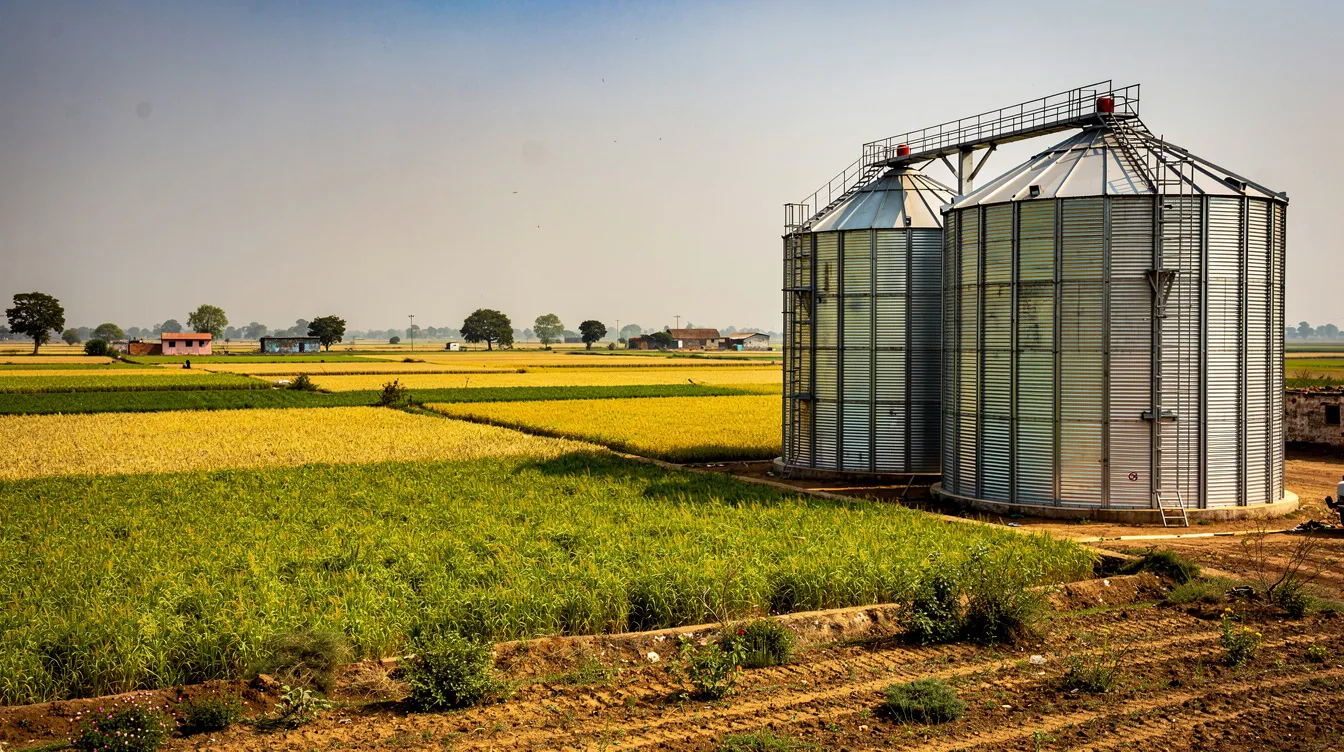
Scientific grain storage refers to the controlled storage of food grains using engineered structures, environmental monitoring and documented procedures to minimise spoilage and maintain quality. It contrasts sharply with traditional methods – earthen pots, bamboo structures, underground pits, wooden crates or simple gunny bags on open platforms – where environmental factors remain largely uncontrolled.
Traditional storage containers like mud bins can last 30 to 50 years with proper maintenance and have served farmers for generations. Improved options such as Pusa bins are airtight and moisture proof for effective storage at farm level, while metal silos at smaller scales can hold between 100 and 3,000 kg of grain. However, for commercial-scale operations, scientific storage demands engineered steel silos, concrete silos, RCC warehouses with proper ventilation, or hermetic structures fitted with moisture and temperature monitoring systems.
The main components of scientific storage include controlled grain handling, pre-storage cleaning and drying, moisture level management, pest prevention, safe fumigation, temperature and humidity monitoring, and systematic inventory and quality documentation. These practices also align with WDRA accreditation and quality standards increasingly required by banks and institutional buyers in India.
| Parameter | Conventional Storage | Scientific Storage |
|---|---|---|
| Structure | Mud bins, open plinths, basic godowns | Engineered silos, RCC warehouses, hermetic units |
| Grain moisture testing | Rarely done systematically | Calibrated meters, sampling protocols |
| Aeration / Ventilation | Passive or absent | Designed fans, ducts, perforated floors |
| Pest management | Reactive, ad hoc | Integrated – sanitation, monitoring, professional fumigation |
| Temperature monitoring | Manual spot checks, if any | Sensor cables, data logging, automated alerts |
| Financial reliability | High loss variability | Documented, auditable, bankable |
Grain Storage Aeration System – Working Principle and Importance
Aeration systems move controlled volumes of ambient air through the grain mass to manage grain temperature, equalise conditions across the bulk and reduce moisture migration. This is especially important in metal silos and concrete silos where large volumes of stored grain can develop significant temperature gradients.
The primary hardware includes aeration fans (centrifugal or axial), perforated floors in flat-bottom silos, aeration ducts or tunnels in warehouses, and roof vents or exhaust points completing the airflow path. Cool air is pushed or pulled through the grain to create a cooling front, reducing grain temperature and thereby slowing insect activity, fungal growth and grain respiration. Aeration systems help regulate grain moisture and temperature, though it is important to understand that aeration stabilises conditions – it is not a substitute for grain drying when grain enters storage at excessively high moisture content.
In tall silos, temperature gradients cause moisture to migrate toward cooler zones, often near the top or bin walls, creating localised condensation and hot spots. Sustained aeration helps keep temperatures uniform. Research on wheat storage in north India found that an airflow rate of approximately 0.11 m³/min/tonne with morning and evening fan operation, controlled by equilibrium moisture content and temperature parameters, achieved minimal dry matter loss while containing energy consumption.
For new silo projects, aeration and ventilation design should be integrated into land, building and layout planning from the outset. Advanced systems can integrate fan automation based on real-time sensor measurements, forming part of automated grain storage monitoring. Correct fan sizing, timers and selection of aeration windows based on outside temperature and relative humidity make the difference between effective cooling and wasted electricity.
Grain Moisture Control and Safe Storage Conditions
The relationship between grain moisture content, temperature and storage life is well established: higher moisture and higher temperature sharply increase the risk of mould growth, insect multiplication and grain spoilage. Moisture control is critical for preventing fungal growth and respiration in stored grains – and the consequences are not just physical deterioration but also the production of harmful mycotoxins that can render entire lots unsaleable.
Grain should be harvested at optimal moisture content for storage, and pre-storage testing using portable moisture meters and laboratory analysis is essential. Sampling should be done at different depths and locations in a truck or heap, not just the surface. Where moisture is above the agreed safe limit, drying or conditioning must be carried out before loading. Options include natural air drying, batch dryers, continuous-flow dryers and, for smaller operations, sun drying. An integrated grain cleaning, grading, drying and storage plant addresses these needs systematically.
Grains stored above 14.5% moisture risk heating and mould, and grain moisture above 14.5% also risks spoilage and mycotoxins. Grains should be dried to safe moisture thresholds of 10%–12% for cereals before storage, depending on the commodity and intended duration.
| Commodity | Indicative Safe Moisture (Wet Basis) | Short Duration (Up to 3 Months) | Long Duration (6–12 Months) | Notes |
|---|---|---|---|---|
| Wheat | 12–13% | Up to ~13% may be acceptable | Preferably ≤12% | Subject to local RH and buyer specs |
| Paddy (raw) | ~14% | Up to ~14% in cooler zones | ≤13% recommended | Higher risk crop for moisture migration |
| Maize / Corn | 12–13% | ~13% acceptable | ≤12% preferred | Susceptible to excess moisture and aflatoxin |
| Pulses | 10–12% | ~12% depending on type | ≤10–11% preferred | Lower thresholds for longer safe storage |
These are indicative benchmarks, not rigid prescriptions. Actual thresholds depend on local climate, grain variety and buyer requirements.
Moisture migration inside silos caused by thermal gradients can lead to caking, crusting and localised hot spots if aeration or turning is inadequate. Humidity and condensation control – through roof insulation, vapour barriers, proper ventilation design, and avoiding warm, humid air intake – further protects quality. Continuous grain moisture monitoring through periodic sampling, use of moisture probes, and checking both surface and deeper layers remains non-negotiable.
In Indian markets, moisture accumulation and quality downgrades attract price discounts. Systematic moisture control contributes directly to better sale realisations, contract compliance and reduced disputes with buyers.
Grain Silo Temperature Monitoring and Automated Control Systems
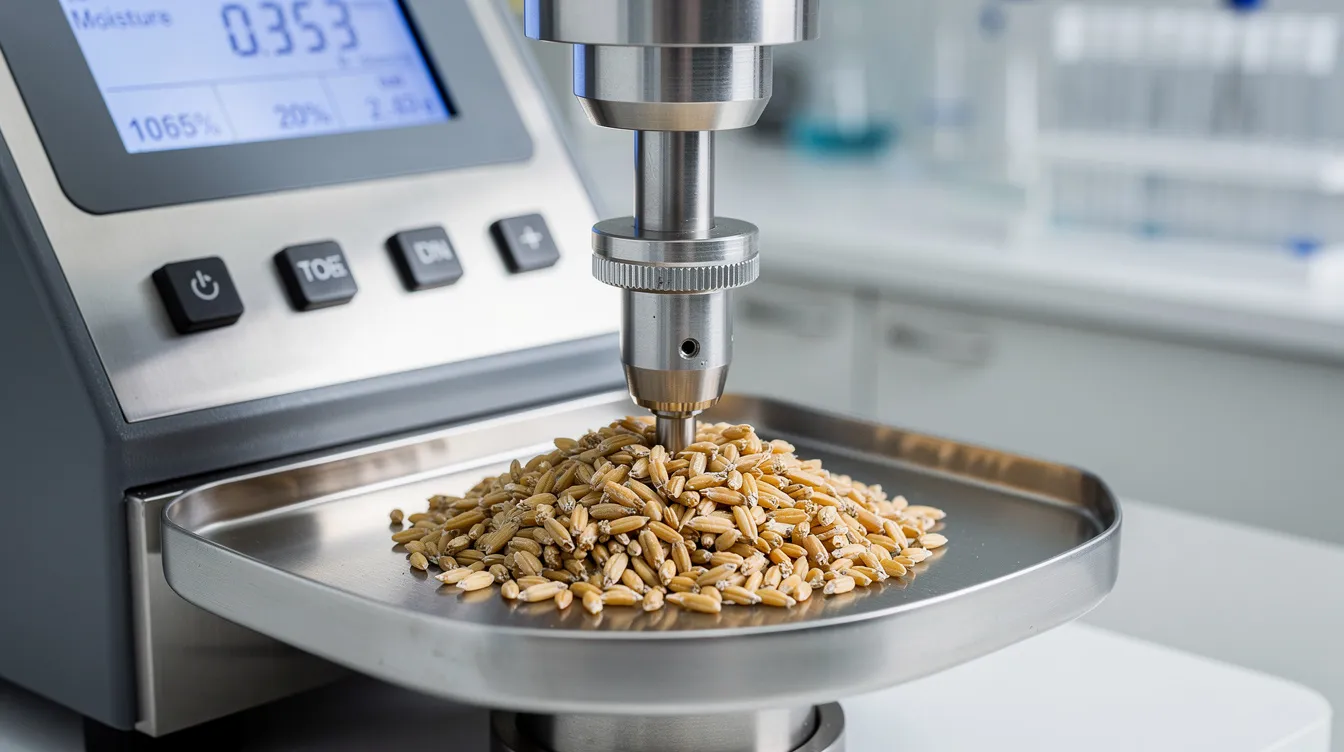
Temperature monitoring is central to scientific storage because it enables early detection of hot spots, insect activity and moisture migration long before visible damage occurs. A rise in grain temperature of even a few degrees in a specific zone can signal the onset of biological activity that, unchecked, will cause weight loss and quality deterioration.
Typical silo temperature monitoring systems consist of vertical cables with multiple thermocouples or digital sensors installed at defined intervals, connected to control panels or PLC/SCADA-based systems that read, log and display data. Alarm thresholds – often set at 5–10°C above baseline or ambient – trigger alerts for abnormal conditions. Automated monitoring systems detect moisture issues in real-time, and IoT-based solutions now transmit sensor data to cloud dashboards or apps, enabling remote supervision and audit trails. The Indian Grain Storage Management & Research Institute (IGMRI) is currently leading sensor-based real-time monitoring initiatives covering temperature, RH, moisture and CO₂ in grain depots.
For commercial facilities, the practical benefits include reduced manual checking, better documentation for clients and insurers, support for WDRA and quality-certification requirements, and improved internal control over large, multi-silo sites. However, sensors need periodic calibration, cables do not physically cover every cubic metre of grain mass, and human inspection remains important. Temperature data must be interpreted – identifying hot columns, localised zones and weekly patterns – before deciding when to initiate aeration, physical inspection or grain turning.
Grain Storage Fumigation and Pest Management
Fumigation is one component of an integrated grain storage pest management plan, which also includes sanitation, physical barriers, aeration, monitoring and proper grain moisture control. Treating fumigation as the sole line of defence is a common and expensive mistake.
Common categories of insect pests in Indian stored grain include weevils (rice weevil, sitophilus), borers (lesser grain borer), and beetles (Khapra beetle, flour beetle). These pests multiply faster at higher temperature and moisture, which is why aeration and moisture management are the first lines of defence.
Preventive sanitation measures are critical: cleaning empty silos and warehouses, removing residual stored grain and dust, repairing cracks and gaps, and controlling spillages around conveyor pits and elevator boots. Regular grain inspection and sampling – sieving samples, observing live insects, frass and odours, and maintaining records – supports early intervention against pests and spoilage.
Hermetic or gas-tight storage, where controlled conditions allow oxygen depletion, can help manage pests with reduced chemical dependence. Controlled atmosphere storage reduces oxygen to preserve grain quality. Hermetic bags, when properly used, can reduce post-harvest losses by up to 98%, though this technology is more commonly applied at smaller scales. For commercial silos, gas-tightness of the structure itself becomes a design consideration.
Professional fumigation involves the use of registered fumigants in gaseous form within sealed storage, always as per the product label, Indian regulatory requirements and under trained, authorised supervision. Dosage rates, exposure times and application methods must be determined and executed only by licensed pest-control operators. Worker safety, PPE, gas monitoring and proper aeration or venting after treatment are non-negotiable. Documentation – treatment records, safety checklists and gas-free certificates – supports audit, client confidence and risk management for lenders and insurers. Inappropriate fumigation can damage grain quality or pose serious health and legal risks.
Scientific Grain Storage Process – Step-by-Step Operational Workflow
A scientific grain storage facility operates through a disciplined, documented sequence from grain receipt to dispatch:
- Arrival and weighment at weighbridge with vehicle documentation and basic inspection.
- Sampling and quality inspection – moisture testing, assessment of foreign matter, damaged grains and live insects.
- Grain cleaning and grading using pre-cleaners, destoners and separators to remove dust and impurities.
- Drying or conditioning where moisture exceeds the agreed safe limit.
- Loading into silos or warehouse bays – ensuring even distribution, avoiding segregation. The First-In, First-Out (FIFO) inventory method minimises stagnation in stored grains and should be planned into the loading and dispatch sequence.
- Continuous or scheduled monitoring of grain temperature and moisture using sensors and manual sampling.
- Aeration management and pest-control activities – sanitation schedules, preventive measures and periodic professional fumigation.
- Periodic quality inspection reports and inventory reconciliation.
- Order-based dispatch – re-weighment, documentation and release under warehouse receipt or contract terms.
Each stage includes quality-control checkpoints: rejection or acceptance criteria at intake, moisture thresholds for storage, sampling frequency, and documentation for WDRA or FCI-related contracts. A well-documented process reduces losses, disputes and claims, and is frequently questioned during bank appraisal and technical due diligence. The grain storage process flow chart and bulk handling system article provides a deeper resource on conveyors, bucket elevators and layout.
Machinery and Equipment Required for Scientific Grain Storage
Scientific grain storage technology goes beyond the basic structure and involves specialised equipment for handling, cleaning, aeration, monitoring and safety.
| Equipment | Main Function | Operational Importance | Key Selection Considerations |
|---|---|---|---|
| Pre-cleaners & separators | Remove dust, chaff, foreign matter | Reduces pest harbourage, improves airflow | Capacity matched to intake rate |
| Bucket elevators & belt conveyors | Vertical and horizontal grain movement | Enables efficient loading and dispatch | Material, speed, grain type compatibility |
| Grain dryers | Reduce moisture to safe levels | Prevents mould, heating, spoilage | Batch vs continuous, fuel type, drying rate |
| Aeration fans, ducts, perforated floors | Temperature management, moisture equalisation | Core of scientific grain preservation | Fan CFM/tonne, duct layout, roof venting |
| Temperature monitoring cables & panels | Detect hot spots and abnormal conditions | Early warning, documentation, compliance | Sensor spacing, data logging, calibration |
| Grain moisture analysers | Measure moisture at receipt, in storage, at dispatch | Quality control, contract compliance | Accuracy, portability, calibration method |
| Dust collection & aspiration | Control airborne dust and fines | Safety, hygiene, equipment protection | Capacity, filter type, placement |
| Fire detection & safety equipment | Gas detectors, PPE, confined-space gear | Worker safety, regulatory compliance | Certification, maintenance regime |
Equipment choice differs for a flat warehouse versus steel silos versus concrete silos versus improved bins, and must be matched to storage capacity, predominant grain type and expected turnover rate. Modern projects also integrate automated grain storage monitoring systems with SCADA or IoT dashboards. Detailed machinery packages and costing for silo-based projects are covered separately.
Scientific Grain Storage Systems for 5,000 MT to 50,000 MT Projects
Design considerations change significantly across project sizes:
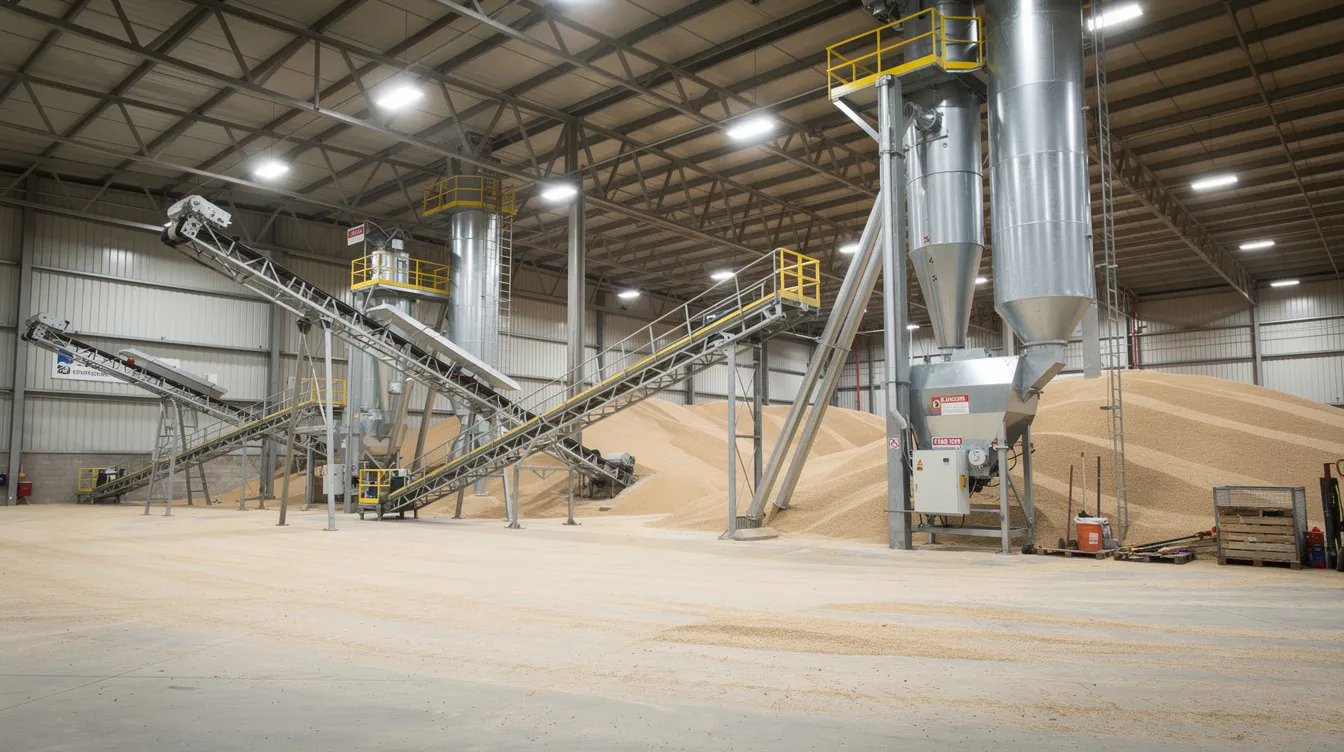
- 5,000 MT facility: Typically one or two warehouses or a small silo block with simpler aeration, basic monitoring, manual sampling and limited automation. Suitable for FPOs or regional traders entering formal storage.
- 10,000 MT facility: More structured bulk-handling, dedicated aeration fans per silo or zone, temperature monitoring cables, semi-automated controls and a defined loading and dispatch sequence.
- 25,000 MT facility: Cluster of silos or larger warehouses with a central control room, integrated aeration and ventilation design, multiple commodity segregation, and more rigorous SOPs and documentation.
- 50,000 MT facility: Full-fledged silo complex or large warehouse campus with automated sampling, extensive temperature and moisture monitoring, SCADA-based controls, elaborate fire and safety systems, and backup power.
Aeration capacity, number of sensors, grain moisture monitoring points and fumigation planning all scale up with project size. Higher-capacity projects justify investment in modern grain storage technology because of the higher throughput and value of grain stored. However, larger projects also concentrate risk, making scientific grain storage quality management essential for financial stability. Detailed capacity configuration and sizing options are discussed in a companion article.
Cost of Scientific Grain Storage Systems in India
Total investment has two layers. The first is basic grain storage infrastructure – land, building or silos, civil works and basic machinery, including a concrete floor, roof, and structural elements. The second is the additional scientific grain preservation systems – aeration, monitoring, drying, automation and pest management protocols.
Major capital cost components include aeration infrastructure (perforated floors, ducts, fans, vents and associated electrical work using cement mortar and construction as needed), grain moisture and temperature monitoring systems (sensors, cables, control panels, data loggers), grain drying and conditioning units, and automation hardware (PLCs, SCADA, IoT gateways).
Recurring costs include electricity for fans, conveyors, dryers and monitoring systems; calibration, preventive maintenance and replacement of sensors, motors, belts and filters; professional fumigation and pest management services; and labour for monitoring, inspection, housekeeping and record keeping.
Exact cost levels vary across Indian states, site conditions, technology choices, commodity mix and construction period. Promoters should obtain vendor quotations and engineering inputs for each major subsystem before finalising the DPR and bank loan proposal. A detailed discussion of how these scientific systems fit within the broader project cost is available in the grain silo and warehouse setup cost article.
Financial Benefits of Scientific Grain Storage
Investments in scientific grain storage are justified not only by better physical preservation but also by tangible economic outcomes. Effective storage allows farmers to sell grain at higher prices later, and for commercial operators, better quality means fewer rejected loads, higher grade realisations and stronger contract compliance. Globally, the scale of the problem is staggering – postharvest losses in Sub-Saharan Africa alone cost about USD 4 billion annually, and reducing postharvest losses worldwide could feed an additional billion people.
Financial benefits fall into three categories:
- Direct cost savings: Less re-bagging, reduced sorting and cleaning, lower rejected loads.
- Avoided losses: Prevented quantity and quality deterioration that would have reduced saleable weight or downgraded grade.
- Additional revenue opportunities: Capacity to store longer and sell at favourable market prices, ability to handle premium contracts requiring strict quality control through cold storage or climate-controlled systems.
Illustrative Example (Assumptions Clearly Stated):
Consider a 25,000 MT wheat storage facility. If storage loss is reduced from an assumed 3% to 1% through scientific storage practices, the additional saleable quantity is 500 MT per year. At an assumed realisation of ₹25,000 per MT, this represents approximately ₹1.25 crore in additional gross revenue. The incremental annual operating cost of aeration, monitoring and maintenance may range between ₹15–30 lakh depending on system configuration. Even with conservative assumptions, the net benefit is meaningful. These figures are illustrative; actual outcomes depend on grain value, storage duration, climatic risk and SOP discipline.
Analysis of ROI, IRR, payback period and sensitivity to storage losses is an essential part of any serious grain storage feasibility study. Lenders and investors respond positively to projections that connect scientific quality measures with realistic assumptions on loss reduction and revenue stability.
Importance of Scientific Storage in a Grain Silo DPR and Bank Finance Proposal
Banks, DFIs and investors evaluate both technical feasibility and financial viability in grain storage DPRs, and scientific storage features must be explicitly planned and costed. These systems influence project cost (civil, mechanical, electrical and instrumentation), means of finance (equity, term loan, subsidies where applicable), operating cost projections and storage revenue assumptions.
Key DPR components where scientific grain storage should appear include:
- Technical description of silos or warehouses and the grain storage technology deployed.
- Capacity utilisation planning and throughput assumptions.
- Grain loss and quality-deterioration assumptions, linked to moisture and temperature control strategies.
- DSCR analysis and loan repayment schedule factoring in realistic savings from better grain preservation.
- Sensitivity analysis to changes in loss percentage, energy tariff and utilisation levels.
Separate line items should be provided in project cost and means of finance for aeration systems, monitoring systems, temperature cables, automation hardware and specialised pest-management infrastructure. Financial projections, working capital and DSCR analysis should reflect the operating economics of these systems rather than treating them as an afterthought.
Common Mistakes in Grain Storage Management
Many Indian grain warehouses and silo operations have modern structures but weak operating discipline. Common avoidable errors include:
- Accepting grain at higher than planned moisture without arranging prompt drying or segregation.
- Poor aeration design or under-sized fans leading to ineffective cooling and persistent hot spots.
- Irregular or superficial inspection routines with inadequate documentation.
- Insufficient housekeeping and sanitation, allowing residual stored grain, dust and spillage to support insect and rodent populations. Regular inspection is essential for early intervention against pests and spoilage.
- Skipping calibration of moisture meters and temperature sensors, leading to decisions based on inaccurate data – FCI SOPs specifically mandate calibrated meters for this reason.
- Treating fumigation as a casual, last-minute task rather than a carefully scheduled, professionally managed operation.
These mistakes translate into financial losses, disputes with clients, insurance claim rejections and weakened credibility with banks. Written SOPs, training, supervision and periodic internal audits keep operations aligned with scientific best practices.
Best Practices for Scientific Grain Storage in Indian Conditions
Indian climatic conditions – hot summers, monsoon rains, high humidity in coastal areas and wide day–night temperature variations – require location-specific operational strategies. The transition towards climate-controlled infrastructure improves grain storage efficiency and is increasingly seen as a necessary investment.
Practical best practices include:
- Plan intake, drying and storage schedules around local harvest calendars and monsoon patterns.
- Maintain cool grain by timely aeration, especially when night-time temperatures are significantly lower than grain temperature.
- Use commodity-specific guidelines for moisture control; avoid mixing commodities with very different storage behaviour in the same bins.
- Adopt a structured sampling plan (depth, frequency, locations) and maintain labelling and records for each silo or warehouse bay, using tools that employ artificial intelligence for pattern recognition where feasible.
- Keep all grain contact surfaces, pits, ducts and handling equipment clean; repair leaks, cracks and insulation issues promptly. Apply mud plaster or appropriate sealant for traditional bins; use proper cement mortar and construction standards for commercial facilities.
- Engage qualified engineers for structural design and airflow calculations, and qualified pest-control professionals for fumigation.
- Protect grain from ground moisture by ensuring adequate damp-proofing and elevated storage, avoiding direct contact with the floor in bag storage.
For both silos and RCC godowns, following WDRA, FCI and BIS guidelines strengthens credibility with clients and lenders. Practices applicable to modern food grain warehouse and godown projects are discussed in detail separately, and the principles apply even where paddy straw or cow dung-based traditional methods are still used at farm level to prevent damage in low cost storage.
How CA Manish Gugliya and Project Report Bank Can Assist with Grain Storage Project Planning
CA Manish Gugliya brings more than 20 years of professional experience in project finance advisory, Detailed Project Reports, CMA Data and financial modelling for MSME and agro-processing projects. Project Report Bank provides customised advisory support for grain storage projects, including:
- Preparation of DPRs for grain silos, concrete silos, modern warehouses and integrated grain cleaning–drying–storage plants.
- Project feasibility and viability analysis, including assessment of capacity, operating model, tariffs and expected grain loss assumptions.
- Detailed project cost estimation with separate capture of aeration systems, monitoring systems, grain dryers and automation as scientific grain storage investments.
- Means of finance planning, loan structuring and bank finance DPR and loan proposal assistance.
- Financial projections, cash flow, DSCR, break-even analysis, ROI and IRR calculations, including sensitivity analysis for grain loss percentage, power cost and utilisation.
- CMA Data preparation and supporting documentation for bank term loan and working capital limits.
Engineering design, fumigation execution and technical certifications are handled by qualified engineers, silo suppliers and licensed pest-control experts. Project Report Bank focuses on the financial and project-planning dimensions.
Interested promoters, FPOs and agribusinesses can share basic project details via WhatsApp for an initial discussion on feasibility and DPR requirements. Project feasibility study services are available for projects across India.
Frequently Asked Questions
What is the practical difference between aeration and grain drying?
Aeration primarily moves ambient air through stored grain to control temperature and reduce moisture migration, operating at relatively low airflow rates. Grain drying is a deliberate process using heated or high-flow air to significantly reduce grain moisture content before or early in storage. Aeration does not change grain moisture drastically; dryers are sized to remove a specified amount of moisture in a defined time. Both systems complement each other – drying brings grain to a safe moisture band, and aeration keeps it cool and stable during storage.
Can scientific grain storage methods be applied in conventional warehouses or only in silos?
Scientific grain storage is not limited to metal or concrete silos. Many principles apply equally to RCC warehouses and godowns storing grain in bulk or in gunny bags. Warehouses can incorporate aeration or ventilation ducts, roof vents, controlled stacking patterns, moisture and temperature monitoring, sanitation programmes and documented SOPs. Upgrading an existing warehouse with selected scientific features can significantly improve grain storage quality without fully converting to a silo system.
How often should temperature and moisture readings be taken?
Frequency depends on storage duration, grain type, season and risk level. Many commercial facilities target at least weekly readings during stable conditions and more frequent checks during the first weeks after filling or during weather extremes such as high humidity or rapid ambient temperature changes. Any unusual trend – rising temperature, change in odour, condensation – should trigger immediate additional measurements and physical inspection.
Is automated monitoring compulsory for bank finance?
Most Indian banks do not mandate a specific automated monitoring system, but they expect technically sound storage design consistent with project scale and risk. For larger capacities – 25,000 MT and above – automated temperature and moisture monitoring is increasingly considered best practice and improves the comfort level of clients and lenders. Promoters should discuss system selection and justification in the DPR, demonstrating how monitoring supports quality control and risk mitigation.
How early should a promoter involve financial and technical advisers?
Both technical designers and financial advisers should be engaged at the concept stage, before finalising land purchase, storage capacity or vendor contracts. Early involvement helps align capacity planning, grain storage technology choices, aeration and monitoring levels with realistic funding, projected utilisation and bankability. Revising capacity or structure after major commitments have been made is more expensive and can delay project commissioning and loan sanction. Several factors – including grain type, local climate, target market and available equity – should be discussed together before committing resources.
Conclusion
Scientific grain storage in India integrates engineered structures, aeration, grain moisture control, temperature monitoring, disciplined operations and safe, professional fumigation to protect the value of stored food grains. For commercial projects in the 5,000–50,000 MT range, these grain storage solutions directly impact operating reliability, customer confidence, regulatory compliance and overall financial performance.
While engineering design and pest-control execution require technical specialists, a robust DPR, feasibility study and financial model – reflecting realistic storage losses, operating costs and quality-driven revenues – are equally critical for bank finance and investment decisions. Investment choices should be guided by grain type, facility size, storage duration, local climate and defensible financial assumptions.
Entrepreneurs, FPOs, cooperatives and agribusinesses planning grain storage or silo projects are welcome to consult Project Report Bank for customised DPRs, project feasibility assessments and financial modelling.
CA Manish Gugliya FCA, DISA (ICAI) More than 20 years of professional experience in project reports, financial projections, CMA Data, project finance and business advisory.