Key Takeaways
- This article is a practical guide for planning a steel grain silo storage facility in India, covering bankable DPR preparation, project cost estimation, capacity planning, revenue modelling and project finance structuring. It concerns operating a grain storage business, not manufacturing silos.
- The actual steel grain silo project cost in India depends on storage capacity (ranging from 5,000 to 50,000 MT or more), land cost, construction materials, automation level, foundation requirements and geographic location. Every project cost estimate should be based on dated supplier quotations and site-specific engineering design.
- A professionally prepared grain silo plant DPR links technical configuration (grain handling systems, steel silos, civil foundations, utilities) with realistic revenue assumptions, cash flow projections, DSCR and loan repayment analysis suitable for banks and investors.
- Project Report Bank, led by CA Manish Gugliya (FCA, DISA, ICAI) with over 20 years of professional experience, prepares customised Detailed Project Reports, financial projections and CMA Data for grain silo storage business promoters across India.
- Investors should focus on securing demand tie-ups (FCI, PPP contracts, captive users), selecting correct storage capacity, planning land and infrastructure, and structuring project cost and means of finance rather than relying solely on per-MT cost benchmarks.
Steel Grain Silo Plant Project Overview in India
A steel grain silo plant, in the Indian context, refers to a scientific grain storage facility that uses steel silos along with integrated grain handling systems to receive, clean, store and dispatch grain in bulk. This is not a silo manufacturing factory. The facility typically comprises flat bottom silos or hopper silos constructed from galvanized corrugated steel sheets, supported by mechanical conveying equipment, aeration systems, temperature sensors, and quality control infrastructure.
India’s post harvest losses in wheat, rice, maize and other cereals remain a serious concern. Traditional godown storage, where grain is stored in bags stacked on floors with limited environmental control, exposes stocks to moisture damage, pests, rodent infestation and quality deterioration. Silo systems can reduce storage losses from 10–15% down to less than 1% compared to these traditional methods. Modern grain storage silos offer controlled aeration, mechanised loading and unloading, faster turnaround and significantly improved inventory management for long term storage. Steel silos can last up to 50 years with proper maintenance, making them a durable infrastructure asset.
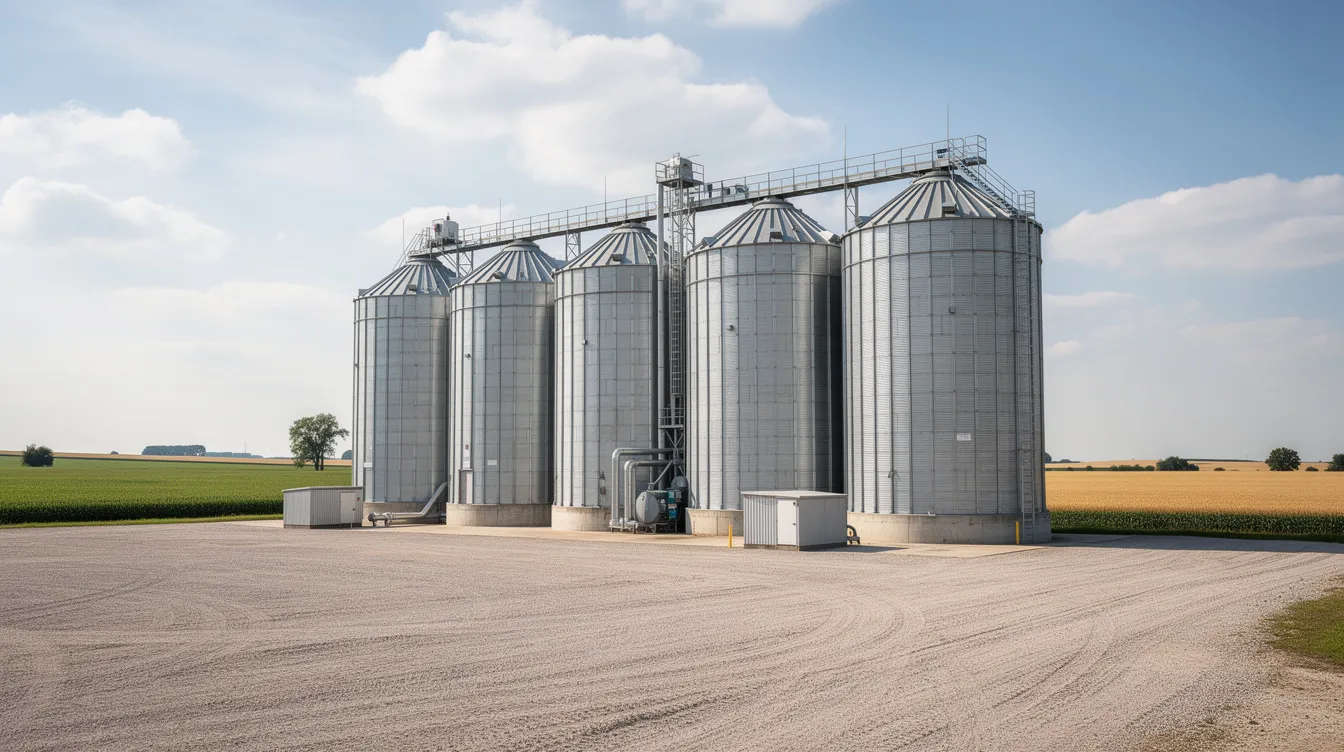
Typical project scales in India range from 5,000 MT to 50,000 MT complexes, with configurations seen in both FCI-linked public projects and private sector investments. Investment opportunities exist across captive storage for flour mills, rice mills and feed mills, commercial third-party storage services, and participation in grain silo PPP projects. A comprehensive project report for a steel grain silo plant evaluates both technical and financial parameters to help the promoter make an informed investment decision.
Market Demand and Investment Opportunities for Grain Silo Projects
India produces over 300 million MT of foodgrains annually, yet the share of scientific storage infrastructure, particularly bulk grain silos, remains a small fraction of total warehousing capacity. The Government of India, through FCI, has outlined plans for 111.125 LMT of steel silo storage at 249 locations across India over multiple phases, with estimated investment of approximately ₹9,236 crore. This signals significant demand growth for grain storage infrastructure in the country.
Key demand segments include:
- Government procurement agencies (FCI, state civil supplies corporations)
- Large flour mills, rice mills, maize processors and animal feed units
- Grain traders, exporters and integrated agri-logistics companies
- Farmer Producer Organisations and agricultural cooperatives
Proximity to transport networks reduces grain intake and distribution costs, making location selection critical. Preferred locations are near major grain producing belts such as Punjab, Haryana, Madhya Pradesh and Uttar Pradesh, with good rail or highway connectivity and access to mandis and procurement centres.
Business models include:
- Captive grain storage attached to processing units
- Commercial third-party storage charging rent per MT per month
- Long-term contracted storage under FCI or state tenders (often 20–30 year concessions)
- Grain silo PPP projects with guaranteed or quasi-guaranteed off-take
A grain silo plant DPR should include a structured market study covering catchment analysis, competitor mapping (other silos, CWC/SWC godowns, private warehouses), and evidence of prospective demand tie-ups.
Types of Steel Grain Silos and Storage Technologies
Vertical steel plate silos are the most common type used in India. Silo structures typically comprise galvanized steel sheets for weather resistance and structural integrity. Automated bulk grain storage facilities utilise corrugated galvanized steel silos for grain preservation. The two principal configurations are:
Flat-bottom grain silos are typically used for large capacity storage (5,000–15,000 MT per silo). They require sweep augers or reclaim systems for unloading and are more economical per MT for long term, high-volume storage. Steel plate silos have maintenance costs as low as $0.0137 per ton, making them cost-effective over their service life.
Hopper bottom grain silos generally have lower individual capacity (200–1,500 MT). The conical bottom enables gravity discharge, making them suitable for frequent loading and unloading, buffer storage and dispatch operations. Hopper silos are advantageous for specific storage scenarios where rapid turnaround is needed.
Steel silos range from a few tons to thousands of tons capacity. Small grain silos typically store 1,000 tons of grain, medium grain silos usually have a capacity of 3,000 tons, and large project grain silos are used in industrial applications. Galvanized steel silos are popular for their durability across all these scales.
For comparison, concrete silos have high upfront costs but low maintenance costs. A 3,000 ton capacity concrete silo costs approximately $273,684 or more, while medium silos start at $273,684 for 3,000 ton capacity. However, steel silos dominate the Indian market due to faster erection, modular design and competitive total price over the project life.
Many projects combine flat-bottom main storage silos with smaller hopper silos for dispatch and blending. Integrated automated grain storage systems combine storage, pre-cleaning, conveying, aeration and monitoring controlled by central PLC/SCADA systems. Standards like IS 5503 cover grain silo construction and handling equipment design criteria, and detailed engineering must be carried out by specialist silo suppliers and structural consultants.
Steel Grain Silo Plant Setup Cost in India
The steel grain silo plant setup cost is project-specific. Cost estimates for silo projects vary based on site conditions and steel pricing. Construction costs vary by geographic location and installation complexity. Silo pricing varies by storage capacity and specifications. Promoters should never rely on generic internet figures for investment decisions.
Major capital expenditure heads include:
- Land purchase or long-term lease
- Land development, boundary wall, internal roads
- Civil foundations for silos and equipment structures
- Steel silo structures (shells, roofs, stiffeners, access platforms)
- Grain intake pits, pre-cleaners, dust control systems
- Bucket elevators and conveyors for grain handling
- Aeration fans, ducts and ventilation systems
- Temperature and moisture monitoring systems
- Electrical substation, cabling, automation panels
- Weighbridge, sampling and laboratory equipment
- Fire protection and safety systems
- Engineering, installation and commissioning charges
- Pre-operative expenses (interest during construction, consultancy)
- Contingencies
- Margin for working capital
Foundation requirements significantly affect silo construction costs. Geographic location impacts transportation and installation costs. Larger silos require more materials and higher construction costs, though the per-MT cost generally reduces with scale due to economies of scale.
As a benchmark, NCML’s Sonipat facility commissioned four flat-bottom silos of 12,500 MT each (total 50,000 MT) at a capital investment of ₹80 crore, yielding approximately ₹6,400 per MT. Research from IIM Ahmedabad indicates that a 10,000 MT silo system may cost around ₹15,000 per MT excluding land and rail siding. Steel plate silos cost about $547.23 per ton at certain scales. Small silos cost ₹5 lakhs to ₹12 lakhs in India for basic farm-level units, while large silos can cost ₹3 crores and above for commercial-grade facilities. A 1,000 ton capacity rice silo costs $34,210.5 to $68,421 depending on specifications.
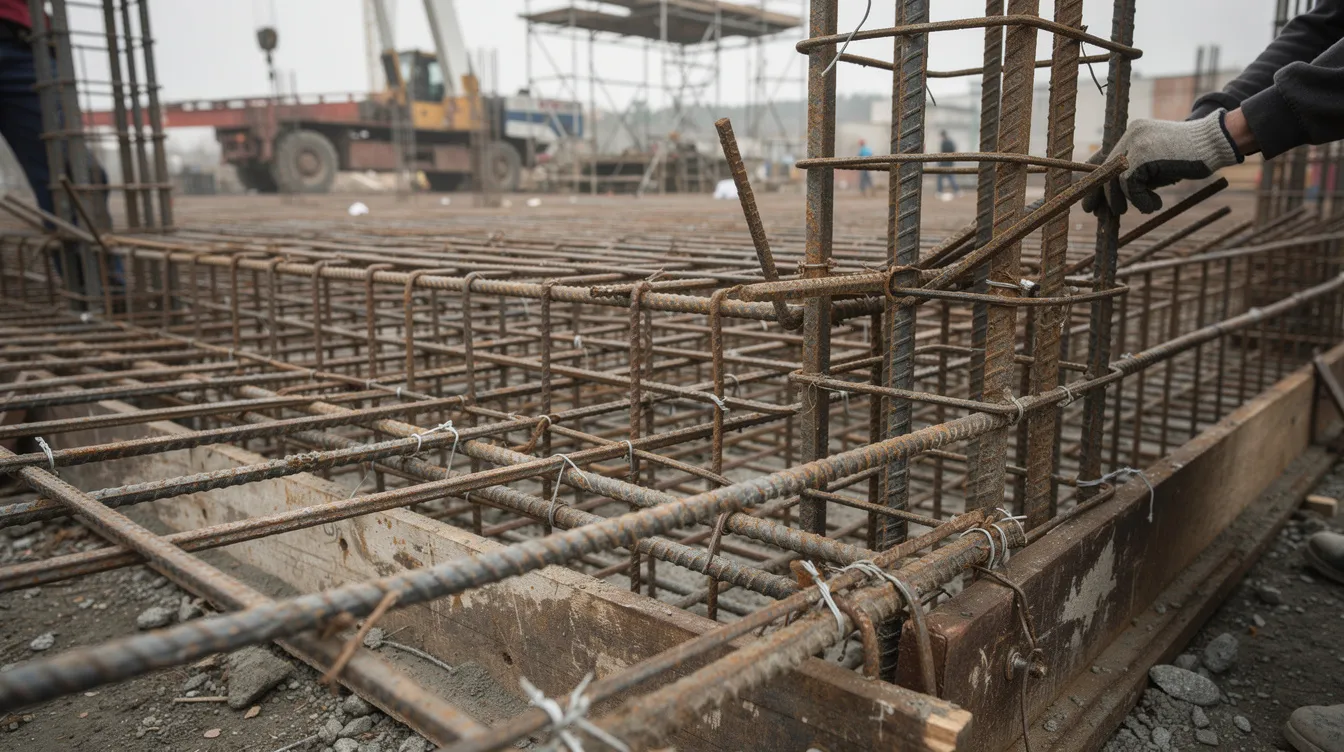
Promoters should obtain at least 2–3 competitive quotations from reputed silo and equipment suppliers, get civil and foundation costs estimated after soil investigation, and distinguish between ex-works machinery cost and total project cost including land, civil works, taxes, rail siding and working capital.
Land, Building and Infrastructure Requirements
Land requirement depends on storage capacity, number of silos, plant layout, truck circulation, railway siding provision and future expansion plans. Soil testing is crucial for structural load calculations during site selection for silo construction. Proper engineering ensures structural integrity under wind and seismic loads in silo design. Design considerations for silos include wind speed and seismic load requirements specific to the project location.
Key infrastructure components on site typically include:
- Grain receiving area with intake pit and truck parking
- Silo foundation block and structural arrangements
- Conveyor galleries, transfer towers and service platforms
- Covered equipment building for pre-cleaners, elevators and control room
- Weighbridge at entry and exit
- Quality control laboratory
- Administrative office, security cabin and staff amenities
For reference, FCI tender data indicates that a 25,000 MT spoke silo may need approximately 4 acres, while a corresponding hub silo with rail siding and full infrastructure may require 15 acres or more. Internal circulation must accommodate separate entry and exit gates, turning radii for large trucks, paved internal roads with drainage, and emergency access routes around the storage silo block.
When rail evacuation or receipt is planned, space and alignment for siding, loading arrangements and approvals from railway authorities must be factored from the beginning. A site layout drawing prepared by an architect or engineer is typically annexed to the DPR.
Grain Silo Plant Machinery, Equipment and Automation
The heart of a steel grain silo plant is not only the storage silo itself but the complete grain handling system. Automated grain storage facilities often integrate mechanical conveying equipment for efficient loading and unloading.
Key equipment and their functions:
- Grain intake hopper and pit: receives grain from trucks and feeds the cleaning line
- Pre-cleaner and aspiration system: removes dust, straw, stones and foreign matter
- Bucket elevators: vertically lift grain to conveyor systems or silo inlets
- Belt or chain conveyors: transport grain horizontally between intake, silos and dispatch
- Grain distributors and diverter valves: route grain to specific silos
- Discharge equipment: sweep augers for flat-bottom silos, gravity gates for hopper silos
- Aeration fans and ducts: maintain uniform temperature and manage moisture migration
- Temperature monitoring cables and sensors: continuously track temperature at various depths inside the grain mass
- Grain level sensors: monitor filling level and prevent overfilling
- Dust extraction systems: reduce dust accumulation at intake and transfer points for safety
- Electrical panels, VFDs, PLC/SCADA systems: control motors, sequences and process automation
- Laboratory instruments: moisture meters, grain grading kits, insect detection equipment
- Weighbridge: records truck-wise weights for billing and stock control
Advanced safety systems prevent grain dust explosions and enhance operational safety. Equipment selection must match conveyor and elevator capacity to peak hourly intake requirements. Energy-efficient motors and appropriate dust control and explosion protection measures are essential. Quality control and maintenance plans improve equipment availability and grain preservation over the long term.
Steel Grain Silo Storage Process and Operational Flow
Steel grain silo plants are storing and handling facilities. They do not change the basic nature of the grain but preserve its quality through controlled conditions.
The operational flow follows this sequence:
- Grain arrival at gate and documentation
- Weighment on weighbridge (gross weight)
- Sampling and lab testing for moisture content, foreign matter, damaged grains
- Unloading into intake hopper if grain meets quality norms
- Pre-cleaning to remove dust, husk and impurities
- Conveying cleaned grain to designated silos using elevators and conveyors
- Controlled filling with monitoring of grain level and distribution
- Storage phase with regular aeration runs and temperature monitoring
- Periodic fumigation or preventive pest control as per approved protocols
- Discharge through sweep augers or hopper outlets when dispatch is planned
- Final weighment and documentation of dispatched quantity and quality
Moisture control is central to efficient grain storage. Generally, only grain stored within specified safe moisture limits is accepted. Inadequate aeration systems can lead to spoilage and insect infestation in stored grain. Advanced aeration systems improve grain storage performance by preventing hotspots and moisture migration. Daily temperature readings, inspection for condensation or unusual odour, and preventive maintenance of moving equipment are essential operational checks.
Grain handling safety requires specific procedures to prevent dust accumulation and explosion hazards at all transfer points and enclosed spaces.
Grain Silo Storage Capacity Planning
Storage capacity in a grain storage silo project can mean three different things: nominal storage capacity (theoretical volume multiplied by bulk density), safe usable capacity (typically 90–95% of nominal, leaving freeboard), and annual throughput capacity (MT handled per year across multiple filling and emptying cycles).
Bulk density varies by grain type. For wheat, the commonly used planning figure is approximately 760–780 kg/m³. Paddy, maize and barley have different densities, affecting silo sizing even for identical geometric volumes.
Worked example: Consider a 25,000 MT nominal wheat storage complex with 90% usable capacity (22,500 MT at any time). If the average storage duration per lot is 4 months, this allows roughly 3 inventory turns per year, giving potential annual handling of about 67,500 MT, subject to demand and operations.
Capacity planning must be linked with equipment sizing. Elevators and conveyors must handle peak daily intake during harvest season, and intake capacity decisions (e.g., 150–300 MT per hour) directly affect the overall cost and operational flexibility.
Oversizing beyond realistic demand creates underutilisation risk and lower return on investment. Undersizing leads to lost revenue and congestion. Capacity planning should be backed by a demand study, customer discussions and sensitivity analysis in the DPR.
Grain Silo Storage Business Model and Revenue Sources
A grain silo storage business in India can operate under several models, each with different revenue streams and risk profiles.
Captive Storage Model: Silos owned by flour mills, feed mills or agri-processors, with the primary objective being secure grain availability and quality rather than external rental income.
Commercial Storage Model: Independent operators offering storage space on rent to traders, processors or institutions. Storage charges are typically structured per MT per month with separate handling charges. Revenue depends on occupancy and throughput.
Contracted/FCI-linked Model: Participation in FCI steel silo projects where capacity is contracted for a defined term. FCI’s recent PPP tenders show fixed storage charges ranging between ₹756 to ₹1,056 per MT per year, varying by location and configuration. Lower demand risk but higher compliance obligations apply.
Integrated Logistics Model: Silos combined with rail siding, bagging and handling services, offering additional revenue from grain handling, loading, blending and logistics.
Key commercial variables affecting profitability include annual average storage utilisation, average storage period, credit period given to customers, customer concentration risk, and competition from conventional warehouses and other grain silos in the region. The selected business model must be clearly defined in the DPR, as it directly drives revenue assumptions and the way bankers evaluate loan proposals.
Project Cost and Means of Finance
Total project cost for a steel grain silo storage facility includes fixed capital (land, site development, civil works, storage silo structures, machinery, electricals, utilities), pre-operative expenses (consultancy, salaries during implementation, interest during construction, approvals), contingencies for cost escalation, and margin money for working capital.
Means of finance typically comprises:
- Promoter’s equity contribution
- Term loan from banks or financial institutions
- Working capital limits for operations
Infrastructure storage projects often follow a 70:30 debt-equity structure, though the actual ratio depends on lender norms, risk profile and promoter strength. Interest during construction is estimated based on the implementation schedule (typically 12–18 months), drawdown of term loan and applicable interest rate.
Working capital needs include expected levels of debtor days, timing of storage payments, and the mismatch between expenses (salaries, electricity) and receipts. Banks carefully evaluate project cost reasonableness and promoter contribution relative to net worth. Promoters may consider professional project finance advisory and loan structuring support to optimise repayment structure in line with DSCR and cash flow capacity.
Financial Projections, Profitability and DSCR
A bankable grain silo plant DPR must include detailed 5–7 year financial projections demonstrating profitability, cash generation and debt servicing capacity. Financial modelling ensures a healthy return on investment and prevents cash flow bottlenecks. Detailed project reports should define measurable financial and operational performance indicators.
Key assumptions include installed storage capacity, phased capacity utilisation (typically 50–60% in Year 1, scaling upward), storage tariff per MT per month with escalation assumptions, and average storage duration.
Major operating cost heads cover power and fuel (for elevators, conveyors, aeration, lighting), salaries and wages, repairs and maintenance, insurance, administrative expenses, and lease charges where applicable.
The projected Profit and Loss statement should show:
- Revenue from storage and handling
- Deduction of operating expenses to derive EBITDA
- Depreciation on fixed assets
- Interest on term loan and working capital
- Profit before tax and profit after tax
DSCR (Debt Service Coverage Ratio) equals cash available for debt service divided by total debt service (interest plus term loan instalments). Banks examine both year-wise DSCR and average DSCR over the loan tenure. A DSCR below 1 indicates a cash shortfall for that period.
Project viability indicators include break-even level of capacity utilisation, ROI, IRR and payback period. A sensitivity analysis showing how variations in capacity utilisation (±10%), tariff levels (±5–10%), project cost overrun and interest rate changes affect DSCR, IRR and break-even is essential for any serious DPR.
Bank Loan and Project Finance for Steel Grain Silo Projects
Banks evaluate grain silo storage projects based on promoter profile, technical feasibility, market demand, project cost and projected DSCR. Core documents generally required include:
- Detailed Project Report with technical, commercial and financial sections
- CMA Data for bank loans
- Land ownership or lease documents
- Quotation from silo and equipment suppliers
- Projected financial statements and cash flows for 5–7 years
- Implementation schedule and KYC of promoters
Lenders focus on robustness of demand (storage contracts, MoUs, FCI or PPP awards), promoter’s experience in grain trade or agriculture, adequacy of equity contribution, and collateral coverage. Specific concerns include volatility in utilisation, competition from low-cost godown storage, and maintenance of grain stored quality to avoid claims.
Professional preparation of bank finance DPR and loan proposals can improve clarity and lender confidence, though no advisory can guarantee sanction. Promoters should engage with banks early and align project scale with lender feedback before freezing final costs.
Government Schemes, FCI Projects and Grain Storage Infrastructure Support
Grain silo infrastructure aligns with the government’s objectives of reducing post harvest losses and improving public food grain storage. FCI has been developing steel silos through PPP models, with approximately 14.75 LMT at 29 locations completed and further phases under implementation.
The Agriculture Infrastructure Fund supports post-harvest management infrastructure including warehouses and silos, with possible interest subvention and credit guarantee for eligible borrowers, subject to prevailing guidelines.
NABARD and some state-level schemes also support agri-infrastructure and warehousing projects, particularly for cooperatives and FPOs. However, not every steel grain silo plant automatically qualifies for subsidy or concessional finance. Eligibility depends on borrower category, project location, scale and timely application through the correct channel.
Promoters should verify current guidelines through official websites of FCI, Ministry of Food and Public Distribution, NABARD and AIF. A professional DPR can incorporate possible scheme benefits as an upside scenario, clearly marking them as subject to approval rather than assuming them in the base-case financial projections.
Regulatory Approvals and Compliance Requirements
Regulatory requirements depend on state, local jurisdiction, project size and whether processing activities are included. Compliance with local zoning laws and environmental impact assessments is essential for silo projects.
Key areas include:
- Land use conversion or NA permission where needed
- Building plan approvals from local planning authority
- Electrical load sanction and installation approvals
- Fire NOC and compliance with state fire safety norms
- Consent from State Pollution Control Board for air and dust emissions
- Factory registration or Shops and Establishment registration as applicable
- FSSAI registration or licence if the facility stores grain for human consumption value chain
- Weighbridge certification under Legal Metrology rules
Promoters should take legal and compliance advice specific to their state. The DPR should list anticipated approvals and tentative timelines in the implementation schedule.
Grain Silo Project Feasibility Study and Investment Risks
A comprehensive grain silo feasibility study covers technical, market, financial and regulatory aspects. Effective risk management enhances project stability and protects financial returns in silo operations.
Commercial risks: Lower-than-expected utilisation, dependence on few large customers, non-renewal of long-term contracts.
Operational risks: Mechanical breakdown of critical equipment, power outages affecting aeration and preservation, improper moisture control leading to spoilage, fire and combustible dust hazards, non-compliance with confined space safety protocols.
Financial risks: Escalation in initial construction cost due to material or labour inflation, delays in commissioning extending interest during construction, increase in interest rates impacting DSCR, mismatch between loan repayment schedule and actual cash flows.
Mitigation strategies include diversified customer base, preventive maintenance with adequate spares, backup power for critical loads, insurance coverage for assets and stocks, and conservative base-case projections with formal sensitivity analysis. Environmental factors such as humidity, temperature and regional weather patterns should also be considered in storage design.
How to Prepare a Bankable Steel Grain Silo DPR
A Detailed Project Report serves as both an internal decision-making document and an external communication tool for banks and investors. The recommended structure includes:
- Executive Summary: project description, capacity, location, investment, key financial indicators
- Promoter Profile: background, experience in agriculture, logistics or related businesses
- Project Concept: rationale, chosen capacity and location
- Market Feasibility: demand assessment, competition, business model, customer targets
- Technical Configuration: types of silos, capacity, grain handling flows, automation level
- Site and Infrastructure Planning: land details, layout, utilities, connectivity
- Machinery and Civil Cost Estimates: supplier quotations, civil BOQ summaries
- Implementation Schedule: realistic timeline with key milestones
- Project Cost and Means of Finance: total cost, funding plan, promoter contribution
- Revenue Model: storage tariffs, handling charges, ancillary revenues
- Financial Projections: projected P&L, balance sheets, cash flows for 5–7 years
- DSCR and Loan Repayment Analysis: year-wise DSCR, break-even analysis
- Risk and Sensitivity Analysis: scenarios for low utilisation, tariff changes, cost overruns
Consistency between technical capacity and financial projections is critical. Major assumptions should be supported by market references or preliminary customer feedback. Professional DPR preparation by an experienced Chartered Accountant ensures banking formats including CMA Data for bank loans are properly addressed.
Professional Steel Grain Silo DPR and Financial Advisory Services
Project Report Bank is a professional project and financial advisory platform led by CA Manish Gugliya, FCA, DISA (ICAI), with more than 20 years of experience in DPR preparation, project finance advisory and CMA Data for bank loans.
Services relevant to grain silo storage projects include:
- Customised steel grain silo plant project report and DPR preparation
- CMA Data preparation for bank loans
- Detailed financial projections and financial modelling with DSCR, IRR and sensitivity analysis
- Project cost assessment and means of finance planning
- Project finance advisory and loan structuring
- Bank loan proposal documentation
- Investor-ready DPR and business plans where applicable
Projections and analysis are based on information and assumptions provided by promoters, industry data and professional judgement. No guarantee of loan sanction or future results can be provided.
Promoters planning a grain silo storage business in India can initiate contact via WhatsApp or the contact options on ProjectReportBank.com to discuss their proposed capacity, location and timelines.
Frequently Asked Questions
What is the typical cost of setting up a steel grain silo plant in India?
The steel grain silo plant setup cost depends on storage capacity, location, type of silos, automation level, rail siding requirements and foundation design. As a reference, NCML’s 50,000 MT Sonipat facility cost approximately ₹80 crore (around ₹6,400 per MT). Costs per MT generally reduce at larger scales. For serious planning, promoters should define a target capacity, prepare a basic layout and obtain itemised quotations for silos, grain handling systems, electricals and civil works. Banks will expect project-specific quotations dated for the relevant financial year.
How much land is required for a 10,000 MT steel grain silo project?
Land requirement cannot be given as a universal figure. It depends on the number of silos, plant layout, truck parking, internal roads, railway siding provision and planned expansion. Some projects may fit within 3–4 acres for basic facilities, while others with rail sidings and extensive circulation areas may need considerably more. Promoters should engage a layout engineer to optimise land use and ensure compliance with local zoning and setback norms.
Is a grain silo storage business more profitable than a conventional warehouse?
Profitability depends on demand, tariffs, utilisation and cost structure rather than technology alone. Steel silos involve higher initial investment but offer higher storage density per acre, faster handling, better grain quality preservation and reduced losses, which may justify higher storage charges. A comparative financial model considering both capex and expected tariffs and occupancy is the right approach to determine commercial suitability for a particular location and market.
Can banks finance a grain silo project without long-term contracts?
Banks prefer visibility of demand and revenue, such as long-term contracts with FCI or processors. However, well-planned commercial storage projects in strong grain belts with credible promoters may also be considered. Without firm contracts, lenders will scrutinise the market study, promoter experience, projected utilisation, security cover and DSCR assumptions more closely. Potential storage agreements or MoUs from credible counterparties can strengthen the proposal.
What information is required to prepare a steel grain silo plant project report?
Key inputs include proposed location details and land status, planned storage capacity and grain types, preferred business model (captive, commercial, FCI/PPP or mixed), preliminary customer discussions, available equity and desired loan amount, initial quotations from silo and machinery suppliers, and a tentative implementation timeline. With these inputs, a professional advisor can structure a detailed DPR, financial projections, CMA Data and bank loan proposal aligned to banking norms.
Conclusion – Planning a Financially Viable Grain Silo Project
Successful investment in steel grain storage silos in India requires careful capacity and configuration planning, realistic assessment of market demand and possible contracts, accurate estimation of project cost covering land, silos, grain handling systems and utilities, and robust financial projections focusing on DSCR, cash flows and risk scenarios.
A professionally prepared steel grain silo plant project report connects engineering design, grain storage capacity, business model and financial viability in a way that bankers and investors can properly evaluate. Promoters should conduct a structured feasibility study before committing capital, and revisit assumptions on tariffs, utilisation and financing costs using sensitivity analysis.
Entrepreneurs, MSMEs, grain traders, processors and infrastructure developers planning grain silo storage projects in India are welcome to reach out to Project Report Bank via WhatsApp or the website contact form for customised DPR, CMA Data, financial modelling and project finance advisory.
CA Manish Gugliya FCA, DISA (ICAI) www.projectreportbank.com