Key Takeaways
- A bankable DPR for an animal feed manufacturing plant must integrate technical design, capital expenditure, working capital assessment, DSCR analysis and realistic 5–8 year financial projections structured specifically for Indian bank appraisal standards.
- Professional CMA Data, rigorous capacity planning and cash-flow-based term-loan structuring are critical for securing project finance ranging from approximately ₹5 crore to ₹100+ crore for poultry feed, cattle feed, aqua feed and integrated feed plants.
- Project Report Bank, led by CA Manish Gugliya, FCA, DISA (ICAI), prepares customised DPRs, CMA Data and project finance models specifically for industrial animal feed projects across India, using plant-specific assumptions rather than generic templates.
- Banks evaluate promoter background, credit history, project cost, means of finance, collateral security and regulatory approvals during credit appraisal-a weak or template-style project report often leads to delays, rework or outright rejection.
- This article provides concrete examples including DSCR calculation logic, working capital methodology and illustrative means-of-finance structures, with references to detailed capacity planning, working capital and machinery resources already published on ProjectReportBank.com.
Introduction – Bank Finance for Animal Feed Manufacturing Plants in India
India’s animal feed manufacturing sector has grown substantially over the past decade, driven by expanding poultry, dairy and livestock operations that increasingly rely on commercially produced compound feed rather than traditional on-farm mixtures. The global poultry feed market alone was valued at USD 225.19 billion in 2025 and is expected to reach USD 302.66 billion by 2034, reflecting the rapid growth in organised feed consumption worldwide. Within India, broiler feed, layer feed and dairy feed together account for roughly 94% of the country’s total commercial feed output, with smaller but growing segments in fish feed, pig feed and speciality animal nutrition.
Industrial feed manufacturing plants-operating at capacities of 50 TPD, 100 TPD, 200 TPD, 300 TPD or higher-represent a fundamentally different investment proposition from micro cottage-level units. A poultry feed plant’s annual capacity can range from 100,000 to 200,000 MT depending on technology and operating schedule. These projects require substantial capital expenditure on land, factory buildings, automated grinding, mixing and pelleting lines, grain storage silos, material handling systems, quality control laboratories, utilities and pollution control equipment. Alongside fixed assets, animal feed plants carry heavy working capital requirements because of bulk raw material procurement cycles for maize, soybean meal, de oiled rice bran, oilseed cakes and feed additives.
Indian banks and financial institutions appraise animal feed projects primarily on project feasibility, promoter track record, projected cash flows and repayment capacity rather than security value alone. Banks assess viability through technical feasibility, consistent cash flows, and repayment capacity, which means that a superficially prepared document is unlikely to survive rigorous credit scrutiny. A well-prepared animal feed manufacturing plant bank loan DPR, together with professionally structured CMA Data, helps align technical, commercial and financial details into a coherent, credible proposal. When the numbers tell a logical business story supported by defensible assumptions, the quality and credibility of the loan application improve materially.
For promoters evaluating the investment scale for grain-based feed plants, the grain-based animal feed plant setup cost analysis provides useful context. Similarly, understanding how to match installed capacity with realistic market absorption is addressed in the feed mill capacity planning guide published on ProjectReportBank.com.
What Is an Animal Feed Manufacturing Plant Bank Loan DPR?
A bankable Detailed Project Report for an animal feed manufacturing plant is a lender-focused document that combines technical feasibility, commercial viability and financial projections into a single integrated analysis. It is not a brief project profile or an 8–10 page generic report; it is a comprehensive document that enables the credit appraiser to evaluate whether the proposed investment is commercially sensible, technically achievable and financially sustainable over the loan repayment period.
A Detailed Project Report requires technical, market, and financial feasibility, and the depth of each section distinguishes a bankable DPR from a template.
Technical Feasibility
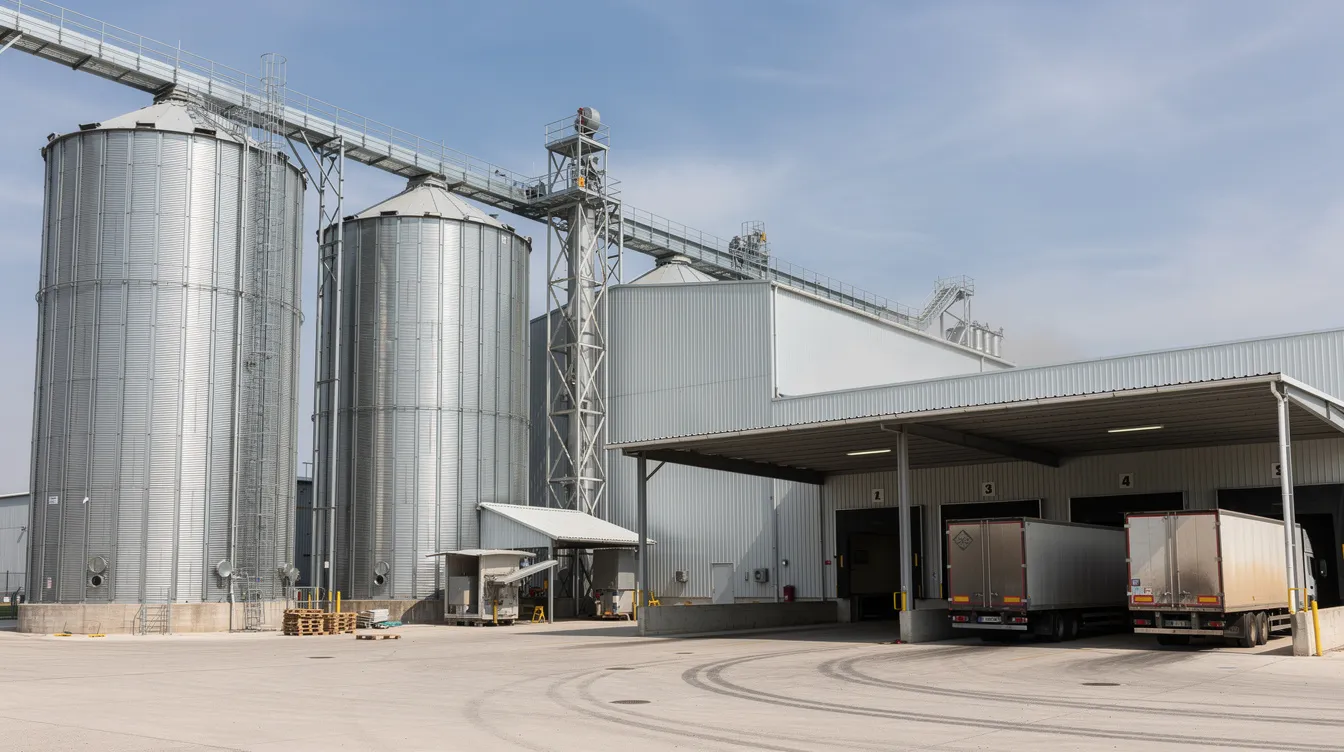
The DPR must describe the proposed location, plant layout, process flow, plant capacity and the type of feed to be produced-whether poultry feed, cattle feed, fish feed, or a multi-product combination. It should specify whether the plant will produce mash feed, feed pellets, crumbles or all three. Animal feed production involves raw material reception and storage, followed by crushing and grinding to achieve the desired particle size for feed. Mixing ensures uniform blending of feed ingredients. Pelletization uses high-capacity ring die feed pellet mills to form feed pellets, and cooling systems are essential after pelletization to maintain pellet integrity. Automated packaging ensures consistency in feed pellet distribution.
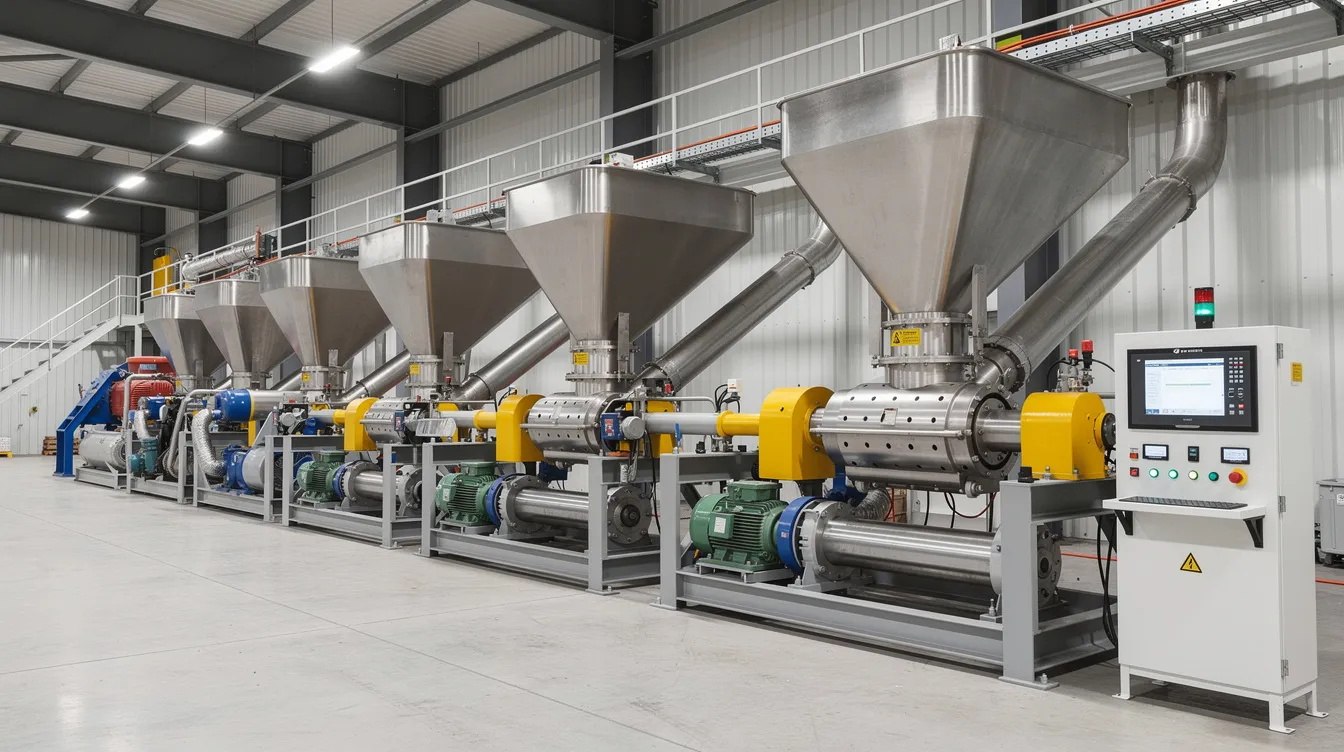
The machinery configuration must be detailed: a cattle feed plant requires a hammer mill, mixer, and pelletizer as core equipment, while a 1–3 ton per hour feed mill requires advanced hammer mills and mixers along with conditioners, coolers, crumblers, sifters, dust collection systems, control panels and automation infrastructure. The DPR should include authentic machinery quotations with specifications, capacity ratings, power consumption and supplier details.
Commercial Feasibility
A strong DPR should include a market survey that identifies potential customers and competition analysis. Animal feed pellet plants require thorough market research before establishment, covering existing demand in the catchment area, customer segments (integrators, dealers, dairy farm operators, poultry farmers), pricing strategy and distribution channels. The project’s competitive landscape should analyze existing competitors’ pricing strategies and distribution channels. Market potential should highlight growth trends in demand for animal feed driven by livestock sectors, including the increasing demand for quality feed in poultry, dairy and aquaculture.
Financial Components
The financial section of the DPR must include itemised capital expenditure, working capital requirement, 5–8 year financial projections covering projected profit and loss, balance sheets, cash flow statements, term-loan repayment schedules, DSCR analysis, break-even analysis and sensitivity analysis. The Executive Summary should summarize the total project cost, production capacity, and financial highlights so that the banker can quickly assess the project’s merit.
The difference between a generic project profile and a comprehensive bankable DPR lies in the quality of assumptions, the internal consistency of numbers and the depth of analysis. At Project Report Bank, DPRs are customised by CA Manish Gugliya based on specific location, capacity, technology and promoter circumstances, ensuring that every document reflects the actual project being proposed rather than recycled industry averages.
Types of Bank Finance Available for Animal Feed Manufacturing Plants
An animal feed manufacturing plant typically requires a combination of financing facilities to cover both the capital investment and ongoing operational funding.
Principal Categories
- Project term loan – Finances land development, factory building, core process machinery, utilities, electrical installations, pre operative expenses and sometimes a portion of working capital margin. Tenure is typically 5–8 years including moratorium, with structured repayments.
- Machinery and equipment finance – Some banks offer standalone machinery finance, especially for specific EPC packages or equipment imports. This may carry slightly different terms from a composite term loan.
- Cash credit and working capital limits – Fund day-to-day operations including purchase of raw materials (maize, soybean meal, bran, premixes), maintenance of finished goods inventory and financing of trade receivables from dealers, integrators and institutional buyers.
- Working capital demand loans (WCDL) – Short-term facilities used to bridge temporary cash gaps, often with defined repayment within 3–12 months.
- Non-fund-based limits – Letters of credit (LC) for raw material imports or bulk domestic procurement, and bank guarantees (BG) for contractual obligations.
- Consortium or multiple banking – For large projects exceeding individual bank exposure norms, consortium arrangements or multiple banking may be structured.
Banks often require a NABARD-approved project report or a professionally prepared bankable DPR for term loan appraisal under agriculture and allied activity lending categories.
Comparison of Financing Facilities
| Facility Type | Purpose | Typical Tenure | Repayment Mode | Key Appraisal Focus |
|---|---|---|---|---|
| Term Loan | CapEx (land, building, machinery, utilities) | 5–8 years including moratorium | Structured quarterly/monthly instalments | Project viability, DSCR, promoter equity |
| Cash Credit | Working capital (stock, receivables) | Renewed annually | Demand facility, drawing power based | Inventory norms, receivable quality, margins |
| WCDL | Short-term operational gaps | 3–12 months | Bullet or structured repayment | Cash flow sufficiency |
| Machinery Finance | Specific equipment purchase | 3–7 years | EMI or structured instalments | Equipment valuation, supplier credentials |
| LC/BG | Raw material procurement, contracts | Transaction-specific | As per LC/BG terms | Underlying transaction, exposure limits |
Existing feed plants planning expansion-such as adding a new pelleting line, upgrading EPC automation or installing integrated grain silos-are appraised differently from greenfield projects. Banks give weightage to the track record of the existing manufacturing unit but still require rigorous feasibility and incremental cash-flow assessment.
Bank Loan Eligibility and Project Finance Requirements
There is no single uniform eligibility rulebook that applies across all Indian banks. Each lender uses its own board-approved credit policy. However, common evaluation factors for animal feed plant bank loan requirements include the following aspects.
Promoter-Related Factors
- Experience in feed manufacturing, poultry farming, dairy farm operations or related agribusiness
- Educational background and management capability
- Existing business performance and profitability track record
- Credit history (CIBIL score, Credit Information reports)
- Net worth and personal financial standing
- Promoter’s contribution is typically 10% for general categories under certain government-backed schemes, though banks may require higher equity depending on project risk
Business Constitution
Constitution of the borrowing entity-proprietorship, partnership, LLP, private or public limited company-affects governance requirements, documentation and sometimes the applicable lending product. For larger projects, shareholding pattern, board composition and corporate governance structures become relevant.
Financial Structure Requirements
Banks typically evaluate the business’s operational margins and raw material supply chains very closely. A reasonable promoter contribution, balanced debt–equity ratio (commonly around 2:1 for manufacturing projects), clarity on unsecured loans from directors and overall group exposure are standard evaluation parameters.
Project-Specific Requirements
- Clear land title or long-term lease with adequate residual tenure
- Up-to-date land-use permissions and building approvals
- Realistic plant capacity and product mix aligned with market demand
- Authentic machinery quotations from credible suppliers
- Demonstrated availability of key raw materials within an economic procurement radius
- Raw material sourcing should include availability, seasonal fluctuations, and procurement strategies
Financial Appraisal Points
Projected profitability, DSCR and cash-flow sufficiency, stress scenarios, adequacy of working capital and the fit between project risk and available primary and collateral security are examined in detail. Key documents include identity proof and business plan along with the bankable DPR and CMA Data.
Some schemes such as AHIDF or NABARD-refinanced loans may have additional conditions, but sanction always remains subject to the lender’s independent appraisal and compliance with applicable regulations.
Animal Feed Manufacturing Plant Project Cost and Capital Investment
Capital expenditure for a medium to large grain-based animal feed plant includes several major components:
- Land and site development – Land acquisition cost varies significantly by location; site development includes grading, fencing, approach roads and drainage
- Factory building and civil works – Production hall, raw material godowns, finished goods warehouse, administrative block, laboratory, canteen and ancillary structures
- Plant and machinery – Raw material intake and cleaning systems, magnet separators, hammer mills, batch weighing and dosing systems, mixers, pellet mills, conditioners, coolers, crumblers, sifters, bagging machines, palletisation systems and dust extraction
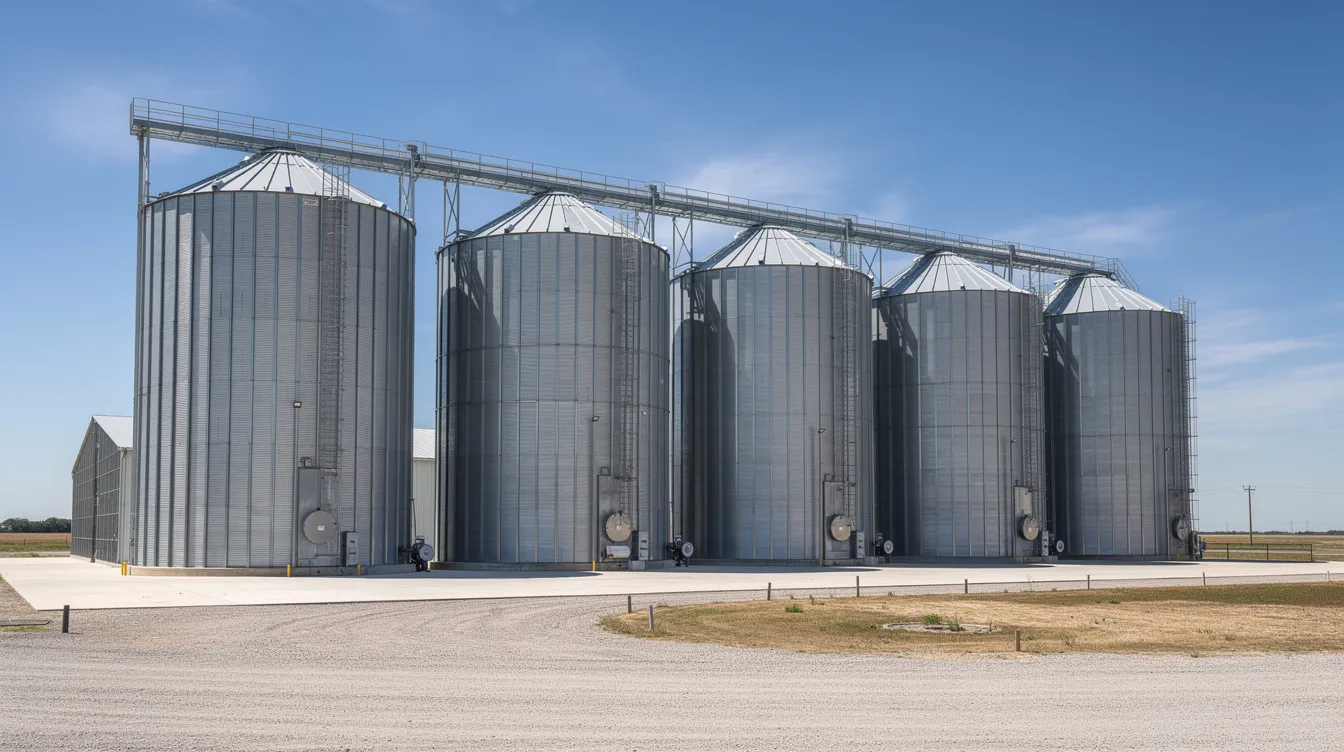
- Grain storage silos and bulk material handling – Elevators, chain conveyors, screw conveyors and industrial grain storage silos can constitute a significant portion of total CapEx
- Electrical installations and utilities – HT/LT electrical systems, transformers, DG sets, boiler and steam systems, compressed air, water treatment
- Laboratory and quality control – Near-infrared analysers, moisture meters, sieves, weighing equipment and testing consumables
- Material handling and pollution control – Conveying systems, cyclone separators, bag filters and effluent management
- Preliminary and pre operative expenses – Technical consultancy, project management, trial runs, interest during construction and regulatory compliance costs
- Contingencies – Typically 3–5% of hard costs
- Margin for working capital – Bank-funded portion of initial operating cycle requirements
Indicative Project Investment Scale
Typical project costs for cattle feed plants range from ₹15 lakh to ₹1 crore at the smaller end. Typical machinery costs for a cattle feed plant range from ₹10–20 lakh for basic units. However, industrial-scale plants at 50 TPD and above involve substantially higher investment.
| Capacity Class | Indicative Investment Range | Key Variables |
|---|---|---|
| 50 TPD | Mid-single-digit crore to low-double-digit crore | Automation level, civil cost, silo inclusion |
| 100 TPD | Low-double-digit crore to mid-double-digit crore | Multi-line capability, storage infrastructure |
| 200 TPD | Mid-double-digit crore to upper-double-digit crore | Full automation, large silo complex, EPC scope |
| 300 TPD | Upper-double-digit crore and above | Multiple process lines, integrated operations |
Note: These ranges are qualitative and indicative only. Actual project cost depends on location, degree of automation, civil construction cost, whether grain silos are included and the specific machinery configuration. Vendor quotations and plant-specific assessment are essential for accurate budgeting.
Project Report Bank bases project cost estimates on current vendor budgets, recent execution experience and location-specific assumptions rather than outdated thumb rules.
Means of Finance – Promoter Contribution and Bank Term Loan
The means of finance section in a DPR describes the funding mix used to meet total project cost. A typical structure includes:
- Promoter equity – Cash contribution from promoters, demonstrated through bank statements, net worth certificates or investment documentation
- Bank term loan – The primary debt component financing fixed assets
- Unsecured subordinate loans – Loans from promoters or group entities, acceptable to the bank as quasi-equity in some cases
- Internal accruals – For expansion projects, the existing business may contribute cash generated from operations
- Subsidy or incentive – Where applicable under schemes like AHIDF or state-level capital subsidy programmes
Illustrative Means of Finance Structure
| Component | Indicative Share | Remarks |
|---|---|---|
| Promoter Equity | 20–35% of project cost | Varies by lender policy, project risk, promoter profile |
| Bank Term Loan | 60–75% of project cost | Subject to DSCR, security, appraisal |
| Other Long-Term Sources | 0–10% | Unsecured loans, grants, subsidy (if eligible) |
| Working Capital (separate) | As assessed | Cash credit limits sanctioned independently |
Caution: The final structure will be customised in discussion with the banker and the promoter. The above is purely illustrative.
Under AHIDF, margin norms differ by enterprise size: micro and small enterprises require approximately 10% margin, medium enterprises approximately 15%, and others up to 25%. However, individual banks may set higher equity requirements based on risk perception.
Incentives or interest subvention under schemes should usually be treated as upside benefit and not the primary basis of viability in the core DPR. A project that is viable only because of subsidy carries inherent risk.
CMA Data Requirements for Animal Feed Manufacturing Plants
CMA (Credit Monitoring Arrangement) Data is a structured set of past and projected financial statements used by Indian banks for working capital appraisal and term loan review. Banks require a project report with CMA data as a standard part of credit evaluation.
Key CMA Schedules
- Schedule of existing and proposed limits – Details of all banking facilities
- Operating statement (projected P&L) – Revenue, raw material cost, manufacturing expenses, overheads, depreciation, interest and net profit
- Projected balance sheets – Assets and liabilities for each projected year
- Current assets and current liabilities statement – Detailed breakup of inventory, receivables, payables and other current items
- Working capital assessment – MPBF (Maximum Permissible Bank Finance) or other applicable method
- Fund flow statement – Sources and uses of funds across projection years
- Key financial ratios – Current ratio, debt-equity ratio, DSCR, interest coverage and profitability margins
For a new animal feed manufacturing unit, CMA Data is prepared entirely on projections aligned with the DPR. For an expansion project, CMA Data must integrate actual historical financials of the existing business with incremental projections for the proposed investment.
Animal Feed-Specific CMA Assumptions
- Raw material inventory norms (in days) for maize, soybean meal, rice bran, oil cakes and premixes
- Finished feed stock holding levels (typically 7–15 days)
- Credit period extended to dealers, farmers and institutional buyers (15–45 days)
- Average credit received from raw material suppliers (30–45 days)
The distinction between DPR and CMA Data is important: the DPR is a comprehensive narrative and analytical document; CMA Data is a banker’s spreadsheet-format summary used for sanction and ongoing monitoring. Both must be fully consistent-any mismatch between the two can slow down or derail the appraisal process.
Project Report Bank prepares CMA Data in line with specific bank formats and integrates it with projections used in the DPR to avoid mismatches.
Working Capital Assessment for Animal Feed Manufacturing Plants
Working capital is substantial in an animal feed plant because of bulk purchase of cereals and protein ingredients, seasonal price volatility and, in many cases, credit sales to dealers and institutional buyers. In a sample cattle feed plant, raw materials typically consume 70–75% of sales revenue, making inventory and procurement management the dominant factor in working capital planning.
Major Current Asset Components
- Raw material stocks – Maize, soybean meal, oilseed cakes, de oiled rice bran, wheat bran, fish meal, premixes, vitamins and minerals. Cattle feed plants require maize and de-oiled rice bran as primary ingredients. Raw material storage is crucial for animal feed production efficiency.
- Work-in-process – Relatively small in feed manufacturing, typically less than 1–2 days
- Finished goods – Packed feed pellets, mash feed or crumbles ready for dispatch (7–15 days)
- Trade receivables – Amounts due from dealers, farmers, poultry integrators and dairy farm operators (15–45 days)
- Minimum cash and bank balance – Operating float for salaries, utilities and miscellaneous expenses
Major Current Liabilities
- Creditors for raw materials (supplier credit, typically 30–45 days)
- Creditors for packing materials and services
- Outstanding wages, utilities and statutory dues
Operating Cycle and Cash Conversion
The cash conversion cycle links holding-period assumptions to the actual rupee requirement:
| Component | Illustrative Holding Period |
|---|---|
| Raw material inventory | 20–45 days |
| Work-in-process | 1–2 days |
| Finished goods | 7–15 days |
| Receivables | 15–45 days |
| Less: Creditors | 30–45 days |
| Net Working Capital Cycle | 13–62 days (varies by business model) |
Maize accounts for 85–90% of poultry feed operating costs, which means even small price fluctuations in maize markets can materially change working capital requirements from month to month. Seasonal variations in raw material supply and price add another layer of complexity.
Illustrative Working Capital Calculation
For a plant operating at, say, 100 TPD with average raw material cost of ₹25,000 per tonne of feed produced:
| Item | Assumption | Approximate Amount |
|---|---|---|
| Raw material stock (30 days) | 100 × 30 × ₹25,000 | ₹7.50 crore |
| Finished goods (10 days) | 100 × 10 × ₹28,000 (cost basis) | ₹2.80 crore |
| Receivables (30 days) | 100 × 30 × ₹30,000 (sale price) | ₹9.00 crore |
| Gross current assets | ₹19.30 crore | |
| Less: Creditors (30 days) | ₹7.50 crore | |
| Net working capital | ₹11.80 crore | |
| Bank finance portion (e.g. 75%) | ~₹8.85 crore | |
| Promoter margin | ~₹2.95 crore |
Note: This is a simplified illustration. Actual assessment depends on operating assumptions, bank norms, product mix and the applicable working capital assessment method (Tandon/Nayak/Turnover method).
For a detailed methodology, the working capital assessment guide for animal feed plants on ProjectReportBank.com provides comprehensive coverage.
Financial Projections Required for Bank Loan Appraisal
Projections in a DPR should span 5 to 7 years and cover total project cost and means of finance along with integrated operating statements, balance sheets and cash flows. Indian banks expect these projections to capture realistic capacity ramp-up and seasonal trends rather than flat-line optimistic assumptions.
Core Projection Elements
- Capacity utilisation by year – First-year utilisation commonly projected at 40–60% for new plants, ramping to 75–90% over three to four years. A typical cattle feed plant operates at 2–5 tons per day capacity at the smaller end, while industrial plants operate at substantially higher throughput.
- Sales volumes and realisations – By product category (broiler feed, layer feed, cattle feed, compound feed, fish feed etc.), reflecting the product mix and pricing strategy
- Raw material consumption – Detailed formulation-based costs. Poultry feed production costs are primarily driven by maize, accounting for 85–90% of variable cost. Animal feed production needs grains, protein sources, vitamins, and minerals.
- Power and fuel – Electricity, steam (for pelleting), diesel for DG backup; pelleting is particularly energy-intensive
- Labour and overheads – Salaries, repairs, insurance, administrative and selling expenses
- EBITDA, PBT and PAT – Derived from the above, with depreciation, interest and tax assumptions aligned with Companies Act and Income Tax norms
- Projected balance sheets – Showing evolution of assets, liabilities and net worth
- Cash flow statements – Operating, investing and financing cash flows
- Term loan amortisation schedules – Matching repayment to projected cash generation
Key Financial Ratios and Metrics
- Gross margin and net margin – Poultry feed plants have gross profit margins of 15–25%. Net profit margins for cattle feed plants are typically 10–15%.
- DSCR – Annual and average over loan tenure
- Current ratio, debt-equity ratio, ROCE
- Break-even analysis – The Break-Even Point indicates the capacity utilisation level where the plant neither profits nor loses. Many feed plant reports show break-even at approximately 40–45% capacity utilisation.
- Project IRR, equity IRR and net present value (NPV)
- Payback period – A typical payback period for cattle feed plants is 3–4 years at the smaller scale; larger industrial projects may show longer payback depending on capital intensity
- Sensitivity analysis – Financial projections include sensitivity analysis to evaluate the impact of fluctuations in key financial variables, typically modelling 5–10% adverse movements in selling prices or raw material costs
For a detailed understanding of how realistic feed mill projections are structured, financial projections for animal feed mills on ProjectReportBank.com is a useful resource.
DSCR, Repayment Capacity and Bank Loan Appraisal
The Debt Service Coverage Ratio is calculated as net cash accruals divided by total debt service (interest plus principal repayment) for the year. Key financial ratios like DSCR should be calculated to demonstrate loan repayment capability. Banks examine both annual DSCR for each projected year and average DSCR over the entire loan tenure.
How DSCR Works
DSCR is influenced by EBITDA levels, interest cost, depreciation (which is a non-cash charge added back to compute cash accruals), tax outflow and the repayment structure including any initial moratorium period.
Formula:
DSCR = (Net Profit After Tax + Depreciation + Interest on Term Loan) ÷ (Principal Repayment + Interest on Term Loan)
Numerical Example
Consider the following assumptions for a single projected year of an animal feed plant:
| Parameter | Amount (₹ Lakh) |
|---|---|
| EBITDA | 320 |
| Depreciation | 85 |
| Interest on term loan | 72 |
| PBT | 163 |
| Tax (say 25%) | 41 |
| PAT | 122 |
| Net cash accruals (PAT + Depreciation) | 207 |
| Add: Interest on term loan | 72 |
| Total available for debt service | 279 |
| Principal repayment for the year | 110 |
| Interest on term loan | 72 |
| Total debt service | 182 |
| DSCR | 1.53 |
In this example, the DSCR of 1.53 indicates that the project generates sufficient cash to cover debt obligations with a reasonable margin. DSCR must be at least 1.50 for loan approval under most bank appraisal norms, though individual banks may set thresholds between 1.25 and 1.50 depending on risk factors, security and promoter strength.
DSCR should be above 1.5 for bank loan eligibility in most practical scenarios. Consistently weak DSCR under realistic assumptions can lead to reduction of loan quantum or outright rejection, even where security is adequate.
Repayment Structuring
Back-ended repayments, graded instalments or ballooning schedules that align with projected cash flows can help manage DSCR during initial capacity ramp-up years. A moratorium of 12–24 months during construction and trial production is common for industrial feed manufacturing projects.
Animal Feed Manufacturing Plant Project Finance Example – Capacity and Loan Sizing
Consider a hypothetical 100 TPD integrated poultry and cattle feed plant being planned as a greenfield project. The following illustrates the logical approach to project planning and loan sizing.
Step-by-Step Logic
- Land and building – Identify a suitable 3–5 acre industrial plot; estimate civil construction for production hall, raw material godowns, finished goods warehouse, utilities area, laboratory and administrative block.
- Machinery – Select an automated 10–15 TPH pellet line with mash and crumble capability, including raw material intake, cleaning, grinding (hammer mill), batching, mixing, conditioning, pelletization using high-capacity pellet mills, cooling, crumbling, screening and automated bagging. Add grain silos for 15–30 days’ raw material storage.
- Total project cost – Aggregate land, civil works, machinery, utilities, electrical, pre operative expenses and contingencies. For a 100 TPD plant with full automation and silo infrastructure, the total cost typically falls in the range of several crore rupees. Precise estimation requires plant-specific vendor quotations.
- Means of finance – Structure promoter contribution at 25–30% of project cost, with the balance as bank term loan. Working capital limits to be sanctioned separately.
- Working capital – Based on a 30–45 day operating cycle, estimate cash credit requirement for inventory and receivables financing.
This example is purely illustrative. Project Report Bank uses plant-specific quotations, formulation-level raw material data and location-specific market intelligence to produce accurate project finance structures and loan sizing for each assignment.
Promoters considering integrated projects with on-site grain handling, premix manufacturing or related animal feed processing operations can refer to the integrated animal feed mill project report for structured project frameworks.
Documents Required for Animal Feed Plant Bank Loan Applications
Documentation for an animal feed plant loan falls into several categories.
Promoter and Entity Documents
- Aadhaar, PAN and photographs of all promoters/directors
- Partnership deed, MoA/AoA or LLP agreement
- Board resolution authorising borrowing
- Udyam registration (for micro and small enterprises and medium enterprises)
- GST registration certificate
- Existing bank account statements (last 12–24 months)
- Income tax returns (last 3 years)
Financial Documents
- Audited financial statements of existing businesses (last 3 years)
- CA-certified net worth statements of promoters
- CMA Data prepared in the bank’s required format
- Details of existing loans and contingent liabilities
- Financial projections should detail production costs, cash flow, and balance sheet statements
Project Documents
- Detailed bankable DPR covering technical, market and financial feasibility
- Plant and machinery quotations from identified suppliers
- Civil and structural cost estimates
- Land ownership documents or registered long-term lease deeds
- Building plans and approvals
- Environmental or pollution clearances as applicable
Security Documents
- Title deeds of property offered as primary and collateral security
- Registered valuation reports
- Encumbrance certificates
- Details of personal and corporate guarantees
Additional Documentation for Expansion Projects
Existing units planning expansion require current production data, installed capacity and utilisation records, past 12–24 months MIS, existing sanctions for working capital or term loans, and reconciliation between current performance and proposed expansion projections. A cattle feed project report for expansion follows a different documentation approach from a greenfield DPR.
Regulatory Approvals and Compliance Requirements
Regulatory requirements differ by state and local authority. However, some broad categories apply to most animal feed manufacturing projects.
Business Registrations
- Incorporation or registration of entity with MCA/ROF
- Udyam registration for MSME classification where eligible
- GST registration
- Statutory compliance must include registrations such as GST and approvals from relevant authorities
Industrial and Municipal Approvals
- Land-use permissions and zoning clearances
- Building plan approval from local municipal authority
- Occupancy certificate upon completion
- Fire safety NOC
- Electrical load sanction (HT/LT connection approval)
- Land requirement and land-use conversion where agricultural land is being used for industrial purposes
Environmental Compliance
Environmental norms for animal feed plants typically focus on dust emissions, noise control and solid waste management. Mandatory approvals include licenses like State Pollution Control Board consent-Consent to Establish (CTE) before construction and Consent to Operate (CTO) before commercial production. The environmental impact of feed plants is generally manageable with appropriate dust extraction, cyclone separators and waste handling systems.
Feed Quality and Labelling
Feed quality and labelling may need to comply with BIS standards (such as IS 2052:2009 for compound cattle feed) and relevant government notifications for compound feed, mineral mixtures and feed additives. It is important to note that human food regulations like FSSAI are separate and not automatically applicable to every animal feed manufacturer. Promoters producing quality feed for commercial sale should verify applicable quality standards with relevant authorities.
Promoters should always verify current regulatory requirements with local authorities or qualified professionals, as laws and notifications change over time.
Common Reasons Banks Reject or Delay Animal Feed Manufacturing Plant Loans
Most rejections are due to gaps in planning and documentation rather than the basic attractiveness of the feed sector itself.
Frequent Issues
- Unrealistic capacity utilisation – Projecting 90–100% utilisation from the first year when practical ramp-up typically takes 2–3 years
- Over-optimistic selling prices – Assuming premium realisations without demonstrating buyer commitments or market differentiation
- Underestimated raw material costs and working capital – Ignoring seasonal and cyclical price movements in maize, soybean meal and other ingredients
- Weak raw material supply planning – Not addressing raw material procurement radius, logistics costs, quality variability and raw material supply reliability
Structural Weaknesses
- Inadequate promoter contribution or inability to demonstrate source of equity
- Weak credit history, high existing leverage or adverse CIBIL scores
- Insufficient primary and collateral security
- Unresolved land title issues, encumbrances or missing regulatory approvals at the time of appraisal
Documentation Mismatches
- Inconsistencies between DPR and CMA Data in project cost, capacity or revenue assumptions
- Missing term-loan repayment schedule in projections
- Absence of sensitivity analysis or risk assessment
- Incomplete or unpriced machinery quotations
A well-prepared DPR ensures faster loan approval and higher subsidy eligibility by identifying and addressing these issues upfront. Professional advisory services focus on document preparation relevant to various project financing needs, ensuring internal consistency across all submissions. DPR preparation should reflect a structured approach tailored to specific project requirements rather than generic templates.
How to Prepare a Bankable DPR and CMA Data for an Animal Feed Manufacturing Plant
The following methodology is suitable for medium- and large-scale industrial projects.
Step 1 – Promoter and project profiling. Collect details on promoters, existing businesses, proposed capacity (e.g. 50 TPD poultry feed plus 30 TPD cattle feed), target geographies, cattle population in the catchment area and approximate bank loan requirement.
Step 2 – Market and product planning. Analyse local market demand, existing demand absorption capacity, competing feed mills, integration opportunities with poultry or dairy farm operations. Finalise product mix: broiler starter, grower, finisher, layer feed, cattle feed, compound feed and specialty formulations. Effective marketing strategies should ensure proper customer reach and brand positioning in the local market.
Step 3 – Technology and machinery selection. Decide on process flow (mash, pellet, crumble), automation level and number of production lines. Identify reputable machinery suppliers and obtain detailed quotations. The automatic animal feed mill machinery and EPC cost guide provides useful reference for evaluating equipment options.
Step 4 – Project cost estimation. Obtain updated machinery quotations, estimate civil and structural works, utilities, grain storage infrastructure, operational efficiency requirements and pre operative expenses. Create a detailed capital expenditure sheet with appropriate contingencies. A DPR typically covers project economics and operational costs comprehensively.
Step 5 – Operating and raw material planning. Prepare formulation-based consumption sheets linking feed recipes to maize, soybean meal, bran, oil cakes, fish meal and feed additives. Estimate per-tonne production cost, considering fixed costs, variable costs and operational costs at different utilisation levels.
Step 6 – Working capital assessment. Compute inventory, receivable and payable norms in days and translate them into rupee working capital requirement for each projected year after commissioning.
Step 7 – Financial modelling and projections. Build integrated P&L, balance sheet and cash flow projections. Compute DSCR, break-even volumes, IRR, net present value and scenario analysis for adverse movements in raw material prices, selling prices or production volumes.
Step 8 – CMA Data preparation. Align projections from the DPR into the specific CMA formats required by the proposed lender, including MPBF or other applicable working capital assessment method. A DPR includes detailed CMA data for bank loans.
Step 9 – Final DPR drafting. Compile technical, market, financial and risk sections into a lender-friendly document with clear assumptions, reconciliations and annexures for quotations, approvals and supporting data. A bankable project report must provide institutional lenders with confidence in technical viability and financial profitability.
Step 10 – Bank discussion and revisions. Present DPR and CMA Data to bankers, address queries, update assumptions where necessary and ensure documents remain consistent across all submissions.

Integrated and Expansion Animal Feed Projects – Special DPR Considerations
Many Indian promoters plan integrated projects such as poultry hatchery plus broiler farming plus feed mill, or dairy farm plus cattle feed plant. In such cases, the DPR must capture internal captive consumption and external sales separately, with appropriate transfer pricing between divisions, shared infrastructure allocation and consolidated versus segment-wise profitability.
For expansion and modernisation projects-where an existing cattle feed or poultry feed manufacturing plant adds additional capacity, automation or product lines-the DPR must blend historical performance with incremental project economics. Banks often give weightage to proven track record in expansion cases but still expect rigorous feasibility study and cash-flow assessment for the incremental investment.
Detailed resources for segment-specific and expansion projects are available:
- Animal feed mill expansion project report covers incremental capacity DPR methodology
- Poultry feed manufacturing plant project report addresses species-specific DPR requirements
- Industrial cattle feed manufacturing plant project report covers dairy-focused feed plant planning, which can serve animals across cattle fattening farm and dairy farm segments
Banks assess integrated projects for inter-unit risk, demand concentration and whether individual segments can sustain independent viability if one component underperforms.
Animal Feed Plant CMA Data and Working Capital for Existing Units
Existing feed manufacturers seeking enhancement of cash credit limits or new term loans for balancing equipment must present CMA Data incorporating actual historical trends in sales, margins, inventory and receivable levels.
Reconciliation is critical: audited balance sheets, stock statements submitted to banks and the proposed CMA projections must be internally consistent. Discrepancies between reported stock and assessed drawing power can raise serious credibility concerns during appraisal.
For existing units, banks closely monitor past utilisation of working capital limits, frequency of cheque returns, overdues, adherence to financial covenants and operational efficiency metrics. These aspects must be factored into the DPR narrative and reflected in the CMA Data.
Project Report Bank assists operational feed plants in restructuring limits, justifying limit enhancements and modelling DSCR after expansion using real numbers from the existing business-not generic industry assumptions. The approach is similar to dairy plant working capital assessment methodologies where real operating data drives the financial model rather than theoretical norms.
Risk Assessment and Sensitivity Analysis in Animal Feed Bank Loan DPR
Every serious animal feed plant DPR must include a structured risk assessment section. Loans may require detailed assessments of operational risks and a mitigation plan for fluctuating raw material prices.
Key Risk Categories
- Raw material price risk – Maize and soybean meal prices can fluctuate 15–30% within a single year, directly affecting gross margins. Operating costs for poultry feed plants are primarily driven by raw materials, especially maize.
- Demand and market risk – Over-reliance on a single customer segment (e.g. one poultry integrator) or geography creates concentration risk. Animal health crises such as avian influenza can temporarily disrupt poultry feed demand.
- Technology and execution risk – Delays in equipment delivery, commissioning problems, power availability issues and learning curve for operators
- Regulatory risk – Changes in environmental norms, feed quality standards or import policies for feed ingredients
Sensitivity Analysis
Banks expect sensitivity scenarios showing the impact on profitability and DSCR under adverse conditions:
| Scenario | Impact Area |
|---|---|
| 10% increase in raw material prices | Gross margin compression, DSCR reduction |
| 10% decline in selling prices | Revenue and profitability decline |
| 20% lower capacity utilisation in Year 1–2 | Slower cash generation, DSCR stress |
| 6-month delay in commissioning | Interest during construction increase, deferred revenue |
Mitigation strategies described in the DPR should include diversified raw material procurement, contracts with farmers and traders, raw material storage and inventory planning to manage price spikes, flexible pricing mechanisms with customers, feed solutions for multiple species to reduce segment concentration, and conservative capacity ramp-up assumptions.
Indian banks expect promoters of large projects (₹25 crore to ₹100+ crore) to demonstrate understanding of such risks, not merely present an optimistic base case. This improves confidence during sanction discussions. The approach mirrors risk and sensitivity analysis methodologies used in dairy project finance, adapted for feed industry-specific variables.
Animal Feed Manufacturing Plant Project Finance Schemes and Support (Indicative)
Schemes, subsidies and guarantee programmes change over time, and promoters must always verify latest guidelines from official sources. The following is indicative only.
Feed plants may, depending on project structure and eligibility, explore benefits under schemes like the Animal Husbandry Infrastructure Development Fund (AHIDF), which explicitly includes animal feed manufacturing units among eligible categories. Under AHIDF, scheduled banks provide credit up to 90% of project cost for eligible borrowers, with interest subvention and credit guarantee fund trust coverage for qualifying MSME borrowers.
Collateral-free loans up to ₹2 crore are available under CGTMSE for eligible micro and small enterprises, which may reduce collateral requirements for smaller feed plant projects. Subsidies under PMEGP can reach up to ₹35 lakh for special categories, though these apply primarily to smaller-scale ventures.
NABARD-refinanced term loans through cooperative and rural banks are another channel, particularly for feed plants serving dairy farm and livestock sectors in rural areas.
Even under government-supported schemes, banks conduct independent appraisal based on DPR, CMA Data, DSCR, promoter profile and security. No scheme guarantees automatic loan sanction.
How ProjectReportBank.com Supports Animal Feed Manufacturing Project Finance
Project Report Bank is a Chartered Accountant-led professional advisory platform focused on DPR preparation, CMA Data, financial modelling and project finance advisory for industrial and MSME projects across India.
CA Manish Gugliya, FCA, DISA (ICAI), with more than 20 years of professional experience, personally oversees feed manufacturing DPRs, financial projections and bank-loan documentation. The approach combines practical business understanding with structured financial analysis, focusing on realistic assumptions, transparent calculations and proposals that promoters can confidently discuss with financial institutions.
Core Services for Animal Feed Projects
- Customised bankable DPR preparation for poultry feed, cattle feed, fish feed, compound feed and integrated feed mills
- CMA Data preparation in specific bank formats with integrated working capital assessment
- Project cost estimation based on current vendor quotations and location-specific parameters
- Term-loan structuring, DSCR and repayment modelling
- Sensitivity and risk analysis
- Feasibility study and viability analysis for greenfield and expansion projects
- Investor-ready DPR preparation where equity participation is envisaged
Professional advisory services focus on document preparation relevant to various project financing needs, using plant-specific assumptions rather than recycled templates. Promoters are encouraged to explore the detailed resources on capacity planning, working capital methodology, machinery EPC costs and segment-specific DPRs published on ProjectReportBank.com before finalising their project plans.
Frequently Asked Questions
The following questions address common practical doubts. Answers are general in nature; final bank decisions depend on individual case assessment.
What is a realistic project size for bank finance in an animal feed manufacturing unit?
Organised banks typically look at projects with meaningful scale-for example, 50–300 TPD capacity plants where total cost often falls in a multi-crore range. Animal feed mill plants can produce 1–3 tons of feed per hour at the smaller industrial scale. However, there is no universal minimum or maximum; limiting factors are promoter contribution, security coverage, projected cash flows and bank-specific exposure norms. A typical cattle feed plant operates at 2–5 tons per day capacity at the cottage level, while industrial-scale plants target significantly higher throughput.
How long does it usually take to get a term loan sanctioned for a feed plant?
Timelines vary widely. Once a complete DPR, CMA Data and supporting documents are submitted, appraisal and sanction for an MSME-scale feed project may take a few weeks. Large corporate-scale projects involving ₹25–₹100+ crore can take several months. Incomplete documentation, frequent changes in project scope, unresolved land issues or pending regulatory approvals stretch timelines substantially.
Can I start with a smaller cattle feed plant and later expand capacity using the same DPR?
Banks prefer a DPR that accurately reflects the project being financed. Starting with a significantly smaller plant than described in the DPR creates confusion in appraisal. A better approach is to either plan a phased project (Phase I and Phase II) within the same DPR or prepare a fresh DPR and CMA Data at the time of major capacity expansion so that projections remain realistic and credible.
Is collateral always required for an animal feed manufacturing plant loan?
Collateral policies differ among lenders and schemes. Most term loans, especially large ones, are secured by mortgage of land and building plus hypothecation of plant machinery. However, certain MSME borrowers may access partially or fully collateral-free limits under applicable guarantee schemes such as CGTMSE, subject to eligibility conditions. Availability of collateral does not replace the need for a viable, cash-flow positive project demonstrated through a robust DPR and financial projections.
Can Project Report Bank also help in discussions with my bank after preparing the DPR?
Project Report Bank’s primary role is professional preparation of DPRs, CMA Data, projections and financial analysis. In many assignments, the team also supports promoters in clarifying project assumptions and financial logic to bankers, subject to agreed scope. The firm does not guarantee sanctions or influence lending decisions, which remain entirely with the bank based on its independent appraisal and credit policies.
Conclusion – Professional Bankable DPR and CMA Data for Industrial Animal Feed Projects
Industrial animal feed projects-whether poultry feed, cattle feed, aqua feed or integrated multi-species plants-require careful planning of plant capacity, machinery configuration, capital expenditure, working capital and risk mitigation to meet bank appraisal standards. The manufacturing process typically involves raw material input, processing, and quality control procedures that must be accurately reflected in technical and financial documentation.
A professionally prepared animal feed manufacturing plant bank loan DPR, aligned CMA Data, realistic financial projections and DSCR-based repayment analysis substantially improve the quality of loan proposals. They help identify weaknesses before submission, ensure internal consistency across documents and present the project in terms that credit appraisers can evaluate with confidence. However, no document preparation can guarantee loan sanction, which remains the prerogative of the lender.
Planning an Animal Feed Manufacturing Plant or Seeking Bank Project Finance?
ProjectReportBank.com provides professionally structured bankable DPRs, CMA Data, financial projections, working capital assessments and project finance advisory for medium- and large-scale industrial animal feed projects across India.
Consult CA Manish Gugliya, FCA, DISA (ICAI) for professional assistance with your manufacturing project financing requirements.
Share your proposed capacity, location, estimated project cost, existing business status and approximate bank loan requirement through the ProjectReportBank.com contact form or WhatsApp channel for an initial professional discussion about your animal feed manufacturing plant project finance needs.