Key Takeaways
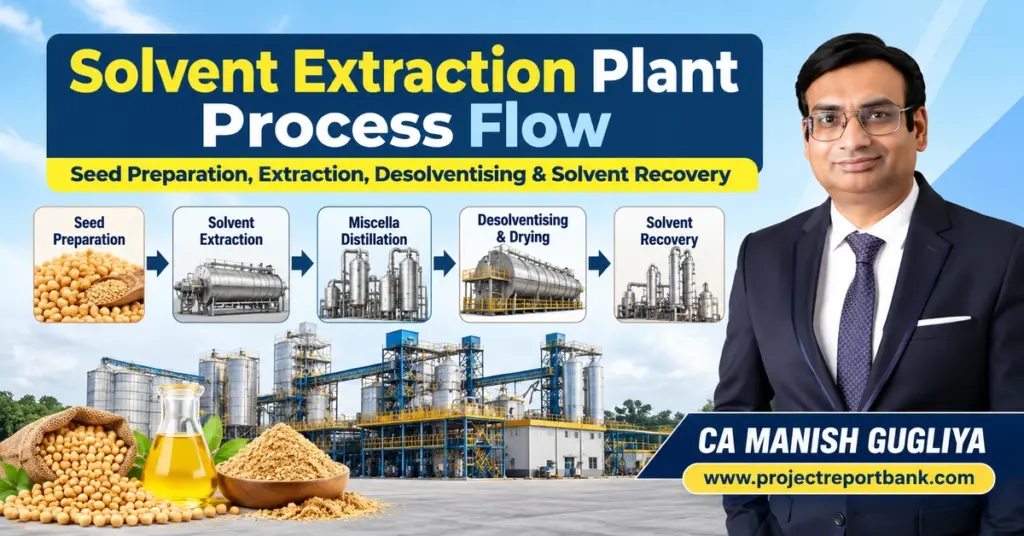
- A typical edible oil solvent extraction plant converts cleaned, prepared seeds or pre-pressed cakes into crude oil, de-oiled meal and recovered solvent through an integrated sequence of seed preparation, hexane extraction, miscella distillation, meal desolventising and solvent recovery.
- Solvent extraction can achieve oil yields exceeding 95% and leave less than 0.5% residual oil in meal when the process is well designed and operated.
- Commercial success depends on extraction efficiency, high solvent recovery, meal quality, safe operation and sustained capacity utilisation rather than just installing machinery.
- The solvent extraction plant process flow consists of several interconnected stages, each with a direct impact on operating cost, product quality and overall plant profitability.
- Project Report Bank, led by CA Manish Gugliya, FCA, DISA (ICAI), prepares customised DPRs and feasibility studies so promoters can financially evaluate solvent extraction plants before committing large capital.
Introduction: Industrial Solvent Extraction Plants and Investment Perspective
This article explains the solvent extraction plant process flow step by step, from raw seed receiving through hexane extraction, miscella distillation, desolventising and solvent recovery, in language accessible to entrepreneurs and project promoters evaluating industrial investments.
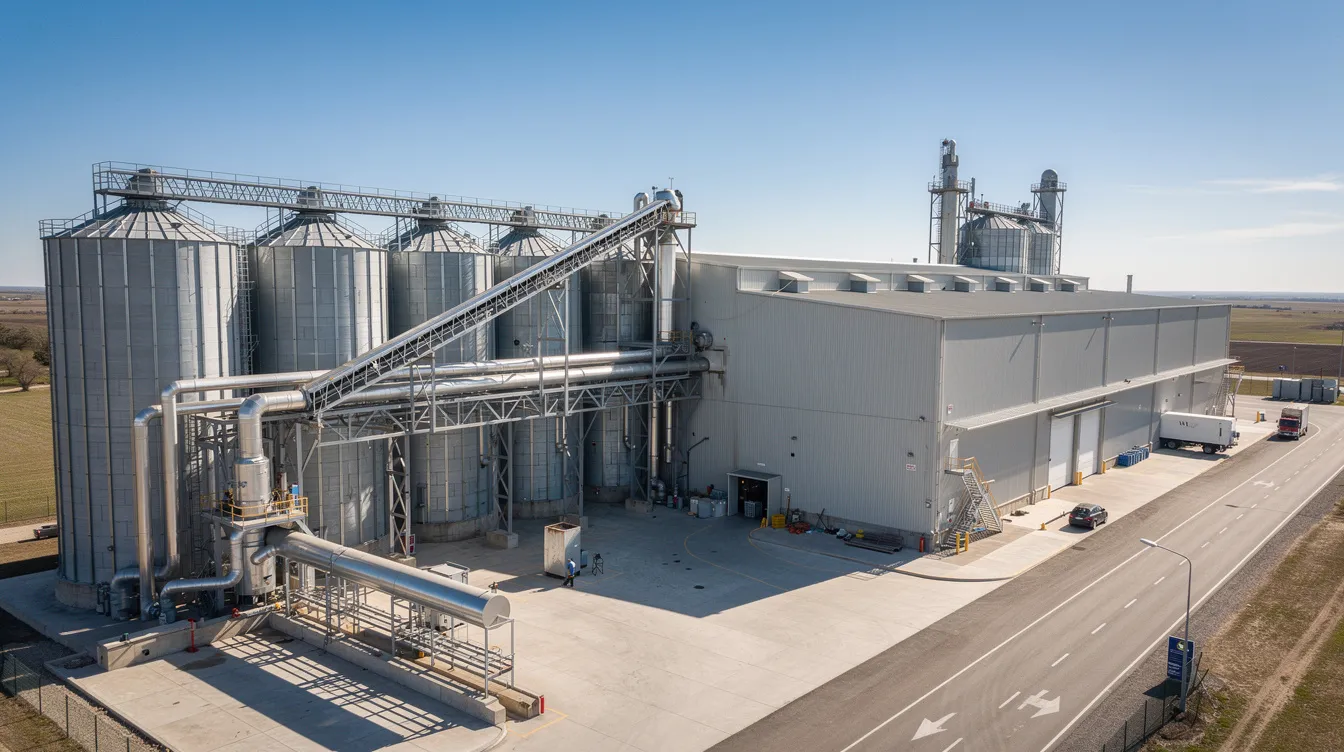
A solvent extraction plant is an industrial unit that uses the solvent extraction method, typically employing food-grade hexane, to recover residual oil from prepared oilseeds or pre-pressed cakes. The key steps produce two main commercial outputs: crude oil for further processing and refining, and protein-rich de-oiled meal sold as animal feed or for other industrial applications. The process is economical for large scale production, generally above 50 tonnes per day and commonly in the 500 to 5,000 TPD range for industrial plants across India.
The discussion here covers edible oil applications for feedstocks including soybean, rapeseed-mustard, sunflower, cottonseed and rice bran. Commercial drivers that shape plant profitability include extraction efficiency, hexane consumption, steam consumption, energy consumption, plant uptime, meal quality, safety considerations and environmental compliance. As a practising Chartered Accountant advising project promoters, I evaluate these technical parameters through the lens of financial feasibility, working capital, DSCR and project returns. Integrated projects combining crushing, extraction and refining are often evaluated through an integrated soybean crushing, oil extraction and refining plant DPR to capture the full value chain.
What Is the Solvent Extraction Process in an Edible Oil Plant?
The solvent extraction process is a mass transfer operation where a liquid solvent, usually food-grade hexane, selectively dissolves oil from solid oil-bearing materials such as flakes or pressed cake. Unlike mechanical pressing, which physically squeezes oil from seeds, solvent extraction achieves significantly higher oil recovery efficiency by dissolving oil from oil bearing cells through diffusion and percolation. A solvent extraction plant recovers oil from oilseed cakes using a liquid solvent, making it the dominant method in the global processing industry for vegetable oils.
Key concepts to understand:
- Solid liquid extraction: The primary mechanism, where a solid feed (flakes or cake) contacts a liquid organic solvent to extract oil. This is distinct from liquid liquid extraction, which involves separating components between two liquid phases based on relative solubilities.
- Miscella: The oil-solvent mixture formed during extraction, which must be distilled to recover crude oil.
- De-oiled meal: The solid residue after extraction, containing residual oil typically below 1% in well-operated plants.
- Direct extraction vs pre pressing: Low-to-medium oil content raw materials like soybean flakes undergo direct solvent extraction, while high oil content seeds such as rapeseed, cottonseed and sunflower benefit from pre pressing followed by solvent extraction to reduce solvent load and improve extractor operation.
Solvent extraction is widely used not only in edible oil processing plants but also in chemical engineering and pharmaceutical industries for separating compounds based on physical properties like solubility. For edible oil plants, it offers higher overall oil recovery than pressing alone, better control over residual oil in meal, suitability for continuous production lines, and compatibility with integrated refining units. Hexane is the most commonly used solvent for extraction due to its low boiling point (approximately 63–69°C) and high efficiency in dissolving vegetable oils.
Complete Solvent Extraction Plant Process Flow Diagram
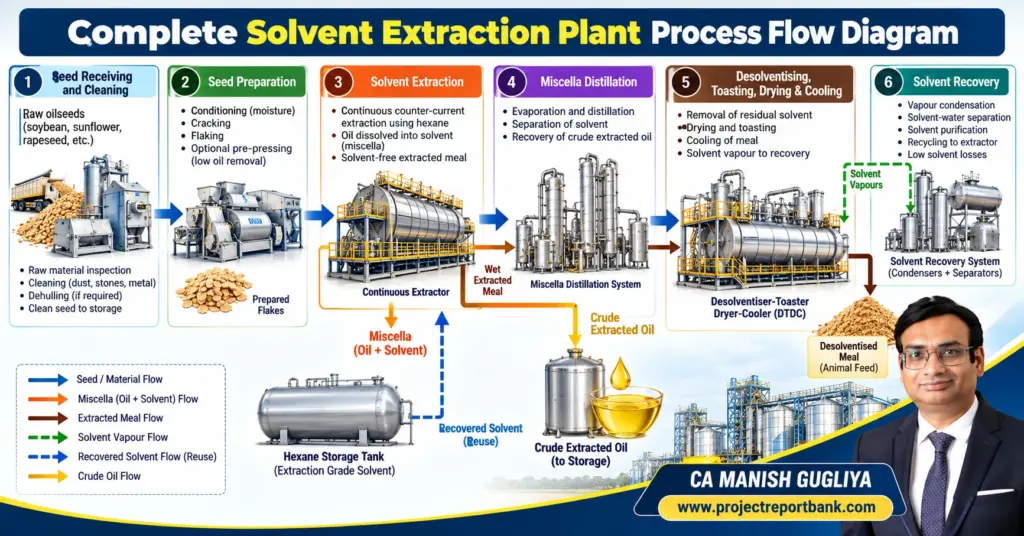
The following text-based process flow diagram illustrates the complete solvent extraction process from seed receiving to final product dispatch and solvent recycling.
Raw Seed Receiving → Storage → Cleaning → Dehulling / Cracking → Conditioning → Flaking / Expanding → (Optional Pre-Pressing) → Continuous Solvent Extraction → Miscella Distillation → Crude Oil Storage → Meal Desolventising–Toasting–Drying–Cooling (DTDC) → Meal Storage → Solvent Condensation & Recovery → Solvent Storage & Recirculation
Three parallel streams operate simultaneously within this process:
- Oil stream: Miscella from the extractor passes through staged evaporation and final stripping in the distillation system to produce crude oil, which moves to storage tanks before edible oil refining (degumming, neutralisation, bleaching, deodorisation).
- Meal stream: Solvent-laden meal from the extractor enters the desolventiser-toaster-dryer-cooler (DTDC) system, where hexane vapor is removed, antinutritional factors are managed through toasting, and the meal is dried and cooled for storage as protein-rich animal feed or further processing.
- Solvent stream: Solvent vapor from the extractor, DTDC and distillation stages is routed to condensers, then to a solvent-water separator, and finally back to solvent tanks for re-use. A small quantity of fresh solvent makeup replaces unavoidable losses.
Counter-current extraction, heat integration and closed-loop solvent recovery link these streams to enhance extraction efficiency and reduce operating cost. An actual engineering process flow diagram (PFD) would be part of a professional DPR, but this conceptual overview is sufficient for understanding the interconnected stages.
Stage 1 – Raw Material Cleaning and Seed Preparation
Seed preparation plays a crucial role in extraction efficiency, hexane consumption, plant safety and equipment life. Inadequate preparation is a frequent cause of higher residual oil, throughput bottlenecks and excessive fines in real extraction systems.
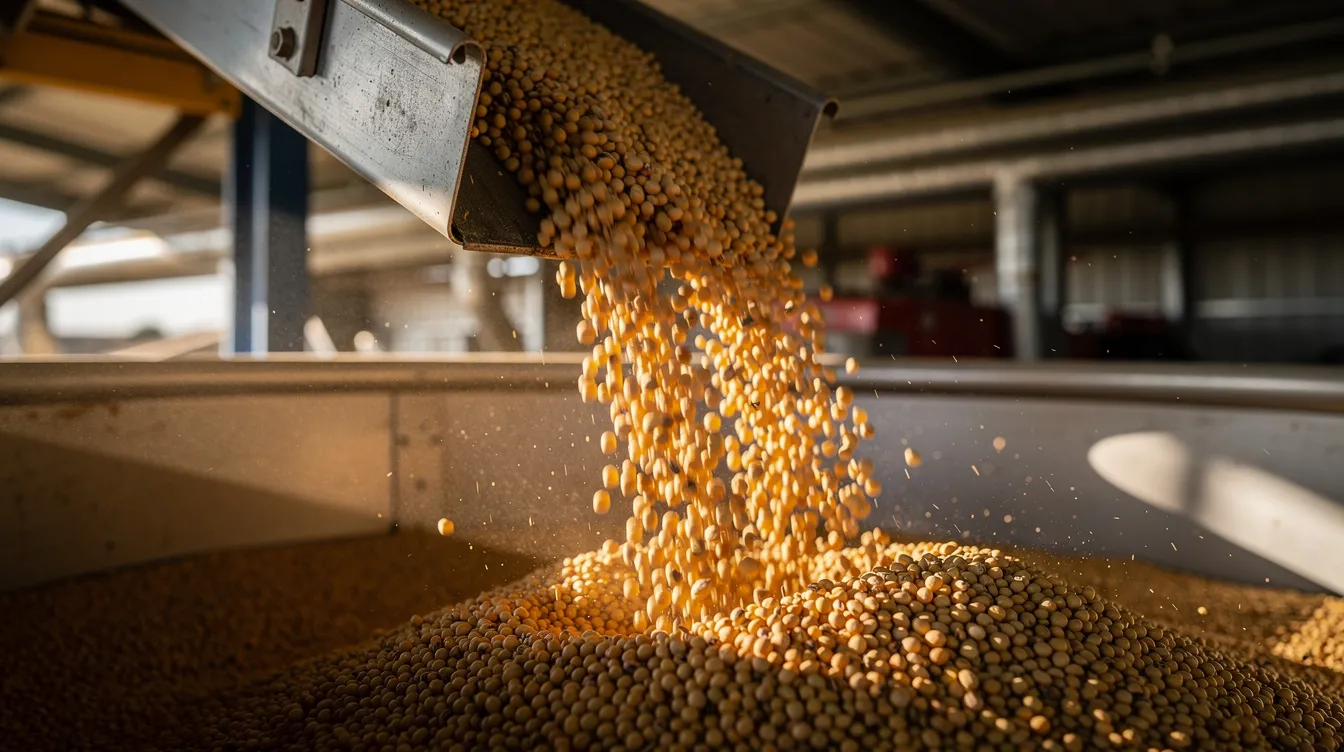
- Receiving and inspection: Raw materials arrive at the plant and pass through weighbridge, sampling and basic quality checks for moisture, FFA and impurities. Incoming soybean seed moisture is typically 12–14%, which must be managed before flaking.
- Cleaning: Seed cleaners, de-stoners, magnetic separators and aspiration systems remove dust, stones, metallic impurities and other hazardous materials that can cause equipment wear, fire risk and product contamination.
- Dehulling and cracking: For soybean, cottonseed and sunflower, hull removal (soybeans contain approximately 6–8% hulls) and cracking into appropriate particle size improves extraction rate and increases meal protein value.
- Conditioning: Seeds are heated to approximately 70°C with moisture adjusted to around 9–10% to soften cell structure, rupture cell walls and optimise plasticity before flaking. Higher temperatures during conditioning enhance leaching rates during subsequent extraction.
- Flaking: Prepared seeds are passed through flaking mills to produce thin, uniform flakes. Flaking increases the surface area of raw materials to optimise extraction. For soybean, target flake thickness is generally 0.30–0.38 mm, with fines minimised to ensure good percolation in the extractor bed. Flake uniformity has a direct impact on both diffusion rate and solvent drainage.
- Expanding or pelleting: Where applicable, expanders increase bulk density and reduce fines, improving percolation in deep bed extractors.
- Optional pre-pressing: For high oil content seeds, mechanical screw pressing reduces oil content in cake before solvent extraction, lowering solvent circulation requirements and improving cost effectiveness.
- Impact on downstream performance: Poor preparation leads to higher residual oil in meal, increased solvent-to-solid ratio, extractor flooding risk, fines carry-over to miscella and downstream fouling, all of which reduce profitability.
Stage 2 – Continuous Solvent Extraction Using Hexane
In the continuous hexane extraction stage, prepared seeds or flakes move through an extractor counter-current to circulating solvent, forming miscella while leaving de-oiled meal. This is where the solvent extraction method delivers its primary advantage: the ability to extract oil far more completely than mechanical pressing alone.
- Choice of solvent: Hexane is preferred for its low boiling point (approximately 63–69°C), good selectivity for oil, chemical stability and recyclability. Temperature affects extraction efficiency, with optimal ranges around 60–63°C. While hexane is highly flammable and requires strict safety protocols, its physical properties and cost effectiveness have kept it dominant across processing plants globally.
- Counter-current extraction principle: The extraction process uses counter-current washing to enhance solvent contact with solids. Fresh solvent contacts nearly extracted solids, while rich miscella contacts fresh incoming material, achieving maximum efficiency with lower solvent circulation. Industrial extractors typically operate with 5–9 counter-current stages.
- Extractor operation: Whether rotary, band or cell-type, extractors feed material continuously, spray or flood solvent across the bed, drain miscella through screens, and control contact time and bed depth. Both shallow bed and deep bed configurations are used depending on capacity and feedstock.
- Miscella formation: Miscella leaving the extractor contains approximately 12–18% oil concentration, increasing from light miscella to heavy miscella across stages.
- Extracted meal: Solvent-laden meal exits the extractor containing about 25–35% solvent by weight, with residual oil as low as 0.35–0.60% in well-operated soybean plants.
- Key process variables: Solvent-to-solid ratio, bed depth, percolation rate, temperature, contact time and particle size all affect oil recovery efficiency and residual oil levels. Solvent extraction requires careful monitoring of operating parameters for efficiency.
- Operational risks: Channeling, poor solvent distribution, fines accumulation and pump failures can increase residual oil and solvent losses. Consistent plant management and preventive maintenance are essential.
For detailed coverage of extractor types, circulation systems and technology options, refer to the dedicated article on solvent extraction plant machinery and process technology.
Stage 3 – Miscella Distillation and Crude Oil Recovery
The miscella is distilled to separate oil from hexane through staged evaporation and stripping, after which crude oil moves to storage and the recovered solvent returns to the extraction circuit.
- Miscella clarification: Miscella from the extractor passes through filters or settling devices to remove fines before entering evaporators, reducing downstream fouling.
- Evaporation stages: First and second stage evaporators (falling-film or forced-circulation type) heat miscella under reduced pressure to vaporise most of the solvent. The distillation process progressively concentrates oil in the miscella.
- Final stripping: A stripping column uses direct steam or inert gas to remove residual solvent from crude oil under near-atmospheric or slight vacuum conditions. Solvent vapor from stripping is routed to condensers for recovery.
- Heat integration: Vapour condensation and hot streams are reused to preheat incoming miscella or process water, improving overall energy efficiency and reducing steam consumption. Multi-effect evaporation can significantly lower boiler demand.
- Crude oil handling: Stripped crude oil is cooled and pumped to buffer tanks. Residual solvent in crude oil is typically very low after effective distillation. The oil then moves to a refining block for degumming, neutralisation, bleaching and deodorisation.
- Impact on economics: Effective distillation system design minimises fresh solvent makeup and ensures product quality. Distillation design parameters such as number of effects, operating pressures and energy integration substantially influence operating cost and are analysed quantitatively in a professional DPR.
Stage 4 – Desolventising, Toasting, Drying and Cooling of Meal
Solvent-laden meal leaving the extractor must be desolventised, toasted, dried and cooled in a DTDC system before safe storage or sale. Desolventising involves heating the meal to evaporate hexane, which is then recovered through the solvent recovery system.
- Desolventising purpose: Removal of hexane vapor from meal to meet food and feed safety limits, recover valuable solvent and ensure the meal is safe to handle and store.
- Equipment: A multi-tray desolventiser-toaster (DT) or integrated DTDC operates with indirect and direct steam. Meal moves from top to bottom through counter-current trays, predesolventising trays and sparge trays, with temperatures reaching approximately 100–105°C.
- Toasting: Controlled heating for specific oilseeds such as soybean inactivates antinutritional factors (trypsin inhibitors, urease activity) while avoiding excessive protein damage. Over-toasting reduces protein solubility and market value, while under-toasting leaves sensitive compounds active that buyers will not accept.
- Drying: Meal moisture is reduced to approximately 10–12.5% for long-term storability. Care must be taken not to over-dry (increasing energy consumption and fines) or under-dry (promoting mould growth).
- Cooling: Final cooling brings meal to near-ambient temperature using air or indirect coolers, preventing condensation and caking in storage silos.
- Residual solvent control: After the DTDC process, residual hexane in meal typically ranges from 200–700 ppm depending on plant efficiency. Regulatory and customer specifications must be checked against current standards.
- Energy and solvent impact: DTDC performance directly affects steam consumption, solvent recovery rates and meal quality, making it a critical unit in both technical design and financial analysis. All vapours from DTDC are routed to condensers rather than vented, influencing the overall solvent balance.
Stage 5 – Solvent Recovery and Recycling System
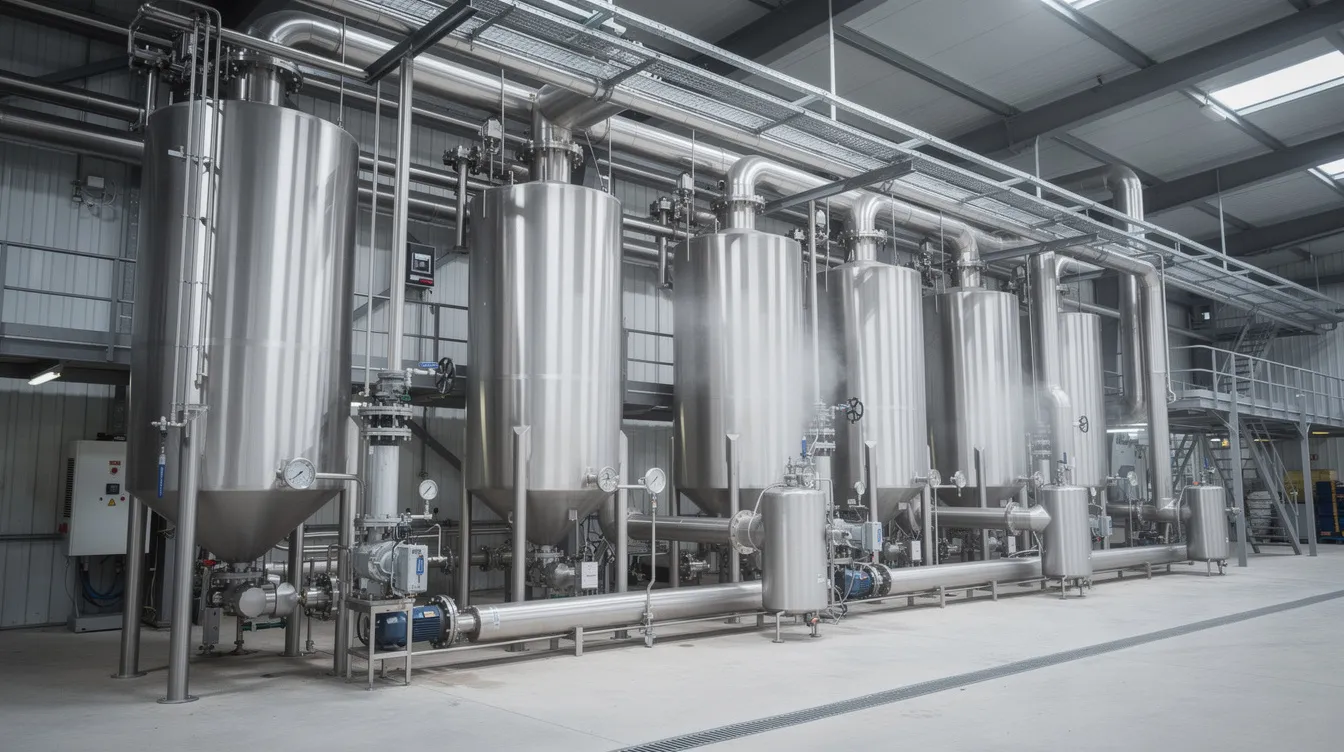
Solvent recovery is vital to reduce costs and environmental impact in extraction processes. Hexane is both flammable and costly, so efficient recovery directly improves profitability and compliance.
- Vapour collection: All solvent-bearing vapours from the extractor, miscella evaporators, stripper, DTDC and storage vents are collected through sealed ducting and routed to condensers.
- Primary condensation: Shell-and-tube condensers using cooling water liquefy most hexane vapor, directing condensate to a solvent-water separator.
- Solvent-water separation: Gravity separation exploits the density difference between hexane and water, with two phases separating in a decanter. Recovered solvent returns to storage tanks; the water phase is treated or reused per plant design.
- Secondary condensation and absorption: Uncondensed vapours pass through an exhaust condenser and then to an absorption tower where mineral oil or another absorbent captures remaining solvent, minimising atmospheric vent losses and managing environmental considerations.
- Desorption: Steam stripping under controlled temperature recovers solvent from the absorption oil, which is then cooled and recycled. This step is essential for plants aiming for high degree solvent recovery.
- Solvent storage and circulation: Storage tanks, circulation pumps and instrumentation maintain solvent inventory and quality. The large volume of solvent circulating in the system contrasts with the small net fresh solvent makeup required per tonne of seed processed.
- Monitoring: Solvent recycling technologies reduce waste and lower costs. In well-operated soybean extraction plants, overall solvent losses can be as low as 1–2 kg per metric tonne of feed-cake. Tracking losses from meal, oil, air emissions and effluent is a key performance indicator for both safety and economics.
Major Machinery and Equipment Used in a Solvent Extraction Plant
This section lists key equipment by function rather than providing a complete procurement specification. Detailed sizing and vendor selection are part of a professional DPR and engineering package.
| Equipment Name | Process Stage | Primary Function | Operational Importance |
|---|---|---|---|
| Seed cleaner & de-stoner | Seed preparation | Remove dust, stones, foreign matter | Protects downstream equipment, reduces fire risk |
| Magnetic separator | Seed preparation | Remove metallic impurities | Prevents equipment damage and ignition sources |
| Cracker / dehulling system | Seed preparation | Crack seeds and separate hulls | Improves protein content in meal, reduces volume |
| Conditioner / cooker | Seed preparation | Heat and moisture adjustment | Optimises flake plasticity and cell rupture |
| Flaking mill | Seed preparation | Produce thin uniform flakes | Increases surface area for more oil extraction |
| Expander | Seed preparation | Increase bulk density, reduce fines | Improves deep bed percolation |
| Screw press (pre-press) | Pre-pressing | Remove bulk oil from high oil content seeds | Reduces solvent load in extractor |
| Continuous extractor | Solvent extraction | Counter-current oil dissolution | Core unit determining extraction efficiency |
| Evaporator (1st / 2nd stage) | Miscella distillation | Vaporise solvent from miscella | Recovers solvent, concentrates oil |
| Stripping column | Miscella distillation | Final solvent removal from crude oil | Ensures low residual solvent in crude oil |
| DTDC system | Meal processing | Desolventise, toast, dry, cool meal | Controls meal quality, recovers solvent |
| Condenser bank | Solvent recovery | Liquefy solvent vapours | Minimises solvent loss, improves recovery |
| Mineral oil absorber | Solvent recovery | Capture uncondensed solvent vapour | Reduces atmospheric emissions |
| Cooling tower | Utilities | Supply cooling water | Essential for condenser operation |
| Solvent storage tank | Solvent management | Store and circulate solvent inventory | Maintains process continuity |
- Specific machinery configuration varies with raw material (soybean vs rice bran) and capacity (500 vs 3,000 TPD).
- For soybean-specific configurations, refer to the article on soybean processing plant machinery and equipment.
Process Parameters Affecting Oil Recovery and Operating Efficiency
Even with modern equipment, day-to-day performance and profitability depend heavily on process parameters. Extraction efficiency can exceed 95% using solvent extraction, but achieving that in practice requires disciplined control over multiple variables.
- Feed moisture: Too high moisture impairs percolation and increases energy demand in desolventising. Too low moisture produces brittle, fragmented flakes with excessive fines.
- Flake thickness and size distribution: Thinner flakes shorten the diffusion path for solvent access to oil bearing cells but generate more fines, increasing channeling risk. An optimised balance of particle size is essential.
- Extraction temperature: Operation near the solvent boiling point maximises mass transfer through enhanced leaching rates while controlling vapour load. Temperature increases extraction efficiency but must remain within safe operating limits.
- Solvent characteristics: Purity and composition range of hexane affect selectivity, recovery energy requirements and safety. Narrow boiling range hexane generally offers better performance.
- Solvent-to-solid ratio and contact time: Higher ratios and longer contact times improve extraction rate but increase circulation energy cost. This trade-off must be optimised for cost effective operation.
- Steam consumption: DTDC and distillation stages are the largest consumers of steam. Heat recovery and energy efficient design can materially reduce boiler load and improve overall energy efficiency.
- Equipment reliability: Consistent operation of extractor chains, pumps, valves and condensers avoids unplanned shutdowns and off-spec product.
- Meal and oil quality: Protein content, colour, FFA and phosphatides influence realisable selling prices. Numerical benchmark ranges used in DPRs should be referenced to specific feedstock and technology and clearly stated as assumptions.
Solvent Extraction Plant Material Balance and Recovery Efficiency
A simplified mass balance helps promoters understand how raw material splits into crude oil, de-oiled meal, moisture loss, process losses and solvent circulation, feeding directly into project financial projections.
- Input: Tonnes per day of cleaned flakes or pre-pressed cake, with known oil content, moisture and impurities.
- Outputs: Crude oil, de-oiled meal, hulls (if separated), minor moisture and handling losses, and solvent emissions.
- Illustrative example (not a universal benchmark): For 100 tonnes of cleaned soybean flakes with approximately 20% oil and 10% moisture, a well-operated plant might produce approximately 19.6–19.8 tonnes of crude oil (reflecting 98–99% oil recovery) and about 80 tonnes of de-oiled meal with residual oil around 0.5%.
- Solvent circulation vs makeup: Hundreds of kilograms of hexane circulate per hour within the system, but net fresh solvent consumption in an efficient plant can remain below 1–2 kg per tonne of seed processed.
- Residual oil in meal: This is a critical indicator. The process can leave less than 0.5% residual oil in meal in well-designed extraction plants, but achieving this requires proper preparation, extractor operation and parameter control. Lower residual oil means more oil revenue but may require more energy and capital.
Actual material balance numbers in DPRs are based on feedstock-specific assumptions, sometimes cross-checked with references on soybean oil and meal recovery, yield and profitability.
Utilities and Infrastructure Requirements
Beyond core process equipment, a solvent extraction plant relies on substantial utilities and infrastructure that must be factored into both technical design and solvent extraction plant setup cost and investment estimates.
- Steam and boiler systems: Steam for DTDC, evaporators, strippers and tracing lines. Fuel choice (coal, biomass, gas, oil) directly affects operating cost and environmental compliance.
- Electrical power: Drives for flakers, expanders, extractors, pumps, fans, conveyors and automation. Reliable power supply with captive DG backup is typically required.
- Cooling water system: Cooling towers and distribution to condensers, with a direct impact on solvent recovery and energy consumption.
- Process water: For boilers, conditioning, cleaning and condensate systems, with appropriate water treatment.
- Ventilation and vapour control: Proper ventilation in extraction buildings, vapour collection ducts and monitoring systems to manage flammable atmospheres and eliminate ignition sources.
- Fire protection: Hydrant network, foam systems for solvent tanks, firewater storage, alarms and emergency response systems to enhance safety.
- Process control and automation: PLC/SCADA-based monitoring of levels, temperatures, pressures and solvent flows.
- Effluent and waste management: Treatment of oily effluent, boiler blowdown, sludge and dust handling, meeting SPCB/CPCB norms.
The DPR should quantify steam, power, water and fuel requirements based on capacity and technology choice, since these significantly influence working capital and DSCR.
Fire Safety, Environmental Controls and Regulatory Considerations in India
Hexane is highly flammable and volatile, so solvent extraction plants fall into hazardous-category installations. Safety measures are critical due to the flammability of solvents like hexane used in extraction.
- Equipment integrity: Leak-tight pumps, seals, high-quality gaskets and regular preventive maintenance reduce solvent leaks and explosion risk.
- Hazardous area classification: Flameproof or explosion-proof electrical equipment is mandatory in solvent handling zones, designed according to applicable standards.
- Static control and earthing: Proper bonding and grounding of equipment, pipelines and storage tanks reduces ignition risk from static electricity.
- Vapour detection: Continuous ventilation in extraction areas with solvent vapour detectors and alarms at strategic locations.
- Fire suppression: Fixed firefighting systems (hydrants, sprinklers, foam), portable extinguishers and documented emergency response plans.
- Regulatory approvals: Hexane storage quantities and arrangements require approvals from authorities such as PESO (Petroleum & Explosives Safety Organisation) and state fire departments. Requirements vary by state and must be verified per project.
- Environmental controls: Stricter environmental regulations drive the adoption of greener extraction techniques. VOC emission reduction through efficient condensation and absorption, plus effluent treatment conforming to SPCB and CPCB norms, are increasingly enforced.
- Greener alternatives: While hexane remains dominant for commodity vegetable oils, eco-friendly solvents such as supercritical CO2 extraction, which eliminates the use of organic solvents entirely, and bio-based solvents like limonene that are biodegradable and non-toxic are gaining popularity in specialty applications. Ionic liquids exhibit low volatility and high thermal stability but remain commercially unproven at scale. Ethanol and methanol can reduce bio-oil viscosity significantly in certain processes. Ethyl acetate has also been investigated as an alternative. However, commercial adoption for large-scale edible oil extraction in India remains limited, and hexane continues to dominate due to its proven cost effectiveness and industrial applications.
Promoters should engage qualified safety and environmental consultants during detailed engineering, as regulatory requirements evolve and differ by state.
How Process Efficiency Affects Solvent Extraction Plant Profitability
From an investment advisory perspective, process performance indicators translate directly into financial metrics. The solvent extraction process ensures high recovery rates and economic efficiency when designed properly, but every operational variable affects the bottom line.
- Recovery losses: A seemingly small increase in residual oil in meal, when multiplied across daily throughput and annual operating days, can materially reduce gross margin. Extracting more oil from each tonne of seed directly improves revenue.
- Solvent consumption: Higher net hexane loss increases the cost of fresh solvent purchase and may trigger additional environmental control expenditure.
- Energy cost: Higher steam and electricity consumption per tonne directly increases variable cost and reduces competitiveness, particularly for export-oriented meal or refined oil.
- Meal quality and pricing: Better protein levels, lower fibre and controlled antinutritional factors fetch premium meal prices. Poor process control causing over- or under-toasting reduces realisations.
- Capacity utilisation: Higher and stable utilisation (e.g. 80–90% of nameplate annually) helps spread fixed overheads. Frequent shutdowns erode profitability.
- Unplanned downtime: Poor preventive maintenance leads to lower production days and weaker financial indicators in bank appraisal, directly affecting DSCR.
- Working capital: High-throughput plants carry significant raw material, WIP and finished goods inventory values. Inefficient processes may lock additional funds in slow-moving stocks.
- DPR and financial modelling are important for assessing the viability of setting up an extraction plant. Process efficiency assumptions must be realistic and stress-tested in sensitivity analysis rather than optimistically tuned to inflate projected returns.
Process Technology Considerations for 500–5,000 TPD Industrial Projects
The 500–5,000 TPD range is common for industrial edible oil solvent extraction plants in India, but the optimal capacity depends on raw material availability, logistics, market access and promoter risk appetite. Plant setup and equipment arrangement in solvent extraction plants depend on feedstock and process design.
- Technology selection: Deep bed vs shallow bed extractors, different DTDC configurations, multi-effect evaporation and advanced solvent recovery system options create trade-offs between CAPEX and OPEX.
- Integrated plant concepts: Combining solvent extraction with seed preparation, pre-pressing, refining and packaging captures value across the chain, supporting large scale production economics.
- Economies of scale: Larger plants achieve lower unit operating cost but require continuous raw material supply and reliable evacuation logistics for oil and meal.
- Utilities sizing: Larger capacities need proportionally scaled boilers, cooling towers, transformers and effluent treatment, affecting land size and infrastructure cost.
- Location: Proximity to oilseed producing regions or ports, availability of labour, water, power and the local regulatory environment are all determinants.
For a detailed example of how capacity decisions are analysed for a specific raw material, refer to soybean crushing plant capacity planning for 500–5,000 TPD projects.
Key Technical and Financial Risks in Solvent Extraction Projects
Solvent extraction projects, while established and scalable, face both technical and financial risks that must be identified and mitigated at the planning and DPR stage.
- Inadequate seed preparation: Leading to higher residual oil, operational instability, excessive fines and increased maintenance cost.
- Higher-than-expected solvent losses: From leaks, poor condensation or inefficient absorption, with consequences for cost, safety and compliance.
- Poor extraction efficiency: Due to incorrect extractor design, bed depth, solvent distribution or parameter control, impacting yields and oil recovery efficiency.
- High energy consumption: From inefficient DTDC, lack of heat integration or sub-optimal boilers.
- Raw material price and availability volatility: Crop failures, competing uses and import policy changes affecting seed and oil prices.
- Capacity utilisation risk: Inability to operate at planned throughput due to raw material shortages, logistics bottlenecks or market downturns.
- Compliance and regulatory risk: Changing environmental, safety and labour regulations requiring additional capital or operating expenditure.
- Counterparty risk: Delays in receivables from buyers of oil and meal, impacting cash flows and DSCR.
- Structured risk analysis and sensitivity testing (variations in oil prices, hexane prices, capacity utilisation) in DPRs are essential rather than relying on a single base-case projection.
Role of DPR, Financial Feasibility and Bank Finance in Solvent Extraction Projects
A solvent extraction project involves significant capital investment in plant, machinery, utilities and working capital. Lenders and investors expect a detailed, professionally prepared DPR before committing funds.
A comprehensive DPR for a solvent extraction plant should cover:
- Process flow and layout: Narrative of seed preparation, extraction, distillation, DTDC and solvent recovery, along with block diagrams and plant layout.
- Machinery selection: Technology choices consistent with the process flow, scaled to targeted TPD capacity.
- Capacity and material balance: Realistic assumptions for oil content, extraction efficiency, residual oil, solvent and energy consumption forming the base of financial projections.
- Project cost estimation: Land, civil works, machinery, utilities, pre-operative expenses, contingencies and interest during construction.
- Means of finance: Term loan, equity, internal accruals and applicable incentives or subsidies.
- Working capital assessment: Stocks of seeds, WIP, finished goods, receivables and payables, with bank working capital limits in line with norms.
- Financial projections: Projected P&L, cash flow, balance sheet, key ratios, DSCR, break-even, payback period, IRR and sensitivity analysis based on stated assumptions.
- Risk and mitigation: Technical risks such as extraction efficiency and solvent losses linked with financial implications and control measures.
For edible oil projects, Project Report Bank prepares soybean oil plant financial projections, CMA Data and DSCR analyses as part of bank finance documentation, applying similar methodology to other solvent extraction projects. All projections are scenario- and assumption-based rather than guarantees of performance or bank sanction. They serve as structured tools for decision-making and lender evaluation.
Frequently Asked Questions
These FAQs address practical doubts commonly raised by first-time solvent extraction investors.
What is the complete solvent extraction plant process flow from seed to oil and meal?
The process begins with raw seed cleaning, followed by dehulling, conditioning and flaking. Prepared seeds enter a continuous extractor where hexane dissolves oil, forming miscella. The miscella undergoes distillation to recover crude oil, while solvent-laden meal passes through a DTDC system for desolventising, toasting, drying and cooling. Solvent vapours from all stages are condensed, separated from water and recycled back to the extractor. The three output streams are crude oil, de-oiled meal and recovered solvent.
Why is seed preparation so critical for solvent extraction efficiency?
Poorly prepared feed, whether too moist, too thick, or with excessive fines, directly increases residual oil in meal, raises solvent consumption and causes operational instability. The financial consequence is lower oil revenue, higher operating cost and weaker DSCR. Investing in proper cleaning, conditioning and flaking equipment is one of the most cost effective decisions a promoter can make.
What is the role of hexane in oil extraction, and are greener alternatives available?
Hexane is commonly used as a solvent for extraction because of its excellent oil solubility, low boiling point and ease of recovery. Supercritical CO2 is an eco-friendly alternative to traditional solvents and eliminates organic solvent use entirely, but remains commercially limited for commodity edible oils due to high equipment cost. Bio-based solvents and ionic liquids with their ionic strength characteristics are under research but have not achieved large-scale commercial adoption for edible oil extraction in India.
What is miscella and why is miscella distillation important?
Miscella is the oil-solvent mixture produced during extraction. Efficient distillation separates hexane from crude oil, ensuring that the crude oil meets quality specifications and that recovered solvent can be recycled. Poor distillation increases solvent losses and crude oil contamination, affecting both product quality and operating cost.
How does the desolventising process protect meal quality and safety?
The DTDC system removes residual hexane from extracted meal through controlled heating with steam, making the meal safe for handling and storage. For soybean meal, toasting also inactivates antinutritional factors. Over-toasting damages protein quality and reduces meal value, while under-toasting leaves unacceptable levels of trypsin inhibitors.
How is solvent recovered, and what are typical loss points?
Vapours collected during extraction and processing are condensed to recover the solvent through a combination of shell-and-tube condensers, solvent-water separators and mineral oil absorption towers. Loss points include extractor vents, DTDC vents, miscella distillation vapours, fugitive leaks and oil storage. Well-operated plants can keep total losses below 1–2 kg per tonne of feed-cake through operational discipline and properly designed recovery systems.
How can solvent losses affect profitability?
Net hexane loss represents a direct material cost. When multiplied across thousands of tonnes of daily throughput and hundreds of operating days, even a modest increase in solvent loss per tonne significantly erodes contribution margins. Additionally, excessive losses trigger environmental compliance costs and safety risks.
Why is a professionally prepared DPR essential before investing in a solvent extraction project?
A solvent extraction plant requires substantial capital for machinery, utilities, infrastructure and working capital. A DPR integrates process flow, material balance, project cost, means of finance, financial projections, DSCR analysis and sensitivity testing into one coherent document. It enables the promoter to make informed investment decisions and provides lenders with the structured analysis they require for loan appraisal.
Conclusion
In conclusion, solvent extraction is an established, scalable technology for recovering edible oil from oilseeds, capable of achieving oil yields exceeding 95% and leaving minimal residual oil in meal. However, the process demands careful integration of seed preparation, continuous extraction, miscella distillation, DTDC and solvent recovery, with each stage influencing the next. A solvent extraction plant is not just an assembly of machines but an integrated system where process design, operating discipline and risk management directly influence profitability, DSCR and investor returns.
Promoters should combine sound engineering advice with rigorous financial feasibility analysis, including sensitivity scenarios on capacity utilisation, raw material and product prices, and key process efficiency parameters.
Planning a Solvent Extraction Plant in India?
A professionally prepared Detailed Project Report helps assess project investment, production capacity, operating costs, working capital, financial feasibility and bank finance requirements. CA Manish Gugliya, FCA, DISA (ICAI) provides customised DPR preparation, financial modelling, feasibility studies and bank loan proposal assistance for industrial and agro-processing projects. Visit www.projectreportbank.com and reach out through the website’s WhatsApp-enabled contact facility.
Independent technical assessment and professionally prepared financial projections remain essential before committing capital to any solvent extraction or integrated oilseed processing project.