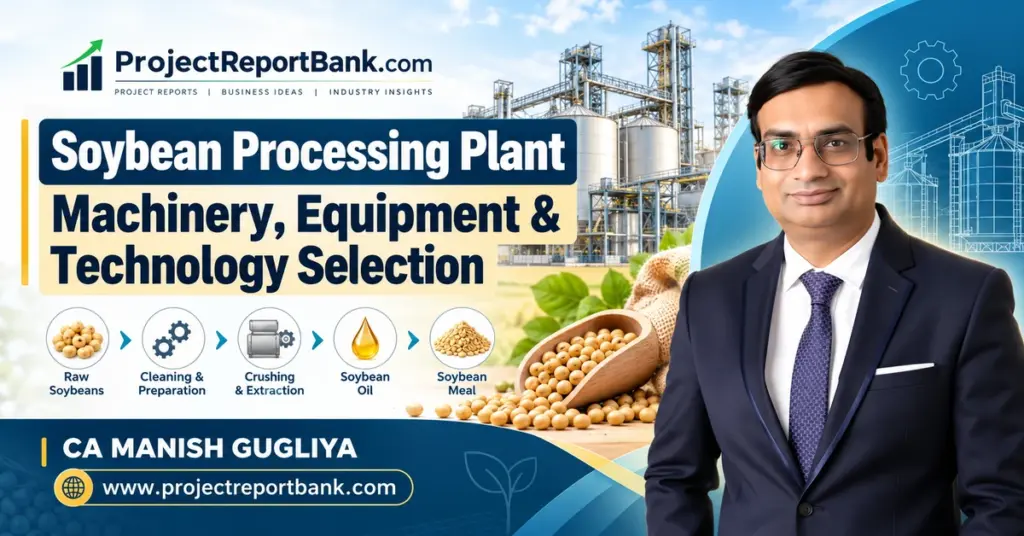
Key Takeaways
Selecting the right soybean processing plant machinery is among the most consequential decisions an investor makes when planning a commercial soybean oil extraction and meal production facility in India.
- Correct machinery selection directly affects oil recovery, soybean meal quality, safety, energy consumption, bankability and long-term profitability.
- Investors typically choose between mechanical expeller plants, solvent extraction plants, or a hybrid pre-press plus solvent extraction configuration based on capacity and product mix.
- For Indian capacities of 100–1,000 TPD, machinery decisions must factor in technology, automation, utilities, layout and compliance with industry standards rather than focusing only on the lowest price.
- A bankable DPR, realistic financial projections and professional evaluation of quotations are essential before freezing machinery orders.
- Customized financial projections and analysis are critical for assessing project viability and investment decisions at every capacity level.
Introduction
The commercial viability of a soybean processing plant depends significantly on how well its machinery, process technology and utilities are matched to the intended capacity, product quality and market requirements. Soybeans contain 18% to 20% oil depending on the variety, and soybean meal forms approximately 80% of the seed after oil extraction. These fundamental yield parameters mean that even small differences in equipment performance – a fraction of a percent in residual oil or a few kilograms of extra steam per tonne – compound into material differences in annual profitability.
The main stages of soybean processing include cleaning, drying, dehulling, cracking, conditioning, flaking, extraction and refining. Soybean processing involves extensive equipment for each stage to ensure efficient and quality production. Production capacity of soybean processing plants ranges from 15 TPD to over 450 TPD in common configurations, though large-scale solvent extraction plants in India routinely exceed this. This article focuses on industrial-scale soybean oil extraction plants in the 100–1,000 TPD range rather than small scale domestic or mini-oil mill units.
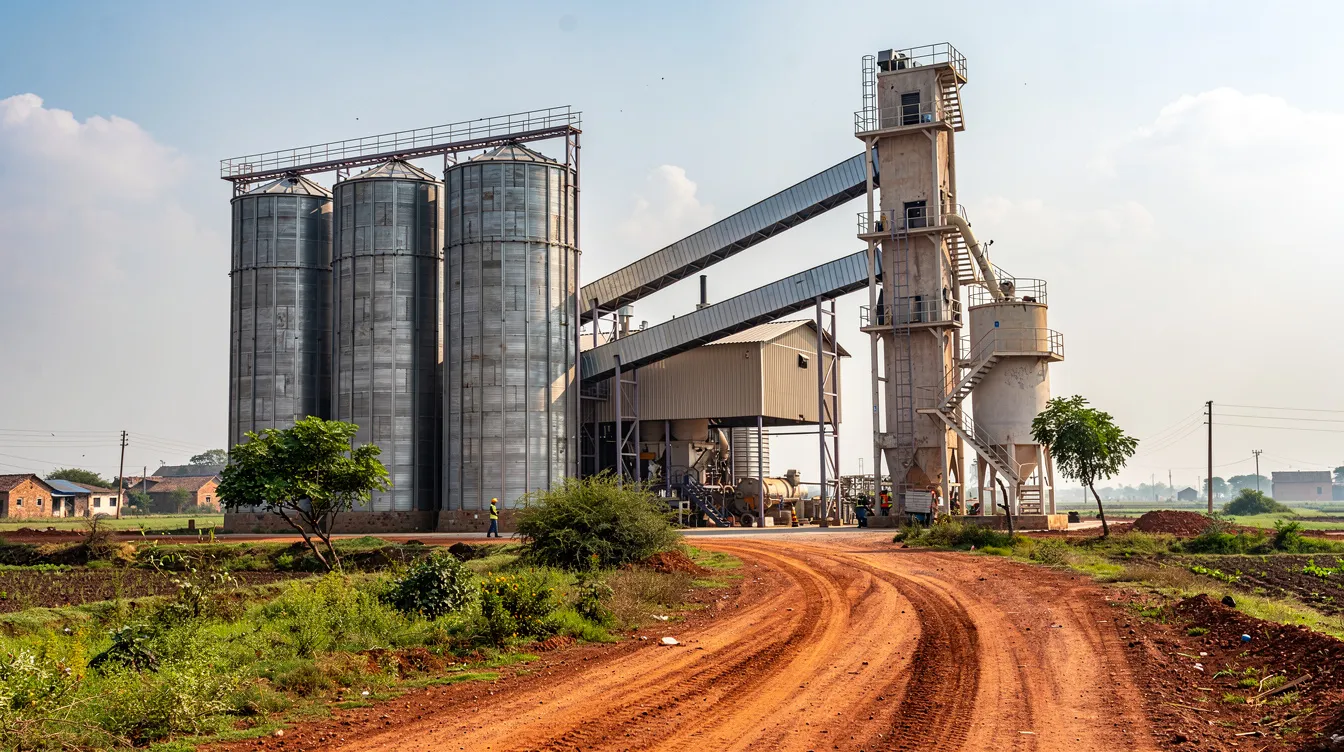
The discussion is positioned from a project finance and DPR perspective, helping entrepreneurs connect technical machinery decisions to bankable financial models.
Understanding Different Soybean Processing Technologies
The choice between expeller pressing and solvent extraction is the first strategic decision. Raw material quality affects soybean oil and meal quality regardless of technology, but the process configuration determines achievable recovery and Capex.
Mechanical oil expeller technology uses screw presses to squeeze oil out by force. A single stage pressing leaves about 5% residual oil in meal, making it suitable for smaller throughputs or where solvent handling is not feasible. Direct solvent extraction of properly prepared soybean flakes – the dominant configuration for large-scale soybean crushing plants – achieves residual oil as low as 0.35–0.60% when flake thickness, moisture and temperature are optimally managed. Pre-press plus solvent extraction is common for high-oil seeds like sunflower or rapeseed and is selectively applied for soy. Integrated crushing and refining complexes add degumming, neutralisation, bleaching and deodorisation for producing refined edible soybean oil.
| Parameter | Mechanical Expeller | Solvent Extraction | Pre-Press + Solvent |
|---|---|---|---|
| Typical capacity | Up to ~150 TPD | 200–2,000+ TPD | 100–1,000 TPD |
| Residual oil in meal | 5–10% | 0.35–1.0% | 0.5–1.5% |
| Capex intensity | Lower | Higher | Highest |
| Solvent safety systems | Not required | Essential | Essential |
| Operating complexity | Simpler | More complex | Most complex |
For Indian investors: capacities below 100 TPD may justify expellers; 300 TPD and above strongly favour direct solvent extraction; 100–300 TPD may use either depending on product goals and capital availability.
Complete Soybean Processing Plant Machinery List
This section presents a structured soybean processing plant machinery list organised by process area. The lists serve as a checklist for DPR preparation, vendor comparison and technical discussions with EPC contractors. Machinery specifications given here are indicative; final engineering should be done by qualified process engineers and machinery OEMs.
A. Raw Material Handling and Storage
- Weighbridge (40–60 MT electronic): receipting and inventory control
- Truck unloading systems: dump pits, intake hoppers with dust suppression
- Conveyors and bucket elevators: capacity-matched belt, chain and bucket systems for internal seed movement
- Raw soybean storage silos: 10–20 days’ cover with aeration, temperature monitoring and fumigation provisions. Storage conditions prevent soybean oil from going rancid or oxidizing. Proper drying reduces soybean moisture to below 13% for storage
- Magnetic separators: tramp iron removal to protect crackers and flaking rolls
- Dust collection systems: aspiration lines for housekeeping and explosion risk reduction
B. Soybean Cleaning and Preparation
- Vibratory seed cleaners: multi-screen separation of oversized and undersized material
- Destoners: density-based stone and heavy foreign matter removal
- Aspirators: light impurity and chaff removal
- Soybean crackers: adjustable roll gap for uniform cracking; roll configuration affects downstream flake formation
- Dehullers and hull separators: hull removal raises protein content in meal. Soybean hulls can be used in composting and animal feed or as boiler fuel
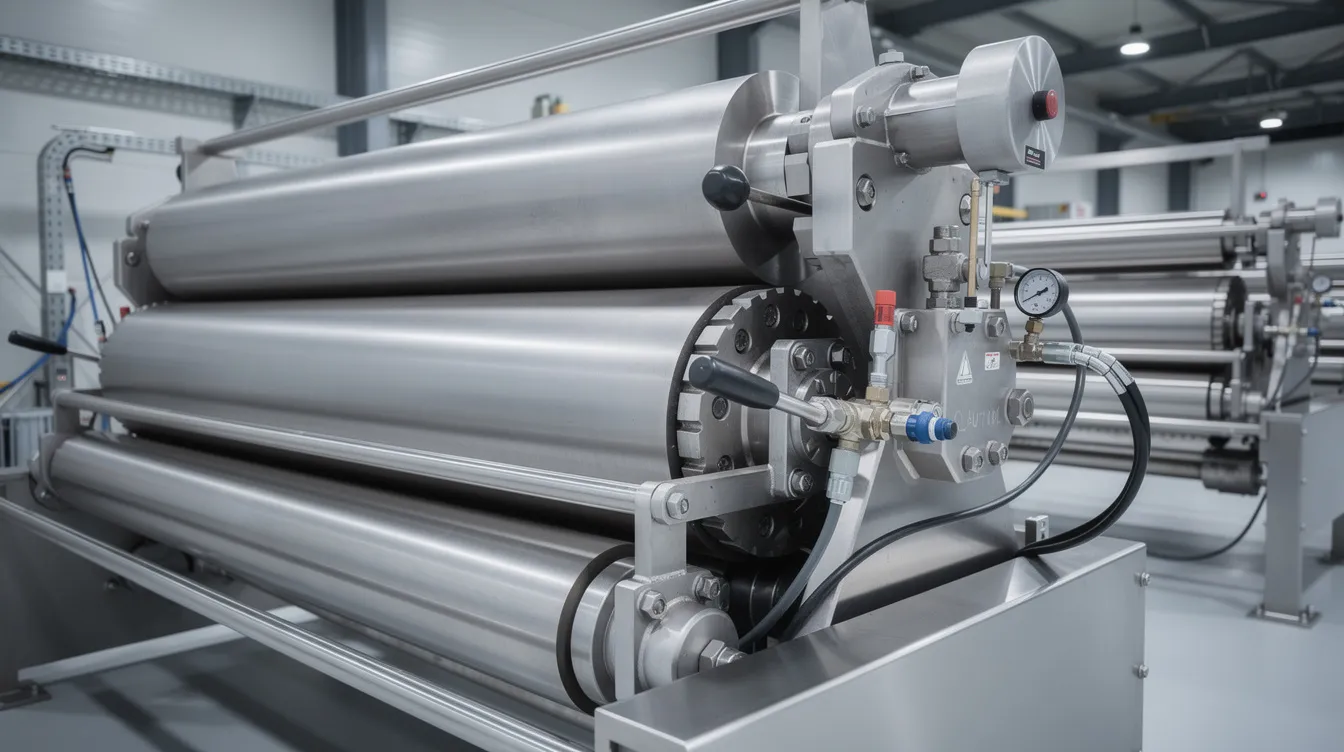
- Flaking roller mills: roll diameter, hydraulic pressure and flake thickness control (target 0.30–0.43 mm) directly affect solvent penetration and oil recovery. The shape of flakes and uniformity of rolls are critical
- Conditioning equipment: steam-based vertical/horizontal conditioners to achieve 8–11% moisture before flaking
- Extruders/expanders: soybean extruders heat cracked soybeans to 150–170°C, improving extraction kinetics and deactivating trypsin inhibitors and other anti-nutritional factors
C. Oil Extraction Machinery
- Screw oil expellers (where used): the soybean oil extraction process includes seed cleaning and oil pressing in expeller-based setups
- Continuous solvent extractors (rotocel, loop or belt type): hexane-based counter-current extraction; explosion-proof design and material compatibility are essential
- Solvent handling systems: storage tanks, circulation pumps, instrumentation and solvent balance monitoring. Hexane loss in well-designed plants is controlled to 1–1.5 litres per tonne versus 3–5 litres in poor designs
- Miscella filtration: filter presses remove suspended solids from crude soybean oil before evaporators
- Evaporators and oil strippers: multi-effect evaporation under vacuum with heat integration
- Condensers and solvent recovery: cooling water-based condensation, vent scrubbing and solvent–water separation
D. Soybean Meal Processing
- Desolventizer-toaster (DT/DTDC): steam stripping, toasting, drying and cooling of meal. Controls residual solvent and deactivates anti-nutritional factors. Soybean meal has a protein content that varies by processing method
- Dryers and coolers: moisture control to ~12% for stable storage
- Hammer mills: grinding soybean meal into fine powder for efficient downstream use, whether for poultry feed, cattle feed or other animal feed formulations. Commercial grade soya DOC is a common animal feed product, while Hypro soya meal has a higher protein content
- Meal conveyors and elevators: covered, explosion-relieved designs for hot and dusty conditions
- Meal storage: ventilated warehouses or silos with sampling and fumigation provisions
- Bagging and bulk loading: automated weighers, stitching machines, bulk tanker loading for supplying customers
E. Soybean Oil Handling and Refining
Investors must separate crude soybean oil extraction equipment from additional refining and packing machinery:
- Crude oil tanks: 3–5 days’ production capacity with heating coils
- Oil filtration: pressure leaf filters or filter presses
- Degumming: phosphoric or citric acid systems for phosphatide removal
- Neutralisation, bleaching, deodorisation: required for refined edible oil suitable for human consumption. These robust systems ensure taste, texture and nutrition meet market expectations. Refined oil should retain vitamins and minerals while removing contaminants
- Packing lines: pouch, tin, PET bottling – optional depending on whether the plant sells crude or refined oil
Industry standards define quality in terms of chemical composition and contaminants for both oil and meal.
F. Utilities and Supporting Equipment
- Boilers: steam at 250–350 kg per tonne of seed; fuel options include coal, briquettes, hulls, natural gas. Steam demand is driven by DT, evaporators and deodoriser
- Cooling towers and chilled water: for condensers, oil cooling and general services
- Air compressors: instrumentation and pneumatic conveying
- Electrical systems: transformers, HT/LT panels, MCC/PCC, DG sets. A 20T soybean processing plant requires 187.2 kW installed capacity as a reference benchmark
- PLC/SCADA automation: process control, interlocks, monitoring
- Safety systems: fire hydrants, sprinklers, solvent vapour detectors, flameproof fittings, emergency shutdown logic
- ETP and environmental compliance: effluent treatment, solvent recovery from vents, dust suppression
Technologies can reduce the carbon footprint of soybean processing, and by-product utilization promotes sustainability. Crop rotation and reduced pesticide use at the cultivation stage further enhance ecological practices, while advancements in extraction technology improve energy efficiency across the value chain. Sourcing raw materials from certified sustainable producers is increasingly relevant for export-oriented facilities.
Soybean Processing Plant Machinery Cost in India
Machinery cost for soybean processing plants varies with capacity, technology, automation level and whether refining is included. Indicative machinery-only cost ranges for solvent extraction configuration:
| Capacity (TPD) | Machinery Cost Range (₹ Crore) | Total Project Cost Range (₹ Crore) |
|---|---|---|
| 100 | 4 – 6.5 | 10 – 17 |
| 200 | 6.5 – 10.5 | 18 – 31 |
| 300 | 9 – 14.5 | 26 – 45 |
| 500 | 14 – 22 | 41 – 70 |
| 1,000 | Project-specific | Project-specific |
Plant setup costs depend on capacity and equipment selection. Capex for commercial grade DOC plants is lower, Hypro soya meal requires higher Capex, and white flakes processing plants have significantly higher Capex due to dedicated preparation and handling equipment. Power consumption runs approximately 15–25 kWh per tonne of seed.
Soybean oil comprises about 20% of the soybean seed, and soybean meal constitutes 80%, making both products equally important revenue streams. Machinery procurement represents a major component of capital expenditure, but investors must also consider land, civil construction, utilities, installation, contingencies and working capital. For a broader understanding of investment requirements and project economics, refer to our detailed guide on Soybean Crushing Plant Setup Cost and Investment.
Investors should obtain at least 2–3 comparable techno-commercial quotations and use them as the basis for DPR and CMA Data rather than relying on generic internet prices.
Soybean Processing Technology Selection – Key Factors
Technology choice should be driven by market positioning, capacity, raw material availability and long-term strategy rather than only immediate Capex savings. Key factors include:
- Daily processing capacity: micro and small plants may use expellers; medium and large plants mainly use solvent extraction
- Raw soybean quality: moisture, oil content, FFA and foreign matter influence conditioning and cleaning equipment design. Soybean oil contains 18% to 20% oil depending on seed variety
- Oil recovery targets: a difference of 0.5–1.0% in residual oil at 300 TPD translates into several crores of annual revenue impact
- Product specifications: whether producing standard DOC, Hypro meal for poultry feed or products for human consumption affects dehulling, toasting and refining choices
- Energy efficiency: steam and power consumption per tonne are critical operating cost drivers
- Safety and compliance: FSSAI norms for edible soybean oil, feed safety standards, explosive atmosphere requirements and local PCB approvals
- Future expansion: modular equipment design allows phased scaling with minimal disruption
Technology choices link directly to overall project economics, working capital cycles and investor return expectations. A soybean oil mill plant can process 15 to 450 tons per day in standard configurations, though larger plants are increasingly common in India. Soybean oil extraction plants can process 15 to 450 tons per day depending on configuration.
Automatic vs Semi-Automatic Soybean Processing Plants
Medium and large solvent extraction plants benefit from PLC-based control of extractors, DT, evaporators and boilers, with SCADA for monitoring. Automation reduces dependence on skilled professionals, improves consistency, enables data logging and strengthens safety interlocks.
Semi-automatic plants may suit lower capacities or locations with abundant technical labour. Above approximately 300 TPD, full automation is generally advisable for maintaining process control, supporting traceability and ESG reporting, and reducing human error in solvent handling areas. The cost differential for automation – typically ₹1–3 crore additional for a 100 TPD plant – should be reflected in manpower savings, efficiency assumptions and downtime reduction within the DPR.
Soybean Processing Plant Capacity and Equipment Selection
Plant capacity must be translated into balanced capacities for each section. All key machines – crackers, flakers, extractor, DT – should be sized to slightly exceed rated capacity when running 20–22 effective hours per day. A bottleneck in any one section idles the entire plant.
Capacity utilisation typically ramps up over 3–4 years. Seasonal soybean harvest patterns in India mean that storage silos and potential toll crushing arrangements significantly influence annual utilisation. Equipment redundancy for boilers, pumps and compressors minimises unplanned shutdowns. Utilities must be designed for peak load, not average load, to prevent process upsets during high-evaporation or summer conditions. The presence of modular equipment facilitates future expansion.
Machinery Layout and Process Integration
Layout should follow a logical process flow: raw material intake, cleaning and preparation, extraction building, DT and meal section, boiler block, solvent tank farm, oil tank farm and finished goods storage. The solvent area must be physically separate from non-solvent zones with appropriate fire zones, ventilation and flameproof electrical fittings. Inspection windows, maintenance access platforms and crane provisions are essential for overhaul efficiency.
Vertical layouts exploiting gravity flow reduce power and material handling cost. Safe distances between boiler areas, solvent storage and process buildings must comply with local factory and fire regulations. Environmental integrations – ETP location, fire water tanks, emergency assembly points – should be covered in the layout to support statutory approvals.
Machinery Suppliers and EPC Contractors – How to Evaluate Quotations
Investors should understand the difference between purchasing standalone machinery from multiple OEMs and appointing a single EPC contractor for turnkey delivery. A structured procurement checklist should cover:
- Equipment name, model and rated throughput
- Guaranteed oil recovery and residual oil in meal
- Power, steam and solvent consumption guarantees
- Material of construction and design codes
- Scope of supply (motors, starters, instrumentation, platforms, insulation)
- Performance guarantees with factory acceptance testing (FAT) and site acceptance testing (SAT)
- After-sales service, spares availability, operator training
- Delivery timelines, payment milestones, warranties and liquidated damages
Maintaining a techno-commercial bid evaluation sheet and using it as an annexure in the DPR demonstrates professional machinery selection to banks.
Machinery Selection Mistakes That Can Affect Project Profitability
Common mistakes that erode value over years:
- Selecting machines solely on lowest quotation without verifying oil recovery and build quality
- Inadequate raw material cleaning leading to higher wear, contaminants in meal and customer rejections
- Unbalanced capacities between preparation, extraction and meal sections creating chronic bottlenecks
- Underestimating boiler capacity, cooling water requirements or electrical systems
- Poor solvent recovery design causing high hexane losses, safety incidents and elevated operating cost
- Insufficient storage infrastructure forcing shutdowns during peak market arrivals
- Ordering machinery before finalising DPR, environmental clearances and bank finance, leading to idle equipment and cash flow stress
A modest increase in upfront machinery investment, when justified by improved yields and reliability, can materially improve DSCR and IRR over the project life. For a comprehensive DPR framework, our Soybean Oil Manufacturing Project Report provides further reference.
Role of Machinery Selection in DPR and Bank Finance
Banks examine machinery lists, quotations and technology choices during loan appraisal. Machinery cost feeds into total project cost and fixed asset block, influencing depreciation, term loan quantum, promoter contribution and interest during construction. Technical assumptions from machinery specifications – capacity, steam and power loads, oil recovery – feed directly into production, income and expense projections.
Working capital assessment is essential for ensuring sufficient liquidity in project financing, linking raw soybean purchase to sale of finished soybean oil and meal through inventory, receivable and payable assumptions. Operating parameters influenced by machinery affect unit production cost, contribution margins and EBITDA. DSCR, break-even utilisation, payback period and project IRR all depend on both Capex and Opex, which are inseparable from machinery selection. Project finance advisory includes preparing detailed project reports, financial models, and conducting feasibility studies. Business valuation services help determine the market value of a business for investment or sale considerations.
Expert Insights from CA Manish Gugliya
In my experience of preparing DPRs and financial models for soybean processing plants and similar manufacturing projects, I have observed that many promoters focus extensively on machinery price comparisons while underestimating the financial impact of small differences in oil recovery or steam consumption per tonne. A variation of even 0.5% in residual oil at 300 TPD translates into a significant annual revenue difference that compounds over the project’s life.
My practical advice to investors: start with a clear market and capacity analysis, shortlist the technology configuration, obtain detailed machinery quotations, and only then freeze the financial model and means of finance. Ensure that machinery selection aligns with projected DSCR, repayment schedules and promoter contribution so that the project remains serviceable even under adverse commodity price scenarios. A DPR should not be a generic template – it should reflect specific machinery models, realistic capacity assumptions, and actual power and steam loads.
At Project Report Bank, we focus on integrating technical machinery decisions into a cohesive, bankable financial model. Final engineering design remains the domain of qualified technical specialists, but the financial architecture must be robust, versatile and defensible.
Frequently Asked Questions
The following questions address practical doubts commonly raised by promoters planning soybean processing plant machinery and technology in India. Answers are general; investors should seek project-specific technical and financial advice.
What machinery is required for a basic soybean processing plant in India?
A basic plant requires raw material intake equipment (weighbridge, conveyors, silos), cleaning and destoning machines, crackers, dehullers, flaking roller mills, a solvent extractor or mechanical expeller, desolventizer-toaster, meal cooling and storage systems, crude oil tanks, filtration equipment, and utilities including boiler, cooling tower and electrical systems. Solvent extraction plants additionally require solvent handling infrastructure, vapour detection and explosion-proof fittings.
Which technology is preferable for large-scale soybean crushing?
For capacities of 300 TPD and above, direct solvent extraction of prepared soybean flakes is generally preferred. It delivers higher oil recovery, lower residual oil in meal and better energy optimisation compared to mechanical expellers. Expeller systems remain relevant for smaller capacities or where solvent handling is not feasible. The soybean oil extraction process varies in form and efficiency depending on which route is chosen.
How should investors evaluate soybean processing machinery suppliers?
Investors should compare at least 2–3 suppliers on guaranteed throughput, oil recovery, energy consumption, material of construction, scope of supply (including motors, instrumentation, platforms), FAT and SAT protocols, spare parts, warranty terms and after-sales service. A structured techno-commercial bid evaluation sheet is a dedicated tool for this purpose and should be attached as an annexure in the DPR. The soybean processing industry in India and the world increasingly demands such rigour.
Can a soybean processing plant be expanded later?
Yes, provided the initial layout, extractor, DT and utilities are designed with expansion in mind. Modular equipment – such as parallel flakers, additional conveyors or a larger boiler – allows phased capacity increase with minimal disruption. Maintaining healthy and efficient operations during expansion requires careful planning of fill rates, lead times and purchase schedules.
Why is a DPR important before ordering machinery?
A Detailed Project Report integrates machinery choices, capacity planning, project cost, means of finance and projected profitability into a coherent document required by banks and investors. Preparing the DPR first prevents under-sizing or over-sizing machinery, avoids cash-flow mismatches and ensures that equity, debt and any applicable government schemes are planned realistically before large purchase commitments.
Conclusion
Technology and machinery choices for soybean processing plants carry long-term implications for oil extraction efficiency, soybean meal quality, utilities, safety and regulatory compliance. Indian investors in recent years have increasingly recognised that the lowest-cost machinery package does not necessarily produce the most efficient or profitable plant.
A structured approach – defining the market, evaluating processing technologies, shortlisting reliable machinery suppliers, assessing automation requirements and validating all assumptions through a professional DPR – materially improves the likelihood of sustained profitability even under volatile commodity prices of wheat, rice, millet and oilseeds.
Professional Advisory Call to Action
If you are planning a soybean processing plant in India and need a bankable Detailed Project Report, financial projections, CMA Data, feasibility analysis or bank finance proposal assistance, feel free to reach out to CA Manish Gugliya at Project Report Bank via WhatsApp. Whether your requirement involves machinery investment evaluation from a financial perspective, working capital planning or project cost optimisation, the focus remains on helping you build a financially sound and operationally viable soybean processing plant.
CA Manish Gugliya, FCA, DISA (ICAI) Practising Chartered Accountant since 2006 Founder – Manish Gugliya & Company, Chartered Accountants Industrial Project Reports | DPR | CMA Data | Financial Modelling | Project Finance Advisory Website: www.projectreportbank.com