Key Takeaways
- Capacity planning for a soybean crushing facility balances soybean availability and market demand-not just ambition or machinery catalogue capacities. Plant capacity must be derived from verified annual raw material access, confirmed offtake for soybean meal and edible oil, and the promoter’s financing capacity.
- Practical capacity utilisation in Indian soybean processing plants typically ranges between 70% and 90% of nameplate capacity. The gap between installed capacity and effective throughput directly impacts profitability, DSCR and return on investment.
- Capacity planning integrates operating costs, product recovery and market demand for profitability. A plant that looks viable at 90% utilisation may become unviable at 70%, particularly when crush margins are thin or negative.
- Phased expansion-starting at 500 or 1,000 TPD and scaling to 2,000–5,000 TPD over several years-can be more prudent than a single large investment when soybean procurement or product offtake is uncertain.
- Project Report Bank provides customised DPR, CMA Data, financial modelling and project finance advisory for soybean crushing and solvent extraction projects across the 500–5,000 TPD range in India.
Introduction: Why Soybean Crushing Plant Capacity Planning Matters
Soybean crushing plant capacity planning is among the most consequential strategic decisions an industrial investor in India faces. The choice between a 500 TPD processing plant and a 5,000 TPD integrated complex determines not just the capital expenditure but also the raw material commitments, working capital structure, operating risk profile and long-term competitiveness of the project.
India’s soybean processing industry operates in an environment of rising demand for soybean oil (driven by domestic consumption of cooking oil and increasing interest from the biofuels industry) alongside steady growth in soybean meal consumption for animal feed, particularly poultry and aquaculture. The global soybean market is projected to reach USD 286.73 billion by 2034, and India is both a significant producer and a growing importer. Domestically, soybean production in 2023–24 was approximately 13.06 million tonnes, while crushing availability for 2024–25 was estimated at around 122 lakh tonnes by SOPA.
This article examines five reference plant sizes-500, 1,000, 2,000, 3,000 and 5,000 TPD-comparing them from technical, commercial and financial perspectives directly relevant to DPR preparation and bank finance in India. All numerical examples are illustrative planning assumptions for DPR modelling, not current supplier quotations or guaranteed returns.
Understanding Soybean Crushing Plant Capacity (TPD, TPH and Utilisation)
Before evaluating specific capacity tiers, promoters must understand how crush capacity is measured and how installed capacity differs from what a plant actually achieves.
- TPD (Tonnes Per Day) is the rated daily processing capacity of the plant under design conditions.
- TPH (Tonnes Per Hour) = TPD ÷ Effective operating hours per day.
- Annual Crush Volume (MT) = TPD × Operating days per year × Capacity utilisation (%).
For context, the soybean oil processing plant industry broadly classifies scales as follows: small scale plants process 1 to 20 tons per day, medium scale plants process 50 to 100 tons per day, and large scale plants can process over 200 tons per day. Projects in the 500–5,000 TPD range are firmly in the industrial category.
Illustrative Example: A 1,000 TPD soybean processing plant running 20 hours per day for 300 operating days at 85% utilisation:
| Parameter | Value |
|---|---|
| Hourly throughput (TPH) | 1,000 ÷ 20 = 50 TPH |
| Annual crush volume | 1,000 × 300 × 0.85 = 255,000 MT |
The difference between nameplate capacity and practical capacity is substantial. Power outages, raw material moisture variations, maintenance shutdowns and logistics constraints routinely reduce effective throughput to 70–90% of installed capacity.
Capacity-Wise Comparison: 500, 1,000, 2,000, 3,000 and 5,000 TPD Plants
The following comparison outlines key parameters across five industrial capacity tiers, assuming 300 operating days per year:
| Parameter | 500 TPD | 1,000 TPD | 2,000 TPD | 3,000 TPD | 5,000 TPD |
|---|---|---|---|---|---|
| Hourly throughput (20 h/day) | 25 TPH | 50 TPH | 100 TPH | 150 TPH | 250 TPH |
| Annual soybean requirement (85% util.) | ~1.28 lakh MT | ~2.55 lakh MT | ~5.10 lakh MT | ~7.65 lakh MT | ~12.75 lakh MT |
| Throughput at 80% | 120,000 MT | 240,000 MT | 480,000 MT | 720,000 MT | 1,200,000 MT |
| Throughput at 90% | 135,000 MT | 270,000 MT | 540,000 MT | 810,000 MT | 1,350,000 MT |
500 TPD is often suitable for first-time promoters or regional processors serving the domestic market. Raw materials can typically be sourced from a single state or cluster of mandis. Infrastructure is modest, but per-TPD cost is higher.
1,000 TPD offers meaningfully better economies of scale and is the threshold where integrated solvent extraction becomes clearly superior to mechanical pressing in cost-effectiveness. A solid procurement network is essential, as annual requirement approaches 2.55 lakh MT.
2,000–3,000 TPD plants require advanced automation level, integrated material handling and stricter process control. The sourcing radius increases significantly, and transport cost becomes a major factor. These capacities suit established agribusiness groups with proven procurement infrastructure.
5,000 TPD represents a major industrial investment requiring approximately 12.75 lakh MT of soybeans annually-a significant share of national crushing availability. Storage capacity must accommodate peak harvest volumes to ensure year-round operations. Only well-capitalised promoters with confirmed supply chains and strong offtake arrangements should consider this scale.
Bank DPRs must justify the chosen capacity with logical reasoning based on verifiable data. A well-structured load balancing of crushing capacity enhances operational reliability and efficiency, but the justification must go beyond engineering to demonstrate commercial sustainability.
Raw Soybean Procurement, Supply Chain and Raw Material Planning
Sustainable raw material supply is the backbone of any soybean crushing plant. Every capacity decision must be preceded by rigorous raw material and supply chain analysis. Accurate forecasts for soybean supply are critical for the success of crushing operations.
India’s main soybean-producing states-Madhya Pradesh, Maharashtra, Rajasthan, Telangana and Karnataka-contributed the bulk of the 13.06 million tonnes produced in 2023–24. However, estimates for 2025–26 suggest production may decline to approximately 100 lakh tonnes, tightening procurement considerably.
Key procurement considerations:
- Seasonality: Major mandi arrivals occur post-monsoon (October–January), representing roughly 70–80% of annual supply. Proper planning must account for seasonal availability of soybeans to prevent production downtimes.
- Procurement models: Mandi purchases, direct farmer sourcing through FPOs, aggregator tie-ups and contract farming each offer different trade-offs in quality control, moisture management and pricing flexibility. Similar principles of raw material planning apply across agro-processing projects.
- Inventory strategy: Minimum and maximum stock days must be planned. Hedging through NCDEX derivatives, geographic diversification of purchase centres and freight cost modelling are essential, especially for plants above 1,000 TPD.
A bankable DPR must include a clear procurement plan with distance matrix, freight assumptions and expected soybean price band. Annual procurement must exceed theoretical consumption to provide a safety margin for poor crop years and transport delays. Soybean farmers in India face yield volatility-current average yield of approximately 985 kg/ha remains well below global benchmarks-meaning a steady supply cannot be taken for granted.
Soybean Crushing Process and Technology Selection
The integrated soybean oil processing sequence for industrial plants follows this flow: Raw Soybean Receipt → Seed Cleaning and De-stoning → Cracking → Dehulling → Conditioning → Flaking → Optional Expanding → Solvent Extraction → Desolventising and Toasting → Meal Cooling and Handling → Crude Oil Clarification and Storage.
For 500–5,000 TPD projects, solvent extraction is the standard process design for maximising oil recovery (typically ~18% oil and ~78% meal by mass). Mechanical pressing alone achieves lower recovery and is generally limited to smaller operations or mini oil mill setups.
Technology choices-such as the degree of dehulling, use of expanders before extraction, and whether a downstream refinery for crude soybean oil is included-affect both plant capacity and product quality. The protein content of meal and phosphatide content in crude oil depend directly on process configuration.
For a comprehensive discussion of machinery options and process configurations, refer to the detailed article on Soybean Processing Plant Machinery, Equipment and Technology.
Environmental regulations govern solvent extraction processes in soybean crushing facilities. Plant design must account for safety standards related to flammable solvents and waste management, including hexane handling, explosive storage under PESO norms and air emission controls.
Machinery Capacity, Equipment Sizing and Bottleneck Management
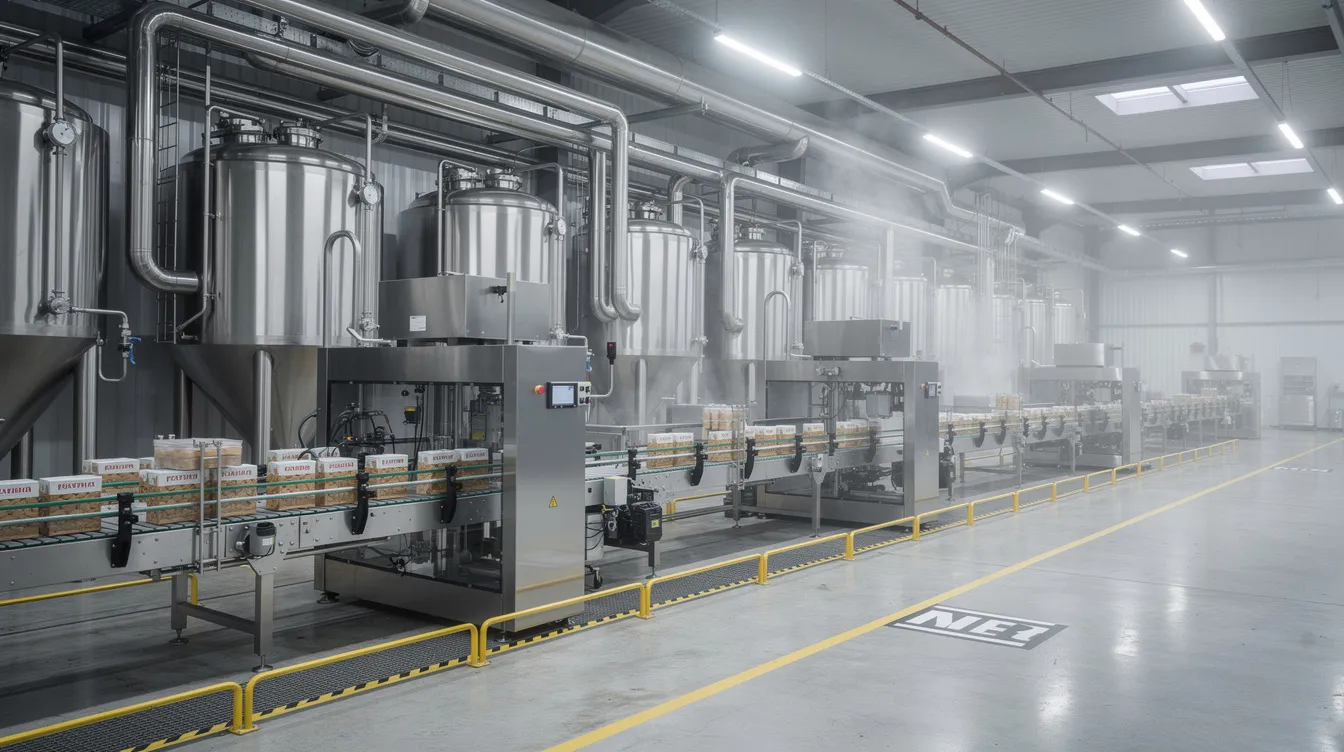
Every equipment group-from seed receiving systems, cleaning and de-stoning units, crackers, dehullers, conditioners and flakers to solvent extractors, desolventiser-toasters, evaporators, condensers, meal handling systems and oil storage tanks-must be sized consistently to the same design TPD.
Crushing capacity depends on the weakest link in the production process, often called the bottleneck. Identifying equipment bottlenecks is critical for optimising plant output. Common constraints include:
- Undersized cleaning sections that limit effective throughput regardless of extractor capacity
- Insufficient steam supply from undersized boilers
- Solvent recovery systems that cannot handle peak miscella flow
For 500–1,000 TPD plants, a single preparation and extraction line is typically adequate. Plants of 2,000–5,000 TPD often require parallel process trains to improve maintainability and uptime. Equipment selection directly influences power requirement, steam demand and hence operating cost per tonne. Operation efficiency benefits from maximising equipment utilisation to lower processing costs, and in-line weighing, flow control and SCADA monitoring are essential at larger scales for maintaining consistent meal quality and crude oil quality.
Land, Building, Storage and Plant Layout Requirements
Land and layout decisions must accommodate current crush capacity as well as future expansion options. Land costs typically account for 10% to 20% of total investment in soybean processing projects.
Key considerations include:
- Site selection: Proximity to soybean-growing belts, rail and road connectivity, reliable power and water supply, environmental zoning and state industrial policy incentives.
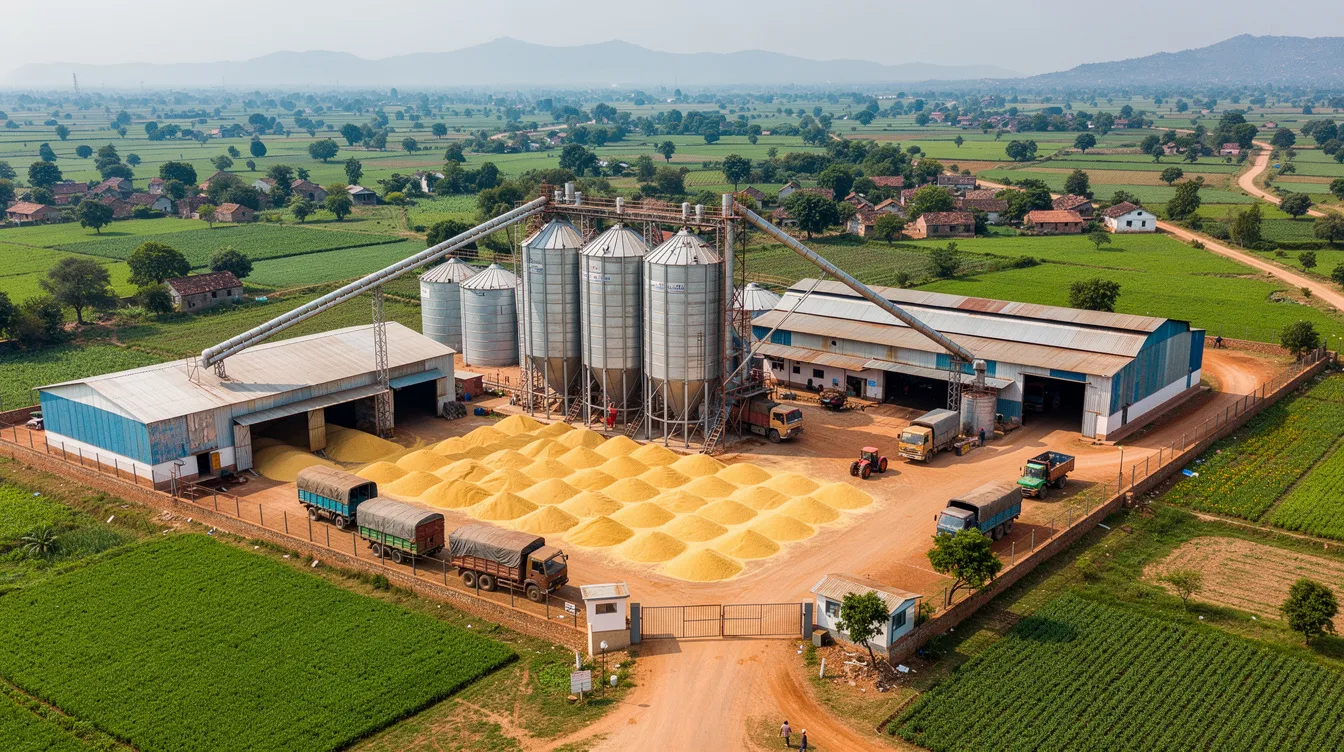
- Functional zoning: Raw soybean receipt and weighbridge area, silo or godown storage, processing block, boiler and utilities zone, finished goods storage for meal and oil, administrative block, laboratory, and truck circulation.
- Storage infrastructure: Raw soybean storage sized in days of crush capacity, finished meal warehouses, crude oil tanks, and solvent storage-all planned with safety clearances and fire-fighting access.
Expansion flexibility should be built into the plant’s design during initial construction. A 500 TPD plant may require a few acres while a 3,000+ TPD complex needs substantially more, but actual land requirement depends on storage philosophy, number of silos, warehousing approach and whether future expansion corridors are provisioned.
Power, Steam, Water and Utilities Sizing
Good planning ensures logistics and utilities are adequate to support continuous processing. Utilities must be engineered from detailed mass and energy balance for the chosen plant capacity, not from generic thumb rules alone.
- Steam/Boiler: The largest utility consumer. Plants of 2,000–5,000 TPD benefit from higher-efficiency boilers, waste-heat recovery and engineered condensate return systems. Steam cost is often the second-largest operating expense after raw materials.
- Power: Connected load varies significantly with capacity and automation. As an illustrative benchmark, power consumption may range from 30–60 kWh per tonne of soybean processed, depending on process configuration.
- Solvent handling safety systems: Proper ventilation, LEL monitoring, nitrogen blanketing in critical tanks, explosion-proof electricals and solvent recovery efficiency targets are mandatory. Efficient resource allocation minimises waste and enhances energy consumption during operations.
Inadequate utilities can cap effective crush capacity below the nameplate rating, making utility design a core component of capacity planning.
Project Cost, CAPEX Structure and Economies of Scale
Plant capacity significantly shapes total project cost, but cost per TPD decreases with scale. For perspective on how small these costs can be at micro scale: a 5 ton per day soybean processing line costs about $7,000–$8,000, a 20–30 ton per day plant costs around $40,000, and industrial oil presses can exceed $100,000. At the 500–5,000 TPD industrial scale, investment runs into tens to hundreds of crores.
Major CAPEX components include:
- Land and site development
- Civil construction (processing building, warehouses, utility block)
- Processing machinery and solvent extraction system
- Material handling, conveyors, elevators, silos, oil tanks
- Boilers, electrical substation, DG sets, water treatment, ETP, fire-fighting and safety systems
- Automation (PLC/SCADA/DCS), instrumentation and laboratory equipment
- Pre-operative expenses, contingencies and margin money for working capital
Per-TPD cost reduces as capacity rises from 500 TPD towards 3,000 TPD due to economies of scale in machinery, civil works and utilities. Very large capacities like 5,000 TPD may again face higher absolute risk and require superior infrastructure and financing. For a detailed breakdown of investment components, refer to the article on Soybean Crushing Plant Setup Cost and Investment.
Current machinery prices and construction rates change over time. The figures discussed in this article are illustrative-promoters should obtain updated supplier offers as part of DPR preparation.
Capacity Utilisation, Annual Production Planning and Sensitivity
Effective capacity planning requires regular monitoring of actual versus planned processing rates. Realistic utilisation assumptions are critical for credible DPRs and financial models.
Ramp-up pattern (illustrative): A new 1,000–5,000 TPD plant may achieve approximately 60–70% utilisation in Year 1, 75–85% in Year 2, stabilising near 85–90% from Year 3 onwards.
Sensitivity Example (2,000 TPD, 300 operating days):
| Utilisation | Annual Throughput | Revenue Impact (at ₹500/T margin) |
|---|---|---|
| 75% | 450,000 MT | ₹22.5 crore EBITDA |
| 85% | 510,000 MT | ₹25.5 crore EBITDA |
| 90% | 540,000 MT | ₹27.0 crore EBITDA |
The difference between 75% and 90% utilisation is approximately ₹4.5 crore in this illustration-which can determine whether the project meets its DSCR obligations. Raw material shortages, power outages, logistics blockages or weak demand for soybean oil or soybean meal can push utilisation below planned levels. Banks and investors scrutinise utilisation assumptions closely; conservative but realistic numbers strengthen the project’s credibility.
Soybean Crushing Economics, Crush Margins and Profitability
The crush spread refers to the financial difference between product market value and soybean cost. Specifically, crush margins are calculated as:
Crush Margin = (Revenue from soybean meal + Revenue from crude soybean oil + By-product value) − (Cost of raw soybeans + Variable processing cost per tonne)
Soybean oil processing offers profit margins of 10–20% in favourable conditions, and soybean oil processing offers steady profit margins when selling oil and meal together. However, these margins fluctuate daily with commodity prices.
Illustrative Per-Tonne Calculation (hypothetical):
| Item | Value |
|---|---|
| Raw soybean cost | ₹60,000/T |
| Oil recovered (18%) at assumed price | ₹18,000 |
| Meal recovered (78%) at assumed price | ₹43,710 |
| Total product value | ₹61,710/T |
| Processing cost | ₹2,500/T |
| Net margin | −₹790/T |
As FarmArt/SOPA data for August–September 2026 illustrates, crush margins can swing from positive ₹3,090/T to negative ₹790/T within weeks. High annual throughput alone does not guarantee profitability.
Financial planning must include break-even analysis to ensure profitability over time. Most well-run soybean processing plants see positive ROI within a few years, but this requires disciplined procurement timing, inventory management and consistent capacity utilisation. Domestic soybean meal consumption is increasing by approximately 2% to 3% annually, and soybean meal inclusion rates in livestock feed are rising as meal prices stabilise. Globally, broilers consumed 18.2 million tons of soybean meal in 2022, reflecting the scale of demand primarily driven by the feed industry.
Working Capital Requirements and Commodity Financing
Working capital is especially significant for large soybean crushers because raw materials account for 85% to 90% of operating expenses. Labor costs vary based on automation level and location but are a much smaller component compared to seed procurement.
Key components of working capital include:
- Raw soybean inventory (15–30 days of consumption)
- In-process stocks
- Finished meal and crude oil inventory
- Trade receivables (30–60 days)
- Less: supplier credit
Illustrative Example (1,000 TPD plant): At 85% utilisation and 300 operating days, annual raw soybean requirement is approximately 255,000 MT. If the plant maintains 20 days of raw material inventory at ₹60,000/T, the inventory value alone is approximately ₹85 crore. Total working capital requirement-including finished goods, receivables and operating expenses-can reach several times monthly revenue.
Many plants fail not due to technical issues but because of insufficient working capital for raw material procurement during peak procurement season. CMA Data preparation for banks must reconcile projected stocks and receivables with sanctioned working capital facilities, consistent with plant capacity and the operating model.
DPR, CMA Data, DSCR and Bank Finance for Soybean Crushing Plants
Lenders in India carefully review DPR quality and financial modelling for high-capacity soybean crushing projects. Financial projections assess capital investment, operating costs and demand outlook over 7–10 years. Analyzing market demand and competition is essential to align production capacity with profitability.
A bankable soybean crushing plant DPR should include:
- Project background, capacity justification and market analysis covering domestic demand for soybean oil and meal
- Technical configuration, utility planning, manpower, environmental compliance
- Project cost, means of finance and implementation schedule
- Projected P&L, balance sheet, cash flows, DSCR, break-even analysis, IRR, NPV and payback period
- Sensitivity and scenario analysis on utilisation and crush margins
DSCR (Debt Service Coverage Ratio) = (EBITDA − Working Capital Interest) ÷ (Term Loan Interest + Principal Repayment). Banks typically expect DSCR above 1.25 in the base case and above 1.1 even under stressed scenarios. CMA Data is a structured financial planning and appraisal tool, not a certification or guarantee.
Banks will also assess promoter contribution, net worth, collateral, experience in agro processing and risk mitigation strategies for raw material and product price volatility.
Phased Expansion Strategy: Scaling from 500 TPD to 5,000 TPD
Phased expansion is a risk-management strategy worth serious consideration. Rather than committing to a 5,000 TPD facility immediately, a promoter may start with 1,000 TPD and add a second line of 1,000 TPD after three years, reaching 2,000 TPD once procurement networks and market offtake are proven.
Advantages of phased expansion include reduced initial risk, lower interest burden at the outset, learning curve benefits and the ability to calibrate capacity to actual crush margins and domestic demand. The layout, structural loading and common utilities (boilers, transformers, cooling systems, solvent recovery) can be designed for ultimate capacity while installing only initial process equipment.
Globally, this approach is well-established. In the United States, U.S. soybean crush capacity was about 2.2 billion bushels in 2021, and 23 plant expansions are expected to add 750 million bushels of capacity-a potential increase of over 30%. Iowa has the highest soybean crush capacity at 1.3 million bushels daily. Much of this crush capacity expansion is driven by renewable diesel demand. The U.S. has around 60 crushing plants currently operational, and the country exported a record 16.1 million metric tons of soybean meal in 2023, with U.S. soybean meal production projected at 56.7 million tons for 2025. These expansions, as tracked by the American Soybean Association and related news sources, are frequently modular, reflecting the same phased construction logic applicable to Indian projects.
Limitations of phased expansion include potentially higher total CAPEX over project life, some redundancy in civil structures and the need for disciplined long-term planning by promoters.
Technical, Commercial and Financial Risk Factors
Capacity planning must incorporate risk analysis. Key risks grouped by category:
Technical risks: Equipment underperformance, design errors, solvent leaks, safety incidents, inadequate utilities and lack of skilled manpower to run large automated plants in the northern plains or remote locations.
Commercial risks: Volatility in soybean prices, fluctuation in demand for soybean oil and meal, shifts in biofuel policies affecting crude oil and edible oil demand, competition from existing crushers in the domestic market, import and export policy changes, and country-level factors like trade restrictions. Growth in global demand for soy production creates opportunities but also competitive pressure.
Financial risks: Higher-than-expected interest rates, currency risk for imported machinery, weaker-than-projected crush margins leading to pressure on DSCR, and working capital shortages. Even established plants like those in North Dakota face margin compression during adverse price cycles.
Mitigation strategies: Diversified procurement, conservative leverage, robust insurance, strict maintenance and safety systems, multi-product strategy (different meal grades for market segmentation, lecithin, refined oil) and strong risk-based financial modelling. Lenders and investors may demand sensitivity and scenario analysis-for example, −10% crush margins and −15% utilisation-as part of a serious DPR.
How to Select the Right Soybean Crushing Plant Capacity
Selecting the right capacity requires a structured decision framework, not aspiration. Promoters should evaluate:
- Raw material availability: Verified annual raw soybean supply within a reasonable sourcing radius, accounting for logistics cost and competition from new plants in the area. This is the main raw material constraint that should determine capacity.
- Product offtake: Confirmed or reasonably assured demand for soybean meal (poultry feed, cattle feed, aquafeed) and soybean oil (refineries, edible oil brands, industrial and biofuel users). Beans must be converted into products that produce more value than the cost of procurement and processing.
- Financing capacity: Promoter equity and borrowing capacity to fund both CAPEX and significant working capital without overstretching. The investment must be structured to withstand margin pressure.
- Organisational capability: Ability to operate large continuous-process plants with high automation. The crush industry demands operational discipline.
- Downside tolerance: What happens to cash flow, DSCR and promoter finances if utilisation or crush margins remain below plan for 2–3 years?
Many first-time large investors in the soybean processing industry may be better served by starting at 500–1,000 TPD with a clear roadmap to scale based on performance, market response and increased demand.
Professional DPR and Project Finance Advisory by Project Report Bank
In my practice, I work with industrial promoters and agribusiness investors to evaluate soybean crushing projects from 500 TPD to 5,000 TPD through customised Detailed Project Reports, financial models, feasibility studies and bank-loan DPRs tailored to specific location, capacity and product mix.
Our advisory includes:
- Bank finance DPR preparation and loan proposal assistance
- CMA Data for term loan and working capital proposals
- DSCR and repayment analysis, working capital assessment
- Sensitivity analysis around crush margins and plant utilisation
- Investor-ready DPR and fundraising advisory
Professional bank finance DPR and loan proposal assistance starts from approximately ₹25,000, depending on scope and complexity. Investor-ready DPR and fundraising advisory starts from approximately ₹75,000, subject to project size and requirements.
Serious entrepreneurs, MSME investors and industrial groups planning soybean crushing or solvent extraction plant setup projects are welcome to initiate a discussion through the official WhatsApp contact available on ProjectReportBank.com. We position ourselves as a professional advisory platform combining chartered accountancy, project finance experience and industry-specific knowledge-not a template seller.
CA Manish Gugliya FCA, DISA (ICAI)
Frequently Asked Questions (FAQs)
What is the ideal crush capacity for a new soybean processing plant in India?
There is no single ideal capacity. The right choice depends on verified raw material access within a reasonable sourcing radius, confirmed domestic demand for soybean oil and soybean meal, promoter equity and borrowing capacity, and organisational ability to operate continuous-process plants. For new entrants, 500–1,000 TPD is often a prudent starting range, allowing the promoter to build procurement networks and market relationships before scaling further.
How much raw soybean is required annually for a 500 TPD plant?
At 300 operating days and 85% capacity utilisation: 500 × 300 × 0.85 = approximately 127,500 MT per year. This is the minimum procurement target; actual sourcing should exceed this to provide buffer for quality rejections, transport delays and crop variability across seasons.
Can I start with crude oil sale and add an edible oil refinery later?
Yes. Many promoters initially sell crude soybean oil to external refineries and focus on producing more soybean meal for the feed market. Adding a refinery later allows you to capture more value from production but requires additional CAPEX, technical expertise and compliance with food safety standards. This approach integrates well into phased capacity planning and allows the promoter to determine market positioning before committing further capital.
How does the scale of a soybean crushing plant affect working capital?
Working capital increases dramatically with scale. A 5,000 TPD plant requires roughly ten times the raw material inventory of a 500 TPD plant in absolute terms. Since operating costs for soybean processing plants are primarily driven by raw materials at 85–90% of expenses, procurement financing dominates working capital. Larger plants may maintain shorter stock cycles in terms of days but carry vastly higher absolute inventory values. A well-prepared DPR must reconcile these requirements with bank credit limits.
What should a soybean crushing plant DPR for bank finance include?
A bankable DPR should include project background, capacity justification with raw material and demand data, technical configuration, utility and manpower planning, environmental compliance strategy, detailed project cost with means of finance, and 7–10 year financial projections covering P&L, balance sheet, cash flow, DSCR, break-even analysis, IRR and sensitivity analysis. The document should clearly distinguish between verified industry data and forward-looking assumptions.