Key Takeaways
- Solvent extraction plant capacity is expressed in TPD, but financially viable capacity depends on realistic utilisation, raw material availability, and confirmed product off-take; a brochure number alone does not determine bankability.
- Plants at 500, 1,000, and 2,000 TPD have very different procurement, utility, working capital, and risk profiles, even when the core extraction technology is similar.
- Capacity planning must consider raw material supply and market demand; overbuilding capacity without securing either creates financial stress that no operating efficiency can offset.
- Detailed Project Reports (DPR), financial modelling, CMA Data, and DSCR analysis are essential steps before finalising plant size in India.
- Project Report Bank, led by CA Manish Gugliya, assists industrial investors across India with capacity-linked DPRs and finance advisory for solvent extraction projects.
Introduction: Why Solvent Extraction Plant Capacity Planning Matters
Selecting a processing capacity for an industrial solvent extraction plant is a strategic decision that determines capital outlay, raw material commitment, daily operating cost, and the financial structure of the entire project. For entrepreneurs and industrial investors evaluating 300 to 2,000 TPD facilities in India, this choice shapes every line item in the project cost estimate and every ratio in the bank finance proposal.
Capacity is more than a machinery specification. It drives the size of your boiler, the depth of your working capital requirement, the volume of hexane in your storage tanks, the number of trucks arriving at your gate each day, and whether your DSCR will hold up under stress. Market demand analysis is crucial to determine the viability of crude oil and co-products before committing to a plant size.
Typical applications include soybean oil, sunflower, mustard/rapeseed, cottonseed, and rice bran extraction, along with toll processing of pre-pressed cakes from integrated crushing plants. The process design aspects of solvent extraction are discussed separately; this article focuses on capacity planning and its financial implications.
Understanding Industrial Solvent Extraction Plant Capacity
Capacity is measured in tonnes per day (TPD), typically quoted on a 24-hour rated basis. However, actual throughput depends on effective operating hours (commonly 20 to 22 hours after accounting for cleaning, shift changeovers, and minor stoppages), number of operating days per year (300 days is a standard Indian planning assumption), and the utilisation percentage applied in each year of the projection.
Promoters must distinguish between three different capacity references:
- Raw oilseed crushing capacity in an upstream expander or mechanical press.
- Prepared flakes or expanded material capacity entering the solvent extractor.
- Extraction plant capacity when fed with externally purchased press cake.
Different OEMs may quote extractor capacity on a seed-equivalent, cake, or flake basis. A DPR must state precisely what the TPD figure represents; otherwise, financial projections built on that number will be unreliable.
Effective capacity is the realistic output after accounting for maintenance and bottlenecks. Regular maintenance and cleaning downtime affect the actual capacity of solvent extraction systems, so rated capacity and practical capacity are never identical. Operating a solvent extraction plant continuously at 100% capacity leaves no room for maintenance spikes or unexpected disruptions. At the largest scales, globally, solvent extraction plants process 1,000 to 6,000 tons of seed daily, but Indian commercial plants commonly range from 100 to 2,000 TPD.
Capacity planning must synchronise upstream seed preparation, the extractor itself, and downstream refining or packing. For integrated soybean projects, the soybean crushing plant capacity planning article provides complementary reading on aligning these stages.
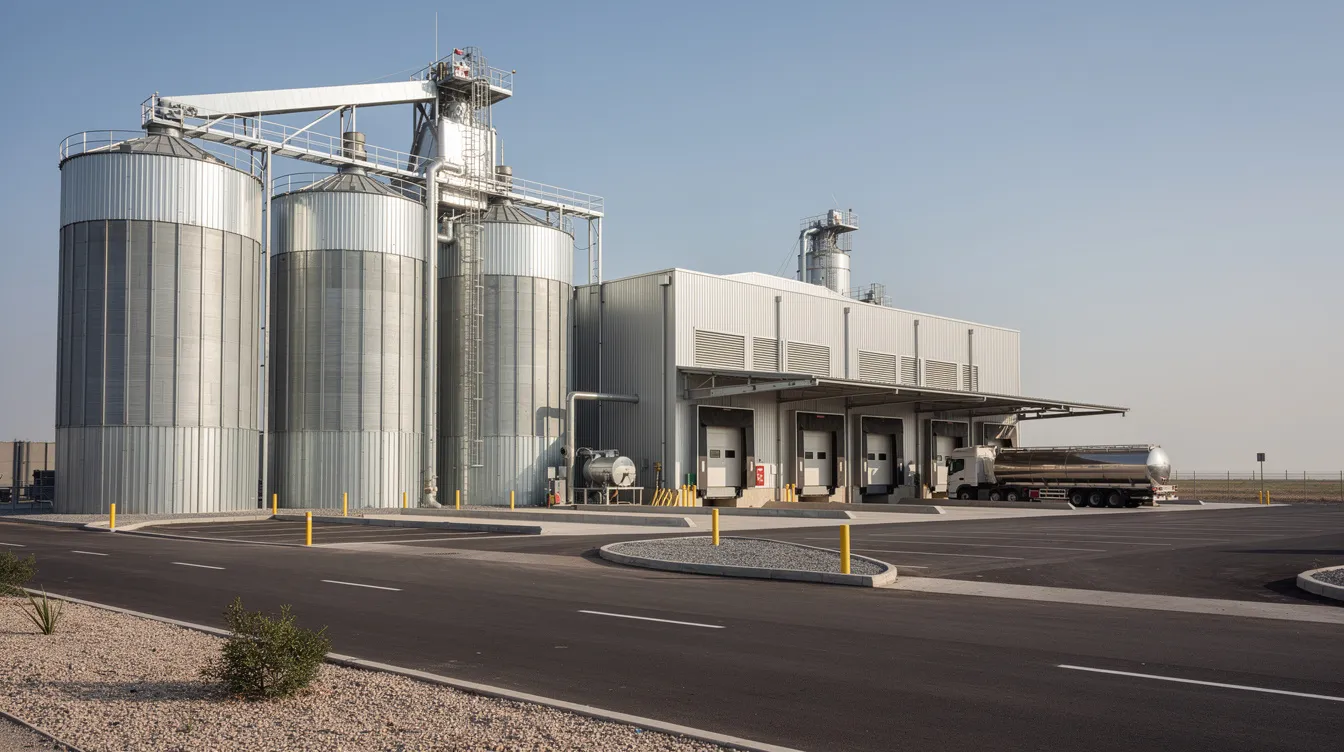
Comparison of 300, 500, 1,000, 1,500 and 2,000 TPD Solvent Extraction Plants
Commercial solvent extraction plants in India span a wide range. In general industry terminology, mini plants processing up to 30 TPD are best suited for new entrants, while mid-size plants range from 50 to 150 TPD, balancing costs and capacity for regional operators. Large plants typically process 200 to 500 TPD of oilseeds, and mega plants exceed 500 TPD, requiring strong supply chains and secured raw material contracts. The 300 to 2,000 TPD band discussed here falls squarely in the large-to-mega category.
300 TPD: At 300 operating days and 75% utilisation, annual throughput is approximately 67,500 tonnes. Daily raw material requirement is around 300 tonnes of seed or cake. Machinery automation is moderate; a single extractor train with basic safety instrumentation is common. Suitable for regional players or first-time extraction entrepreneurs linked to local soybean or rapeseed belts.
500 TPD: Annual throughput at 80% utilisation reaches approximately 120,000 tonnes. Pre-treatment and extractor sizing step up; boilers move into the 15 to 20 tonne/hour steam range. Working capital requirement grows proportionally. This band suits established MSMEs or corporates with secure procurement in one or two states. Mid-size plants in this range balance capital outlay with economies of scale.
1,000 TPD: Annual throughput at 80% utilisation is approximately 240,000 tonnes. Requires high automation, distributed control systems, redundant safety interlocks, and larger utility blocks. Suitable for integrated soybean processors and multi-seed operators with strong procurement and marketing networks.
1,500 to 2,000 TPD: Annual throughput at 80% utilisation ranges from 360,000 to 480,000 tonnes. Mega plants at this scale need secured raw material contracts for high utilisation and may require multi-location procurement, rail access, or port proximity. Suited to large agribusiness groups, exporters, or integrated players with robust sourcing and marketing.
Mini plants cost more per tonne processed, while large plants have the lowest per-tonne operating cost. However, larger capacities expose the promoter to proportionally greater raw material risk, market volatility, and working capital intensity. The optimal capacity is not always the largest possible plant. For a deeper breakdown of how capital investment scales with capacity, see our detailed setup cost analysis.
Solvent Extraction Plant Capacity Calculation: Practical Methodology
Converting a TPD number into annual throughput and product output follows a clear sequence:
- Define rated extractor feed capacity in TPD (seed, cake, or flakes; specify which).
- Set effective operating hours per day (e.g., 22 hours) and operating days per year (e.g., 300).
- Assume realistic utilisation: 60% in year one, 75% in year two, 85% from year three onward.
- Calculate annual feedstock requirement: rated TPD × operating days × utilisation.
- Apply oil content of feed, extraction recovery percentage, and processing losses to derive oil and meal output.
The design capacity must factor in equipment that achieves a high oil recovery rate while minimizing residual oil in the finished meal.
Example: 500 TPD soybean cake plant (illustrative)
- Feed: 500 TPD of pre-pressed soybean cake containing approximately 10% residual oil.
- Operating days: 300; year-one utilisation: 70%.
- Annual feed: 500 × 300 × 0.70 = 105,000 tonnes.
- At 98% extraction efficiency and 1% handling loss: oil output ≈ 105,000 × 0.10 × 0.98 × 0.99 ≈ 10,187 tonnes/year.
- Defatted meal output: approximately 94,000 tonnes/year.
For context on how soybean oil and meal recovery percentages influence these calculations, see our yield and profitability analysis.
Example: 1,000 TPD integrated soybean project (illustrative)
- Upstream crushing produces pre-pressed cake at roughly 800 to 900 TPD to feed the 1,000 TPD extractor.
- At 80% utilisation and 300 operating days: annual cake feed ≈ 240,000 tonnes.
- Oil output from extraction alone: approximately 23,500 tonnes/year, plus oil recovered via upstream pressing.
These are illustrative figures. Serious investors should use seed- and region-specific parameters in a customised DPR and financial model, not generic industry averages.
Raw Material Availability and Procurement Planning
Capacity planning must begin with mapping sustainable raw material availability for at least 8 to 10 years. Assessing raw material availability and quality is essential for determining plant capacity, and crop statistics alone are insufficient; competition from existing crushers, expellers, and other solvent extraction plants in the same procurement belt must be accounted for. The capacity planning process includes raw material supply audit and market demand analysis as foundational steps.
Soybeans account for 56% of oilseeds processed by solvent extraction globally. In India, soybean dominates in Madhya Pradesh, Maharashtra, and Rajasthan. Sunflower, mustard/rapeseed, cottonseed, and rice bran are region-specific alternatives, each with different oil content, preparation methods, and seasonal availability.
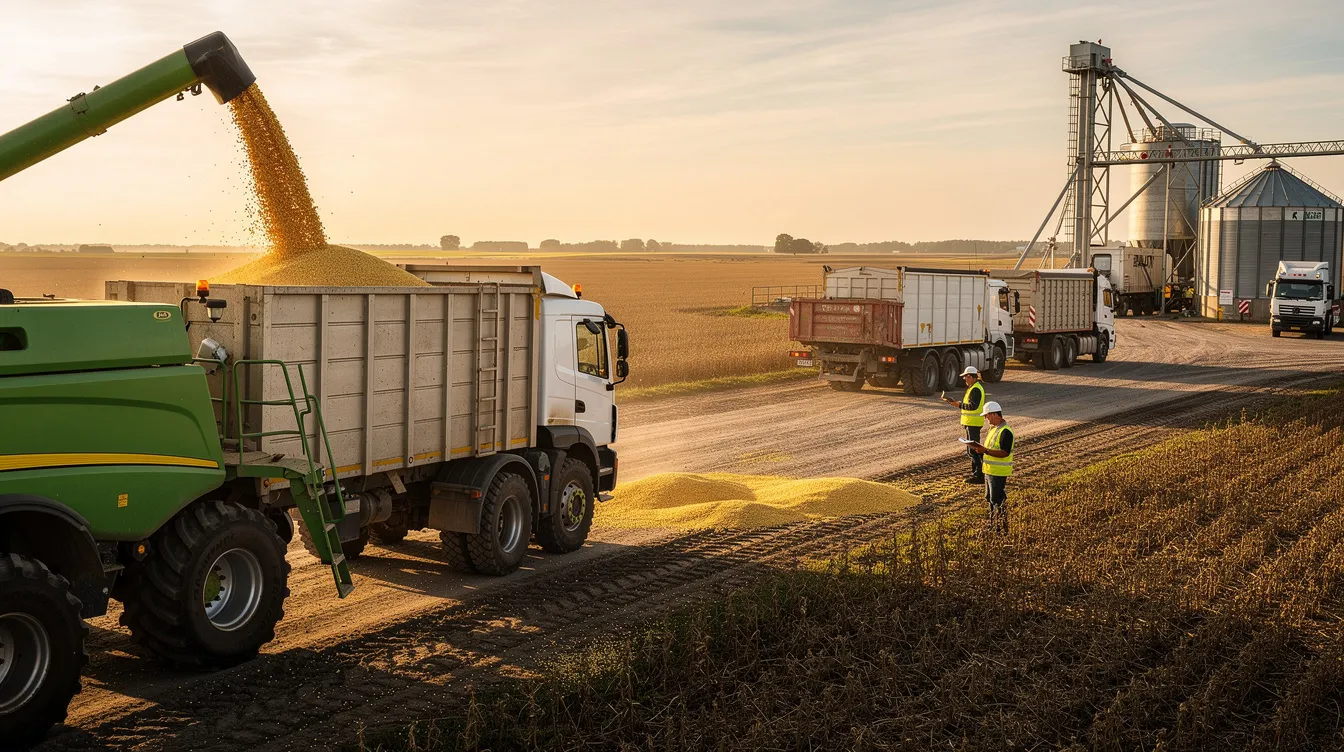
Capacity must align with the local agricultural cycle to avoid costly downtime. Soybean harvest arrives primarily during Kharif (October to March). A 500 TPD plant planning a 60-day raw material buffer needs approximately 30,000 tonnes in storage; a 1,000 TPD plant needs 60,000 tonnes. This storage volume directly affects warehouse investment and bank-financed working capital limits. Analyzing transportation costs within a 300 to 400 km radius is crucial for raw material sourcing economics.
Raw material supply impacts the operational capacity of extraction plants. Plants require a strong raw material supply chain for efficient operation. Seed quality parameters, including moisture (below 12 to 13% for soybean), impurity levels, and FFA content, affect oil recovery and downstream refining cost. For a detailed discussion, see our article on soybean procurement, seasonal inventory and working capital.
Machinery and Technology Selection Based on Plant Capacity
The extraction process includes seven distinct stages: preparation of raw material (the first stage), solvent extraction of oil bearing material, desolventisation of extracted material, distillation of miscella, solvent recovery by condensation, final solvent recovery by absorption, and meal finishing. While the basic process flow remains similar across 300 to 2,000 TPD capacities, machinery sizing, level of automation, redundancy, and safety systems scale with plant size.
Solvent extraction is energy-intensive and requires significant steam for distillation and desolventizing. Bottleneck analysis should be done to identify the maximum sustainable throughput of each process section, and plant design must prevent mismatches between:
- Seed preparation section capacity (cleaning, cracking, flaking, conditioning).
- Solvent extractor throughput.
- DTDC and meal handling capacity.
- Miscella distillation and solvent recovery systems.
At 1,000+ TPD, automation and instrumentation become critical for consistent extraction efficiency and solvent loss control. OEM selection and technology choice (Rotocell vs loop extractors, for example) materially influence operating cost per tonne. The internal article on solvent extraction plant machinery, equipment and technology covers equipment configuration in detail.
Land, Building, Utilities and Infrastructure Requirements
Land and infrastructure planning follows from chosen capacity, raw material logistics, and safety norms. Expansion planning should consider future land and utility requirements; selecting a site that allows future upgradation from 500 to 1,000 TPD avoids costly relocation.
Main components that scale with capacity include:
- Raw material godowns and silos sized for minimum buffer inventory (60 to 180 days depending on procurement strategy).
- Process buildings housing preparation, extractor, and DTDC sections.
- Boilers, cooling towers, and water treatment facilities matched to TPD-related steam and cooling needs (steam consumption runs 250 to 350 kg per tonne of seed).
- Tank farm for crude oil, miscella, and solvent storage, with fire and safety separation distances.
Plants at 1,000+ TPD typically need more elaborate internal roads, weighbridges, and proximity to rail or port infrastructure depending on product distribution. Avoid treating “standard land area numbers” as engineering norms; site-specific layouts designed jointly by process engineers and civil consultants produce more reliable estimates. For integrated projects, the soybean crushing plant land, building and utilities article covers campus-level planning.
Capital Investment and Project Cost by Plant Capacity
Capital cost heads for solvent extraction plants on a turnkey basis (excluding raw land, which varies heavily by state) typically include: land development, civil construction, plant and machinery (preparation, extractor, DTDC, distillation, and solvent recovery), utilities (boiler house, power distribution, DG sets, water systems), erection and commissioning, fire-fighting and environmental systems, pre-operative expenses, interest during construction, contingency, and margin money for working capital.
Investment doesn’t scale linearly with capacity. Per-TPD machinery cost declines from approximately ₹4 to 6.5 lakh/TPD for a 100 TPD plant to roughly ₹2.8 to 4.4 lakh/TPD at 500 TPD, based on industry data. Total project cost for a 300 TPD plant (machinery, civil, working capital) may range from ₹26 to 45 crore; at 500 TPD, ₹41 to 70 crore; at 1,000 TPD and above, costs rise further but per-tonne capital drops.
Accurate project costing requires vendor quotations and project-specific civil estimates captured in a detailed DPR. For a deeper breakdown, see our article on solvent extraction plant setup cost and investment.
Operating Economics, Capacity Utilisation and Break-Even
Operating economics of a solvent extraction plant are sensitive to capacity utilisation. A 1,000 TPD plant at 50% utilisation may be less profitable than a 500 TPD plant operating at 85%.
Fixed costs include core staff salaries, minimum utility contracts, insurance, property tax, and administrative overheads. Smaller plants have higher fixed costs per tonne at any given utilisation level. Variable costs include fuel, power consumption (25 to 40 kWh per tonne), solvent make-up, chemicals, and inward/outward freight.
Solvent recovery efficiency is vital for operating costs and environmental compliance. A well-maintained continuous loop limits solvent loss to 1 to 3 litres per tonne of processed material. At 500 TPD and 300 operating days, even a 1-litre difference in hexane loss per tonne can add up to 150,000 litres annually. High solvent losses can directly impact profitability and environmental compliance.
Solvent recovery systems are crucial to minimize costs and ensure environmental compliance. Break-even utilisation for most plants falls in the 60 to 70% range, but this depends on processing margins, which are themselves a function of seed purchase price, oil realisation, and meal prices. India’s approximately 350 working solvent extraction plants collectively process about 30 million tonnes per year, but many operate at only 30 to 40% of rated capacity, according to USDA Economic Research Service analysis.
Financial Feasibility, ROI, IRR and DSCR
Capacity decisions should emerge from financial feasibility analysis, not from machinery supplier suggestions or rule-of-thumb IRR numbers. Project feasibility studies evaluate the economic viability of a project considering financial metrics including project IRR, equity IRR, payback period, NPV, and DSCR.
A robust DPR links capacity with annual throughput, yield, operating costs, and realistic selling prices to generate 5 to 10 year financial projections. Multiple scenarios must be tested: lower utilisation (60% instead of 80%), higher raw material prices, weaker meal prices, delayed commissioning, and higher interest costs. Banks typically expect DSCR of 1.25× to 1.40× even under stress scenarios.
Projected returns in a DPR are estimates based on assumptions, not guaranteed outcomes. For an example of how sensitivity analysis structures capacity decisions, see the soybean crushing plant feasibility, ROI, IRR and sensitivity analysis article.
Bank Finance, CMA Data and Working Capital Planning
Solvent extraction projects in the 300 to 2,000 TPD range are typically financed through a combination of promoter equity (usually 25 to 33% of project cost) and term loans, with separate cash credit limits for raw material inventory and stock.
Banks require a bankable DPR, CMA Data with 5 to 7 year projections, and evidence of adequate DSCR, current ratio, and promoter contribution. Working capital implications differ sharply by capacity: a 300 TPD plant holding 60 days of soybean stock at a notional ₹50,000/tonne ties up approximately ₹90 crore in inventory; at 1,000 TPD, the same buffer approaches ₹300 crore. CMA Data must reflect realistic capacity utilisation ramp-up (60%, 75%, 85%) rather than 100% from year one.
For soybean-based projects, many capacity-planning principles overlap with the framework discussed in our article on soybean oil plant financial projections, CMA Data, DSCR and bank finance.
Regulatory, Environmental and Industrial Safety Considerations
Hexane and other solvents used in the extraction process are flammable and hazardous. Environmental and safety compliance must be incorporated into capacity planning from inception, with costs scaling at 1,000+ TPD.
Designs for solvent extraction plants must address safety and environmental standards to mitigate risks. Key requirements include:
- Consents from the State Pollution Control Board for air emissions, water discharge, and hazardous waste, as applicable.
- Fire NOC and compliance with fire-safety codes for tank farms, process buildings, and solvent storage.
- Compliance with applicable petroleum storage, factory, and hazardous chemical regulations.
- Explosion-proof electrical fittings, leak detection systems, earthing, bonding, and static electricity management.
Operators require training and SOPs, especially during startup and capacity ramp-up stages. Ventilation and zoning of hazardous areas are non-negotiable. While Project Report Bank analyses regulatory cost and broad requirements in DPRs, detailed engineering design, statutory certification, and approvals are handled by specialised engineering consultants and local authorities.
Choosing the Right Capacity: 300 vs 500 vs 1,000 vs 2,000 TPD
The capacity choice should follow a structured evaluation:
- Raw material mapping: Estimate sustainable procurement within a 300 to 400 km radius, accounting for competing plants. If mapping shows comfortable supply for 120,000 tonnes/year but not 240,000, a 500 TPD plant is more prudent than 1,000 TPD.
- Market access: Confirm off-take channels for crude oil (or refined oil) and meal. Domestic feed industry demand, export opportunities, and logistics cost all factor in.
- Promoter capital and borrowing capacity: A 1,000 TPD project may require ₹80 to 120 crore or more in total investment. The promoter must have both equity depth and credit standing.
- Manpower and management bandwidth: Larger plants require experienced technical operators, quality teams, and commercial staff that may not be available locally.
When 300 TPD is appropriate: localised oilseed belt, moderate capital, cautious first project. When 500 TPD offers better economics: established MSME with reliable supply. When 1,000 TPD and above are justified: integrated agribusiness, multi-location procurement, strong balance sheets.
Consider phased expansion where layout allows future upgradation from 300 or 500 TPD to 800 to 1,000 TPD based on utilisation trends and market feedback, instead of over-investing initially.
Common Mistakes in Solvent Extraction Capacity Planning
From my experience reviewing DPRs and bank proposals, these errors recur frequently:
- Overestimating raw material availability by referencing district-level crop data without adjusting for competition from other extraction plants in the same belt.
- Assuming 90 to 100% utilisation from year one. Most new plants take 6 to 12 months to stabilise at even 60 to 70%.
- Underestimating working capital needs, particularly when soybean or rapeseed prices spike during lean procurement months.
- Treating solvent extraction as low-risk “job work” without securing long-term cake supply contracts.
- Selecting capacity purely on per-tonne machinery cost without modelling DSCR and cash flows over 7 years.
- Failing to size utilities adequately for peak loads, creating hidden capacity bottlenecks that reduce effective throughput.
- Ignoring safety and environmental costs in initial budgets, resulting in project delays and cost overruns during commissioning.
These mistakes are avoidable if investors insist on a professional DPR, realistic financial model, and independent capacity-validation. Revisiting capacity assumptions before placing machinery orders is far cheaper than correcting an oversize plant after commissioning.
How CA Manish Gugliya and Project Report Bank Assist in Solvent Extraction Projects
I am CA Manish Gugliya (FCA, DISA ICAI), practising from Ratlam, Madhya Pradesh, with over 20 years of experience in project finance and industrial DPRs across India. Through Project Report Bank, I provide:
- Customised DPR preparation integrating technical inputs from your approved machinery suppliers.
- Capacity-linked financial projections and financial modelling reflecting realistic utilisation, yields, and pricing.
- CMA Data preparation and structuring of term loan and working capital proposals.
- DSCR analysis, break-even calculation, ROI/IRR assessment, and sensitivity analysis on capacity choices (e.g., 300 vs 500 vs 1,000 TPD).
Project Report Bank does not manufacture machinery or provide engineering drawings. We collaborate with your selected machinery and engineering vendors to embed credible capacity, utility, and cost data into the DPR. The goal is a cost effective, data-backed investment plan that can withstand bank scrutiny.
Frequently Asked Questions on Solvent Extraction Plant Capacity Planning
What is a realistic capacity utilisation to assume for a new 500 to 1,000 TPD solvent extraction plant?
Most new plants should plan for 60 to 70% utilisation in year one, 75% in year two, and 85% from year three onward. Assuming higher levels in initial years without confirmed supply contracts and customer commitments will weaken DSCR under bank stress-testing.
How do I decide between a soybean-only vs multi-seed configuration?
If your procurement area reliably supplies soybean for 200+ operating days, a soybean-focused design with preparation suited to soy characteristics is efficient. Multi-seed flexibility (sunflower, rapeseed) requires additional preparation sections and higher capital outlay but can improve utilisation in regions with mixed oilseed cultivation.
How many months of raw material stock should a 1,000 TPD plant plan for?
In India, 60 to 90 days of buffer stock is common for soybean-based plants, given the concentrated Kharif procurement season. At 1,000 TPD and 300 operating days, 60 days of stock equals approximately 60,000 tonnes, a quantity that demands substantial godown or silo capacity and bank-financed inventory limits.
What is the typical project implementation timeline from sanction to commissioning?
For a 300 to 500 TPD plant, 12 to 18 months from financial closure to trial production is a reasonable estimate. For 1,000 TPD and above, 18 to 24 months is common, factoring in regulatory clearances, civil construction, equipment fabrication, and commissioning. PESO, SPCB, and fire approvals can add 6 to 12 months if not initiated early.
Can modular plant design help in expanding from 300 to 1,000 TPD later?
Phased expansion is feasible if the original site layout, utility infrastructure, and civil foundations are designed with future capacity in mind. Adding a second extractor train and scaling boilers and solvent recovery capacity is more cost effective than retrofitting an undersized site. Discuss expansion planning with your process engineer before finalising the initial layout.
Conclusion: Selecting a Financially Sustainable Plant Capacity
Solvent extraction plant capacity planning is a balance between technology, raw material availability, market access, capital strength, and risk appetite. The objective is not to achieve the largest TPD number available in the market but to select a capacity that can sustain procurement, generate adequate returns at realistic utilisation, and service its debt through market cycles.
A 300 TPD plant running at 85% utilisation with reliable supply and healthy margins will produce better returns than a 2,000 TPD plant struggling at 40% due to procurement shortfalls. Base decisions on DPR-led financial modelling, not on optimistic back-of-envelope calculations or machinery brochure claims.
If you are planning a solvent extraction project in the 300 to 2,000 TPD range and need a customised DPR, CMA Data, financial model, or bank-finance proposal, connect with CA Manish Gugliya & Company, Chartered Accountants, Ratlam, through the WhatsApp contact facility on ProjectReportBank.com. Capacity planning, done well, is the foundation for long-term viability in the oilseed processing industry.