Key Takeaways
Land, layout, utilities, fire safety and environmental approvals together determine whether a solvent extraction project in the 300–2,000 TPD range in India is bankable, feasible and capable of sustained profitability. These infrastructure elements are not afterthoughts-they form the backbone of any credible Detailed Project Report (DPR).
- Solvent extraction plant land requirements typically start around 2–3 acres for a 300 TPD standalone unit and can go beyond 10–12 acres for integrated 1,500–2,000 TPD complexes, depending on layout, warehousing philosophy, railway siding needs and green-belt provisions.
- The plant layout must clearly segregate hexane-based hazardous zones from safe utility, administrative and warehousing areas to meet both safety and statutory norms under the Factories Act and PESO regulations.
- Utilities-power, steam, water, cooling, compressed air-and mandatory safety and environmental systems can together account for a substantial portion of total project cost. These must be planned upfront and reflected accurately in the DPR and CMA Data.
- Infrastructure and compliance costs directly affect fixed capital intensity, cost per tonne of processing, DSCR, IRR and break-even volume. Underestimating them leads to funding gaps, commissioning delays and financial stress.
- Professional DPR preparation, financial projections and compliance planning by Project Report Bank, under CA Manish Gugliya, help Indian promoters align land, infrastructure, bank finance and approvals before committing large capital to solvent extraction projects.
Introduction – Why Land, Layout and Compliance Matter
Solvent extraction plants processing soybean, rice bran, mustard, sunflower and similar oil bearing materials at industrial scale handle large throughputs of raw material while simultaneously managing flammable hexane-the primary solvent used in oil extraction-alongside high-temperature steam systems and continuous material movement. For capacities in the 300–2,000 TPD range, solvent extraction plant land requirements, factory layout design, utilities planning, fire safety and environmental compliance cannot be treated as items to be sorted out after machinery orders are placed. They strongly influence total project cost, commissioning timelines and bankability.
The reason solvent extraction commands industrial attention is straightforward: mechanical pressing alone leaves 6–8% residual oil in cake, whereas hexane extraction achieves 95–99% oil recovery from oilseeds, reducing residual oil in extracted meal to as low as 0.5–1%. This efficient extraction of oil from seeds and bran drives edible oil production economics. However, the process involves handling flammable hexane, high-pressure steam, volatile solvent vapor and large volumes of raw material and finished products-all of which require careful spatial and logistical planning.
Consider a practical example. If the extraction building is positioned too close to the boiler house, or if truck movement routes pass through solvent handling zones, the project risks redesign at a late stage, delayed statutory clearances and significant cost overruns. Lenders in India increasingly examine whether land area, hazardous-area segregation, utility sizing and consent conditions such as CTE and CTO have been realistically captured in the DPR before sanctioning project finance.
This article focuses specifically on integrated planning of land, layout, utilities, fire safety and environmental approvals for industrial solvent extraction plants in India. It complements existing resources on solvent extraction plant machinery and process technology and process design available on ProjectReportBank.com.
Solvent Extraction Plant Land Requirements in India
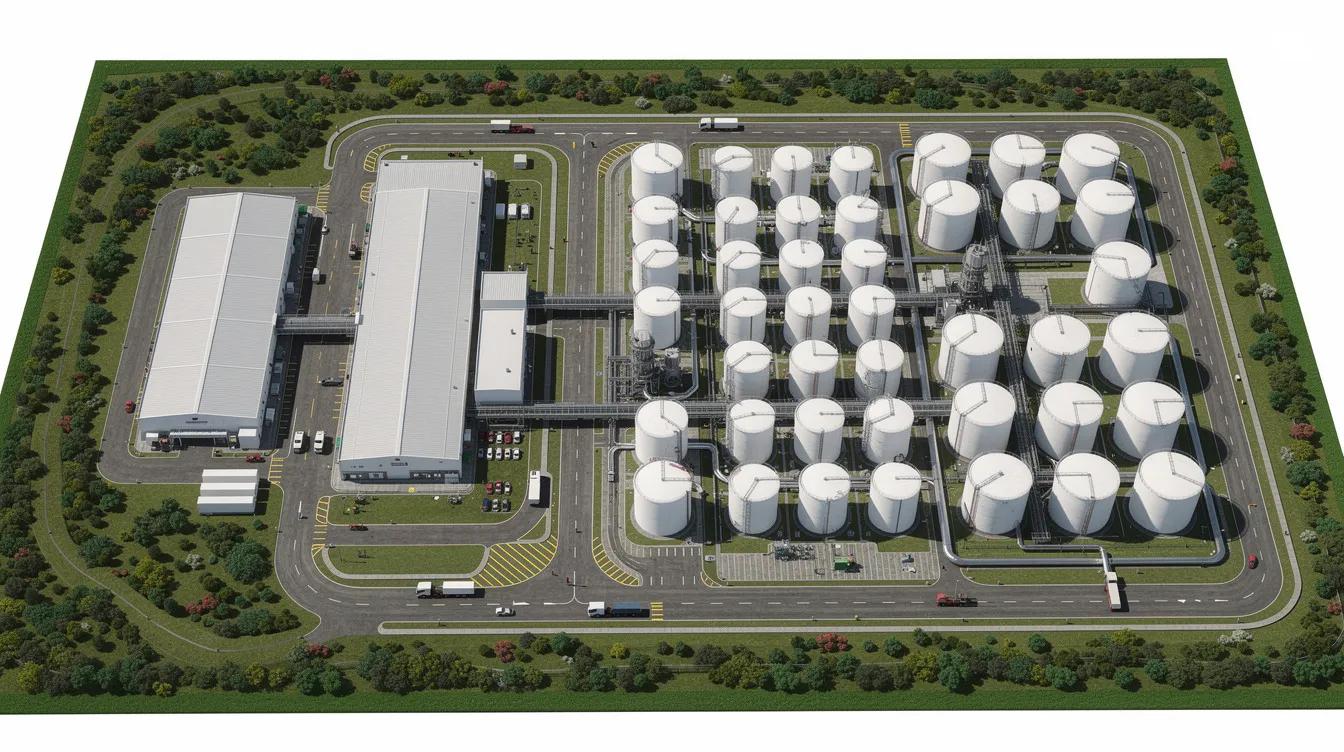
There is no single statutory “minimum land area” prescribed for all solvent extraction plants in India. Land area requirements depend heavily on daily processing capacity, degree of integration (standalone extraction versus crushing plus extraction plus refining), storage philosophy (warehouses versus silos), and site-specific constraints such as plot shape, topography and local setback norms. Land area needs vary based on plant capacity and design, and promoters must evaluate several factors before finalising a site.
Site Selection Criteria
When selecting an industrial site for a solvent extraction plant, promoters should consider:
- Industrial zoning: Zoning laws typically require plants to be located in notified industrial zones or estates such as MIDC (Maharashtra), RIICO (Rajasthan), APIIC (Andhra Pradesh) or equivalent state industrial development authorities. Solvent extraction plants must be set up away from densely populated areas.
- Proximity to raw materials: Siting near soybean belts, rice mills or rice bran sources minimises freight costs for bulky inputs and supports reliable procurement.
- Transport access: Heavy vehicle access roads must be at least 6 metres wide for safe transport of raw material and finished goods. Proximity to national or state highways and, where volumes justify it, railway sidings.
- Infrastructure availability: Reliable power supply, adequate water source and availability of skilled and semi-skilled labour.
- Safety distances: Land requirements include process area, hexane storage, and utilities. Promoters must account for minimum separation from other occupancies, space for firewater tanks, ring main and hydrants, and safe siting of hexane storage tanks relative to process buildings and boundary walls. Under the Goa Factories Rules, Schedule XVIII, for instance, no solvent extraction plant shall be constructed within 30 metres of the nearest residential locality.
Land allocation and site choice dictate operational safety and regulatory compliance for the entire project lifecycle.
Capacity-Wise Land Planning Benchmarks
The following table presents indicative planning benchmarks based on vendor data and real project examples. These are not statutory norms but practical ranges observed in Indian industrial projects.
| Processing Capacity (TPD) | Plant Type | Indicative Land Area | Key Assumptions |
|---|---|---|---|
| 50–100 | Standalone extraction | 1–2 acres | Basic process blocks, small warehousing, limited hexane storage. For very small units, total area required for a project is less than 2,800 m². |
| 300 | Standalone extraction | 2–3 acres | Moderate raw material and meal storage, utility block, ETP, green belt |
| 500 | Extraction with moderate storage | 3–5 acres | A 500 TPD plant requires approximately 3–5 acres including warehousing, truck yard, boiler house, cooling tower and expansion provision |
| 1,000 | Extraction + partial integration | 6–10 acres | Larger silos, crude oil tank farm, expanded utilities, administrative block, larger ETP |
| 1,500–2,000 | Integrated crushing, extraction, refining | 10–15+ acres | Major raw material and meal silos, refinery, packing, railway siding, large green belt, buffer zones |
For reference, Maharashtra Solvent Extraction (P) Ltd in Dhule operates a 700 MT/day crushing and 400 MT/day refining facility on 17 acres of MIDC land, with an additional 25 acres reserved for green belt and future expansion.
Major Land-Occupying Blocks
The principal blocks that determine land footprint include:
- Raw material unloading yard and weighbridge
- Preparatory and extraction building
- Desolventising-Toaster-Dryer-Cooler (DTDC) section and meal storage godown
- Crude oil storage tanks and dispatch area
- Boiler and utility block
- Cooling tower and water treatment area
- Administrative block, laboratory and quality control
- Truck parking, turning areas and internal roads
- Mandatory green belt along the perimeter
- Hexane storage and handling zone: A separate fenced compound with tank farm, secondary containment dikes, pump house, solvent recovery system equipment, vent stacks and safe access for PESO and fire inspections
An integrated soybean crushing, oil extraction and refining plant DPR or a rice bran oil complex typically needs substantially more land than a standalone solvent oil extraction plant because of additional seed silos, refinery, packing lines, effluent treatment plant and possibly a railway siding.
For detailed guidance on matching capacity decisions with land footprint, refer to our resource on solvent extraction plant capacity planning for 300–2,000 TPD projects. Serious project promoters should treat land selection as a strategic decision affecting long-term logistics cost, future expansion possibilities and collateral value for bank finance.
Solvent Extraction Plant Layout Design and Factory Planning
Solvent extraction plant layout design must minimise material handling distances, provide safe circulation paths, segregate hazardous hexane zones from non-hazardous areas, and leave logical corridors for maintenance access and future expansion. Process layouts must account for hazardous and non-hazardous zones due to the presence of flammable solvents, and environmental management systems should be integrated into the plant layout from the design stage.
Typical Layout Sequence
In plan view, the physical sections generally follow the extraction process flow:
- Raw material receiving, weighbridge and pre-cleaning
- Seed or rice bran preparation (cracking, flaking into thin flakes, conditioning)
- Pre-press section (where applicable for high oil seeds)
- Extraction building-where prepared material contacts fresh solvent, commonly hexane, in a counter current manner; the extraction process typically takes 60–90 minutes in the extractor
- Miscella distillation system and solvent recovery area
- DTDC section and meal handling
- Crude oil storage and dispatch
- Utilities block (boiler, cooling tower, compressed air, electrical substation)
- Workshop, laboratory and administration
The extraction building and solvent-handling equipment are normally classified as Zone 1 or Zone 2 hazardous areas, requiring physical segregation from non-hazardous buildings such as the office, canteen and general warehouse. Extraction processes require heavy load-bearing foundations for equipment and storage silos.
Circulation and Safety
- Truck movement: Separate entry and exit gates, adequate turning radius, covered unloading points. Internal roads should allow two-way movement for heavy vehicles.
- Pedestrian safety: Designated walkways with railings, access control at entry to hazardous zones.
- Fire infrastructure: Layout must earmark locations for firewater tanks, pump house, hydrant ring main, the main control room, emergency assembly points and clear fire tender access around all main plant blocks.
Layout should facilitate gravity-assisted flow where possible-extractors at higher levels feeding miscella to lower-level distillation, and DTDC floors designed vertically-while keeping structural loads and civil cost realistic. For understanding how equipment selection affects layout, refer to solvent extraction plant process flow, which explains how process flow diagrams translate into physical layout decisions covering pump locations, solvent lines and vapour recovery headers.
Layout drawings should be prepared in phases-current capacity and provision for future expansion-to avoid rework and minimise business disruption.
Solvent Extraction Plant Utilities Requirements
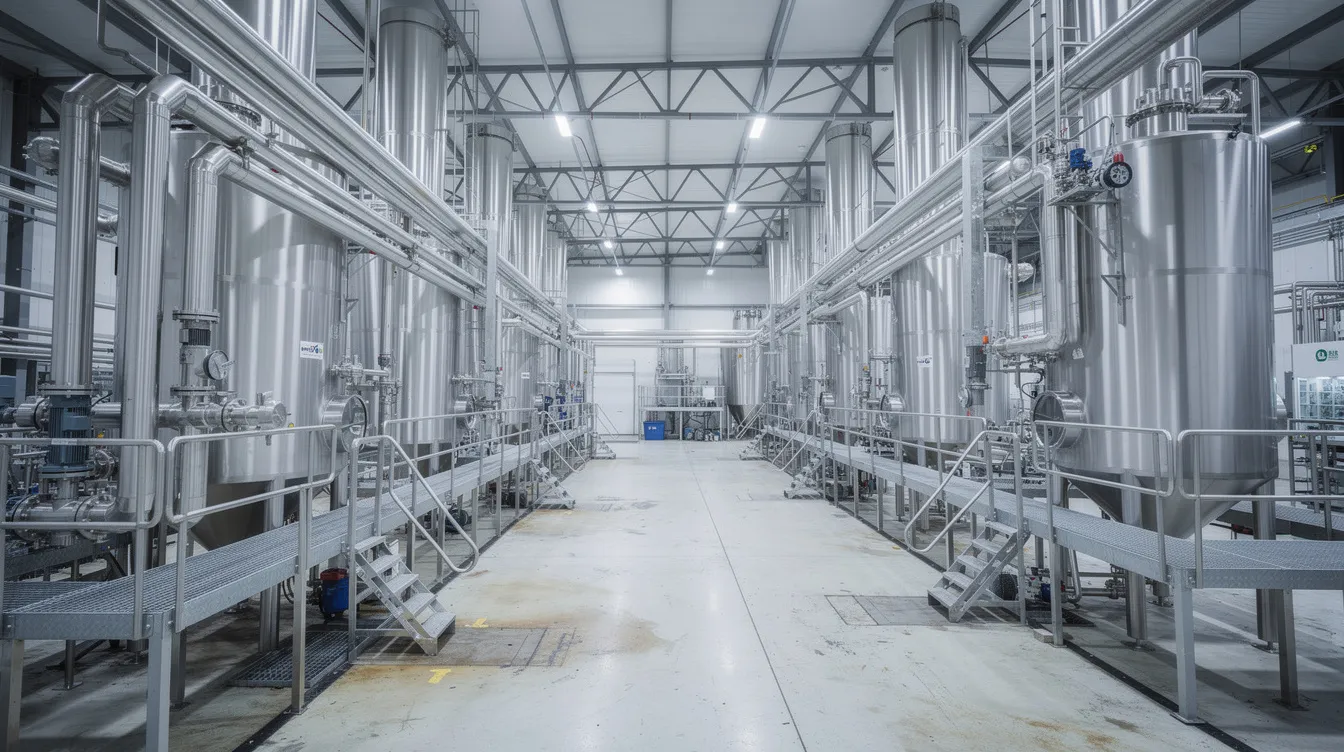
Utilities in a solvent extraction plant-power, steam, water, cooling, compressed air, fuel and condensate recovery-directly affect both capital investment and per-tonne operating cost. Accurate utility sizing and costing must be reflected in the DPR and CMA Data because utility consumption is a major driver of energy consumption and variable cost.
Actual figures depend on technology supplier guarantees, raw material type (rice bran generally demands higher steam than soybean due to moisture), process configuration, automation level and integration with crushing or refining units. The ranges below are typical planning benchmarks and should be verified with the selected equipment vendor.
Key Utility Subsystems
1. Electrical Power and Connected Load
Power consumption is approximately 15–25 kWh per tonne processed in most well-engineered plants, though some vendor data indicates 22–28 kWh per tonne for plants with average automation. Power supply requirements can range from 100 kW for smaller units to over 600 kW for larger plants.
2. Steam Generation and Boiler Sizing
Steam consumption typically ranges from 180–240 kg per tonne of seed processed. A 500 TPD plant may require a boiler capacity of 15–20 tonnes per hour. The boiler type (coal, briquettes, biomass, gas or oil-fired) affects both fuel storage area and operating cost.
3. Industrial Water and Cooling Water
Cooling water circulation ranges from 30–50 m³/hour for smaller plants to 150–250 m³/hour for 500 TPD units. Raw water source, water treatment and recycling systems must be planned alongside the cooling tower.
4. Compressed Air
Instrument air and plant air systems are needed for pneumatic valves, controls and safety interlocks. A compressor room, receivers and air treatment equipment are required.
5. Fuel Requirements
Fuel type and storage planning affects layout (coal yard, briquette storage, gas pipeline or oil tanks) and air emission control requirements.
6. Condensate and Heat Recovery
Heat recovery from desolventiser vapour for feed conditioning, miscella preheating or first stage evaporator operation can materially reduce steam demand and improve overall heat transfer efficiency. Condensate recovery from steam lines reduces boiler feed water and fuel cost.
7. Backup Power
Standby diesel generators or alternative supply is essential for critical safety systems-solvent recovery, vapour detection, emergency lighting and control room operations require uninterrupted power.
Illustrative Utility Planning Benchmarks
| Parameter | 300 TPD | 500 TPD | 1,000 TPD | 2,000 TPD |
|---|---|---|---|---|
| Connected electrical load (kW) | 200–350 | 350–550 | 600–1,000 | 1,000–1,800 |
| Indicative boiler capacity (TPH) | 5–8 | 10–16 | 18–30 | 35–55 |
| Cooling water circulation (m³/hr) | 40–70 | 80–150 | 150–250 | 250–400 |
| Hexane consumption (litres/tonne) | 1.0–1.5 | 1.0–1.5 | 1.0–1.5 | 1.0–1.5 |
Hexane consumption is 1–3 litres per tonne processed across the industry, though a well-maintained plant consumes 1.0–1.5 litres of hexane per tonne with a well-maintained solvent recovery system recycling hexane at over 99.5% efficiency. This hexane recovery efficiency directly affects both operating cost and fugitive emissions.
Selection of energy efficient motors, variable frequency drives for pumps and fans, and optimised heat recovery systems reduce total energy consumption, supporting low energy consumption per tonne and stronger financial viability through lower variable costs. Accurate utility sizing forms part of a professional DPR, influencing project finance calculations such as DSCR, IRR and sensitivity to fuel and electricity tariff changes.
Fire Safety Requirements for Hexane-Based Solvent Extraction Plants
Hexane extraction is classified as a high fire and explosion risk activity. Hexane has a flash point of −22°C, a wide flammable vapour range, and the potential for solvent vapor accumulation in confined equipment and building spaces. Solvent extraction plants are classified as hazardous areas under Indian regulations, and plants should be equipped with fire protection systems due to these chemical hazards.
Principal Hazard Sources
Major hazard sources include storage tanks for flammable hexane, the extractor and miscella system where the mixture called miscella contains dissolved oil in hexane, vapour lines and condensers, DTDC off-gases containing hexane vapours and residual hexane, pumps and flanges prone to leakage, and solvent-contaminated equipment during maintenance shutdowns.
Core Safety Design Principles
- Hazardous-area classification: Zones 0, 1 and 2 as per applicable IS/IEC standards. All electrical equipment in extraction zones must be explosion-proof.
- Earthing and bonding: Proper earthing and bonding of all metallic equipment, piping, flanges and tanks to prevent static charge accumulation.
- Ventilation: Extraction buildings are often open or partially enclosed to allow free air circulation. Mechanical ventilation where enclosed areas exist, maintaining air changes to keep vapour concentration well below the Lower Explosive Limit (LEL).
- Continuous LEL monitoring: Continuous LEL monitoring is required in solvent extraction plants. Fixed gas detectors calibrated for hexane should be strategically placed near extractors, distillation units, tank farm, pump rooms and the absorption tower area, connected to audible and visual alarms and interlocks for emergency shutdown.
Firewater and Suppression Systems
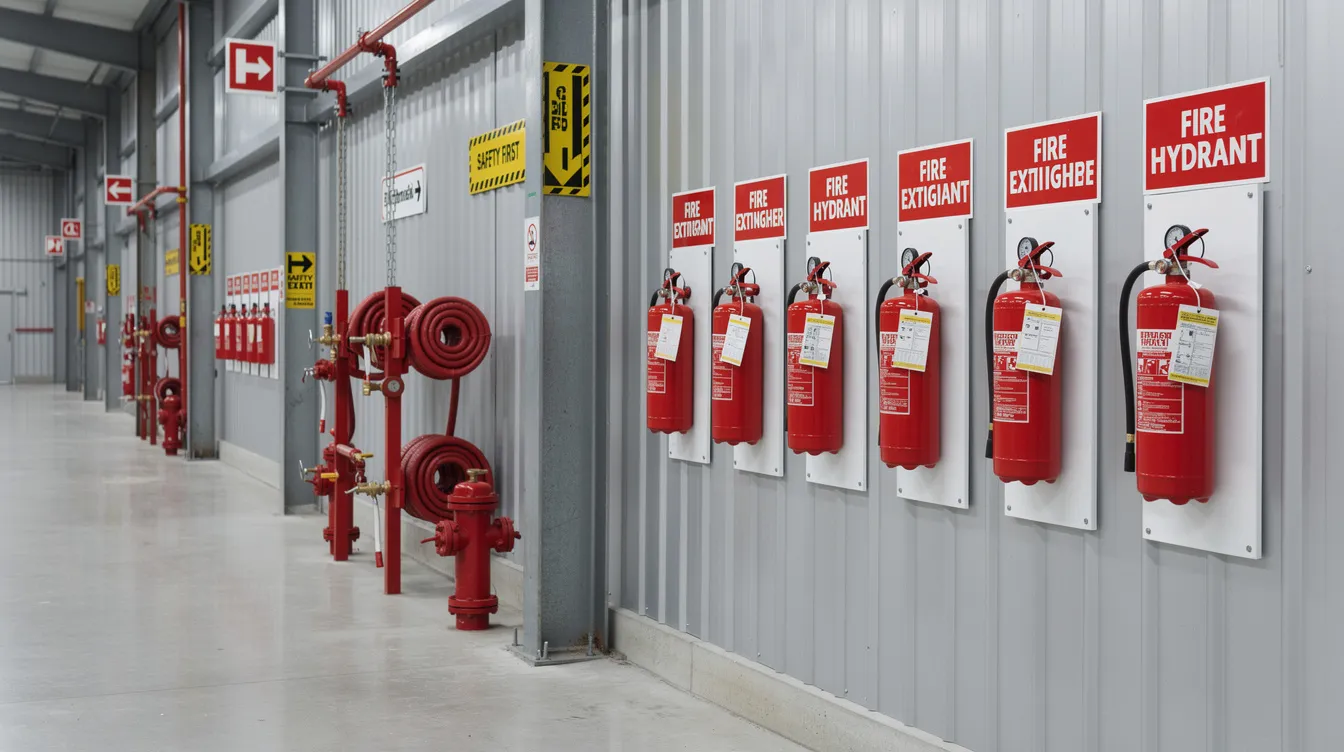
- Dedicated firewater tank sized as per applicable fire authority or NFPA guidance
- Diesel and electric fire pumps for reliability
- Hydrant ring main, monitors and sprinklers in high-risk buildings
- Secondary containment dikes are necessary for crude oil and solvent storage tanks
- Suitable portable extinguishers (foam and dry chemical) at accessible points
- Periodic testing, maintenance logging and third-party inspection where mandated
Emergency Systems
Emergency shutdown logic should include automatic isolation valves on solvent lines and pump trip on vapour alarm. Vapor recovery units are necessary to capture fugitive solvent emissions. Emergency lighting and clearly marked evacuation routes with illuminated exit signage and assembly points outside hazard zones are essential.
While this article outlines common elements of solvent extraction plant fire safety, the final engineering design must be prepared and certified by qualified fire-safety professionals in line with state fire services, Factory Inspectorate, PESO and insurer requirements. Adequate budget provision for fire safety should appear explicitly in the project cost estimate rather than being clubbed under generic miscellaneous heads.
Environmental Compliance and Statutory Approvals in India
Solvent extraction plants in India operate under multiple regulatory frameworks. Compliance with local fire and pollution control authorities is mandatory. The specific approvals required depend on actual plant configuration, storage thresholds, location and prevailing regulations. Multiple approvals-at least six approvals are typically needed to set up a solvent extraction plant in India-must be secured before construction and commercial operation begin.
State Pollution Control Board (SPCB) Requirements
- Consent to Establish (CTE): Required before starting construction. Application typically includes project details, process description, air emission and wastewater estimates, site plan and environmental impact assessment where applicable.
- Consent to Operate (CTO): Required before commercial production. The SPCB inspects installed pollution control systems, stack emission arrangements and wastewater treatment facilities before granting consent.
Environmental Clearance
Larger agro-based processing projects in certain categories, or those located in ecologically sensitive areas, may fall under the EIA Notification 2006 and subsequent amendments. Promoters must check current MoEF&CC and state-level notifications or consult environmental professionals to confirm applicability for their specific project.
PESO Licence
PESO approval is necessary for hexane storage where storage exceeds notified limits under the Petroleum Rules 2002. Approval typically covers design and operation of tank farms, pipelines and pump houses for the primary solvent. Final applicability must be verified against the latest PESO circulars.
Other Statutory Approvals
- Factory licence under state Factories Rules (solvent extraction plants handling hazardous processes have additional obligations)
- Building plan and land-use approval from the local authority or industrial development corporation
- Fire NOC from state or city fire services
- FSSAI licence for edible oil processing where final edible oil products are manufactured
- Boiler inspector and electrical inspectorate approvals
Air, Water and Waste Management
- Air emissions from boiler stacks require particulate control (bag filters or multi-cyclones) and monitoring per SPCB norms
- Effluent Treatment Plants (ETP) are crucial for treating process wastewater before discharge. Facilities must have provisions for wastewater treatment to meet environmental standards, including oil separation, biological treatment and, where required, zero liquid discharge
- Proper disposal of ETP sludge and spent filter media as per Hazardous and Other Wastes Rules
- Solvent losses and fugitive emissions represent both economic loss and environmental concern. Modern plants adopt closed-loop solvent recovery, vapour condensers, mineral oil absorbers (in the absorption tower) and proper vent heights to limit emissions
Promoters should not rely solely on generic online lists of mandatory approvals but obtain state-specific advice from qualified legal, environmental and safety consultants. Lenders often require proof of CTE/CTO applications, environmental clearance (where applicable) and fire/PESO progress before disbursement of later tranches of the term loan.
Infrastructure and Compliance Cost Considerations
For a typical 300–2,000 TPD solvent extraction project in India, infrastructure and statutory compliance costs-land, civil works, utilities, fire protection, ETP, legal and consultancy fees-together form a significant proportion of total capital cost. A 100 TPD solvent extraction plant costs INR 5–12 crore as a reference point, and costs scale substantially as capacity increases with more complex infrastructure requirements.
Major cost heads include:
- Land acquisition, registration and development including boundary wall
- Internal roads, drainage and site levelling
- Factory sheds, RCC structures and warehouse construction
- Boiler and power house
- Electrical substation, cabling and explosion-proof fittings
- Cooling towers, water treatment and reservoirs
- Fire hydrant network, firewater tank, sprinklers and fire pumps
- ETP and stack monitoring systems
- PESO-compliant hexane tank farm with secondary containment
- Safety instrumentation for vapour detection and emergency interlocks
In many real-world projects, promoters initially underestimate items such as firewater tanks, explosion-proof electrical fittings, hazardous area lighting and PESO-compliant design changes, leading to 10–20% escalation over preliminary budgets. For a mid-sized plant (500–1,000 TPD), civil and infrastructure costs may represent 25–35% of total fixed capital, utilities another 15–20%, and safety and environmental systems 5–10%, with the balance going toward process equipment.
A separate article covers solvent extraction plant setup cost and investment at a high level. Professional DPRs for solvent extraction projects in India should clearly break out each of these heads, include contingencies (often 5–10% of fixed capital), and identify items that may attract interest capitalisation during construction if project timelines slip. Budgeting for approvals, engineering consultancy, detailed design and statutory fees is equally essential for timely commissioning.
Impact of Land, Utilities and Compliance on Project Financial Viability
From a project finance and DPR perspective, land, infrastructure and compliance decisions are not mere technicalities. They directly affect capital intensity, cost per tonne processed, break-even volume and DSCR. Understanding these connections is critical for preparing defensible financial projections.
- Fixed capital versus working capital: Land, building, plant and machinery, utilities and pre-operative expenses form fixed capital. Raw materials (soybean, rice bran, mustard), hexane inventory, fuel stock, stores and spares, and receivables form working capital. Both must be planned together. The minimum capacity for financial viability is generally considered to be 100 TPD, below which scale economies become difficult.
- Cost per tonne impact: Higher-than-optimal land cost or over-designed utility systems increase depreciation and interest charges, raising fixed cost per tonne. Conversely, under-sized utilities cause capacity loss and unplanned downtime, hurting revenue and IRR.
- Variable cost drivers: Energy consumption (power and steam per tonne) and hexane loss per tonne are major contributors to variable operating cost. Even small percentage improvements in process efficiency, cost efficiency and oil recovery efficiency significantly influence EBITDA margins. The payback period for a solvent extraction plant is typically 3–5 years when infrastructure is properly planned and capacity utilisation ramps up as projected.
- Sensitivity analysis: What happens to DSCR if power tariff rises by 10%, or if environmental clearance delays commercial operation by 6–9 months, requiring additional interest during construction? These questions must be addressed in the financial model.
Realistic infrastructure and utility assumptions, supported by vendor quotes and engineering input, are essential for preparing credible financial projections, CMA Data and bank loan proposals for solvent extraction plant projects. Oil produced from well-planned extraction plants with strong oil yield and controlled operating cost generates competitive margins in the competitive market for edible oil.
Common Mistakes in Solvent Extraction Plant Infrastructure Planning
Many cost overruns and operational bottlenecks in Indian solvent extraction projects arise from early-stage planning mistakes rather than from core extraction technology failures.
Land-related mistakes:
- Purchasing insufficient land without provision for expansion
- Ignoring statutory setback and green-belt requirements
- Under-planning raw material and finished goods storage area, leading to over-stacking and safety hazards
Layout and utilities errors:
- Locating boiler or DG sets too close to solvent handling zones
- Cramped extractor and distillation building with poor maintenance access
- Under-sizing electrical substation or steam lines
- Routing truck movement through hazardous areas
Safety and environmental underestimation:
- Budgeting only for basic portable extinguishers instead of a full ring main and hydrant system
- Delaying ETP design until after civil construction begins
- Assuming that CTE/CTO or PESO approvals will be routine, resulting in commissioning delays and penalties
Financial planning mistakes:
- Selecting too large a capacity without a firm raw material procurement strategy, leading to lower capacity utilisation
- Over-optimistic assumptions for solvent recovery rates, heat recovery and reducing energy consumption
- Inadequate contingency provisions in project cost
Promoters should engage experienced technical consultants alongside financial advisors at the DPR stage to avoid these mistakes and create a coordinated land-layout-utilities plan. Understanding why solvent extraction demands this level of planning-from handling other solvents and liquid liquid extraction principles to managing continuous operation of extraction plants-prevents costly errors.
Practical Project Planning Checklist
Before freezing land and layout decisions for a solvent extraction plant, promoters should systematically review the following:
Land and Site:
- ☐ Verify land title and confirm industrial zoning
- ☐ Confirm accessibility to highways and/or rail
- ☐ Ensure adequate area for process blocks, storage, utilities, green belt and future expansion
- ☐ Assess soil-bearing capacity and flood risk
Layout and Machinery Integration:
- ☐ Finalise process route and capacity
- ☐ Coordinate extractor, DTDC, distillation system and solvent recovery locations
- ☐ Map truck circulation with separate entry/exit
- ☐ Allocate safe distances between boiler house, tank farm and extraction building
- ☐ Plan control room and admin building in low-risk zones
Utilities:
- ☐ Estimate connected load and demand
- ☐ Shortlist boiler type and capacity
- ☐ Plan raw water source and water treatment
- ☐ Decide cooling tower size and location
- ☐ Provision for compressed air, fuel storage and condensate/heat recovery
Fire and Safety:
- ☐ Engage competent fire-safety professional
- ☐ Design firewater storage and pump house
- ☐ Plan hydrant and sprinkler coverage
- ☐ Specify gas detection and emergency shutdown systems (including vacuum pump interlocks)
- ☐ Mark emergency exits and assembly points
Environmental and Statutory Approvals:
- ☐ Verify whether environmental clearance is applicable
- ☐ Prepare and file CTE application with SPCB
- ☐ Plan ETP and air pollution control for waste water and stack emissions
- ☐ Check PESO requirements for hexane storage
- ☐ Apply for fire NOC, factory licence and FSSAI licence where needed
DPR and Finance:
- ☐ Prepare solvent extraction plant DPR with realistic cost estimates covering all infrastructure heads
- ☐ Build financial model covering project cost, means of finance, working capital, profitability, DSCR, IRR and sensitivity
- ☐ Prepare CMA Data and bank loan proposal incorporating approval timelines
- ☐ Include adequate contingency for solvent extraction plant cost escalation
For promoters evaluating soybean oil manufacturing projects, these checklist items apply equally, with additional considerations for soybean-specific storage and oils and fats processing requirements.
Frequently Asked Questions
How much land is required for a solvent extraction plant in India?
A standalone 300 TPD solvent extraction plant typically needs about 2–3 acres. A 500 TPD unit may require 3–5 acres. Larger integrated 1,000–2,000 TPD complexes handling crushing, extraction and refining may need 6–12 or more acres depending on storage philosophy, railway siding and green-belt provisions. A 50–100 TPD plant requires approximately 1–2 acres. These are indicative planning benchmarks, not statutory norms.
What is the land requirement for a 500 TPD solvent extraction plant?
For a 500 TPD plant handling soybean, mustard or rice bran with basic warehousing, utilities, ETP and space for future expansion, promoters usually plan around 3–5 acres in Indian industrial estates. If integrated with crushing, refinery and large silos, additional land will be necessary based on the layout concept and oil content of the feedstock.
What utilities are required in a solvent extraction plant?
Major utilities include electrical power for drives, pumps and instrumentation; steam from boilers for the extraction process, desolventising and distillation; industrial water and cooling water; compressed air; fuel for boilers (coal, briquettes, gas or oil); and backup diesel generators for critical safety and control systems. Exact capacities depend on capacity selection and technology, and should be obtained from the equipment vendor.
How much electricity does a solvent extraction plant consume?
Power consumption varies with raw material, degree of integration, extraction technology, automation level and heat recovery. Typical benchmarks range from 15–25 kWh per tonne, with some vendor guarantees indicating 22–28 kWh per tonne. Promoters should obtain specific consumption guarantees from technology suppliers and use those to build power cost assumptions in financial projections rather than relying solely on generic ranges.
Why is hexane fire safety important in solvent extraction plants?
Hexane has a flash point of −22°C and forms flammable vapour-air mixtures at ambient temperatures. Without proper hazardous-area classification, explosion-proof electrical equipment, continuous LEL monitoring, adequate ventilation and firewater systems, the risk of fire or explosion is significant. Solvent extraction achieves 95–99% oil recovery rates through efficient use of hexane, but this efficiency requires handling large quantities of flammable solvent safely. Inadequate fire safety can result in catastrophic losses, regulatory shutdown and insurance claim denial.
Which pollution control approvals are required?
Consent to Establish (CTE) from the State Pollution Control Board is required before construction, and Consent to Operate (CTO) before commercial production. The plant must demonstrate compliance with air emission norms, wastewater discharge standards and solid waste management requirements. Additional approvals may include PESO licence for hexane storage, fire NOC, factory licence and FSSAI licence for edible oil processing.
Is environmental clearance mandatory for a solvent extraction plant?
Environmental clearance under EIA Notification 2006 may be required depending on project capacity, category and location. Not every solvent extraction project automatically triggers environmental clearance. Promoters must verify current MoEF&CC and state-level notifications for their specific project configuration and location, ideally with support from qualified environmental consultants.
What safety approvals are applicable to hexane storage?
PESO approval is generally necessary for hexane storage exceeding notified threshold quantities under the Petroleum Rules 2002. This covers layout, tank design, bund walls, pipelines and pump houses. Additionally, compliance with the Manufacture, Storage and Import of Hazardous Chemical Rules (MSIHC) may apply if hexane storage exceeds threshold quantities, requiring safety reports and emergency plans.
How do utility and compliance costs affect project profitability?
Utility costs-steam, power, water and hexane makeup-are among the largest variable cost components after raw material. A difference of even 2–3 kWh per tonne in power consumption or 0.3 litres per tonne in hexane loss can materially affect EBITDA margins over a full year of continuous operation. Compliance costs, while largely one-time capital expenditure, add to depreciation and interest burden. Together, they influence DSCR, break-even volume, payback period and IRR. Professional financial modelling should capture these with realistic assumptions, including sensitivity to tariff and fuel price changes.
Why should infrastructure planning be included in a bankable DPR?
Banks and investors in India evaluate not only machinery but also land adequacy, layout practicality, utility sizing, fire safety and environmental compliance costs. Omitting these from the DPR leads to underestimation of project cost, weaker DSCR and potential funding gaps during implementation. A solvent extraction plant DPR that realistically covers all infrastructure heads-along with recovered oil projections, oil cakes revenue, animal feed byproduct value and final edible oil output-is essential for a genuinely bankable proposal using patented technology or established process designs.
Conclusion – Importance of Integrated Infrastructure and Financial Planning
Solvent extraction plant land requirements, layout design, utilities, fire safety and environmental compliance are interlinked decisions which together determine whether a plant can operate safely, efficiently and profitably over the long term. The solvent extraction process-from preparing oil seeds into thin flakes and contacting them with solvent in the extractor, through miscella distillation, solvent recovery and final traces of hexane removal-demands infrastructure that is purpose-built, properly segregated and compliant with applicable regulations.
- Informed decisions on land size, factory layout and utility sizing reduce construction changes, shorten commissioning time and help achieve target capacity utilisation and energy performance. This directly supports higher IRR and stronger DSCR.
- Fire protection, PESO approvals, SPCB consents and ETP are not “extra costs.” They are integral to legal operation and long-term risk management in hexane-based solvent extraction plants producing edible oil at industrial scale.
- CA Manish Gugliya & Company, Chartered Accountants, through Project Report Bank, assists entrepreneurs and MSME/industrial promoters with customised solvent extraction plant DPRs, project feasibility studies, financial projections, CMA Data and bank loan proposal support. Interested project promoters can reach out via WhatsApp through www.projectreportbank.com for professional advisory on plant management, project finance and investment planning.
Combining sound engineering input with disciplined financial modelling and realistic compliance planning is the most reliable way to convert a solvent extraction plant concept into a bankable, sustainable industrial project in India.