Key Takeaways
- Pulse protein plants in India typically use dry fractionation for concentrates (50-70% protein) and wet fractionation for isolates (over 80% protein), each requiring distinct machinery trains and investment profiles.
- Correct selection and sizing of pulse protein manufacturing machinery directly impacts protein purity, yield, utilities consumption, and overall project viability.
- Plant capacity planning must integrate raw pulse availability, mass balance, operating hours, and future expansion; relying only on nameplate TPD figures from suppliers is insufficient.
- Project cost in India spans land, civil works, process machinery, utilities, automation, effluent treatment, and working capital, all of which must be structured properly for bank finance.
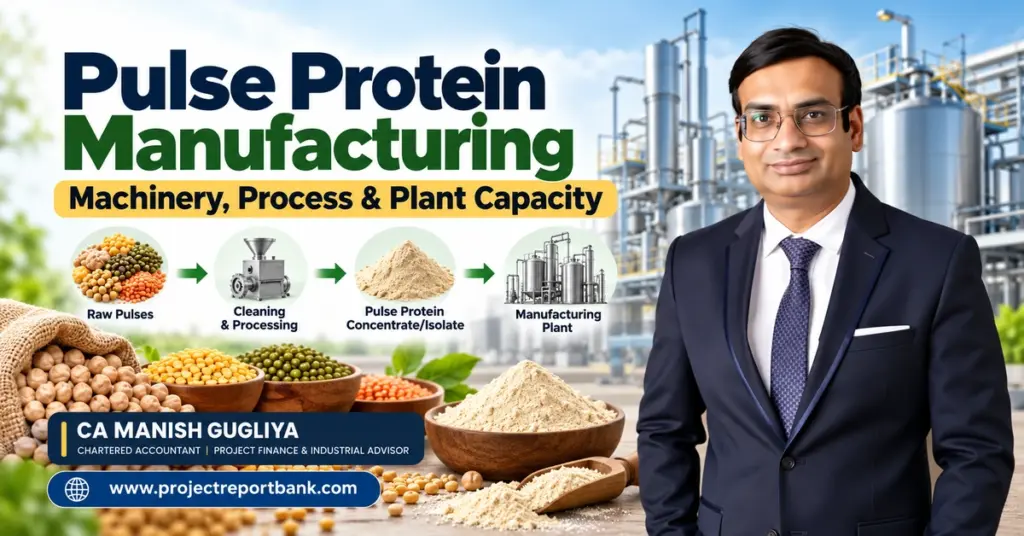
- Project Report Bank, led by CA Manish Gugliya (FCA, DISA (ICAI)), prepares customised DPRs, financial projections, CMA Data, and bankable project reports for pulse protein projects across India.
Introduction: Industrial Relevance of Pulse Protein Manufacturing
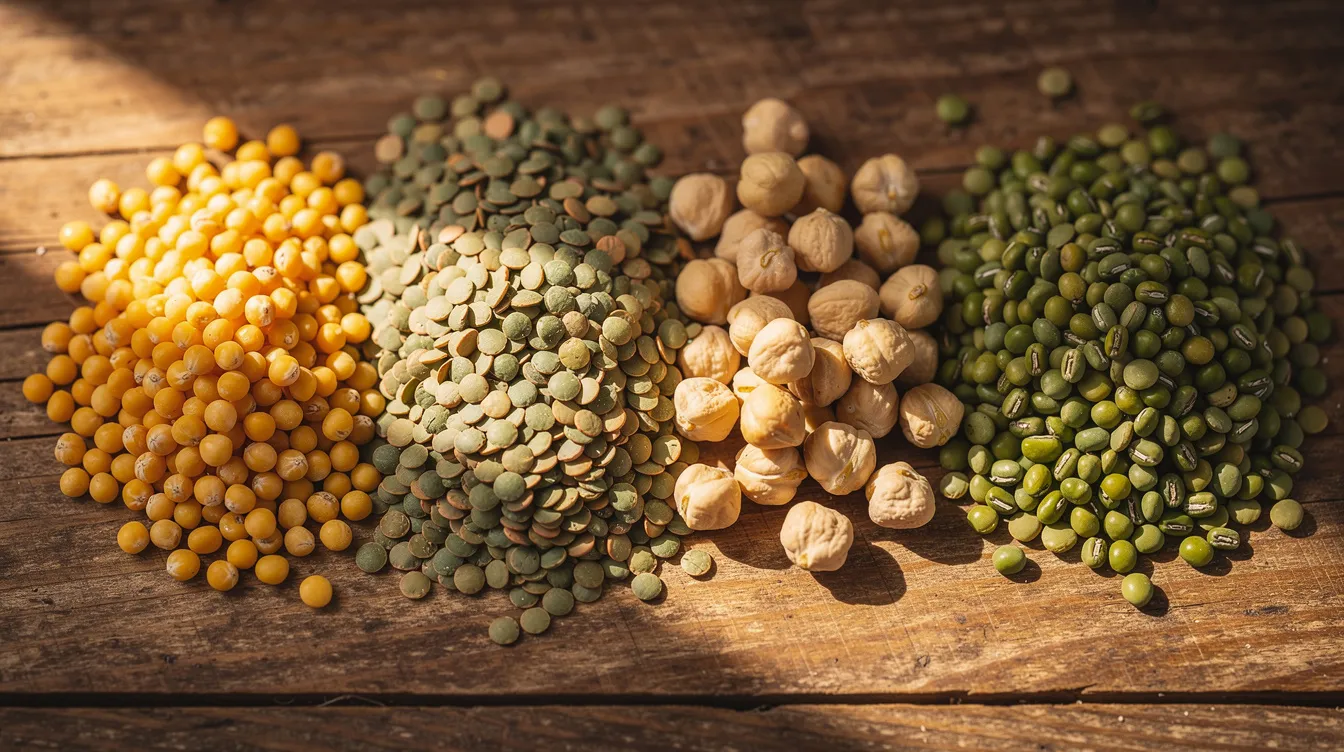
Pulse protein is derived from legumes like peas, chickpeas, lentils, and beans. These crops, once processed mainly into dal and flours, now serve as feedstock for high-value protein ingredients used in plant-based meat, dairy alternatives, sports nutrition, bakery fortification, and functional food formulations. Pulses include chickpeas, lentils, and black gram, among others, and the ingredient market built around them has grown rapidly since 2020, driven by clean-label preferences, vegan dietary shifts, and sustainability concerns.
India cultivates 25 to 27 million tonnes of pulses annually, giving domestic manufacturers a raw material base that few countries can match. But converting raw pulses into standardised protein concentrates or protein isolates requires specialised pulse protein manufacturing machinery, carefully engineered process routes, and realistic capacity planning.
This article covers the end-to-end manufacturing process, machinery requirements, plant capacity planning, and investment framework from a project-finance and bank-finance perspective. Technical process configurations must be validated by qualified process engineers and equipment suppliers. The analysis here guides entrepreneurs on the financial and planning implications of each decision. It is written from the advisory perspective of CA Manish Gugliya, FCA, DISA (ICAI), a practising Chartered Accountant with over 20 years of experience leading Project Report Bank as a professional DPR and project finance advisory platform.
Overview of Pulse Protein Manufacturing Plants
Pulse protein concentrates typically contain 50 to 70% protein and are produced primarily through dry fractionation (milling and air classification). Pulse protein isolates contain over 80% protein and require wet extraction involving solubilisation, separation, and drying. Both differ from basic pulse flours, which retain most of the starch and fibre and offer only 20 to 30% protein content.
The efficiency of pulse protein manufacturing processes depends on the feedstock and production objectives. Typical feed pulses used in India and globally include yellow peas, green peas, chickpeas, mung beans, lentils, and faba beans. Each has distinct amino acid composition and functional properties that influence both processing behaviour and buyer acceptance.
Major plant configurations include:
- Concentrate-only dry fractionation lines producing protein-enriched fractions via milling and air classification, with relatively lower capex
- Isolate-only wet extraction plants using solubilisation, centrifugation, and spray drying to achieve high purity
- Integrated protein, starch, and fibre complexes combining both routes to maximise raw material valorisation; for a detailed overview, refer to the Integrated Pulse Protein, Starch & Fibre Processing Plant Project Report
Pulse proteins are used as alternatives to animal proteins across multiple end-use segments: plant-based meat and dairy, sports nutrition, bakery (pulse proteins can replace 20 to 40% of wheat flour in biscuits), snacks, instant foods, and specialised nutrition. Pulse protein ingredients also enhance the nutritional value of meat alternatives by adding plant-based amino acids. The required protein purity and functionality for each application dictate whether a concentrate or isolate plant is appropriate.
Achievable protein purity and yield depend on raw pulse quality, dehulling efficiency, fractionation technology, pH and temperature control, residence time, and separation equipment performance.
Global and Indian Context for Pulse Proteins and Plant Proteins
Global momentum in pulse-based alternative proteins is driven by markets across Asia-Pacific, Europe, North America, and emerging players in Latin America and the Middle East. India, North America, and China are major pulse producers, with annual pulse production having increased threefold since 1961 according to the Food and Agriculture Organization. Dry beans, peas, and chickpeas are the most consumed pulses worldwide.
India’s position as the world’s largest producer and consumer of pulses underpins raw material availability for pulse protein manufacturing plants serving both domestic and export markets. The domestic pulse protein ingredient market is valued at approximately USD 180 to 220 million in ingredient sales across all grades as of recent estimates, with annual consumption of roughly 35,000 to 45,000 metric tonnes on a dry-weight 80% protein equivalent basis.
For project promoters, this context carries specific investment implications:
- Raw material security is strong, but seasonal availability and monsoon variability create price volatility
- Export potential exists, though international buyers require standardised specifications and food-safety certifications
- Pulse proteins complement cereal proteins in amino acid ratio; pulses are rich in lysine while cereals provide sulfur-containing amino acids, making protein combinations attractive for formulation scientists
- High import duties of 20 to 40% on pulse protein isolates and concentrates (under HS codes 35040099 and 21061010) offer protection to domestic manufacturers but also increase cost for those importing equipment or raw ingredients
Pulse Protein Characteristics, Amino Acid Composition and Protein Fractions
Pulses contain 14 to 39% protein by weight, with most commercially relevant varieties (peas, chickpeas, lentils) typically containing over 30% protein content on a dry basis. This range makes them attractive conventional plant protein sources for both concentrates and isolates. Beyond protein, pulses are low in fat, typically under 5%, and provide essential vitamins and minerals, including iron. Research has also linked regular pulse consumption to reduced risk of cardiovascular diseases.
The primary protein compositions in pulses follow the Osborne protein composition classification:
- Globulins (salt-soluble storage proteins) make up 70 to 80% of pulse proteins and include two dominant protein components: legumin (11S) and vicilin (7S). Vicilin protein molecules are oligomeric protein structures that influence solubility, emulsification, and gelation. Subunit compositions vary considerably across pulse species, which is why chickpea and pea proteins behave differently in the same food formulations.
- Albumins (water-soluble) constitute 10 to 20% of total pulse proteins, including enzymatic proteins and a third minor storage protein fraction. Some albumins are tryptophan rich proteins with nutritious proteins characteristics that contribute to the protein’s biological activity and nutritional benefits.
- Minor fractions include glutelins and prolamins, which play smaller roles in overall pulse protein structure and functionality.
Amino acid composition of pulse proteins is relatively high in lysine, arginine, and aspartic/glutamic acid. However, pulse proteins are low in sulfur-containing amino acids (methionine, cysteine) and have limited tryptophan relative to counterpart animal proteins and meat protein benchmarks. This means that complementary essential aa composition can be achieved by blending pulse proteins with cereals or other plant proteins such as canola protein to create balanced dietary protein formulations. The amino acid ratio between lysine and methionine is a key consideration for formulators evaluating essential amino acids profiles for product development.
While these biochemical details are primarily of interest to food scientists, they indirectly influence marketability. Buyers assess protein attributes such as amino acid profile, hydrophobic amino acids content, and protein solubility when deciding whether a product meets specifications for their applications. For promoters, this means that raw pulse selection and processing conditions affect not only yield but also the achievable selling price.
Pulse Protein Formats: Concentrate vs Isolate for Project Planning
Pulse protein concentrates, produced mainly through dry milling and air classification, retain more native functional and sensory characteristics. The manufacturing process for pulse protein concentrates can yield concentrates typically 55 to 65% protein, with lower capex, utilities, and effluent treatment requirements. For investors interested in concentrate-focused projects, the Pea Protein Concentrate Manufacturing Project Report provides a detailed project-planning reference.
Pulse protein isolates (typically over 80 to 85% protein) are made via wet extraction, using isoelectric precipitation at the protein’s isoelectric point or membrane filtration, followed by washing, neutralisation, and spray drying. Pea protein isolates are used in plant-based yogurt production and high-performance sports nutrition applications where protein concentration and purity are non-negotiable. The Pea Protein Isolate Manufacturing Plant Project Report covers the specific machinery, spray drying requirements, and financial modelling for isolate-type plants.
How the choice between concentrate and isolate affects project planning:
- Investment size: Isolate plants require 2 to 3 times the capex of concentrate plants due to tanks, centrifuges, membranes, and spray dryers
- Utilities and effluent load: Wet extraction consumes large volumes of water and generates effluent requiring treatment; dry fractionation does not
- Target customers: Sports nutrition, specialised food products, and beverages often demand isolates; bakery, snack, and general fortification applications can use concentrates
- Bankability: Lower-capex concentrate plants are easier to finance for first-time promoters; isolate plants require stronger financial structuring, promoter equity, and demonstrated off-take
Pulse Protein Manufacturing Process: Step-by-Step Dry Fractionation
Pulse protein manufacturing involves breaking down raw legume seeds to isolate the protein-rich fraction. The dry fractionation route, suitable mainly for concentrates and higher-protein flours, uses minimal water and requires simpler effluent treatment.
Dry Fractionation Flowchart:
Raw Pulse Procurement → Cleaning and Pre-Grading → De-stoning and Magnetic Separation → Dehulling → Controlled Milling (Pin/Impact Mill) → Air Classification → Protein-Rich Fraction Collection → Starch/Fibre Fraction Collection → Sifting and Blending → Metal Detection → Packaging and Storage
Each unit operation impacts product quality:
- Dehulling: Degree of hull removal (target 90-98% kernel recovery) affects colour, flavour, and anti-nutritional factors. For yellow peas, dehulling removes roughly 10 to 15% by mass.
- Milling: Fineness of flour (200 to 400 microns) determines separation efficiency in subsequent air classification. Precision milling and fractionation equipment improve yield and functional properties of the resulting protein powder.
- Air classification: Classifier rotor speed, airflow rate, and cut-point control define both protein purity and yield. Research on yellow peas showed classifier wheel speed of approximately 4,350 rpm and airflow of 50 m³/h achieved protein content up to 50% in the fine fraction with reasonable yield. Double air classification can push protein content further but reduces mass yield (fine fraction typically 35 to 45% of original mass).
Electrostatic separation and air classification preserve native protein functionality without water usage. Gentle processing machinery helps retain protein characteristics suited for applications in plant-based foods.
Dry fractionation typically produces lower protein concentrations than wet extraction processes and requires less energy and water but yields lower protein purity. This route is widely used for pea protein concentrate and chickpea protein concentrate projects where moderate protein content (50 to 65%) is acceptable for the target market.
Pulse Protein Manufacturing Process: Step-by-Step Wet Fractionation
Wet extraction produces high-purity pulse protein isolates and some premium concentrates. The process demands higher utilities, effluent treatment capacity, and process-control complexity compared to dry fractionation.
Wet Fractionation Flowchart:
Raw Pulse Procurement → Cleaning and De-stoning → Dehulling (optional in some configurations) → Milling to Flour → Slurry Preparation with Water → pH Adjustment and Protein Solubilisation → Solid-Liquid Separation (Decanter Centrifuge) → Protein-Rich Liquor → Protein Precipitation (pH Shift to Isoelectric Point) → Separation of Protein Curds → Washing and Neutralisation → Concentration (Centrifuge/Membrane) → Drying (Spray Dryer) → Sieving and Blending → Packaging
Wet processing yields higher-purity protein isolates, typically over 80% protein. Process variations exist for concentrate versus isolate: concentrates use less extensive washing and a lower concentration stage, while isolates require multi-stage washing and finer separation.
Membrane filtration enhances protein concentration and purification in pulse processing, with ultrafiltration (UF) and nanofiltration (NF) systems increasingly used to polish protein solutions and recover additional protein from wash streams. New techniques in extraction can help improve flavour and reduce antinutritional factors such as amylase inhibitors and trypsin inhibitors in pulse proteins.
Wet extraction yields high-purity protein isolates but requires extensive wastewater management. For a medium plant processing 5 tonnes/hour of raw feed, water consumption, heating/cooling load, chemicals for pH control, and effluent treatment must all be quantified in engineering design and integrated into plant cost and DSCR analysis. Water and chemical reduction strategies are being adopted in modern pulse protein processes, including water recirculation and closed-loop systems.
The Pea Protein Isolate Manufacturing Plant Project Report covers wet-route projects in greater financial detail. This article focuses on overall machinery and capacity planning across both process routes.
Process Comparison: Dry vs Wet Fractionation Flowchart
A side-by-side comparison clarifies the structural differences between the two routes:
| Stage | Dry Fractionation | Wet Fractionation |
|---|---|---|
| Raw material preparation | Cleaning, dehulling, milling | Cleaning, dehulling (optional), milling |
| Separation mechanism | Air classification (no water) | Slurry preparation, pH-adjusted solubilisation |
| Solid-liquid separation | Not required | Decanter centrifuge, disc-stack centrifuge |
| pH control | Not required | Alkali/acid dosing systems |
| Membrane filtration | Not required | UF/NF for purification |
| Drying | Not typically required (product exits as dry flour) | Spray dryer mandatory for isolates |
| Protein purity achieved | 50-65% (concentrate) | 80-85%+ (isolate) |
| Water consumption | Minimal | High (thousands of litres per tonne of feed) |
| Effluent treatment | Minimal dust control | Full ETP required |
| Capital intensity | Lower | 2-3x higher |
Process improvements in pulse protein manufacturing optimise both recovery and final functionality across both routes. For investors seeking a deeper process-engineering comparison, the dedicated article on Pulse Protein Extraction Technology: Dry vs Wet Fractionation provides additional technical discussion.
Final technology selection should follow pilot trials, feedstock assessment, and consultation with reputable technology licensors or machinery suppliers. A visual infographic can be created from this comparison for promoter presentations.
Complete Pulse Protein Manufacturing Machinery List
Factors influencing machinery selection include target protein purity, end-product format, raw material characteristics, and budget. Modern pulse protein manufacturing machinery focuses on efficient resource use and high performance across both dry and wet routes.
The table below covers major equipment items for a typical medium-to-large-scale pulse protein processing plant:
| Machinery/Equipment | Function | Technology/Selection Considerations | Key Capacity Parameters |
|---|---|---|---|
| Raw pulse cleaner and grader | Remove foreign matter, grade by size | Both routes; aspirator + sieve type | 10-200 TPD depending on plant scale |
| Destoner | Remove stones and heavy impurities | Both routes; gravity-based | Matched to cleaner throughput |
| Magnetic separator | Remove metal contaminants | Both routes; inline or drum type | Matched to conveying flow rate |
| Dehuller and hull separator | Remove hulls for colour, flavour, anti-nutritional factor reduction | Both routes; abrasive or impact type; 90-98% kernel recovery target | 50-1,000 kg/hr per unit |
| Pin mill / impact mill | Reduce kernels to flour (200-400 microns for dry; finer for wet) | Both routes; SS construction; particle size distribution control | 50-1,000 kg/hr |
| Air classifier | Separate protein-rich fine fraction from starch/fibre (dry route only) | Dry route only; rotor speed, airflow, cut-point critical | Airflow 50-500+ m³/hr; throughput proportional to separator size |
| Cyclone and dust collector | Collect fines, manage dust from dry milling/classification | Dry route primarily | Sized to match classifier and mill output |
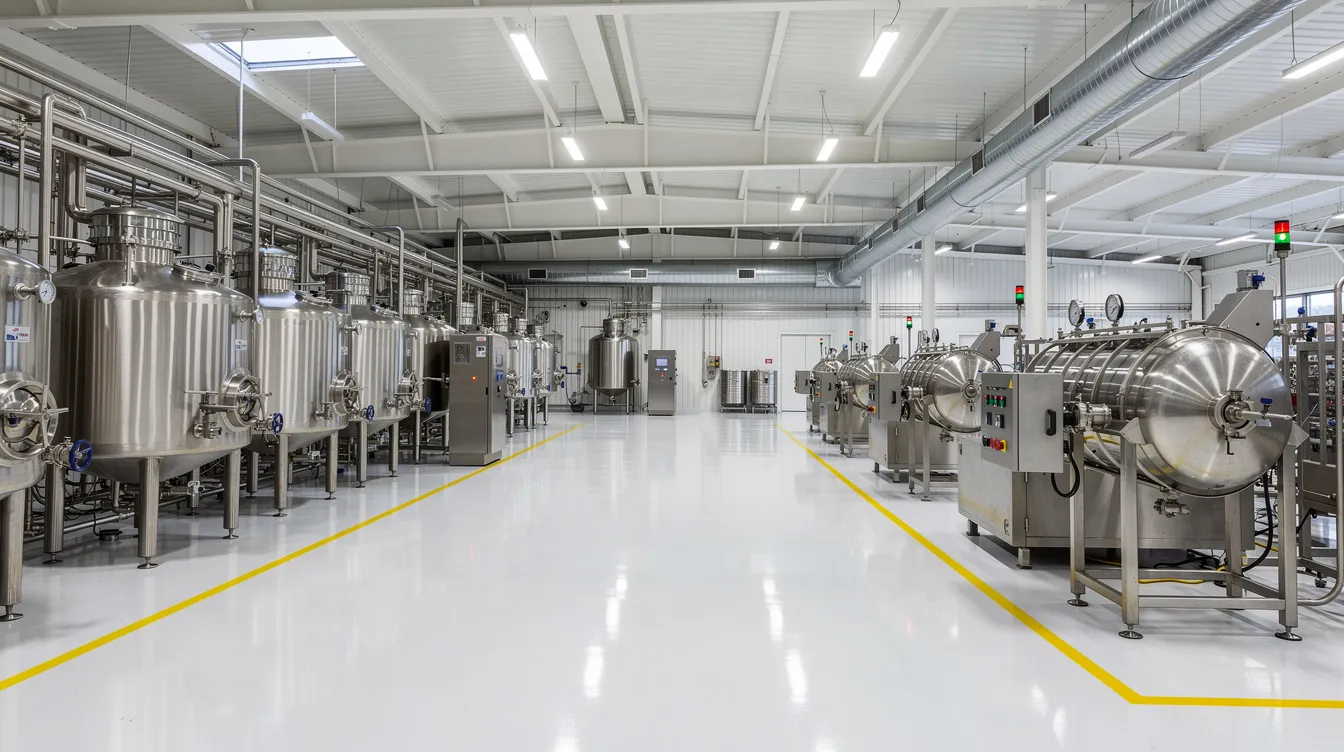
| Extraction/mixing tanks | Slurry preparation, protein solubilisation | Wet route only; SS316 sanitary fittings; CIP-capable | 5,000-50,000 L per tank |
| Agitators | Maintain uniform slurry suspension | Wet route only; variable speed drive | Sized to tank volume |
| pH dosing system | Alkali/acid addition for protein solubilisation and precipitation | Wet route only; automated dosing with PLC | Matched to batch/continuous flow |
| Decanter centrifuge | Solid-liquid separation of slurry | Wet route only; continuous type; bowl speed up to 5,000+ rpm | 1,000-5,000+ L/hr |
| Disc-stack centrifuge | Fine clarification, protein curd separation | Wet route only; self-cleaning models | 200-20,000 L/hr depending on model |
| Membrane filtration (UF/NF) | Protein concentration, purification, diafiltration | Wet route; membrane technology principles apply across dairy and pulse processing | Rated in m² membrane area; hundreds to thousands L/hr |
| Protein precipitator/recovery vessel | Collect protein precipitate at isoelectric point | Wet route only | Matched to centrifuge output |
| Spray dryer | Produce dried powder (moisture below 5%) | Wet route mandatory for isolates; tall tower structure | 50-500+ kg/hr dried powder |
| Pneumatic conveying | Transport powder between stages | Both routes | Matched to dryer/classifier output |
| Sifter and blender | Ensure uniform particle size and blend consistency | Both routes | 100-2,000 kg/hr |
| Automatic packing machine | Weigh and pack finished product | Both routes; multi-head weigher for precision | 5-50 bags/min depending on pack size |
| Boiler (steam generation) | Supply process steam and drying heat | Mainly wet route; also dry route if tempering | Capacity matched to spray dryer and heating loads |
| Compressor | Compressed air for pneumatics and instruments | Both routes | Sized to plant air demand |
| Chiller / cooling tower | Process cooling, condensation | Wet route primarily | Matched to cooling load |
| Water treatment plant | Treat incoming water to food-grade standards | Wet route primarily; dry route for utilities | Matched to total water consumption |
| ETP (Effluent Treatment Plant) | Treat process wastewater before discharge | Wet route mandatory; minimal for dry route | Matched to daily effluent volume |
| QC laboratory instruments | Protein analyser (Kjeldahl/Dumas), moisture meter, pH meter, spectrophotometer, microbiology setup | Both routes; lab area 50-150 m² in medium plants | Scaled to batch frequency |
| PLC/SCADA automation | Centralised process monitoring and control | Both routes; essential for consistency and safety | Scaled to number of control loops |
Equipment constructed from food-grade stainless steel (SS304, SS316 in corrosive zones) is essential to prevent contamination in pulse processing. Automation helps maintain consistent protein quality in pulse protein production; AI and automation improve process consistency and reduce operator-dependent variations. Hygienic design standards (CIP/SIP capability, polished surfaces, sanitary fittings) affect both capex and long-term operability.
Indian suppliers such as Labh Group offer pea protein extraction plants with capacities from 100 kg/hr to 5 tonnes/hr and claim protein recovery of 60 to 85%. Actual machinery sizing must be done by vendors based on agreed plant throughput, mass balance, and the specific pulse being processed.
Pulse Protein Plant Capacity Planning and Mass Balance
Capacity planning connects raw pulse input (tonnes per day) to finished protein product output (tonnes per day) through yield and mass balance. The balance must account for protein fractions, starch, fibre, hulls, moisture, and processing losses. Promoters who assume a 1:1 relationship between input and output will arrive at flawed financial projections.
For a hypothetical illustration (not a guarantee): a 50 TPD raw yellow pea plant using dry fractionation may produce approximately 12 to 20 TPD of protein concentrate, depending on classification efficiency and number of passes. The same 50 TPD feed through wet extraction might yield 8 to 12 TPD of protein isolate at 80 to 85% protein, since more solids are removed during washing, precipitation, and neutralisation.
Operating parameters affecting annual capacity:
- Operating days: Most industrial plants assume 300 working days per year
- Shifts: One shift (8 hours), two shifts (16 hours), or three shifts (24 hours) determine hourly machinery sizing versus annual tonnage
- Bottleneck equipment: The air classifier in dry route or spray dryer in wet route often limits actual throughput; oversizing these reduces production losses
Illustrative Capacity Comparison (Hypothetical)
| Parameter | Small Plant | Medium Plant | Large Plant |
|---|---|---|---|
| Raw pulse input | 15-25 TPD | 40-75 TPD | 100-200+ TPD |
| Likely process route | Dry fractionation | Dry + wet (hybrid) | Integrated dry + wet |
| Estimated protein product output | 4-8 TPD concentrate | 10-25 TPD (mix of concentrate and isolate) | 25-60+ TPD (concentrate + isolate) |
| Typical shifts | 1-2 | 2-3 | 3 (continuous) |
| Power/water requirement (relative) | Low | Medium-High | High |
| Spray dryer needed | Unlikely | Yes (for isolate line) | Yes (large capacity) |
Figures are for conceptual understanding only. Actual values depend on feedstock, process design, and vendor guarantees.
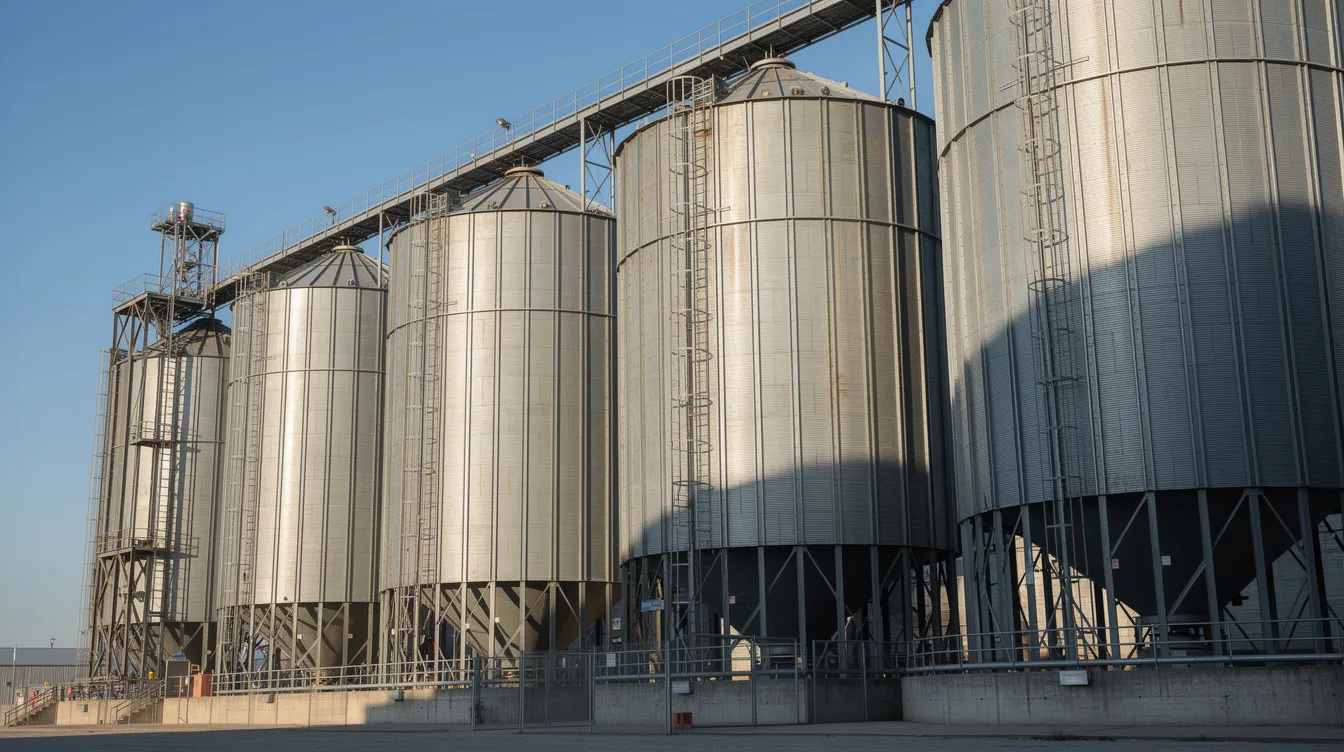
Practical issues that affect capacity planning: seasonal availability of pulses (Rabi harvest dominates supply), requirement for buffer raw-material storage in silos, and the risk of bottlenecks in milling, air classification, or spray drying. Planning for modular or phased capacity expansion is advisable, allowing promoters to add wet extraction modules as markets develop.
Pulse Protein Manufacturing Plant Cost Structure in India
This section outlines typical cost heads and their relative contribution for a pulse protein plant in India. Absolute rupee figures are not quoted here because they depend on site-specific factors, chosen capacity, technology route, and current vendor pricing.
Major capex heads:
- Land acquisition or lease and land development
- Factory building and civil works (including spray dryer tower height considerations)
- Main process machinery (as listed in the machinery table above)
- Utilities: boiler, chiller, compressors, electrical systems (transformer, panels, DG backup)
- Storage: raw pulse silos, finished goods warehouse
- Internal roads, drainage, and compound
- Quality control laboratory
- ETP/STP
- Fire-fighting systems
- Administrative block
Project development and intangible costs:
- Engineering and consultancy fees
- DPR preparation and financial advisory
- Interest during construction (IDC)
- Pre-operative expenses (salaries, travel, trial runs)
- Statutory approvals and registration fees
- Initial technical training
- Contingencies (typically 5-10% of total project cost)
Working capital requirements:
- Raw material inventory (pulses, pH adjustment chemicals, packaging)
- Finished goods inventory
- Receivables from buyers
- Operating cash buffer for wages, utilities, maintenance
Banks normally finance a portion of working capital as fund-based limits (cash credit). Promoters should seek a customised Detailed Project Report where capex and working capital estimates are based on actual machinery quotations, site conditions, and chosen capacity, forming the basis for bank loan proposals.
Dry vs Wet Fractionation: Machinery and Investment Comparison
| Parameter | Dry Fractionation | Wet Fractionation |
|---|---|---|
| Core technology | Milling + air classification | Solubilisation + centrifugation + drying |
| Protein concentration range | 50-65% (concentrate) | 80-85%+ (isolate) |
| Key machinery | Dehullers, pin mills, air classifiers, sifters | Tanks, centrifuges, membranes, spray dryers |
| Capital intensity | Low to medium | High |
| Operating complexity | Moderate | High |
| Water consumption | Minimal | High |
| Power consumption | Moderate (milling, fans) | High (centrifuges, spray dryer, pumps) |
| Effluent load | Dust only; no liquid effluent | Large liquid effluent requiring ETP |
| Typical product applications | Bakery, snacks, fortification | Beverages, sports nutrition, plant-based dairy/meat |
| Suitability | Lower-capex entry; domestic markets | Export-oriented; specialty ingredient markets |
Dry fractionation suits investors seeking lower capex, simpler operation, and moderate protein purity. Wet fractionation is appropriate for export-oriented or specialty-ingredient players needing higher purity and tighter specifications acceptable to multinational food manufacturers.
Technology selection impacts long-term revenue potential: isolates command INR 500 to 750 per kg versus INR 250 to 400 per kg for concentrates, but the margin advantage must be weighed against 2 to 3 times higher capex and ongoing utility costs. Sensitivity of profitability to steam, fuel, and power tariff escalation is higher for wet-route plants. For a deeper comparison, refer to Pulse Protein Extraction Technology: Dry vs Wet Fractionation.
A staged approach is viable: start with dry fractionation for concentrates, with civil and utility provisions for later addition of wet extraction modules as off-take and financial capacity develop.
Land, Building, Utilities and Infrastructure Requirements
Land and building needs depend on capacity, process route, storage strategy, and site-specific norms. Food-grade pulse protein plants require well-planned hygienic layouts with clear separation between raw material handling, processing, and finished product storage.
Typical plant zones:
- Raw pulse receiving, cleaning, and silo storage
- Dehulling and milling section
- Fractionation or extraction area
- Drying section (spray dryer towers can exceed 15-20 metres in height)
- Packing hall
- Finished goods warehouse (temperature and humidity controlled)
- Utilities block: boiler house, chiller plant, compressor room
- ETP area
- QC laboratory
- Administrative office
Key utilities and infrastructure:
- Reliable power supply with transformer capacity and DG backup
- Adequate water source and water treatment plant
- Steam generation: boiler with fuel storage (gas, diesel, biomass)
- Compressed air system for instruments and pneumatic conveying
- Chilled water or glycol system for process cooling
- Ventilation, dust extraction, and explosion venting (where relevant for fine powder handling)
- Fire-safety systems compliant with state regulations
Spray dryers and wet extraction areas require particular attention to building height, ventilation design, and compliance with safety standards. These must be addressed in detailed engineering drawings before construction. Sufficient space should be planned for future capacity expansion, additional processing lines, and possible integration of starch and fibre processing modules at a later stage.
Raw Material Requirements, Pulse Selection and Product Recovery
Pulse selection affects not only protein content but also colour, flavour, anti-nutritional factors, and processing behaviour. Yellow peas are the most widely used feedstock globally for pea protein concentrates and isolates. Chickpea protein and mung bean protein serve niche markets with specific functional properties and amino acid profiles. For projects focused on these pulses, the Chickpea & Mung Bean Protein Manufacturing Project Report provides tailored project-planning information.
Pulses are rich in dietary fibre, aiding digestion, and offer agronomic and nutritional benefits including nitrogen fixation in soil and nutrient-rich food products for consumers.
Quality parameters for incoming pulses include moisture content (target below 12-14%), foreign matter limits, insect damage levels, and mycotoxin risk. Robust cleaning and grading machinery minimises process losses and protects downstream equipment.
Product recovery distributes between protein-rich fractions, digestible and resistant starch, dietary fibre, hulls, fines, and unavoidable processing losses. Exact yields must be measured through pilot trials and vendor-guaranteed mass balances rather than assumed from literature values.
Integrated valorisation, where starch and fibre fractions are sold into bakery, snack, or industrial applications, improves project economics. Starch recovered from pulse protein manufacturing can be a meaningful revenue stream; the Pea Starch Extraction & Manufacturing Plant Project Report covers starch recovery as a standalone or integrated business.
Existing dal mills and besan manufacturing units already possess cleaning and dehulling infrastructure that may partially serve as a foundation for dry fractionation upgrades, though high-performance air classification and wet extraction will require new machinery.
Quality Control, Amino Acid and Functional Property Testing
Quality-control checks for pulse protein products include moisture, protein content (Kjeldahl or Dumas method), microbiological limits, colour, particle size distribution, bulk density, and, where required by buyers, amino acid profile and functional property tests. Functional properties such as protein solubility, emulsification, foaming properties of pulse proteins, and gelation are among the most important protein properties affecting market acceptance.
Pulse proteins can be modified to improve functionality. Physical modifications include thermal and non-thermal processes for pulse proteins. Biological modifications use enzymes to enhance pulse protein properties; for instance, protease hydrolysis enhances solubility and emulsifying properties of pulse proteins. Acylation improves the emulsifying properties of pulse proteins through chemical covalent modifications, selectively incorporating functional groups into protein molecules. Modified pea proteins exhibited improved protein solubility and emulsification in published studies. Non-covalent complexation can improve pulse protein functionality by altering protein structures without covalent bonding. These modifications are relevant because they define whether a supplier’s protein can form stable gel structures, provide a crucial functional characteristic like foaming, or meet specific protein gels requirements for plant-based meat or dairy formulations.
Mung bean protein charge and chickpea protein isolate behaviour differ from pea protein in terms of protein denaturation temperature and protein solution stability, which means that formulation scientists evaluate different pulse proteins against each specification. Understanding unclear pulse protein characteristics or properties that vary batch-to-batch underlines why consistent quality control and process monitoring are essential.
Typical QC lab equipment includes protein analysers, moisture meters, sieve shakers, pH meters, spectrophotometers, basic microbiology incubator setup, and possibly rheometers for advanced applications. These are part of project capex. Advanced functional testing may be outsourced to specialised laboratories in the initial years, but an in-house lab is expected by serious B2B ingredient buyers.
Specification-setting should align with buyer requirements and may evolve as R&D teams develop applications using the plant’s protein fractions and protein particles surfaces data.
Pulse Protein Manufacturing Plant Cost: Operating Expenses and Working Capital
Operating expenses in a pulse protein plant break down into several categories:
- Raw pulses and auxiliary inputs: Feedstock cost (INR 45-70/kg for quality yellow peas or chickpeas depending on season), chemicals for pH adjustment, packaging materials
- Power and fuel: Electricity for milling, fans, centrifuges, conveyors; steam/fuel for spray dryer and process heating
- Water: Treated water for slurry preparation, cleaning, cooling
- Effluent treatment: Chemicals and energy for ETP operation
- Labour: Skilled operators, unskilled workers, quality-control staff, management
- Maintenance: Spare parts, periodic equipment servicing, calibration
- Administrative overheads: Insurance, rent (if applicable), professional fees, compliance
In most pulse protein plants, raw material cost is the largest component of manufacturing cost, often 55 to 70% of total production cost. Utilities (especially where spray dryers and centrifuges operate) are the second-largest component.
Working-capital cycle considerations include credit period offered to buyers (often 30 to 60 days for B2B ingredient sales), payment terms to farmers or traders, and inventory-holding strategy for raw pulses and finished protein powder. These parameters determine bank working-capital requirements and interest cost.
Financial modelling should estimate break-even capacity utilisation, required contribution margins, and DSCR under conservative, base, and optimistic scenarios, rather than assuming full-capacity operation from year one. Proper cost-centre-wise budgeting (process, utilities, administration) helps identify areas for efficiency improvement once the plant is operational.
Financial Feasibility, Profitability and Project Finance Perspective
From a project-finance perspective, financial feasibility of a pulse protein plant is evaluated using projected income statements, cash-flow statements, and balance sheets over a 7 to 10 year horizon. The numbers should tell a logical business story connecting capacity, yield, selling price, and cost structure.
Key metrics include:
- Contribution per kg: Difference between selling price (concentrate INR 250-400/kg; isolate INR 500-750/kg) and variable cost (raw material, utilities, packaging)
- EBITDA margin: Depends on product mix, utilisation level, and operating efficiency
- Break-even sales volume: The tonnage at which fixed and variable costs are covered
- DSCR: Relationship between cash available for debt service and annual repayment obligations; banks typically require minimum DSCR of 1.25 to 1.50
- IRR and payback period: Internal rate of return and time to recover initial investment
- Return on equity: Net return relative to promoter contribution
Viability depends on accurate assumptions about protein recovery rates, achievable selling prices for concentrates, isolates, and by-products (starch, fibre), plant utilisation build-up over initial years, and stability of raw pulse procurement costs. Pulse proteins ability to command premium prices depends on functional performance, consistency, and food-safety certifications.
Sensitivity analysis is non-negotiable. Testing impacts of 10 to 15% lower yields, 10 to 20% lower selling prices, 15 to 20% higher raw material costs, and delayed ramp-up on DSCR and IRR helps promoters and banks gauge downside scenarios. A project that remains viable under moderate stress conditions is more bankable than one that depends on best-case assumptions.
Project Report Bank prepares customised DPRs and CMA Data using client inputs and realistic, documented assumptions. These projections are not certifications of future profitability or guarantees of bank loan sanction.
Licences, Certifications and Regulatory Requirements in India
Statutory approvals likely required for a pulse protein manufacturing plant include:
- FSSAI licence: Food manufacturing licence under Food Safety and Standards Act
- Factory registration: Under state Factories Act
- Pollution Control Board: Consent to establish (CTE) and consent to operate (CTO) for air emissions, water discharge, and ETP operation
- Fire NOC and building plan approval: From local authorities
- Electricity connection: From state DISCOM, with transformer/HT connection for medium and large plants
- Udyam registration: If qualifying as MSME
- GST registration: Mandatory for all taxable businesses
Food-safety and quality certifications:
- HACCP, ISO 22000/FSMS: Widely expected by institutional B2B buyers
- BRC or FSSC 22000: Often required by export-oriented plants and multinational food companies
- These are voluntary certifications, not statutory mandates, but large buyers insist on them as a condition of doing business
Export-related requirements (where applicable):
- IEC (Import Export Code) for export transactions
- APEDA registration if applicable to the product category
- Compliance with importing-country norms for pesticide residues, heavy metals, microbiological limits, and labelling
Regulatory requirements evolve over time. Promoters should work with local consultants and legal advisors to ensure current compliance at the time of project implementation. Significant bioactive substances and other significant bioactive substances present in pulse protein products (such as trypsin inhibitors, phytic acid) may come under future regulatory scrutiny in export markets.
Pulse Protein Manufacturing Project Report and Bank Finance
A professional Detailed Project Report (DPR) for a pulse protein manufacturing plant typically contains: project background and market context, technical configuration and process selection, machinery list with vendor quotations, capacity planning and mass balance, plant layout concept, project cost estimate, means of finance (equity plus term loan), financial projections (revenue, cost, profit, cash flow, balance sheet), working capital assessment, DSCR analysis, and risk/sensitivity analysis.
CMA Data is prepared for term loan and working-capital proposals, aligning projected financial statements with bank formats and ensuring consistency between DPR assumptions and CMA numbers.
Banks evaluate promoter background, equity contribution, technical tie-ups, off-take visibility, project DSCR, and sensitivity analysis before sanction. A well-prepared DPR improves the quality of bank appraisal by presenting a coherent, defensible financial case. Project Report Bank specialises in investor-ready DPRs and financial models for pulse protein, starch, and allied food-processing plants across India, based on CA-led analysis rather than generic templates.
A DPR and CMA Data are important for bank finance, but they form part of a broader credit-assessment process that includes collateral, banking history, risk ratings, and project-inspection reports.
Key Risks Before Investing in a Pulse Protein Plant
Raw material and market risks:
- Pulse prices fluctuate by 20 to 40% across seasons depending on monsoon outcomes and government procurement policies
- Weaker-than-expected demand or price realisation for protein products, especially if multiple new entrants produce similar grades
- By-product (starch, fibre) markets are not guaranteed; promoters should not depend on by-product revenue without confirmed off-take
Technology and operational risks:
- Scaling from pilot to commercial capacity involves risks of lower-than-expected yields, inconsistent protein quality, and integration challenges between dry and wet process modules
- Choosing unproven machinery suppliers may result in underperformance on purity, recovery, and maintenance support
- Utilities cost escalation (fuel, power tariffs) disproportionately impacts wet-route plants with high steam and electricity consumption
- Effluent treatment underperformance can trigger regulatory penalties and operational shutdowns
Financial risks:
- Higher capex than budgeted due to construction delays, import logistics for machinery components, or underestimated utility infrastructure
- Longer gestation before meaningful cash inflows while the plant stabilises process and builds customer relationships
- Working-capital pressure from extended credit periods offered to institutional buyers
- Foreign-exchange exposure if machinery, chemicals, or target customers are overseas
Practical mitigation measures:
- Long-term raw-material sourcing arrangements with aggregators or farmer producer organisations
- Phased capacity expansion starting with concentrate (dry route), adding isolate capability later
- Performance guarantees and extended trial-run clauses with machinery suppliers
- Pre-marketing to secure offtake MoUs or letters of intent before financial closure
- Conservative financial structuring with adequate contingency (minimum 5 to 10% of project cost)
- Independent DPR preparation, technical vetting by process experts, and structured sensitivity analysis before committing capital
Case-Style Illustrative Scenarios for Capacity and Technology Choice
Scenario A: 25 TPD dry-fractionation pea protein concentrate plant
A first-time entrepreneur targets domestic snack, bakery, and instant food manufacturers with pea protein concentrate at 55 to 60% protein. The machinery train consists of cleaners, dehullers, pin mills, and dual-pass air classifiers. No spray dryer is needed. Capex is relatively low. Starch and fibre fractions are sold to existing flour and snack processors. The project is suited for MSME financing.
Scenario B: 75 TPD integrated dry + wet plant for export-grade yellow pea protein isolate
A mid-scale manufacturer with food-industry experience plans an integrated plant producing both concentrate and isolate. Wet extraction requires large extraction tanks, decanter centrifuges, membrane filtration, a high-capacity spray dryer, and a dedicated ETP. Capex is 2 to 3 times Scenario A. The promoter targets export buyers in Europe and Southeast Asia and must invest in FSSC 22000 and BRC certifications. Financial structuring requires higher promoter equity, demonstrated off-take, and a phased commissioning plan.
Scenario C: Chickpea and mung bean protein project aligned with local pulses
A project in a chickpea-growing belt uses locally procured raw material to produce chickpea protein isolate and mung bean protein concentrate. This aligns with specific functional properties: chickpea protein isolate offers good gelation and emulsification, while mung bean protein has neutral flavour suited for beverages. Processing conditions (dehulling, soaking, extraction pH) must be customised to each pulse species. The project must confirm that achievable volumes and specifications meet buyer requirements before committing to capital investment.
These scenarios are for conceptual understanding only and do not constitute investment advice. Actual design must be based on detailed market studies, pilot trials, and professional financial analysis.
Frequently Asked Questions (FAQs)
The following questions address common queries from entrepreneurs and investors evaluating pulse protein manufacturing projects. Answers are general; actual project decisions should rely on customised professional advice and current regulatory information.
What is the minimum viable capacity for a commercial pulse protein plant in India?
Minimum viable capacity depends on whether the plant produces concentrate or isolate, the target market, and achievable selling prices. Serious concentrate (dry fractionation) projects typically start at 20 to 30 TPD raw pulse intake. Fully wet isolate plants require higher throughput to justify the capex of centrifuges, membranes, and spray dryers. Very small capacities may fail to cover fixed costs of utilities, quality systems, and management. Detailed financial modelling should precede any capacity decision.
How long does it usually take to commission a pulse protein manufacturing plant?
Realistic timelines from DPR preparation and loan sanction to commercial production range from 12 to 24 months. Major variables include land acquisition, building construction, machinery delivery (6 to 9 months for complex equipment like spray dryers), installation, and trial runs. Promoters should include buffer time for regulatory approvals, import logistics (if applicable), and process stabilisation before projecting full-scale revenues.
Can an existing dal or pulse milling unit be upgraded into a pulse protein manufacturing plant?
Existing dal mills already possess cleaning, dehulling, and basic milling infrastructure, which can reduce initial investment for a dry-fractionation concentrate plant. However, high-performance air classification and, especially, wet extraction with spray drying require new machinery, layout changes, and additional utility infrastructure. A technical and financial gap analysis should determine which existing assets are reusable and how that affects project cost and bank appraisal.
Do pulse protein projects qualify for any government schemes or incentives?
Central and state governments in India periodically offer incentives for food-processing and agro-based industries, such as interest subsidies, capital subsidies, or support under schemes of the Ministry of Food Processing Industries (MoFPI) or state industrial policies. Availability and conditions vary widely by time, location, and project type. Promoters should verify current schemes with relevant departments and factor only confirmed, sanctionable incentives into financial projections, supported by written documentation.
How can I find reliable technology and machinery partners for a pulse protein project?
Evaluate technology providers based on prior reference installations at comparable scale, performance guarantees on protein purity and recovery, after-sales service capabilities within India, and willingness to support commissioning and training. Combine supplier discussions with independent professional advisory and, where possible, pilot trials using the specific pulses and product specifications your project targets. Pulse protein products must meet buyer specifications consistently; the machinery supplier’s track record in delivering that consistency is more valuable than the lowest quotation.
Conclusion and Professional Advisory Note
Successful pulse protein manufacturing projects require integrated planning across manufacturing machinery, technology route (dry versus wet fractionation), realistic plant capacity, land and utility design, raw-material strategy, and thorough financial feasibility assessment. Selecting the right pulse protein manufacturing machinery is both an engineering and commercial decision; it defines achievable protein purity, operating costs, product positioning with buyers, and the bankability of the project.
A robust, independently prepared DPR with detailed mass balance, capacity utilisation plan, project cost, financial projections, DSCR, and sensitivity analysis serves as the most effective tool for investors, banks, and other stakeholders before committing capital. The protein concentrates and pulse protein isolates that a plant can produce, and at what cost, determine whether the project generates adequate returns or faces financial stress.
CA Manish Gugliya, FCA, DISA (ICAI), through Project Report Bank, provides professional services including customised Detailed Project Reports, industrial project feasibility studies, financial projections and modelling, CMA Data preparation, bank loan proposal assistance, and project finance advisory for pulse protein, starch, and allied food-processing projects across India.
Serious investors, MSME promoters, and manufacturers planning pulse protein plants in India may connect with CA Manish Gugliya via the WhatsApp enquiry option on ProjectReportBank.com for project-specific advisory and DPR preparation.
Author Bio
CA Manish Gugliya, FCA, DISA (ICAI), is a practising Chartered Accountant based in India with over 20 years of experience in project finance advisory, Detailed Project Reports (DPR), CMA Data, financial modelling, and industrial feasibility studies across manufacturing and food-processing sectors. He leads ProjectReportBank.com, a professional advisory platform supporting entrepreneurs, MSMEs, and investors in planning, evaluating, and financing new manufacturing and processing projects, including pulse protein, starch, and advanced ingredient plants. His work focuses on practical, assumption-based financial analysis, bankable documentation, and balanced risk assessment rather than generic templates or unrealistic projections.