Key Takeaways
Pulse protein extraction technology is the processing backbone behind a growing range of plant based foods, from meat analogues and dairy alternatives to fortified bakery products and sports nutrition formulations. The choice between dry and wet fractionation determines not just protein purity and functional properties, but also capital investment, water consumption, effluent obligations and overall project viability.
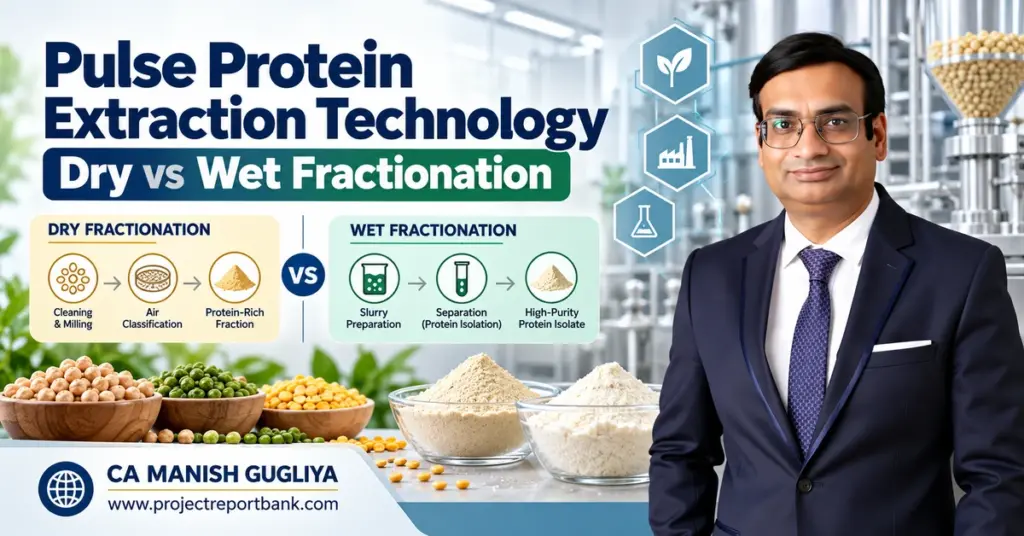
Dry fractionation produces protein concentrates with 40–65% protein content through mechanical milling and air classification, with lower capital expenditure, minimal water use and simpler environmental compliance. Wet fractionation methods yield protein isolates with more than 80% protein content using alkaline extraction, isoelectric precipitation or membrane separation, but demand higher investment in centrifuges, spray dryers, effluent treatment and process chemicals. Both approaches generate valuable co-streams of starch and fibre that can add revenue when processed in an Integrated Pulse Protein, Starch & Fibre Processing Plant Project Report.
Investors in India need to align technology selection with target markets, feedstock availability, realistic protein recovery assumptions and validated financial projections rather than relying on theoretical laboratory yields. A well-constructed Pulse Protein Extraction Plant Project Report, with assumption-driven financial modelling and sensitivity analysis, remains the foundation for sound investment decisions and bank finance approvals. Project Report Bank, led by CA Manish Gugliya (FCA, DISA ICAI), prepares customised DPRs, financial models and bankable project reports for Indian entrepreneurs and investors evaluating pulse protein manufacturing opportunities.
Introduction: Why Pulse Protein Extraction Technology Matters for Investors
Consumer demand for plant based proteins has accelerated steadily since 2020, driven by health and sustainability concerns across both Indian and global markets. Pea protein is currently the most widely used pulse protein commercially, but chickpea, mung bean and lentil proteins are gaining traction as food manufacturers seek allergen-friendly, non-soy alternatives for meat analogues, dairy replacements and nutritional supplements.
The strategic question for any project promoter is not simply whether to manufacture pulse protein, but which extraction technology to adopt. Pulse protein extraction technology based on dry vs wet fractionation represents two fundamentally different processing philosophies. Dry fractionation relies on mechanical milling and air classification to enrich the protein fraction without water or chemicals. Wet fractionation dissolves and recovers proteins through pH-driven solubilisation, centrifugation and drying. Each route has distinct implications for protein purity, functional properties such as solubility, emulsifying properties and foaming properties, capital outlay, operating expenses and environmental footprint.
The product categories are equally distinct. Pulse protein concentrates, typically produced via dry fractionation, suit applications in texturised products, bakery fortification and snacks where cost competitiveness matters more than ultra-high purity. High-purity protein isolates, usually produced via wet routes, target beverage formulations, clinical nutrition and export markets where neutral flavour, high solubility and tight specifications are essential.
An integrated pulse processing hub that recovers protein, starch and dietary fibre from the same feedstock can improve overall project economics. Rather than treating starch and hulls as waste, an integrated facility monetises all output streams, reducing per-unit protein cost and strengthening financial viability.
This article examines both fractionation technologies in detail: process flows, machinery, cost elements, production capacity planning, operating economics, risk factors and the importance of a customised Pulse Protein Extraction Plant Project Report for bank finance and investor discussions.
What Is Pulse Protein Extraction Technology?
Pulse crops, as defined by the Food and Agriculture Organization, are dry legume seeds harvested for grain. Yellow peas, green peas, chickpeas, lentils, mung beans and kidney beans are the most commercially relevant species for protein extraction. Their typical proximate composition includes protein at 18–30% of dry weight, starch at 40–55%, dietary fibre at 10–20% and a small lipid component at 2–6%. Pulses contain 14–39% protein by weight depending on species, variety and growing conditions. More precisely, protein content in pulses ranges from 15–30% on a dry basis in most commercial varieties used for industrial extraction.
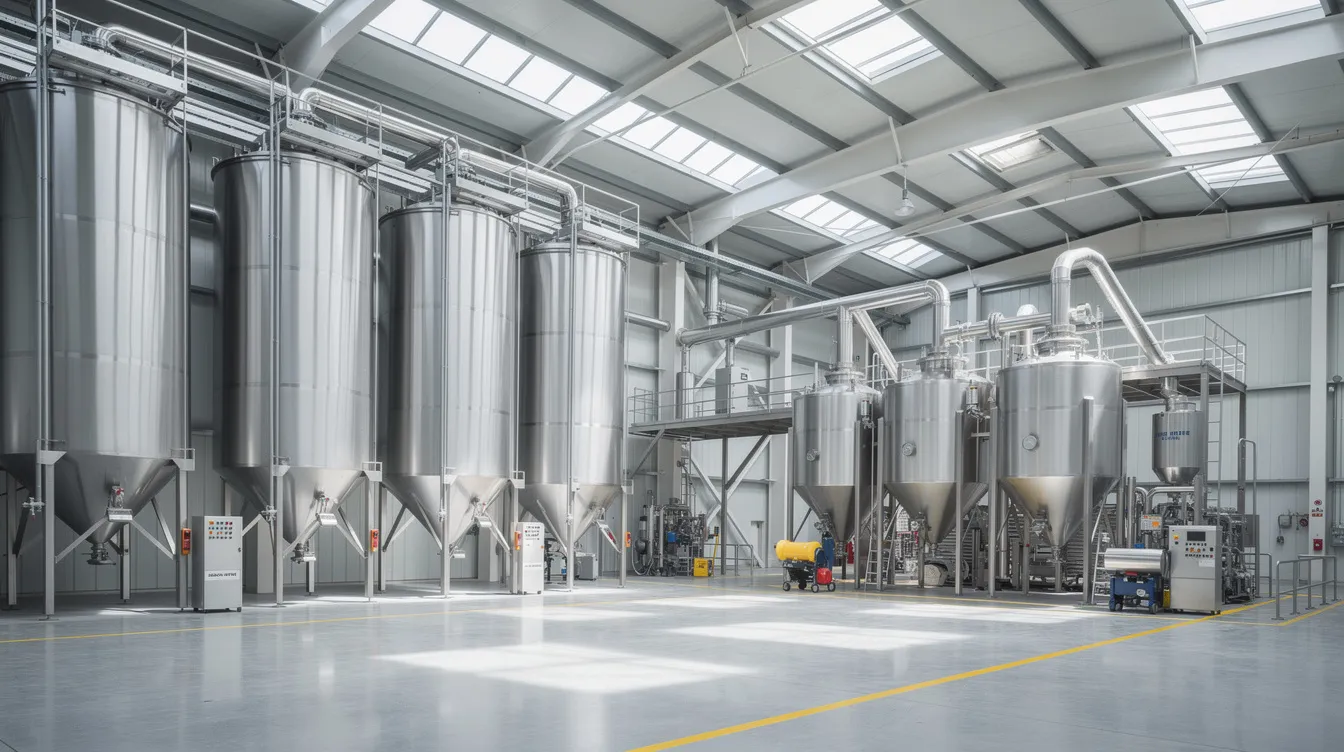
Pulse protein extraction technology separates and enriches the protein fraction from whole pulses to produce commercial pulse protein ingredients. The two primary product formats are protein concentrates, at approximately 40–65% protein on a dry basis, and protein isolates at 80% protein or higher. Starch and fibre co-streams from either route have independent commercial value for food products, industrial applications and animal feed.
Three formats exist in commercial practice:
- Protein concentrates from dry fractionation, produced through milling and air classification, retaining more native protein functionality.
- Protein isolates from wet fractionation methods, produced through alkaline extraction and isoelectric precipitation or membrane-based separation, achieving higher protein purity.
- Native and modified pulse flours, where protein remains in the whole matrix alongside starch and fibre, used in bakery and snack applications.
The amino acid composition of pulse proteins is largely determined by the crop itself. Pulses are high in lysine but generally low in sulfur-containing amino acids such as methionine and cysteine. Extraction methods, however, influence protein digestibility, sensory properties and functional behaviour in finished food products.
Starch and fibre fractions are valuable by-products. Pea starch finds applications in noodles, bakery and industrial uses. Hull-derived fibre serves feed, fibre-enriched food formulations and, in some cases, biomass energy.
Pulse Protein Characteristics and Functional Properties
The dominant storage proteins in pulses are globulins, specifically legumin (11S) and vicilin (7S), which together make up 70–80% of total pulse protein composition. The remaining fraction consists of water-soluble albumins and smaller protein classes. This protein structure determines how pulse proteins behave in food processing applications, from gelation in meat analogues to emulsification in dairy alternatives.
The amino acid profile of pulse proteins is characterised by high lysine and arginine content, making them complementary to cereals (which are lysine-limited). Blending pulse proteins with wheat, rice or maize proteins creates a more balanced amino acid composition for finished food formulations targeting human diets. However, the relatively lower content of sulfur amino acids limits pulse proteins as standalone dietary protein sources in certain clinical applications without supplementation.
Key functional properties affected by extraction technology include:
- Protein solubility: pulse proteins exhibit high solubility, especially at pH 7, making them suitable for beverage and liquid formulations when native protein functionality is preserved.
- Emulsifying properties: these improve with pH shifts during processing, and are central to dressings, sauces and dairy analogues.
- Foaming properties: foaming capacity varies among different pulses, with pea and chickpea proteins generally performing better than lentil in aerated applications.
- Gelation: gelation properties depend on protein concentration and ionic strength, which determines the gelling concentration needed for structured products such as meat analogues.
Mung bean protein, for instance, has a water-holding capacity of 2.1 g/g, making it relevant for applications where moisture retention is critical. Cowpea protein and bean proteins from other pulse types show varying performance on these parameters.
Dry-fractionated concentrates often retain more native protein functionality because the processing avoids harsh pH shifts and thermal stress. Wet extraction can change protein structure, potentially affecting functionality. Protein denaturation during alkaline treatment or spray drying reduces solubility and can alter emulsifying and foaming behaviour, though wet routes often reduce antinutritional factors (such as protease inhibitors, amylase inhibitors, enzyme inhibitors and phytates) and off-flavour compounds more effectively.
Processors can post-modify isolates through pH shifting, enzymatic treatment or fermentation to tune functional properties for specific applications. These modifications can restore improved solubility or enhance gelling characteristics, though they add processing cost and complexity.
Dry Fractionation Technology for Pulse Protein Extraction
Dry fractionation is a mechanical separation process that produces pulse protein concentrates without water or chemical inputs. The pulse protein fractionation process in a dry route follows these steps:
- Cleaning and grading: Raw pulses pass through pre-cleaners, sifters, destoners and aspirators to remove stones, dust, foreign matter and undersized or damaged grains.
- Dehulling: Mechanical dehullers remove the fibre-rich seed coat. This step separates hull material (rich in dietary fibre and resistant starch) from the cotyledon, improving downstream protein separation efficiency.
- Coarse milling: Dehulled splits are broken down using coarse grinders or hammer mills.
- Fine milling: Pin mills, impact mills or rotor mills reduce particle size further. The objective is to break the cotyledon structure so that protein bodies detach from starch granules without damaging larger starch granules, because starch damage increases starch contamination in the protein fraction.
- Particle size control: Sieves and classifiers sort milled material by particle size distribution, which directly influences the sharpness of the subsequent separation.
- Air classification: The fine fraction and coarse fraction are separated by aerodynamic behaviour. Smaller, lighter protein-rich particles are carried by the air stream into the fine fraction, while coarser, heavier starch-rich particles settle separately. The protein-rich fraction typically contains 50–60% protein on a dry basis. Research on impact and jet milling followed by air classification has achieved approximately 55% protein in pea protein concentrates through this route.
- Collection and packing: Protein-rich concentrate, starch-rich fraction and hull/fibre by-products are collected, packaged and stored separately.
Dry fractionation produces protein concentrates with 40–65% protein content, depending on species, milling parameters and classifier efficiency. The process has lower capital expenditure, lower operating costs (no chemical inputs, no large water handling systems) and lower thermal energy requirements compared to wet routes. Native protein structure is preserved, which can result in better solubility and gel behaviour under some conditions.
The limitations are equally real. Protein purity cannot easily reach isolate-grade levels. Starch contamination remains higher, more antinutritional factors are retained, flavour may be less neutral, and applications requiring very high protein density or strict sensory specifications may not be served well.
Suitable applications for dry-fractionated concentrates include bakery fortification, snack formulations, textured vegetable protein (TVP) bases, pet food and functional food products where low production cost matters more than ultra-high purity. The technology and project economics of dry-route concentrate manufacturing are covered in the Pea Protein Concentrate Manufacturing Project Report.
Wet Fractionation Technology for Pulse Protein Extraction
Wet fractionation is a slurry-based extraction process where proteins are solubilised in water, separated from insolubles, and recovered as high-purity isolates. Wet fractionation methods yield protein isolates with more than 80% protein content on a dry basis, and in some optimised processes, purity reaches 85–95%.
The step-wise pulse protein fractionation process in a wet route proceeds as follows:
- Raw material preparation: Cleaned and dehulled pulses are milled into flour. Starting pea flour typically contains approximately 20–24% protein.
- Slurry formation: Flour is dispersed in water at a controlled flour-to-water ratio, often around 1:10 or higher, to ensure adequate protein release.
- Protein solubilisation: The slurry is adjusted to alkaline pH (typically pH 8–10) using food-grade alkali. Alkaline extraction improves protein solubility and emulsifying properties. Temperature and extraction time (often around 60 minutes or more) are controlled to maximise soluble proteins while minimising starch swelling.
- Solid-liquid separation: Insolubles (fibre, hull residues, undissolved starch) are removed by decanter centrifuges, disc separators or filtration. The clarified liquid contains dissolved protein.
- Protein isolation: The protein is recovered by either isoelectric precipitation (adjusting pH to approximately 4.5–5.0, where pulse proteins reach minimum solubility and precipitate) or ultrafiltration/diafiltration membranes that concentrate protein while allowing smaller molecules to pass through. Isoelectric precipitation is commonly used for extracting pulse proteins at commercial scale.
- Washing and neutralisation: The precipitated protein curd is washed to remove residual salts and solubles, then neutralised to near-neutral pH.
- Concentration and drying: The protein slurry is concentrated and spray dried. Pilot and commercial spray dryers typically operate at inlet temperatures around 180°C and outlet temperatures around 90°C, with feed solids at approximately 8–12%. A Canadian pilot study produced pea protein isolates with approximately 81% protein and 3.9% ash using these parameters.
Not all wet extraction plants follow identical recipes. Some use mild alkaline conditions with isoelectric precipitation, others rely on membrane technologies to avoid pH swings and reduce chemical usage. Fermentation-based approaches and salt extraction methods are being explored to produce isolates with different nutritional and functional properties.
Wet extraction can change protein structure, potentially affecting functionality. The pH shifts, thermal exposure during extraction and spray drying can partially denature proteins, reducing solubility in certain applications. However, wet routes often produce more neutral flavour, lower antinutritional factor levels and cleaner sensory properties than dry-fractionated concentrates.
Wastewater streams from wet plants carry high chemical oxygen demand (COD) and biological oxygen demand (BOD), requiring effluent treatment. Starch and fibre slurries from the separation stage can be further processed and sold as co-products rather than disposed of as waste.
Protein extraction methods affect functional properties of the finished isolates. The choice between isoelectric precipitation and membrane separation influences not just purity but also the molecular state of the protein, its solubility profile and its behaviour in end-use formulations. Pea protein isolates manufactured through wet routes are covered in detail in the Pea Protein Isolate Manufacturing Plant Project Report, including spray drying, export-grade specifications and nutraceutical applications.
Dry vs Wet Fractionation – Detailed Technology Comparison
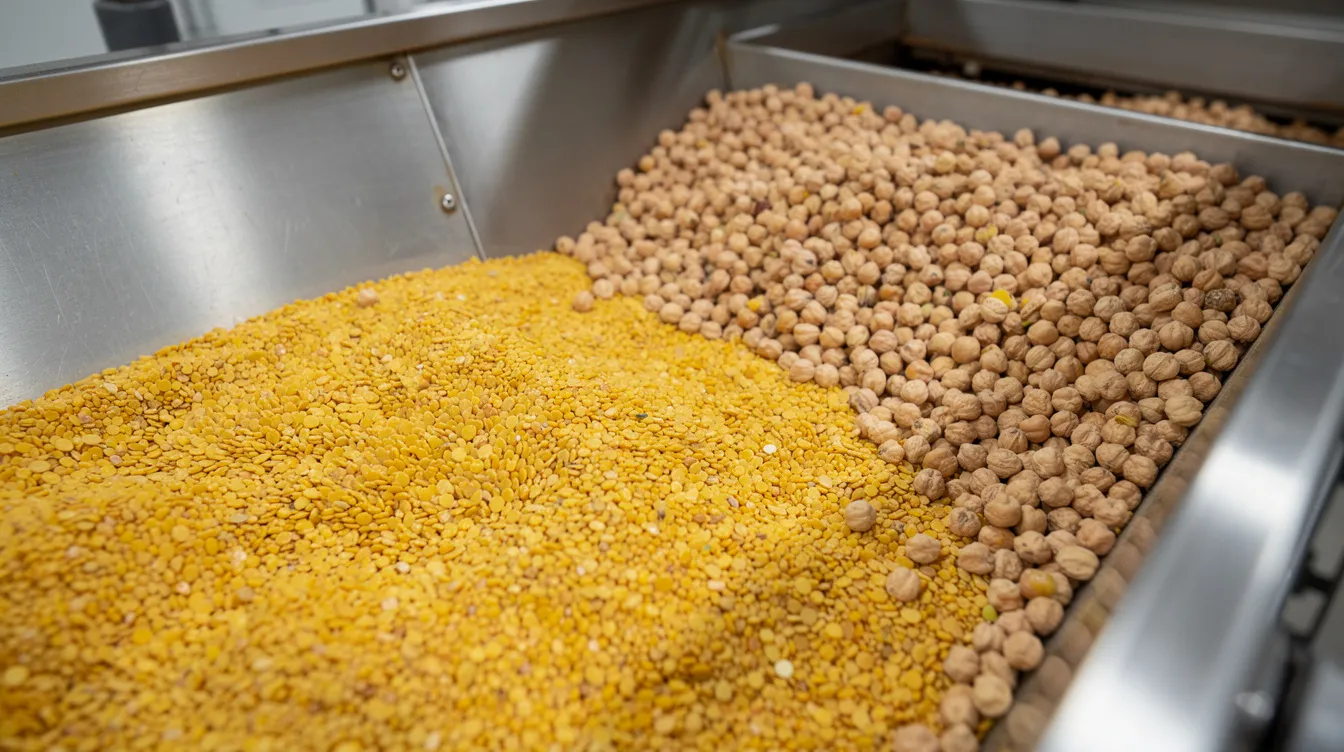
Investors evaluating pulse protein extraction technology must weigh dry vs wet fractionation across multiple technical and financial dimensions. The table below summarises indicative industry patterns; actual performance depends on specific equipment, plant design, operating discipline and feedstock quality.
| Parameter | Dry Fractionation | Wet Fractionation |
|---|---|---|
| Processing principle | Mechanical (milling + air classification) | Solvent/pH-driven (aqueous extraction + separation) |
| Typical protein purity | 40–65% (dry basis) | 80–95% (dry basis) |
| Protein recovery (% of initial protein) | ~50–70% (variable by classifier) | ~60–90% (AE-IEP or membrane) |
| Raw material requirements | Whole dehulled pulses, clean and dry | Pulse flour with controlled moisture and particle size |
| Capital investment | Lower (simpler equipment, no large vessels or dryers) | Higher (centrifuges, membranes, spray dryer, ETP) |
| Operating expenses | Lower (no chemicals, minimal water) | Higher (chemicals, water, thermal energy, maintenance) |
| Water consumption | Minimal (dust suppression and cleaning only) | High (process water, CIP, washing) |
| Electricity consumption | Moderate (milling, air classification, pneumatic conveying) | High (pumps, centrifuges, fans, spray dryer, membrane systems) |
| Chemicals and consumables | Negligible | Alkali, acid, cleaning agents, membrane replacements |
| Labour requirements | Lower, less specialised | Higher, needs process chemistry and membrane expertise |
| Machinery complexity | Moderate | High |
| Environmental management | Simpler (dust control, solid waste) | Complex (ETP, sludge handling, air emissions from dryer) |
| Product functionality | Retains native structure; potentially better gelation | Risk of partial denaturation; more neutral flavour |
| Starch and fibre recovery | Starch-rich fraction as co-product; hulls for fibre/feed | Starch slurry and fibre for separate processing |
| Market applications | Bakery, snacks, TVP, pet food, feed | Beverages, sports nutrition, clinical nutrition, dairy alternatives |
| Scalability | Suitable for SME to large scale | Generally favours larger, export-oriented plants |
| Commercial feasibility | Lower risk, lower margin per kg | Higher risk, higher potential margin for isolates |
Starch recovery from both routes can be a meaningful revenue contributor. The economics of pea starch processing are examined in the Pea Starch Extraction & Manufacturing Plant Project Report.
Laboratory or pilot-scale data should not be assumed to translate directly to full commercial scale. Classifier efficiency, centrifuge capacity, membrane fouling rates and spray dryer throughput all introduce variability between theoretical and operational yields.
Hybrid flowsheets, where dry pre-concentration is followed by wet polishing, are emerging as a way to balance water usage, chemical consumption and final protein purity. Future research is needed on hybrid fractionation methods for pulse proteins to establish optimal configurations and commercial viability at scale. These hybrid approaches are discussed further in the technology selection section below.
Dry fractionation is generally more accessible for first-time MSME investors with moderate capital budgets. Wet fractionation is better suited to larger, export-driven projects where promoters have the technical capabilities and financial resources to manage complex operations and effluent compliance.
Machinery and Equipment Requirements for Dry and Wet Plants
Equipment choice directly influences capital cost, energy consumption, achievable protein quality and operational reliability. The DPR should include vendor-neutral evaluation of machinery options, with specifications matched to the target processing capacity and product standards.
Dry Fractionation Machinery
| Process Step | Typical Equipment | Key Selection Parameters | Major Cost Drivers |
|---|---|---|---|
| Cleaning | Pre-cleaner, destoner, aspirator, magnetic separator | Capacity (TPD), impurity removal efficiency | Local vs imported make |
| Dehulling | Mechanical dehuller, kernel splitter | Hull removal rate, kernel damage | Wear parts, throughput |
| Milling | Pin mill, impact mill, rotor mill | Feed moisture, mill speed, target particle size | Material of construction, motor power |
| Classification | Air classifier, cyclone separator | Air velocity, rotor speed, cut size, sharpness | Classifier design, imported vs local |
| Dust collection | Bag filters, aspiration systems | Airflow capacity, filter area, safety compliance | Filter media, automation |
| Packaging | Bagging machines, bulk loading systems | Pack sizes, automation level | Weighing accuracy, speed |
Wet Fractionation Machinery
| Process Step | Typical Equipment | Key Selection Considerations | Major Cost Drivers |
|---|---|---|---|
| Slurry preparation | Mixing tanks, wet grinder/colloid mill | Tank volume, agitation speed, material of construction | Stainless steel, sanitary design |
| Extraction | Extraction vessels with pH dosing, temperature control | Batch size, heating/cooling jackets, pH control precision | Instrumentation, automation |
| Separation | Decanter centrifuge, disc separator | G-force, throughput, solids handling | Imported centrifuges, maintenance |
| Concentration/filtration | UF/RO membrane skids, diafiltration units | Membrane configuration, flux rate, fouling resistance | Membrane cost and replacement frequency |
| Precipitation/neutralisation | Isoelectric precipitation tanks, neutralisation vessels | pH control, mixing uniformity | Chemical dosing systems |
| Drying | Spray dryer (most common), freeze dryer (premium) | Inlet/outlet temperature, evaporation rate, powder recovery | Dryer size, energy source, atomiser type |
| Effluent treatment | ETP plant (COD/BOD removal, neutralisation, sludge) | Effluent volume, discharge norms | Civil works, equipment, recurring chemical costs |
| Hygiene | Clean-in-place (CIP) systems | Cycle time, chemical handling, automation | Piping, control systems |
Integrated plants may require additional equipment for starch drying (flash dryers or rotary dryers), fibre pelletising and by-product handling. These additions affect both capital cost and plant layout.
Actual vendor quotations and plant layouts must be customised for the desired processing capacity (whether 5 TPD, 25 TPD or 50 TPD of finished protein product) and local utility constraints, including power transformer capacity, boiler or thermic fluid system sizing and water source availability.
Pulse Protein Extraction Plant Setup Cost in India
The major components of project cost for a greenfield pulse protein extraction plant include:
- Land acquisition or lease and site development (levelling, compound wall, internal roads, drainage)
- Factory building and RCC structures including processing hall, raw material storage, finished goods warehouse, laboratory, utilities area and administrative block
- Plant and machinery for the chosen process line (dry or wet), including material handling, utilities and instrumentation
- Electrical installation and control systems (power distribution, control panels, variable frequency drives, transformers)
- Pre-operative and preliminary expenses such as technical consultancy, FSSAI licensing, environmental clearances, trial runs and interest during construction
- Contingency provision, typically 5–10% of the above costs
- Margin for working capital to cover raw material procurement, initial operating expenses and inventory build-up
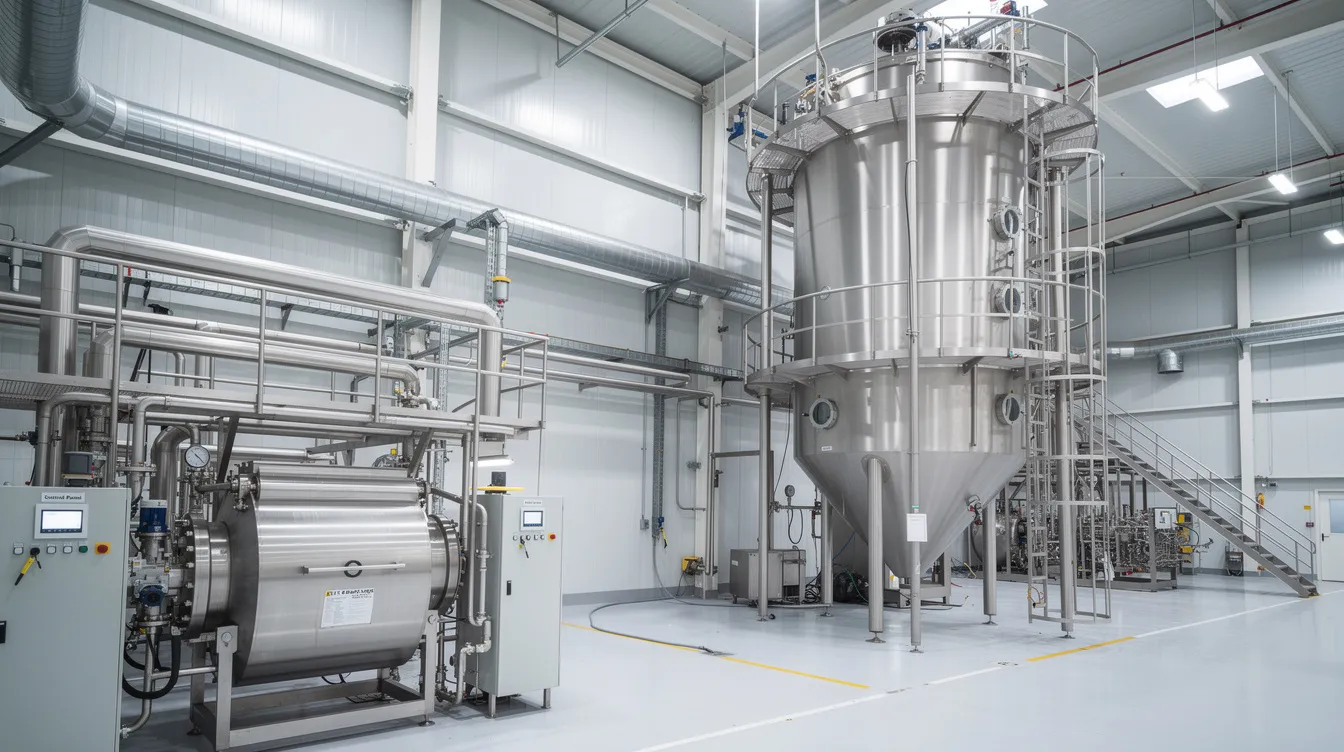
Dry fractionation plants typically have lower machinery cost and simpler civil structures. The absence of large extraction vessels, centrifuges, membrane systems, spray dryers and effluent treatment infrastructure reduces both equipment expenditure and associated civil foundations. Wet plants require each of these, along with larger utility infrastructure (boiler or steam generator, water treatment, compressed air) and more extensive hygienic design.
At higher processing scales (e.g., 50 TPD raw pulses compared to 10 TPD), per-tonne capital cost tends to reduce due to economies of scale in equipment, civil works and utilities. However, larger plants require correspondingly larger market commitments and working capital.
Reliable cost estimation requires:
- Firm vendor quotations for major equipment, not estimates from brochures
- Site-specific civil and structural estimates based on soil conditions and local construction rates
- Utility infrastructure assessment (power transformer, borewell or piped industrial water, boiler capacity)
- Compliance-related costs including pollution control equipment, FSSAI fees and local authority approvals
Project Report Bank prepares plant-specific cost sheets and funding structures as part of a customised Pulse Protein Extraction Plant Project Report, based on project-specific assumptions, vendor data and local cost factors rather than generic templates.
Production Capacity, Protein Recovery and Yield Planning
Plant capacity is usually expressed in two ways: TPD of raw pulses processed and TPD of finished protein ingredient produced. Both figures should be clearly defined in any bank finance proposal, because they determine raw material procurement, revenue projections and working capital requirements.
Factors influencing yield and protein yields include:
- Variety and quality of pulse crops: Moisture content, protein content, proportion of damaged grains and impurity levels affect extraction efficiency. Mung bean protein, for instance, contains 23.6–30.1% protein depending on the region of cultivation.
- Dehulling efficiency and flour particle size: Incomplete dehulling leaves hull material in the process stream, reducing protein concentration in the final fraction. Over-fine milling can damage starch granules, increasing starch contamination.
- Chosen extraction method: Dry air classification, AE-IEP wet extraction or membrane-based wet extraction each yield different protein purities and recovery rates.
- Target product specifications: Higher protein purity requirements (e.g., 90% isolate versus 55% concentrate) reduce mass yield but increase unit value.
- Operating losses: Dust, fines, unrecovered protein in starch/fibre streams and process residues all reduce effective recovery.
Illustrative Material Balance (Hypothetical, for Explanation Only)
Dry fractionation route (1,000 kg raw yellow peas, ~23% protein):
- Hulls removed: ~100–120 kg
- Protein-rich fine fraction: ~250–300 kg at ~55% protein
- Starch-rich coarse fraction: ~500–550 kg at ~60–65% starch
- Process losses: ~30–50 kg
Wet isolate route (1,000 kg raw yellow peas, ~23% protein):
- Hulls and fibre: ~100–120 kg
- Protein isolate (dry basis): ~120–160 kg at ~85% protein
- Starch fraction: ~350–400 kg
- Soluble losses and process water residues: ~250–350 kg
Higher protein purity means lower mass yield and vice versa. This trade-off directly influences turnover, raw material requirements and by-product volumes. Realistic yield assumptions must come from pilot trials, vendor data and published industrial benchmarks, validated during DPR preparation and sensitivity analysis.
Operating Cost and Manufacturing Economics
Major operating cost heads for a pulse protein extraction plant include:
- Raw material (pulses): Often 60–70% of total cost in dry plants. In wet plants, the raw material share may be lower in percentage terms because utility and chemical costs are higher in absolute terms.
- Power: Milling, air classification, pumps, centrifuges, spray dryer fans and pneumatic conveying are energy-intensive. Wet plants draw more electrical load per tonne of output.
- Thermal energy: Steam or hot air for spray drying is a major operating cost in wet fractionation.
- Water and process chemicals: Alkali (sodium hydroxide or equivalent), acid (hydrochloric acid or citric acid) and cleaning agents are recurring costs in wet plants. Water consumption for process and cleaning-in-place can be substantial.
- Labour and supervision: Operators, QC staff, maintenance team, administration. Wet plants need more specialised operators.
- Repairs and maintenance: Centrifuge seals, membrane replacement, mill wear parts, dryer nozzles.
- Packaging materials: Bags, bulk containers, intermediate packaging.
- Quality control and laboratory testing: Protein assays, microbiological testing, heavy metals, pesticide residues.
- Waste treatment and disposal: ETP chemicals, sludge handling, solid waste disposal.
- Logistics and marketing: Transport, warehousing, sales and distribution.
Capacity utilisation is a key determinant of per-kg manufacturing cost. A plant operating at 50% utilisation in year one carries the same fixed cost burden as one at 85%, but produces fewer sellable kilograms. This effect is more pronounced in capital-intensive wet plants where depreciation, interest and fixed utility costs form a larger proportion of total cost. A reasonable financial model may assume progressive ramp-up: perhaps 50% in year one, 70% in year two, and 80–90% from year three onward.
Three variables drive manufacturing economics:
- Protein yield (kg of protein shipped per tonne of raw pulses processed)
- Net selling price realisation for protein concentrates, protein isolates, starch and fibre by-products
- Product mix (domestic versus export, bulk versus value-added packaging)
Continuous monitoring of pulse procurement costs and by-product markets is essential because margins are sensitive to seasonal raw material price volatility, particularly for peas and chickpeas.
Financial Projections, Profitability, ROI and DSCR Analysis
Any serious investment in pulse protein extraction technology must be supported by detailed financial projections, typically covering 7–10 years, which form the core of a bankable DPR and CMA Data submission. Financial modeling facilitates financial projections and analysis for project feasibility, converting operational assumptions into structured financial statements.
Key components of the financial model include:
- Project cost and means of finance: Equity contribution, term loan, subsidies (where applicable under MSME or food processing schemes) and other funding sources
- Sales projections by product (protein concentrates, isolates, starch, fibre/hulls) and by market (domestic, export)
- Operating cost projections with inflation assumptions on raw materials, utilities and labour
- EBITDA and operating margin estimates at different capacity utilisation levels
- Depreciation, interest and tax calculations based on the asset schedule and loan structure
- Cash flow statement and loan repayment schedule
Banks generally expect a comfortable average Debt Service Coverage Ratio (DSCR) of 1.4–1.5 or higher over the loan tenure. Volatile margins, overestimated protein yields or aggressive capacity utilisation assumptions in early years can depress DSCR below bankable levels, making the proposal difficult to approve.
Working capital assessment evaluates cash flow needs and operational finances; it determines how much revolving finance is needed for raw material procurement, inventory holding and receivable financing. For a pulse protein plant carrying several months of raw material stock (purchased during harvest season) and offering credit terms to B2B customers, working capital requirements can be substantial.
Profitability indicators to evaluate:
- Break-even point: Expressed as capacity utilisation percentage or annual sales value
- IRR (Internal Rate of Return): The discount rate at which project NPV equals zero; useful for comparing alternative investment opportunities
- ROI on total capital employed: Measures returns relative to total project investment
- Payback period: Time required to recover the initial investment from net cash flows
All results depend on assumptions regarding protein yields, selling prices and capacity utilisation. As a practising Chartered Accountant, my role is to model realistic ranges and perform sensitivity analysis rather than to assure or certify future returns.
Operating Risks, Sensitivity and Scenario Analysis
Sensitivity analysis helps assess risk in project economics and financial outcomes by evaluating how project viability responds to changes in key variables: raw material cost, selling price, protein recovery percentage, capacity utilisation, interest rate and utility tariffs.
Consider these illustrative risk scenarios:
Scenario 1: Export price decline. If the international price of pea protein isolate drops by 15–20% due to competition from established global suppliers, EBITDA margins compress, DSCR falls, and loan servicing may become strained in high-capex wet plants. Dry plants, with lower fixed costs, absorb this shock more easily.
Scenario 2: Raw material cost increase. A poor rabi season or government procurement interventions can push pulse prices up by 20–30% within months. For a plant where raw material is 60–70% of cost, this directly erodes margins unless selling prices can be passed through to customers.
Scenario 3: Lower-than-expected protein recovery. If protein recovery in initial operating months is 10–15 percentage points below assumptions due to equipment teething problems, operator inexperience or variable feedstock quality, production volumes fall, per-unit costs rise and cash flows weaken.
Scenario 4: Delayed capacity utilisation ramp-up. If the plant achieves only 40% capacity in year one instead of the projected 55–60%, fixed costs are spread over fewer units of output, stretching the payback period and depressing DSCR.
A well-structured DPR should include downside, base-case and upside scenarios with clearly stated assumptions. Structured risk assessment helps promoters decide on staging investment (for example, starting with dry fractionation and adding a wet line later) and designing appropriate loan structuring and repayment schedules.
Dry vs Wet Fractionation – Which Technology Should Investors Choose?
This decision framework is designed for Indian entrepreneurs, MSMEs and institutional investors evaluating pulse protein extraction technology options. There is no universally correct answer; the right technology depends on specific project circumstances.
Key evaluation factors:
- Target product portfolio: Concentrates, isolates, textured proteins, blends or multiple formats
- Customer specifications: Required protein purity, solubility, allergen profile, microbiological standards and nutritional quality
- Available feedstock: Locally grown chickpea, pea, mung bean or lentil; mung bean, chickpea and other pulse-specific processing considerations are addressed in the Chickpea & Mung Bean Protein Manufacturing Project Report
- Desired scale: Small regional plant versus large export hub
- Capital budget and risk appetite
- Availability and cost of water, power and steam
When dry fractionation is generally preferred:
- For moderate protein purity needs (40–65%), suitable for bakery, snacks, TVP bases and feed
- Where water availability is constrained or effluent norms are stringent
- For MSMEs entering the pulse protein space with limited capital and technical infrastructure
- Where native protein functionality (gelation, emulsification) is valued over ultra-high purity
When wet fractionation may be justified:
- When targeting high-value pea protein isolates or other pulse protein isolates for sports nutrition, beverages, clinical nutrition or export markets
- When promoters have strong technical resources, experienced operations teams and the capacity to manage process chemistry, membrane maintenance and effluent treatment
- When reliable offtake contracts or brand-led captive demand justify the higher capital commitment
Phased or hybrid strategies:
Starting with dry fractionation and later adding a wet polishing section is commercially feasible if planned at the design stage. The dry plant generates cash flow and market presence while the promoter accumulates technical experience. Sharing infrastructure in an integrated pulse hub optimises cost and by-product utilisation. Future research is needed on hybrid fractionation methods to refine optimal configurations, but the concept is sound in principle.
Regulatory Approvals and Quality Requirements in India
A pulse protein extraction plant in India requires the following primary regulatory approvals:
- FSSAI registration or licence for food manufacturing, with product category-specific requirements
- State Pollution Control Board consent to establish and consent to operate, covering air emissions, water effluent discharge and hazardous waste management; wet plants with high-COD effluents face more scrutiny
- Factory licence under the Factories Act and Shops & Establishments registration as applicable
- Fire safety NOC, building plan approvals and local municipal permissions
- Labour registrations (ESI, PF) for units employing above threshold manpower
Food safety and quality systems expected by buyers of pulse protein ingredients include implementation of Good Manufacturing Practices (GMP) and HACCP-based food safety management. Export-oriented plants and those supplying multinational food companies typically need ISO 22000 or FSSC 22000 certification. Regular testing for microbiological parameters, heavy metals, pesticide residues, mycotoxins and allergen management is standard practice. Standardized testing methods are required for consistent pulse protein quality across batches and suppliers.
Specific concerns for pulse protein manufacturing include control of off-flavours, management of antinutritional factors (trypsin inhibitors, phytic acid), accurate labelling of protein content and nutritional composition, and amino acid profile documentation for export shipments. Export-oriented plants must also consider importing-country regulations, GMO-free declarations where required and compliance with buyers’ third-party audit requirements. Folic acid and other micronutrient content may need declaration depending on the target market.
The DPR should include a regulatory roadmap with estimated timeline and cost for obtaining statutory approvals before commercial operations.
Project Risks and Commercial Feasibility for Pulse Protein Plants
Technical risks:
- Lower-than-expected protein recovery due to inadequate process design or inconsistent quality of pulse crops
- Equipment underperformance, membrane fouling or centrifuge downtime reducing throughput
- Difficulty achieving targeted functional properties (solubility, gelation, emulsification) required by specific customers
- Processing different pulses on the same line may require different processing techniques and parameter adjustments
Commercial and market risks:
- Competition from established global pea protein suppliers (Roquette, Cosucra, Puris and others) with scale advantages and established customer relationships
- Price volatility in both raw pulses and finished plant proteins
- Shifts in consumer preferences between pea, soy, faba and other plant based proteins
Environmental and regulatory risks:
- Stricter water usage or effluent discharge norms affecting wet plant operations
- Changes in local zoning or industrial policies impacting expansion or new plant setup
Financial risks:
- Under-capitalisation and inadequate working capital leading to operational stress
- Overestimation of demand or selling prices in early years
- Interest rate increases affecting debt servicing capacity
Commercial feasibility is different from technical feasibility. A plant may function technically but struggle commercially without secured offtake arrangements, realistic pricing and strong financial planning. Environmental sustainability is a key benefit of using pulse protein extraction technology, as pulses naturally fix nitrogen in the soil, reducing the need for synthetic fertilizers and improving the environmental profile of the raw material supply chain. However, sustainability credentials alone do not guarantee financial returns; comprehensive feasibility and viability analysis before investment remains essential.
Integrated Pulse Protein, Starch and Fibre Utilisation
A well-designed pulse protein plant produces three output streams: protein fractions (concentrates or isolates), starch fractions and fibre/hull material. Treating only the protein as the revenue product and discarding or under-pricing the rest weakens project economics.
Integrated utilisation converts each stream into a saleable product:
- Protein concentrates and isolates serve food and nutrition markets
- Starch fractions are processed into food-grade pea starch (for noodles, bakery, confectionery) or industrial starch
- Fibre and hulls are converted into bakery fibre ingredients, animal feed pellets or biomass fuel
Innovative applications for pulse protein co-products are being explored, including resistant starch ingredients, prebiotic fibre formulations and speciality feed products. Integrated plants can improve overall project economics by adding co-product revenue, reducing waste disposal costs and enhancing the sustainability profile that multinational buyers and ESG-focused investors increasingly require.
Integrated plants require more complex material handling, storage and quality control systems. These must be reflected in both capital cost and operating cost assumptions within the DPR. Well-designed integrated projects may attract better valuation and investor interest due to diversified revenue streams and reduced concentration risk. Investor presentations often include pitch decks that summarize financials and project plans, and diversified co-product revenue strengthens the investment narrative.
Human Resources, Skill Requirements and Plant Operations
Typical HR requirements for a pulse protein plant vary by scale and technology:
- Production manager / plant head with prior experience in food processing, grain processing or related manufacturing
- Process engineers and shift supervisors with knowledge of milling, separation, drying and (for wet plants) process chemistry
- Quality assurance and laboratory staff trained in proximate analysis, protein assays, microbiological testing and in vitro protein digestibility assessment
- Electrical and mechanical maintenance team for preventive and breakdown maintenance
- Skilled and semi-skilled operators for each shift, plus warehouse and logistics staff
Dry plants require operators proficient in milling and air classification systems. Wet plants additionally need expertise in centrifuge operation, membrane maintenance, clean-in-place (CIP) procedures, ETP operation and chemical handling. The skill gap can be a practical constraint for first-time promoters.
Structured standard operating procedures (SOPs), batch records and training programmes are essential for maintaining consistent protein quality, nutritional properties and protein yields, particularly when processing different pulses over the year. Robust operations and preventive maintenance reduce unplanned downtime, stabilise output and cost structures, and improve DSCR and ROI by ensuring predictable cash flows.
Manpower planning and salary budgets, adjusted for plant size and automation level, should be included in the financial projections.
Raw Material Sourcing Strategy and Seasonality
Pulses are seasonal agricultural commodities. Major Indian harvest windows include rabi season (October–March) for chickpeas and yellow peas, and kharif season (June–October) for some bean varieties. This seasonality affects procurement timing, storage requirements and working capital.
Sourcing options include:
- Direct purchase from mandis and farmer-producer organisations
- Long-term supply arrangements with aggregators or large traders
- Import options (Canada, Australia, Myanmar, East Africa) for specific pulse types or quality grades not sufficiently available domestically
Critical quality parameters at intake:
- Moisture content (typically below 12–14% for safe storage)
- Impurity levels and foreign matter
- Mycotoxin and pesticide residue testing
- Navy bean flour, chickpea flour or pea flour specifications for direct feeding into extraction lines
The DPR should evaluate peak-season bulk procurement versus staggered buying, the working capital impact of carrying several months of inventory and price risk management approaches. Different pulses (chickpea versus pea versus mung bean) respond differently to specific dry and wet fractionation settings. Pilot trials or vendor data should validate extraction parameters for each intended feedstock.
Environmental factors such as rainfall variability and regional crop patterns influence both availability and protein content of different pulses. Salt soluble proteins and basic subunits composition can vary between varieties grown in different agro-climatic zones.
Market Applications and Demand Outlook for Pulse Proteins
Pulse protein production is forecast to increase to 120 million metric tonnes by 2031, driven by expanding demand across multiple application segments. Consumer demand for plant based proteins is driven by health and sustainability concerns, including cardiovascular disease prevention, cholesterol levels management and the nutritional benefits of plant based diets relative to animal derived products.
Current demand segments include:
- Plant-based meat analogues and TVP: Pulse proteins are used in plant-based meat alternatives, providing texture, protein density and binding functionality
- Dairy alternatives: Chickpea protein can replace milk in dairy alternatives, and pea protein isolates can be used in plant-based yogurts, beverages and cheese analogues
- Bakery and snacks: Pulse proteins enhance the nutritional quality of baked goods and improve the texture of pasta products
- Clinical and sports nutrition: High-purity isolates for protein supplementation and medical nutrition
- Pet food and specialised feed: Protein concentrates and co-products in premium animal nutrition
Protein concentrates suit solid food products where structure and cost are priorities. Protein isolates serve applications where solubility, neutral taste and high protein density (dietary protein per serving) are essential. The food industry is increasingly interested in non-soy, non-dairy options due to allergen and clean-label considerations. Health benefits associated with pulse consumption, including fibre intake, resistant starch content and mineral profiles, add to the appeal for food products targeting health-conscious consumers across the growing global population.
Promoters should map potential B2B customers, explore supply agreements and include a concise market section in the DPR covering demand trends, competitive landscape, indicative price ranges and entry strategy. The DPR should reflect market realities rather than generic demand forecasts.
Environmental Management, Water and Energy Considerations
The environmental profiles of dry and wet fractionation are substantially different:
Water and effluent:
- Dry fractionation requires minimal process water; dust and solid waste management are the primary environmental tasks
- Wet fractionation generates large volumes of process water, CIP streams and nutrient-rich effluents with high COD/BOD that require treatment before discharge
Energy:
- Electrical load for dry plants covers milling, air classification and pneumatic conveying
- Wet plants add pumps, centrifuges, membrane systems and, most notably, spray drying (which requires both electrical and thermal energy for heating air to 150–200°C inlet temperatures)
A well-designed plant can incorporate:
- Heat recovery from dryer exhaust
- Variable-frequency drives for key motors
- Optimised compressed air systems
- Water recycling within CIP systems where product safety standards permit
Environmental capital expenditure (ETP, waste utilisation, emissions control) and recurring operating costs must be factored into feasibility analysis. State Pollution Control Board approvals require submission of an environmental management plan, and compliance costs can be material for wet plants.
The DPR should include a dedicated section on environmental management, compliance strategy and approximate recurring costs.
Detailed Project Report (DPR) and Bank Finance Assistance
Detailed Project Reports are critical for assessing project viability and securing finance. A DPR for a pulse protein extraction plant should cover:
- Technical description of the chosen pulse protein extraction technology, including process flow diagrams and mass balance
- Detailed plant and machinery list with specifications aligned to the target capacity
- Civil, structural and utility requirements based on site-specific factors
- Project cost estimate with documented assumptions and contingency provisions
- Means of finance and promoter contribution planning
- Financial projections covering revenue, operating cost, EBITDA, depreciation, interest, tax, cash flow and balance sheet for 7–10 years
- Ratio analysis including DSCR, IRR, ROI, break-even and payback period
- Sensitivity analysis across raw material cost, selling price, recovery rate and capacity utilisation scenarios
A professionally prepared DPR supports technology selection between dry vs wet fractionation, assists in vendor discussions and tendering, satisfies bank appraisal requirements for term loan sanction, and provides the analytical foundation for investor evaluation.
CMA Data is essential for bank loan proposal preparation in project funding. Accurate working capital assessment, cash flow-based repayment planning and alignment with banking norms form the basis of a successful loan application.
Project Report Bank, under CA Manish Gugliya (FCA, DISA ICAI), provides customised DPRs based on project-specific assumptions, financial modelling and scenario analysis, and assistance with bank loan proposal preparation and investor-ready documentation. Advisory services are delivered pan-India through online consultations via www.projectreportbank.com.
The objective is to help promoters make informed investment decisions, not to certify or guarantee any future financial outcome.
Frequently Asked Questions
The following FAQs address common practical questions from Indian entrepreneurs and investors considering pulse protein concentrate and isolate manufacturing projects.
What minimum scale is practical for a dry fractionation pulse protein plant in India?
Very small-scale operations (below 3–5 TPD of raw pulses) often struggle to recover fixed overheads and achieve competitive per-unit costs. Practical entry-level capacities for dry fractionation generally start around 10–15 TPD of raw pulse input, though the optimal scale depends on market access, capital availability, feedstock logistics and target product specifications. This should be evaluated case by case as part of the DPR, with breakeven analysis at different utilisation levels.
Can one plant process multiple pulses (peas, chickpeas, mung beans) on the same line?
Many dry and wet systems can technically handle multiple pulse crops, but require careful scheduling, changeover cleaning and sometimes adjustment of processing parameters (milling speed, classifier settings, extraction pH). Designing flexible process flows from the outset, with separate raw material storage and cleaning lines, helps manage cross-contamination risk and quality consistency across batches of different pulses.
Do banks in India finance wet fractionation plants given the higher risk and capex?
Banks can finance both dry and wet plants. For high-capex wet projects, banks will evaluate project viability more closely, examining promoter experience, equity contribution, offtake visibility, DSCR projections and environmental compliance. A robust DPR with realistic assumptions, detailed CMA Data and clear sensitivity analysis strengthens the loan proposal for either technology.
Is it possible to upgrade from concentrates to isolates later without scrapping existing equipment?
If planned at the design stage, a promoter can add a wet polishing section (extraction, separation, spray drying) downstream of an existing dry fractionation unit. This requires adequate space, utilities (water, steam, power), effluent treatment capacity and integration between the two process stages. The result is combined concentrate and isolate production capability from a single facility.
How long does it typically take to go from concept to commercial production?
A general timeline involves 2–4 months for DPR preparation, financing discussions and regulatory applications; 3–6 months for detailed engineering, equipment procurement and civil works; and 2–4 months for installation, commissioning and stabilisation. Total elapsed time ranges from approximately 8 to 14 months for a dry plant and 12 to 20 months for a wet plant, depending on scale, technology complexity, regulatory environment and promoter preparedness.
Conclusion and Professional Advisory Note
The choice between dry and wet pulse protein extraction technology is fundamentally a business decision, not just a technical one. Dry fractionation offers lower capital cost, minimal water usage, simpler environmental compliance and moderate protein purity suitable for bakery, snacks and textured protein applications. Wet fractionation delivers higher purity isolates with broader market applications in beverages, clinical nutrition and export formulations, but requires greater capital, technical expertise, utility infrastructure and environmental management.
Successful pulse protein projects integrate sound technology selection, realistic yield and price assumptions, a robust market strategy for protein, starch and fibre fractions, and disciplined financial structuring with appropriate risk buffers. Neither technology is inherently superior; both can be commercially viable when aligned with the right markets, resources and financial planning.
Professional Advisory:
CA Manish Gugliya, FCA, DISA (ICAI) Manish Gugliya & Company, Chartered Accountants Ratlam, Madhya Pradesh | Online Advisory Services Pan-India www.projectreportbank.com
Professional assistance is available for:
- Customised Detailed Project Reports (DPR) for pulse protein extraction plants
- Project feasibility studies and technology comparison analysis
- Financial projections, CMA Data and working capital assessment
- Project cost estimation and means of finance structuring
- Bank loan proposal preparation and investor-ready documentation
Interested promoters and investors can reach out through the WhatsApp contact option on www.projectreportbank.com for a preliminary discussion. Investment decisions should be based on customised, data-driven analysis and validated assumptions rather than generic industry benchmarks.