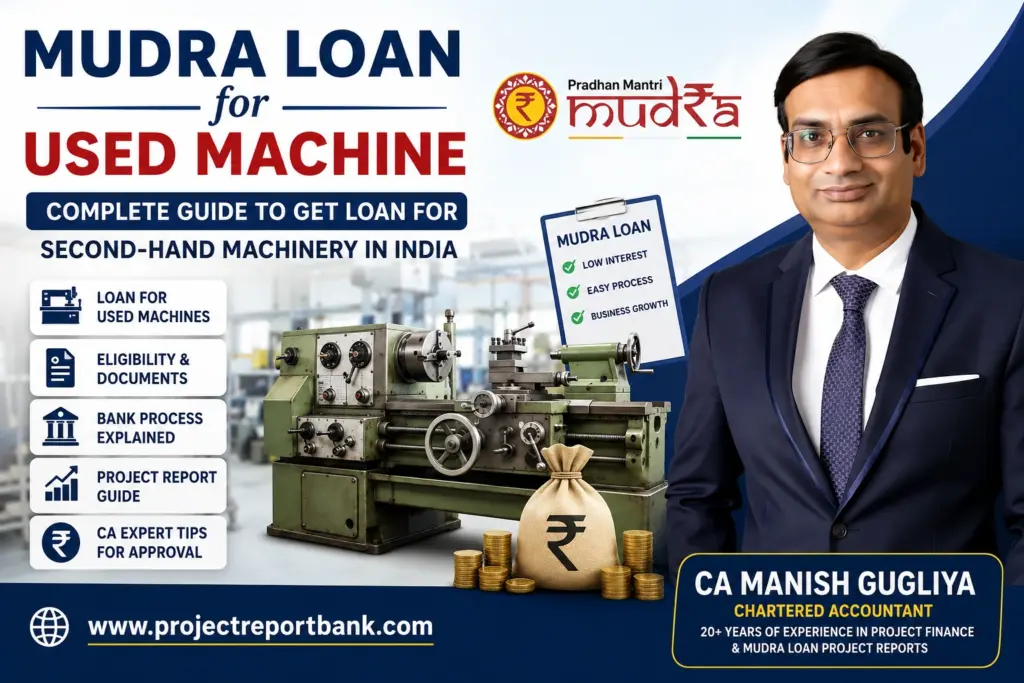
As a practicing Chartered Accountant with over 20 years of experience in preparing Mudra Loan Project Reports, I get this question almost every week: “Sir, can I get a Mudra Loan for a used machine?” The short answer is yes. But the real answer involves understanding how banks think, what documents they want, and how to present your proposal so it gets approved – not rejected.
In this guide, I will walk you through everything you need to know about getting a Mudra loan for second-hand machinery in India, based on my practical experience working with banks and small business owners across the country.
Key Takeaways
- Yes, you can get a Mudra Loan for a used machine – but it depends on the bank’s internal policy and your documentation quality. There is no PMMY rule that bans second-hand machines.
- Used machines can be financed under the Pradhan Mantri Mudra Yojana if the machine is productive, properly valued by an approved engineer, and payment goes through a bank account (not cash).
- A strong project report, seller invoice with machine details, independent valuation report, and clear justification of machine life and profitability are the real approval drivers.
- Most Mudra rejections for used machinery happen due to weak paperwork, cash deals, inflated invoices, and unrealistic financial projections – all of which can be fixed with proper preparation.
- ProjectReportBank.com can prepare bank-ready Mudra Project Reports customised for used machine proposals for borrowers across India.
Table of Contents
What Is PM Mudra Loan and How It Applies to Used Machines?
The Pradhan Mantri Mudra Yojana (PMMY) – commonly called the PM Mudra Loan scheme – was a government initiative launched on 8 April 2015 to provide collateral-free business loans to non corporate, non farm micro and small enterprises. The scheme was launched to fill the credit needs of millions of small businesses that could not access formal bank finance earlier.
Here is what you need to know about how it applies to used machines:
- Mudra loans are designed to support income generating activities for small enterprises in sectors like manufacturing, trading, and services. They are not limited to buying new equipment.
- The loan amount originally went up to ₹10 lakh (collateral-free). After 2024, some banks introduced Tarun Plus with a maximum loan amount of up to ₹20 lakh for eligible borrowers.
- In FY 2022-23 alone, about 6.23 crore mudra loans were sanctioned and ₹4,50,423.66 crores were disbursed – showing the massive scale of this mudra scheme.
- Mudra loans support diverse sectors like manufacturing and services. They cover expenses like working capital, purchase machinery (new or used), tools, and business expansion.
- The application for a Mudra loan can be made at public sector banks, private sector banks (including HDFC Bank), small finance banks, regional rural banks, cooperative banks, and authorised microfinance institutions. Various financial institutions and lending partners participate in this scheme.
- You can apply for a mudra loan online through portals like Jan Samarth or specific bank websites, or visit a branch directly with your application form and required documents.
MUDRA stands for Micro Units Development and Refinance Agency. It is a refinance agency under SIDBI that supports financial institutions and micro finance institutions in providing financial assistance to micro units and small businesses across the non farm sector.
Can I Get a Mudra Loan for a Used or Second-Hand Machine?
Yes, in many banks you can get a Mudra Loan for used machines. But it is not automatic. It depends on the bank’s internal policy and proper evidence of machine condition and price.
Mudra loans can also be used to purchase second-hand machinery if the lender is satisfied with the condition and value. There is no explicit PMMY prohibition against financing used or second-hand equipment. What matters is how each lending institution assesses risk.
Here are the conditions banks typically look for:
- The machine must be a productive asset that helps you generate income.
- Remaining useful life must be longer than the loan tenure (for example, if you want a 5-year loan, the machine should have at least 7-8 years of life left).
- Purchase price must be reasonable and supported by a valuation or market comparison.
- Payment must be routed through a bank account – cash transactions are a red flag for every bank.
- Some banks prefer you buy from a registered dealer rather than a private individual, but individual-to-individual sale is also possible if documentation is strong.
Practical Example: A client of mine in Rajasthan wanted to buy a 5-year-old CNC milling machine worth ₹3.5 lakh to expand his small fabrication unit. We applied under the Kishore loan category. The bank’s panel engineer inspected the machine, confirmed remaining useful life of 8+ years, and the loan was sanctioned within 10 days. The key? A clean sale invoice, proper valuation, and a realistic project report showing how monthly revenue would cover the EMI comfortably.
CA Tip: Before you even start your application, visit your bank branch and ask the manager directly: “Does your bank finance used machines under Mudra?” This one conversation can save you weeks of effort.
Types of Mudra Loans (Shishu, Kishore, Tarun, Tarun Plus) for Used Machinery
Mudra loans are classified into Shishu, Kishore, Tarun, and Tarun Plus based on the loan category and business stage. Here is how each applies to used machinery:
- Shishu (up to ₹50,000): Shishu loans offer up to ₹50,000 for startups. Rarely used for industrial machines. More suitable for very small used equipment like sewing machines, hand tools, or small grinders.
- Kishore (₹50,001 to ₹5 lakh): Kishore loans range from ₹50,001 to ₹5 lakh. This is the most common bracket for used industrial machines – lathe machines, bakery ovens, small injection moulding units, food processing equipment.
- Tarun (₹5 lakh to ₹10 lakh): Tarun loans provide ₹5 lakh to ₹10 lakh for established businesses. Suitable for higher-value used machines like printing presses, 4-post car lifts, small construction machinery.
- Tarun Plus (₹10 lakh to ₹20 lakh): Tarun Plus loans range from ₹10 lakh to ₹20 lakh. Available only after successful repayment of a Tarun-level loan. Can finance bigger or multiple used machines.
| Loan Category | Loan Amount | Used Machine Suitability | Example Sectors |
|---|---|---|---|
| Shishu | Up to ₹50,000 | Very small equipment only | Tailoring, small food stall |
| Kishore | ₹50,001 – ₹5 lakh | Most common for used machines | Fabrication, bakery, printing |
| Tarun | ₹5 – ₹10 lakh | Higher-value used machines | Auto workshop, packaging, manufacturing |
| Tarun Plus | ₹10 – ₹20 lakh | Multiple/large used machines | Medium manufacturing, civil construction |
The maximum loan amount under Mudra is ₹20 lakh. Mudra loans have no processing fees or foreclosure charges, which makes them attractive for small businesses.
Interest rates for Mudra loans are deregulated – meaning the government does not fix a uniform rate. Mudra loan interest rates typically range from 19% to 21%, though interest rates depend on the bank and loan category. Generally, mudra loans usually have lower interest rates than traditional business loans from private lenders. The interest rate also depends on your credit profile and the risk the bank sees in financing a used machine.
The maximum repayment period for a Mudra loan can extend up to 7 years, with flexible repayment options depending on the bank. For used machines, banks often keep the repayment period shorter than the machine’s remaining useful life.
Eligibility Criteria for Mudra Loan for Used Machinery
The eligibility criteria for a Mudra Loan for used machinery are almost the same as a regular Mudra loan, with some extra checks related to machine age and valuation.
Basic Borrower Eligibility:
- Applicants must be Indian citizens aged 18 to 65 years.
- Eligible borrowers include individuals and micro-enterprises engaged in manufacturing or services.
- Eligible businesses include trading, manufacturing, and services in the non farm sector.
- Can be a sole proprietorship, partnership, company, LLP, or even NGOs. Sole proprietorships, LLPs, and NGOs can apply for loans.
- A good credit score is required for loan approval. Banks check your CIBIL score and past repayment history.
- Agricultural businesses are not eligible for Mudra loans, though allied agricultural activities like poultry farming and food processing are sometimes considered.
Business-Specific Eligibility:
- Business should be feasible and profitable even after paying EMI for the used machine.
- Existing turnover or projected turnover should justify the machine capacity you are buying.
- GST registration is preferred for higher ticket loans, but a Mudra loan without GST is possible for smaller cases.
Machine-Specific Eligibility:
- Maximum age of machine at purchase: typically banks prefer not more than 8-10 years old, but this varies by bank.
- Remaining useful life at least 1.5x the loan period (e.g., 5-year loan needs minimum 7-8 years useful life).
- Clear ownership documents of seller and no existing hypothecation or charge on the machine.
Even women entrepreneurs and housewives starting micro businesses can take Mudra for used machines – think small masala grinder, sewing machine, or food processing equipment.
Which Businesses and Machines Are Suitable for Used-Machine Mudra Loans?
Many small businesses can grow faster using second-hand machines instead of new ones because of lower cost. Here are industries where used machines are very common:
- Fabrication and machine shops – old lathe, milling machine, drilling machine.
- Automobile repair and car business ideas – used car lifts, wheel balancers, diagnostic scanners. Also relevant for transport business ideas.
- Printing and packaging units – old offset printing machine, cutting machine.
- Food processing and masala business – used pulveriser, mixer, packaging machine.
- Dry fruits business – used roasting or packing machines.
- Civil engineering business ideas – small used concrete mixers, mini-batch plant.
- Medical business ideas – basic used lab equipment where permitted.
- Rental business ideas – machine-on-rent model where you buy used and rent out.
Types of machines banks commonly consider:
- Industrial machinery – CNC, lathe, press, compressor
- Service machines – laundry machines, car washing plants, dental chairs
- Food processing machines – roasters, grinders, sealing machines
- Construction and transport-related machines – small excavators, loaders, material handling equipment
| Machine Type | Typical Mudra Category | Common Bank Concerns |
|---|---|---|
| Lathe / Milling Machine | Kishore / Tarun | Age, condition, spare parts availability |
| Food Processing Equipment | Shishu / Kishore | Hygiene standards, brand reliability |
| Car Lift / Diagnostic Scanner | Kishore / Tarun | Technology obsolescence, calibration |
| Printing Press | Tarun / Tarun Plus | Remaining output capacity, maintenance cost |
| Construction Equipment | Tarun / Tarun Plus | Wear and tear, safety certification |
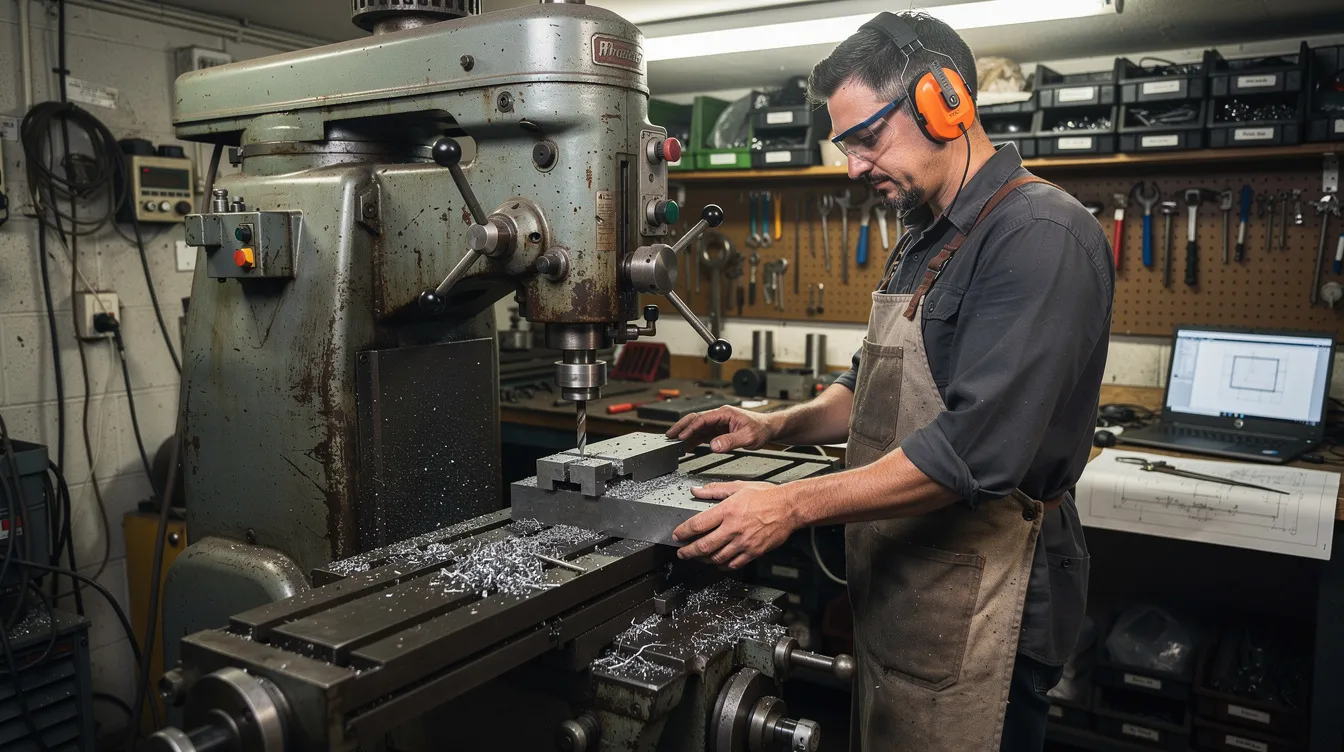
Advantages and Risks of Buying Used Machines with Mudra Loan
Banks will also look at whether buying a used machine really makes business sense for you. Here is what you should weigh:
Advantages:
- Lower project cost and lower EMI compared to new machine – useful when cash flow is tight.
- Faster break-even and better DSCR (Debt Service Coverage Ratio) if machine price is reasonable.
- Availability of imported or discontinued models at lower price that still deliver good output.
- Helpful for startups with smaller ticket Mudra loan for startup requirements.
Risks:
- Hidden repair and maintenance costs if machine condition is poor.
- Difficulty in getting spare parts or service support for very old machines.
- Lower resale value, which also worries bankers in case of default.
- Risk that valuation is inflated or documents are incomplete.
| Factor | New Machine | Used Machine |
|---|---|---|
| Cost | Higher | 40-60% lower |
| EMI | Higher monthly burden | Lower EMI |
| Warranty | Yes (OEM) | Usually none |
| Maintenance Risk | Low initially | Higher |
| Bank Comfort | High | Moderate (needs valuation) |
| Resale Value | Good | Lower |
| Approval Speed | Faster | Slightly slower |
CA Tip: Prefer a used machine when you already know the technology well and have a reliable mechanic. Avoid used machines for critical high-precision production where even small downtime is very costly.
Bank and RBI Perspective on Financing Second-Hand Machinery
Understanding how bankers really think when they see “used machine” in a Mudra application can make or break your proposal.
RBI’s broad stance:
- RBI does not prohibit second-hand machinery finance. It mainly sets prudential norms and asset classification rules.
- Individual banks draft internal credit policies for used machinery based on RBI guidance and their own risk appetite.
Typical bank concerns:
- Real remaining life vs proposed loan tenure – will the machine outlast the loan?
- Difficulty in recovery if machine has low resale value in case of borrower default.
- Possibility that machine is already under finance somewhere else or is stolen property.
How banks mitigate risk:
- Asking for valuation by an approved valuer or empanelled chartered engineer.
- Insisting on invoice and proof of payment through the borrower’s bank account.
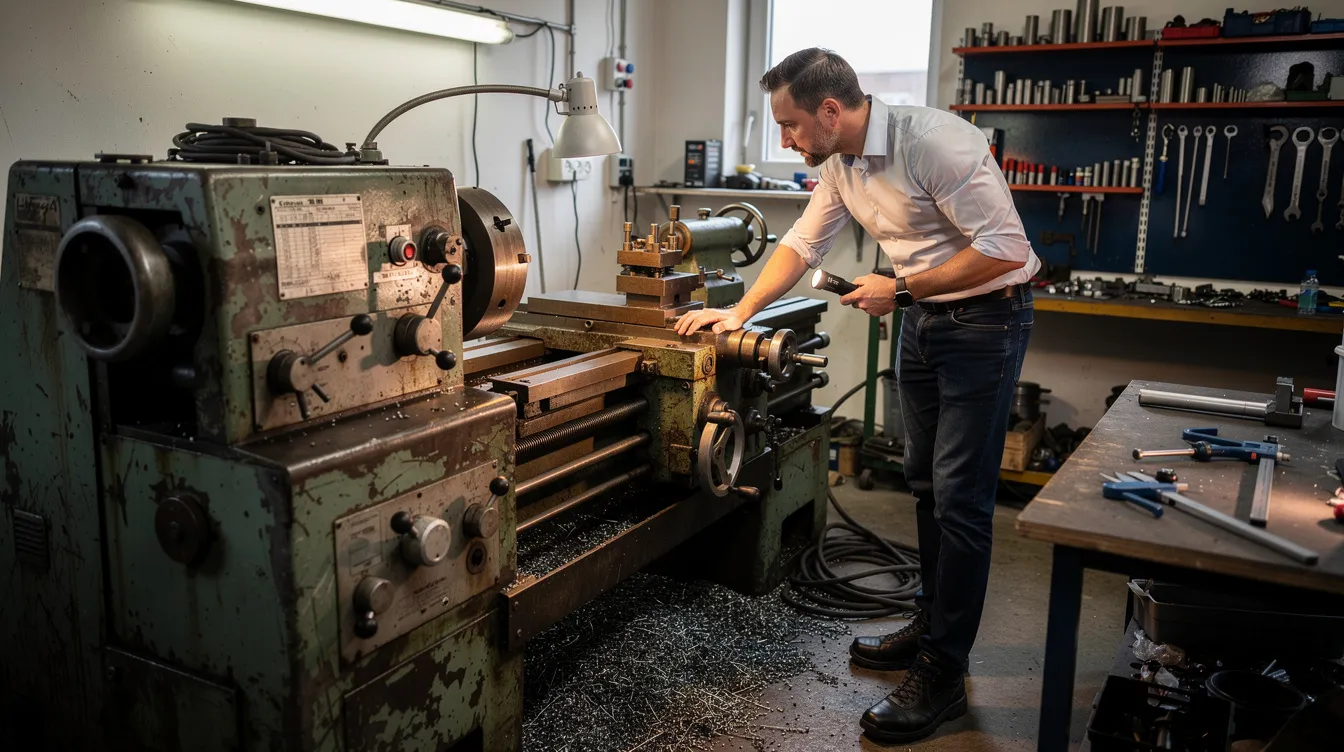
- Physical inspection and photographs of the machine before sanction.
Banker Viewpoint: “When I see a used machine proposal, the first thing I check is whether the borrower is trying to show an inflated price. If the invoice says ₹4 lakh but the valuer says the machine is worth ₹2.5 lakh, I know something is wrong. The second thing I check is – can this person actually pay the EMI from business profits?”
Documents Required for Mudra Loan for Used Machine
Documentation is slightly heavier for used machines than for new ones. This often decides approval. Submit required documents like ID proof and business plan along with machine-specific papers.
Basic KYC and Business Documents:
- Aadhaar, PAN, recent photographs, voter’s id card (as additional ID).
- Address proof of applicant and business premises.
- Existing bank account statement (bank statements) for last 6-12 months.
- Business registration documents – Udyam, GST certificate, Shop & Establishment licence, partnership deed, as applicable.
Financial Documents:
- ITRs for last 1-3 years for bigger loans. For very small shishu loans, ITR may not be insisted upon.
- Basic financial statements – Balance Sheet, Profit & Loss – if available.
- For very small and new units, projected cash flow instead of past results.
Machine-Specific Documents:
- Seller’s invoice or sale agreement with machine details (make, model, year, serial number).
- Previous purchase invoice copy, if seller has it, to prove ownership chain.
- Independent valuation report where bank demands it. A valuation report for the used machine may be requested by the lender.
- Photographs of machine from multiple angles and sometimes video inspection notes.
- A formal quotation or proforma invoice for the used machine is required for financing applications.
- NOC from existing financier if machine was earlier hypothecated to another bank or NBFC.
| Document Category | What to Submit |
|---|---|
| Identity | Aadhaar, PAN, Passport-size photo |
| Address Proof | Utility bill, rent agreement, voter’s ID |
| Business Proof | Udyam, GST, Shop licence, Partnership deed |
| Bank Statements | Last 6-12 months of main business account |
| Financial Statements | ITR, P&L, Balance Sheet (for Kishore/Tarun) |
| Machine Invoice | Seller’s bill with make, model, year, serial no. |
| Valuation Report | From bank-approved engineer |
| Machine Photos | Multiple angles, serial plate close-up |
| Quotation | Proforma invoice or formal quotation from seller |
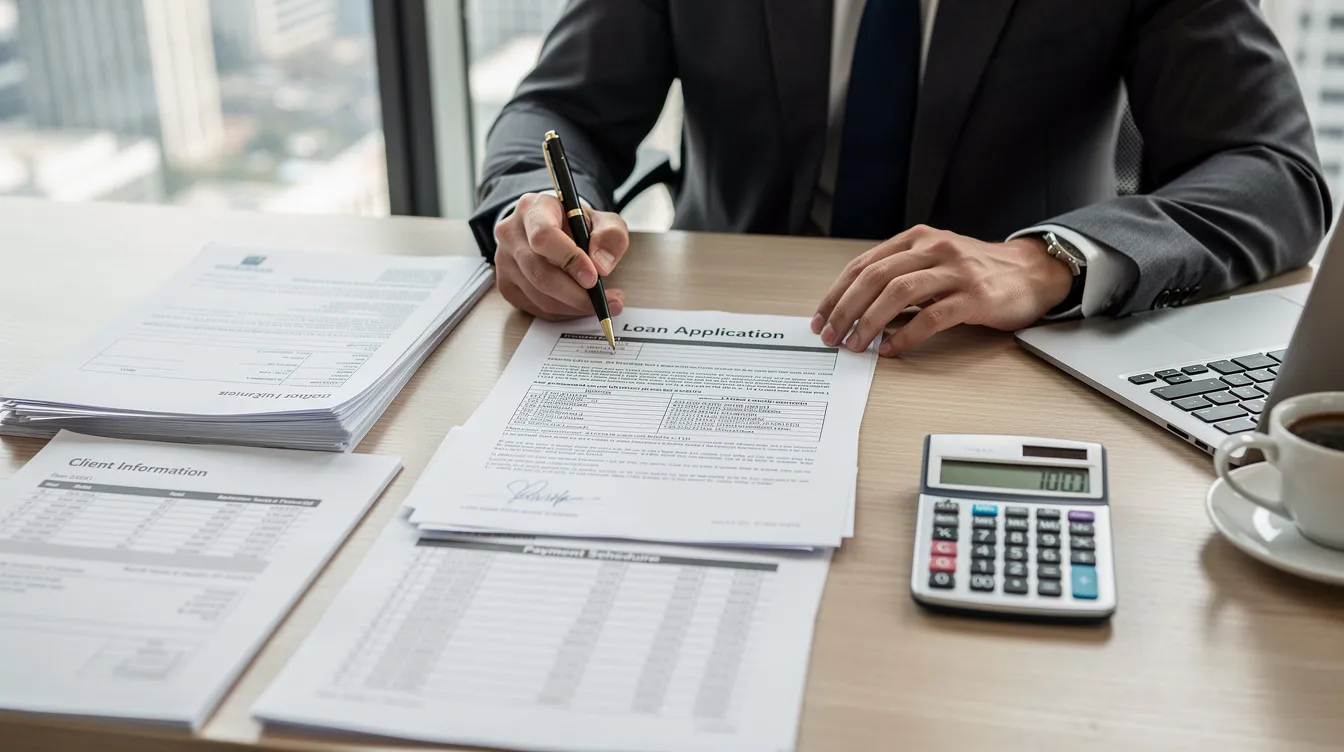
Valuation and Technical Assessment of Used Machinery
Banks insist on valuation for second-hand machines to avoid over-financing and fraud. This is one of the most important steps in a used machine Mudra loan.
Who does the valuation?
- Bank-approved chartered engineer or empanelled valuer.
- Sometimes the OEM (Original Equipment Manufacturer) or authorised dealer gives a technical fitness certificate.
What does the valuation report normally contain?
- Original cost and year of manufacture.
- Depreciated value and present market value.
- Estimated remaining useful life.
- Condition grading – excellent, good, average, or poor.
Guidelines for the borrower:
- Arrange for the machine to be accessible and in working condition on inspection day.
- Keep serial plates visible, manuals handy, and past service records ready.
CA Tip: Never show an artificially high price in the sale invoice to get a higher loan amount. Banks compare the invoice with the valuation report. If the mismatch is big, the application gets rejected immediately. I have seen this happen dozens of times.
Dealer Purchase vs Individual Purchase of Used Machines
Banks generally prefer a clear trail of ownership and payment. How you buy the machine matters.
Buying from a registered dealer:
- Easier documentation – GST invoice, proper machine description, and often a basic warranty.
- Better comfort for banks about machine origin and authenticity.
- Easier to justify price when the dealer specialises in used machinery.
Buying from an individual:
- Requires a strong sale agreement, seller KYC, and proof of earlier purchase.
- Bank may insist on direct payment from borrower’s bank account to seller’s bank account – no cash allowed.
- Higher chances that the bank asks for independent valuation and additional verification.
Example: Two clients approached me for similar used printing machines. Client A bought from a registered dealer in Mumbai – loan sanctioned in 8 days. Client B found a cheaper machine from an individual in a small town but had no proper invoice. His application took 3 weeks and required extra documentation including a notarised sale agreement and two separate valuation opinions.
Importance of Project Report, CMA Data and Financial Projections
For used machine mudra loans above around ₹2-3 lakh, a proper project report and financial projections significantly improve approval chances. This is where many applicants fall short.
What a good project report for used machinery should cover:
- Brief business profile and promoter background.
- Details of used machine – capacity, age, purpose – and total project cost break-up.
- Revenue projections showing how the machine will increase turnover and profit.
- Cost estimates for power, labour, raw materials, rent, and other business activities.
CMA Data in simple language:
CMA Data is just a structured statement of past and projected financials which banks use to assess repayment capacity. For mudra loans, a simplified CMA-style summary is often enough: projected Profit & Loss, Balance Sheet, and Cash Flow.
Simple cash flow example:
| Item | Monthly Amount (₹) |
|---|---|
| Expected additional revenue from machine | 80,000 |
| Raw material cost | 30,000 |
| Labour | 15,000 |
| Power and other expenses | 10,000 |
| Net surplus before EMI | 25,000 |
| Monthly EMI | 8,500 |
| Surplus after EMI | 16,500 |
In this example, DSCR (cash available to pay EMI divided by EMI) = 25,000 / 8,500 = 2.94. Banks are comfortable when this ratio is above 1.3 to 1.5.
If you are looking for business expansion ideas, a used machine can be a cost-effective way to grow your shop business or B2B business. The MSME Mudra Loan Guide provides additional details on how commercial banks and micro finance institutions evaluate such proposals.
Step-by-Step Application Process for Mudra Loan for Used Machine
Here is the practical, step-wise approach for applying – combining both offline and online methods:
Step 1: Finalise your business plan and identify the specific used machine you want – with technical details, expected price, and seller information.
Step 2: Collect KYC documents, business documents, bank statements, and machine-related papers (quotation, sale agreement draft, valuation if available).
Step 3: Prepare a project report and financial projections. Consider taking professional help from ProjectReportBank.com for a bank-ready report.
Step 4: Approach your existing bank branch (SBI, HDFC Bank, Bank of Baroda, etc.) where you maintain your main bank account. Alternatively, you can apply for a mudra loan online – visit the official PM MUDRA website to apply online, or use the Jan Samarth portal.
Step 5: Fill in the bank’s Mudra application form, clearly mentioning “purchase of used machine” in the purpose of loan section. An application number will be generated after submission.
Step 6: Cooperate during bank inspection and valuation. Ensure the seller is available for verification if required.
Step 7: On approval, sign loan documents and hypothecation agreement. Ensure payment to seller happens directly from the bank to the seller’s bank account. You can withdraw money from the sanctioned amount only as per bank procedures.
Mudra loans are processed within a few days if documents are complete. In practice, I’ve seen approvals take 5-15 working days depending on the bank and completeness of the file.
For state-specific guidance on documentation and local bank practices, check our detailed guides for Madhya Pradesh, Maharashtra, Uttar Pradesh, Bihar, Gujarat, Karnataka, Kerala, Tamil Nadu, Telangana, Rajasthan, Odisha, Andhra Pradesh, and West Bengal.
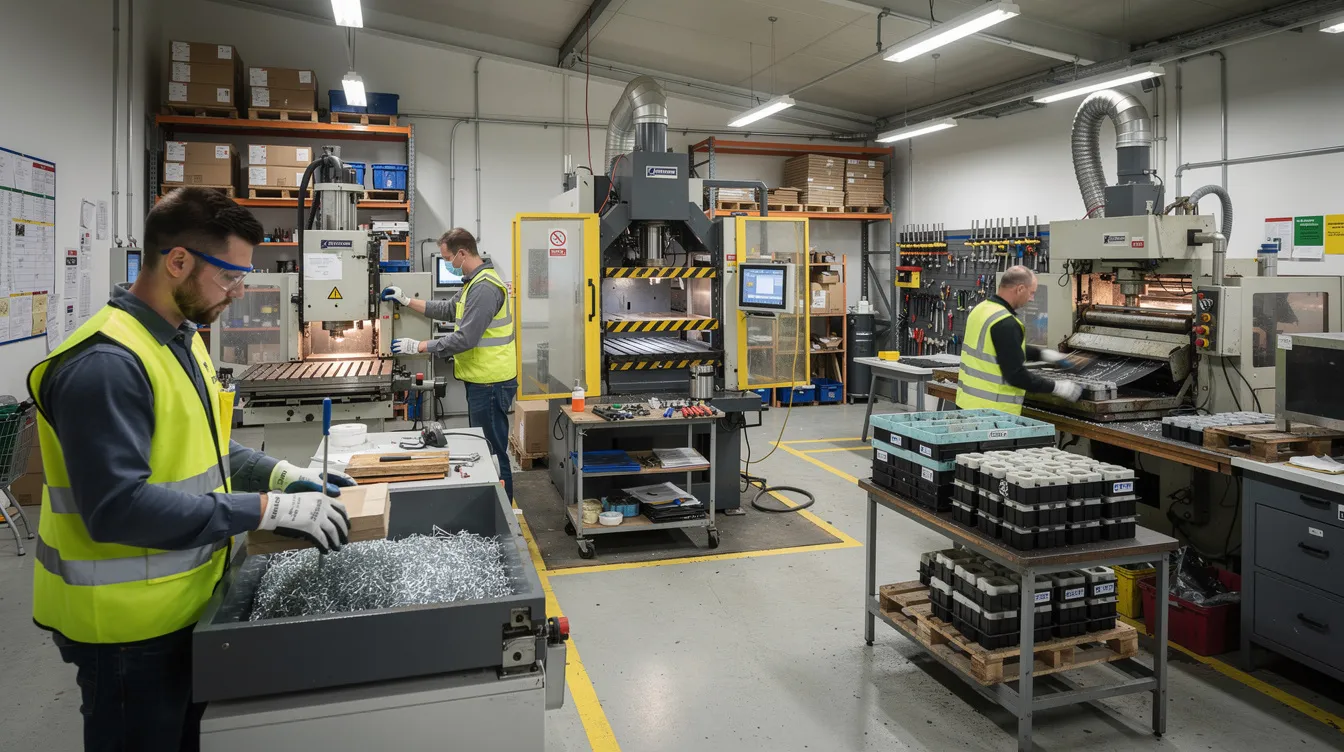
How Banks Assess Repayment Capacity for Used Machinery Loans
Beyond machine value, the bank’s main question is simple: “Will the EMI be paid on time from business profits?”
Basic assessment points:
- Past average monthly credits in your bank account vs the proposed EMI.
- Existing loan EMIs and other fixed obligations.
- Expected additional income from the new machine’s capacity or cost savings.
Analytical tools banks use:
- DSCR – if your monthly surplus after expenses is ₹20,000 and EMI is ₹10,000, your DSCR is 2.0. Banks want at least 1.3.
- Break-even analysis – at what monthly sales level does your business cover all expenses plus EMI?
- Margin – the borrower’s own contribution vs bank finance. For used machines, banks may ask for 20-40% from your side.
Banker Tip: Showing regular turnover in the same bank account for 6-12 months before applying increases lending comfort significantly. Bankers trust bank statements more than any project report.
Numbers you should be ready with:
- ✅ Current monthly sales
- ✅ Expected monthly sales after machine addition
- ✅ Net profit margin percentage
- ✅ Comfortable EMI amount you can pay
Common Mistakes and Reasons for Rejection in Used Machine Mudra Proposals
Many good entrepreneurs get rejected because of avoidable mistakes in paperwork or presentation.
Common mistakes:
- Cash purchase or planning to pay the seller in cash – banks dislike this and may refuse finance.
- No proper sale invoice or unclear machine ownership history.
- Very old machine with low remaining life but high loan tenure request.
- Overstated sales projections with no market study or proof.
- Mixing personal and business transactions in the bank account, making cash flow analysis difficult.
Other rejection causes:
- Incomplete documentation or mismatch between the application form and supporting documents. Read more about reasons for Mudra loan rejection.
- CIBIL issues or existing overdue loans – maintaining a good credit score is essential.
- Business activity not eligible under Mudra (for example, pure agriculture). If your loan was rejected, learn about the rejected Mudra loan appeal process.
⚠️ Warning: Never hide existing loans or cheque bounces from the bank. They will check your credit history from CIBIL and other bureaus anyway. Hiding information only destroys trust.
How to Improve Approval Chances for Used Machine Mudra Loan
Let me turn those common mistakes into actionable solutions:
Practical tips:
- Keep at least 10-25% margin (your own contribution) from your side. Do not expect 100% finance of the used machine cost.
- Route all business receipts and payments through a single main bank account for at least a few months before applying.
- Get a clean, detailed quotation or draft sale invoice with complete machine details and a realistic price.
- If possible, get a prior technical inspection or service report from a mechanic to show machine fitness.
Support documents that create confidence:
- Customer orders or enquiries showing existing demand for your product offerings.
- Photographs of your existing unit, staff, and present machines.
- A simple written business plan explaining how the machine will be used daily to generate income.
Pro Tip: Take help from an experienced CA or a firm like ProjectReportBank.com for preparing your project report, CMA data, and for guidance on answering banker queries effectively. A professionally prepared report provides easy access to information that banks need.
Special Situations: Startups, Households, and Franchise Businesses
Even new businesses and home-based units can seek Mudra Loan for used machines, but they need to be more careful with planning.
For startups:
- Many first-time entrepreneurs use used machinery to reduce initial investment. This is a smart strategy when budget is limited.
- Importance of detailed projections and conservative assumptions cannot be overstated.
- Explore Mudra Loan for Startup for detailed guidance. Also check business ideas for students and business ideas for men for inspiration.
For housewives and home-based entrepreneurs:
- Used sewing machines, small food processing units, or beauty equipment can be financed under Shishu or Kishore categories.
- See our guide on Mudra Loan for Housewives and business ideas for housewives for more ideas.
For franchise or agency businesses:
- Some small franchise models (like printing kiosks, small food counters) may allow used equipment with franchisor consent.
- Check Mudra Loan for Franchise and agency business ideas for detailed guidance.
In all such cases, strong branding and support from a franchisor or mentor adds comfort to the bank. Mudra offers loans to the beneficiary micro unit through its lending partners across the country.
Myths vs Facts About Mudra Loan for Used Machinery
Many borrowers reject the idea themselves due to wrong information. Let me clear up the most common myths:
| Myth | Fact |
|---|---|
| “Mudra loan is allowed only for new machines.” | Many banks finance used machines if documentation and valuation are proper. |
| “No ITR needed for any Mudra loan.” | For larger Kishore and Tarun loans, banks usually ask for ITR and financials. |
| “Interest rate is fixed by government at 19-21%.” | Interest rates vary by bank, borrower profile, and loan category. Rates are deregulated. Banks may offer concessional interest rates to low-risk borrowers. |
| “GST is compulsory for all Mudra loans.” | Smaller loans and unregistered micro businesses may be financed without GST where permissible. |
| “You must buy from a dealer only.” | Individual-to-individual purchase is allowed if payment goes through bank account and documents are proper. |
Need a Professional Mudra Loan Project Report?
As a practicing Chartered Accountant, I have personally helped hundreds of entrepreneurs get their Mudra Loan proposals approved by preparing professional, bank-ready project reports. At ProjectReportBank.com, we specialise in exactly this.
Our services include:
- Customised Mudra Loan Project Reports tailored to your specific used machinery and business model.
- Detailed financial projections, CMA data, DSCR calculation, and working capital assessment.
- Project cost estimation, Profit & Loss Statement, Balance Sheet, and Cash Flow Statement preparation.
- Break-even analysis and loan repayment schedule designed as per bank norms.
Why choose us?
- Online service across India – from Madhya Pradesh and Maharashtra to Uttar Pradesh, Bihar, Andhra Pradesh, Gujarat, Karnataka, Kerala, Odisha, Rajasthan, Tamil Nadu, Telangana, West Bengal, and every other state.
- Reports formatted according to common expectations of public sector and private banks, improving approval chances.
- Support in preparing the correct loan application, document checklist, and answering banker queries.
We provide online Mudra Loan Project Report preparation services across India for entrepreneurs, startups, manufacturers, traders, service businesses, and MSMEs. Our reports are customised according to bank requirements and business needs.
👉 Contact ProjectReportBank.com today to get a professionally prepared Mudra Project Report for your used machine proposal. A strong project report is the single biggest factor that separates approved loans from rejected ones.
About the Author – CA Manish Gugliya
CA Manish Gugliya is a practicing Chartered Accountant with more than 20 years of experience in project finance, Mudra Loan Project Reports, CMA Reports, MSME advisory, and business loan documentation. He has practical experience working with banks and entrepreneurs across manufacturing, trading, service, civil, transport, car, medical, and agency businesses. Through ProjectReportBank.com, he has helped thousands of MSMEs across India prepare customised, bank-ready project reports and financial projections that improve their chances of securing business finance. His guidance is focused on simple explanations, practical banking insights, and customised financial planning for small businesses and micro enterprises.
- Suggested External Authoritative References:
Frequently Asked Questions (FAQ) on Mudra Loan for Used Machine
Can I take Mudra Loan for a used machine I already purchased in cash?
This is very difficult. Banks want to see the payment going from your bank account to the seller’s bank account. If you already paid in cash, there is no banking trail – and the bank will question whether the purchase even happened. In rare cases, if you have a proper invoice, the seller confirms the transaction, and you can show bank withdrawal records matching the amount, some banks may still consider it. But honestly, the chances are low. Always plan your Mudra loan application before purchasing.
What is generally the maximum age of machine acceptable for Mudra loan?
There is no universal rule. Different banks have different internal policies. In my experience, most banks prefer used machines that are not more than 7-10 years old at the time of purchase. For example, Indian Bank’s policy for pre-used tractors specifies a maximum age of 7 years. The key factor is remaining useful life – not just age.
Do banks finance used machines bought from OLX or similar online classifieds?
The source of the listing does not matter as much as the documentation quality. Whether you find the machine on OLX, IndiaMART, or through a personal contact, what matters is: proper sale agreement, seller’s KYC, verifiable ownership history, transparent payment through bank channels, and a valuation report if demanded. Banks do not ban online classified purchases, but they scrutinise individual-to-individual deals more carefully.
Is valuation always compulsory for second-hand machine Mudra loans?
For most medium and large Mudra loans (Kishore and above) involving used machines, banks insist on a valuation by an empanelled valuer to confirm fair price and remaining life. For very small Shishu-level loans (under ₹50,000), some banks may waive formal valuation if the machine is clearly low-value and the branch manager is satisfied after a simple inspection. But as a rule of thumb – assume valuation will be needed and prepare accordingly.
Can I club working capital and used machinery purchase in a single Mudra loan?
Yes, banks often sanction composite Mudra loans that include both machinery cost and some working capital, provided the overall proposal is viable and the total stays within the loan category limit. For example, you could apply for a ₹4 lakh Kishore loan – ₹3 lakh for the used machine and ₹1 lakh for working capital (raw materials, initial expenses). Just make sure your project report clearly shows both components and how the combined loan amount will be used in your income generating business activities.
- Can Bank Reduce Mudra Loan Amount Without Your Consent? Complete Practical Guide (2026)


- What to Do If You Cannot Pay Your Mudra Loan EMI (2026 Guide)

- Can a Bank Refuse a Mudra Loan Because the Target Is Completed? Complete Guide (2026)

- Bank Refused My Mudra Loan Application – What Are My Rights?

- Mudra Loan for Used Vehicles (2026): Eligibility, Documents, Bank Rules & Complete Guide

- Rejected Mudra Loan – What to Do Next? Appeal Process Explained (2026)

- Mudra Loan Project Report Madhya Pradesh – Bank-Ready DPR & CMA Guide

- Project Report for Mudra Loan Maharashtra: Complete Guide for MSMEs, Startups and Small Businesses (2026)
- Mudra Loan Uttar Pradesh: Complete Guide for MSMEs, Startups and Small Businesses (2026)
- Mudra Loan Bihar 2026: Eligibility, Documents, Online Application Process & Project Report Guide
- Jan Samarth Mudra Loan 2026: Complete Guide to Online Application, Eligibility, Documents & Approval Process

- MSME Mudra Loan: Complete Guide for Small Businesses, Startups & Manufacturing Units in India (2026)
- Is the Mudra Loan Subsidy Real or Fake? Get the Facts Here

- Mudra Loan Without CIBIL Score: How to Qualify and Apply

- Mudra Loan for Used Machine (2026 Guide) – Eligibility, Documents, Valuation & Approval Tips