
Key Takeaways
- A dry fruit business in India can start from around ₹25,000–₹50,000 (home-based) to ₹10 lakh+ (full retail shop), with profit margins typically ranging from 15% to 40% depending on the model and product mix.
- Success hinges on a solid dry fruit business plan, correct licences (especially FSSAI and GST), quality sourcing, and smart storage to prevent moisture loss and spoilage.
- Entrepreneurs can choose from multiple business models-home-based packing, retail shop, wholesale distribution, online store, or corporate gifting hampers-each with different investment requirements and profit potential.
- Dry fruits have a long shelf life, reducing wastage risk compared to perishable food items, but proper packaging and inventory rotation remain essential.
- A professionally prepared project report with financial projections helps in securing bank loans and accurately estimating expected profit margin, cash flow, and working capital needs.
Table of Contents
Introduction: Why Start a Dry Fruit Business Now?
India’s dry fruit market is booming. Health conscious consumers are replacing fried snacks with almonds, walnuts, and dates. Urban lifestyles, rising disposable incomes, and the cultural tradition of gifting dry fruits during Diwali, Raksha Bandhan, Eid, and New Year keep demand consistently high. The dry fruit market is growing due to increased health awareness, and online sales of dry fruits are growing rapidly through platforms like BigBasket, Blinkit, and Amazon.
But here is what most new entrepreneurs miss: high sales alone do not make the dried fruit business profitable. The real key is maintaining a healthy expected profit margin through smart sourcing, controlled costs, and efficient operations. This article walks you through how to start a dry fruits business in India-from choosing a business model and writing a plan to licences, cost estimation, and marketing strategies.
Understand the Dry Fruits Market and Business Models
Before investing even ₹50,000, spend time understanding the dry fruits market. India’s dry fruits industry was estimated at over ₹8,500 crore in FY 2025, growing at 8–12% CAGR with projections reaching ₹15,000 crore by 2030. Demand for dry fruits is driven by health-conscious consumers and gifting occasions, making this a business with strong tailwinds.
Here are the main business models to consider:
- Retail dry fruit shop – The most common business model, serving walk in customers in a local market. Investment: ₹2–10 lakh. Gross margin: 25–35%.
- Wholesale dry fruits business – Selling in bulk to retailers, restaurants, bakeries, and confectioners. Higher volume, lower margin per kg (10–20%).
- Home-based repacking – Minimal investment, ideal for housewives or part-time entrepreneurs. Start with ₹25,000–₹50,000.
- Online dry fruit store – An online dry fruit store can reach a wider customer base through e commerce platforms. Higher margins (40–70% gross) but packaging and delivery costs apply.
- Corporate gifting and hampers – Premium boutique shops cater to high-end customers with luxury packaging. Gross margin can touch 50–60% during festivals.
- Seasonal stalls – Seasonal stalls can be set up at festivals for quick returns with lower commitment.
- Import–export – For scaled operations needing IEC and customs compliance.
Identify your target audience early. Are you serving local middle-class families, premium buyers, corporate clients, gyms and dieticians, or bakeries? This choice shapes your entire business strategy, product range, and pricing strategy.
Study competitors in your city or on marketplaces-check their pricing, packaging style, and how they handle competitive pricing and customer trust. Entrepreneurs in smaller states can also explore location-specific guides on low-investment business ideas in Manipur to understand how to align ventures with local demand and government schemes.
Drafting a Practical Dry Fruit Business Plan
A written dry fruit business plan is not just paperwork-it is your roadmap for avoiding costly mistakes and estimating realistic profit margins. A business plan should detail budget, sourcing strategy, pricing, and marketing plan. Starting a dry fruits business requires market research and planning before committing capital.
Key components to include:
- Business overview: Location, model (retail, online, wholesale), and core products
- Market analysis: Local demand, competition, target market size, and trends
- USP: What differentiates you-organic dry fruits, imported nuts, budget-friendly mixed packs, or gift packaging
- Operations plan: Direct sourcing strategy, storage and moisture control, cleaning and grading workflow, and packaging workflow
- Financial projections: Startup investment, working capital for 6–12 months, expected monthly sales, gross and net profit margin, and break-even analysis
For example, a small shop in Pune with ₹5 lakh total setup might target monthly sales of ₹2,50,000. With a 25% gross margin, that gives ₹62,500 gross profit. After rent (₹15,000), staff (₹10,000), and utilities (₹5,000), net profit could be ₹20,000–₹30,000 per month.
A detailed project report with CMA data and financial projections improves your chances of getting bank finance significantly. You can get professionally prepared reports from ProjectReportBank.com.
Investment and Cost Breakdown to Start a Dry Fruit Business
How much investment do you actually need? Starting a dry fruit business can require an investment of ₹50,000 to ₹5 lakh, depending on scale:
One-time setup costs:
- Shop deposit and basic interior (shelves, jars, display counter): ₹50,000–₹2,00,000
- Weighing machine, sealing machine, packaging machines: ₹10,000–₹50,000
- Branding materials (logo, signage, packaging design): ₹5,000–₹20,000
- Licence fees: ₹5,000–₹15,000
Working capital items:
- Inventory of core dry fruits (almonds, cashews, pistachios, walnuts, raisins, dates, figs): The largest expense in a dry fruit business is inventory, costing ₹1 to ₹5 per unit depending on grade
- Packaging materials, labels, gift boxes
- Initial marketing and delivery expenses
If you plan to offer ready-to-heat meals or catering supplies, evaluating an aluminium foil container manufacturing project report can help you understand packaging supply options, costs, and margins.
Sample scenarios:
- A micro home-based dried fruit business: ₹25,000–₹50,000 for inventory, basic tools, and FSSAI registration
- A 150 sq. ft. shop in a Tier-2 city: ₹3–4 lakh stock + ₹1.5–2 lakh setup = ₹5–6 lakh total
- Investment for a dry fruit shop in a metro ranges from ₹2 lakh to ₹10 lakh
Ongoing monthly expenses-rent, electricity, staff salary, transport, online marketplace commissions-directly eat into your net profit margin. A dry fruit business can achieve full ROI in 12 to 18 months with disciplined cost control.
Licences and Registrations Required in India
Compliance is non-negotiable in any food-related business in India. Missing licences can result in penalties, marketplace suspension, and loss of customer trust.
Essential registrations:
- FSSAI licence – Mandatory for all food businesses in India. Basic registration for turnover up to ₹12 lakh/year; state licence for ₹12 lakh to ₹20 crore. The FSSAI license costs between ₹2,000 and ₹5,000, and processing time for FSSAI license is 15–30 days.
- GST registration – Required for dry fruit businesses in India once turnover crosses the threshold (₹20–40 lakh depending on state). Raw nuts attract 5% GST; roasted or processed variants may attract 12%.
- Shop & Establishment licence – Needed for physical outlets. An establishment license from the local labour department is standard.
- Trade license – A trade license may be needed depending on the business setup and municipal area.
Additional registrations based on scale:
- MSME (Udyam) registration for access to government schemes and credit
- Import Export Code (IEC) if planning to import or export dried fruit
- Trademark registration for brand protection
Labelling norms under the standards authority (FSSAI) require expiry date, batch number, net weight, FSSAI number, ingredients, and allergen declarations on every pack. Complete all licences before bulk purchasing or marketing.
Choosing and Sourcing the Right Dry Fruits
Where and how you source dry fruits directly determines whether your dry fruit business is profitable. Reliable suppliers are essential for high quality products that keep customers coming back.
Core products for most Indian markets:
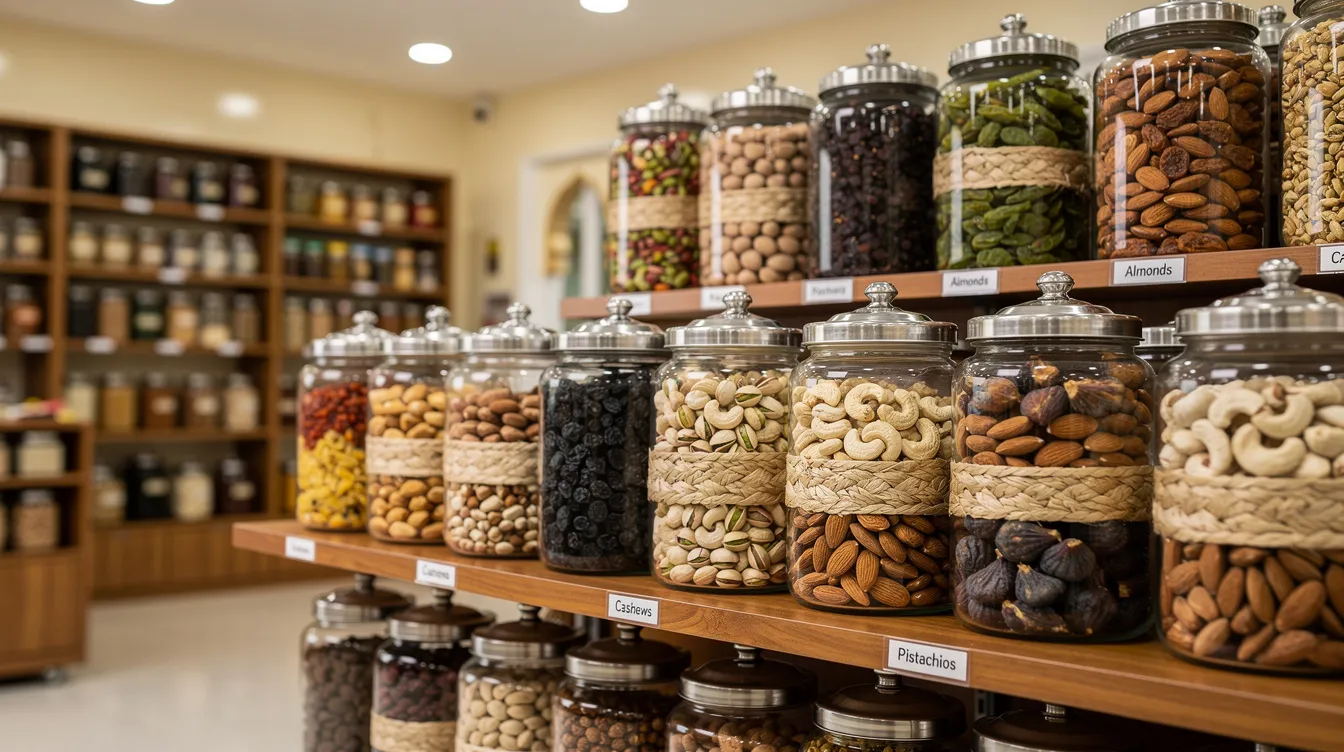
- Almonds, cashews, pistachios, walnuts, raisins, dates, figs, and mixed dry fruit packs. This offered product diversity covers both daily consumption and gifting needs.
How to find suppliers:
- Wholesale markets like Khari Baoli (Delhi) or Vashi APMC (Navi Mumbai) for dried fruit wholesalers
- Direct sourcing from farmers in Kashmir, Maharashtra, and Gujarat-dry fruits from Kashmir are 30-40% cheaper than wholesale markets for items like walnuts and almonds
- Importers for premium pistachios, Iranian dates, and California almonds
- Branded distributors for retailers starting small
Quality checks:
- Samples should be requested before placing large orders-check size, colour, moisture content, taste, and absence of insects
- Compare at least 2–3 supplier quotes before committing
- Buy in bulk during harvest seasons for better pricing
- Organic certification can increase pricing by 3-4 times, but start with standard quality unless your target market specifically demands organic
Balance low price with consistent best quality to protect customer trust and build repeat customers over the long term.
Storage, Packaging, and Competitive Pricing Strategy
Proper storage, attractive packaging, and correctly set prices are what separate a profitable dry fruit business from one that bleeds money. Dry fruits are sensitive to moisture and pests during storage, so this area deserves serious attention.
Storage basics:
- Use airtight containers in cool, dry rooms (15–25°C, humidity below 60%)
- Use moisture absorbers or dehumidifiers in humid cities like Mumbai or Kolkata
- Practice FIFO (first-in, first-out) to reduce spoilage
- Dry fruits have a long shelf life, but poor storage can cause 15–25% stock loss
Packaging options and machines:
- Investing in quality packaging enhances the perceived value and customer trust
- Packaging should be moisture-resistant to maintain product quality
- Vacuum packaging machines preserve freshness by removing air
- Band sealers quickly seal pre-filled pouches for efficiency
- Shrink machines provide polished, tamper-proof packaging
- Automatic pouch packing machines streamline high-volume production
- Creative packaging increases perceived value and attracts customers-a ₹400 gift box can retail at ₹1,000+
Small 100 g and 250 g packs often have a higher per-kg selling price than loose bulk sales, allowing healthy margins even for small sellers. Custom packaging with your brand logo builds recognition over time.
Pricing strategy:
- Calculate total cost per kg: purchase price + wastage + packaging + transport + rent share + labour
- Add a reasonable gross margin (20–35% for retail, 10–20% for wholesale)
- Use premium pricing for gift packs and festival combos
- Apply dynamic pricing during peak seasons (Diwali, New Year) with slightly higher rates and premium packaging
- Monitor nearby competitors’ price boards and online prices for competitive pricing
Marketing and Sales Channels: Offline and Online
Even the best quality dry fruits will not sell without consistent effective marketing. In today’s digital age, you need both an offline presence and a strong online presence to reach your target audience.
Offline methods:
- Shop branding, signboards, and clean in-store displays
- Free sampling of premium or new variants
- Tie-ups with local bakeries, sweet shops, gyms, and corporate offices for regular supply and festive hampers
- Seasonal promotions can significantly boost sales during festivals
Online and digital marketing:
- Create a Google Business Profile so customers find you on Maps
- Post product photos and offers on social media platforms-Instagram, Facebook, and WhatsApp Business
- Social media presence is crucial for online dry fruit shops
- Utilizing digital marketing strategies can effectively target specific demographics interested in health foods
- Effective marketing methods include social media advertising and collaborations with influencers
Selling products through multiple channels:
- Dry fruits are typically sold through various sales channels such as local retail, online marketplaces, and supermarkets
- List on Amazon, Flipkart, JioMart, or build your own online store
- Factor in listing fees, commissions (10–20%), and reliable courier partners
Building customer trust and retention:
- Loyalty discounts for repeat customers
- Small free samples with orders
- Transparent weighing in front of customers
- Ask satisfied buyers to refer friends
- Effective marketing builds customer trust and drives repeat purchases-effective branding is cheaper than constant customer acquisition
Managing Inventory, Profit Margin, and Daily Operations
Careful inventory and cost control is what converts good high sales into actual profit. Quality control is critical for maintaining brand reputation in the dry fruits industry.
Inventory management practices:
- Maintain a stock register or use basic software tracking fast-moving vs. slow-moving items
- Avoid overstocking costly nuts like pistachios-common mistakes in starting a dry fruit business include poor quality control and overstocking
- Plan reorders based on actual demand patterns, not assumptions
- Consider the seasonal demand for dry fruits, particularly during festivals and special occasions
Monitoring profit margin:
- Regularly compare purchase and selling prices for each product
- Adjust prices when wholesale rates change
- Focus on higher-margin items like mixed packs, flavoured nuts, and corporate gifts
- Typical monthly sales can reach ₹2,50,000 with a 25% gross margin in a well-located shop
Daily operational routines:
- Clean shelves, check for insects or moisture, rotate stock
- Basic bookkeeping to track cash flow and working capital requirements
- Use POS systems or simple accounting software for GST-compliant invoices and item-wise sales reports
- Having the right tools for billing and inventory makes a significant role in understanding which dry fruits contribute most to profits
Financing Your Dry Fruits Business and Analysing Profitability
Funding a dry fruit business in India does not always require large capital. Here are typical financing routes:
- Personal savings and family funds for micro setups (₹25,000–₹1,00,000)
- Bank term loans and working capital limits for larger shops-explore Mudra Loans and CGTMSE-backed schemes
- MSME schemes for subsidies and lower interest rates
Banks require a detailed project report before approving any business loan. This report should include sales forecasts, gross and net profit margin estimates, break-even analysis, and DSCR (Debt Service Coverage Ratio). Financial projections built on realistic assumptions-not wishful thinking-make the difference between approval and rejection.
Example calculation: Monthly sales of ₹2,50,000 with a 25% gross margin gives ₹62,500 gross profit. Deducting rent (₹15,000), salary (₹10,000), utilities (₹5,000), packaging (₹5,000), and miscellaneous (₹5,000) leaves a net profit of roughly ₹22,500. Over 12–18 months, this recovers an initial investment of ₹3–5 lakh.
Regular profitability analysis helps you decide when to expand your product range, upgrade packaging, or open an additional outlet. Track your investment requirements against actual returns every quarter.
Common Mistakes to Avoid When Starting a Dry Fruit Business
Many new dry fruits businesses fail not from low market demand but from avoidable mistakes.
Operational errors:
- Buying excess expensive stock at the start-cash gets locked in slow-moving inventory
- Ignoring moisture control, leading to stale smell and spoiled product
- Using low-quality packaging that damages customer trust
- Not displaying FSSAI licence details visibly in the shop
Pricing and financial mistakes:
- Under-pricing to compete with big chains without understanding your own cost structure
- Giving heavy discounts without calculating the impact on gross profit
- Not revising prices when purchase costs increase
- Poor cash flow planning without adequate working capital buffer
Marketing mistakes:
- Relying only on word of mouth with no online marketing effort
- Not collecting customer phone numbers or feedback for repeat sales
- Ignoring the health benefits and nutritional benefits angle in messaging-this is what attracts health conscious consumers choosing healthier lifestyles
Simple preventive actions:
- Start with a focused product range (4–5 core items)
- Review stock weekly using FIFO
- Test-market new products in small quantities before committing
- Keep a basic monthly profit and loss statement-even a simple spreadsheet works

FAQ: Starting a Dry Fruit Business in India
These FAQs address key questions that beginners commonly ask. Each answer includes practical next steps you can take immediately.
How much minimum capital do I need to start a small dry fruit business from home?
Starting a dry fruit business costs between ₹25,000 and ₹50,000 for a home-based model. This covers 4–5 basic dry fruits (almonds, cashews, raisins, dates), simple pouches, a weighing scale, and FSSAI registration. There is no shop rent involved. Starting small lets you test demand among neighbours, offices, and local WhatsApp groups. Once consistent orders flow in, you can scale to a physical shop or an online store. The business size can grow gradually without taking on unnecessary risk.
Can I run a dry fruit business part-time alongside a job?
Yes-home-based or online-only models work well part-time. You can handle order packing in mornings and evenings, manage online sales through your phone, and deliver locally on weekends. A physical retail shop generally needs full-time attention for walk in customers. Start with pre-orders and limited hours, then transition to full-time once your seasonal business cycles and profits become stable enough to replace your salary.
Do I need to sell organic or imported dry fruits to be successful?
Not initially. Organic and imported dry fruits offer higher margins but demand higher investment and more discerning customers. Begin with standard quality Indian almonds, cashews, raisins, and dates. As you understand local purchasing power and customer preferences through market research, gradually introduce organic or imported lines. Remember, organic certification can increase pricing by 3-4 times, but only if your target market is willing to pay that premium.
How long does it usually take for a new dry fruit shop to break even?
A small retail dry fruit business in a decent location typically takes 12–24 months to recover its initial setup cost. This depends on monthly sales volume, rent level, and expense discipline. Your business plan should include at least 6 months of working capital so you are not forced to shut down due to cash flow issues. With long term growth in focus, patience during the initial months pays off.
What simple steps help build customer trust quickly?
Maintain visible cleanliness, use transparent jars so customers can see product quality, weigh products openly in front of buyers, and display your FSSAI number and licences prominently. Offer to replace any packet if quality complaints arise. Consistent quality, honest behaviour, and polite communication are more powerful than heavy advertising for building lasting customer trust with your dry fruit customers. Better pricing alone will not win loyalty-quality and integrity will.
Ready to launch your dry fruit business with confidence? A professionally prepared project report, CMA data, and business plan from ProjectReportBank.com can help you secure bank financing, estimate realistic profits, and avoid costly guesswork. Start planning today.
- Integrated Soybean Crushing, Oil Extraction & Refining Plant Project Report & DPR in India


- Soybean Crushing Plant Investment Risks: Raw Material Prices, Crush Margins & Capacity Utilisation

- Integrated Soybean Crushing Plant Feasibility Study, ROI, IRR & Sensitivity Analysis

- Soybean Oil Processing Plant Financial Projections, CMA Data, DSCR & Bank Finance in India

- Soybean Procurement, Seasonal Inventory & Working Capital Management for Large Crushing Plants

- Soybean Crushing Plant Land, Building, Utilities & Factory Layout Requirements in India

- Soybean Oil & Meal Recovery, Processing Yield, Losses and Profitability

- Soybean Crushing Plant Capacity Planning: 500–5,000 TPD Industrial Projects

- Soybean Processing Plant Machinery, Equipment & Technology Selection in India

- Large-Scale Soybean Crushing Plant Setup Cost, Investment & Project Economics in India

- Pulses, Dal Milling, Besan & Pulse Derivatives Manufacturing Projects in India – DPR, Investment, Plant Setup & Bank Finance

- Pulse Cleaning and Packing Plant DPR – Detailed Project Report for India

- Pulse Grading Standards in India: Quality Control, FSSAI Compliance & Export Requirements

- Automatic Pulse Packing Machine: Machinery, Packaging Formats and Branded Dal Business in India

- Pulse Cleaning Plant Feasibility Study: ROI, IRR, DSCR and Bank Finance
