Key Takeaways
- A roller flour mill feasibility study tests market demand, raw material availability, technical configuration, project cost and financial viability before you commit crores to plant and machinery.
- Even a flour mill project showing accounting profit can fail due to weak cash flow, low capacity utilisation, underestimated working capital or excessive term loan burden.
- A proper feasibility study combines market research, wheat procurement analysis, technical design, detailed financial projections, DSCR analysis and sensitivity testing under adverse scenarios.
- Banks and investors look beyond projected profit to parameters like debt service coverage ratio, working capital cycle, promoter contribution and break-even capacity utilisation.
- Project Report Bank, led by CA Manish Gugliya, prepares customised feasibility studies, DPRs and financial models for roller flour mill projects across India based on actual quotations and local cost structures.
Introduction: Why a Roller Flour Mill Feasibility Study Matters Before You Invest
Setting up a roller flour mill for atta, maida, suji and bran manufacturing in India typically involves investment ranging from ₹4–6 crore for a 25 TPD unit to ₹50–75 crore for a 300 TPD plant. Before land purchase or machinery orders, the promoter must conduct market research and test whether the proposed capacity, product mix and funding structure can withstand real market and cost conditions. The roller flour milling sector processes approximately 12–15% of total wheat consumed in India, and competition is intense. Flour milling operates on high volume and thin margins, where dependence on wheat procurement prices, power cost, bran price fluctuations and working capital locks can quickly erode profitability. Many promoters jump directly to machinery quotations without first preparing a structured roller flour mill feasibility study-often leading to overcapacity or debt stress. This article walks through how to evaluate roller flour mill project viability from a project finance and Chartered Accountant’s perspective.
What Is a Roller Flour Mill Feasibility Study?
A roller flour mill feasibility study is a structured investigation of the technical, commercial and financial viability of a proposed wheat flour manufacturing plant. It is not a generic profitability calculation. A detailed project report provides structured documentation for financing and planning, but the feasibility study usually precedes or integrates with the DPR to freeze strategic decisions-plant capacity (say 80 TPD versus 120 TPD), location, product mix and debt–equity structure.
It helps to distinguish between related documents:
- A pre feasibility study offers an early-stage go or no-go decision with limited detail.
- A detailed feasibility study or techno economic feasibility report provides full technical design, vendor quotations and multi-year financial analysis.
- A DPR or project report is the bank-ready document combining feasibility findings with CMA data and repayment analysis.
- Financial projections and a business plan may overlap with the DPR but serve different purposes for investors versus lenders.
A feasibility report for a roller flour mill should cover both quantitative aspects (cost, revenues, DSCR, IRR) and qualitative aspects (promoter capability, procurement network, marketing reach). At Project Report Bank, the feasibility study and DPR are integrated so that assumptions, project cost and financial analysis remain consistent and bank-ready.
Why Project Viability Should Be Tested Before Setting Up a Flour Mill
Wheat flour is a commodity where minor assumption errors can wipe out margins. Fixed assets-factory building, roller flour machinery, silos, electrical installation, lab and packing line-typically form 60–70% of total cost in medium and large plants. Once these investments and term loans are committed, resizing is extremely difficult.
Key risk factors that make viability testing critical:
- Volatility in wheat prices and bran prices
- Power tariff increases and electricity load availability
- Competition from local chakki mills and large branded players
- Capacity utilisation risk in the first two to three years
- High working capital blockage in wheat stock and receivables
- Sensitivity to government procurement policies and MSP changes
In my experience, mills that became non-performing did so not because the technology was wrong, but because the original flour mill feasibility study was either missing, copied from a generic document, or built on overly optimistic assumptions about wheat cost and sales realisation.
Key Components of Roller Flour Mill Project Viability
A robust roller flour mill feasibility study breaks viability into interconnected components. Market feasibility findings directly shape capacity planning and working capital estimates. Ignoring any single component can distort the entire viability picture.
Market Feasibility: Demand, Competition and Realisation
Feasibility studies assess demand for various flour types-atta, maida, suji, bran-across retail, wholesale and institutional segments. India has around 800 large flour mills, and the installed capacity of flour mills exceeds 21 million metric tons. Flour mills convert about 10.5 million tons of wheat annually. Market demand for flour is consistent across urban and rural areas, with the packaged wheat flour market in India growing at 19% CAGR.
Market analysis should assess demand for wheat flour including target customers, competitors within a 150–200 km radius, and seasonal fluctuations. The critical concept is realisation per tonne of wheat milled-the weighted revenue from atta, maida, suji and bran combined. A drop of even ₹50–100 per tonne in atta or bran prices can materially alter the contribution margin of a 100 TPD mill. Market demand analysis should include expected growth alongside competitive intensity, because feasibility depends on achievable selling price and distribution capability, not just market size. A feasibility study evaluates market growth potential alongside current demand.
Raw Material Feasibility: Wheat Procurement and Price Risk
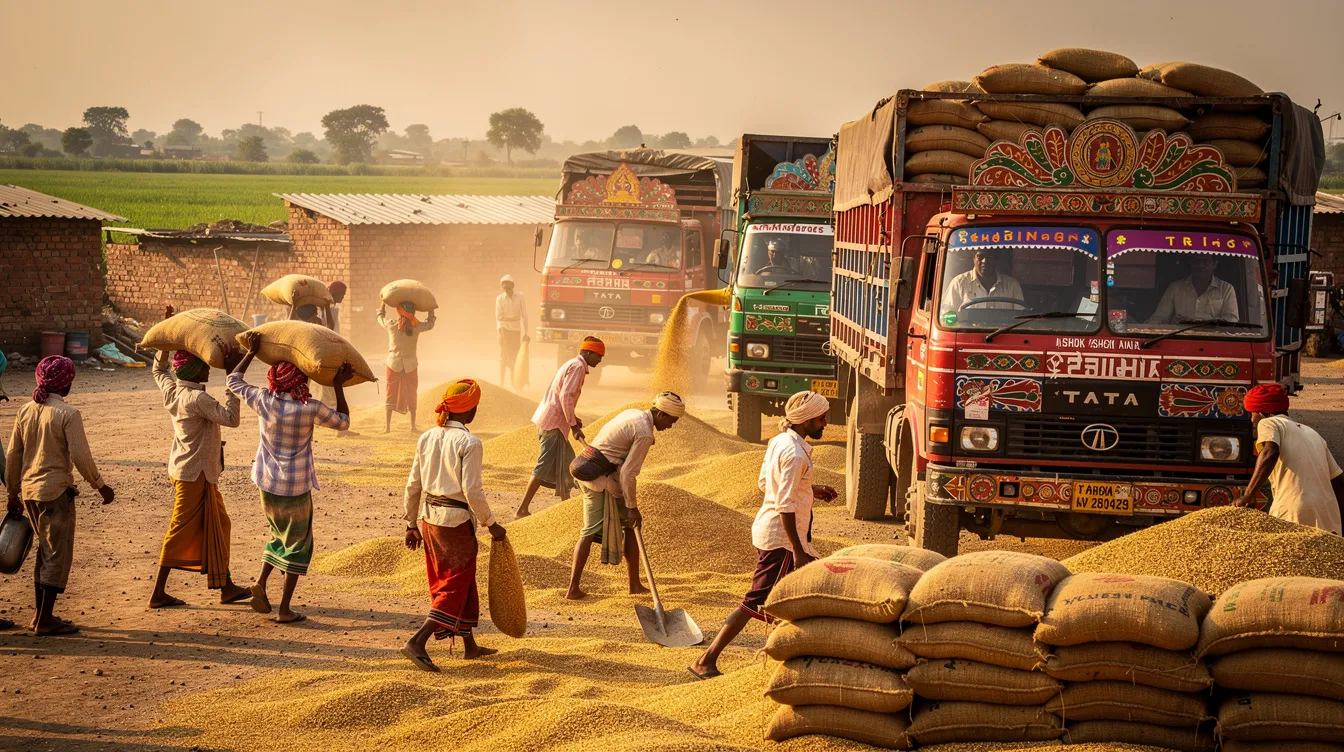
Raw material assessment analyzes wheat availability and procurement logistics across seasons. The Rabi harvest concentrates supply, while lean months require procurement from mandis at potentially higher cost over a radius of 50–250 km. Wheat wholesale prices in India have been around ₹2,800–3,000 per quintal in recent periods, but open-market prices vary significantly with MSP, FCI procurement and export policy changes.
Quality parameters-moisture content, protein, gluten strength-directly affect extraction rates and roller flour mill profitability. Most mills hold 15–30 days of wheat stock, which directly affects working capital requirement and interest cost. A mere assumption of stable wheat price at a fixed rate is insufficient; sensitivity to a 5–10% price increase must be tested in the feasibility analysis.
Technical Feasibility: Process, Machinery and Extraction
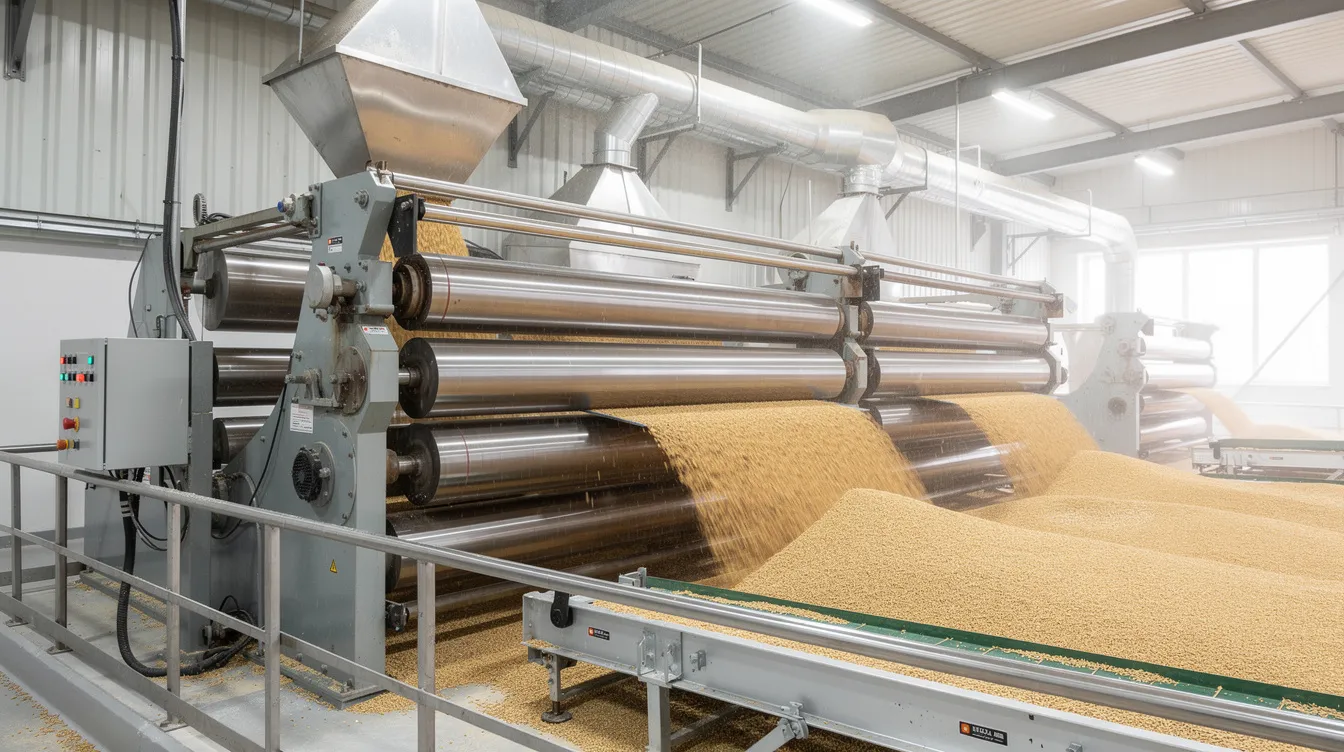
The roller flour milling process involves cleaning, conditioning, grinding through multiple roller passes, sifting, grading and packing. Technical analysis determines plant capacity and selects appropriate milling machinery. Readers can study the detailed process in the Roller Flour Milling Process & Flow Chart for step-by-step understanding.
Realistic extraction rates in Indian conditions are typically 72–76% for atta, with the balance being bran and wheat germ. Machinery selection impacts flour extraction rates and energy efficiency-power consumption runs approximately 45–55 kWh per tonne of wheat processed. Electricity demand for rolling mills requires detailed calculations, as this contributes roughly ₹315–440 per tonne to processing cost. Quality control in milling needs laboratory testing and hygienic practices. Maintenance, spare parts availability and downtime risk are key technical factors. For capital cost details, refer to Roller Flour Mill Machinery & Equipment Cost.
Capacity Feasibility: Matching TPD with Market and Finance
Production scale is typically measured in tons per day. Most mills have an average capacity of 70 tons per day, and annual production capacity depends on operating days (typically 300–330 per year) minus downtime. Practical capacity ranges are:
| Category | TPD Range | Typical Use Case |
|---|---|---|
| Small | 60–80 TPD | Local markets, trading-linked |
| Medium | 80–120 TPD | Regional distribution |
| Large | 150–250+ TPD | Multi-state, institutional |
Sometimes a smaller but fully utilised 80 TPD plant is more viable than an underutilised 200 TPD plant. In Punjab, approximately 70 roller flour mills operate at only about 50% capacity utilisation despite total installed capacity of ~6,400 tonnes per day. Feasibility studies should not assume 90–100% capacity utilisation in Year 1; instead, show ramp-up-50–60% in Year 1, 65–75% in Year 2, 80–85% from Year 3 onwards. For detailed sizing guidance, see Roller Flour Mill Capacity Planning – TPD & Production Capacity.
Location and Infrastructure Feasibility
Location evaluation considers accessibility to transportation and proximity to raw materials-wheat-growing districts in Punjab, Haryana, Madhya Pradesh, Rajasthan and Uttar Pradesh. Being 200–300 km from wheat sources can materially change viability compared to being within a wheat belt.
Infrastructure needs include adequate land, reliable 3-phase power, water for conditioning and storage facilities. Typical space requirements vary:
- Large-scale flour mills require over 7,000 square meters
- Medium-scale mills need 4,000 to 7,000 square meters
- Small-scale mills operate in 3,000 to 4,000 square meters
Operational workflows should integrate storage solutions for raw and finished products. Regulatory compliance involves securing necessary food safety and operational licenses including FSSAI, factory licence and pollution control. For layout planning, refer to Roller Flour Mill Land, Building & Plant Layout Requirements.
Project Cost and Capital Requirement for a Roller Flour Mill
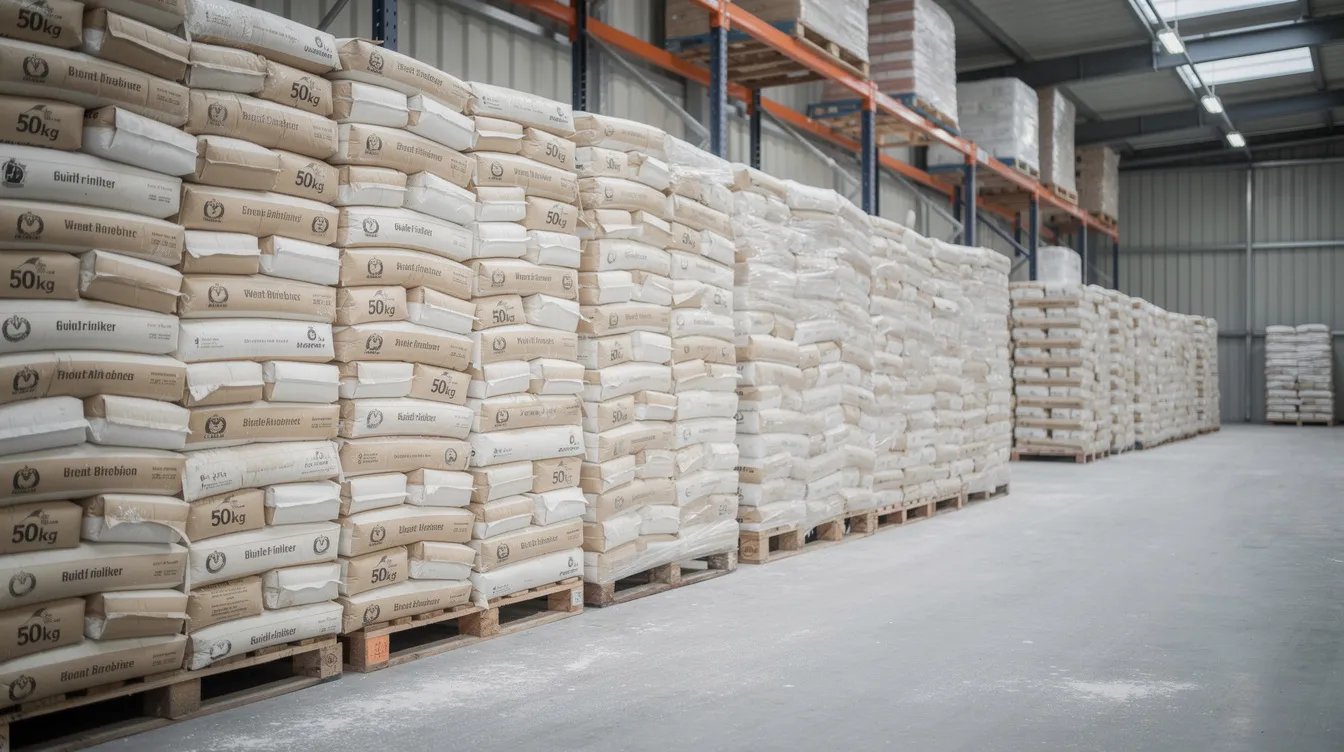
Any flour mill feasibility study must translate technical configuration into a realistic estimate of total cost and capital requirement. Starting a small-scale flour mill costs around ₹2 crore, while large-scale flour mills require investments over ₹18 crore. Cost assessments include evaluating capital and operating costs for profitability.
Major project cost components include land, site development, building and civil construction, plant and machinery, electrical installation, laboratory equipment, vehicles, preliminary and pre-operative expenses, interest during construction and contingency provision of 3–5%. Working capital margin must be included in total project cost, not treated as an afterthought.
For indicative cost ranges, see Roller Flour Mill Setup Cost in India. To understand how total cost is matched with term loan and promoter contribution, refer to Roller Flour Mill Project Cost & Means of Finance. The feasibility should always be done on the promoter’s actual project parameters-land rate in a specific district, building style, machinery supplier quotations-not on generic assumptions from older project reports.
Financial Feasibility of a Roller Flour Mill
Roller flour mill financial feasibility goes beyond a projected profit and loss account. Financial evaluation includes capital expenditure, operating costs, and revenue projections integrated with capacity ramp-up assumptions over 7–10 years. The financial model should include sales volume by product linked to wheat input and extraction rates, average realisation per tonne, raw materials consumption, power and fuel expenses, employee costs, repairs, packing material, freight and administrative overheads.
Gross contribution per tonne of wheat milled must cover fixed operating costs, interest and depreciation for the project to be viable. From a project finance perspective, lenders look at cash accruals and cash flow available for debt servicing, not only accounting profit. Multi-year projections should capture capacity utilisation build-up, periodic wage and power cost escalation, and the term loan repayment schedule. For structuring these projections, refer to Roller Flour Mill Financial Projections & Working Capital.
Working Capital Requirement and Its Impact on Viability
Flour mills are working-capital intensive. Major components include wheat inventory (15–30 days of consumption), finished goods stock, packing material, trade receivables from distributors and institutional buyers, and operating expenses. For an 80–100 TPD roller flour mill, working capital requirement might range from ₹3–6 crore depending on credit terms and inventory levels.
The working capital cycle-days from purchasing wheat to collecting cash-directly determines liquidity. Underestimation of current assets and working capital can create serious stress even when the flour mill appears profitable on paper. Mills may run at lower capacity, delay wheat payments, or default on term loan instalments because cash is tied up in stock and debtors.
Key Financial Ratios for Roller Flour Mill Project Viability
After building financial projections, a roller flour mill feasibility study should summarise viability through key ratios. Financial indicators include EBITDA, EBIT, and project cash flow metrics. No single ratio should be used in isolation; viability assessment should interpret all indicators collectively along with qualitative project risks.
Debt Service Coverage Ratio (DSCR)
DSCR measures cash available for servicing debt (principal plus interest) relative to total debt servicing obligations. Lenders examine both year-wise DSCR and average DSCR over the loan tenure, with special attention to initial years when capacity utilisation is lower. Sample DPRs show DSCR values around 1.81–1.92 under base-case assumptions. A small reduction in contribution per tonne or slower capacity ramp-up can sharply reduce DSCR for a roller flour mill.
Break-Even Point and Break-Even Capacity Utilisation
Operating break-even is the production level at which contribution covers all fixed operating costs. For roller flour mills, break-even utilisation typically falls around 48–55% of installed capacity in sample feasibility reports. Crossing operating break-even does not automatically mean the project can service its term loan; DSCR analysis is still required.
Return on Investment (ROI)
ROI expresses average annual profit or cash accrual as a percentage of total capital employed. Flour mills can achieve ROI within the first two years under favourable conditions, but ROI does not capture timing of cash flows or project risk. A roller flour mill ROI only marginally higher than the borrowing interest rate may not justify the investment risk.
Internal Rate of Return (IRR)
IRR is the discount rate at which the project’s net present value equals zero. It considers time value of money and is widely used in investment appraisals. However, optimistic assumptions on capacity utilisation, selling price or wheat cost can artificially inflate IRR. For long-life assets like mills, IRR must be considered alongside sensitivity analysis results.
Payback Period
Payback period measures the time for cumulative post-tax cash accruals to recover the initial investment. In sectors with commodity price risk like wheat flour milling, promoters prefer shorter payback periods. Smaller mills (15–50 TPD) may recover investment in 3.7–5.5 years under good utilisation. Payback ignores cash flows after the payback point and the time value of money.
Interest Coverage Ratio
Interest coverage ratio-EBIT divided by interest expense-indicates how comfortably the project can pay interest. For roller flour mills with substantial term loans and working capital borrowings, low coverage signals vulnerability. Higher power tariffs or wheat prices can reduce EBIT and weaken interest coverage even when sales volumes remain stable.
Sensitivity Analysis for Roller Flour Mill Projects
A sound roller flour mill feasibility study must test what happens if key assumptions change adversely. Sensitivity analysis tests the economic viability under varying assumptions. Key variables to test include:
- Wheat procurement price increasing by 5–10%
- Atta or maida realisation falling by 3–5%
- Capacity utilisation remaining 10–15 percentage points below plan
- Power tariff increases
- Working capital cycle stretching due to delayed payments
- Project implementation delay increasing interest during construction
DSCR is often most sensitive to three parameters: contribution per tonne, capacity utilisation and working capital interest cost. A project that appears viable in the base case can become marginal under a modest wheat price increase combined with slower ramp-up.
Product Mix and Its Impact on Roller Flour Mill Profitability
Roller flour mill profitability is driven by the entire wheat basket-atta, maida, suji, coarse flour, bran and other wheat products-rather than any single product’s price. Extracting flour from wheat yields various products including maida and atta, each with different realisations and credit periods. By-product management can significantly affect overall profitability in milling operations.
The feasibility study should model different product mix scenarios. Value-added branded atta or fortified flour may improve realisation but requires higher marketing, packaging and distribution costs. Institutional sales of maida often involve longer payment cycles, stretching working capital.
Capacity Utilisation and Break-Even Risk in Flour Mills
There is a critical distinction between installed capacity and actual production. The industry utilisation average for roller flour mills in India hovers around 60%. High fixed costs-depreciation, salaries, minimum power demand charges, financial charges and administrative expenses-make low capacity utilisation particularly dangerous.
Feasibility analysis should calculate both operating break-even utilisation and the minimum utilisation required for comfortable DSCR. A 120 TPD plant running perpetually at 50% utilisation may generate accounting profit but still struggle with loan repayments and working capital interest.
Debt–Equity Structure and Means of Finance for a Roller Flour Mill
Even a technically sound flour mill can become unviable if financed with an inappropriate debt–equity structure. Typical means of finance include promoter contribution (equity and unsecured loans), term loan from banks, subsidies under food processing schemes, and internal accruals for expansion.
Excessive term loan relative to promoter capital increases the instalment burden and reduces DSCR headroom. Repayment period and moratorium should be aligned with capacity build-up; very short repayment tenures strain cash flow in initial years. Working capital finance must be planned alongside term loan, with banks expecting promoters to bring a minimum margin. At Project Report Bank, we typically analyse alternative financing structures to identify an option that balances lender comfort with project viability.
Can a Profitable Flour Mill Still Become Financially Unviable?
Yes, and this is a frequent issue in project finance practice. A flour mill project can show accounting profit while facing cash flow stress due to high term loan EMI during early years, inadequate working capital limits, slow realisation from institutional customers, or wheat price spikes not immediately passed on. The difference between accounting profit and actual cash available for servicing debt lies in inventory build-up, receivables and repayment obligations. A well-prepared viability analysis should identify such risks before establishing the plant and propose conservative scenarios or restructured finance plans.
How Banks Examine Roller Flour Mill Project Viability
Banks assess both the project and the promoter. Lenders generally review promoter background and experience in grain trading, detailed project cost with realistic quotations, evidence of promoter contribution, projected profitability and cash accruals, DSCR over the loan tenure, working capital assessment and available security. Banks verify whether assumptions align with recent market data for the specific region. They also examine implementation risk, required licences and compliance.
A professionally prepared roller flour mill feasibility report can significantly improve the credibility of the loan proposal but does not guarantee sanction-internal credit parameters of banks still apply. The document should help professionals involved in the decision making process reach well-informed conclusions.
Common Mistakes in Flour Mill Feasibility Studies
Many flour mill project reports fail due to recurrent errors rather than industry unviability:
- Copying generic sample project report numbers from a PDF found online without adjusting for local wheat prices, power tariffs and land costs
- Assuming very high capacity utilisation from Year 1 without marketing groundwork
- Underestimating working capital and ignoring credit terms for institutional customers
- Neglecting power cost escalation or relying on unreliable supply without backup
- Ignoring transportation cost in procurement and distribution
- Not performing sensitivity analysis on wheat price and selling price
- Assuming uniform extraction rates regardless of wheat quality variations
- Overlooking maintenance downtime and spare-part lead time
These mistakes result in overstated IRR and DSCR, which mislead both promoters and investors. Engaging experienced professionals and suppliers for a customised roller flour mill feasibility study reduces these risks substantially. Few Indian major players and Indian major players in the food processing and industrial world understand that the date of cost assumptions matters-a report based on 2020 data is unreliable for a 2025–2026 investment decision.
FAQ – Roller Flour Mill Feasibility Study & Viability
The following questions address practical concerns many promoters raise while planning a roller flour mill project in India.
What is the minimum economical capacity for a new roller flour mill in India?
Economic capacity depends on location and market access, but in current conditions most new projects consider 60–80 TPD as a practical lower range for a stand-alone roller flour mill. Very small capacities may struggle to cover fixed costs unless strongly integrated with an existing trading business. The country’s mills process 12–15% of total wheat consumed, and the competitive landscape demands sufficient scale to invest in quality and distribution.
How long does a proper roller flour mill feasibility study typically take?
For a well-defined project where capacity, location and broad configuration are decided, a professional feasibility study with detailed financial modelling typically takes around 3–5 weeks, including data collection, market checks, costing and discussions with the promoter. Complex or multi-location projects can take longer.
Can an existing chakki atta unit upgrade to a roller flour mill, and how does that affect feasibility?
Many promoters upgrade from chakki to roller mill to increase capacity and supply maida and suji. The feasibility study should consider the existing customer base, land availability for expansion, potential to store and utilise by-products like bran, and the incremental working capital and term loan required for the new equipment. The growth potential of the packaged wheat flour market-growing at 19% CAGR-makes this a viable path for many businesses in the country looking to convert from unorganised to organised processing.
How often should financial projections be revised after the mill starts operations?
Projections should be revisited at least annually, or earlier if major changes occur in wheat prices, power tariffs, selling prices or capacity utilisation. Updated details help adjust future budgets, term-loan repayment planning and working capital limits. This is essential research that keeps the business aligned with actual market conditions.
Does Project Report Bank provide customised feasibility studies and DPRs for roller flour mills?
Yes. Project Report Bank, led by CA Manish Gugliya, prepares project-specific feasibility studies, DPRs, CMA data and financial models for roller flour mill and wheat processing projects across India. These are based on actual quotations, local cost structures and realistic commercial assumptions-not generic templates.