Key Takeaways
- Roller flour mill capacity refers to the designed wheat input per day, expressed in TPD (Tonnes Per Day), and actual flour output is always lower than wheat input due to bran, screenings and process losses.
- The typical capacity of roller flour mills is measured in tonnes per day (TPD) or kilograms per hour, with Indian commercial plants commonly ranging from 30 TPD to 300 TPD and above.
- Installed capacity and actual production differ significantly – a 100 TPD roller flour mill may process only 60–80 tonnes daily depending on capacity utilisation, downtime and market demand.
- TPD is calculated as hourly milling throughput multiplied by effective operating hours, not simply 24 hours.
- Correct capacity selection – whether 50 TPD, 100 TPD or 200 TPD – is a strategic decision affecting investment, wheat requirement, working capital, machinery, storage and long-term profitability, and should be evaluated before preparing a DPR or business plan.
This article is written from Project Report Bank’s professional advisory perspective, aimed at helping promoters plan realistic roller flour mill capacity, wheat procurement and expansion strategy.
What Is Roller Flour Mill Capacity?
In commercial flour mills, “roller flour mill capacity” refers primarily to the designed maximum wheat input per day, expressed as flour mill capacity in TPD. This number describes how much wheat the plant is engineered to receive, clean, condition, mill and convert into finished products under specified operating conditions.
However, several related but distinct capacity definitions exist, and promoters must understand the differences:
- Wheat input capacity – maximum tonnes of raw wheat per day the plant can accept (e.g. 100 tonnes).
- Milling or throughput capacity – tonnes of wheat the roller mill plant can actually grind per hour.
- Finished product output – combined weight of atta, maida, suji and bran produced.
- Installed or nameplate capacity – what the machinery and layout are designed for under optimal conditions.
- Achievable production capacity – what the plant can generally produce under normal operating conditions.
- Saleable production – net quantity after process loss, quality rejections and moisture variation.
These figures are not identical. A 100 TPD roller flour mill plant may produce only 94–97 tonnes of combined products from 100 tonnes of wheat, as the balance goes to screenings and unavoidable process losses.
For business planning and DPR purposes, promoters should separately define maximum rated wheat intake per day, realistic average production per operating day, and target saleable output volumes of each product. This conceptual clarity is essential before any flour mill capacity calculation, financial modelling or sales projection.
What Does TPD Mean in a Roller Flour Mill?
TPD stands for Tonnes Per Day. In a roller flour mill, TPD normally refers to the maximum tonnes of wheat the mill is designed to process in one day under specified conditions. Flour milling plants are available in various configurations and capacities, and TPD provides a standardised way to compare them.
A 100 TPD roller flour mill, for instance, is designed to process approximately 100 tonnes of wheat in 24 hours – roughly 4.2 tonnes per hour if continuous operation is assumed. In practice, effective milling hours will be lower due to cleaning, stoppages and maintenance.
The basic formula is straightforward:
Daily Wheat Processing Capacity (TPD) = Hourly Milling Capacity (tonnes/hour) × Effective Operating Hours per Day
To convert daily to annual capacity:
Annual Rated Capacity (tonnes/year) = Daily Rated Capacity (TPD) × Planned Operating Days per Year
For example, 100 TPD × 300 days = 30,000 tonnes rated annual wheat milling capacity. However, actual annual production must be based on realistic roller flour mill capacity utilisation – typically 60–80% – rather than assuming 100% utilisation for all 365 days. This distinction is critical for accurate project feasibility and bank finance appraisal.
Common Roller Flour Mill Capacities in India
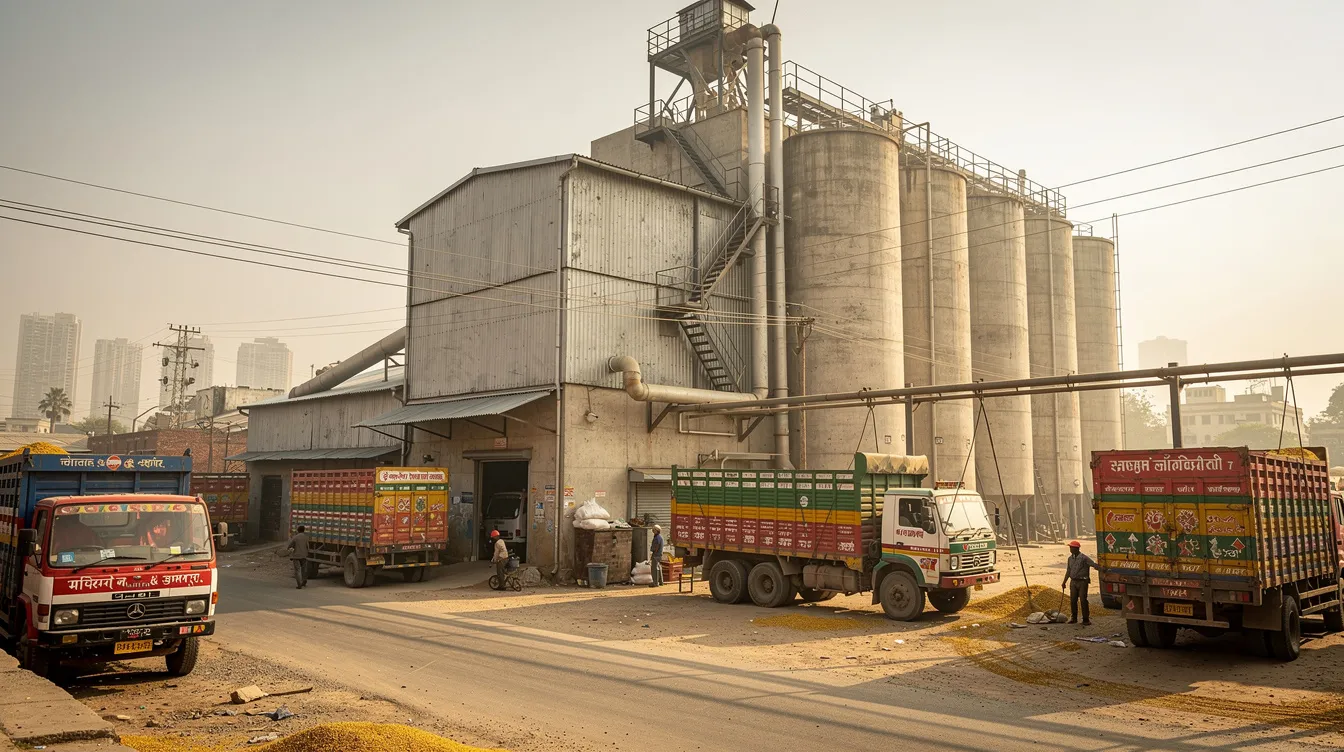
Indian commercial flour mills are classified by flour mill capacity in TPD. Roller flour mills vary in capacity from small units processing a few hundred kilograms per hour to large complexes handling over 500 TPD. Mini or small-scale commercial roller mills may have a capacity of 10 to 20 TPD, medium-scale mills range from 30 to 80 TPD, large-scale industrial roller mills cover 100 to 300 TPD, and mega-scale automated mills can reach 500 to over 3,000 TPD.
| Plant Capacity | Approx. Wheat Processing | Typical Positioning |
|---|---|---|
| 30 TPD | ~30 tonnes/day | Small commercial unit serving district-level markets |
| 50 TPD | ~50 tonnes/day | Small to medium unit with mixed atta and maida output |
| 100 TPD | ~100 tonnes/day | Medium industrial flour mill serving multiple districts |
| 150 TPD | ~150 tonnes/day | Medium-large plant with regional brand distribution |
| 200 TPD | ~200 tonnes/day | Large regional roller flour mill plant |
| 300 TPD+ | 300+ tonnes/day | Large industrial operation; a roller flour mill can have a capacity of 300 MT/day |
These ranges are indicative. In some markets a 50 TPD roller flour mill is considered medium, while in metro clusters an atta chakki unit at 200–300 TPD may be common. Capacity choice must align with local wheat availability, customer base, and the promoter’s experience level.
How to Calculate Roller Flour Mill Production Capacity
Flour mill capacity calculation requires breaking the problem into hourly capacity, operating hours, number of shifts and operating days per year. The formulas shown here are for conceptual understanding; actual DPRs refine these based on project-specific plant design, product mix and operating assumptions.
Hourly Capacity
Hourly capacity is the tonnes of wheat the roller flour mill can process per hour, determined by cleaning, conditioning and milling sections combined. Machinery suppliers often specify output in kg hr or TPH (tonnes per hour). For example, a line rated at 5 TPH corresponds to 120 TPD if operated 24 hours without stoppage.
Roller flour mill capacity is influenced by roll size and length, number of rolls, and roll gap. Roller speed and differential settings also influence the milling throughput. A machine rated at 4 tonnes/hour yields a theoretical daily capacity of 4 × 24 = 96 TPD, but effective capacity will be lower – for instance, 4 × 20 = 80 TPD at 20 operating hours. Promoters should focus on effective hourly throughput under realistic conditions when planning business volume.
Operating Hours Per Day
Even a three-shift, 24-hour flour mill does not achieve 24 productive milling hours. Deductions arise from:
- Wheat receiving and sampling
- Cleaning, changeover and sanitation
- Planned maintenance and lubrication
- Power interruptions
- Housekeeping and food-safety compliance
A practical planning band for continuous industrial flour mills is 20–22 effective hours per 24-hour day. For example, a roller flour mill rated at 5 TPH with 21 effective hours yields a daily wheat milling capacity of 5 × 21 = 105 TPD rated, though commercial production may target only 60–85% of this depending on demand and operating maturity.
Number of Shifts
Industrial flour mill plants normally run in one shift (8 hours), two shifts (16 hours) or three shifts (24 hours with breaks). Shift planning directly impacts achievable TPD:
- Machinery capacity 4 TPH, one 8-hour shift → 32 TPD
- Two shifts (16 effective hours) → 64 TPD
- Three shifts (21 effective hours after losses) → 84 TPD
A new 50 TPD flour mill may begin with one or two shifts, while established 150–200 TPD plants often run two or three shifts to utilise fixed assets. Shift planning should match expected flour demand, manpower availability and power tariffs.
Operating Days Per Year
Annual roller flour mill production capacity should assume realistic operating days:
- Weekly offs or staggered holidays
- Annual maintenance shutdowns
- Lean season or wheat procurement constraints
- Unplanned disturbances such as monsoon logistics
Typical planning bands in DPRs for Indian wheat flour mills are 270–300 operating days per year for moderate assumptions, and up to 330 days for well-established mills. Project Report Bank generally bases annual capacity calculations on realistic utilisation ramp-up over the first three to five years rather than assuming full utilisation from day one.
Installed Capacity vs Actual Production Capacity
Installed capacity – whether 100 TPD, 150 TPD or 200 TPD – describes what the machinery is designed to handle. Actual production capacity is what the mill normally achieves within real-life constraints. The formula is simple:
Capacity Utilisation (%) = Actual Wheat Processed ÷ Installed Wheat Processing Capacity × 100
For a 100 TPD flour mill operating 300 days per year:
| Capacity Utilisation | Annual Wheat Processed |
|---|---|
| 60% | 18,000 tonnes |
| 70% | 21,000 tonnes |
| 80% | 24,000 tonnes |
| 90% | 27,000 tonnes |
New projects should avoid assuming 100% utilisation because of the time needed to build a distributor and institutional customer base, wheat price fluctuations, power reliability issues, manpower learning curves, and working capital constraints. Banks examining CMA Data and DPRs typically test DSCR and repayment capacity under realistic utilisation scenarios.
Wheat Input vs Finished Product Output
One hundred tonnes of wheat input into a roller flour mill does not result in 100 tonnes of atta or maida alone. Roller flour mills can produce maida, suji, atta and bran, and the output is distributed across these streams. Wheat characteristics such as hardness and moisture content directly affect roller flour mill capacity and extraction rates.
Main output categories include atta, maida, suji or rava, bran, germ, screenings, dust and process losses including moisture variation. Overall mass balance is close to 97% recovery, but product ratios depend on wheat variety, conditioning, milling diagram, target extraction rate and quality specifications.
Illustrative example (indicative only) – from 100 tonnes of wheat:
- Maida: ~50–55 tonnes
- Suji/Rava: ~5–10 tonnes
- Resultant atta: ~7–10 tonnes
- Bran: ~20–25 tonnes
- Process loss and screenings: ~2–3 tonnes
Actual recovery percentages vary depending on plant design and must be discussed with process designers and technology suppliers.

Illustrative Production Capacity of a 100 TPD Roller Flour Mill
Consider a 100 TPD wheat flour mill with 300 operating days and 70% capacity utilisation in a mature year. Annual wheat processed equals 100 × 300 × 70% = 21,000 tonnes. Effective average wheat processed per operating day is approximately 70 tonnes, even though the plant is technically rated at 100 TPD.
If the plant targets a typical mix of atta, maida, suji and bran, approximate saleable output might be around 11,000–11,500 tonnes of maida, 1,000–2,000 tonnes of suji, 1,500–2,000 tonnes of atta, and 4,200–5,250 tonnes of bran annually. All recovery percentages and tonnages are indicative and project-specific. A full DPR refines these figures after discussions with technologists, machinery suppliers and the promoter.
Capacity Planning Based on Product Mix
Roller flour mill plant capacity should not be chosen only on total wheat input; it must reflect expected demand for each product. Key product-segment considerations include:
- Retail atta and chakki-style flour for households
- Refined maida for bakeries, biscuit and noodle manufacturers
- Suji for snack manufacturers and sweet shops
- Bran sold to cattle-feed and poultry-feed units
- Customised or fortified flour for institutional clients
Roller flour mills can also process other cereals like rice and dal, which may influence capacity planning for multigrain flour operations. Product mix influences the milling diagram, required packaging lines and quality-control intensity. In practice, some mills shift product mix seasonally – more atta in winter, more maida in summer – and capacity planning should allow for this flexibility.
How Much Wheat Is Required for Different TPD Capacities?
The following table shows daily and annual wheat requirement for common capacities, assuming 300 operating days and 100% utilisation, purely for illustration:
| Plant Capacity | Wheat/Day | Wheat/25 Days (Monthly) | Wheat/300 Days (Annual) |
|---|---|---|---|
| 50 TPD | 50 tonnes | 1,250 tonnes | 15,000 tonnes |
| 100 TPD | 100 tonnes | 2,500 tonnes | 30,000 tonnes |
| 150 TPD | 150 tonnes | 3,750 tonnes | 45,000 tonnes |
| 200 TPD | 200 tonnes | 5,000 tonnes | 60,000 tonnes |
Actual wheat requirement will be lower if roller flour mill capacity utilisation is below 100%. Promoters must also decide on minimum buffer stock – typically 10–20 days – based on procurement pattern and mandi distance. This simple TPD-based wheat requirement helps in planning procurement contracts, working capital and storage volumes.
Capacity Planning and Wheat Storage
Milling capacity and wheat storage capacity are inseparable. A 100 TPD or 200 TPD roller flour mill cannot run smoothly without adequate raw wheat inventory. Promoters should calculate wheat storage requirement as daily wheat consumption multiplied by desired storage days, then convert tonnage to floor area based on stacking height.
Higher TPD and larger buffer stock directly increase inventory investment and bank CC/OD limits needed. The promoter’s capacity to fund stocks and handle price fluctuations of the grain becomes a practical constraint. Exact godown layout should be finalised with architects once TPD capacity is decided.
Capacity Planning and Finished Goods Storage
Finished flour, suji and bran require systematic storage and fast dispatch. High roller flour mill capacity without adequate warehouse space can result in stock pile-up and quality risk. Finished goods storage should be derived from average daily output, typical days of stock to be maintained (3–7 days for fast-moving flour), and space requirements per ton based on bag size.
High-capacity mills at 150 TPD and above should plan separate storage zones for different products and ensure smooth material flow for loading trucks. Correct alignment of production capacity with dispatch capacity helps manage working capital and is important for cash flow and DSCR.
Capacity Planning and Machinery Selection
Once a promoter decides the target roller flour mill TPD, machinery selection must be matched across every section. Key features of capacity-linked equipment groups include:
- Wheat cleaning section (pre-cleaner, destoner, scourer, magnetic separator)
- Conditioning and tempering systems sized for the hourly tonnage
- Roller mills – number and size of roller stands (e.g. 4 stands for 50 TPD, 6 for 100 TPD, 10+ for 200 TPD)
- Plansifters and purifiers designed for the required hourly flour flow
- Conveying, aspiration and dust-control systems
- Packing equipment capable of handling daily bagging requirements
Flour mill machines can be controlled manually or pneumatically, and flour mill plants can be installed on steel frames or concrete buildings depending on scale and budget. Flour milling machines are designed for high grinding efficiency, and key specifications should be validated against the target TPD. Plant and machinery costs for a well-configured plant may be around Rs. 4.76 Cr depending on capacity and manufacturer, though prices vary depending on supplier, technology and automation level.
Readers seeking detailed equipment cost ranges can refer to the dedicated article on roller flour mill machinery and equipment cost.
Capacity Planning and Milling Process
Roller flour mill capacity is driven not just by equipment size but by the design configuration, which affects daily throughput and flour extraction rates. The main process stages – wheat reception, cleaning, conditioning, break system, reduction system, sifting, purification, blending and packing – each have a designed throughput. Efficiency of sifting and separation equipment can bottleneck roller flour mill capacity if undersized. Hammer mills produce a finish product size based on screen openings, but in roller milling the grinding and separation stages are more nuanced.
Readers wanting a step-wise diagram may refer to the flour milling process flow chart. Process engineers should be consulted alongside financial advisors to ensure planned TPD and the chosen milling diagram are compatible.
Capacity Planning and Project Setup
Once a promoter freezes the desired industrial flour mill capacity, other project components scale accordingly – land, building, utilities and working capital. Flour milling machines can be installed in steel or concrete structures depending on scale.
For context, a 300 TPD mill may require total capital investment of approximately Rs. 37.92 Cr, with land and building costs around Rs. 15.54 Cr for 15,000 sq mtr. Connected motor power requirements scale from approximately 150 kW for 30 TPD plants to over 1,400 kW for 300 TPD facilities.
This article deliberately avoids detailed cost numbers because those are covered in the guide on roller flour mill setup cost in India. Promoters should finalise a tentative capacity band before entering detailed project-cost discussions.
Capacity Planning Before Preparing a DPR
From an advisory perspective, roller flour mill capacity selection is one of the first decisions to be taken before preparing a Detailed Project Report or business plan. Capacity choice directly influences sales projections, raw material consumption, working capital, utility costs, manpower, depreciation, interest burden, break-even point, DSCR and loan repayment feasibility.
Project Report Bank prepares DPRs and financial models only after discussing market demand and wheat availability with the promoter and shortlisting a practical TPD range. Readers wanting a holistic view of project economics may refer to the dedicated wheat flour mill project report on Project Report Bank.
Factors to Consider Before Selecting Roller Flour Mill Capacity
This is a practical capacity-selection checklist. None of these factors should be ignored; capacity selection should be an integrated decision.
Wheat Availability
The proposed capacity must be supported by reliable wheat availability – proximity to grain mandis, ability to procure desired quality grades, and seasonal price considerations. A 200 TPD roller flour mill may require 50,000–60,000 tonnes of wheat annually at moderate utilisation. Promoters must evaluate whether such quantity can be consistently sourced from the origin markets and funded.
Market Demand
Capacity should reflect realistic demand for atta, maida, suji and bran in the target geography – retail, wholesale, institutional demand from bakeries and snack manufacturers, and competition from existing flour mills and local chakki units. Even basic field-level enquiries and distributor feedback help before finalising TPD. Some mills also serve as exporter units for wheat flour, which adds another demand dimension.
Product Mix
Expected split between products affects extraction rates, packing formats, brand positioning and realisable selling price per ton. Mills focusing on maida for industrial clients may choose different capacity and layout than mills focused on consumer atta brands.
Distribution Network
Higher roller flour mill TPD requires proportionately stronger sales capabilities – more dealers, transport tie-ups, ability to serve multiple districts. Installing a 150–200 TPD flour mill without adequate distribution planning can lead to underutilisation and working capital stress.
Working Capital
Larger plants require higher investment in wheat stock, bigger credit terms for buyers, and larger bank limits. Working capital for one month in a 300 TPD operation can be approximately Rs. 17.86 Cr. Promoters must assess whether they can comfortably fund the working-capital cycle at scale and plan for purchase of wheat, packing material and operational expenses.
Storage Capacity
Inadequate wheat godown capacity may force frequent stoppages, while limited finished-goods warehouse space may slow dispatches and cash conversion. Plan storage for at least 10–20 days of wheat and a few days of finished goods for the selected TPD.
Power Availability
Higher TPD needs higher connected load. Unstable power or inadequate DG backup can reduce effective milling hours. Local power tariffs, reliability and feasibility of DG or solar supplementation should be evaluated.
Manpower
Operator skills and maintenance play a crucial role in maintaining mill productivity. Skilled millers, technicians and professionals are essential, especially in 100 TPD and above plants. Availability of experienced workers or training and retention costs should be factored in.
Future Expansion
Many successful mills develop their operations by starting at one capacity and later adding more roller stands or a second milling line. Initial layout and land selection should leave room for growth, even if the first phase is only a 50 TPD roller flour mill. This is a proven success story pattern across the industry.
Financial Viability
Final capacity choice must be tested through financial projections – term-loan requirement, DSCR across years at realistic utilisation ramp-up, and break-even sales volume. For a well-configured 300 TPD operation, the break-even point is estimated at approximately 39% and the rate of return on investment is projected at around 41%, though these figures are indicative and project-specific. Project Report Bank evaluates these aspects in a customised DPR, applying realistic cost assumptions and analysis rather than generic templates. Professional fees for such advisory should be considered part of project development costs.
Should You Start with 50 TPD, 100 TPD or 200 TPD?
There is no one-size-fits-all answer. Appropriate roller flour mill capacity depends on promoter profile, market, funding and risk appetite. Roller flour mills can process 300 MT of wheat daily at the upper end, but most new entrants begin at smaller scale.
50 TPD Roller Flour Mill
Suitable for promoters entering the flour milling sector for the first time, targeting district-level markets. These plants require lower initial capital, moderate wheat procurement (about 1,250–1,500 tonnes per month at full utilisation) and are easier to manage. Such units may initially operate in one or two shifts and scale up as demand grows. The construction and setup is relatively straightforward.
100 TPD Roller Flour Mill
A medium industrial flour mill capacity suitable for promoters with some prior experience in agro-processing or trading. A 100 TPD roller flour mill needs stronger wheat procurement, wider distribution including institutional customers, and justifies investment in durable lab and quality-control facilities. This capacity can yield good economies of scale if realistic capacity utilisation is planned in the DPR over the course of the initial years.
200 TPD and Above
These plants fall into the large regional category, requiring robust procurement from multiple mandis, professional management, a structured and established company-level sales team, and strong working capital. Such plants are more sensitive to underutilisation and often operate near-continuously to justify higher fixed costs. Promoters should take a conservative, data-backed view before deciding to start directly at 200 TPD, and may consider a phased expansion strategy.
Common Capacity Planning Mistakes
Many roller flour mill projects face stress not due to technology but due to incorrect capacity choices. Typical mistakes include:
- Choosing plant capacity solely based on a machinery supplier or leading equipment company recommendation without independent market validation
- Assuming 100% capacity utilisation from the first or second year
- Ignoring local wheat availability and logistics costs
- Underestimating time to build a reliable distribution network and clients
- Not planning adequate working capital limits for wheat and receivables
- Treating wheat input and finished flour output as equal in tonnage
- Ignoring downtime for maintenance, sanitation and power cuts
- Selecting an oversized plant without a clear sales pipeline
- Selecting an undersized plant without provision for future expansion
- Ignoring that efficient operations must be tested and refined over time
A short, realistic pre-feasibility study can help avoid these errors before large capital is committed.
Example – 100 TPD Roller Flour Mill Capacity Planning
The following illustrative example shows a three-year capacity ramp-up for a 100 TPD roller flour mill operating 300 days per year:
| Year | Capacity Utilisation | Annual Wheat Processed | Avg. Daily Wheat Input |
|---|---|---|---|
| Year 1 | 60% | 18,000 tonnes | ~60 tonnes/day |
| Year 2 | 70% | 21,000 tonnes | ~70 tonnes/day |
| Year 3 | 80% | 24,000 tonnes | ~80 tonnes/day |
All figures are illustrative. In a detailed DPR, such capacity ramp-up assumptions are linked to expected market penetration, marketing plans, procurement capacity and repayment obligations, and are stress-tested with sensitivity analysis.
Capacity Expansion Strategy
Smart capacity planning does not end on day one. Practical expansion options include:
- Increasing operating hours and adding shifts once demand justifies it
- Upgrading bottleneck equipment such as sifters, purifiers or automatic packing lines
- Adding an additional roller mill section or second milling line
- Expanding wheat and finished-goods storage using suitable designs
- Introducing automation and improved material handling to reduce downtime and produce more per shift
Provision for expansion should be considered at the initial layout stage – sufficient land, building height, planned utility corridors and flexibility to store additional equipment. From a financial perspective, promoters should plan whether expansion will be funded through internal accruals or additional term loans to maintain healthy DSCR and cash flows.
FAQs
These FAQs address common capacity and TPD queries that promoters typically raise during project consultations.
What does 100 TPD flour mill mean in practical terms?
A 100 TPD wheat flour mill is designed to process up to 100 tonnes of wheat per 24 hours under specified operating conditions. In a realistic scenario with 70–80% utilisation, such a mill may process 70–80 tonnes of wheat per day on an average annual basis. The value of the output depends on product mix, market prices and operational scale.
Is TPD calculated on wheat input or finished flour output?
In roller flour mill practice, TPD almost always refers to wheat input capacity. Finished flour output (atta, maida, suji) will be lower in tonnage due to bran, screenings and process losses. TPD should not be mistaken as net flour output.
How many hours per day does a commercial roller flour mill usually operate?
Many industrial mills are designed for 24-hour, three-shift operation, but effective milling hours are typically 20–22 hours after accounting for cleaning, maintenance and stoppages. Smaller or new mills may initially run only one or two shifts, gradually increasing as demand and operational experience develop.
Can a 100 TPD roller flour mill be expanded later to 150 or 200 TPD?
In many cases, yes – subject to availability of extra space, sufficient power infrastructure and ability to add more roller mills, sifters and packing capacity. Designing the initial layout with modular expansion in mind makes future capacity enhancement smoother and more economical. Many owners in the industry follow this approach.
How should an entrepreneur in India choose the right TPD for a new flour mill?
Capacity selection should balance local and regional market demand, wheat availability and procurement logistics, the promoter’s experience and management bandwidth, access to term loans and working capital, and provision for future expansion. Before finalising capacity, entrepreneurs may benefit from a structured feasibility assessment and customised DPR from Project Report Bank to test different capacity scenarios on both technical and financial grounds. Contact us for details and project-specific guidance.
Conclusion
Correct roller flour mill capacity planning – expressed in TPD and supported by realistic capacity utilisation – is a foundational decision for a successful wheat flour mill project in India. Promoters must understand the difference between installed and actual production capacity, the impact of wheat input versus product-wise output, wheat requirement and storage implications, and the role of product mix, market demand, working capital and future expansion.
Selecting the right TPD is more important than merely selecting the largest plant. Technical and financial feasibility should be evaluated before finalising plant capacity.
Project Report Bank, led by CA Manish Gugliya, FCA, DISA (ICAI), with more than 20 years of professional experience, provides customised DPR preparation, financial modelling and capacity-linked feasibility analysis for roller flour mill projects across India. Actual project results will depend on project-specific execution, market conditions and management capability.
CA Manish Gugliya