Key Takeaways
- Roller flour mill project cost is not just machinery; it combines land, building, plant and equipment, utilities, pre-operative expenses, contingency and working capital margin. For a 100 TPD plant, total project outlay (including working capital margin) can range from ₹12 to ₹18 crore, while a 200 TPD unit may require ₹30 to ₹45 crore. All figures are illustrative and vary with location, automation and product mix.
- A realistic flour mill project report for bank loan must separately present fixed capital, preliminary and pre-operative expenses, contingency, interest during construction and working capital margin as distinct cost heads.
- Means of finance for a roller flour mill typically combines promoter contribution, bank term loan and working capital limits. Banks closely examine debt-equity ratio, DSCR and cash-flow-based repayment capacity before sanctioning finance.
- Project cost varies with capacity (50 TPD vs 100 TPD vs 200 TPD vs 300 TPD), level of automation, product mix (atta, maida, suji, bran) and geographical location. Every numerical figure in this article should be treated as illustrative only.
- Project Report Bank, a Chartered Accountant-led advisory practice, prepares customised DPRs, CMA Data and financial projections for roller flour mills based on project-specific assumptions, not generic templates.
Introduction: Understanding Roller Flour Mill Project Cost in India
Many promoters begin their flour mill planning by asking a single question: “What is the roller flour mill project cost?” The answer is never one number. Establishing a roller flour mill involves substantial capital investment that goes well beyond the machinery supplier’s quotation. The total cost is a combination of fixed assets, pre-operative expenses and working capital requirement, each of which must be estimated separately.
India produces over 70 million tonnes of wheat annually, and roller flour mills in India produce about 12 million tons of atta each year. Wheat is the most important crop globally by area planted, and 90% of atta consumed in the Indian markets is made from wheat grains. Wheat flour is used to make chapattis and bread across the country, and demand is driven by population growth and consumption rates. This makes wheat flour milling a large-scale industrial project with real opportunities, but only when the financial planning matches the technical ambition.
This article covers the complete roller flour mill cost breakup, working capital assessment and means of finance structure for medium and large wheat flour mills (50 to 300 TPD) producing atta, maida, suji and bran. All cost ranges are indicative, not universal. The perspective is that of a practising Chartered Accountant with more than 20 years of experience in DPR preparation, CMA Data and project finance advisory for flour mill and agro-processing projects.
What Is Included in Roller Flour Mill Project Cost?
Roller flour mill project cost refers to the total capital outlay required to bring the plant to the stage of commercial production. In project finance language, some bankers define “project cost” as fixed capital plus pre-operative expenses and interest during construction, while “total funding requirement” includes margin for working capital as well.
A properly structured detailed project report for a flour mill should cover these cost heads:
- Land and site development
- Factory building and civil construction
- Plant and machinery (the largest single item in most cases)
- Electrical installations and internal electrification
- Utilities and supporting services
- Storage infrastructure (silos, godowns)
- Laboratory and quality-control equipment
- Material handling systems (conveyors, elevators, forklifts)
- Packing equipment for different pack sizes
- Office furniture, fixtures and vehicles (where project-related)
- Preliminary and pre-operative expenses
- Contingency provision
- Interest during construction (IDC), where applicable
- Working capital margin (promoter’s long-term funds for working capital)
A good flour mill project report will clearly show which components are financed through the term loan, which are funded from promoter contribution, and which relate to working capital finance.
Land and Site Development Cost
Land and site development is one of the major cost factors in setting up a roller flour mill. A 50 to 100 TPD unit may need 1.5 to 2.5 acres, while 150 to 200 TPD plants require more space for storage, truck movement and future expansion. Land cost varies between industrial estates, semi-urban areas and rural locations across India. Where project land is already owned by the promoter’s family, the fresh investment in land reduces, but banks may still consider notional land value during appraisal.
Site development includes internal roads, boundary wall, drainage, leveling, security gate, weighbridge foundation, loading and unloading platforms, rainwater management and provision for future expansion. These estimates should ideally be based on local PWD rates or civil engineer assessments rather than rough lump-sum guesses.
For a deeper discussion on area requirements and layout considerations, see the article on roller flour mill land, building and plant layout requirements.
Building and Civil Construction Cost
Building and civil works often form 25 to 45% of total roller flour mill fixed capital, depending on construction specification and land cost. Building and civil works involve constructing warehouses, dedicated milling structures and storage areas for wheat and finished goods.
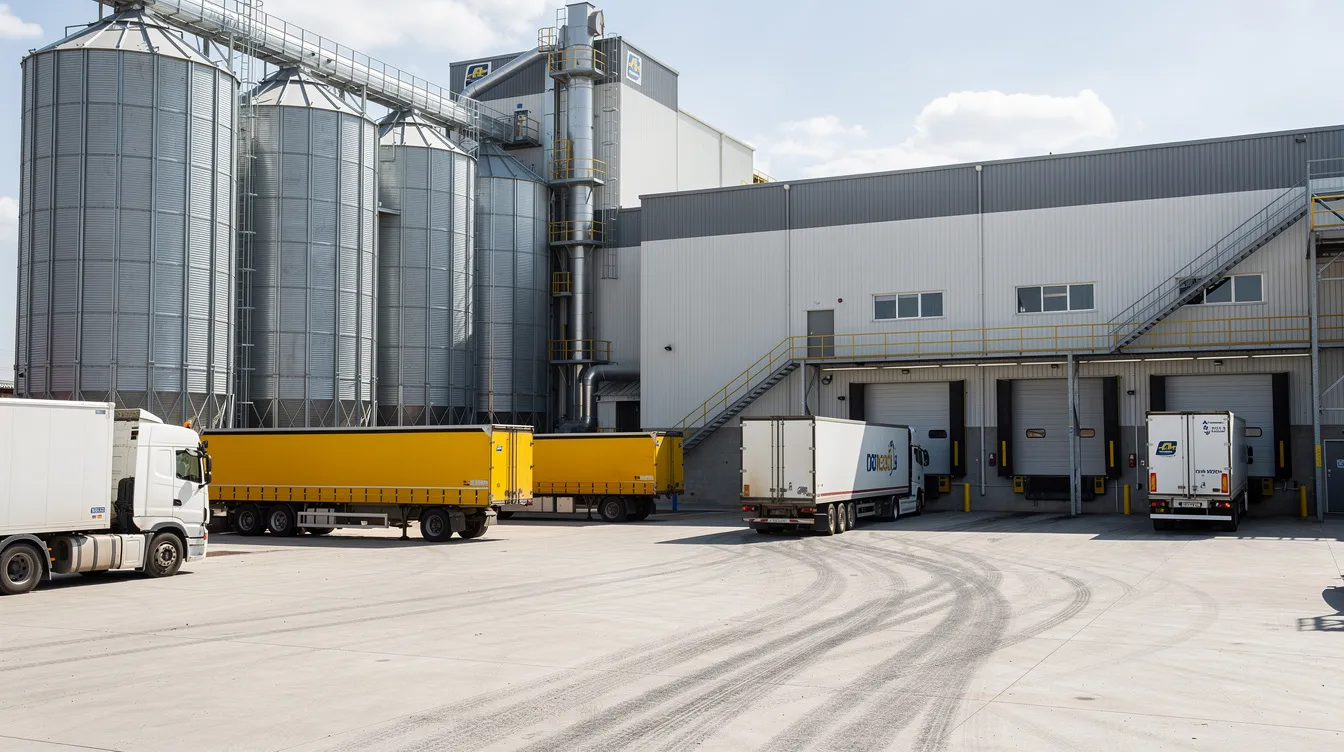
The main building blocks include wheat storage godowns or silos, cleaning and pre-cleaning section, multi-storey milling building for roller mills and plansifters, finished goods storage for atta, maida, suji and bran, packing hall, utility block (DG, compressor, transformer), laboratory, office and staff amenities.
Multi-storey RCC or structural steel frame designs for the milling building, heavy floor loads and vibration control can materially influence costs. In a 40 TPD semi-automatic plant DPR from Rajasthan, civil construction was estimated at approximately ₹800 per sq. ft. for a built-up area of about 17,500 sq. ft., totalling roughly ₹1.48 crore. In metro or high-input-cost areas, this rate could be ₹1,200 to ₹1,500 per sq. ft. or more. For reference, in a 300 TPD DPR, land and building costs were estimated at ₹15.54 crore. Bankers routinely compare civil cost per sq. ft. with local benchmarks when reviewing a project report.
Plant and Machinery Cost
Plant and machinery cost is the core of roller flour mill capital investment, but it is still only one part of total cost. Milling and processing equipment for roller flour mills must be carefully selected based on production requirements.
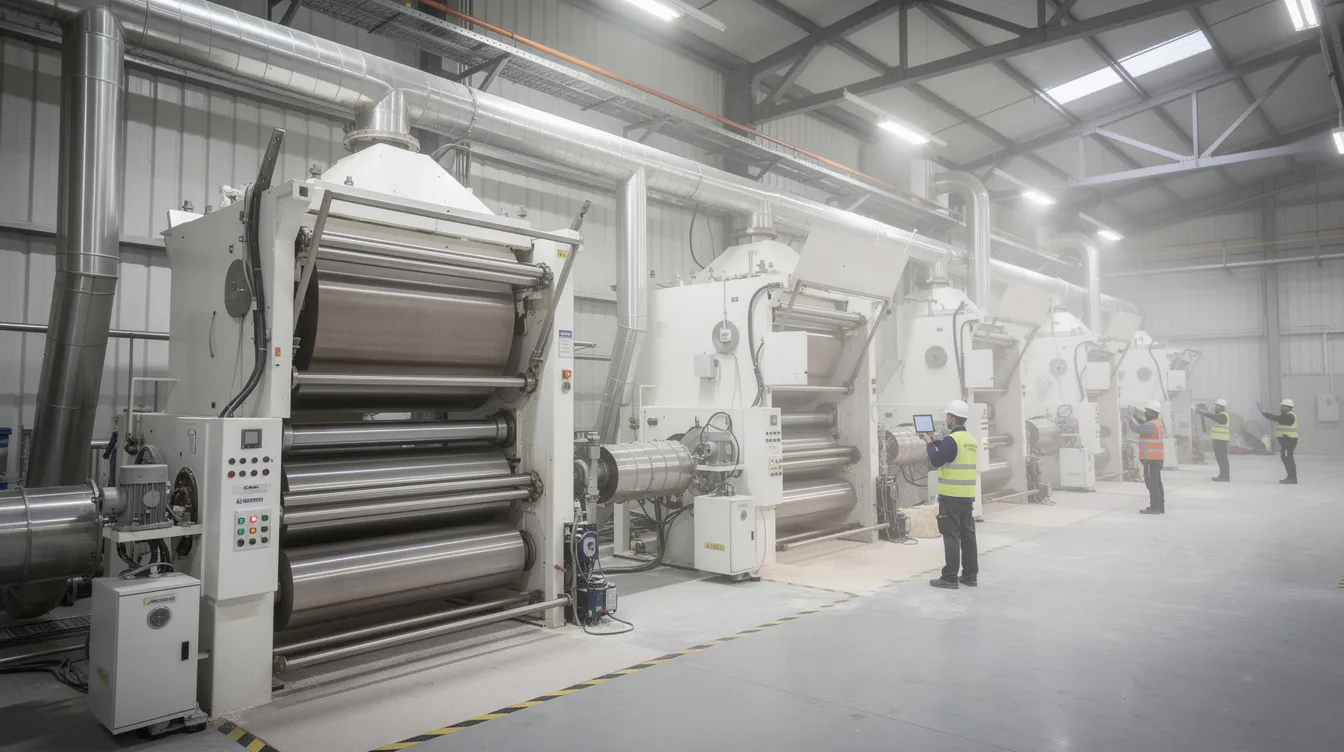
Major machinery sections include wheat intake and unloading, pre-cleaning, cleaning, destoning, magnetic separation, conditioning and tempering bins, roller mills, plansifters, purifiers, pneumatic conveying, bran handling, flour and suji handling, blending, dust collection, aspiration and packing lines (bulk bags, 50 kg, 10 kg and retail packs).
Plant and machinery costs correlate with daily milling capacity. According to MoFPI cost norms, a 1.0 TPH automatic wheat flour plant machinery set costs approximately ₹22.70 lakh, while a 3.0 TPH set costs about ₹129.55 lakh. These are machinery-only figures and do not include civil work, utilities or working capital. In one 300 TPD DPR, plant and machinery cost was ₹4.76 crore, while for a 100 TPD automatic mill, machinery alone may range from ₹5.5 to ₹7.5 crore depending on brand, automation and imported components.
Promoters should obtain quotations from multiple technically comparable suppliers before finalising the machinery budget. For a detailed discussion on equipment selection and cost, refer to roller flour mill machinery and equipment cost.
Capacity and Its Impact on Project Cost
The total expenditure for a roller flour mill depends on production capacity measured in TPD, but the relationship is not linear because of economies of scale. While machinery cost per tonne usually decreases with higher capacity, total capital investment in land, building, utilities and working capital increases.
Illustrative project cost ranges (on owned land, including working capital margin):
| Capacity | Fixed Investment (Approx.) | Working Capital Margin | Total Project Outlay |
|---|---|---|---|
| 50 TPD | ₹5-7 crore | ₹2-3 crore | ₹7-10 crore |
| 100 TPD | ₹9-13 crore | ₹3-5 crore | ₹12-18 crore |
| 200 TPD | ₹22-32 crore | ₹8-12 crore | ₹30-45 crore |
| 300 TPD | ₹35-55 crore | ₹12-20 crore | ₹50-75 crore |
In one published DPR, the plant capacity was 300 MT per day and the total capital investment was ₹37.92 crore. These are broad bands; actual atta maida suji plant project cost depends on the specific technical configuration and location.
For guidance on choosing the right capacity, see roller flour mill capacity planning in TPD.
Process Configuration and Its Effect on Investment
The chosen roller flour milling process configuration has a direct impact on both plant design and investment cost, even for the same TPD capacity. The milling process separates flour, bran and pollard, but the number of roller mill passages, purifiers and plansifters needed depends on the target product mix.
A basic commercial atta plant requires fewer purification stages than a setup targeting premium bakery flour or refined maida with low ash content. Decisions on wheat cleaning intensity, number of conditioning stages, extraction strategy and automation of feeding and blending all influence machinery cost and space requirements. The packaging configuration (bulk dispatch, 50 kg bags or consumer packs) also adds cost.
For a detailed look at the manufacturing process and flow, refer to the roller flour milling process and flow chart.
Utility and Supporting Infrastructure Cost
Utility and supporting infrastructure is often underestimated by promoters, but it can form a notable part of overall project cost. Costs for utilities setup in roller mills include high-tension electrical installations and water systems. High monthly electricity expenses for roller mills can reach substantial amounts depending on operational scale; in a 40 TPD unit, connected load was 125 kW.
Typical utility items include electrical connection charges, transformer and HT/LT panels, cables and internal electrification, DG set for backup, air compressors for pneumatic conveying and packing, water storage and piping, dust collection systems, fire-fighting equipment and lighting.
Supporting systems cover laboratory equipment for quality control, weighing scales and weighbridge, forklifts or conveyors for material handling, and basic IT or automation systems. Under-budgeting utilities in the DPR can reduce credibility with lenders and cause cost overruns during implementation.
Preliminary and Pre-Operative Expenses
Preliminary and pre-operative expenses cover project consultancy and staff training in roller flour mill setup, among other items. Preliminary expenses include company or firm formation, legal fees, registration and stamp duty. Pre-operative expenses cover technical consultancy fees, DPR and CMA Data preparation, architecture and structural design, government approvals and licences, trial runs and test batches, recruitment and training, project office expenses, travel, insurance during construction and interest during construction.
Regulatory compliance and licensing costs can include fees for food safety certifications (FSSAI) and local factory licences. Permits and licences may include securing local factory and environmental clearances. The accounting and tax treatment of these expenses (capitalisation vs profit and loss) can differ, but from a project finance perspective they are normally included in project cost.
A realistic implementation timeline for a 100 to 200 TPD flour mill is typically 12 to 18 months from sanction to commissioning; longer timelines increase pre-operative expenses and IDC.
Contingency Provision in the Project Cost
Contingency is a necessary part of roller flour mill project cost calculation, especially when civil drawings and machinery specifications are still being finalised. Common escalation areas include civil construction due to cement and steel price changes, freight and insurance on outstation machinery, on-site fabrication, electrical and cabling extras, and design changes.
There is no single universal contingency percentage. Contingency may be lower when detailed, item-wise quotations and final drawings are available, and higher at the early concept or DPR stage. Banks accept reasonable contingency when it is justified in the project report and properly reflected in the means of finance.
Working Capital Requirement of a Roller Flour Mill
Flour milling is a working-capital-intensive business due to the need for bulk raw material inventory. Raw material procurement, specifically wheat, is a major recurring expense. Working capital is essential for daily operations due to high recurring costs in flour milling. A wheat flour mill project cost estimate is incomplete without a careful working capital assessment.
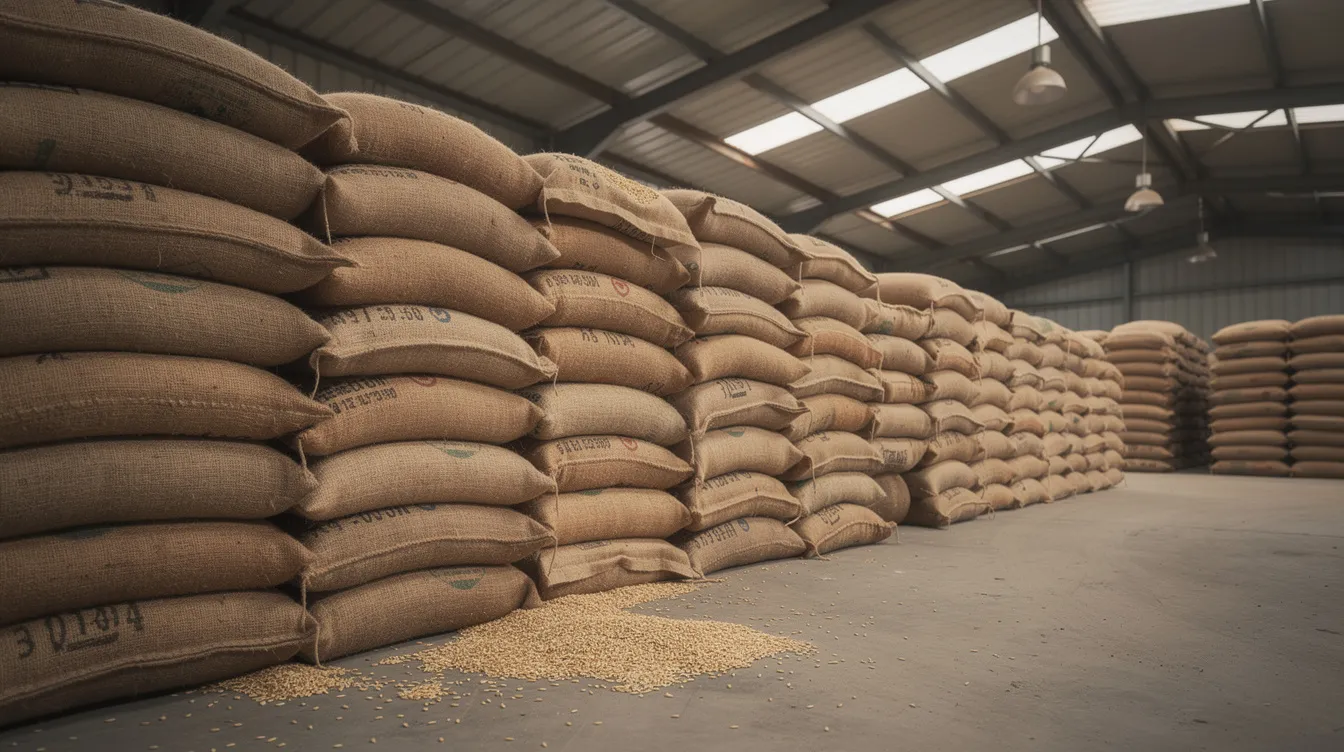
Major current-asset items include wheat inventory (often 3 to 4 weeks or more depending on seasonality and procurement strategy), packing material stocks, finished goods inventory (atta, maida, suji) and trade receivables. In one 300 TPD DPR, working capital for one month was estimated at ₹17.86 crore, reflecting the sheer scale of wheat and finished goods inventory required.
Key current liabilities include credit from wheat traders, packing suppliers, power bills and wages. The working capital cycle (days of raw material plus finished goods plus receivables minus creditors) drives the bank cash credit limit.
Underestimating working capital can lead to a plant that is technically sound and profitable on paper but faces continuous cash-flow stress. The concept of margin money is relevant here: a portion of working capital must be funded from the promoter’s long-term funds and is treated as part of total project cost in the DPR.
Understanding Means of Finance
“Means of finance” refers to the sources from which total project cost (fixed capital, pre-operative expenses and margin for working capital) will be funded. Common sources for a roller flour mill include:
- Promoter contribution (equity, share capital or capital account)
- Unsecured loans from promoters or relatives (where acceptable to the bank)
- Bank term loan
- Institutional finance
- Internal accruals (in case of expansion projects)
- Capital subsidy or incentive, where sanctioned and reasonably assured
Total means of finance must always equal total project cost. Bankers and credit committees verify this equality closely.
Illustrative Means of Finance (Conceptual Only)
| Source | Illustrative Share |
|---|---|
| Promoter Contribution (Equity) | 20-30% of project cost |
| Term Loan | 55-70% of fixed capital |
| Working Capital Margin (Long-Term Funds) | As assessed |
| Subsidy (if sanctioned) | As per scheme eligibility |
The choice of means of finance directly affects interest burden, DSCR and promoter’s return on capital employed.
Promoter Contribution
Banks expect a minimum promoter contribution in any flour mill project finance proposal to ensure adequate stake, risk sharing and financial discipline. Factors influencing the required level include project size, risk profile, new vs experienced promoters, quality of collateral, existing banking history and whether the project qualifies under a priority scheme.
There is no single compulsory promoter contribution percentage applicable to every case. Banks look at overall debt-equity ratio, including unsecured loans from promoters where treated as quasi-equity. In one AIF model DPR, promoter equity was assumed at 10% of project cost. The source of promoter contribution (own funds, retained earnings, sale of assets) is scrutinised by banks; unsupported claims of margin money can delay sanction.
Bank Term Loan for Roller Flour Mill
The term loan typically finances building, plant and machinery, electrical installations, utilities and other eligible fixed assets. According to Indian Bank’s agro mills scheme, repayment tenures can extend up to 7 years with a moratorium of 6 to 12 months during construction and trial run.
Bankers evaluate promoter background, CIBIL/credit history, net worth, detailed project report with technical and financial feasibility, realistic project cost and means of finance, projected profitability, DSCR, security and collateral, wheat supply and market outlook for atta, maida and suji.
No consultant can guarantee a roller flour mill bank loan. This section is educational; the purpose is to help promoters understand lender expectations, not to make promises.
Working Capital Finance
Term loan finances fixed assets. Working capital finance covers day-to-day operations. Common working capital facilities for roller flour mills include cash credit limit against stock and receivables, working capital demand loan where applicable, and non-fund-based limits such as bank guarantees or LCs.
The DPR and CMA Data must present separate estimates for term loan and working capital limits, with matching interest costs in the financial projections. Banks monitor utilisation through periodic stock statements and drawing power calculations, which determine how much of the sanctioned limit can actually be drawn at any point based on current inventory and receivable levels.
Debt-Equity Ratio and Financial Structure
Debt-equity ratio expresses the relationship between borrowed funds and promoters’ own capital. In published flour mill DPRs, this ratio typically ranges from 1.5:1 to 2.0:1. Higher leverage improves return on equity when the project performs well, but also increases fixed obligations and cash-flow risk if margins contract.
Banks consider not just initial debt-equity but also projected DSCR over the repayment period and sensitivity to changes in wheat prices or flour realisation. Both extremes are risky: very high debt without adequate promoter capital, and excessively high equity which may reduce promoter liquidity for working capital and future expansion.
Sample Roller Flour Mill Project Cost Structure (Illustrative)
The following cost structure is purely illustrative, based on a hypothetical medium-capacity roller flour mill (approximately 100 TPD). Actual figures must be derived from location-specific civil estimates, machinery quotations and working capital assessment.
| Cost Component | Basis / Description | Indicative Amount | Remarks |
|---|---|---|---|
| Land | 2 acres, industrial area | ₹50-150 lakh | Varies widely by state |
| Site Development | Roads, boundary, weighbridge, drainage | ₹20-40 lakh | Depends on terrain |
| Building & Civil Works | Factory, storage, office, labs (~20,000+ sq. ft.) | ₹3-5 crore | Multi-storey milling building adds cost |
| Plant & Machinery | Roller mills, plansifters, purifiers, cleaning, packing | ₹5.5-7.5 crore | Brand, automation dependent |
| Electrical Installations | HT connection, transformer, panels, cables | ₹30-60 lakh | Connected load 250-400 kW range |
| Utilities & Services | DG, compressor, water, fire, dust collection | ₹25-50 lakh | Often underestimated |
| Storage & Godowns | Wheat and finished goods | Included in civil or separate silos | Silo cost can be substantial |
| Lab & QC Equipment | Moisture, ash, gluten testing | ₹5-15 lakh | FSSAI compliance needed |
| Material Handling & Packing | Conveyors, elevators, packing machines | ₹30-60 lakh | Retail packs add cost |
| Preliminary & Pre-Operative | Consultancy, approvals, training, IDC | ₹30-60 lakh | 12-18 months implementation |
| Contingency | Cost escalation provision | 5-10% of fixed cost | Justified in DPR |
| Working Capital Margin | Promoter long-term funds for WC | ₹3-5 crore | Based on operating cycle |
| Total Project Outlay | ₹12-18 crore | Illustrative only |
This table is to help promoters understand the roller flour mill cost breakup conceptually, not a ready-made costing for any specific state or technology.
Example Means of Finance Structure (Illustrative)
Once total project cost is estimated, a matching means of finance plan must be prepared.
| Source of Finance | Illustrative Amount |
|---|---|
| Promoter Contribution (Equity/Capital) | ₹3-5 crore (20-30%) |
| Bank Term Loan | ₹6-9 crore (50-60%) |
| Working Capital Margin from Long-Term Funds | ₹3-5 crore |
| Subsidy (if sanctioned under eligible scheme) | As per scheme |
| Total | ₹12-18 crore |
The total of means of finance equals the total project cost. The actual mix varies from project to project. Subsidies should be treated conservatively in cash-flow planning; timing of receipt can be uncertain.
Why Machinery Cost Alone Cannot Determine Total Investment
Promoters frequently ask “What is the cost of a 100 TPD roller flour mill?” expecting one machinery-based number. While a supplier may quote ₹5.5 to ₹7.5 crore for a 100 TPD line, the complete roller flour mill setup cost in India also depends on land, civil construction, storage, power infrastructure, utilities, packing systems, working capital and implementation period.
For a 100 TPD unit, machinery may be 40 to 50% of fixed capital. The remaining 50 to 60% includes civil work, electrical, utilities, pre-operative expenses and contingency. Adding working capital margin takes the total investment even further beyond the machinery quotation. For a comprehensive view, see the article on complete roller flour mill setup cost in India.
How Banks Assess Roller Flour Mill Project Cost
Bankers cross-check project cost estimates by comparing machinery quotations against industry norms, validating civil cost per sq. ft. with local rates, and benchmarking against other DPRs. They also check consistency between technical capacity (e.g. 100 or 200 TPD), projected turnover, gross margins, operating expenses, interest cost and repayment schedule.
Inflated project cost weakens credibility. Underestimated cost leads to overruns, delayed commissioning and cash-flow stress. Accurate CMA Data, realistic capacity utilisation build-up (gradual, not 90% from Day 1) and conservative sales assumptions improve the credibility of the flour mill project finance proposal.
Importance of DPR, CMA Data and Financial Projections
For a serious roller flour mill investment, a properly prepared detailed project report and 5 to 7 year financial projections are essential. Investment analysis is crucial before starting a roller flour mill project. A bankable DPR should integrate technical configuration and manufacturing process, project capacity and capacity utilisation ramp-up, detailed project cost, means of finance, product mix, sales estimates, raw material and power costs, interest and depreciation charges, cash flow, profitability, DSCR, break-even point, IRR and payback analysis.
In one published DPR for a 300 TPD mill, the break-even point for the project was 39% and the expected rate of return on investment was 41%. All figures in the financial model must flow from the same project cost assumptions; machinery cost drives depreciation, while term loan size drives interest and repayment. The finance annexure and project financials must be internally consistent.
Planning a roller flour mill and need a project-specific DPR, CMA Data, financial projections or bank finance proposal? CA Manish Gugliya can assist in structuring the project cost, means of finance, working capital and repayment projections based on your proposed capacity, quotations and project location. Learn more about bank finance DPR and loan proposal assistance.
Common Mistakes While Estimating Flour Mill Project Cost
From experience with DPR preparation and financial consultancy services, these are the errors I see most frequently:
- Focusing only on the supplier’s machinery quotation and ignoring freight, insurance and installation charges
- Underestimating building height and structural requirements for the milling section
- Not planning adequate storage for wheat and finished goods
- Overlooking power infrastructure costs (transformer, HT connection, backup)
- Not providing for sufficient working capital; this is the single most common financial gap
- Assuming 80 to 90% capacity utilisation from the first year without a supporting market study
- Using optimistic flour realisation and gross margins without market survey data
- Counting expected subsidy as if it were guaranteed and immediate
- Mismatch between project cost shown in the DPR and the cost structure used in financial projections
- Incomplete or inaccurate CMA Data
A pre-sanction review of the DPR and financial model by an experienced CA can help identify and correct these gaps before presenting the case to a bank.
Questions Promoters Should Answer Before Finalising Project Cost
Before freezing roller flour mill project cost and approaching a bank, promoters should work through these questions:
- What project capacity (50, 100, 150, 200 TPD) is justified by local wheat supply and market demand?
- What proportions of atta, maida, suji and bran are targeted? Is consumer packing required?
- Is land owned, to be purchased or leased? Is there scope for future expansion?
- What wheat procurement strategy will be followed (seasonal stock vs regular purchase)?
- What credit period will key customers receive? How many days of stock and receivables are expected?
- How much promoter capital is genuinely available? What is the source?
- What level of bank borrowing and EMI burden is sustainable compared to projected cash flows?
- What debt-equity and DSCR range is acceptable given the identified key parameters and project risk?
Answering these before project identification helps avoid costly redesigns later.
Final Takeaway: Structuring Roller Flour Mill Investment Prudently
A successful roller flour mill project in India must be planned around the full picture: project cost, working capital, means of finance and repayment capacity. Machinery cost alone is not the answer. Promoters should base their wheat flour mill project cost and means of finance on actual quotations, realistic civil estimates and conservative working capital assessment, with all figures integrated into a coherent DPR and financial model.
From my experience of more than 20 years of preparing detailed feasibility reports, techno economic feasibility reports and research reports for manufacturing projects, technically sound roller flour mills have failed when capital structure and cash-flow planning were weak. The flour mill business operates in an industry where margins on grain processing can be thin, and the supply of wheat and demand for flour are influenced by broader industry trends. Net profit margins require discipline in both cost control and financial planning.
Promoters planning new or expansion roller flour mills, whether for existing units or greenfield projects, can seek professional support from Project Report Bank for customised DPRs, financial projections, CMA Data and bankable flour mill project reports tailored to their capacity, location, market strategy and store of products in the food and cereals processing sector.
CA Manish Gugliya Chartered Accountant | FCA, DISA (ICAI) Detailed Project Reports, CMA Data, Financial Projections & Project Finance Advisory for MSME and Manufacturing Projects ProjectReportBank.com
FAQ: Roller Flour Mill Project Cost & Finance
What is the typical investment range for a 100 TPD roller flour mill in India?
The total project outlay for a 100 TPD roller flour mill, including fixed capital and working capital margin, typically falls in the range of ₹12 to ₹18 crore on owned land. This includes approximately ₹5.5 to ₹7.5 crore for plant and machinery alone, with the balance covering land, civil works, utilities, pre-operative expenses, contingency and working capital margin. Actual cost depends on land price, construction specification, machinery brand, automation level and the wheat procurement cycle. A project-specific estimate should only be finalised after obtaining updated machinery quotations and site-specific civil estimates.
How long does it usually take to implement a roller flour mill project?
For a medium-capacity roller flour mill (100 to 200 TPD), the typical implementation period from loan sanction to commercial production is 12 to 18 months. This includes civil construction, machinery procurement and delivery, installation, trial runs and commissioning. Timelines can extend due to land readiness, approval delays, machinery delivery schedules or monsoon-related civil work interruptions. Longer implementation periods increase pre-operative expenses and interest during construction, which in turn increase total project cost. The detailed project report should reflect a realistic implementation schedule by date milestones.
Can an existing chakki atta mill be upgraded into a roller flour mill?
Some existing infrastructure such as land, boundary, basic buildings and utilities may be reusable, which can reduce fresh capital investment. However, roller flour mills require specific multi-storey structures, specialised roller mill equipment, plansifters, purifiers and pneumatic systems that chakki mills do not have. A separate DPR is advisable in such cases to clearly distinguish existing assets from new investment and to present the bank with an accurate expansion project report. For further reading on small-scale atta mills, see the wheat flour mill project report.
How important is a market study for deciding flour mill capacity and cost?
A market study covering wheat availability, competition from existing units, price assessment, demand for atta vs maida vs suji and preferred pack sizes is critical for choosing plant size and product mix. The technical and financial feasibility of the project depends on whether the chosen capacity can be utilised at a commercially viable level. Overestimating demand leads to underutilised capacity and stress on loan repayment. Underestimating can constrain future growth. A proper market study directly influences capital allocation and the business plan presented to lenders.
Do government subsidies reduce roller flour mill project cost?
Some central and state schemes (such as AIF, PM FME and state-specific food processing incentives) may offer capital subsidy or interest subvention for agro and food processing units. Eligibility depends on location, capacity, product mix and compliance with scheme conditions. In one model DPR, subsidy was assumed at 35% of project cost excluding working capital. However, such sources of subsidy should be treated as potential upside and not as guaranteed funding. Project feasibility, profitability and loan repayment planning should stand even without subsidy or with delayed receipt. Professionals and clients should verify the current status of relevant services and schemes before relying on them in the preparation of the DPR and financial model.