I am CA Manish Gugliya, and over the past 20 years I have helped hundreds of entrepreneurs secure bank finance for their small businesses. One question comes up more often than any other: “The bank manager is asking me for property papers for my Mudra loan. Is this legal?” Let me answer that clearly and practically.
Key Takeaways
- Under Pradhan Mantri Mudra Yojana (PMMY), banks cannot insist on collateral security such as house or property mortgage for mudra loan amounts up to ₹10 lakh. However, they can take hypothecation of business assets purchased with the loan and ask for complete documentation.
- In practice, some bank branches still informally ask for property papers or a guarantor. Sometimes this is against mudra loan collateral guidelines; other times it is simply additional due diligence or a misunderstanding that the borrower can resolve by talking to the branch head.
- If a bank insists on collateral for a PMMY loan, borrowers can file complaints with higher authorities, starting from the branch manager and going up to the RBI Integrated Ombudsman Scheme.
- Always carry a well-prepared set of documents required for the application – KYC (aadhaar card, PAN), address proof, business proof, bank statements, a project report, Udyam Registration, and GST certificate where applicable. Walking in prepared reduces unnecessary demands dramatically.
- Entrepreneurs can often resolve collateral disputes by understanding their rights, communicating respectfully with the bank, and if required, filing a written complaint using the sample letter provided later in this article.
Table of Contents
Understanding Mudra Loan & Why Collateral Is Normally Not Required
Let me start with a story I see play out regularly. Rahul, a small shop owner from Indore, visited a public sector bank to apply for a ₹3 lakh mudra loan to expand his trading business. After reviewing his form, the bank manager asked him to submit property papers as security. Rahul was confused – he had heard that loans under the mudra scheme are collateral-free. Was the manager right?
To answer that, you need to understand the scheme first.
The Pradhan Mantri Mudra Yojana was launched on 8th April 2015 by the Government of India. Its purpose is to provide collateral-free financial assistance to micro and small business units engaged in manufacturing, trading, services, food processing, and allied agriculture (non-farm) activities. Note that purely agricultural businesses are not eligible for mudra loans.
Mudra loans are categorized into three groups:
- Shishu – loans covering up to ₹50,000
- Kishor – loans covering ₹50,001 to ₹5 lakh
- Tarun – loans covering ₹5 lakh to ₹10 lakh
Since October 2024, a newer category called Tarun Plus allows eligible past borrowers to avail collateral-free mudra loans up to ₹20 lakh. Mudra loans are available for amounts up to ₹20 lakh for micro enterprises through this extended category.
The basic idea behind mudra yojana is straightforward: small businesses and startups that require funds but don’t own property should still be able to access a business loan. The scheme is backed by the Credit Guarantee Fund for Micro Units (CGFMU), which shares the default risk with the bank. Eligible businesses include shop owners, vendors, and service providers. Applicants must be aged between 18 to 65 years, and even students over 18 can apply for mudra loans if they have a viable business plan.
Mudra loans support income generation and employment creation across India. They are processed quickly with minimal documentation when the borrower’s papers are in order. You can apply through banks, non banking financial companies, and micro finance institutions, and you can apply for a mudra loan online as well.
So if the scheme is collateral-free, why did Rahul’s bank manager ask for property papers? That is exactly what we will unpack next.

Can a Bank Legally Ask for Security in a Mudra Loan? (Direct Answer)
Here is the direct answer: for standard PMMY mudra loans up to ₹10 lakh, banks are not supposed to insist on external collateral security like a house or property mortgage. They should rely on primary security and the credit guarantee.
But this answer needs some nuance, because borrowers often confuse different types of security. Let me break them down:
- Collateral / Mortgage: Pledging property that has nothing to do with the loan – your house papers, shop property deed, agricultural land documents. This is what PMMY guidelines prohibit for eligible loans.
- Primary security / Hypothecation: A charge on assets purchased with the mudra loan itself – stock, machinery, equipment, a vehicle bought from the loan proceeds. This is standard banking practice and is fully allowed. The primary security for mudra loans is the hypothecation of assets purchased with the loan.
- Third-party guarantee (Guarantor): Another person promising to repay if the borrower defaults. Not mandatory under PMMY, though some banks may request it in specific situations.
Taking hypothecation of business assets is normal. If you buy machinery worth ₹4 lakh using a Kishor mudra loan, the bank will create a charge on that machinery. This should not worry you – it is not collateral in the PMMY sense.
The real problem arises when a bank links your loan approval to depositing property papers or registering a mortgage on your house. That goes against the spirit and wording of PMMY rules.
One important distinction: sometimes banks may offer you a regular business loan instead of processing it under PMMY. In that case, collateral can be asked legally because the loan falls outside mudra scheme rules. Always confirm whether your loan is being sanctioned under Pradhan Mantri Mudra Yojana or as a generic MSME loan.
If the loan is officially sanctioned under Pradhan Mantri Mudra Yojana (PMMY) up to ₹10 lakh, the bank should not demand collateral security as a condition for sanction.
What Do RBI & PMMY Guidelines Actually Say About Mudra Loan Collateral?
The RBI Master Direction on Lending to the MSME Sector mandates that banks should not accept collateral security for loans up to ₹10 lakh extended to micro and small enterprises. The CGFMU scheme guidelines explicitly define a “micro loan” as financial assistance provided without requirement of collateral or third-party guarantee.
In simple terms:
- Loans up to ₹10 lakh under PMMY should be collateral-free.
- The government, through the refinance agency SIDBI and the CGFMU managed by NCGTC, shares the default risk with the lending bank.
- Banks pay a guarantee fee for this cover (often passed on to the borrower as part of processing fee or interest rates).
- For loans up to ₹5 lakh to micro enterprises, the guarantee covers up to 85% of the defaulted amount.
Even though no property or asset mortgage is required for mudra loans, banks can still legitimately ask for:
- Full KYC (Aadhaar, PAN, passport or voter ID)
- Business proof (Udyam Registration, shop license, partnership deed or other legal entity documents)
- Financial documents (bank statement for 6-12 months, ITR, GST returns)
- A project report or CMA data to judge business viability
Each bank may have its own internal risk scoring or documentation checklist, but they cannot override the basic “no collateral” rule for mudra loans up to ₹10 lakh. The difference between government policy and branch-level practices is where most confusion starts.
Verify from official sources. Before believing WhatsApp forwards or agent advice, check the official PMMY website or RBI circulars for the applicable rules.
Why Do Some Bank Managers Still Ask for Property Papers or Extra Security?
From my experience handling cases across Madhya Pradesh, Maharashtra, Uttar Pradesh, and Rajasthan, there are genuine reasons why some branch managers still ask for property documents or guarantors – even when they know the mudra loan collateral guidelines.
Typical risk factors that make a manager cautious:
- Weak or no project report submitted with the application
- Very new business with limited business registration or proof of continuity
- Low bank balance history or irregular transactions in the bank statement
- Past loan defaults or poor CIBIL score
- High-risk sector or seasonal business with unpredictable income
- Cash-only business with no verifiable turnover or documentation
Applicants with poor credit histories may face collateral requests despite the scheme’s provisions. Banks may assess borrower profiles and project viability before requesting collateral as additional comfort.
Sometimes borrowers also misunderstand. The manager may only be asking for:
- Proof of property ownership as a net-worth indicator (not as mortgage)
- A simple undertaking from a family member (not a registered guarantee)
- Address documents to prove stability – which is documentation, not security
I recall a case where a Kishor category applicant was asked for “house papers.” After I spoke with the branch head, it turned out they only needed proof of permanent address. Once we provided utility bills and a rent agreement, the loan was processed without any mortgage.
How to reduce such demands:
- Carry a well-prepared, realistic project report
- Submit 6-12 months of clean bank statements showing regular cash flow
- Get your Udyam Registration done before applying
- Disclose existing loans honestly
- Choose the right loan category based on your real requirement
Can Banks Ask for Property Mortgage or Guarantor in a Mudra Loan?
On property mortgage: For genuine PMMY loans up to ₹10 lakh, asking for property mortgage as a condition is against the mudra loan collateral rules. No property or asset is required for mudra loans. Banks can, however, create a charge on assets purchased from the loan amount – machinery, equipment, vehicle, stock. This hypothecation of business assets is standard and should not concern you.
On guarantor: A guarantor is a person who promises to repay the loan if the borrower cannot. It is legally different from collateral. Under PMMY, a guarantor is not a universal statutory requirement. Some banks may internally prefer a guarantor for higher-risk cases – for instance, if the applicant has no credit history or a very new enterprise. But many mudra loans are sanctioned without any third-party guarantor.
If a bank insists on either a mortgage or a guarantor, ask this question: “Is my loan still being sanctioned under Pradhan Mantri Mudra Yojana, or is it being converted into a normal business loan?”
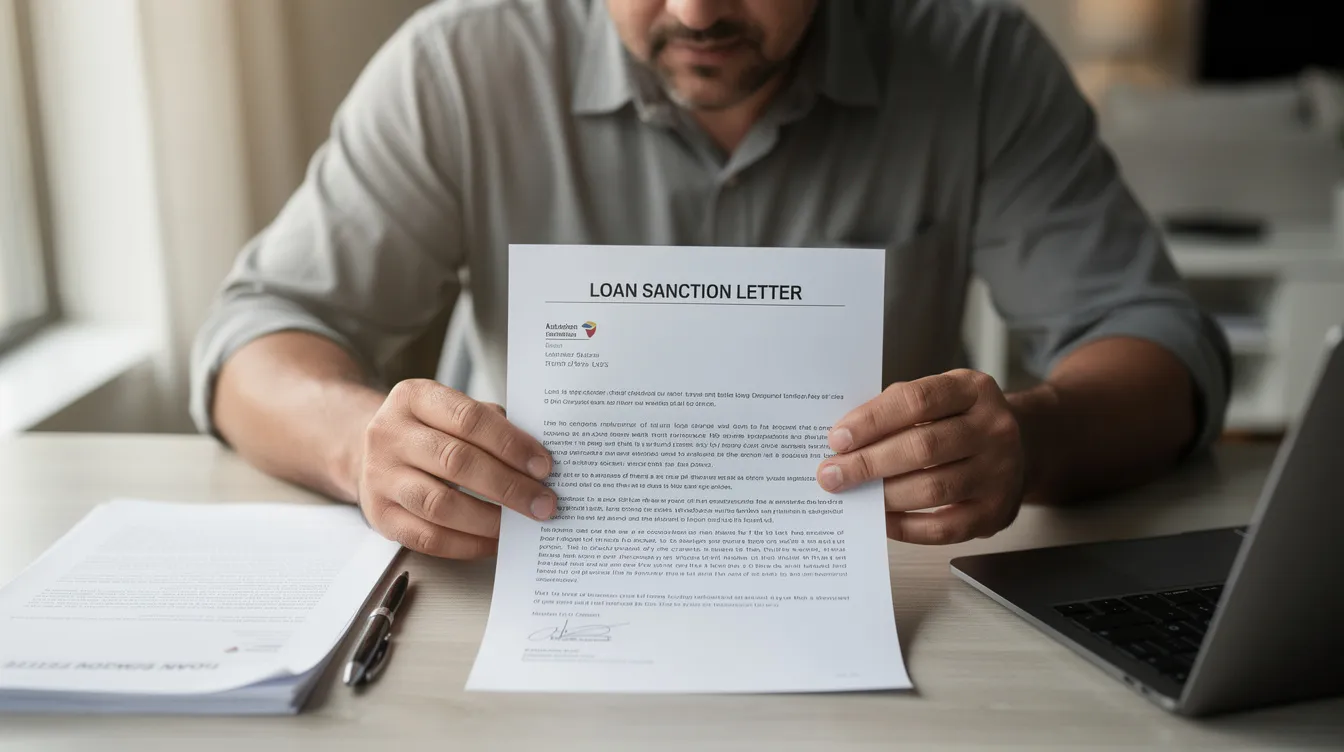
What to check in your sanction letter:
- Scheme name: Does it say “PMMY” or “Mudra” or just a generic MSME loan?
- Security clause: Does it mention hypothecation only, or does it list mortgage/collateral?
- Guarantee clause: Is a third-party guarantor recorded?
- Guarantee fund: Is CGFMU or CGTMSE coverage mentioned?
If the sanction letter mentions property mortgage for a loan under PMMY up to ₹10 lakh, that is a red flag. Raise it immediately.
Borrower Rights & How to Respond Politely When Bank Asks for Collateral
Know Your Rights Before Leaving the Bank
- You have the right to know under which scheme your loan is being processed – PMMY Mudra or a regular MSME loan.
- You have the right to ask for the specific RBI or PMMY rule if collateral is being demanded.
- You have the right to receive written reasons for rejection or change of scheme.
- You have the right to escalate to the branch manager, regional office, and bank grievance cell.
Sample Conversation
Borrower: “Sir, I understand your concern about risk. However, I have read that loans under Pradhan Mantri Mudra Yojana up to ₹10 lakh are collateral-free as per PMMY and RBI guidelines. I am happy to submit all required documents – my business plan, bank statements, and project report. Could you kindly process my application under the Mudra scheme without requiring property mortgage?”
Bank Manager: “We need some additional comfort for our internal compliance.”
Borrower: “I fully respect the bank’s appraisal process. If there are specific other documents you need, I will provide them. But if the issue is only about property papers as collateral, may I request you to kindly confirm in writing that collateral is mandatory? I would like to understand which circular changes the PMMY guideline.”
This approach is firm but respectful. It does not burn bridges.
If the Issue Is Not Resolved – Escalation Steps
- Step 1: Request a meeting with the branch manager. Submit your concern in writing.
- Step 2: Email the bank’s zonal or regional office, or contact the bank’s nodal officer for government schemes.
- Step 3: Use the bank’s official grievance portal or customer care helpline.
- Step 4: If there is no resolution within 30 days, approach the RBI Integrated Ombudsman Scheme.
For a detailed list of what to carry, refer to our guide on documents required for Mudra loan. If your application was rejected, you may also want to read about common reasons for Mudra loan rejection.
Practical Checklist: Documents Required So Bank Doesn’t Hide Behind ‘Risk’
Mudra loans are collateral-free and approved quickly – but they are not document-free. Applications are processed within a few days if documents are complete. Here is what you should carry:
Identity Proof:
- Aadhaar card
- PAN card
- Passport or voter ID
Address Proof:
- Aadhaar card (if address is current)
- Utility bills (electricity, water)
- Rent agreement
- Property tax receipt
Business Proof:
- Shop & Establishment license or business registration certificate
- GST registration (if applicable – you can check if you qualify without GST)
- Udyam Registration
- Partnership deed or incorporation certificate if the applicant operates as a partnership firm or other legal entity
Financial Documents:
- Last 6-12 months bank statement
- Last 2-3 years ITR (if filed)
- Basic balance sheet or income summary
Project Report & Business Plan:
- Simple explanation of business model, cost, revenue, profit, and repayment plan
- CMA data (cost of project, means of funding, profitability, cash flow projections)
- Asset quotations – machinery quotes, vehicle quotation, stock list, equipment details
How each group helps:
| Document Group | What It Proves |
|---|---|
| KYC | Identity and address of the applicant |
| Business Proof | Genuine enterprise with legal standing |
| Bank Statements & ITR | Repayment capacity and income stability |
| Project Report & CMA | Viability – helps manager justify sanction in credit appraisal |
| Quotations | Exact loan amount needed and what assets will be covered |
When you walk in with this complete set, the manager has very little reason to ask for property papers. Incomplete documents are one of the most common reasons for delay or rejection.
Sample Complaint Letter If Bank Still Insists on Collateral Under Mudra
If you have submitted all documents and the bank still insists on collateral or mortgage for a genuine PMMY mudra loan, you can send the following letter to the branch manager, regional office, or bank grievance cell.
Date: [DD/MM/YYYY]
From: [Your Full Name] [Your Address] [Mobile Number] [Email Address]
To: The Branch Manager [Bank Name], [Branch Name] [Branch Address]
Subject: Request for Processing Mudra Loan Without Collateral Security as per PMMY Guidelines
Respected Sir/Madam,
I, [Your Name], have applied for a Mudra Loan under the [Shishu/Kishor/Tarun] category vide Application No. [_] dated [DD/MM/YYYY] for a loan amount of ₹[_] for the purpose of [briefly state purpose – e.g., purchase of equipment for my trading business].
I understand that loans sanctioned under Pradhan Mantri Mudra Yojana (PMMY) up to ₹10 lakh are collateral-free as per the scheme guidelines and the RBI Master Direction on Lending to MSME Sector. The scheme is designed to help micro and small businesses obtain credit without pledging property or assets, and is backed by the Credit Guarantee Fund for Micro Units (CGFMU).
However, I have been informed at the branch that my application cannot be processed without submitting property papers / providing a guarantor / [specify what was asked]. I have already submitted all necessary KYC, business proof, financial documents, and a project report as required.
I respectfully request you to kindly process my loan application under PMMY without insisting on collateral security, in line with the applicable government and RBI guidelines. If the bank is unable to do so, I request written reasons for the same so that I may take appropriate steps.
I trust the bank will consider my request favourably. In case I do not receive a response within 15 days, I may be compelled to escalate this matter to the bank’s grievance cell, regional office, or the RBI Integrated Ombudsman Scheme.
Thanking you,
[Your Signature] [Your Full Name]
Enclosures:
- Copy of loan application
- Copy of identity and address proof
- Copy of relevant PMMY/RBI guidelines (optional)
Keep the tone formal but non-confrontational. The goal is to get your loan processed, not to start a legal battle.
Common Myths vs Reality About Mudra Loan Security
Many borrowers – and even some bank field officers – still hold misconceptions about mudra loan collateral, guarantors, and eligibility. Here is a reality check:
Myth 1: Every mudra loan needs property collateral. Reality: PMMY loans up to ₹10 lakh are designed to be collateral-free. Only primary security (hypothecation of assets financed) is taken. Banks do not require collateral for mudra loans up to ₹10 lakh.
Myth 2: The bank manager can refuse to accept my application if I don’t bring property papers. Reality: Banks must accept and process eligible applications. They can reject on documented grounds but not simply refuse at the gate for lack of collateral.
Myth 3: A guarantor is always compulsory. Reality: Not mandatory under PMMY. Some banks may ask in specific risk cases, but many loans get sanctioned without any third-party guarantor.
Myth 4: Mudra loan automatically gets approved because it is a government scheme. Reality: Banks still assess repayment capacity, CIBIL score, and business viability before sanction. The government does not force banks to approve every application.
Myth 5: No income proof is needed because the loan is unsecured. Reality: Banks ask for bank statements, ITR, GST returns, or estimated cash flow projections to judge repayment ability.
Myth 6: You get a subsidy in mudra loan. Reality: There is no subsidy component in PMMY. It is a loan that must be repaid with interest.
Myth 7: Only people who own property can qualify. Reality: The whole point of the mudra scheme is to help those without property to access credit. Ownership of property is not an eligibility condition.
Myth 8: Mudra is only for traders. Reality: The scheme covers manufacturing, trading, services, food processing, and allied non-farm activities. Even startups and housewives can apply.
Myth 9: Filing a complaint means the bank will blacklist me. Reality: Banks have formal grievance mechanisms. A polite, written complaint is your right and is processed through official channels.
Myth 10: Interest rates are fixed by the government for mudra loans. Reality: Interest rates are decided by the lending institution – each bank or NBFC sets its own rate within RBI norms. There is no single fixed rate.
Rely on official guidelines or professional advice rather than hearsay from agents, friends, or social media.

Practical Advice from CA Manish Gugliya on Getting Mudra Without Unnecessary Collateral
After handling hundreds of mudra and MSME loan cases across states like Madhya Pradesh, Maharashtra, Rajasthan, Gujarat, and Uttar Pradesh, here are the patterns I have observed:
- A realistic project report matters more than anything. I have seen applicants inflate their projected sales by 3-4 times to justify a larger loan amount. Bank managers see through this immediately, and it makes them nervous – which is when they start asking for “extra comfort” like property papers. A realistic business plan with honest numbers gets approved faster.
- Prepare simple CMA data even for small loans. A basic fund flow statement, profitability projection, and cash flow estimate – even for a ₹2 lakh Kishor loan – shows the manager you are serious. It also helps the manager justify the sanction during the internal credit appraisal phase without asking for collateral.
- Keep bank accounts active and transparent. If your bank statement shows regular deposits and withdrawals for 6-12 months, it demonstrates business continuity and repayment capacity. A dormant or newly opened account raises red flags.
- Disclose existing loans honestly. Hiding an availed personal loan or credit card outstanding will surface in the CIBIL check. When a manager discovers hidden debt, trust breaks down – and that is when collateral demands grow stronger.
- Pick the right category. Don’t apply for Tarun (₹10 lakh) if your enterprise genuinely needs ₹1.5 lakh. Choosing the right stage and scale improves your credibility and speeds up processing.
- Treat the banker as a partner, not an opponent. In my experience, borrowers who approach the bank with patience, complete documents, and a clear business purpose rarely face unreasonable demands.
If you need help preparing a bankable project report, CMA data, financial projections, or a DPR for your mudra loan, you can explore professional support at ProjectReportBank.com. I have personally assisted thousands of entrepreneurs across India in preparing bank-ready documentation that helps them walk into the branch with confidence.
Frequently Asked Questions (Mudra Loan & Collateral)
Is collateral required for Mudra loan under Pradhan Mantri Mudra Yojana?
For PMMY mudra loans up to ₹10 lakh, collateral is normally not required. Mudra loans are collateral-free loans by design. The bank takes only primary security – hypothecation of assets purchased with the loan – and the loan is backed by CGFMU. No separate property or asset pledge is needed. Mudra loans can be approved quickly due to no collateral requirement.
Can the bank convert my Mudra loan request into a normal business loan and then ask for collateral?
Yes, banks are allowed to offer a different loan product if they believe the applicant does not qualify under PMMY. However, they should inform the borrower clearly. If you want PMMY benefits (collateral-free, guarantee coverage), insist that the loan be processed under the mudra scheme. Ask for written confirmation of which scheme your loan falls under. You can also apply through the Jan Samarth portal for transparent processing.
What if my CIBIL score is low – will the bank force me to give property security?
A low CIBIL score can justify rejection or tighter appraisal, but even then, demanding collateral is not part of PMMY norms. The bank may instead suggest a different collateral-backed product. If your loan is eligible under PMMY and you have the documents to prove repayment capacity, the collateral-free rule still applies. You may want to read about how to appeal against Mudra loan rejection if your application is turned down.
Can I complain to RBI if the bank refuses my Mudra loan only because I have no collateral?
You should first use the bank’s internal grievance system – submit a written complaint to the branch manager, then escalate to the regional office or nodal officer. If there is no resolution within 30 days, you can approach the RBI Integrated Ombudsman Scheme. Keep copies of all correspondence.
Do women entrepreneurs or housewives get any special relaxation in collateral or guarantor requirement for Mudra loans?
The collateral-free rule applies equally to all eligible applicants regardless of gender. However, some banks and state-level schemes offer interest concessions or processing priority to women applicants. The growth of women-led enterprises is a stated priority under PMMY. If you are a woman entrepreneur or homemaker looking to start a business, you can explore more at our guide on Mudra loan for housewives.
About the Author
CA Manish Gugliya is a Chartered Accountant with over 20 years of experience in Project Reports, CMA Data, Mudra Loans, MSME Consulting, Startup Advisory, Business Planning, Bank Finance, and Business Valuation. Through ProjectReportBank.com, he has assisted thousands of entrepreneurs across India in preparing bankable project reports and securing business finance. His mission is to simplify complex banking and financial procedures so that every entrepreneur can confidently start, finance, and grow a successful business.
- Atta Chakki Plant Project Report – A Professional DPR & Business Plan Guide

- Atta Chakki Plant ROI, IRR, Payback & Sensitivity Analysis

- Atta Chakki Plant Feasibility Study & Project Viability

- Atta Manufacturing Financial Projections, Working Capital & DSCR

- Atta Chakki Plant Project Cost & Means of Finance (India Focus)

- Atta Chakki Plant Land, Building & Layout Requirements

- Atta Chakki Plant Capacity Planning – TPD & Production Capacity

- Atta Manufacturing Process & Flour Mill Flow Chart (Expert Guide for Plant Promoters)

- Atta Chakki Machine Price & Automatic Atta Plant Machinery Cost – A Practical Guide for Entrepreneurs

- Atta Chakki Plant Setup Cost in India – Practical Cost Guide by CA Manish Gugliya

- Roller Flour Mill Project Report & DPR: Complete Guide for Bank Finance and Project Planning

- Roller Flour Mill ROI, IRR, Payback & Sensitivity Analysis: A Practical Guide for Investors and Bankers

- Roller Flour Mill Feasibility Study & Project Viability

- Roller Flour Mill Financial Projections & Working Capital

- Roller Flour Mill Project Cost & Means of Finance