Most people know that Mudra loans offer business finance without collateral. Very few understand why the Government of India launched this flagship scheme in the first place. Knowing the objectives of PM Mudra Yojana helps you pick the right loan category, prepare a stronger project report, and match your proposal to what banks actually look for.
Key Takeaways
- PM Mudra Yojana (PMMY), launched in April 2015, provides collateral free mudra loans up to ₹20 lakh (under the Tarun Plus category) to micro and small non-farm businesses through banks, NBFCs, and other financial institutions.
- The core PM Mudra Yojana objectives are: funding the unfunded, financial inclusion, self-employment promotion, MSME development, support for women and first-generation entrepreneurs, and employment generation.
- The scheme classifies loans into four categories; Shishu, Kishore, Tarun, and Tarun Plus; based on business stage and loan size, helping applicants select the right fit.
- This article is written by CA Manish Gugliya (FCA) from 20+ years of hands-on experience in MSME finance, mudra loan consultancy, and preparation of bankable project reports at projectreportbank.com.
Table of Contents
Background and Origin of PM Mudra Yojana
Before 2015, most micro enterprises; small shops, repair units, dairy farms, home-based food businesses; had almost no relationship with regulated financial institutions. A mechanic in a Tier-3 town or a woman running a papad-making unit from her kitchen typically borrowed from local moneylenders at rates of 36% to 60% per year. Banks found these non corporate, non-farm borrowers too small and too risky.
To close this gap, the Government of India launched Pradhan Mantri Mudra Yojana on 8 April 2015 under the Department of Financial Services, Ministry of Finance. MUDRA (Micro Units Development and Refinance Agency Ltd) was set up as the refinance agency to support lending institutions. The scheme covers income generating activities in manufacturing, trading, and services, including allied agriculture like dairy, poultry, and beekeeping. Loans are collateral-free up to ₹10 lakh as per RBI norms.
PMMY is not just a policy document. Over 57 crore loan accounts have been sanctioned, with over rs 33 lakh crore in credit extended since inception. MUDRA is one of India’s largest micro-credit initiatives, reaching millions of small businesses. If you want a broader overview of how the scheme works, read What is PM Mudra Yojana?
Core Objectives of PM Mudra Yojana
Here are the main objectives of PM Mudra Yojana, explained so that even a first-time entrepreneur can connect their business idea with the scheme’s purpose.
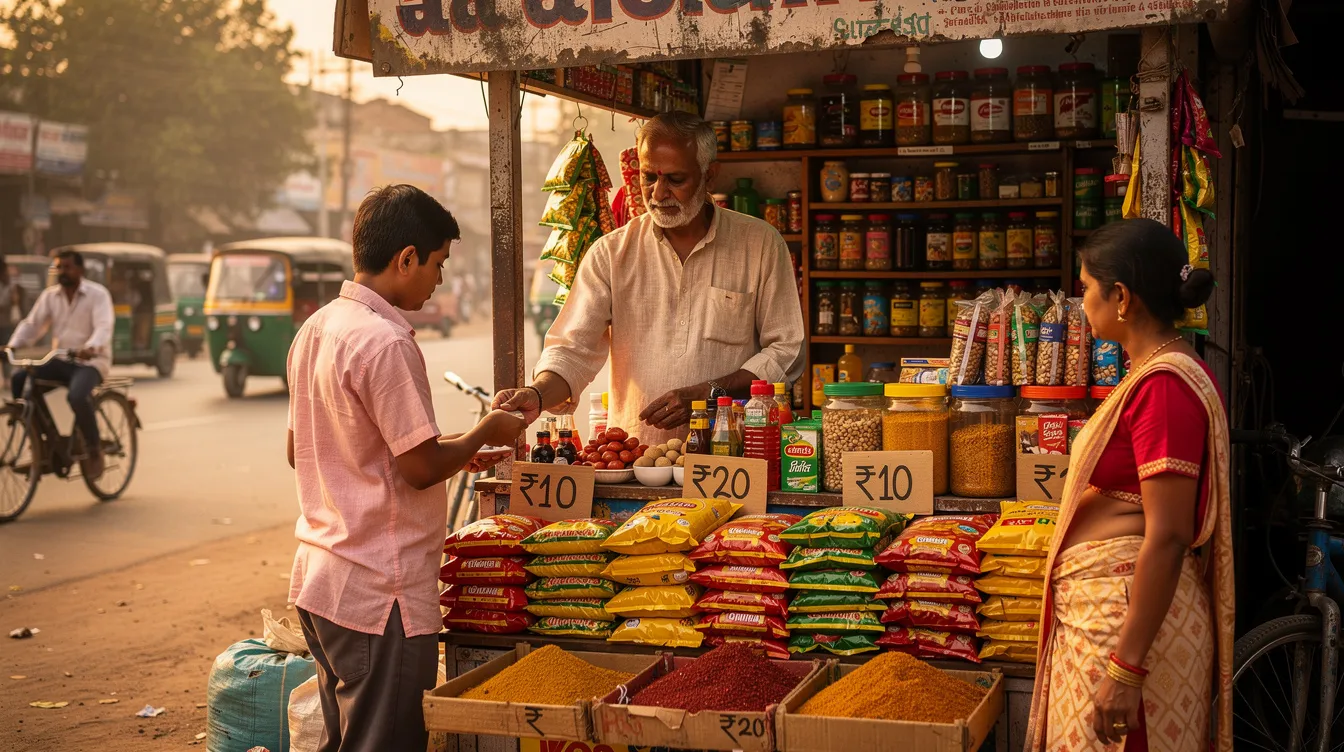
- Funding the unfunded. Extending institutional mudra loans to street vendors, small traders, artisans, and service providers who previously had zero access to bank finance. The scheme operates through a vast network of financial institutions like public sector banks, private banks, RRBs, small finance banks, and NBFCs for credit delivery.
- Financial inclusion. Bringing unbanked micro enterprises into the formal banking system; helping individuals open accounts, use digital payments, and start building a credit history for future loans.
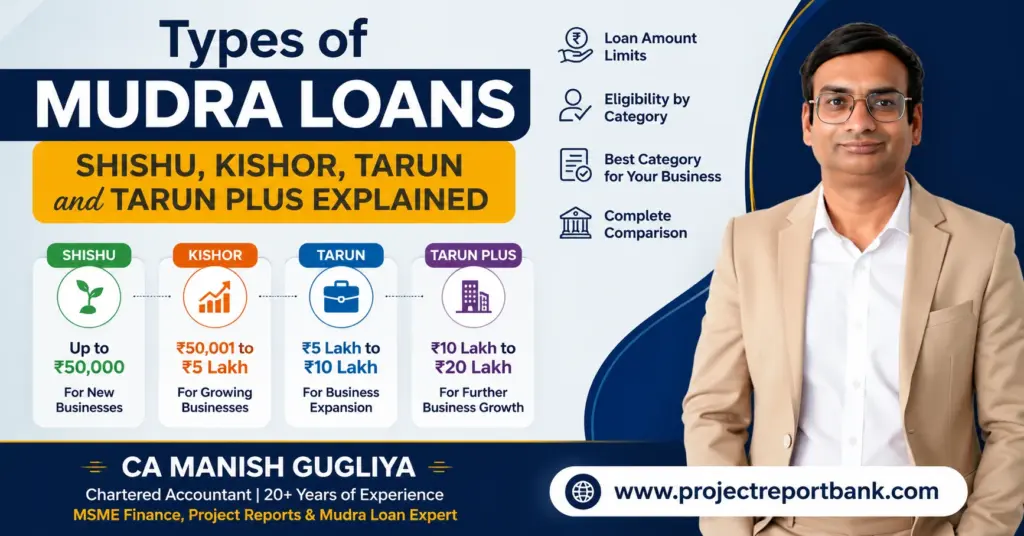
- Self-employment and first-generation entrepreneurs. Providing small-ticket loans without collateral so that people can start units like tailoring shops, mobile repair centres, food carts, and small workshops. Shishu loans cover up to ₹50,000, Kishore loans range from ₹50,001 to ₹5 lakh, Tarun loans range from ₹5 lakh to ₹10 lakh, and Tarun Plus loans go from ₹10 lakh to ₹20 lakh for repeat borrowers.
- Women entrepreneurship. Approximately 67% to 70% of PMMY beneficiaries are women entrepreneurs, including individuals running home-based businesses such as beauty parlours, tiffin services, and boutique units.
- MSME strengthening. Supporting both working capital and term loan needs so that micro enterprises can buy machinery, expand inventory, or add a second branch instead of remaining at subsistence level.
- Reducing dependence on informal lenders. PMMY eliminates dependence on informal lenders by providing affordable institutional loans from regulated entities, protecting entrepreneurs from debt traps.
- Balanced regional development. Supporting viable businesses in semi-urban and rural areas, not only metro cities.
Financial Inclusion, “Funding the Unfunded” and Employment Generation
These three goals work together: every sanctioned mudra loan moves an entrepreneur into the formal system and is expected to generate additional livelihoods.
Many micro businesses run purely on daily cash or supplier credit. A small Kishore loan of ₹1.5 lakh through a bank or NBFC can stabilise cash flow and allow planned growth. The mechanics matter: KYC completion, savings or current account opening, digital receipts, and timely repayment under PMMY build a positive credit score that helps the borrower access larger MSME financing later. The scheme aims to integrate underserved communities into the formal financial system through exactly this process.
On the employment side, consider these scenarios:
- A tailor uses a ₹1.5 lakh Kishore mudra loan to add 3 sewing machines and employ two assistants.
- A small food processing unit availed a ₹4 lakh loan to buy equipment and hire 4 to 5 workers.
- A grocery shop, mobile repair centre, dairy unit with 3 to 4 animals, beauty salon, or e-rickshaw operator; each borrower typically supports 2 to 5 additional incomes.
The initiative supports job creation through grassroots business development, and this focus on micro-jobs is one of the biggest goals of PMMY for youth and women in Tier-2 and Tier-3 towns. In my consulting practice, banks give positive weightage to proposals that clearly state how many jobs will be created or protected by the loan.
Support for Women, First-Time and Existing Entrepreneurs
PMMY is not only for new startups. An important objective is to support women, first-time entrepreneurs, and existing micro businesses that want to expand.
Women entrepreneurs use mudra loans widely for home-based businesses, small manufacturing (papad, pickles, handicrafts), and services. This directly supports financial independence. First-generation entrepreneurs; electricians, mechanics, beauticians, drivers; who have skills but no family business background get a formal starting point without collateral security. You can read more about how new businesses qualify in our guide on Mudra Loan for startup businesses.
Existing small businesses also use mudra loans to expand: buying a second machine, adding a delivery vehicle, renovating a shop, or increasing inventory for festival seasons. The loan structure includes categories like Shishu, Kishore, Tarun, and Tarun Plus based on business growth stages. Moving from Shishu to Tarun reflects the scheme’s objective of helping businesses graduate to higher scale. For a detailed walkthrough, see our complete MSME Mudra Loan guide.
How Understanding PMMY Objectives Helps You Get a Loan
Applicants who align their project reports with the objectives of PM Mudra Yojana face fewer queries from bankers. In 20 years of working with lender institutions, I have seen that proposals highlighting job creation, women participation, and business formalisation get more positive attention.
- Mention nature of business, local market demand, projected sales, employment potential, and use of funds. A bankable project report for Mudra Loan can make the difference between approval and rejection.
- Show financial inclusion aspects: digital payments, bank transactions instead of cash-only operations, and realistic repayment capacity.
- Objectives are policy goals of the government (financial inclusion, employment generation). Benefits are what you receive (collateral-free credit, better credit history, business expansion). When your proposal speaks to both, it stands out.
- You can also apply through the Jan Samarth portal, but documentation and viability assessment remain the deciding factors.
Pradhan Mantri MUDRA Yojana aims to provide formal, affordable credit to micro-entrepreneurs. The scheme promotes self-employment and entrepreneurship across a diverse range of income generating activities including manufacturing and services. It helps create employment and supports local economies. Understanding these goals before you walk into a bank is the single most practical step you can take to improve your chances.
Disclaimer: This article is for informational purposes. Loan approval depends on the lender’s assessment of your eligibility and business viability. Interest is charged as per the lending institution’s policy. Consult your bank or a qualified professional before applying.
Frequently Asked Questions on Objectives of PM Mudra Yojana
Below are answers to common questions about the aims and purpose of PMMY that go beyond what is covered in the sections above.
Is PM Mudra Yojana a subsidy scheme or a normal loan?
Mudra loans under PMMY are regular business loans provided by banks and other financial institutions, not grants. No direct capital subsidy is built into the scheme. Interest is charged by the lender based on its own policy. Any interest subvention available under separate government programmes (Is Mudra Loan a subsidy?) is independent of core PMMY objectives.
Are only unemployed people allowed to take a Mudra loan?
No. The scheme’s purpose is to support both unemployed individuals with a viable business idea and existing small business owners looking to expand. Banks assess business viability and repayment capacity, not employment status, when sanctioning mudra loans.
Does PMMY cover agricultural activities?
PMMY does not finance traditional crop cultivation. It does cover allied agricultural activities such as dairy, poultry, fisheries, and beekeeping when they are run as small businesses. This links back to the objective of supporting non-farm and allied income generating activities in rural and semi-urban areas.
How is the objective of PMMY different from a normal bank business loan?
Any business loan aims to earn interest for the bank. PMMY additionally pursues public policy objectives: financial inclusion, women empowerment, and employment generation for small borrowers. That is why mudra loans are collateral-free up to ₹10 lakh and targeted at micro and small non corporate enterprises that regular corporate-focused lending tends to ignore. A sample Mudra project report for a small business at this letter-by-letter guide can show you how these objectives translate into a real application.
- PM Mudra Yojana Basics: Complete Guide to PMMY
- Latest Statistics and Growth of PM Mudra Yojana (PMMY) in India
- Common Myths About PM Mudra Yojana: Facts Every Business Owner Should Know
- PM Mudra Yojana vs Stand-Up India Scheme: Which Government Business Loan Is Right for You?
- PM Mudra Yojana vs MSME Loan: Which Is Better for Your Small Business in 2026?
- PM Mudra Yojana vs Traditional Business Loans: Which Is Better for Small Businesses?
- Types of Mudra Loans: Shishu, Kishor, Tarun and Tarun Plus Explained
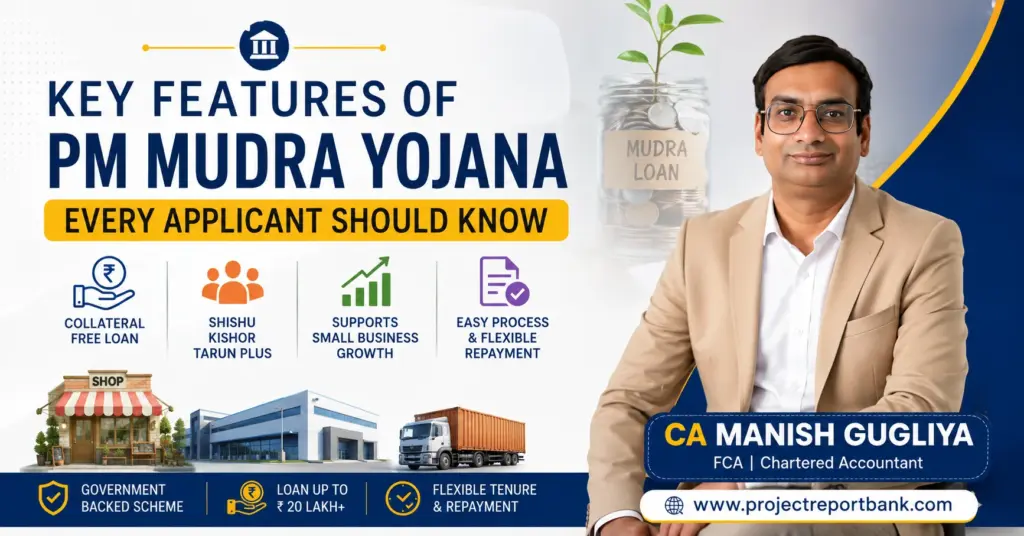
- Key Features of PM Mudra Yojana Every Applicant Should Know
- Objectives of PM Mudra Yojana Explained