Key Takeaways
Pradhan Mantri Mudra Yojana has quietly become one of the largest micro-credit programmes in the world. Here are the numbers that matter most:
- Between 8 April 2015 and early 2025, PMMY has sanctioned over 52 crore loans worth ₹32.61 lakh crore, with cumulative disbursal surpassing ₹40.07 lakh crore across over 57.79 crore loan accounts sanctioned under PMMY.
- Around 68 percent of Mudra beneficiaries are women, and roughly 50 percent of Mudra accounts are held by SC, ST, and OBC entrepreneurs, reflecting deep financial inclusion.
- Average loan size increased from ₹38,000 in FY16 to ₹1.02 lakh in FY25, proving that borrowers are scaling from survival-mode micro units to genuine growth businesses.
- The services sector and small trading activities dominate PMMY lending, fuelling self employment and own account enterprises across urban and rural India.
Introduction: Why PM Mudra Yojana Statistics Matter
In my 20-plus years of preparing project reports and CMA data for small businesses, I have seen hundreds of entrepreneurs walk into bank branches unsure whether they even qualify for a loan. Pradhan Mantri Mudra Yojana, launched on 8 April 2015 with the mission of “funding the unfunded,” changed that equation fundamentally. It created a nationwide entrepreneurial revolution by providing collateral free institutional credit to non corporate, non-farm micro and small enterprises.
Why should you care about PM Mudra Yojana statistics? Because the data tells you how many loans banks are actually approving, what the realistic ticket sizes look like, which sectors get funded most, and whether first-time borrowers stand a genuine chance. All figures in this article come from official sources – the Press Information Bureau (PIB), the Department of Financial Services, and Data.gov.in – with reporting periods noted alongside. If you are new to PMMY, start with this complete beginner’s guide to PM Mudra Yojana.
Table of Contents

Latest PM Mudra Yojana Statistics at a Glance
Here is a consolidated snapshot of the most recent PM Mudra Yojana data available from the Ministry of Finance and PIB.
| Indicator | Figure | Period |
|---|---|---|
| Total loan accounts sanctioned | Over 57.79 crore | Apr 2015 – Mar 2025 |
| Total loans sanctioned (amount) | ₹32.61 lakh crore | Apr 2015 – Mar 2025 |
| Cumulative disbursal | Over ₹40.07 lakh crore | Apr 2015 – Mar 2025 |
| Women beneficiaries | ~68% of total accounts | Cumulative |
| SC/ST/OBC beneficiaries | ~50% of total accounts | Cumulative |
| First-time entrepreneurs | ~21% of accounts | Cumulative |
| Average loan size (FY25) | ₹1.02 lakh | FY 2024–25 |
| Loan categories | Shishu, Kishor, Tarun, Tarun Plus | Current |
These numbers are not abstract. Over 52 crore loans since April 2015 means that street vendors, kirana shop owners, tailors, and mobile repair businesses across every district have been able to access finance through formal channels. PMMY has improved access to formal credit for micro-enterprises that were previously invisible to the banking system. The collateral free loan structure removes the single biggest barrier – property mortgage – that kept unfunded micro enterprises out of institutional credit.
Around 45 to 50 percent of total accounts belong to marginalized communities, and women entrepreneurs account for 60 to 68 percent of total loan accounts. This is targeted financial inclusion in action, not just on paper.
PM Mudra Yojana Growth Since Launch (Year-wise Data)
PMMY has completed roughly ten financial years. The year-wise expansion path tells a powerful story.
| FY | Loans (Cr) | Amount Sanctioned (₹ L Cr) | YoY Growth (Amt) | Highlights |
|---|---|---|---|---|
| 2015–16 | 3.49 | 1.37 | – | Launch, Shishu focus |
| 2016–17 | 3.97 | 1.80 | +31% | Awareness ramp-up |
| 2017–18 | 4.81 | 2.54 | +41% | Kishor expansion |
| 2018–19 | 5.98 | 3.22 | +27% | Peak pre-COVID |
| 2019–20 | 6.23 | 3.37 | +5% | Early COVID impact |
| 2020–21 | 5.07 | 3.22 | –4% | Pandemic disruption |
| 2021–22 | 5.38 | 3.39 | +5% | Recovery begins |
| 2022–23 | 6.24 | 4.56 | +36% | Strong rebound |
| 2023–24 | 6.67 | 5.41 | +19% | Record disbursement |
| 2024–25 | ~6.80* | ~5.45* | ~1%* | Tarun Plus launched |
*FY25 figures are provisional as of Feb 2025. Source: PIB and DFS.
The total Mudra loan amount grew from ₹1.37 lakh crore in FY16 to over ₹5.41 lakh crore in FY24. Loan disbursal rose by 36 percent in FY23, indicating strong confidence among both lenders and borrowers after the pandemic. This msme credit boom coincided with MSME lending surging from ₹8.51 lakh crore in FY14 to ₹27.25 lakh crore in FY24 across the banking system, and PMMY contributed meaningfully to that credit flow.
Year-wise Growth Analysis and Key Phases
Rather than repeating numbers, let me interpret what actually happened on the ground during each phase.
Launch and Stabilisation (FY16–FY17): Banks were cautious. Most sanctions were Shishu loans – small amounts for vendors and traders. Average ticket size hovered around ₹38,000. Member lending institutions including scheduled commercial banks, regional rural banks, and non banking financial companies were still setting up internal processes.
Expansion Phase (FY18–FY19): As repayment data matured, risk perception improved. Kishor and Tarun categories gained traction. The scheme crossed 5 crore annual loans for the first time.
COVID Disruption (FY20–FY22): Loan volumes dipped to 5.07 crore in FY21. Many genuine borrowers lost access temporarily, but government refinance support through the development and refinance agency (MUDRA/SIDBI) kept the pipeline alive.
Post-COVID Recovery (FY23–FY25): This is where PMMY truly scaled. In my own consultancy practice, I watched street vendors who started with ₹30,000 Shishu loans graduate to Kishor limits for shop renovation, and some even move to Tarun for expansion. The introduction of Tarun Plus around late 2024 – for borrowers who had successfully repaid loans – confirmed this upscaling trend.
Category-wise PM Mudra Yojana Statistics (Shishu, Kishor, Tarun, Tarun Plus)
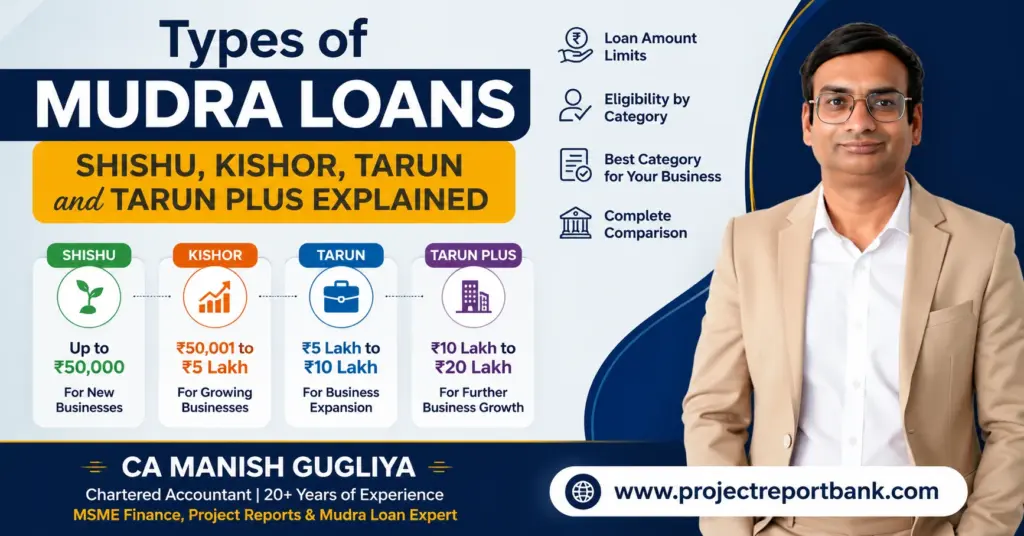
PMMY offers four loan categories. Shishu loans are up to ₹50,000. Kishor loans range from ₹50,001 to ₹5 lakh. Tarun loans are between ₹5 lakh and ₹10 lakh. Tarun Plus loans range from ₹10 lakh to ₹20 lakh, available only to repeat borrowers. PMMY provides collateral free loans up to ₹20 lakh across these categories. For a detailed comparison, see Types of Mudra Loans Explained.
| Category | % of Accounts | % of Amount | Typical Borrower |
|---|---|---|---|
| Shishu | ~78% | ~35% | Street vendors, home-based units |
| Kishor | ~20% | ~40% | Small shop owners, service providers |
| Tarun | ~2% | ~25% | Expanding micro manufacturers, fleet owners |
| Tarun Plus | Negligible | Negligible | Proven repeat borrowers scaling up |
The Kishor loans share grew from 5.9 percent in FY16 to 44.7 percent of sanctioned amount by FY25. This signals significant progress – borrowers are no longer stuck at survival-level credit. In my experience, first-time entrepreneurs without history often start with Shishu, but those with a clean 18-month track record quickly target Kishor or Tarun limits.

Women Entrepreneurship and Social Inclusion Statistics
One of PMMY’s strongest outcomes is enhancing women’s economic empowerment. Women comprise 68 percent of all Mudra beneficiaries, enabling women led businesses across self-help groups, small trading, and home-based manufacturing. This is not a token number – 68 percent of Mudra beneficiaries are women, promoting women led enterprises at a scale that few government schemes have achieved.
Per woman PMMY disbursement reached ₹62,679 by FY25, growing at a double-digit CAGR from FY16. Women-led MSMEs now exceed 2.8 million due to PMMY, advancing women led enterprises and advancing equitable growth in the process.
On social inclusion, 50 percent of Mudra accounts are held by SC, ST, and OBC entrepreneurs, while around 10–11 percent belong to minority communities. This is breaking traditional credit barriers – banks evaluate repayment track records and group guarantees rather than demanding immovable property collateral, enabling marginalised communities to access financial support for the first time. To understand why PM Mudra Yojana is important for small businesses, these inclusion numbers tell the real story.
First-Time Entrepreneurs and New Business Creation under PMMY
Approximately 21 percent of loans are extended to first-time entrepreneurs – borrowers with no prior business loan history in the formal banking system. These are people who were no longer job seekers but aspiring business owners: delivery partners buying two-wheelers, small e-commerce sellers, home-based food units, and village-level service providers running salons, repair shops, or common service centres.
PMMY brings these new entrepreneurs into formal finance by helping them open current accounts, build their first credit history, and shift from informal lenders to institutional credit. A clean repayment record over 18–24 months often allows an upgrade to higher mudra loan categories or regular MSME working capital limits – promoting self employment and promoting inclusive entrepreneurship at scale.
State-wise Performance Highlights of PM Mudra Yojana
States like Tamil Nadu, Uttar Pradesh, and Karnataka lead in loan disbursements. Here are the top-performing states by cumulative disbursal up to 28 February 2025, based on Data.gov.in and PIB:
| State/UT | Disbursal (₹ Crore) | Accounts |
|---|---|---|
| Tamil Nadu | 3,23,647.76 | Leading |
| Uttar Pradesh | 3,14,360.86 | Leading |
| Karnataka | 3,02,146.41 | High |
| West Bengal | 2,82,322.94 | High |
| Bihar | 2,81,943.31 | High |
| Maharashtra | 2,74,402.02 | High |
| J&K (UT) | ~45,815 | 21+ lakh |
Tamil Nadu has the highest disbursal at ₹3,23,647.76 crore. Uttar Pradesh follows with ₹3,14,360.86 crore disbursed. Karnataka ranks third with ₹3,02,146.41 crore disbursed. West Bengal has received ₹2,82,322.94 crore. Bihar’s total disbursal stands at ₹2,81,943.31 crore, and Maharashtra’s disbursal is ₹2,74,402.02 crore. Among Union Territories, Jammu and Kashmir stands out with over ₹45,000 crore disbursed across more than 21 lakh accounts – a significant achievement for expanding financial access in that region. Rankings shift marginally each year, so readers should refer to the latest official datasets for updated numbers.
Sector-wise Distribution: Manufacturing, Trading, Services and Allied Agriculture
The scheme supports sectors such as manufacturing, retail, and agriculture. Trading and the services sector typically account for the highest number of mudra loans because they require lower upfront investment and generate quick cash flow. Manufacturing takes a larger per-loan share due to machinery costs.
| Sector | Typical Share (Accounts) | Typical Share (Amount) | Examples |
|---|---|---|---|
| Trading | ~35% | ~30% | Kirana stores, wholesale traders |
| Services | ~38% | ~25% | Salons, transport, mobile repair businesses |
| Manufacturing | ~15% | ~30% | Fabrication, food processing |
| Allied Agriculture | ~10% | ~15% | Dairy, poultry, agri-processing |
These patterns reflect how small enterprises reflect india’s enabling policy environment – offering institutional credit where it is needed most.
Economic Impact of PM Mudra Yojana on MSMEs and Employment
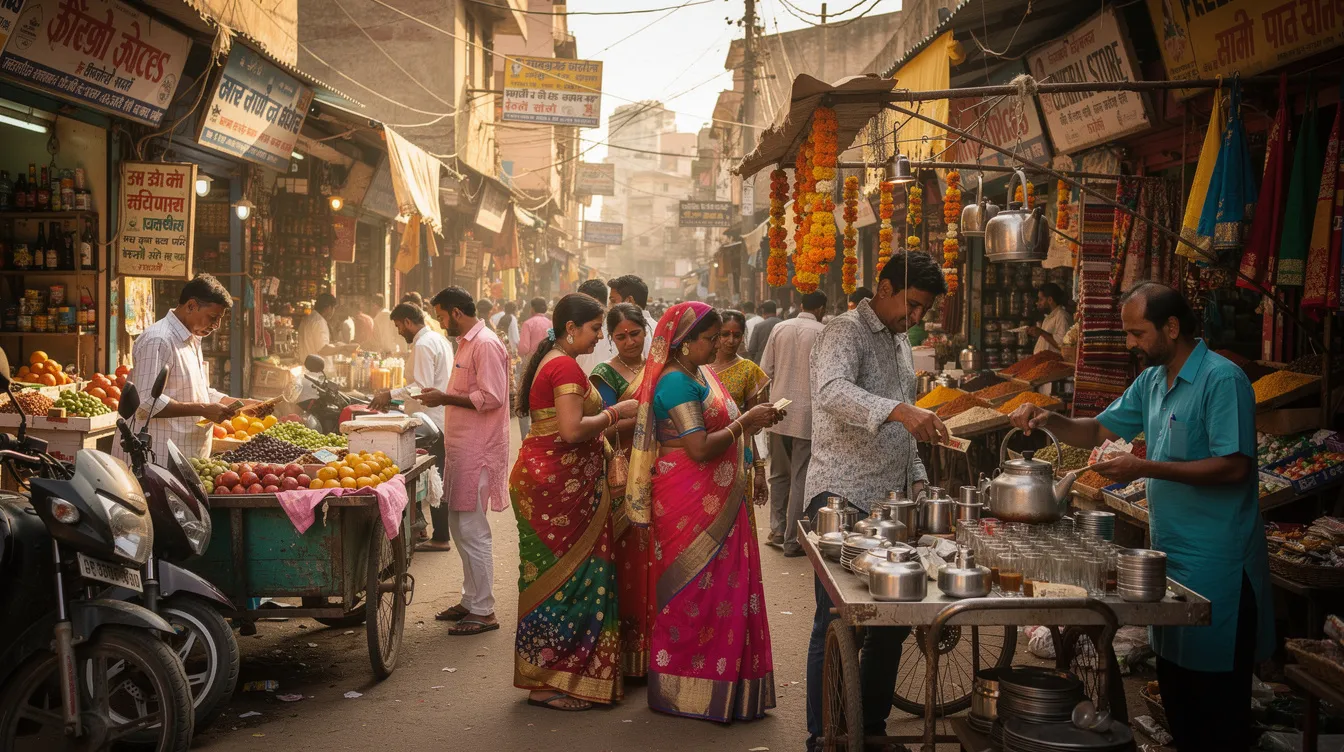
Government assessments cite the creation of over 1 crore jobs due to PMMY, with significantly higher employment generation in services and trading compared to manufacturing. Mudra-funded beneficiary micro units contribute to local supply chains, sub-contracting for larger MSMEs, last-mile delivery, and rural non-farm income diversification – driving grassroots job creation and strengthening india’s grassroots economy.
Total bank credit increased substantially in the MSME segment, with MSME share in total bank credit reaching nearly 20 percent by FY24. PMMY has played a role in this by expanding access to credit for millions of non corporate micro units that previously had zero formal credit history. Woman incremental deposits grew alongside as many women mudra loan holders opened their first bank accounts.
Beyond credit, PMMY complements PMJDY, UPI, and GST in building transparent financial records – enabled businesses now adopt QR codes and digital payments, making them stronger candidates for future working capital and term loans.
Important Achievements and Milestones of PM Mudra Yojana
Since its launch on 8 April 2015, PMMY has crossed successive landmarks: ₹10 lakh crore in cumulative disbursal, then ₹20 lakh crore, and now over ₹32 lakh crore in sanctions with disbursal surpassing ₹40.07 lakh crore. Over 52 crore loans sanctioned since 2015 makes this a major economic segment in India’s credit architecture.
Key milestones include massive inclusion of women, SC/ST/OBC and minority entrepreneurs; evolution from Shishu-dominant lending to higher-value Kishor and Tarun segments; and the introduction of Tarun Plus for repeat good borrowers. Digital integration has simplified access to PMMY loans through the JanSamarth portal, standardised application formats, and credit scoring by commercial banks, small finance banks, micro finance institutions, and non banking financial companies. The international monetary fund has also acknowledged PMMY’s contribution to financial inclusion and women-led enterprise promotion in India.
Challenges and Gaps Despite Strong PMMY Growth
As a practitioner, I must note that statistics alone do not capture ground-level friction. Some financial institutions report higher NPAs in very small-ticket unsecured portfolios – poor cash-flow planning and external shocks remain real risks. Many eligible micro units still do not know about credit access differences between PMMY and generic business loans, or about Tarun Plus possibilities – awareness gaps persist.
Documentation challenges – absence of GST registration, weak income proofs, and poorly prepared project reports – often result in smaller sanctions than requested. Regional disparities also exist: states with stronger banking networks and SHG structures receive more loans, while remote or tribal districts still lag. Professional guidance through proper project reports and CMA data can help borrowers overcome most of these hurdles.
Future Outlook: PM Mudra Yojana Growth in Coming Years
The outlook for PMMY remains positive. India’s push for MSME growth, digital lending, and self-employment ensures continued demand. Expect further scaling of the Tarun and Tarun Plus segment, greater integration with digital platforms and the account aggregator framework, and wider use of alternative credit assessment based on GST data and cash flows.
PMMY is expected to support new-age service businesses, small e-commerce sellers, rural tourism, and allied agriculture entrepreneurs. Simpler processes, better grievance redressal, and handholding via SIDBI and state-level institutions will keep expanding financial access. Supporting financial institutions – from commercial banks to small finance banks – are deepening their rural reach. Entrepreneurs who build proper records now under Mudra will be best positioned for future MSME term loans, providing collateral free loans as a stepping stone to larger formal finance.
Expert Opinion: Practical Interpretation of PMMY Statistics by CA Manish Gugliya
In my experience working with bank managers and MSME clients, here is what the PM Mudra Yojana statistics actually mean for an individual borrower: high sanction volumes indicate that banks and supporting financial institutions are open to Mudra proposals. Women and first-time entrepreneurs have a strong case. But approval still depends on quality of proposal and repayment capacity.
My practical tips for better approval chances:
- Prepare a realistic business plan and project report – this is the scheme’s unique selling proposition working in your favour.
- Estimate working capital correctly based on actual business cycles.
- Keep banking transactions clean for at least six months before applying.
- Avoid multiple parallel loan applications that confuse lenders.
- Maintain basic compliance – GST and UDYAM registration where applicable.
For Kishor, Tarun, and Tarun Plus limits, professional project reports and CMA data make the difference between a quick approval and months of back-and-forth. Read more about key features of PM Mudra Yojana every applicant should know. In my experience, applicants who are transparent and well-prepared find PMMY to be one of the most entrepreneur-friendly credit schemes – the refinance agency plays a supportive role, and the development and refinancing activities behind PMMY keep liquidity flowing to member lending institutions.
Frequently Asked Questions on PM Mudra Yojana Statistics
How many Mudra loans have been sanctioned since the launch of PMMY?
Over 52 crore loans worth ₹32.61 lakh crore have been sanctioned since April 2015. Over 57.79 crore loan accounts have been sanctioned when including repeat and renewed accounts. Cumulative disbursal has surpassed ₹40.07 lakh crore as of early 2025, according to PIB and DFS data.
What is the current average Mudra loan size in India?
The average loan size increased from ₹38,000 in FY16 to ₹1.02 lakh in FY25. This significant rise reflects business growth among mudra loan holders – borrowers are graduating from survival-level working capital to meaningful business expansion loans.
Which Mudra category has grown the fastest in value terms?
Kishor has shown the most dramatic shift. The Kishor loans share grew from 5.9 percent of sanctioned amount in FY16 to 44.7 percent by FY25. This indicates that lakhs of borrowers who started small have scaled their businesses and now access larger credit, reflecting a significant rise in entrepreneurial ambition.
How does PMMY impact labour force participation and employment?
Government assessments cite the creation of over 1 crore jobs supported by PMMY-financed micro enterprises. The scheme is directly fuelling self employment and grassroots job creation across manufacturing, trading, and services. Many mudra loan holders belong to communities that previously had no formal credit access, and they are now micro-employers themselves.
Does PM Mudra Yojana really help compared to traditional business loans?
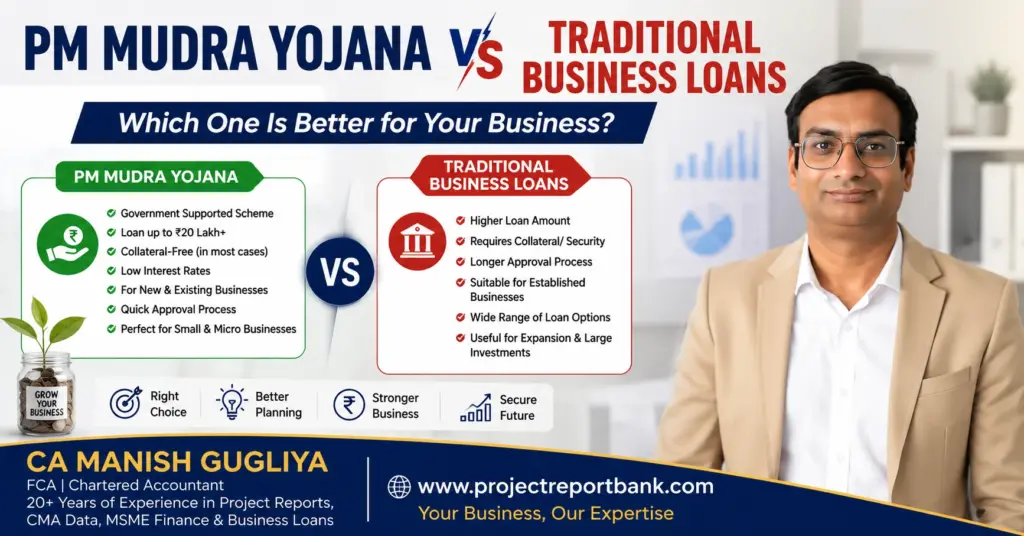
Yes. Unlike traditional business loans that demand collateral, PMMY offers collateral free loans with simpler documentation. For a detailed comparison, see PM Mudra Yojana vs traditional business loans. The pm mudra loan disbursal data shows that the scheme reaches borrowers whom traditional credit barriers would have excluded entirely.
Conclusion: Using PMMY Statistics for Better Borrowing Decisions
The PM Mudra Yojana data discussed here – cumulative loans exceeding 52 crore, 68 percent women beneficiaries, rising average ticket sizes, and strong state-level disbursal – collectively prove that mantri mudra yojana pmmy is a large, functioning credit pipeline for micro entrepreneurs. This is not a paper scheme; it is an active, growing programme offering collateral free loans that are reaching the grassroots.
Serious applicants should look beyond headline numbers and focus on their own eligibility, documentation, business viability, and proper project planning. Refer frequently to official PM Mudra Yojana data from PIB, DFS, and Data.gov.in before believing rumours about scheme “closure” or “no funds” – the statistics clearly show ongoing growth and significant progress year after year.
Platforms like Project Report Bank help entrepreneurs interpret these figures and translate them into bank-ready project reports and CMA data tailored to their trade or services sector business. PMMY remains central to India’s journey toward a stronger MSME ecosystem, broader financial inclusion, and a future where unfunded micro enterprises constitute a shrinking – not growing – share of the economy.
- PM Mudra Yojana Basics: Complete Guide to PMMY


- Latest Statistics and Growth of PM Mudra Yojana (PMMY) in India
- Common Myths About PM Mudra Yojana: Facts Every Business Owner Should Know
- PM Mudra Yojana vs Stand-Up India Scheme: Which Government Business Loan Is Right for You?

- PM Mudra Yojana vs MSME Loan: Which Is Better for Your Small Business in 2026?

- PM Mudra Yojana vs Traditional Business Loans: Which Is Better for Small Businesses?
- Types of Mudra Loans: Shishu, Kishor, Tarun and Tarun Plus Explained
- Key Features of PM Mudra Yojana Every Applicant Should Know

- Objectives of PM Mudra Yojana Explained