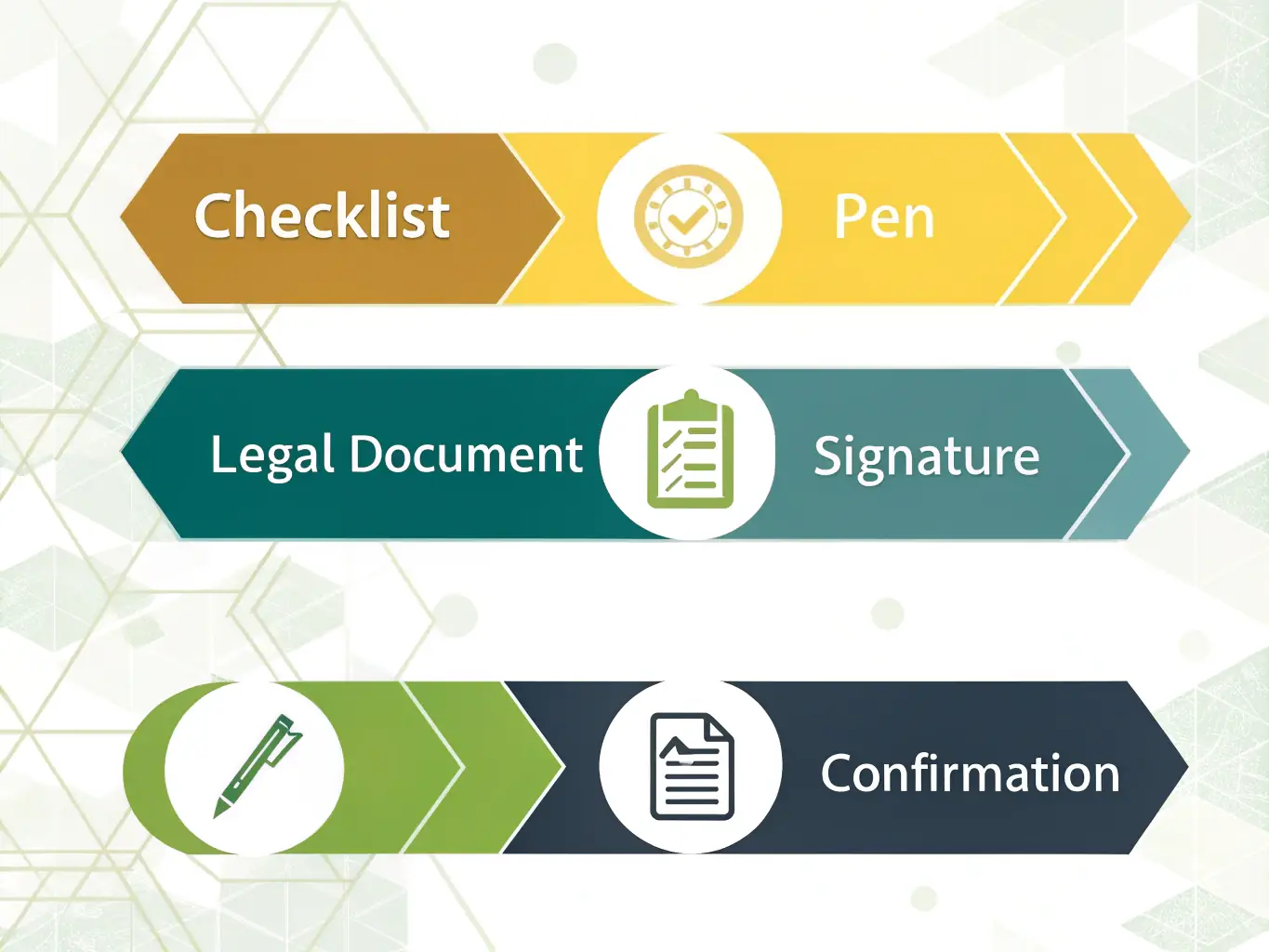




Our Services & Simple 4-Step Engagement Process

Get expertly crafted Mudra Loan project reports, CMA data, and business plans tailored for businesses across Karnataka. We serve all major cities and industries, ensuring a seamless, 100% online experience from inquiry to delivery. Our transparent process makes it easy for you to secure your loan with confidence and clarity.
A professional image showing a Chartered Accountant reviewing a detailed project report with financial charts and graphs, set in a modern office environment, representing expert report preparation services.
Comprehensive Mudra Loan Project Reports

We prepare Mudra Loan project reports, CMA data, and business plans that meet all bank requirements, ensuring your application stands out and is processed smoothly for faster approvals.
A vibrant image depicting various small business owners in Karnataka—such as a shopkeeper, manufacturer, and service provider—collaborating and reviewing documents, symbolizing the industries served.
Industries Served Across Karnataka
Our services cover retail, manufacturing, trading, and service sectors in Bengaluru, Mysuru, Hubballi, Mangaluru, Belagavi, and all other cities, supporting entrepreneurs and established businesses alike.
A clean infographic-style image illustrating a simple four-step process: Inquiry, Consultation, Report Preparation, and Delivery, with icons for each step and a clear visual flow.
Simple 4-Step Process for Easy Engagement
From your initial inquiry to final delivery, our process is straightforward: submit your details, consult with our expert, receive a draft, and get your final report delivered online—quick, transparent, and hassle-free.

Mudra Loan Karnataka – Complete Guide to PM Mudra Loan Eligibility, Documents, Interest Rate, Application Process & Project Report (2026)

Key Takeaways

  • Mudra Loans in Karnataka offer collateral-free finance up to Rs. 10 lakh under Shishu, Kishore, and Tarun categories – and up to Rs. 20 lakh under Tarun Plus for eligible borrowers who have successfully repaid previous loans.

  • Interest rates are not fixed centrally; each bank or financial institution in Karnataka sets its own rate (typically 8%–12% p.a.) based on reserve bank guidelines, borrower profile, and lender’s policy.

  • Entrepreneurs across Karnataka can apply both online (Jan Samarth portal, bank websites) and offline through public sector banks, private sector banks, Regional Rural Banks, small finance banks, NBFCs, and microfinance institutions.

  • A professionally prepared project report with CMA data, realistic financial projections, and break-even analysis significantly improves Mudra Loan approval chances and reduces processing time.

  • Project Report Bank provides online, bank-ready Mudra Loan project report preparation services across all districts and major cities of Karnataka.

Introduction

If you run a small shop in Bengaluru, manufacture garments in Hubballi, operate a food stall in Mysuru, or trade commodities in Mangaluru, chances are you have heard of Mudra Loans – but may not know exactly how they work in Karnataka.

Under the Pradhan Mantri Mudra Yojana (PMMY), eligible borrowers in Karnataka can access loans ranging from Rs. 10,000 up to Rs. 10 lakh (and Tarun Plus up to Rs. 20 lakh for qualifying applicants) for working capital, machinery purchase, business expansion, or setting up a new venture. These are collateral-free business loans specifically designed for non-farm micro enterprises and small businesses. The scheme encourages entrepreneurship among small traders and startups across urban and rural Karnataka.

This guide is written from the perspective of a practicing Chartered Accountant who regularly prepares bankable project reports for Mudra Loan applicants. Whether you are a first-time entrepreneur, an existing business owner, a woman entrepreneur, or an SC/ST applicant – this article covers everything you need to know about eligibility, required documents, interest rates, the application process, common mistakes, and how a strong project report can make or break your loan approval in 2026.

The image shows a small business owner working diligently in a compact workshop filled with various tools and materials, reflecting the vibrant environment of micro enterprises. This scene highlights the importance of financial assistance, such as mudra loans, for small and micro businesses to thrive and generate income.


What is PM Mudra Loan?

Pradhan Mantri Mudra Yojana (PMMY) is a flagship scheme launched on 8 April 2015 by the Government of India. It channels affordable credit to non corporate non farm small and micro businesses through a network of banks, NBFCs, and other financial intermediaries.

The scheme operates through the micro units development and refinance agency Ltd (MUDRA), a subsidiary of SIDBI. MUDRA itself does not lend directly to ultimate borrowers. Instead, it acts as a refinance agency – providing funds and policy framework to Member Lending Institutions (MLIs) such as commercial banks, Regional Rural Banks, small finance banks, non banking finance company entities, and microfinance institutions. These institutions then sanction and disburse mudra loans to individual borrowers and micro enterprises engaged in income generating small business activities.

In Karnataka, PMMY loans are available through public sector banks (SBI, Canara Bank, Bank of Baroda), private sector banks (HDFC Bank, ICICI Bank, Axis Bank), Regional Rural Banks like Karnataka Grameena Bank, small finance banks, and several NBFCs – making the scheme widely accessible from Bengaluru to Bidar.

Objectives of the Scheme

The core objective of the mudra loan scheme is to bring micro enterprises into the formal financial system by:

  • Providing financial assistance to small entrepreneurs who lack access to institutional credit

  • Reducing dependence on informal moneylenders charging exorbitant interest rates

  • Supporting self-employment and job creation, especially among youth and women entrepreneurs

  • Encouraging first-generation entrepreneurs to start income-generating ventures

  • Promoting financial inclusion across rural, semi-urban, and urban areas

Benefits for Small Businesses

For small businesses in Karnataka, Mudra Loans bring several practical advantages:

  • Collateral-free financing – no property mortgage needed for loans up to Rs. 10 lakh

  • Simpler documentation compared to traditional business loan products

  • Availability across rural and urban bank branches throughout Karnataka

  • Special focus on women entrepreneurs, SC/ST applicants, and minority communities

  • Flexibility to use the loan for working capital, term loan purposes, or both

Important: Mudra Loans are strictly for business purposes – stock purchase, machinery, tools, commercial vehicles, shop renovation, and similar productive activities. They must not be used for speculative activities, trading in shares/derivatives/mutual funds, or personal consumption like a home loan.

Government’s Vision Behind PMMY

The government’s vision is straightforward: “Fund the Unfunded.” Millions of micro businesses across India, including Karnataka, operate outside the reach of the banking system. Pradhan Mantri Mudra Yojana (PMMY) supports non-corporate non-farm small enterprises by connecting them with institutional credit. MUDRA does not appoint agents or middlemen – applicants in Karnataka should deal directly with authorised banks and financial institutions to avoid fraud.

Why Mudra Loan is Important in Karnataka

Karnataka’s MSME Ecosystem

Karnataka has one of India’s most vibrant MSME ecosystems. As of February 2025, the state had received cumulative PMMY disbursements of approximately ₹3,02,146 crore since 2015 – making it the third highest among all Indian states. Around 49 million loan accounts have been opened in Karnataka under the scheme, reflecting the deep penetration of mudra loans across the state.

Mudra Loans support self-employment opportunities in Karnataka by enabling small entrepreneurs to access capital without the burden of collateral or complex paperwork. The scheme helps create job opportunities as businesses expand, contributing to local economies from Bengaluru to Yadgir.

Major Industries in Karnataka

Karnataka’s economy is diverse, and Mudra Loans feed into multiple sectors:

  • IT and startups – Bengaluru’s tech corridor supports thousands of small IT-enabled service providers

  • Textiles and garments – Hubballi-Dharwad and Bengaluru have thriving garment manufacturing clusters

  • Food processing – Mandya, Hassan, and Vijayapura have strong agro-processing potential

  • Tourism and hospitality – Mysuru, Kodagu, and Uttara Kannada benefit from tourism-linked micro businesses

  • Engineering and auto components – Small manufacturing units across Tumakuru, Davanagere, and Shivamogga

  • Trading and retail – Every district has thousands of small traders who rely on working capital financing

Opportunities for New Entrepreneurs

Many entrepreneurs lack awareness of Mudra Loan categories and the financial support available to them. Whether you want to open a mobile repair shop in Kolar, set up a beauty parlour in Raichur, or start a coaching centre in Kalaburagi, the PMMY framework covers a wide range of non-farming small business activities through its Shishu, Kishore, and Tarun categories.

Even micro entrepreneurs in North Karnataka districts like Bidar, Koppal, Bagalkot, and Yadgir can access the scheme through nearby bank branches.

Why Banks Prefer Proper Documentation

After the consolidation of Karnataka’s Regional Rural Banks (Karnataka Gramin Bank and Karnataka Vikas Grameena Bank merged into Karnataka Grameena Bank on 1 May 2025), verification and documentation standards have become more streamlined. Banks prefer well-documented proposals because they reduce NPA risk. A proper project report, clear financial documents, and accurate KYC ensure faster processing and higher sanction rates.

The image depicts a vibrant Indian marketplace filled with small shops and traders bustling with activity. Stalls are adorned with colorful goods, while various individuals engage in commerce, highlighting the essence of micro businesses and the financial support they seek through initiatives like the Mudra loan scheme.


Types of Mudra Loans

PMMY loans are categorized into Shishu, Kishore, Tarun, and Tarun Plus based on loan size and the growth stage of the business. Mudra Loans are categorized into Shishu, Kishore, and Tarun as the three primary tiers, with Tarun Plus added recently for repeat borrowers.

Shishu Loan

Shishu loans are for amounts up to Rs. 50,000. These are ideal for the smallest micro businesses – street vendors in Bengaluru, petty shops in semi-urban towns, small tailoring units, mobile repair kiosks, and home-based food businesses. Documentation is minimal, and most banks waive processing fees for shishu loans.

Kishore Loan

Kishore loans range from Rs. 50,001 to Rs. 5 lakhs. They are designed for growing micro units – small restaurants, salons, fabrication workshops, traders looking to increase stock, and similar businesses that have some operating history and need expansion capital. Banks typically require more detailed financial documents and a basic business plan for Kishore category.

Tarun Loan

Tarun loans cover amounts from Rs. 5 lakhs to Rs. 10 lakhs. This category suits more established small businesses planning technology upgradation, purchasing equipment, expanding premises, or adding product lines. The documentation requirement is higher, and banks will assess your repayment capacity carefully based on past financials and projected cash flows.

Tarun Plus Loan

Tarun+ loans extend up to Rs. 20 lakhs for previous Tarun borrowers who have successfully repaid previous loans. Introduced in the Union Budget 2024-25 and effective from October 2024, Tarun Plus is gradually being adopted by more lenders. Availability depends on individual bank policy, so check with your preferred bank in Karnataka before applying.

Parameter

Shishu

Kishore

Tarun

Tarun Plus

Loan Amount

Up to ₹50,000

₹50,001 – ₹5,00,000

₹5,00,001 – ₹10,00,000

₹10,00,001 – ₹20,00,000

Target Borrower

New/micro startups

Growing micro units

Established small businesses

Repeat Tarun borrowers

Documentation

Minimal

Moderate

Detailed

Detailed + track record

Margin Money

Nil/very low

0–10% (bank-specific)

5–15% (bank-specific)

As per lender’s policy

Processing Fee

Usually nil

Nominal

As per bank norms

As per bank norms

Project Report

Optional

Recommended

Essential

Essential

Mudra Loan Features

Here is a concise overview of the key features that apply across all Mudra Loan categories in Karnataka:

  • Loan Amount: Shishu up to ₹50,000; Kishore ₹50,001–₹5,00,000; Tarun ₹5,00,001–₹10,00,000; Tarun Plus up to ₹20,00,000.

  • Interest Rate: There is no single fixed Mudra Loan interest rate. Each Member Lending Institution decides its own rate, linked to MCLR/RBLR/base rate plus spread. In Karnataka, Regional Rural Banks typically start at 10% onwards, while public sector banks may offer rates from approximately 8.4%–10.5%. Always verify the current slab with your chosen bank branch.

  • Repayment Period: Tenure ranges from 12 months to 5–7 years depending on the purpose. Working capital loans are typically renewable annually, while term loan repayment is structured through fixed EMIs. Some banks offer a moratorium period on principal repayment for term loans.

  • Processing Charges: Shishu loans are often processed with zero or very low charges. Kishore and Tarun may attract a small processing fee (a percentage or flat fee decided by the bank). Ask clearly about fees, GST, and any upfront charges before signing.

  • Collateral Requirement: Mudra Loans provide collateral-free financing up to Rs. 10 lakh. No property mortgage is required. Banks may take hypothecation of assets created from the loan as primary security and a personal guarantee of the proprietor, partners, or directors.

  • Margin Money: For Shishu, margin is usually nil. For Kishore and Tarun, banks may ask for 5–15% margin depending on the purpose and internal policy. Your own savings, already-purchased machinery, or existing stock can sometimes serve as margin contribution.

  • Working Capital Facility: Sanctioned as cash credit or overdraft, working capital loans are for day-to-day needs like raw materials, stock, salaries, and power bills. Interest is charged only on the utilised amount.

  • Term Loan: Used for purchasing capital assets like machinery, commercial vehicles, or shop renovation. EMIs are fixed based on tenure and interest rate. Some banks issue a Mudra-branded debit card linked to the working capital account for ATM withdrawals and POS purchases up to the sanctioned limit.

Common Mistake to Avoid: Do not treat a Mudra working capital limit as a personal spending card. Separate business and personal expenses clearly. Banks monitor utilisation, and mixed usage can lead to account classification issues at renewal time.

Who Can Apply for Mudra Loan in Karnataka?

Eligible Applicants

Eligibility for PMMY requires the applicant to be an Indian citizen. Applicants must be between 18 and 65 years old. The loan is available for small businesses in various sectors including manufacturing, trading, services, and allied agriculture. There is no minimum educational qualification or education qualification requirement – what matters is the viability of the proposed activity.

Eligible applicants include:

  • Individuals (proprietors)

  • Partnership firm entities

  • Limited Liability Partnerships (LLPs)

  • Private limited companies

  • Self Help Groups (SHGs) engaged in business

  • Any other legal forms involved in non-farm income-generating activities

Applicants must not be defaulters to any bank or financial institution. A satisfactory credit track record with no wilful defaults is a basic prerequisite. A good credit history improves loan approval chances significantly.


Eligible Businesses

PMMY loans target non-farm income-generating activities in various sectors. The beneficiary micro unit must be involved in manufacturing, processing, trading, or service sectors. Allied agriculture activities (dairy, poultry, fisheries, agro-processing) are also covered, though pure crop cultivation is not.

Existing Businesses

For existing businesses, banks typically expect at least 6 months of operational history, demonstrated through bank statements, GST returns, or invoices. Businesses should have been operational for at least 6 months to qualify under standard assessment. Having a track record makes it easier for the bank to assess repayment capacity. Your business is assessed based on turnover, cash flows, and existing financial statements.

New Businesses

New entrepreneurs are eligible under PMMY if they have a viable business idea, necessary skills, basic KYC, and a clear business plan. However, new businesses often receive lower loan amounts (typically Shishu or small Kishore) as banks take a cautious approach without historical financial data. A strong project report becomes essential in such cases.

Manufacturing Units

Small manufacturing units producing goods like garments, auto components, food products, packaging materials, and handicrafts can avail Mudra Loans for purchasing machinery, raw materials, or expanding production capacity. Karnataka has strong clusters in garments (Bengaluru), machine tools (Hubballi-Dharwad), and food processing (Mandya).

Service Businesses

Service providers – IT freelancers, beauty parlour owners, gym operators, coaching centres, repair workshops, logistics providers, and healthcare practitioners – all qualify if they operate as non corporate, non-farm micro or small enterprises.

Traders

Retail and wholesale traders form a large chunk of Mudra borrowers in Karnataka. Whether you run a kirana store, a medical store, or a hardware shop, working capital loans under Mudra can help you maintain stock levels and manage seasonal demand.

Professionals

Self-employed professionals like doctors, dentists, chartered accountants, architects, and engineers can apply if they operate independent practices. Proper professional licences and GST registration (where applicable) strengthen the application.

Women Entrepreneurs

Women entrepreneurs receive special focus under PMMY. Nationally, about 68% of Mudra loans have been granted to women. In Karnataka, approximately 52% of Shishu loans go to women borrowers. Many banks offer slightly better repayment terms or faster processing for women-led enterprises.

SC/ST Entrepreneurs

SC/ST applicants benefit from relaxations and priority lending norms under PMMY. Banks are encouraged to ensure adequate coverage of SC/ST/OBC borrowers. For a detailed understanding of special provisions, read our guide on Mudra Loan for SC/ST applicants.

Senior Citizens

Senior citizens who operate or wish to start a business can apply for Mudra Loans, provided they demonstrate the ability to manage the business and repay the loan. There is no explicit upper age bar, though some banks may cap at 65 years. For more details, see our resource on Mudra Loan for senior citizens.

Salaried Persons Starting a Business

Salaried individuals cannot normally take a Mudra Loan as a personal facility. However, if a salaried person starts a registered side business (with Udyam registration, GST, or trade licence), they may qualify. Our detailed guide on Mudra Loan for salaried persons explains how this works.


Businesses Eligible Under Mudra Loan

The loan is available for small businesses in various sectors. Here is a comprehensive list of business activities commonly financed under Mudra in Karnataka:

  • Manufacturing – garment units, small fabrication shops, packaging, food products

  • Retail – kirana stores, mobile shops, stationery stores, footwear stores

  • Wholesale – commodity trading, FMCG distribution, hardware supply

  • Agriculture Allied Activities – dairy units, poultry farms, fisheries, sericulture, agro-processing

  • Food Processing – flour mills, pickle manufacturing, bakery units, spice grinding

  • Transport – auto-rickshaws, goods vehicles, passenger cabs for commercial use

  • Repair Shops – automobile repair, electronic and mobile repair, appliance servicing

  • Beauty Parlours – salons, grooming studios, spa services

  • Restaurants – tiffin centres, cloud kitchens, small dine-in restaurants, juice bars

  • Hotels – small lodges, guest houses, homestay support services

  • Medical Stores – pharmacies, surgical supply stores

  • Tuition Centres – coaching classes, skill development training institutes

  • Digital Businesses – e-commerce resellers, digital marketing agencies, app-based services

  • Freelancers – content writers, graphic designers, software developers with Udyam/GST

  • Home-Based Businesses – papad making, catering services, handicrafts, tailoring

Businesses Not Eligible

Not all activities qualify under the mudra loan scheme. The following are generally excluded:

  • Pure crop cultivation and traditional farming (covered under separate agriculture loan and Kisan Credit Card schemes)

  • Speculative activities including trading in shares, derivatives, or mutual funds as the primary business

  • Real estate speculation or construction for resale

  • Activities banned or restricted by law

  • Purely personal consumption needs (education, home loan, wedding expenses)

  • Businesses already classified as medium enterprises or large enterprises under MSME definitions

Documents Required for Mudra Loan

Having your required documents ready before approaching the bank is half the battle. Here is a category-wise breakdown of what banks in Karnataka typically ask for:

Personal Documents

  • PAN card (mandatory)

  • Aadhaar card

  • Voter ID / Driving licence / Passport (any one as additional ID)

  • Recent passport-size photographs (2–4 copies)

Applicants must provide identity and address proof documents as part of the standard KYC process.

Business Documents

  • Udyam Registration certificate

  • Trade licence / Shop and Establishment licence

  • Partnership deed (for partnership firm)

  • MOA, AOA, and Certificate of Incorporation (for companies)

  • Professional licence (for doctors, CAs, engineers, etc.)

  • FSSAI licence, Drug licence, or other sector-specific permits as applicable

Business proof can include Udyam Registration or trade license.

Financial Documents

  • Last 6–12 months bank statements of existing business account

  • Income Tax Returns (last 1–2 years, if available)

  • Existing loan statements (if any)

  • Stock and debtor/creditor details

  • Financial statements – balance sheets and profit & loss accounts (for Kishore/Tarun, typically last 2 years)

Quotations

  • Quotations for machinery, equipment, furniture, or vehicles to be purchased

  • Rate contracts or supplier agreements where applicable

Udyam Registration

Udyam Registration is free and quick to obtain online. While not always mandatory for Shishu, having it strengthens your application and helps classify your enterprise properly for the bank.

GST Registration

GST registration is required if your annual turnover exceeds the threshold (currently Rs. 20 lakh for services, Rs. 40 lakh for goods in most states). Even if not mandatory, having GST improves credibility.

Bank Statements

Banks use your last 6–12 months bank statements to assess cash flow patterns, average monthly balance, and transaction volumes. Ensure your statements are clean – minimal cheque bounces and regular business deposits.

Income Tax Returns

For Kishore and Tarun applicants, ITR filing demonstrates income levels and tax compliance. First-time entrepreneurs without ITR can still apply (especially for Shishu), but ITR filing helps for higher loan amounts.

Other Supporting Documents – Checklist Table

Document Category

Shishu (Up to ₹50K)

Kishore (₹50K–₹5L)

Tarun (₹5L–₹10L)

PAN & Aadhaar

✅ Required

✅ Required

✅ Required

Address Proof

✅ Required

✅ Required

✅ Required

Business Proof

Helpful

✅ Required

✅ Required

Bank Statements (6–12 months)

Helpful

✅ Required

✅ Required

ITR (1–2 years)

Not mandatory

Recommended

✅ Required

Udyam Registration

Helpful

✅ Required

✅ Required

GST Registration

Not mandatory

Recommended

✅ Required

Project Report / CMA Data

Not mandatory

Recommended

✅ Essential

Quotations for assets

Not applicable

If buying assets

✅ Required

Balance Sheets & P&L

Not required

Last 1–2 years

Last 2–3 years

How to Apply for Mudra Loan in Karnataka

The application process is broadly similar across India, but here are practical steps tailored for applicants in Karnataka in 2026.

Online Application Process

Online application is possible through the unified Jan Samarth portal as well as individual bank websites. Loan applications can be processed through the Udyami Mitra Portal as well. Mudra Loan applications can be submitted online or at bank branches – the choice depends on your comfort level.

Steps to apply online:

  1. Visit the Jan Samarth portal or your bank’s website

  2. Select the PMMY / Mudra Loan scheme

  3. Register using your mobile number and OTP

  4. Fill in personal information, business details, proposed loan amount and category

  5. Enter PAN and Aadhaar details, existing banking relationship, and preferred bank branch in Karnataka

  6. Upload scanned copies of KYC and financial documents

  7. Submit the application

An application number is generated after submission for tracking. The case is routed to the selected bank branch, which will contact you, seek additional documents like the project report, and then process the file.

Pro Tip: Keep scanned copies of all KYC, bank statements, and quotations ready before starting the online process. Partial submissions create delays and a poor impression.

Offline Application Process

Many micro-entrepreneurs in Karnataka still prefer visiting nearby branches for guidance – especially in rural and semi-urban areas of Shivamogga, Chitradurga, Haveri, and Chamarajanagar.

Steps to apply offline:

  1. Identify the nearest bank branch that actively lends under PMMY

  2. Meet the loan officer and discuss your business idea

  3. Collect the Mudra Loan application form and document checklist

  4. Fill the form, attach all required documents and project report

  5. Submit and schedule a site visit

The bank will check your CIBIL score, verify financial documents, and may visit your business premises. After assessment, a sanction letter is issued, loan agreement is signed, and funds are credited to your account or released directly to suppliers.

Processing time for loans up to Rs. 5 lakh is typically about two weeks if documents are complete. However, loan approvals can take time due to processing delays, especially during peak periods or if documentation is incomplete.

Pro Tip: Entrepreneurs in districts like Belagavi, Ballari, and Raichur should carry a well-structured project report and CMA data printout when visiting the branch. It demonstrates seriousness and speeds up appraisal.

Applying Through Public Sector Banks

Public sector banks like SBI, Canara Bank (headquartered in Bengaluru), Bank of Baroda, Punjab National Bank, Union Bank of India, and Indian Bank have extensive branch networks across Karnataka. They generally offer competitive interest rates starting from approximately 8.4%–10.5% for Mudra Loans.

Applying Through Private Banks

Major private sector banks like HDFC Bank, ICICI Bank, Axis Bank, and Kotak Mahindra Bank actively finance small and micro businesses in Karnataka’s cities and towns. Processing may sometimes be faster, but interest rates can be slightly higher than public sector banks.

Applying Through Regional Rural Banks

Karnataka Grameena Bank (formed from the amalgamation of Karnataka Gramin Bank and Karnataka Vikas Grameena Bank in May 2025) is the primary RRB providing mudra loans in rural Karnataka. With a wide branch network covering villages and taluk headquarters, RRBs are often the most accessible option for rural entrepreneurs.

Applying Through NBFCs

Non banking finance company lenders and small finance banks (like Ujjivan Small Finance Bank, Jana Small Finance Bank, and AU Small Finance Bank) also provide Mudra Loans in Karnataka. Interest rates may be higher (9%–14%), but they sometimes offer more flexible eligibility criteria for borrowers without strong formal documentation.
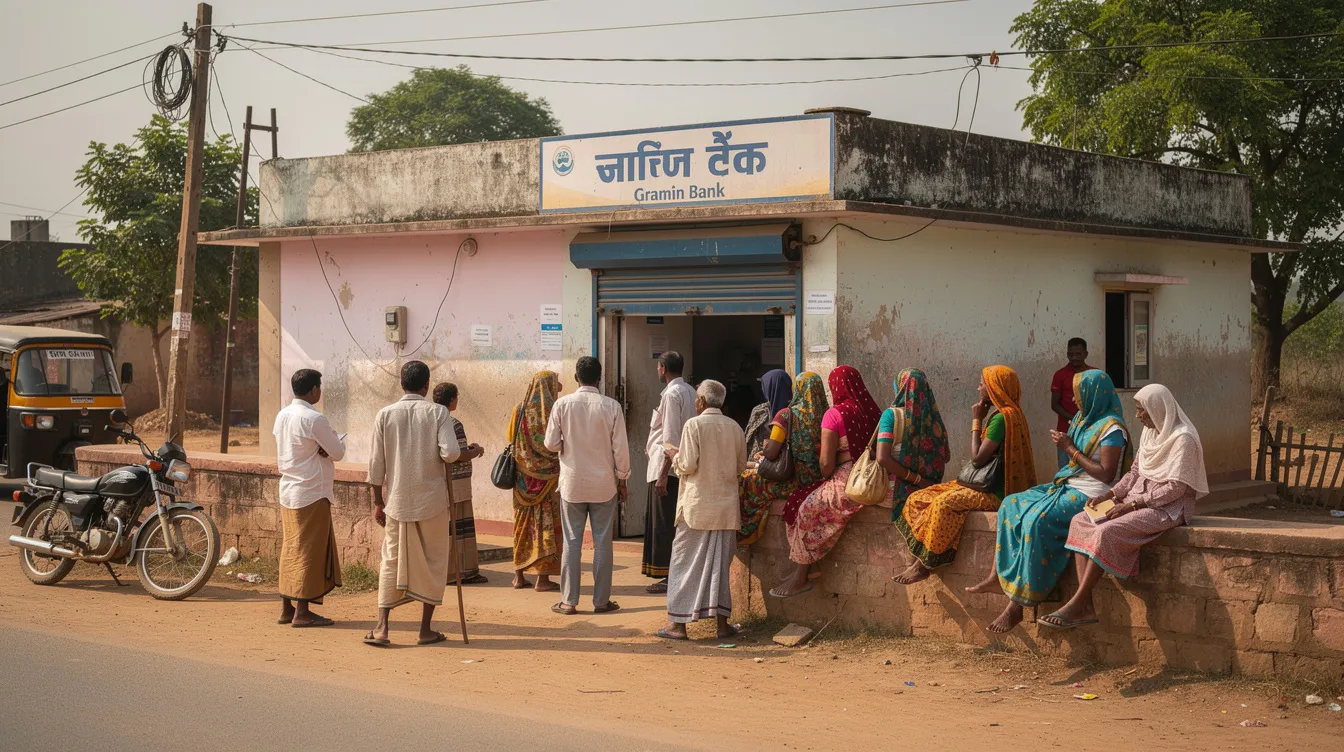
The image depicts a rural Indian bank branch with a group of people waiting outside, likely seeking financial assistance for their small and micro businesses. This setting highlights the importance of public sector banks in providing mudra loans and supporting local entrepreneurs in their financial needs.


Best Banks Offering Mudra Loan in Karnataka

Most scheduled commercial banks and many NBFCs in Karnataka are authorised under PMMY. Here is a reference table of major lenders providing mudra loans in Karnataka:

Bank Name

Type

Approx. Interest Rate Range

Key Strength

State Bank of India (SBI)

Public Sector

8.5%–10.5%

Largest branch network

Canara Bank

Public Sector

8.4%–10.5%

HQ in Bengaluru, strong local presence

Union Bank of India

Public Sector

8.5%–11%

Wide reach in Karnataka

Bank of Baroda

Public Sector

8.5%–11%

Good MSME focus

Punjab National Bank

Public Sector

8.5%–11%

Established in metros

Indian Bank

Public Sector

8.5%–11%

Active PMMY lender

Indian Overseas Bank

Public Sector

8.5%–11%

Available in select districts

Karnataka Bank

Private Sector

9%–12%

Strong Karnataka roots

Karnataka Grameena Bank

RRB

10% onwards

Best for rural Karnataka

UCO Bank

Public Sector

8.5%–11%

Select branches

Bank of India

Public Sector

8.5%–11%

Available in key cities

Central Bank of India

Public Sector

8.5%–11%

Select branches

HDFC Bank

Private Sector

9%–12%

Fast processing in urban areas

ICICI Bank

Private Sector

9%–12%

Digital-first approach

Axis Bank

Private Sector

9%–12.5%

Good for service businesses

Note: Rates are indicative and subject to change. Always confirm the latest rate with your specific branch.

Mudra Loan Interest Rate in Karnataka

Interest rates for Mudra Loans are generally lower than traditional unsecured loans, but they are not uniform. Each bank decides its own rate based on several factors.

Factors Affecting Interest Rate:

  • Type of bank (PSB vs private vs NBFC)

  • Borrower’s credit score and credit history

  • Loan category (Shishu/Kishore/Tarun)

  • Business turnover and vintage

  • Purpose of loan (working capital vs term loan)

  • Overall guidelines issued by the reserve bank

Interest Rate Comparison Table – Karnataka (Indicative 2026)

Lender Type

Typical Rate Range

Notes

Public Sector Banks

8.4%–10.5% p.a.

Usually linked to MCLR + spread

Private Sector Banks

9%–12% p.a.

May vary by city and borrower profile

Karnataka Grameena Bank (RRB)

10% onwards

Strong in rural/semi-urban Karnataka

Small Finance Banks

10%–14% p.a.

More flexible eligibility

NBFCs / MFIs

10%–15%+ p.a.

Higher rates, easier documentation

Pro Tip: Don’t just chase the lowest rate. Consider processing speed, branch proximity, and overall service quality. A bank that processes your loan in 10 days at 10.5% may be better than one that takes 60 days at 9.5%.

Mudra Loan Repayment Rules

Repayment terms depend on the loan type and purpose:

  • Working Capital Loans: Typically sanctioned as cash credit or overdraft facilities with annual renewal. Interest is charged on the utilised amount. The limit may be enhanced at renewal if your business grows.

  • Term Loans: Repaid through monthly EMIs over 3 to 5 years (some banks allow up to 7 years for machinery or equipment purchases). A moratorium period of 3–6 months on principal may be available for new projects.

  • Prepayment: Most banks allow prepayment of Mudra term loans without penalty, though you should confirm with your specific lender.

  • Discipline Matters: Regular repayment builds a strong credit history, qualifying you for larger loans (including Tarun Plus) in the future. Defaults damage your CIBIL score and disqualify you from future PMMY benefits.

Is Collateral Required?

No collateral is required for loans up to Rs. 10 lakh under PMMY. This is one of the most attractive features of the scheme – Mudra Loans provide collateral-free financing up to Rs. 10 lakh. Banks cannot insist on property mortgage for standard Mudra Loans.

However, banks may:

  • Hypothecate assets created from the loan funds (machinery, vehicles, equipment)

  • Take a personal guarantee from the proprietor, partners, or directors

  • For Tarun Plus (above Rs. 10 lakh), additional charge documents over business assets may apply

If any bank branch insists on property collateral for a standard Mudra Loan, you have the right to escalate the matter to the bank’s grievance redressal mechanism or the Lead District Manager.

Mudra Loan for Startups

New entrepreneurs without any prior business history can apply for Mudra Loans under PMMY. Startups are one of the primary target groups for this scheme. However, since there is no financial track record, banks rely heavily on:

  • A detailed and realistic project report

  • The promoter’s relevant experience or necessary skills

  • Initial capital contribution (margin money) from own sources

  • A clear proposed activity with market potential

New businesses often receive lower loan amounts – typically Shishu or small Kishore – until they build a repayment track record. For detailed strategies, read our guide on Mudra Loan for startups.

Mudra Loan for Existing Businesses

Established businesses with 1–3 years of operating history are in a strong position to avail Kishore or Tarun loans. Banks can verify your repayment capacity through past bank statements, ITR filings, GST returns, and audited financial statements. If you have successfully repaid a previous loan extended under PMMY, you may qualify for Tarun Plus up to Rs. 20 lakh.

The key advantage for existing businesses is that the loan amount is assessed based on actual turnover and demonstrated profitability – not just projections.

Mudra Loan for Women Entrepreneurs

Women entrepreneurs receive priority under PMMY. In Karnataka, women account for over 52% of Shishu loans sanctioned. Many banks actively promote financial support for women-led micro businesses. The application process is the same, but women borrowers may benefit from:

  • Faster processing at some branches

  • Marginally lower interest rates at certain banks

  • Priority consideration under government financial inclusion targets

If you are a woman entrepreneur in Karnataka looking to start or expand a business – whether a home-based catering service, a boutique in Mysuru, or a salon in Bengaluru – Mudra Loan is one of the most accessible sources of initial capital.

Mudra Loan for SC/ST Entrepreneurs

SC/ST applicants are among the priority categories under PMMY. Nationally, approximately 50% of Mudra loans have been granted to SC/ST/OBC borrowers. Banks are expected to ensure adequate covering loans for these segments, and some state-level schemes in Karnataka may offer additional interest subvention or subsidy layered on top of Mudra Loans.

For a comprehensive understanding of special provisions and how to apply, see our detailed page on Mudra Loan for SC/ST applicants.

Mudra Loan for Senior Citizens

Senior citizens who are actively managing or starting a business can apply for Mudra Loans. While there is no explicit bar, most banks set an upper age limit of around 65 years. The key criterion is the ability to generate income and repay the loan within the proposed tenure.

If you are a senior citizen in Karnataka exploring entrepreneurship or continuing a family business, our guide on Mudra Loan for senior citizens provides detailed eligibility and documentation guidance.

Mudra Loan for Salaried Persons

Salaried individuals cannot directly avail Mudra Loans as a personal credit facility. However, if a salaried person registers a side business (proprietorship with Udyam registration, GST, or trade licence) and plans to run it actively, they may qualify for a Shishu or Kishore Mudra Loan.

The bank will evaluate whether the business activity is genuine and whether the applicant has the capacity to manage it alongside employment. Read the detailed guide on Mudra Loan for salaried persons explained for practical steps.

Common Reasons Why Mudra Loan Applications Get Rejected

Understanding why loans get rejected saves time, effort, and frustration. High competition results in many applications being rejected – but most rejections are avoidable. Here are the most common reasons in Karnataka:

  • Poor Documentation: Missing bank statements, incomplete KYC, or mismatch between PAN, Aadhaar, and bank records. Banks cannot process what they cannot verify.

  • No Business Plan: Walking into a bank without a written plan for your proposed activity signals a lack of seriousness. Banks want to see how you will use the funds and generate returns.

  • Weak Financials: Low turnover, irregular bank transactions, or inadequate cash flow to support EMI payments.

  • Low Credit Score: Poor credit history leads to loan rejections. Past loan defaults, overdue credit card dues, or unpaid EMIs reflected in your CIBIL report are red flags.

  • Incorrect Information: Providing wrong or inconsistent data in the application form – intentional or not – creates trust issues.

  • Incomplete Forms: Partially filled forms or unsigned declarations cause unnecessary delays and may lead to outright rejection.

  • Unrealistic Projections: Claiming that a small tiffin centre will generate Rs. 50 lakh turnover in the first year is a quick way to lose credibility. Financial projections must be realistic and supportable.

Common Mistake: Applying simultaneously at five or six banks hoping one will approve. Multiple CIBIL enquiries in a short period can negatively affect your credit score and signal desperation to lenders.

Tips to Improve Mudra Loan Approval Chances

Here are practical, action-oriented steps you can take before approaching a bank in Karnataka:

  1. Maintain a clean banking track record for at least 6–12 months before application. Regular deposits, minimal cheque bounces, and controlled cash withdrawals build trust.

  2. Document your business turnover properly through bank channels, GST returns, and simple bookkeeping. Even if you are a small trader, route sales through your business account.

  3. Prepare a clear project report with realistic financial projections, break-even analysis, and a repayment plan. This is the single most impactful document you can present to the bank.

  4. Check your CIBIL score in advance. If there are small overdue amounts, settle them before applying. If you have genuine past issues, prepare a written explanation supported by documents.

  5. Get your Udyam Registration done before applying – it is free, takes minutes, and adds credibility to your application.

  6. Choose a bank where you already have an account. Existing customers get faster processing and the branch already knows your transaction pattern.

  7. Be honest and transparent in your application. Under-reporting turnover to avoid tax may save a few rupees today but weakens your loan proposal significantly.

Pro Tip: Keep personal and business accounts separate. Route most business transactions through a dedicated current account. This builds a strong banking profile for current and future business loan applications.


The image depicts a wooden desk cluttered with various financial documents, including balance sheets and project reports, alongside a calculator, symbolizing the financial assistance process for small and micro businesses, such as those applying for mudra loans under the Mantri Mudra Yojana. The scene suggests a focus on managing financial needs and understanding interest rates for potential borrowers.


Why a Proper Project Report Matters

As a practicing Chartered Accountant, I can tell you from direct experience: above a basic threshold (often around Rs. 2–3 lakh), banks in Karnataka expect structured financial analysis under PMMY – even when collateral is not taken. The project report is your loan’s strongest advocate.

Business Plan

Your project report should clearly describe the business overview, promoter profile, market analysis, details of the proposed activity, location, target customers, and competitive positioning. For Karnataka, district-level market context matters – a food processing unit in Mandya faces different dynamics than a tech services firm in Bengaluru.

Financial Projections

Banks need month-wise or year-wise revenue projections, cost of raw materials, labour, overhead, GST implications, and net profit estimates for at least 3–5 years. These must be realistic, supported by market rates, and internally consistent.

CMA Report

CMA (Credit Monitoring Arrangement) data is a structured financial summary that banks use internally for credit assessment. It includes past and projected balance sheets, profit and loss accounts, fund flow statements, and ratio analysis. For Kishore and Tarun loans, CMA data is often mandatory.

DSCR

Debt Service Coverage Ratio (DSCR) tells the bank whether your projected cash flows are sufficient to cover loan repayments. A DSCR above 1.5 is generally considered comfortable. Below 1.25, most banks will either reduce the loan amount or reject the application.

Break-even Analysis

Break-even analysis shows the point at which your business covers all its costs. It helps both you and the bank understand how quickly the business becomes self-sustaining.

Cash Flow

A month-wise cash flow projection demonstrates that you will have enough liquidity to meet EMI obligations, pay suppliers, and manage seasonal fluctuations. This is especially important for businesses in Karnataka with seasonal demand patterns (tourism in Kodagu, agricultural cycles in Hassan).

Profitability Projections

Year-wise profitability projections show the bank that the business is viable and growing. Include gross profit margin, net profit margin, and return on investment calculations.

A professionally prepared project report can significantly reduce queries from the bank, speed up appraisal, and improve chances of sanction at the desired loan amount and interest rate.

Professional Mudra Loan Project Report Preparation Services in Karnataka

Project Report Bank specialises in preparing bank-ready project reports, CMA data, and financial projections for Mudra Loans and MSME loans across India.

Although our physical office is not located in Karnataka, we provide online project report preparation services to entrepreneurs, traders, manufacturers, and service providers in all major cities and districts of Karnataka. We regularly assist startups, MSMEs, and small entrepreneurs across the state by preparing customised Mudra Loan business plans that can be submitted directly to banks and financial institutions.

Our services are available in:

Bengaluru, Mysuru, Hubballi, Dharwad, Mangaluru, Belagavi, Kalaburagi, Ballari, Shivamogga, Davanagere, Tumakuru, Udupi, Hassan, Vijayapura, Bidar, Raichur, Chikkamagaluru, Kolar, Mandya, Chitradurga, Bagalkot, Gadag, Haveri, Ramanagara, Yadgir, Uttara Kannada, Kodagu, Koppal, Chamarajanagar, and all other cities and districts of Karnataka.

Our process is simple:

  1. We collect your business details online (phone/email/WhatsApp)

  2. We understand your business model, financial needs, and the bank’s specific requirements

  3. We prepare a customised Mudra Loan project report with CMA data, financial projections, and repayment schedule

  4. We deliver the report in PDF and Excel formats – ready for bank submission

  5. We provide revisions and support until your loan application is submitted

We also prepare specialised project reports for startups and new enterprises, including those in the tech, manufacturing, food processing, and service sectors across Karnataka.

Why Choose Project Report Bank?

  • Experienced Chartered Accountant – Reports prepared under the guidance of CA Manish Gugliya with deep expertise in bank lending norms

  • Bank-Compliant Reports – Our reports follow the format and content expected by public sector banks, private banks, RRBs, and NBFCs across Karnataka

  • Customized Financial Projections – No generic templates; each report is tailored to your specific business, location, and loan requirement

  • Fast Delivery – Standard delivery within 3–5 working days, with express options available

  • Online Service Across India – No need to visit an office; the entire process is handled online

  • Multiple Revisions – We refine the report until it meets your bank’s expectations

  • Affordable Pricing – Professional quality at prices accessible to micro and small business owners

  • Support Until Loan Submission – We assist with bank queries and provide guidance until your project report is accepted

Conclusion

Mudra Loan Karnataka is one of the most powerful tools available for small and micro businesses in the state. Whether you are a street vendor in Bengaluru, a food processor in Mandya, or a garment manufacturer in Dharwad, the scheme offers collateral-free financial support through a structured, bank-led process.

However, approval is not automatic. Proper documentation, a realistic business plan, clean credit history, and accurate financial projections are what separate successful applications from rejected ones. The importance of a professionally prepared project report cannot be overstated – it directly influences the bank’s confidence in your proposal, the loan amount sanctioned, and the speed of processing.

If you are planning to apply for a Mudra Loan in Karnataka in 2026, invest time in preparation before approaching the bank. And if you need professional help with your project report, CMA data, or financial projections, Project Report Bank is here to assist you. Our entirely online process serves entrepreneurs across every district and city of Karnataka – from Bengaluru to Yadgir and everywhere in between. Contact us today to get your bank-ready Mudra Loan project report prepared by an experienced Chartered Accountant.

About the Author

CA Manish Gugliya

CA Manish Gugliya is a practicing Chartered Accountant with extensive hands-on experience in preparing bankable project reports, CMA reports, business plans, financial projections, and loan documentation for entrepreneurs, startups, MSMEs, manufacturers, and service businesses across India.

He leads Project Report Bank, an online platform that helps clients secure Mudra Loans, MSME loans, CGTMSE loans, startup funding, and other forms of bank finance through professionally crafted documentation. His work spans multiple sectors including manufacturing, trading, services, transport, hospitality, and technology – giving him practical insight into what banks look for when sanctioning Mudra Loans in states like Karnataka.

CA Manish Gugliya provides online project report preparation services across Karnataka and throughout India through Project Report Bank. Whether you need a Shishu-level business plan or a detailed Tarun Plus project report with comprehensive CMA data, his team delivers bank-compliant documentation tailored to your specific business and financial needs.

For customised Mudra Loan project report preparation and advisory support, reach out to Project Report Bank today.

Frequenly Asked Questions (FAQs)

Mudra Loan FAQs

Mudra Loan is a government-backed business loan under Pradhan Mantri Mudra Yojana (PMMY) for micro and small businesses in non-farm sectors. Loans are provided by banks, NBFCs, and other financial intermediaries—not by MUDRA directly. The scheme offers collateral-free financing up to Rs. 10 lakh.

Any Indian citizen aged 18 to 65 who is running or planning to start a non-farm income-generating business can apply. This includes proprietors, partnership firms, LLPs, companies, SHGs, and other legal forms. Applicants must not have defaulted on any existing bank loan.

The maximum loan amount is Rs. 10 lakh under the Tarun category. Eligible borrowers who have repaid a previous Tarun loan can apply for Tarun Plus up to Rs. 20 lakh. Shishu covers up to Rs. 50, 000 and Kishore covers Rs. 50, 001 to Rs. 5 lakh.

There is no single fixed rate. Public sector banks typically charge 8.4%–10.5%, private banks 9%–12%, and NBFCs 10%–15%. Karnataka Grameena Bank starts at 10% onwards. The rate depends on the borrower’s profile, loan category, and the bank’s internal policy.

No. Mudra Loans are designed as collateral-free loans. Banks do not require property mortgage for loans up to Rs. 10 lakh. They may take hypothecation of assets created from the loan and personal guarantee of the borrower.

Yes. First-time entrepreneurs with a viable business idea and a well-prepared project report can apply. However, since there is no business track record, banks may sanction lower amounts initially (Shishu or small Kishore).

Salaried individuals cannot take Mudra Loan as a personal facility. But if they start a registered side business with proper documentation (Udyam, GST, trade licence), they may qualify for PMMY lending.

Yes, provided they are actively managing or starting a business and can demonstrate the ability to repay the loan. Most banks cap eligibility at around 65 years of age.

Absolutely. Women entrepreneurs are a priority category under PMMY. Over 52% of Shishu loans in Karnataka go to women borrowers. The application process is the same, with potential benefits like faster processing at some branches.

GST is not mandatory for Shishu loans or businesses below the turnover threshold. However, for Kishore and Tarun categories, having GST registration strengthens your application and demonstrates formal business operations.

Udyam Registration is not strictly compulsory for Shishu, but it is strongly recommended for all categories. For Kishore and Tarun, most banks in Karnataka expect Udyam Registration as part of business proof.

All major public sector banks (SBI, Canara Bank, PNB, Bank of Baroda, Union Bank, Indian Bank), private banks (HDFC, ICICI, Axis), Regional Rural Banks (Karnataka Grameena Bank), small finance banks, and several NBFCs are authorised to disburse Mudra Loans.

Yes. You can apply through the Jan Samarth portal, Udyami Mitra portal, or directly on your bank’s website. After online submission, the application is routed to the chosen branch for further processing.

Working capital loans are typically renewable annually. Term loans have repayment periods of 3 to 5 years, with some banks offering up to 7 years for machinery or equipment purchases.

Most banks allow prepayment without penalty for Mudra term loans. However, confirm this with your specific lender before the loan extended is sanctioned, as policies may differ.

For Shishu loans, a formal project report is usually not required. For Kishore and Tarun loans (especially above Rs. 2 lakh), a detailed project report with financial projections and CMA data is either mandatory or strongly recommended by banks.

A bankable project report should include business overview, promoter profile, market analysis, cost of project, means of finance, profitability projections (3–5 years), cash flow statements, DSCR calculation, break-even analysis, and repayment schedule.

Processing time for loans up to Rs. 5 lakh is approximately two weeks when documents are complete. For Tarun and Tarun Plus, the process may take 3–4 weeks due to detailed assessment and field verification.

For Shishu loans, ITR is generally not mandatory. For Kishore and Tarun, banks prefer at least one year of ITR filing. If you do not have ITR, you can still apply with strong bank statements and a convincing project report, though your chances improve significantly with proper tax filings.

Pure crop farming, speculative trading (shares, derivatives, mutual funds as primary activity), real estate speculation, activities banned by law, and purely personal consumption needs are not eligible under PMMY.

PMMY mainly covers non-farm enterprises and allied agricultural activities like agro-processing, dairy units, poultry, and agri-logistics. Traditional crop cultivation is not covered – it is financed under separate Kisan Credit Card and agriculture loan schemes.

Mudra Loans are collateral-free by design. Banks do not insist on property mortgage. They may take a personal guarantee from the proprietor, partners, or directors and charge documents over assets created from the loan funds.

Trusted by Leading Businesses in Karnataka

Hear what our satisfied clients say about CA Manish Gugl… and our project report services across Karnataka.
CA Manish Gugl... has been instrumental in helping our startup secure funding with comprehensive project reports. His expertise and attention to detail are unmatched. Highly recommended for entrepreneurs seeking reliable financial guidance in Karnataka.
Rahul Sharma
Rahul Sharma
Founder & CEO, Innovate Tech Solutions
Thanks to CA Manish Gugl... and Project Report Bank, our business plan was approved swiftly. Their professionalism and deep understanding of Karnataka's market helped us succeed. We trust their services for all our financial documentation needs.
Sneha Patel
Sneha Patel
Managing Director, Karnataka Agro Traders
CA Manish Gugl... provided us with a detailed CMA report that impressed our investors. His 20+ years of experience in project reports and financial analysis in Karnataka made all the difference. We are grateful for his expert guidance.
Vikram Joshi
Vikram Joshi
Business Owner, VJ Enterprises
The project report prepared by CA Manish Gugl... was thorough and tailored to Karnataka's industry standards. It helped us secure a loan easily. His professionalism and expertise are truly commendable.
Anjali Rao
Anjali Rao
Finance Manager, Rao Industries
We highly recommend CA Manish Gugl... for his exceptional skills in project report preparation. His insights and experience in Karnataka's business environment are invaluable. Our project was approved without any issues.
Suresh Kumar
Suresh Kumar
Entrepreneur, SK Tech Solutions
CA Manish Gugl... helped us craft a compelling pitch deck that attracted investors. His 20+ years of experience in Karnataka's financial sector is evident in his work. We trust his expertise for all our project reports.
Meena Iyer
Meena Iyer
Startup Founder, Iyer Innovations