Key Takeaways
- A strong, bank-style mudra loan project report and CMA data are essential for approval in Madhya Pradesh – a simple Word file will not work for Kishore, Tarun, or Tarun Plus categories.
- Banks in MP (SBI, PNB, Bank of Baroda, Union Bank, and others) check financial projections, DSCR, BEP, and repayment plan before sanctioning any Mudra loan.
- This guide covers Shishu, Kishore, Tarun, and Tarun Plus loans for traders, manufacturers, service providers, and startups across Bhopal, Indore, Gwalior, Jabalpur, Ujjain, and all MP districts.
- A professionally prepared report by a CA significantly improves approval chances and reduces queries.
- Entrepreneurs can get fully online, bank-approved DPR and CMA reports from Project Report Bank for any district of Madhya Pradesh.
Introduction: Mudra Loan Project Report in Madhya Pradesh
The Pradhan Mantri Mudra Yojana, launched on 8 April 2015, provides credit support to non-farm micro enterprises engaged in manufacturing, trading, and services. Mudra loans support Micro, Small, and Medium Enterprises (MSMEs) across India, and Madhya Pradesh is no exception. A project report demonstrates business feasibility and repayment capacity – and banks in MP insist on a detailed project report for Mudra loan MP applications, even for amounts as small as ₹2–3 lakh.
This article explains step-by-step how to prepare a bank-approved mudra loan project report Madhya Pradesh with realistic financial projections and CMA data. Written from the perspective of a practising Chartered Accountant, it covers entrepreneurs in Bhopal, Indore, Gwalior, Jabalpur, Ujjain, Sagar, Rewa, Satna, Ratlam, Dewas, and smaller districts like Shivpuri, Morena, and Panna.
Understanding Mudra Loan & Categories (Shishu, Kishore, Tarun, Tarun Plus)
The Pradhan Mantri Mudra Yojana offers loans up to Rs. 10 Lakhs in three categories. The Mudra loan is categorized into three schemes: Shishu, Kishore, Tarun – with a newer Tarun Plus category introduced in Budget 2024-25 for borrowers who have repaid previous Tarun loans.
| Category | Loan Range | Typical MP Borrower | DPR Expectation |
|---|---|---|---|
| Shishu | Up to ₹50,000 | Tea stall in Bhopal, home-based enterprise | Basic business plan |
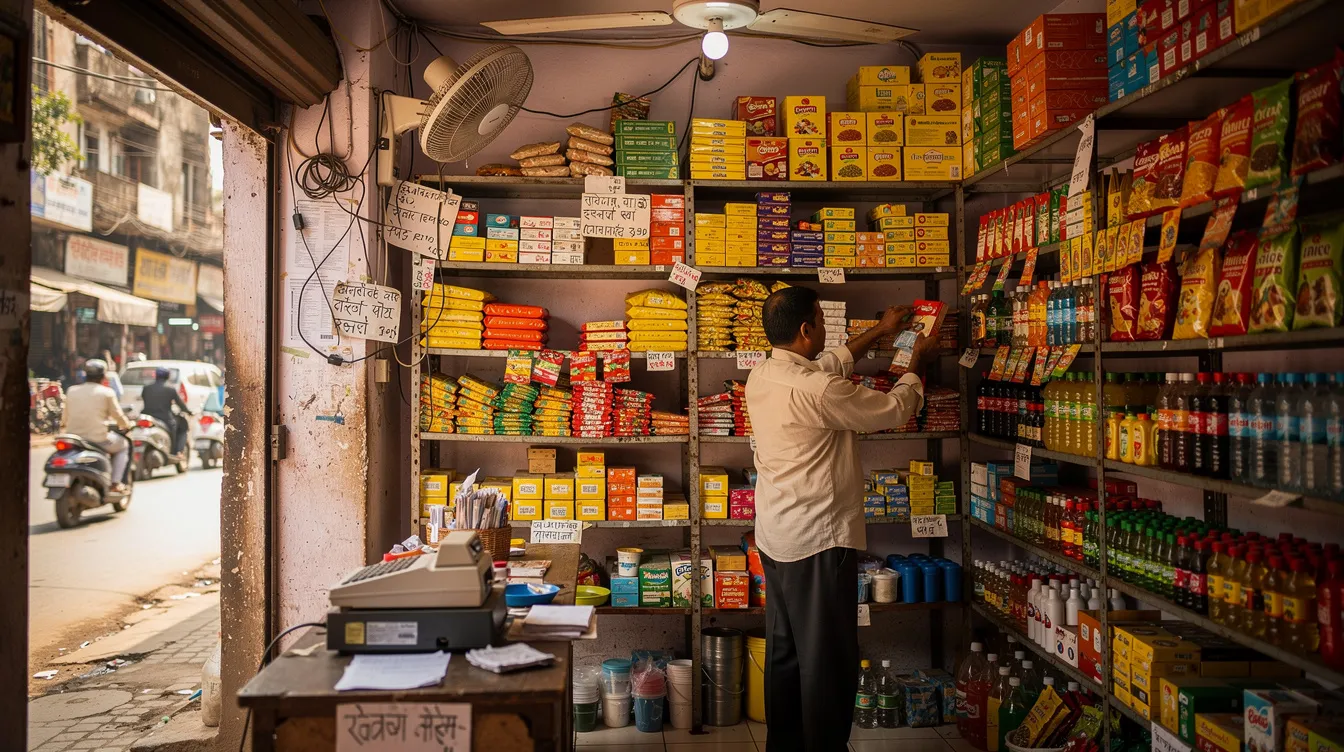
| Kishor | ₹50,001 to ₹5 Lakh | Grocery shop in Indore, beauty parlors in Satna | Standard project report with financials |
| Tarun | ₹5 Lakh to ₹10 Lakh | Medical store in Sagar, restaurant in Jabalpur | Detailed project report with CMA |
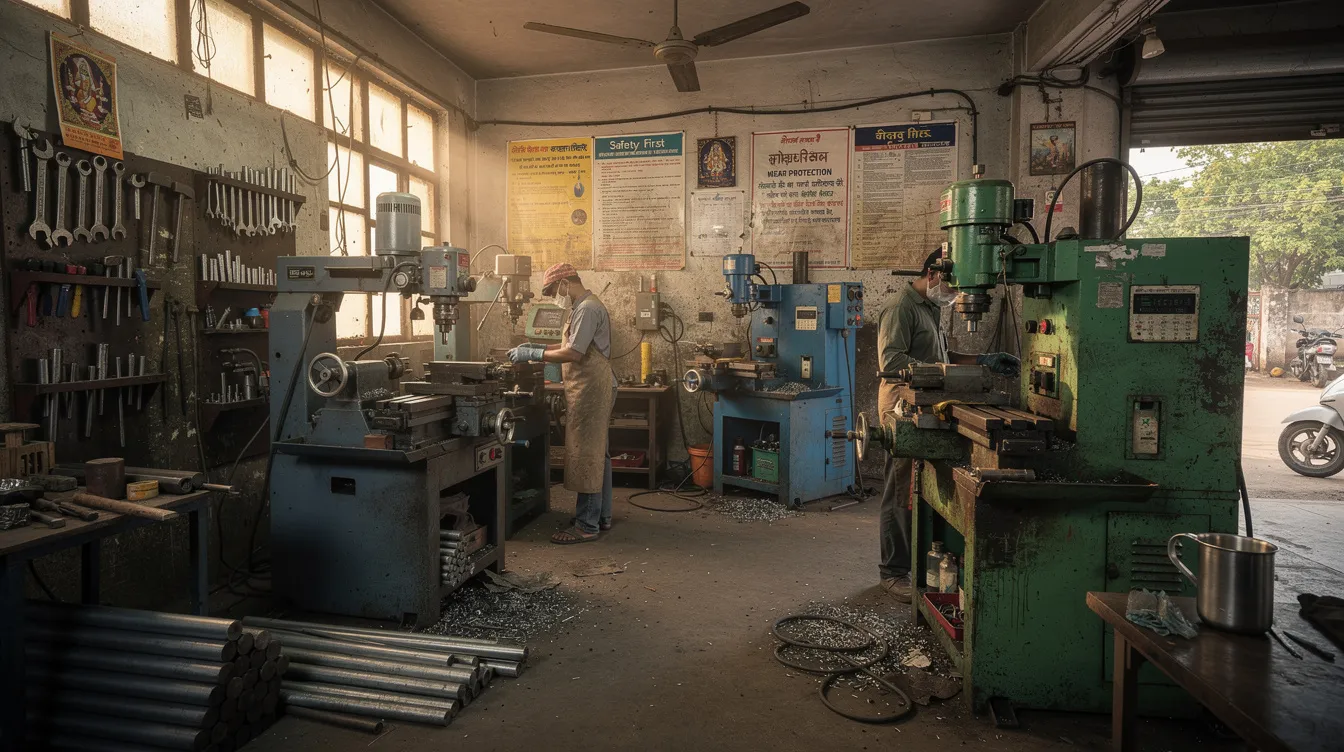
| Tarun Plus | ₹10 Lakh to ₹20 Lakh | Fabrication unit in Dhar, dairy in Sehore | Full DPR, CMA, DSCR ≥1.50 |
The Shishu category offers loans up to Rs. 50,000. The Kishor category offers loans from Rs. 50,001 to Rs. 5 Lakh. The Tarun category offers loans from Rs. 5 Lakh to Rs. 10 Lakh. Even for Shishu loans, many MP branches now ask for a basic project report showing your business plan and repayment capacity. Readers interested in state-specific guides can explore the Maharashtra Mudra Loan Guide, Uttar Pradesh Mudra Loan Guide, or Bihar Mudra Loan Project Report.
Why Banks in Madhya Pradesh Ask for Mudra Loan Project Report & CMA
Banks require a project report to assess loan viability – this applies even for collateral-free loans under the pmmy scheme. Branch managers verify:
- Business feasibility and demand for the product or service
- Projected cash flow and repayment plan alignment with EMI
- DSCR calculation and break even analysis
- Past banking behaviour, CIBIL score, and KYC consistency
- Whether margin money is genuine and reflected in bank statements
PSU banks like SBI, PNB, Bank of Baroda, Union Bank, Canara Bank, Indian Bank, Bank of India, Central Bank of India, UCO Bank, Punjab & Sind Bank, and RRBs in MP all insist on a proper DPR and CMA data for Kishore and Tarun loans. A CMA report for Mudra loan evaluates working capital requirements, margin money, and drawing power. A structured loan project report reduces queries, speeds up sanction, and protects applicants from “weak proposal” remarks.
Components of a Bank-Ready Mudra Loan Project Report (Madhya Pradesh)
A professional DPR for Mudra loan in MP follows a standard project report format accepted by most banks. The report should be clear and easy to understand. Project reports must include financial projections and risk assessments. Key content blocks include:
- Cover page with applicant name, business name, loan request amount, and category
- Applicant profile covering education qualification, experience, and company’s background
- Business overview outlining vision, objective, location, and business description
- Market analysis describing local demand, competition, and advertising strategies
- Project cost and means of finance with complete financial information
- Technical details including commercial manufacturing processes (if applicable), machinery with itemized costs and quotations, space or land requirement, and employees working
- Financial projections with projected P&L, balance sheet, and cash flow
- Repayment plan, DSCR, BEP, and risk analysis
The report for Mudra loan must clearly show how the borrower will use funds and how monthly EMI will be paid from business surplus.
Detailed Structure of Mudra Loan DPR for Madhya Pradesh
Applicant Profile & Business Background
This section presents a narrative profile: name, age, education, address, and business experience. For example, a 32-year-old commerce graduate from Indore starting a medical store, or a woman entrepreneur in Satna opening a beauty parlour under Mudra loan MP. Include existing banking relationship, CIBIL behaviour, GST/Udyam registration status, and whether this is a new unit or expansion. A clear business overview should outline vision, objectives, and location. Note that the mudra scheme is basically a non-subsidy scheme – claims otherwise are often misleading (see the Mudra Loan Subsidy – Real or Fake article).
Business Model, Location & Market Analysis (Madhya Pradesh Focus)
Include market analysis describing local demand, competition, and marketing strategies specific to MP. Describe project logistics details like a medical store near district hospital in Sagar, a restaurant near bus stand in Rewa, or a mobile shop in a busy chowk in Ujjain. Cover estimated footfall, unique selling points, project commercial aspects, and local demand drivers such as nearby colleges, industrial areas, or government offices. The tone should reflect realistic MP conditions, not generic national averages.
Project Cost, Means of Finance & Working Capital Requirement
Break project cost into renovation, machinery and equipment, furniture, initial stock, working capital margin, and pre-operative expenses. Typical MP ranges:
| Business Type | Approximate Project Cost | Loan Category |
|---|---|---|
| Mobile repair shop | ₹3–4 lakh | Kishore |
| Grocery / retail shop | ₹4–5 lakh | Kishore |
| Medical store | ₹8–10 lakh | Tarun |
| Restaurant | ₹12–15 lakh | Tarun Plus |
| Fabrication unit | ₹15–18 lakh | Tarun Plus |
The means of finance table should show loan amount (80–90%), owner contribution (10–20%), and any other funds. Working capital assessment covers stock level in days, credit to customers, credit from suppliers, and minimum cash balance. Banks in MP check whether borrower margin is genuine and available in the bank statement. Machinery and equipment details should include itemized costs and quotations from local vendors.
Financial Projections: P&L, Balance Sheet, Cash Flow, BEP & DSCR
Financial projections should include profit & loss statements and cash flow for 3–5 years. Include financial statements with projected balance sheet showing fixed assets, current assets, term loan, and capital account. Include financial projections showing expected revenue, gross margin, operating expenses (rent, salary, electricity, transport), and net profit.
DSCR benchmarks: minimum 1.25 for Kishore/Tarun, and 1.50 or higher for Tarun Plus. Break even analysis should show the sales level where the business covers all fixed and variable costs – banks want to see BEP crossed within Year 1 or 2.
Repayment Plan & Assessment of Repayment Capacity
Present proposed loan tenure (3–5 years for Mudra), moratorium if any, EMI amount, and repayment schedule. Link monthly EMIs to projected net profit and cash flow, showing adequate cushion. Reports misaligned with bank repayment expectations are rejected. MP bankers particularly check alignment between business seasonality (agriculture-linked trading in Mandsaur, Neemuch, Khandwa) and repayment plan. A clear repayment plan significantly improves loan approval chances.
Risk Analysis, Security & Mitigation Measures
Mudra loans are collateral-free, but banks still assess risk. Typical risks include competition, demand fluctuation, supplier dependency, and proprietor health issues. Mitigation measures: diversified products, multiple suppliers, insurance, and family support. Maintaining proper books, GST compliance, and consistent bank transactions reduces perceived risk. For instance, an agro-trading unit in Morena must plan for weak monsoon scenarios.
CMA Data for Mudra Loan in Madhya Pradesh
CMA (Credit Monitoring Arrangement) data helps banks assess working capital needs, drawing power, and financial viability. Core components include projected P&L, balance sheet, cash flow, fund flow, and working capital assessment. A CA-prepared CMA report aligns figures with bank norms and avoids discrepancies. For details on online processing, see the MSME Mudra Loan Guide and Jan Samarth Mudra Loan articles.
Eligibility & Documents for Mudra Loan in Madhya Pradesh
Most non-farm micro enterprises in MP are eligible – manufacturing units, retail shops, trading businesses, food processing, dairy, restaurants, beauty parlors, medical stores, mobile shops, automobile workshops, repair centres, furniture units, fabrication, agriculture allied, home-based businesses, women entrepreneurs, startups, and professionals. This is not an exhaustive list but covers key areas.
Documents checklist: Aadhaar, PAN, photograph, address proof, business proof (Udyam, GST, shop act, licence), bank statements (6–12 months), vendor quotations, rent agreement or ownership proof, required third party details and third party details for co-applicants. Some banks also ask for ITRs, drug licence for medical stores, FSSAI for restaurants, and other trade-specific document requirements.
Common Mistakes in Mudra Loan Project Reports (Specific to Madhya Pradesh)
Many applications in MP are rejected not because of scheme issues but due to weak project reports. Incomplete reports are a common reason for Mudra loan rejection. Unrealistic financial projections cause loan application denials. Inconsistent information in reports results in rejection. Common mistakes include:
- Copying generic formats from internet without local MP data
- Inflated sales estimates (restaurant in Jabalpur showing 90% occupancy year-round)
- Mismatch between DPR, CMA data, and ITR/bank statement
- Manipulated financials instead of realistic estimates
- Missing details information like vendor quotations or margin money evidence
How to Improve Mudra Loan Approval Chances in Madhya Pradesh
A well-structured project report increases Mudra loan approval chances – quality of the report, not just scheme eligibility, decides the outcome. Key steps:
- Prepare realistic, data-backed financial projections with local quotations
- Keep banking transactions clean 6–12 months before applying
- Register on Udyam, maintain GST compliance, and submit ITRs
- Take professional support from a Mudra loan consultant Madhya Pradesh or CA to create a bank-ready DPR

Generic Project Report vs Professional Bank-Approved DPR
Most rejections occur when applicants submit generic reports. Banks evaluate project reports to assess loan viability and risk – a generic report with vague business description, no DSCR/BEP, and no local data fails this test. A professionally prepared report includes city-specific market assumptions, proper projection tables, clear term loan and working capital analysis, and realistic growth paths. For startup-focused structures, see the Mudra Loan for Startup article.
Self-Prepared vs CA-Prepared Mudra Loan Project Report
| Factor | Self-Prepared | CA-Prepared |
|---|---|---|
| Cost | Low / free | Professional fees apply |
| Financial structure | Often weak, missing ratios | Bank-compatible CMA, DSCR, BEP |
| Best suited for | Shishu loans (up to ₹50,000–₹1 lakh) | Kishore, Tarun, Tarun Plus |
| Approval chances | Higher risk of rejection | Stronger acceptance in PSU branches |
| Format | May not match bank expectations | Uses banking norms and industry benchmarks |
Project Report Bank specialises in CA-supervised Mudra DPRs across Madhya Pradesh, covering all the products and services that small business owners need.
Practical Examples of Mudra Loan Project Reports in Madhya Pradesh
Fabrication unit in Indore (Tarun Plus ₹15 lakh): Project cost includes welding machines, cutting equipment, and raw material. Five-year projections show 20% annual capacity growth. DSCR target above 1.50 with monsoon-adjusted repayment schedule.
Grocery shop in Bhopal (Kishore ₹4.5 lakh): ₹2.5 lakh for initial stock, ₹60,000 display racks, ₹40,000 furniture. Monthly sales ₹1.2 lakh at 20-25% gross margin. DSCR ~1.30 in Year 1 improving to ~1.60 by Year 3.
Medical store in Sagar (Tarun ₹9 lakh): Located near district hospital. Medicine margins of 15-20%, steady demand. BEP around ₹2.5 lakh monthly sales. Drug licence and FSSAI (if applicable) included as annexures.
Dairy unit near Sehore (Tarun ₹8 lakh): Milk collection, chilling unit, transport costs. Seasonal variations accounted for in cash flow. BEP achieved by Year 2.
Mudra Loan in Madhya Pradesh: Coverage Across Cities & Banks
The procedure and loan requirement for a loan project report are broadly similar across MP districts. Entrepreneurs seek Mudra loan MP in Bhopal, Indore, Jabalpur, Gwalior, Ujjain, Ratlam, Dewas, Sagar, Rewa, Satna, Katni, Chhindwara, Khandwa, Khargone, Neemuch, Mandsaur, Dhar, Sehore, Vidisha, Shivpuri, Morena, Bhind, Betul, Hoshangabad (Narmadapuram), Singrauli, Burhanpur, Shahdol, Damoh, Tikamgarh, and Panna. State bank branches, icici bank, and all major financial institutions actively finance these loans. Project Report Bank provides fully online DPR and CMA services across all MP cities – no branch visit required. Even entrepreneurs working outside MP who want to start a business in their home town can coordinate remotely.
Role of GST, Udyam, Bank Statements & Business Profile in Mudra Appraisal
Banks look beyond the project report – they cross-check data with GST returns, Udyam details, and bank statements. Udyam registration is important for MSME recognition and sometimes interest rate benefits. GST registration supports sales figures projected in the DPR. Bank statements verify turnover, cash deposits, regularity, and margin money availability. A short, well-written project company profile on letterhead creates a strong first impression for bankers.
Typical Reasons for Mudra Loan Rejection in Madhya Pradesh & Solutions
Most reasons for rejection are avoidable. Incomplete reports lead to Mudra loan rejection – along with poor CIBIL score, cheque bounces, and negative field reports. Solutions include repairing credit history before applying, regularising accounts, and providing clear clarification letters. Some borrowers in MP fall prey to wrong information about “subsidy” or “no-income-proof” loans. For those already refused, see the Rejected Mudra Loan Appeal Process for next steps.
Important Clarification: Mudra Loan Subsidy, Used Vehicles & Other Myths
PM Mudra Yojana generally does not offer direct capital subsidy. Only credit guarantee through CGFMU benefits banks, not cash subsidy to the borrower. Be cautious of intermediaries promising guaranteed loans with heavy subsidy. Mudra loan can be used for income-generating vehicles including used vehicles in some banks, subject to valuation and bank policy – see the Mudra Loan for Used Vehicles article. Startups can refer to the Mudra Loan for Startup page for specific guidance on achievements export orders and export orders related enterprise documentation.
More Articles & Resources for Mudra Applicants
For more articles and deeper research on related topics, explore these resources:
- Maharashtra Mudra Loan Guide – State-specific DPR norms
- Mudra Loan Uttar Pradesh – UP-focused eligibility and process
- Mudra Loan Bihar Project Report – Bihar district coverage
- Jan Samarth Mudra Loan – Online portal process
- MSME Mudra Loan Guide – Comprehensive MSME finance guide
These resources also help MP entrepreneurs who plan expansion in other states.
Conclusion: Why a Professional Mudra Loan Project Report Matters in Madhya Pradesh
A well-structured project report increases Mudra loan approval chances – this is not optional advice but a practical reality across MP bank branches. Realistic financial projections, DSCR, BEP, and a clear repayment plan matter far more than a lengthy narrative about your business idea. A project report is required to apply for a Mudra loan, and its quality determines whether your file moves forward or sits in a pending tray.
Entrepreneurs across MP – from Bhopal to Panna – should invest in a professionally prepared report rather than risking rejection with a generic template. Project Report Bank, led by a practising CA, prepares fully customised, city-specific Mudra DPRs and CMA reports for entrepreneurs anywhere in Madhya Pradesh via online mode. The right detailed project report can convert a good business idea into an actual sanctioned loan and sustainable enterprise.
FAQs on Mudra Loan Project Report Madhya Pradesh
Is a project report compulsory for Mudra loan in Madhya Pradesh?
While the central scheme notification does not explicitly mandate a DPR, almost all PSU banks and RRBs in MP now insist on at least a basic loan project report for Kishore, Tarun, and Tarun Plus categories. Even for Shishu loans above ₹1–2 lakh, many branches require a simplified business plan. A project report must include business-related details and financial projections to be considered complete.
How detailed should financial projections be for a Mudra loan of ₹5–10 lakh in MP?
Banks usually expect 3–5 year projections with month-wise working for at least the first year, including sales, expenses, net profit, EMI outflow, DSCR (minimum 1.25–1.50), and simple BEP. All numbers should align with local MP market conditions. Include financial projections in the project report covering all the products and land requirement for the business.
Can I use the same Mudra project report for different banks in Madhya Pradesh?
Core projections and business model can remain the same, but each bank (SBI, PNB, Bank of Baroda, Union Bank) may have its own application form, annexures, and checklist. Your report may require minor customisation per bank. A standard project report format is accepted by most banks, but annexures and forms vary.
Do startups without previous ITRs get Mudra loans in MP if they only have a project report?
Yes, pure startups can get Mudra loans based on a strong DPR, CMA projections, promoter profile, and clean KYC. Banks may sanction smaller loan limits initially and insist on margin money. A strong project report for Mudra with realistic projections helps finance approval even without past ITRs.
How long does it usually take to get a Mudra loan sanctioned in Madhya Pradesh with a proper DPR?
Typically 7–21 working days after complete file submission in MP branches. A professionally prepared project report and CMA often reduce this time by cutting down repeated queries. For Shishu loans, processing can be as fast as 7–10 days.
About the Author
CA Manish Gugliya is a practising Chartered Accountant with extensive experience in preparing bank-ready project reports, CMA data, financial projections, and business loan documentation for entrepreneurs, startups, MSMEs, manufacturers, service providers, and traders across India. Through Project Report Bank, he has assisted numerous businesses in preparing professionally structured project reports for Mudra loans, MSME finance, term loans, working capital facilities, and startup funding across states including Madhya Pradesh.
His articles combine practical banking knowledge with professional financial expertise, focusing on realistic, banker-friendly structures that match on-ground expectations rather than theoretical templates – helping first-time entrepreneurs and small business owners understand the actual process and improve their Mudra loan approval chances.
- Can Bank Reduce Mudra Loan Amount Without Your Consent? Complete Practical Guide (2026)


- What to Do If You Cannot Pay Your Mudra Loan EMI (2026 Guide)

- Can a Bank Refuse a Mudra Loan Because the Target Is Completed? Complete Guide (2026)

- Bank Refused My Mudra Loan Application – What Are My Rights?
- Mudra Loan for Used Vehicles (2026): Eligibility, Documents, Bank Rules & Complete Guide

- Rejected Mudra Loan – What to Do Next? Appeal Process Explained (2026)

- Mudra Loan Project Report Madhya Pradesh – Bank-Ready DPR & CMA Guide

- Project Report for Mudra Loan Maharashtra: Complete Guide for MSMEs, Startups and Small Businesses (2026)
- Mudra Loan Uttar Pradesh: Complete Guide for MSMEs, Startups and Small Businesses (2026)
- Mudra Loan Bihar 2026: Eligibility, Documents, Online Application Process & Project Report Guide
- Jan Samarth Mudra Loan 2026: Complete Guide to Online Application, Eligibility, Documents & Approval Process

- MSME Mudra Loan: Complete Guide for Small Businesses, Startups & Manufacturing Units in India (2026)
- Is the Mudra Loan Subsidy Real or Fake? Get the Facts Here

- Mudra Loan Without CIBIL Score: How to Qualify and Apply

- Mudra Loan for Used Machine (2026 Guide) – Eligibility, Documents, Valuation & Approval Tips