Key Takeaways
- Medical equipment is the largest movable asset in any cancer hospital project, commonly accounting for 35–60% of movable-asset cost, and directly affects project cost, depreciation, DSCR, and bankability.
- There is no single standard cancer hospital equipment list – requirements and cost vary by bed strength, whether radiation oncology is included, diagnostic depth, and clinical model.
- All cancer hospital equipment price figures below are indicative 2025–2026 planning ranges in ₹ lakh/crore; final budgeting must rely on current vendor quotations.
- Clinical decisions must be led by an oncologist and medical planners; ProjectReportBank.com supports DPR preparation, financial projections, and bank-loan planning.
Explore Cancer Hospital DPR Guides
Explore our complete series on Cancer Hospital project planning, financial analysis and bank finance.
Introduction: Why Cancer Hospital Equipment Planning Matters
A comprehensive cancer hospital includes diagnostic, therapeutic, and supportive care equipment – and the cost structure of medical equipment significantly shapes the total cancer hospital project cost in India. Overall cancer treatment costs in India range from ₹2,00,000 to ₹25,00,000 per patient depending on stage and method, and the facilities behind those treatments require substantial capital. Cancer care requires a range of infrastructure including imaging, pathology, and surgical services, while immunotherapy helps the immune system fight cancer more effectively as a growing treatment plan. Equipment cost must be understood as “installed cost” – not isolated machine prices – covering civil modifications, shielding, HVAC, software, training, and statutory compliance. This article provides a guide to making informed decisions on equipment budgeting for cancer hospitals across India, including smaller cities.
Department-Wise Cancer Hospital Equipment List & Budget Snapshot
| Department | Major Equipment | Indicative Investment Range | Importance |
|---|---|---|---|
| Radiation Oncology | LINAC, CT simulator, brachytherapy, TPS | ₹25–60 crore (with bunker) | Very High |
| Medical Oncology / Chemotherapy | Infusion pumps, chairs, monitors, biosafety cabinets | ₹40 lakh–₹1.2 crore | High |
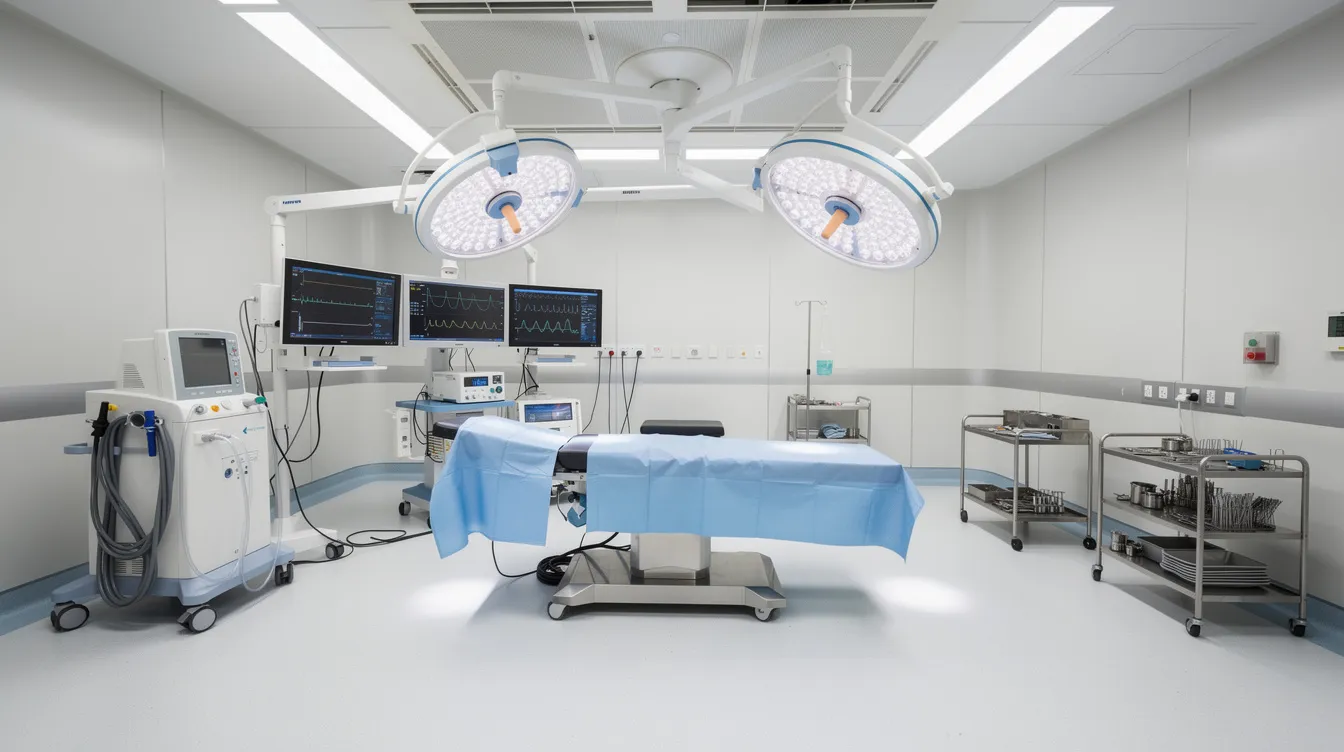
| Surgical Oncology / OT | Modular OTs, anaesthesia workstations, laparoscopic systems, CSSD | ₹2–6 crore (2–4 OTs) | High |
| Imaging & Diagnostics | PET-CT, CT scanner, MRI, mammography, ultrasound | ₹4–25 crore | High |
| Pathology & Lab | Histopathology, IHC, flow cytometry, biochemistry | ₹1–4 crore | High |
| ICU & Wards | Ventilators, monitors, beds, medical gas systems | ₹1–5 crore | High |
These assume new equipment. Refurbished systems can reduce the oncology centre equipment cost but carry risk and finance considerations discussed later.
Radiation Oncology Equipment List & Cost Implications
Radiation oncology typically forms the single largest block of cancer hospital equipment cost in India. Radiation therapy uses high-energy rays to destroy cancer cells, and radiotherapy requires specialized machines for both external and internal treatment delivery.
| Equipment | Purpose | Indicative Cost (India) | Budget Note |
|---|---|---|---|
| Linear Accelerator (LINAC) | Delivers high-energy radiation to destroy cancer cells | ₹15–35 crore | Largest single item |
| CT Simulator | Treatment planning imaging | ₹4–8 crore | Essential companion to LINAC |
| Brachytherapy Unit | Places radioactive sources directly inside or near tumors | ₹3–8 crore | Salem GMKMCH installed one at ₹4 crore |
| TPS + Oncology Information System | Precise treatment plan computation | ₹1–3 crore | Software + hardware |
| ECHO-FLEX Series Tables | Patient positioning for radiation therapy sessions | ₹5–20 lakh | Specialised positioning |
| Dosimetry, QA & Radiation Protection | Proper radiation protection equipment is essential in oncology settings | ₹50 lakh–₹1.5 crore | Regulatory compliance |
| UPS / Power Backup | Uninterrupted treatment delivery | ₹30–80 lakh | Critical for patient safety |
Radiation therapy equipment includes linear accelerators for targeted treatment delivery. The “installed cost” – including bunker construction, shielding, specialised HVAC, and AERB compliance – commonly adds 30–70% over machine price. Radiation therapy costs in India range from ₹1,50,000 to ₹4,00,000 per patient, and the DPR should model LINAC depreciation over 10–12 years with AMC at 8–10% of machine cost annually after warranty.
Medical Oncology & Chemotherapy Day-Care Equipment
Chemotherapy uses drugs to kill or slow cancer cell growth, and while capital investment is lower than radiotherapy, working capital for expensive cancer medicines can be significant. Chemotherapy costs between ₹25,000 to ₹2,00,000 per cycle in India, and total chemotherapy costs can reach ₹10,00,000 or more depending on cycles and stage. Chemotherapy sessions can last from 30 minutes to 8 hours.
| Item | Role | Approx. Cost Range | Note |
|---|---|---|---|
| TRIAD Treatment Chair / Chemo Recliners | Designed for patient comfort during chemotherapy | ₹45,000–₹1,50,000 each | 10–20 chairs typical |
| Automated Infusion Pumps | Safely administer precise doses of anti-cancer drugs | ₹50,000–₹1,50,000 each | Regulate continuous delivery |
| Syringe Pumps | Controlled drug delivery | ₹25,000–₹80,000 each | Multiple per chair |
| Patient Monitors | Vitals monitoring | ₹1–3 lakh each | Multipara recommended |
| Biosafety Cabinet | Cytotoxic drug preparation | ₹2–5 lakh | Mandatory for safe compounding |
| Emergency Crash Cart + Defibrillator | Resuscitation | ₹2–5 lakh combined | Essential safety |
| Medicine Refrigerators | 2–8°C storage for medications | ₹50,000–₹2 lakh | Temperature-monitored |
Hospital pharmacy equipment is critical for safe drug compounding. Targeted therapy – which focuses on specific proteins or genes in cancer cells – also needs proper storage and handling infrastructure. Overall medical oncology equipment for a 10–20-chair day-care may cost ₹40–120 lakh excluding building interiors.
Surgical Oncology & Operation Theatre Equipment
Surgery is often the first line of treatment for many cancers, and surgical oncology tools include specialized instruments for tumor removal. Surgery costs in India range from ₹1,50,000 to ₹5,00,000 depending on the type and condition. A 2-OT block for a 50-bed cancer hospital may require ₹2–4 crore of OT and CSSD equipment, including modular OT structures (₹20–60 lakh per OT), anaesthesia workstations (₹8–25 lakh), electrosurgical units, laparoscopic systems (₹5–20 lakh), and endoscopy towers. OT throughput assumptions must correlate with installed capacity in the DPR to ensure effective debt servicing.
Diagnostic & Imaging Equipment for Cancer Hospitals
Diagnostic imaging equipment is critical for detecting tumors. CT scanners create detailed cross-sectional images to locate tumors, while MRI machines utilize powerful magnets to study soft tissue and brain lesions. PET-CT scanners combine metabolic tracking with structural imaging for cancer detection. Nuclear medicine equipment is used for targeted cancer detection and therapy. C-arm fluoroscopy is used in image-guided procedures such as tumor removal, and medical imaging chairs assist patients with limited mobility during X-rays.
| Equipment | Indicative Cost (New, India) |
|---|---|
| PET-CT (digital, ToF) | ₹20–25 crore; mid-range ₹12–18 crore |
| CT Scanner (64–128 slice) | ₹4–12 crore |
| MRI 3T | ₹12–25 crore; 1.5T ₹6–15 crore |
| Digital X-ray | ₹40 lakh–₹1.5 crore |
| Mammography (breast screening) | ₹40 lakh–₹1.5 crore |
| Ultrasound (colour Doppler) | ₹15–60 lakh |
| Endoscopy System | ₹20–80 lakh |
Not every cancer hospital must own every diagnostic machine from day one. Outsourcing PET-CT or MRI initially – via PPP or revenue-share – can be financially suitable until volumes justify the number of scans required for early stage cancer diagnosis and follow-up of advanced stage cancers.
Pathology, Histopathology & Molecular Diagnostics
Pathology and laboratory equipment are used for tissue and cellular analysis. Flow cytometers analyze cell characteristics in blood or bone marrow, providing critical diagnostic tests for conditions like lung, breast, and cervical cancers. A basic histopathology-plus-IHC lab may cost ₹75–200 lakh, while molecular diagnostics (PCR/NGS) can require ₹1.5–5 crore. Many centres start with core histopathology and outsource advanced tests until patient volume justifies in-house investment. Recurring costs – reagents, quality assurance, accreditation – must appear in operating expenses.
ICU, Wards, Emergency & General Hospital Equipment
Cancer centers require specialized equipment for patient monitoring and supportive care. Monitoring and life support systems are essential in oncology intensive care units. Medical gases are integral for hospital infrastructure in cancer treatment. A 10–12-bed ICU with ventilators, multi-parameter monitors, syringe pumps, and defibrillators may cost ₹1–3 crore. Ward infrastructure for 50–100 beds including isolation rooms for neutropenic patients adds ₹1–3 crore. These are commonly clubbed under “hospital equipment” in the DPR but must be estimated department-wise.
Equipment Budget by Type of Cancer Hospital
| Model | Typical Facilities | Indicative Equipment Budget | Key Cost Driver |
|---|---|---|---|
| Consultation + Chemo Day-Care | OPD, chemo chairs, basic lab | ₹1–3 crore | Chair count, pharmacy |
| Medical & Surgical Oncology | 2–3 OTs, CT, basic imaging, wards | ₹6–15 crore | OT number, imaging depth |
| Comprehensive with Radiation Oncology | LINAC + bunker, CT simulator, TPS | ₹35–80 crore | LINAC + bunker dominant |
| Advanced Comprehensive Centre | PET-CT, 3T MRI, LINAC, molecular lab | ₹60–120 crore+ | PET-CT + MRI + LINAC combined |
These represent the cancer hospital equipment budget only – not the complete cancer hospital setup cost.
Equipment Cost Is Not the Complete Cancer Hospital Project Cost
Promoters commonly mistake vendor quotations for total project cost. Beyond medical equipment, a bankable cancer hospital DPR must include: land, building, radiation bunker construction, interiors, HVAC, electrical substation, medical gas pipeline, fire safety, IT/HIS, pre-operative expenses, working capital margin, contingency, and interest during construction. For a broader understanding of land, construction, infrastructure, and working capital, refer to our detailed guide on Cancer Hospital Project Cost in India.
Cancer Hospital Equipment Cost & Bank Finance Perspective
From a lender’s standpoint, oncology hospital machinery cost must be backed by department-wise breakdowns with proforma invoices. Banks scrutinise LINAC, PET-CT, and MRI purchases for utilisation projections, competing facilities in the catchment area, and DSCR impact. Imported equipment involves forex risk, customs duties (which can add 25–40% over CIP value), GST, and installation timelines – all of which affect the plan and implementation schedule.
Equipment Cost, Capacity & Revenue: Linking to Financial Feasibility
In a DPR, the logic must flow: Equipment → Installed Capacity → Procedures → Utilisation → Revenue → EBITDA → Debt Servicing.
Illustrative example (LINAC): A LINAC with notional capacity of ~9,000 fractions/year at 100% utilisation might realistically achieve 50–65% utilisation in early years. At an average tariff of ₹3,000–₹5,000 per fraction, this yields indicative annual radiotherapy revenue of ₹1.35–₹2.9 crore – which must comfortably cover AMC, staffing, and loan EMI.
Illustrative example (Chemo chairs): 10 chairs × 2 sessions/day × 300 working days = 6,000 sessions at 100%. At realistic 60% occupancy, ~3,600 sessions generate revenue depending on drug margins and types of treatment protocols recommended by the doctor.
How to Prepare an Equipment Budget for a Cancer Hospital DPR
A systematic method prevents both clinical gaps and financial strain: define clinical services → freeze bed strength → conduct department-wise planning with oncologists → prepare detailed equipment list → obtain multiple quotations → separate imported vs domestic → include infrastructure add-ons (bunker, HVAC, UPS) → estimate AMC/CMC → prepare phased procurement schedule → map to equity and term-loan disbursements → link capacity to revenue and DSCR. Banks frequently ask for justification of every expensive purchase.
New vs Refurbished Medical Equipment in Cancer Hospitals
| Parameter | New Equipment | Refurbished Equipment |
|---|---|---|
| Initial Investment | Higher (full price) | 30–70% lower depending on modality |
| Warranty | 3–5 years typically | Limited, often 1 year |
| Lender Acceptability | High | Variable; needs residual-life certification |
| Spare Parts | Readily available | Risk of obsolescence |
| Recommended For | LINAC, primary imaging | Select CT/MRI in budget-constrained projects |
No universal recommendation is made. The DPR should transparently disclose where refurbished systems are proposed and reflect realistic maintenance and downtime assumptions.
Common Mistakes in Cancer Hospital Equipment Planning
- Purchasing expensive LINAC or PET-CT without realistic patient volume in the catchment area
- Ignoring bunker, shielding, and power infrastructure costs (often 30–70% of machine price)
- Underestimating AMC/CMC and CT tube replacements (₹25–60 lakh per change)
- Commissioning every modality on day one instead of phasing procurement
- Preparing the equipment list independently from the DPR, causing mismatch between installed capacity and projected revenue
- Failing to consult with families, patients, and the broader community study of demand
Practical DPR Perspective from CA Manish Gugliya
When I evaluate a cancer hospital equipment list from a project finance standpoint, I examine whether the total oncology hospital equipment cost is proportionate to bed capacity and catchment. I review whether revenue projections correspond to installed capacities – fractions per LINAC, chemo cycles per chair, surgeries per OT, scans per imaging machine. I verify that operating costs account for manpower, consumables, AMC/CMC, and utilities. Bankability analysis includes DSCR sensitivity testing and the effects of any imported equipment on repayment capacity. ProjectReportBank.com assists promoters, trusts, doctors, and healthcare companies in preparing detailed cancer hospital project reports, financial projections, and CMA data for bank finance – without guaranteeing loan sanctions.
Note: Equipment prices mentioned in this article are indicative estimates for preliminary project planning. Actual investment should be based on current vendor quotations, technical specifications, applicable taxes, installation requirements and project location. Privacy choices regarding vendor data and pdf quotations should be respected.
Frequently Asked Questions
What is the typical equipment cost range for a 50-bed cancer hospital in India?
For a 50-bed hospital with medical and surgical oncology but without in-house radiotherapy, equipment cost may fall broadly in the ₹8–20 crore range. Adding a LINAC-based radiation therapy block with CT simulator and bunker can raise this to ₹40–80 crore. The end figure depends on diagnostics, brand choices, and whether symptoms of demand justify high-end modalities in that country or region, particularly in Mumbai or other metros versus smaller cities.
How much does a Linear Accelerator (LINAC) cost in India?
The LINAC machine price typically lies around ₹15–35 crore depending on technology (3D-CRT vs IMRT/VMAT vs SRS), while total radiotherapy equipment cost in India – including bunker, shielding, electrical, HVAC, and QA – can reach ₹25–60 crore for a complete radiation oncology suite.
What is the PET-CT Scan Machine Cost in India?
PET-CT equipment generally falls in the ₹12–25 crore band for new digital systems. Additional room shielding, HVAC, and licensing add to the total cost. Refurbished PET-CT systems may be available from ₹3–8 crore but carry service and regulatory risks. Consult vendors for detail on current pricing.
Can cancer-treatment equipment be financed through bank term loans?
Yes. Banks finance LINACs, CT, MRI, and PET-CT as eligible project assets, subject to promoter contribution, satisfactory DPR, realistic utilisation projections, and DSCR analysis. Equipment useful life governs maximum loan tenor – typically 10–12 years for major oncology equipment.
How should equipment quotations be presented in a Cancer Hospital DPR for bank loan?
Quotations should be organised department-wise, summarised in a clear table with vendor name, model, basic price, taxes, installation, and warranty terms, and mapped directly into the project cost sheet so lenders can trace each major equipment price to a supporting document. Ensure imported-equipment quotes include customs duty, GST, and freight.
Explore All Cancer Hospital Project Report Guides
Continue exploring our complete series on Cancer Hospital project planning, project cost, equipment, financial projections, repayment capacity and bank finance.