



Expert Mudra Loan Reports Gujarat

Get your Mudra Loan project report prepared by CA Manish Gugliya, a Chartered Accountant with 20+ years of expertise. Trusted by businesses across Gujarat for accurate, bank-ready reports delivered 100% online.

Mudra Loan Gujarat – Complete Guide to Mudra Loan Project Report & Approval Process 2026

Key Takeaways

  • Mudra loans in Gujarat under Pradhan Mantri Mudra Yojana offer collateral-free funding up to ₹20 lakh across Shishu, Kishore, Tarun, and Tarun Plus categories for micro enterprises in manufacturing, trading, and services sectors.

  • A professionally prepared mudra loan project report with realistic financial projections, DSCR analysis, and a clear repayment plan is critical for improving approval chances at banks and NBFCs in Gujarat.

  • Project Report Bank prepares bank-ready Mudra loan project reports, CMA data, and financial projections online for applicants across all cities and districts of Gujarat, including Ahmedabad, Surat, Vadodara, Rajkot, Morbi, and more.

  • This guide covers everything from eligibility and loan categories to required documents, step-by-step application process, common rejection reasons, and practical tips written from a practicing CA’s perspective.

Introduction

The Mudra Yojana was launched by the Government of India on April 8, 2015, to bring formal credit within reach of millions of small business owners who previously depended on informal money lenders. Since then, the scheme has disbursed over 577.9 million loans totaling ₹40.07 lakh crore across the country. Gujarat, with its vibrant MSME ecosystem spanning textiles, diamonds, ceramics, chemicals, and food processing, stands as one of the strongest beneficiaries of this initiative.

Yet, getting a Mudra loan approved is not automatic. Banks evaluate every application carefully, and the quality of your project report often determines whether your loan sails through or stalls in the credit officer’s drawer. The Mudra loan scheme targets funding for local micro-enterprises in Gujarat, but you need to present your business idea with clarity, realistic numbers, and proper documentation.

This guide is designed for MSME owners, traders, artisans, home-based businesses, e-commerce sellers, and first-time entrepreneurs in Gujarat. Whether you are opening a garment workshop in Ahmedabad or a cloud kitchen in Surat, this article will walk you through everything you need – from understanding the scheme to preparing a bank-ready project report.

The image depicts a small manufacturing workshop bustling with activity, featuring various machinery and workers engaged in commercial manufacturing processes. This industrial setting illustrates the vital role of micro enterprises in the economy, highlighting the potential for growth supported by initiatives like the Mudra loan scheme.

What is the PM Mudra Loan Scheme?

Objectives of Mudra Loan

The Pradhan Mantri Mudra Yojana, commonly known as PMMY, was designed with a clear objective: provide affordable, collateral-free credit to non-corporate, non-farm micro and small enterprises across India. The scheme aims to formalize the informal business sector, reduce dependence on exploitative lending, and encourage entrepreneurship among underserved communities.

Mudra loans are collateral-free and aim to empower entrepreneurs who otherwise struggle to access formal bank credit. The focus is on creating a level playing field where a tea-stall owner in Junagadh has the same opportunity to access bank funding as an engineering workshop in Rajkot.

Benefits for MSMEs

The benefits of the mudra scheme for MSMEs are substantial:

  • Access to credit up to ₹20 lakh without traditional collateral requirements

  • Support for both working capital and capital expenditure needs such as machinery, equipment, and raw materials

  • Encouragement to integrate with formal registrations like Udyam and GST, opening doors to larger business opportunities

  • Special interest rate concessions at some banks for women entrepreneurs and SC/ST applicants

  • Coverage under credit guarantee schemes like CGTMSE, reducing risk for lenders

Government Support for Small Businesses

The Government of India actively promotes the PMMY scheme through multiple channels. Mudra loans are provided by various lending institutions including commercial banks, regional rural banks, small finance banks, cooperative banks, NBFCs, and micro finance institutions. The scheme has been designed so that even a first-time borrower with a viable business plan can access formal credit.

Two-thirds of all Mudra loan beneficiaries are women entrepreneurs, demonstrating the scheme’s commitment to inclusive growth. Mudra loans support non-corporate small businesses in India, from street vendors to mid-sized manufacturing units.

Types of Businesses Covered

Mudra loans cater to micro enterprises in manufacturing, trading, and services sectors. The coverage is broad:

  • Manufacturers: garment units, food processing, plastic moulding, engineering workshops

  • Traders: retail shops, wholesale distributors, e-commerce sellers

  • Service providers: beauty parlors, restaurants, coaching centres, logistics, repair services

  • Allied agriculture activities: dairy, poultry, beekeeping, fisheries

  • Professionals: small clinics, consultancies, digital agencies

  • Franchise businesses and transport operators

Funding from Mudra loans supports sectors like textile weaving and animal husbandry, making the scheme genuinely sector-agnostic.

Mudra Loan Categories

Loans are categorized as Shishu, Kishore, and Tarun based on funding amounts. Choosing the correct category is important because it affects documentation depth, appraisal intensity, and your repayment plan.

Shishu Loan

The Shishu category offers loans up to Rs. 50,000. This is ideal for very small startups and micro businesses that need minimal capital to get started. Think mobile repair kiosks in Mehsana, home-based pickle units in Anand, tea stalls in Gandhinagar, or small vegetable vendors in rural Gujarat. A detailed project report is usually not mandatory at this level, though having one always helps.

Kishore Loan

The Kishore category provides loans from Rs. 50,001 to Rs. 5 lakhs. This suits businesses looking to expand – a beauty salon in Vadodara adding new equipment, a small retail shop in Ahmedabad stocking up inventory, a 3-machine engineering workshop in Rajkot, or a small restaurant in Surat. Banks generally expect a project report for Kishore loans, especially when the loan size crosses ₹2-3 lakh.

Tarun Loan

The Tarun category includes loans from Rs. 5 lakhs to Rs. 10 lakhs. This is where the appraisal gets serious. A garment manufacturing unit in Ahmedabad’s Narol area, a diamond polishing unit in Surat, a ceramic production setup in Morbi, or a small chemical blending unit in Vapi would typically fall in this range. Banks insist on a detailed project report with financial projections, CMA data, and DSCR analysis.

Tarun Plus Loan

The Tarun+ category offers loans from Rs. 10 lakhs to Rs. 20 lakhs. Introduced in October 2024, this category is available to borrowers who have successfully availed and repaid a Tarun loan. It requires CA-verified reports, strong repayment history, and thorough financial documentation.

Comparison Table:

Category

Loan Amount

Typical Use

Project Report Requirement

Shishu

Up to ₹50,000

Micro startups, small working capital

Usually not mandatory

Kishore

₹50,001 – ₹5,00,000

Expansion, machinery, stock

Often mandatory

Tarun

₹5,00,001 – ₹10,00,000

Larger capex, full setup

Detailed report + financials required

Tarun Plus

₹10,00,001 – ₹20,00,000

Scaling proven businesses

CA-verified report + repayment track


Who Can Apply for Mudra Loan in Gujarat?

Manufacturers

Any proprietor, partnership, or small company engaged in manufacturing activities – whether garments, plastics, food products, or engineering components – can apply. Gujarat’s strong manufacturing base in Surat, Rajkot, Morbi, and Vapi makes this category highly relevant.

Traders

Retail and wholesale traders, from kirana stores in Vadodara to automobile spare parts dealers in Rajkot and electronics shops in Mehsana, are eligible. Trading businesses need to demonstrate consistent turnover and realistic sales projections.

Service Providers

Service businesses including beauty parlors, automobile repair garages, coaching centres, digital marketing agencies, cloud kitchens, and logistics operators can apply. The service sector is a major driver of mudra loans in Gujarat’s urban centres.

Startups

Both new startups and existing businesses can apply. Startups seeking Mudra loans must demonstrate a clear business model and realistic financial projections. Prior business experience helps but is not mandatory.

Women Entrepreneurs

The PMMY scheme has a strong focus on women entrepreneurs. Women-owned businesses across Gujarat receive priority processing at many bank branches. Some financial institutions offer marginally lower interest rates for women borrowers.

SC/ST Entrepreneurs

SC/ST entrepreneurs are actively encouraged under the Mudra scheme. Additional state-level support schemes in Gujarat may supplement the Mudra loan with margin money or interest subsidies for reserved category applicants.

Professionals

Small clinics, consultancies, CA and legal practices, and other professional setups that qualify as non-corporate micro enterprises are eligible.

Self-employed Individuals

Freelancers, independent consultants, tutors, and self-employed individuals running income-generating activities from home or small offices can apply, provided they meet the basic KYC and business proof requirements.

Industries Eligible for Mudra Loan in Gujarat

Gujarat’s industrial diversity makes a wide range of sectors eligible for Mudra loan funding. Here is an exhaustive list of key areas:

Textile Industry

Ahmedabad and Surat are powerhouses of textile manufacturing. Power-loom units, garment stitching, embroidery workshops, and fabric trading businesses can all access Mudra credit for machinery, raw materials, or working capital expansion.

Diamond Industry

Surat is the global capital of diamond cutting and polishing. Small diamond polishing job units can use Mudra loans for equipment, polishing wheels, and initial working capital.

Ceramic Industry

Morbi hosts one of the world’s largest clusters of ceramic tile manufacturing. Small ceramic units needing kilns, moulds, and raw materials can benefit from Tarun category loans.

Chemical Manufacturing

Vapi, Ankleshwar, and Bharuch form Gujarat’s chemical corridor. Small chemical blending, packaging, and formulation units can apply with proper regulatory clearances and pollution NOCs.

Food Processing

Food businesses across Gujarat – from snack manufacturing in Rajkot to spice grinding units in Mehsana – are prime candidates. Mudra loans cover machinery, packaging equipment, and working capital for food processing ventures.

Dairy Business

Anand and surrounding areas have a rich dairy ecosystem. Milk collection centres, small dairy processing units, and related enterprises can access Mudra funding under allied agriculture activities.

Plastic Products

Plastic injection moulding, packaging, and product manufacturing units in Vapi and Ahmedabad can use Mudra loans for moulds, machines, and raw material procurement.

Engineering Workshops

Rajkot and Jamnagar are known for engineering precision. Small job work units, fabrication workshops, and CNC machining setups are ideal Mudra loan candidates.

Automobile Repair

Auto repair garages and service centres across Gujarat can finance lifts, diagnostic equipment, and spare parts inventory through Mudra loans.

Retail Shops

From hardware stores in Bharuch to chemist shops in Gandhinagar and supermarkets in Vadodara – retail businesses of all the products and types are eligible.

Restaurants & Cafes

Restaurants, dhabas, cloud kitchens serving Zomato and Swiggy in Surat, and catering units in Navsari can apply for equipment, interiors, and working capital.

Home-Based Businesses

Home-based businesses such as home kitchens, tuition centres, handmade products, and small-scale manufacturing from residential premises are covered under the Mudra scheme.

Amazon Sellers

E-commerce is booming in Gujarat. Amazon sellers and online traders can use Mudra loans for inventory purchase, packaging, and logistics setup.

E-commerce Businesses

Beyond Amazon, businesses selling on Flipkart, Meesho, or their own websites can apply. Trading and online sales activities are fully covered.

Digital Services

Digital agencies, web development firms, graphic design studios, and social media marketing businesses in Ahmedabad and other cities are eligible as service enterprises.

Freelancers

Independent professionals – content writers, developers, designers – operating as micro enterprises can access Shishu or Kishore category loans for equipment and workspace setup.

The image showcases a vibrant array of textile fabrics and traditional looms within a weaving workshop, highlighting the intricate craftsmanship involved in the manufacturing processes. This scene reflects the potential for small finance banks and financial institutions to support micro enterprises through initiatives like the Pradhan Mantri Mudra Yojana, fostering entrepreneurship in the textile industry.

Eligibility Criteria for Mudra Loan

The eligibility criteria for Mudra loans are straightforward but non-negotiable:

  • Applicants for Mudra loans must be between 18 and 65 years old

  • The applicant must be a proprietor, partner, or director of a non-corporate, non-farm enterprise

  • The business must be engaged in income-generating activity – manufacturing, trading, or services

  • The applicant should not be a defaulter with any bank or financial institution

  • A satisfactory CIBIL score or credit history is checked, especially for Kishore and Tarun categories

  • Udyam registration is beneficial though not always mandatory for Shishu loans

  • GST registration is required if turnover crosses the threshold limit

  • For Tarun Plus, prior Mudra loan repayment proof is mandatory

  • Both urban and rural applicants across Gujarat are eligible – there is no location-based restriction

The scheme is designed to be inclusive. Whether you run a snack stall in a village in Dahod or a digital agency in Ahmedabad, you are eligible if you meet these basic criteria.

Documents Required for Mudra Loan Gujarat

Documentation for Mudra loans includes identity proof and business proof, along with financial and bank-related documents. Exact requirements can vary slightly between banks, but the core list remains consistent across Gujarat.

Personal Documents

  • Aadhaar Card

  • PAN Card

  • Voter ID or Passport

  • Address proof (electricity bill, rent agreement, ration card)

  • Passport-size photographs

  • Education qualification certificates (for promoter profile)

Business Documents

  • Udyam registration certificate

  • GST registration certificate (if applicable)

  • Shop and Establishment license or trade license

  • Partnership deed or company registration documents (if applicable)

  • GIDC allotment letter or factory license for manufacturing units

Financial Documents

  • Bank account statements for the past 6–12 months

  • Income Tax Returns for the past 2–3 years (especially for Kishore and Tarun)

  • Profit & Loss statements and Balance Sheet (for existing businesses)

  • Net worth statement of promoters

Bank Documents

  • Details of existing credit facilities and repayment track records

  • Sanction letters of previous loans (if any)

  • CIBIL or credit score report

Additional Documents

  • Quotations for machinery and equipment

  • Rental agreement for business premises

  • NOCs from local authorities for specific trades (chemical units, food businesses)

  • Photographs of the business location

  • Caste certificates for SC/ST/OBC applicants

  • Invoices, purchase orders, or sales data for existing businesses

What is a Mudra Loan Project Report?

A mudra loan project report is a formal document that outlines business plans and financial needs to the lending bank. It presents your business idea, operational plan, project cost, revenue model, financial projections, and repayment plan in a structured format that credit officers can evaluate.

Think of it as a business plan translated into the language that bankers understand. It contains complete financial information – from how much money you need to how you will generate enough cash flow to repay every EMI on time. The project report should include market analysis and funding needs, making it the single most important document in your loan application.

A standard project report format is accepted by most banks across Gujarat, though some branches may have minor variations in what they prefer.

Why Banks Ask for a Project Report

Business Feasibility

Banks need to understand your product or service, your operations, manufacturing processes, capacity utilization, raw material sources, and competition. The project report provides a business overview that helps credit officers evaluate whether your enterprise can actually function as planned. The project commercial aspects and project logistics details must be clearly laid out.

Repayment Capacity

This is the core concern. The bank wants to know whether your projected profits and cash inflows are sufficient to cover your EMIs comfortably. The DSCR calculation in your project report directly answers this question. Reports must clearly state repayment plans to gain approval.

Risk Assessment

Every business carries risks – raw material price fluctuations, seasonal demand drops, regulatory changes, competition. Your project report should identify these risks and explain your mitigation strategy, giving the bank confidence in your ability to handle adverse scenarios.

Financial Planning

The report breaks down your project cost into fixed assets, working capital, and preliminary expenses. It shows the means of finance – how much is your own contribution, how much is the loan, and whether any subsidy or margin money is involved. This clarity helps the bank structure the loan appropriately.

Contents of a Professional Mudra Loan Project Report

Here is a detailed checklist of what a bank-ready mudra loan project report for Gujarat must contain:

Executive Summary

A one-page summary covering business name, nature of activity, loan category and amount, purpose of the loan, and the promoter’s name. This gives the credit officer a quick snapshot before diving into details.

Business Profile

Nature of the enterprise – whether manufacturing, trading, or service. Details about products or services, location (mention specific Gujarat city or GIDC estate), legal status (proprietorship, partnership), and operational history. This section serves as the project company profile and company’s background.

Promoter Details

Education qualification, work experience, track record in the industry, banking history, and any existing loans or repayments. Banks want to see that the promoter has the capability to run the business successfully. Include required third party details and third party details like guarantors if applicable.

Market Analysis

Demand-supply dynamics in the local area, competitor analysis, target customers, pricing strategy, seasonality patterns, and advertising strategies. For a textile trader in Surat, this means analyzing local fabric demand; for a ceramic unit in Morbi, it means understanding export orders and domestic construction trends. Include any achievements export orders if applicable.

Technical Details

For manufacturing businesses, this covers commercial manufacturing processes, machinery layout, raw material flow, production capacity, and process charts. For service businesses, describe the operational workflow, equipment needed, and service delivery process. Address space or land requirement and land requirement for the business premises.

Cost of Project

A detailed breakup:

  • Land and building (if applicable)

  • Plant and machinery (with quotations)

  • Furniture and fixtures

  • Vehicles

  • Working capital margin

  • Preliminary and pre-operative expenses

  • Contingencies

Means of Finance

How the project cost will be funded:

  • Promoter’s own contribution

  • Unsecured loans from family or friends

  • Bank loan (Mudra loan amount)

  • Subsidy components (PMEGP/CMEGP margin money if applicable)

Sales Projections

Monthly and annual expected revenue for 3–5 years with clear assumptions about pricing, volume growth, and market penetration. These projections must be realistic and backed by local market data.

Profit & Loss

Projected profit and loss statements covering revenue minus all costs including raw materials, salaries, rent, utilities, depreciation, interest, and overheads.

Cash Flow

Monthly cash flow for the first year and annual cash flow thereafter. This is where the bank checks whether you have enough money each month to pay your EMI, even during slow months.

Balance Sheet

Projected balance sheets showing net worth growth, asset-liability matching, and overall financial health of the enterprise over the projection period.

Break-even Analysis

Break even analysis shows how much sales volume or revenue is needed to cover all fixed and variable costs. This tells the bank when your business will start generating profit.

DSCR

Debt Service Coverage Ratio is the single most watched ratio. Banks generally expect a DSCR of 1.25 or higher, meaning your net cash profit should be at least 1.25 times your annual loan repayment obligation.

Financial Ratios

Current ratio, gross profit margin, net profit margin, working capital turnover, and debt-equity ratio. These ratios provide a quick health check of your financial projections.

Assumptions

Every projection needs a stated basis – raw material price assumptions, growth rates, cost inflation factors, capacity utilization percentages. Without stated assumptions, projections are just numbers without credibility.

CMA Report for Mudra Loan

What is CMA Data?

CMA stands for Credit Monitoring Arrangement. It is a standardised format that banks use for assessing working capital and term loan proposals. CMA data provides a structured view of your business’s financial past, present, and projected future in a format that credit officers are trained to read.

Why Banks Require CMA

Banks require CMA because it provides complete financial information in a standardised layout. For MSME loan proposals above certain thresholds (often ₹10-25 lakh), banks in Gujarat may demand full CMA data. Even for smaller loans, a simplified CMA presentation strengthens your application significantly.

Components of CMA

The CMA report typically includes five forms:

  1. Operating Statement – Past and projected profit and loss

  2. Balance Sheet Analysis – Past and projected balance sheets

  3. Current Assets and Liabilities Statement – Working capital assessment

  4. Maximum Permissible Bank Finance (MPBF) – Calculation of eligible bank credit

  5. Fund Flow Statement – Sources and uses of funds

Financial intermediaries and lending institutions rely heavily on CMA data to make credit decisions.

Financial Projections Required by Banks

Banks in Gujarat increasingly insist on credible financial projections even for relatively small Mudra loans above ₹2-3 lakh. Here is what they typically expect:

  • Projected Profit & Loss for 3–5 years with incremental sales, cost of goods sold, overheads, depreciation, and taxes

  • Cash flow forecasts – monthly for year one, annual for subsequent years

  • DSCR of 1.25 or higher across all projection years

  • Break-even analysis in terms of both volume and revenue

  • Balance sheet projections showing net worth growth and asset-liability matching

  • Sensitivity analysis showing impact on profitability if sales drop by 10-15%

Unrealistic financial projections can cause rejection. If your projected gross margin is 60% in an industry where 25% is the norm, the credit officer will flag it immediately. Similarly, inconsistent information in reports results in loan denial – your profit and loss, cash flow, and balance sheet must reconcile perfectly.

How to Prepare a Bank-Ready Mudra Loan Project Report

Preparing a bank-ready report requires more than filling in a template. Here is a practical approach:

  1. Start with your actual numbers – What is your real turnover, real margins, and real costs? Build projections from this base, not from wishful thinking.

  2. Use sector benchmarks – If you run a textile trading firm in Surat, research what typical gross margins are in that segment. Match your assumptions to industry reality.

  3. Collect supporting documents first – Machinery quotations, rental agreements, utility bills, and raw material price lists lend credibility to your cost estimates.

  4. Keep projections conservative – Banks would rather see modest but achievable projections than aggressive ones that look unrealistic.

  5. Ensure internal consistency – Every number in your project report should connect logically. Your sales projection should drive your raw material cost, which should flow into your cash flow, which should cover your EMI.

  6. Include a clear repayment plan – Show month-by-month EMI coverage with projected net cash flow. This is what the credit officer checks first.

  7. Get professional help – For loans above ₹2-3 lakh, a CA-prepared report carries significantly more weight than a self-prepared document.

Sample project reports can guide structure and content preparation, but always customise them for your specific business, location, and market conditions.

Common Reasons Why Mudra Loans Get Rejected

Many viable proposals from Gujarat entrepreneurs get rejected not because the business is weak, but because the documentation and presentation are poor. Understanding these pitfalls can save you time and frustration.

Weak Project Report

Incomplete project reports lead to loan rejection. Generic templates downloaded from the internet without customisation for your Gujarat business reality are a common problem. A project report that lacks details information about your specific operations, market, and costs will not convince any credit officer.

Unrealistic Financials

Projections showing 50% annual growth in a mature market, extraordinarily high profit margins, or revenue figures that have no basis in reality will get your file rejected. Banks compare your numbers against industry benchmarks, and unrealistic financial projections stand out immediately.

Poor Documentation

Missing KYC documents, no GST or Udyam registration where required, absent machinery quotations, or unclear premises ownership. Reports not aligned with bank repayment expectations are rejected because the bank cannot verify basic information.

Credit Issues

Low CIBIL score, multiple existing loans with irregular repayments, returned cheques, or over-utilised credit limits. These are borrower-level red flags that no project report can overcome.

Inadequate Business Planning

Vague market analysis, no clear understanding of competition, absence of advertising strategies or customer acquisition plans, and no risk mitigation framework. Banks want to see that you have thought through how your business will survive and grow.

The most frustrating rejections are the ones caused by presentation problems, not business problems. A solid business with a poorly prepared project report will lose to a weaker business with better documentation.

Tips to Improve Mudra Loan Approval Chances

Here are practical steps to boost your approval chances:

  • Clean up your banking habits 6–12 months before applying. No cheque bounces, stable account balances, and regular transaction flow.

  • Prepare a detailed but honest project report with conservative projections and sector-specific benchmarks from your Gujarat market.

  • Register your business under Udyam and obtain GST registration if your turnover qualifies. This signals seriousness to the bank.

  • Collect multiple quotations for machinery and equipment. This shows cost accuracy and research.

  • Engage a CA or project report consultant who understands Gujarat banking practices to prepare DSCR and CMA data correctly.

  • Choose the right bank branch – apply where you already have a savings or current account relationship. Build rapport with the branch manager.

  • Respond to bank queries quickly – delays in answering credit officer questions can stall or kill your application.

  • Present your prior business history – even informal turnover data, invoices, or customer references from employees working with you add credibility.

Step-by-Step Mudra Loan Application Process in Gujarat

The application process for Mudra loans can be done online or offline. Here is the step-by-step process:

Step 1: Decide Your Loan Category and Amount Based on your realistic project cost, determine whether you need a Shishu, Kishore, or Tarun loan. The loan size should match your actual capital requirement – not more, not less.

Step 2: Prepare Your Project Report Get a detailed, bank-ready mudra loan project report prepared with financial projections, DSCR analysis, and repayment plan. For Kishore and Tarun loans, this step is critical.

Step 3: Choose Your Bank Select a bank or NBFC where you already have a relationship. Public sector banks like SBI, Bank of Baroda, and Union Bank are common choices. Private banks like ICICI Bank and small finance banks also offer Mudra loans.

Step 4: Submit Your Application Fill the Mudra/PMMY loan application form available at the branch or online. Attach all required documents and submit. You can also apply through the Jan Samarth portal or Udyamimitra platform for digital submissions.

Step 5: Bank Appraisal The credit officer reviews your project report, verifies KYC documents, checks your CIBIL score, and may conduct a site visit to your business location. Expect questions about your projections and demand assumptions.

Step 6: Sanction and Disbursement Once approved, the bank issues a sanction letter. After completing documentation, the loan is disbursed – either as a term loan for capital expenditure or as a working capital limit. The repayment period for Mudra loans can extend up to 84 months depending on the loan type and bank policy.

Typical processing time ranges from 7–21 working days in most Gujarat branches, depending on loan size and completeness of documents. Delays usually happen when projections are unclear or documents are missing.

The application process is broadly similar whether you are in Ahmedabad, Surat, Rajkot, or a smaller town in Kutch. What matters is the quality of your documentation.

Major Banks Offering Mudra Loans in Gujarat

Bank

Mudra Loan Available

Online Application

State Bank of India (SBI)

Yes – All categories

Yes (YONO/Branch)

Bank of Baroda

Yes – Including Digital Mudra (from ~8.40% p.a.)

Yes

Union Bank of India

Yes – All categories

Yes (Branch/Portal)

Punjab National Bank

Yes – All categories

Yes

ICICI Bank

Yes – Select categories

Yes

Bank of Maharashtra

Yes (from ~8.15% p.a.)

Yes

Baroda Gujarat Gramin Bank

Yes – Gujarat-specific RRB

Branch only

Small Finance Banks

Yes – Shishu and Kishore focus

Varies

NBFCs and MFIs

Yes – Higher interest rates typically

Varies


Bank of Baroda acts as the convenor of the State Level Bankers’ Committee in Gujarat, making it a particularly active player in Mudra loan disbursement. Interest rates generally range from 8% to 14% p.a. depending on the bank, borrower profile, loan category, and prevailing Reserve Bank guidelines.

Commercial banks and financial institutions across Gujarat offer Mudra loans, but your experience will vary by branch. Building a relationship with your branch manager and maintaining clean banking records significantly improves your process.

Government Support for MSMEs in Gujarat

Gujarat’s state government actively supports MSME development through multiple channels:

  • The Startup Gujarat portal lists PMMY scheme details, highlights processing fee waivers for Shishu loans, and encourages application via Udyamimitra

  • District Industries Centres (DIC) across Gujarat provide mentoring, assistance with project reports, and guidance on business registrations

  • The micro units development and refinance agency (MUDRA) itself operates as a refinance agency under SIDBI, providing funds to lending institutions so they can lend to the beneficiary micro unit

  • State finance agencies sometimes offer additional margin money support or interest subsidies for specific categories

  • The mantri mudra yojana PMMY and related pmmy scheme details are regularly updated on government portals

Gujarat’s entrepreneurial culture, combined with government support infrastructure, creates a favourable environment for entrepreneurs seeking Mudra loans. The enterprise ecosystem here is among the strongest in India.

Why Professional CA Assistance Matters

Banks in Gujarat give higher weightage to project reports prepared or vetted by professionals familiar with banking norms. Here is why engaging a Chartered Accountant makes a difference:

  • Data accuracy: A CA ensures that every number in your report is logically derived and internally consistent

  • Proper DSCR coverage: The ratio is calculated correctly using accepted methods, not approximations

  • Bank format compliance: CA-prepared reports follow the format that credit officers expect, reducing back-and-forth queries

  • Industry benchmarks: A CA with MSME experience knows typical margins, cost structures, and financial ratios for Gujarat industries like textiles, ceramics, engineering, and chemicals

  • Query handling: When the bank raises questions, a professional can revise the report or explain assumptions credibly

Generic online templates or auto-generated reports often miss state-specific factors like Gujarat industrial cluster dynamics, local power tariffs, labour costs, and sector margins. The difference between a professional report and a template can be the difference between approval and rejection.

Our Mudra Loan Project Report Preparation Services in Gujarat

Explain Services

Project Report Bank provides professionally prepared Mudra Loan Project Reports, CMA Data, Financial Projections, Ratio Analysis, and bank-ready documentation for entrepreneurs across the entire state of Gujarat. Our services include:

  • Bank-ready Project Reports: Customised for your specific business, industry, and Gujarat location. Each report is prepared in formats accepted by PSU banks, private banks, and NBFCs.

  • CMA Reports: Full 5-form CMA data for working capital and term loan proposals, covering 3–5 years of projections.

  • Financial Projections: Projected Profit & Loss, Cash Flow, and Balance Sheet with realistic assumptions and sector benchmarks.

  • Ratio Analysis: DSCR, current ratio, profitability ratios, and working capital turnover calculations.

  • Startup Reports: Specialised reports for startup businesses with no prior financial history, built on market research and conservative estimates.

  • Manufacturing Reports: Covering commercial manufacturing processes, machinery specifications, production capacity, and raw material costing.

  • Service Business Reports: For restaurants, salons, coaching centres, logistics, digital agencies, and other service enterprises.

  • Trading Business Reports: For retail, wholesale, e-commerce, and distribution businesses with inventory-based financial models.

We also provide reports for Mudra loans in Karnataka, Tamil Nadu, Madhya Pradesh, Maharashtra, Uttar Pradesh, and Bihar, demonstrating our pan-India experience and best practices.

We Provide Online Project Report Services Across Gujarat

Although our physical office is not located in Gujarat, we provide 100% online Mudra Loan Project Report preparation services across the entire state.

Our clients share data via email, WhatsApp, or online forms, and we deliver completed project reports in soft copy format – ready to submit at any bank branch in Gujarat.

We regularly prepare bank-ready project reports for applicants from:

  • Ahmedabad, Surat, Vadodara, Rajkot, Gandhinagar

  • Bhavnagar, Jamnagar, Junagadh, Anand, Bharuch

  • Ankleshwar, Mehsana, Morbi, Vapi, Navsari

  • Nadiad, Patan, Palanpur, Kutch (Bhuj), Dahod

  • Godhra, Veraval, Amreli, Botad, Surendranagar

  • Himmatnagar, Valsad, Porbandar

  • And all other cities and districts of Gujarat

Whether you are a ceramic manufacturer in Morbi or a freelancer in Ahmedabad, our online delivery model ensures you get professional project report services without geographical limitations.

The image shows a laptop on a wooden desk, with financial charts and graphs displayed on the screen, indicating a detailed project report that could relate to a mudra loan project report. This setup suggests a focus on business planning and financial analysis, essential for small finance banks and micro enterprises seeking funding.


Why Choose Project Report Bank?

  • CA Prepared Reports: Every report is prepared under the guidance of a practicing Chartered Accountant with MSME finance expertise

  • Bank Accepted Formats: Our reports follow the format and structure expected by credit officers at Gujarat banks

  • Quick Delivery: Most reports are delivered within a few working days of receiving complete information

  • Revision Support: If your bank raises queries or requests changes in projections or format, we provide revision support

  • Affordable Pricing: Our pricing is project cost-based and designed to be accessible for micro and small enterprises

  • Online Assistance: The entire process – from data collection to report delivery – happens online

  • Pan India Service: Our experience covering loans across multiple states helps us maintain high documentation standards

Ready to get your Mudra loan approved? Contact Project Report Bank today for a professionally prepared, bank-ready Mudra loan project report that improves your approval chances. Submit your details and get started – no matter which city or district of Gujarat you are in.

Conclusion

Securing a Mudra loan in Gujarat comes down to three things: eligibility, documentation quality, and the strength of your project report. The PMMY scheme has opened doors for millions of entrepreneurs across India, and Gujarat’s vibrant MSME ecosystem is perfectly positioned to benefit.

However, a business idea alone is not enough. Banks need to see structured financial projections, realistic assumptions, a solid repayment plan, and clear market analysis before they approve your loan. Inconsistent reports, unrealistic numbers, and incomplete documentation are the most common reasons for rejection – and all of these are preventable.

Whether you are a first-time borrower opening a retail shop in Vadodara, a textile entrepreneur expanding operations in Surat, or a home-based business owner in Bhuj, a professionally prepared mudra loan project report is your strongest tool for improving approval chances.

Don’t leave your loan approval to chance. Contact Project Report Bank today for a CA-prepared, bank-ready Mudra loan project report delivered 100% online – no matter which city or district of Gujarat you are in. Let us handle the financial projections, CMA data, and ratio analysis while you focus on building your business.

About the Author – CA Manish Gugliya

CA Manish Gugliya is a practicing Chartered Accountant with extensive experience in preparing bank loan project reports, CMA reports, financial projections, startup advisory, MSME finance consulting, and business planning. Through Project Report Bank, he has assisted entrepreneurs across India – including Gujarat – in preparing professionally structured project reports for Mudra Loans, MSME loans, CGTMSE loans, startup funding, and other bank finance requirements.

His practical banking knowledge, understanding of DSCR norms, documentation standards, and credit appraisal expectations helps businesses improve documentation quality and enhance their chances of loan approval. Through Project Report Bank, he aims to simplify access to professional project reports for micro and small enterprises via fully online services.

Industries We Support Across Gujarat for Mudra Loans

Our team has extensive experience preparing project reports for Gujarat’s diverse business landscape, including manufacturing, trading, agriculture, and service sectors. We understand the unique requirements of each industry and deliver tailored solutions that help clients secure Mudra loans efficiently and confidently. Trust our expertise for your sector.
A modern factory floor in Gujarat with workers operating machinery, showcasing advanced manufacturing processes and industrial equipment, used to represent the manufacturing sector supported by Project Report Bank.
Manufacturing: Powering Gujarat’s Industrial Growth
We specialize in preparing detailed project reports for manufacturing units, from textiles to engineering. Our reports help businesses demonstrate their financial viability and operational strengths, making Mudra loan approval easier and faster.
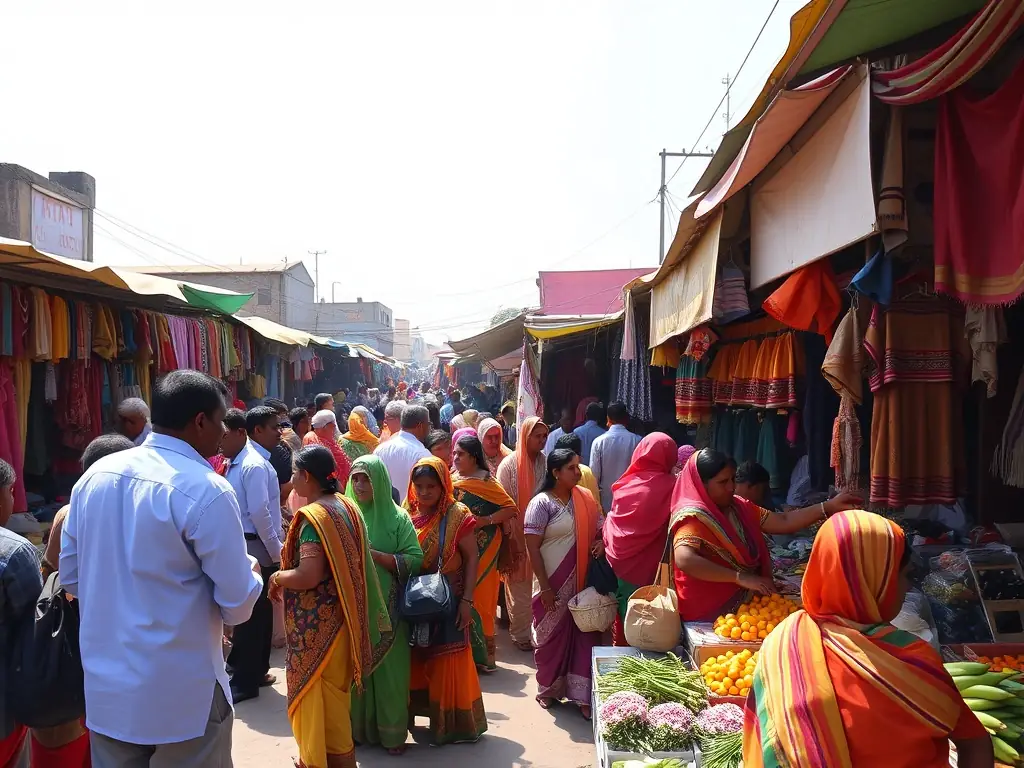
A bustling wholesale market in Gujarat with traders negotiating and exchanging goods, vibrant stalls, and busy activity, illustrating the trading sector’s dynamic environment for the website.
Trading: Enabling Business Expansion and Success

Our expertise covers trading businesses, including wholesalers, retailers, and import-export firms. We create comprehensive reports that highlight business potential and support Mudra loan applications for trading enterprises across Gujarat.
A lush green agricultural field in Gujarat with farmers tending crops, tractors in operation, and a clear sky, representing the agriculture sector’s importance for the website.
Agriculture: Supporting Gujarat’s Farming Community
We assist farmers and agribusinesses with project reports tailored to agricultural needs. Our reports address crop planning, financial projections, and market analysis, helping secure Mudra loans for sustainable growth.

A Mudra loan is a credit facility under Pradhan Mantri Mudra Yojana for non-corporate, non-farm micro and small enterprises. It provides covering loans up to ₹20 lakh without traditional collateral to support small business growth across manufacturing, trading, and services sectors.

A mudra loan project report is a structured document that presents your business plan, project cost, means of finance, financial projections, and repayment plan to the lending bank. It helps the bank assess your business feasibility and repayment capacity.

For very small Shishu loans (up to ₹50,000), most banks proceed with minimal documentation. However, for Kishore and Tarun loans, banks in Gujarat generally insist on at least a basic project report. A professionally structured report significantly improves your approval chances.

CMA (Credit Monitoring Arrangement) is a standardised format used by banks to assess working capital and term loan proposals. It includes operating statements, balance sheet analysis, current assets and liabilities, MPBF calculation, and fund flow statements.

Any non-corporate, non-farm micro enterprise engaged in manufacturing, trading, or services is eligible. This includes textile units, food businesses, retail shops, beauty parlors, engineering workshops, e-commerce sellers, and professionals. The objective is to fund income-generating small business activities.

The maximum loan amount is ₹10 lakh under the Tarun category and ₹20 lakh under the Tarun Plus category (for borrowers who have successfully repaid a previous Tarun loan).

Generally, no collateral is required for Mudra loans. These loans are collateral-free by design. However, banks may hypothecate the assets financed (like machinery) and the loan may be covered under credit guarantee schemes.

Interest rates vary by bank, borrower profile, and loan category. Indicative rates range from approximately 8% to 14% p.a. in Gujarat. For example, Bank of Baroda’s Digital Mudra starts around 8.40% p.a. for small micro units.

The repayment period typically ranges from 3 to 5 years, though it can extend up to 84 months depending on the bank and loan type. Manufacturing units may receive an initial moratorium period for equipment installation.

Yes. Startups can obtain Mudra loans if they have a clear business idea, proper KYC, business registrations, and a well-prepared project report with realistic financial projections.

Absolutely. Women entrepreneurs are a primary focus of the PMMY scheme, with two-thirds of all beneficiaries being women. Some banks offer priority processing and marginally lower interest rates.

Yes. Professionals such as doctors, CAs, lawyers, and consultants running non-corporate micro enterprises can apply for Mudra loans for their practice setup or expansion.

Typically 7–21 working days after submission of complete documents and project report. Delays usually occur when financial projections are unclear, documents are incomplete, or the bank requires additional details information.

SBI, Bank of Baroda, Union Bank, PNB, ICICI Bank, Bank of Maharashtra, Baroda Gujarat Gramin Bank, cooperative banks, small finance banks, and several NBFCs provide Mudra loans across Gujarat.

Yes. The application process can be done through bank-specific portals, the Jan Samarth portal, or the Udyamimitra platform. However, physical document verification is usually still required.

Yes. Home-based businesses including home kitchens, tutoring, handmade products, and digital services are eligible for Mudra loans under the trading or services category.

Yes. E-commerce sellers trading on Amazon, Flipkart, or other platforms can apply for Mudra loans to fund inventory, packaging, and logistics.

Project report preparation costs vary based on the loan amount and complexity of the business. Project Report Bank offers affordable, tiered pricing designed for micro and small enterprises. Contact us for a specific quote.

A CA brings expertise in financial projections, ratio analysis, DSCR calculations, and bank format compliance. CA-prepared reports carry greater credibility with credit officers and reduce the risk of queries and rejections.

Project Report Bank, led by an experienced CA, prepares customised Mudra loan project reports, CMA data, financial projections, and repayment plans fully online for Gujarat applicants. We also provide revision support based on bank feedback, ensuring your document meets the specific requirements of your lending branch.