
Key Takeaways
- Amazon, Flipkart, Meesho, Shopify and most other online marketplace sellers can get mudra loans under PMMY if they operate as registered small businesses with proper documentation, income proof and repayment capacity.
- Pure dropshipping and pure affiliate marketing are harder (but not impossible) to finance under the mudra scheme unless the business is formalised with registration, bank statements, ITR, website, agreements and supplier invoices.
- Pradhan Mantri Mudra Yojana offers collateral free loans up to ₹10 lakh across three main categories – Shishu, Kishore and Tarun. The interest rate, margin and processing fee depend on each bank’s policy and are not a fixed 19–21% across the board.
- GST registration, a physical office or a separate shop are not always mandatory. Many home-based online businesses get Mudra loans when projections and repayment capacity are convincing.
- As CA Manish Gugliya with 20+ years of experience in bank finance, I can prepare a bank-ready Mudra Loan Project Report for online businesses through ProjectReportBank.com. Final approval always remains at the bank’s discretion based on eligibility, documentation and business viability.
Introduction: Why Online Sellers Are Looking for Mudra Loans in 2026
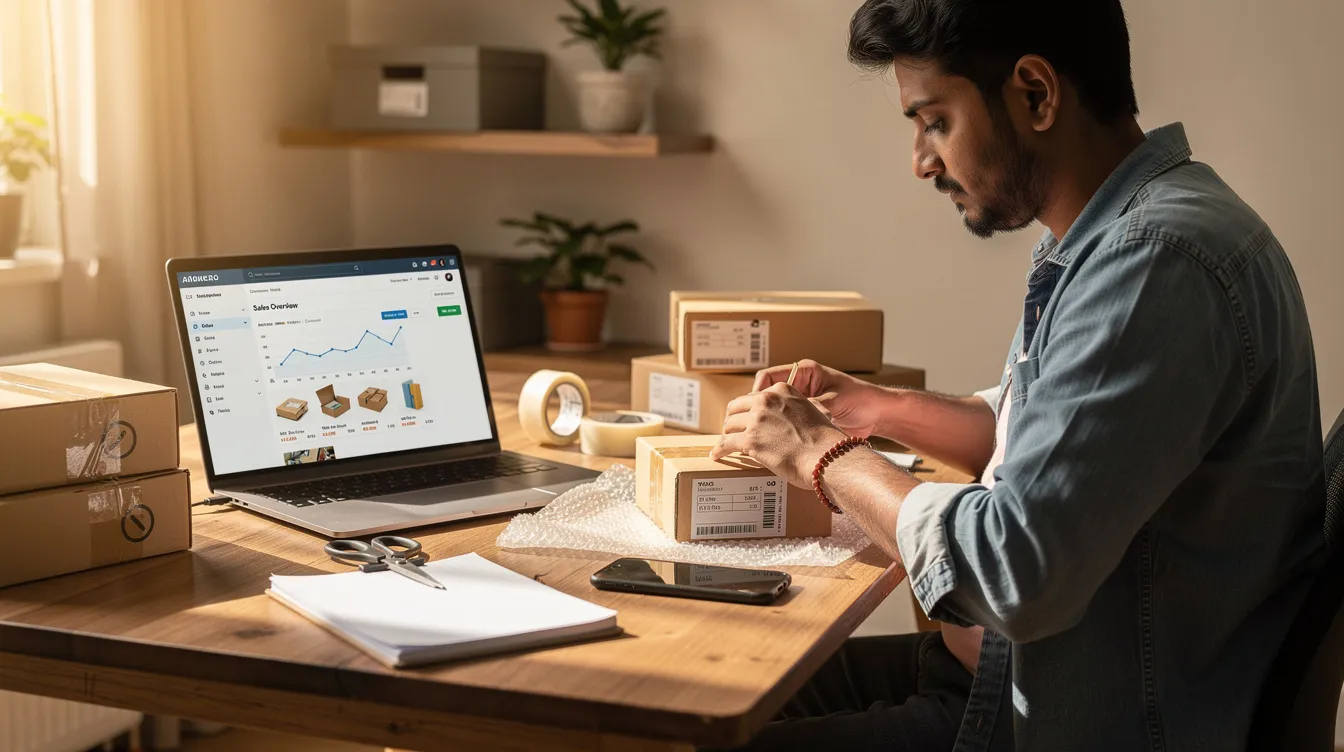
Since 2015, platforms like Amazon, Flipkart, Meesho, Shopify and Instagram have turned lakhs of ordinary Indians into first-time digital entrepreneurs. A homemaker in Jaipur sells sarees on Meesho. A college student in Pune lists phone covers on Amazon. A freelancer in Bengaluru runs a Shopify store selling custom t-shirts. Digital entrepreneurship in India is no longer a niche – it is mainstream.
These small online businesses need money – not crores, but a few lakhs – to buy inventory, pay for packaging, run ads, handle courier charges, manage returns and refunds, and purchase basic equipment like a laptop, barcode printer or photo setup. That is where a business loan under the government scheme becomes critical.
The Pradhan Mantri Mudra Yojana (PMMY), a flagship scheme launched on 8 April 2015, is the most accessible collateral free MSME loan facility for micro enterprises in India. Mudra Yojana supports income generation and employment creation across the non farm sector. As of March 2026, cumulative disbursal under PMMY had crossed ₹40.07 lakh crore across more than 57 crore accounts.
I am CA Manish Gugliya, a Chartered Accountant with over 20 years of hands-on experience in bank finance, MSME project reports and Mudra loan documentation. In this article, I will honestly explain whether Amazon sellers, dropshippers and affiliate marketers actually get Mudra loans in real life – and what you need to do to improve your chances.
What Is Mudra Loan under Pradhan Mantri Mudra Yojana (PMMY)?
A Mudra loan is a government-backed credit facility under the Pradhan Mantri Mudra Yojana, also known as Mantri Mudra Yojana PMMY. The scheme was launched on April 8, 2015, by the Prime Minister to provide financial assistance to non corporate small businesses in the non farm sector.
Mudra stands for Micro Units Development and Refinance Agency Ltd. It functions as a refinance agency – meaning Mudra itself does not lend directly to you. Instead, loans are disbursed through commercial banks, NBFCs, MFIs, RRBs, cooperative banks and small finance banks. Applications are accepted through participating banks, regional rural banks, small finance banks, and NBFCs. You can also apply online through portals like Jan Samarth.
Mudra loans help small and micro enterprises fund business operations. Loans under Mudra Yojana are available for non-corporate small businesses including shop owners and service providers. Mudra loans are not available for agriculture-related businesses, though allied agricultural activities like food processing may qualify.
Loans up to ₹10 lakh are available under PMMY, and no collateral is required for loans up to ₹10 lakh. Mudra loan categories include Shishu, Kishore, Tarun, and Tarun Plus. Here is a reference point table:
| Category | Loan Amount | Typical Borrower | Online Seller Example |
|---|---|---|---|
| Shishu | Up to ₹50,000 | Nascent stage, minimal documentation | Basic inventory + laptop for new Meesho seller |
| Kishore | ₹50,001 to ₹5 lakh | Growing enterprise with some track record | Scaling Amazon FBA stock before festive season |
| Tarun | ₹5 lakh to ₹10 lakh | Established micro unit | Own small warehouse + staff + expanded product line |
| Tarun Plus | ₹10 lakh to ₹20 lakh | Repeat borrower with proven track record | Major inventory expansion (bank-specific, not standard PMMY) |
Shishu loans are up to ₹50,000. Kishore loans range from ₹50,001 to ₹5 lakh. Tarun loans range from ₹5 lakh to ₹10 lakh. Tarun Plus loans range from ₹10 lakh to ₹20 lakh – however, Tarun Plus is not officially part of standard PMMY guidelines. Mudra Yojana offers collateral-free loans up to ₹20 lakh through Tarun Plus, but this extended facility is offered by select lenders based on past repayment performance and is not universally available. Some competitor articles present it as standard – that is misleading.
Mudra loans are available through public and private sector banks across India. Interest rates for Mudra loans are deregulated by banks, meaning each lender sets its own rate. Public sector banks typically charge 8%–12% p.a., while some private lenders and NBFCs may charge higher. Mudra loan interest rates range from 19% to 21% at some private or NBFC lenders for higher-risk profiles, but this is not universal. Interest rates depend on the bank and loan category. Mudra loans typically have lower rates than traditional unsecured business loans for similar amounts.
Can Amazon Sellers Get Mudra Loan in 2026?
Yes, in many cases Amazon sellers are eligible for Mudra loans if they are treated as small enterprises under PMMY. Amazon sellers qualify for Mudra loans if they operate an income-generating micro or small enterprise.
Banks look at Amazon seller businesses through the lens of trading activity. Your eligibility improves when you have:
- GST registration (mandatory if turnover crosses the statutory threshold)
- Amazon seller dashboard reports showing consistent sales
- Bank statements reflecting marketplace settlements
- Income tax returns (ITR-3 or ITR-4)
- Stock records and supplier invoices
Mudra loans can assist with purchasing inventory and managing working capital in e-commerce. Typical purposes include:
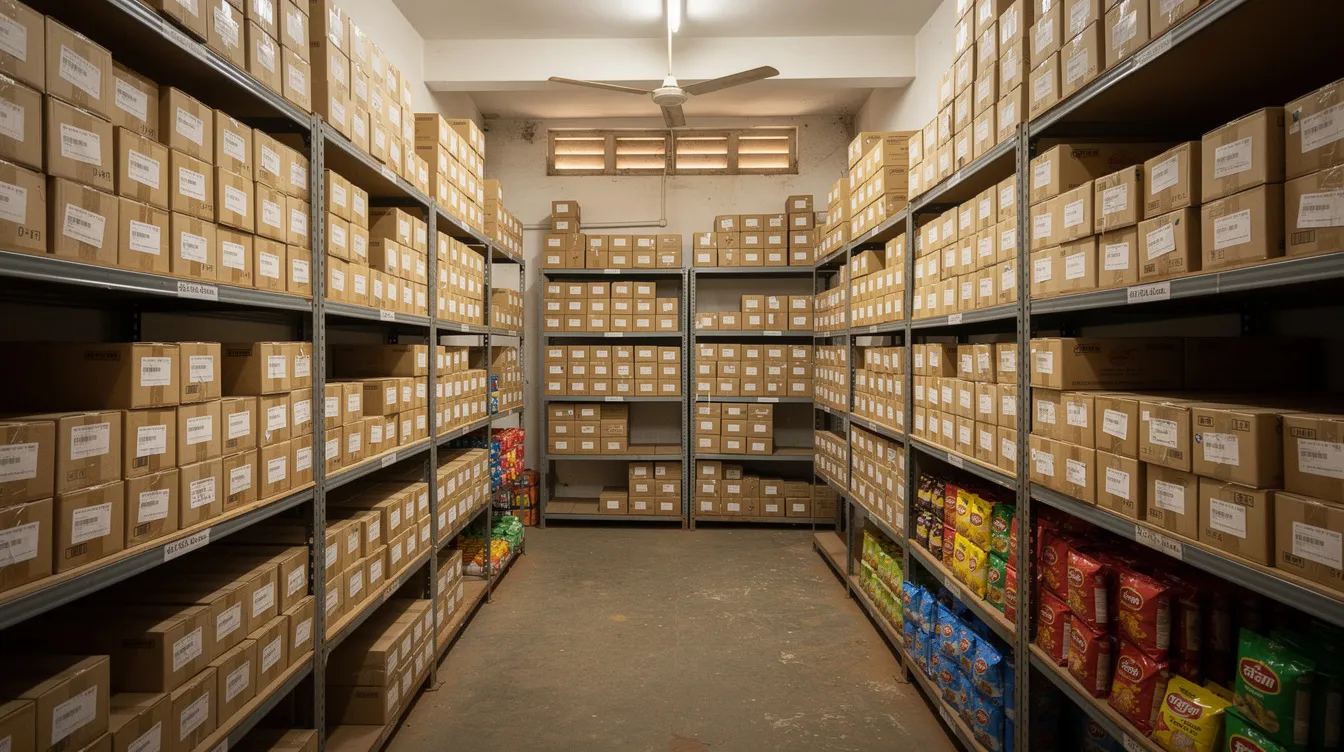
- Inventory purchase and bulk sourcing
- Packaging material and shipping supplies
- Barcode printer, label printer, laptop
- Product photography equipment and setup
- Software tools for inventory management and advertising
- Working capital to manage returns, refunds and settlement delays
Both Amazon FBA and “merchant fulfilled” sellers can apply. Funds must be used strictly for business – not personal expenses.
Quick example: An Amazon seller in Hyderabad with 12 months of consistent sales (₹1.5 lakh/month, 30% margin) applied under the Kishore category. She submitted Amazon settlement reports, 12 months of bank statements, ITR and a project report. The bank sanctioned ₹4 lakh at approximately 10.5% p.a. for 3 years as working capital for inventory build-up.
Can Amazon FBA Sellers Get Mudra Loan?
Fulfilment by Amazon (FBA) sellers often need more capital because they ship inventory in bulk to Amazon warehouses well before orders arrive. This makes them a strong fit for working capital and stock purchase purposes under PMMY.
Documents that strengthen an FBA seller’s case:
- FBA inventory reports (units shipped, units sold, current stock)
- Amazon settlement reports and sales analytics
- GST filings showing outward supplies
- Bank statements matching Amazon credit entries
- Any existing overdraft or cash credit facility history
Banks are generally more comfortable when the business has been running for at least 6–12 months with visible, consistent sales – even if turnover is modest.
CA-style advice for presenting Amazon FBA in a project report:
- Show sales trends month by month, highlighting seasonality (Diwali, Republic Day sales)
- Break down Amazon fees (referral, FBA, storage) to arrive at realistic net margin
- Calculate repayment capacity based on conservative (not peak) months
- Include DSCR calculation showing the borrower can comfortably service the EMI
Mudra Loan for Other Marketplace Sellers (Flipkart, Meesho, etc.)
From the bank’s perspective, Flipkart, Meesho, Ajio, Myntra, Snapdeal and similar marketplaces all represent “online trading/service businesses.” The eligibility principles are similar to those for Amazon sellers.
Common data banks look for across all platforms:
- Seller panel screenshots and sales reports
- Returns ratio and customer feedback
- Settlement cycles and payment frequency
- Bank statements, KYC and Udyam Registration
Mudra Loan for Flipkart Sellers
Flipkart sellers often deal in inventory-heavy categories – electronics accessories, fashion, home and kitchen products. These segments typically need Kishore or Tarun category funding.
- Flipkart may offer its own seller finance or tie-up loans, but Mudra through banks remains an independent option. Compare cost, flexibility and documentation before choosing.
- Banks may ask for trade license or shop & establishment registration if you operate a dedicated warehouse or small shop.
Example: A Flipkart seller in Lucknow selling kitchen accessories stocked up ₹3 lakh worth of inventory using a Mudra Kishore loan ahead of the festive season. Sales jumped 2.5x during October-November, and EMI remained comfortable.
Mudra Loan for Meesho & Other Social Commerce Sellers
Many Meesho sellers operate completely from home using WhatsApp, Instagram and the Meesho app. They often do not have GST or formal books of account initially.
Banks can still finance such home-based sellers under Mudra if there is clear evidence of regular income – for example, 6–12 months of bank statements showing UPI payments and Meesho settlements, plus a simple project report.
If you are a homemaker looking for business ideas, Meesho and social commerce is a realistic starting point. The key is gradually formalising the business: get Udyam registration, maintain basic accounting and file ITR – even if income is small. This builds your eligibility over time.
Mudra Loan for Shopify Stores and Independent E‑commerce Websites
Shopify, WooCommerce or custom website stores are treated by banks as “online trading/service units” – similar to physical shops – provided there is a clear domain, brand, payment gateway and business registration.
What convinces bankers:
- Payment gateway reports (Razorpay, PayU, Cashfree etc.)
- Order summaries and customer invoices
- Website analytics showing traffic and conversions
- Bank statements showing customer receipts
For brand-building D2C stores, Mudra loans are commonly used for inventory, packaging, branding, digital marketing, photography and basic office setup. Mudra Yojana loans can be used for various business purposes as long as they relate to the beneficiary micro unit’s operations.
A detailed comparison of Shopify vs Amazon vs Meesho from a banking perspective is covered in the eligibility section below.
Mudra Loan for Dropshipping Business
Let me be honest here. Classical inventory-free dropshipping – especially from foreign suppliers like AliExpress – is harder for Indian banks to finance under Mudra. The reason is straightforward: there is no local stock, and risk is higher.
Bank’s viewpoint:
- No owned inventory to value
- Dependence on third-party (often overseas) suppliers
- High refund and return risk
- Compliance issues on imports
- Difficulty verifying actual margins
| Factor | Pros (Entrepreneur) | Cons (Bank’s View) |
|---|---|---|
| Inventory | Low upfront investment | No assets to secure or verify |
| Scalability | Can expand quickly | Unstable supply chain |
| Margins | Variable, can be high | Hard to predict and prove |
| Compliance | Minimal warehousing | Import rules, GST complexities |
Despite these challenges, some banks may consider a mudra loan for dropshipping business if the business is well-documented: registered proprietorship/LLP/company, proper invoices from suppliers, payment gateway data, 12+ months of stable receipts, ITRs and a solid business plan.
As a CA, I generally advise hybrid models – keeping some local inventory – to make the proposal more acceptable. Approval is strictly at the bank’s discretion.
Can Affiliate Marketers Get Mudra Loan?
Affiliate marketing – earning commission by promoting products via Amazon Associates, Flipkart Affiliate, ClickBank and similar networks – is usually treated as a service business or freelancing activity by banks.
The challenge? Many affiliate marketers do not maintain proper books. Their income often goes into savings accounts or payment wallets. This makes it difficult when applying for a mudra loan for affiliate marketing.
To improve your chances, you should have:
- A website or YouTube channel with verifiable traffic data
- Detailed income statements from affiliate networks
- GST registration (if applicable based on turnover)
- At least 1–2 years of ITR reflecting such income
- A current account with regular inflows
Mudra loan eligibility improves significantly for affiliate marketers who have diversified into a small agency or digital marketing firm with proper invoices to clients, rather than relying purely on platform-based commission.
Realistic advice: Completely new affiliate marketers with no income proof are unlikely to get a Mudra loan. Build a track record first or start with self-funded operations before approaching banks.
Is Home‑Based Online Business Eligible for Mudra Loan?
PMMY guidelines do not say a separate office or physical shop is compulsory. Many successful Mudra cases involve home-based businesses – tailoring, cloud kitchens, tuitions, and now home-based online sellers.
Banks mainly check:
- Genuine business activity with verifiable income
- Capacity to repay the loan amount
- Basic KYC and address proof (even residential)
- Any local permissions if the product category requires them (food, cosmetics etc.)
Examples: A homemaker running a Meesho saree business from home. A student selling customised phone covers on Amazon. A freelancer running a Shopify print-on-demand store from a rented flat.
Udyam Registration as a micro enterprise and simple bookkeeping (income/expense summary, stock list) help a lot when approaching the bank for easy access to Mudra funding.

Is GST, Shop or Office Compulsory for Mudra Loan?
Three common doubts – answered clearly:
GST Registration: GST is mandatory only when turnover crosses the statutory threshold or when your business model demands it (inter-state supply, certain marketplace requirements). A Mudra loan without GST is possible for very small businesses, but documentation requirements may be higher. Banks want confidence in your credit needs and repayment – GST helps but is not always the deciding factor.
Physical Shop: A rented shop or commercial office is not a legal requirement under PMMY. Your residence can serve as your business address if the lender is satisfied – especially for online and services businesses.
Office/Warehouse: Banks might still prefer some proof of place of business: electricity bill, rent agreement, NOC from property owner, or a simple trade license if the local authority requires it. But for most online sellers, home address is accepted.
Is Inventory Necessary? What Expenses Are Covered Under Mudra Loan?
Mudra is not only for inventory purchase. It can fund many business-related capital and working capital needs, subject to each bank’s internal policy. Eligible businesses include shop owners, service providers, manufacturers and traders across the non farm sector.
| Expense Type | Allowed Under Mudra for Online Business? |
|---|---|
| Inventory / Stock | Yes |
| Packaging Material | Yes |
| Laptop / Desktop | Yes |
| Printer / Barcode Printer | Yes |
| Product Photography Equipment | Yes |
| Storage Racks / Furniture | Yes |
| Software (Tally, ecommerce tools) | Yes |
| Digital Marketing / Ads | Yes (if for same business) |
| Website Development | Yes |
| Courier / Logistics Deposits | Depends on bank |
| Warehouse Rent Advance | Depends on bank |
| Business Registration / Trademark | Depends on bank |
| Internet / Phone Bills | Generally not funded separately |
| Personal Expenses | No – strictly prohibited |
Pure service or digital businesses (affiliate marketing, content creation, digital marketing agency) may not have inventory but still need funds for equipment, software, marketing and team – which can also be covered under Mudra if justified in the project report.
Eligibility Criteria for Mudra Loan (Amazon, Dropshipping, Affiliate & Online Businesses)
Generic PMMY eligibility criteria:
- Borrowers must be Indian citizens and aged 18 to 65 years
- Applicants must be aged between 18 to 65 years
- Non farm business activity (manufacturing, trading or services)
- Maximum loan up to ₹10 lakh under standard categories
- First-time or existing entrepreneurs
- Applicants must not have a defaulted loan history to qualify for a Mudra loan
| Eligibility Factor | Amazon / E-commerce Seller | Dropshipping Model | Affiliate / Digital Services |
|---|---|---|---|
| Business Proof | Seller registration, Udyam, GST | Business registration, supplier agreements | Website, affiliate agreements, invoices |
| Revenue History | 6–12 months dashboard + bank statements | 12+ months payment gateway + bank statements | 1–2 years ITR + network reports |
| GST Required? | If turnover exceeds threshold | Often yes (inter-state/imports) | If turnover exceeds threshold |
| Collateral | Not required up to ₹10 lakh | Not required up to ₹10 lakh | Not required up to ₹10 lakh |
| CIBIL Score | 700+ preferred | 700+ preferred | 700+ preferred |
| Bank’s Comfort Level | High | Low to Medium | Medium |
| Acceptable Risk | Low to Medium | Medium to High | Medium |
CIBIL score matters – 700+ is generally preferred for Kishore and Tarun. Banks may insist on Udyam Registration for MSME classification, especially for larger loans.
Meeting eligibility criteria does not guarantee sanction. The final decision always lies with the lending institution after credit appraisal of the applicant, the borrower’s profile, and business viability.
Documents Required for Mudra Loan for Online Businesses
KYC Documents:
- PAN card
- Aadhaar card
- Passport-size photographs
- Address proof (electricity bill, rent agreement)
Business Proof:
- Registration certificate (proprietorship, partnership, company or LLP)
- Udyam Registration certificate
- GST certificate (if applicable)
- Shop & establishment certificate / trade license (if applicable)
- Rent agreement / NOC if business run from rented place
Financial Documents:
- Last 6–12 months bank statements
- Last 2–3 years ITR (if available)
- Simple balance sheet and profit & loss account
- Existing loan statements
- Credit card statements (where relevant for context)
Online Activity Proof:
- Amazon / Flipkart / Meesho seller dashboards
- Payment gateway statements (Razorpay, PayU etc.)
- Website screenshots and traffic analytics
- Invoices to customers and major suppliers
The exact list varies by bank and state. An experienced CA can help compile the complete file to reduce chances of rejection.
Is Project Report Mandatory for Mudra Loan?
For very small shishu loans, many banks accept a simple application with basic details. But for Kishore and Tarun categories (above ₹50,000), almost all banks now insist on a basic project report or business plan.
From my experience as a CA, a structured project report greatly improves the chances of sanction because it answers the banker’s core questions: What is your business model? What are your margins? How will you repay?
Some banks have their own form and format, while others accept CA-prepared Detailed Project Reports (DPR) including projected financials, CMA data and break-even analysis.
If you are a startup looking for Mudra loan guidance, having a professional project report is one of the most important steps you can take.
How to Prepare a Bankable Mudra Loan Project Report for Online Business
A strong project report has these components:
- Business Overview – What you sell, where you sell, which platforms
- Promoter Profile – Your background, experience and skills
- Market Analysis – Demand for your product offerings, competition, growth potential
- Business Model Description – Revenue model, supply chain, delivery method
- Cost Structure – Cost of goods sold, platform fees, packaging, courier, ads
- Risk Analysis – Return rates, platform dependence, seasonal fluctuations
- Implementation Schedule – Timeline for using funds
Financial Projections (simplified):
- Projected sales for 3–5 years
- Gross margin calculation
- Operating expenses and costs breakdown
- Net profit projections
- Cash flow statement showing monthly inflows and outflows
Key financial ratios bankers look for:
- DSCR (Debt Service Coverage Ratio): If an Amazon seller borrows ₹5 lakh at 10% for 3 years, EMI is approximately ₹16,100/month. If monthly net profit after all expenses is ₹32,000, DSCR = 32,000 ÷ 16,100 = ~1.98. Banks prefer DSCR above 1.5.
- Break-even Analysis: At what monthly sales level does the business cover all costs including EMI?
- Working Capital Assessment: How much money is locked in inventory, returns, and settlement delays at any given time?
For dropshipping and affiliate models, the project report must be especially detailed about traffic generation plan, conversion ratio, refund rate and platform dependence – because the banker at the branch may not be familiar with such models.
My advice: Professionally prepared, realistic projections are valued far more than aggressive, unbelievable numbers. If you claim ₹50 lakh monthly sales from a ₹3 lakh loan, no banker will take it seriously.
Common Reasons for Mudra Loan Rejection for Online Businesses
Many Mudra applications from online sellers fail due to avoidable issues – not because PMMY is against online business models.
Common rejection reasons:
- Poor CIBIL score (below 650)
- Existing overdue loans or being a defaulter
- Unstable or very recent business with no proof of income
- Incomplete documentation or missing KYC
- No clear business plan or project report
- Large unexplained cash deposits in bank statements
- Mismatch between bank statement figures and claimed sales
- Unrealistic revenue projections in the project report
- Frequent cheque bounces in account history
- High unsecured borrowings already availed
- Negative impression at personal discussion or branch interview
- Branch staff unfamiliar with online business model – leading to conservative decision
A clear, simple explanation of your online business with supporting screenshots and data can reduce the risk of rejection due to lack of understanding.
For a detailed guide on reasons for Mudra loan rejection and the appeal process after rejection, refer to our dedicated resources.
Practical Tips from a Chartered Accountant to Improve Approval Chances
Based on 20+ years of helping entrepreneurs navigate bank finance, here is my practical advice:
- Keep business transactions in a dedicated current account – do not mix with personal savings
- File income tax returns every year, even if income is small
- Avoid cash-heavy behaviour; let payments flow through banking channels
- Improve your CIBIL by paying existing loans and credit cards on time
- Prepare clear invoices for every transaction – buy and sell
- Maintain simple books of account (even an Excel sheet is better than nothing)
- Start with a sensible loan amount based on realistic repayment capacity – do not immediately ask for ₹10 lakh Tarun when your monthly sales are ₹20,000
- Visit 2–3 different banks, RRBs or cooperative banks as some branches are more comfortable with online models than others
- Get Udyam Registration – it takes 5 minutes and costs nothing
- Taking help from a CA for your project report and documentation often saves multiple bank visits and clarifies banker queries in advance
Real‑Life Style Example: Amazon Seller Using Mudra Loan
Here is a real-world style case study (details anonymised):
Background: An Amazon FBA seller based in Pune had been selling home decor products for 14 months. Monthly sales averaged ₹1.5 lakh with a gross margin of approximately 35%. She needed to expand her inventory for the Diwali and Christmas season.
Loan Details:
- Category: Kishore
- Loan amount: ₹4.5 lakh
- Interest rate: ~10.5% p.a. (public sector bank)
- Tenure: 4 years
- Approximate EMI: ₹11,500/month
Documentation Prepared:
- Amazon seller dashboard with 14-month sales history
- Bank statements showing Amazon settlement credits
- ITR-3 for two years
- Udyam Registration certificate
- Project report with 3-year projections prepared by CA
How Funds Were Used:
- 70% – Inventory purchase (₹3.15 lakh)
- 10% – Packaging and photography (₹45,000)
- 10% – Digital marketing and Amazon ads (₹45,000)
- 10% – Contingency and working capital buffer (₹45,000)
Result: Post-Diwali monthly sales reached ₹4 lakh. DSCR remained above 2.0. EMI was paid comfortably from business cash flow.
Lesson learned: Realistic planning and professional guidance mattered more than just getting the money. She avoided over-stocking by basing projections on conservative estimates rather than peak hopes.
Mistakes to Avoid When Applying for Mudra Loan as an Online Entrepreneur
- Mixing personal and business expenses in one account
- Applying without any income proof or sales history
- Providing false or fabricated invoices
- Inflating sales figures in the project report
- Hiding existing loans or credit card dues
- Not checking your CIBIL score before applying
- Applying for ₹10 lakh Tarun when your business is only 2 months old
- Ignoring return and refund rates in projections
- Not reading the sanction terms and conditions carefully
- Misusing funds for personal consumption, investments or speculation
- Submitting photocopies instead of clear originals when asked
- Not preparing a project report at all
- Copying someone else’s project report without customisation
- Approaching only one bank and giving up after one rejection
- Using a savings account instead of current account for business
- Not filing ITR because “my income is too small”
- Exaggerating margins without understanding platform fees and returns
- Not maintaining any books of account – not even basic records
- Being rude or impatient at the bank branch during discussion
- Paying heavy upfront fees to “guaranteed loan” agents – no CA or agent can guarantee Mudra approval
Banks cross-check information from CIBIL, GST portal and bank statements. Any inconsistency or misrepresentation can permanently damage your credibility with financial institutions.
Advantages and Limitations of Mudra Loan for Online Business
Advantages:
- Collateral free up to ₹10 lakh – no security or property needed
- Suitable for first-time entrepreneurs with no credit history
- Available across India through various financial institutions
- Can fund working capital and basic assets for online businesses
- May be covered under credit guarantee schemes (CGFMU), reducing bank’s risk
- Helps small businesses expand and grow at the next phase
- Mudra loans typically have lower rates than traditional business loans from many lenders
- Benefits women, SC/ST and aspirational district applicants through potential concessions
- You can apply online through Jan Samarth portal or directly at bank branches
Limitations:
- Interest rate may be higher than secured loans (especially from NBFCs at 15–18%)
- Not every business model (pure dropshipping, new affiliate sites) is easily understood by branch staff
- Processing time varies significantly by branch and bank
- Sanction is strictly at bank’s discretion – no subsidy or guaranteed approval
- Loan amount limited to ₹10 lakh under standard PMMY (Tarun Plus is not universally available)
- Borrower cannot withdraw money for personal use – funds are tracked
| Feature | Mudra Loan | Regular Unsecured Business Loan | Platform Seller Finance (Amazon/Flipkart) |
|---|---|---|---|
| Security / Collateral | Not required | Usually not required | Not required |
| Interest Rate | 8%–18% (varies) | 12%–24% | 12%–20% |
| Maximum Loan | ₹10 lakh (standard) | ₹25 lakh+ | Based on sales history |
| Flexibility of Use | Broad (any business purpose) | Broad | Often restricted to platform inventory |
| Documentation | Moderate | Moderate to High | Minimal (auto-approved) |
| Government Support | Yes (PMMY scheme) | No | No |
Need a Bank‑Approved Mudra Loan Project Report?
If you are an Amazon seller, Flipkart seller, Meesho seller, Shopify store owner, dropshipping entrepreneur or affiliate marketer planning to apply for a Mudra loan – a professionally prepared project report can make the difference between sanction and rejection.
At ProjectReportBank.com, CA Manish Gugliya and team prepare bank-ready Mudra Loan Project Reports specifically tailored for online businesses. Our reports include:
- Detailed Project Report (DPR)
- CMA Data
- Projected Balance Sheet and Profit & Loss Statement
- Cash Flow Statement
- DSCR and Break-even Analysis
- Working Capital Assessment
- Customised assumptions for Amazon sellers, dropshipping, affiliate and other online models
- Bank-compliant documentation matching each lender’s format
Our reports are suitable for public sector banks, private banks, regional rural banks and cooperative banks. We provide fully online services across India – Maharashtra, Uttar Pradesh, Gujarat, Karnataka, Rajasthan, Tamil Nadu, West Bengal and all other states – with revisions as required by the lending bank.
Contact CA Manish Gugliya through ProjectReportBank.com for a personalised consultation before applying for a Mudra loan for your online business.
Remember: no one can guarantee loan approval. But a well-prepared, realistic and professional project report significantly improves your chances.
Frequently Asked Questions on Mudra Loan for Amazon Sellers, Dropshipping & Online Businesses
These FAQs cover practical doubts not fully answered above. Final sanction is always at the bank’s discretion based on eligibility, documentation and viability – no one can guarantee approval.
Can a student running an Amazon or Instagram store part‑time apply for a Mudra loan?
Yes, students aged 18 or above can apply for a Mudra loan if they are the registered business owner with proper KYC, basic business proof and some income track record. However, banks may be cautious if there is no stable income or guarantor. Starting with a small Shishu category loan (up to ₹50,000) and building repayment history is the most practical approach for student entrepreneurs.
Can I get one Mudra loan for both my offline shop and my Amazon or Meesho account together?
Banks typically finance the overall business unit, so a single Mudra loan can cover combined offline and online operations if both are under the same ownership. The project report must clearly explain how funds will be used across both channels and how total cash flow from the combined business supports the EMI comfortably.
Will using Mudra loan money to run ads on Amazon, Facebook or Google be treated as valid business use?
Genuine digital marketing expenses for promoting the same business are normally considered valid business use under Mudra. However, funds must not be diverted to personal investments, speculation or unrelated activities. Keep invoices and ad platform billing receipts for your records – banks may ask for proof of fund utilisation.
Is it possible to shift from home‑based business to rented warehouse later under the same Mudra loan?
Banks usually allow business growth and change of premises during the loan tenure. You should inform the branch, update your KYC and inspection details, and ensure EMIs continue to be paid on time. No separate loan is needed just for a change of business address.
Can I top‑up my Mudra loan if my Amazon or Shopify sales grow fast?
Some banks allow enhancement or a fresh Mudra loan after a good repayment track record and proven business growth. The decision depends on branch appraisal, existing EMI behaviour, your overall exposure with funding from various lenders, and the bank’s internal policy. Typically, at least 12 months of on-time repayment is expected before any enhancement is considered.
- Can Bank Reduce Mudra Loan Amount Without Your Consent? Complete Practical Guide (2026)


- What to Do If You Cannot Pay Your Mudra Loan EMI (2026 Guide)

- Can a Bank Refuse a Mudra Loan Because the Target Is Completed? Complete Guide (2026)

- Bank Refused My Mudra Loan Application – What Are My Rights?

- Mudra Loan for Used Vehicles (2026): Eligibility, Documents, Bank Rules & Complete Guide

- Rejected Mudra Loan – What to Do Next? Appeal Process Explained (2026)

- Mudra Loan Project Report Madhya Pradesh – Bank-Ready DPR & CMA Guide

- Project Report for Mudra Loan Maharashtra: Complete Guide for MSMEs, Startups and Small Businesses (2026)

- Mudra Loan Uttar Pradesh: Complete Guide for MSMEs, Startups and Small Businesses (2026)

- Mudra Loan Bihar 2026: Eligibility, Documents, Online Application Process & Project Report Guide

- Jan Samarth Mudra Loan 2026: Complete Guide to Online Application, Eligibility, Documents & Approval Process

- MSME Mudra Loan: Complete Guide for Small Businesses, Startups & Manufacturing Units in India (2026)

- Is the Mudra Loan Subsidy Real or Fake? Get the Facts Here

- Mudra Loan Without CIBIL Score: How to Qualify and Apply

- Mudra Loan for Used Machine (2026 Guide) – Eligibility, Documents, Valuation & Approval Tips