
Introduction
India is the largest consumer of gold globally, and the gold market is projected to reach $249.6 billion by 2026. Gold is often attractive for jewellery, investment, gifting, and wealth preservation-making this gold industry one of the most resilient sectors for entrepreneurs.
In 2025, India’s gold demand by value rose roughly 30% to ₹7.51 lakh crore, even as volumes dipped due to record prices. Investment demand in bars and coins climbed 17% to 280.4 tonnes, while gold jewellery exports surged 22% to USD 5.79 billion in H1 FY25-26. The gold market continues to offer opportunities for entrepreneurs as consumers seek stability, and digital channels are creating opportunities for buying and selling gold beyond traditional methods. Business opportunities in gold include pawn broking, recycling, and digital assets-well beyond traditional jewellery retail.
Whether you want to start gold business with minimal investment or build a capital intensive manufacturing plant, this guide covers every viable gold business idea for 2026.
How We Chose the Best Gold Business Ideas
Every gold business idea in this guide was evaluated on these criteria:
- Investment requirements and scalability potential
- Profit margin and realistic financial projections
- Market demand based on thorough market research and market trends
- Ease of entry, technical skills needed, and licensing requirements
- Suitability for different entrepreneur types-first-time founders, women entrepreneurs, experienced traders
- Mudra loan eligibility and ability to secure funding through MSME schemes
These criteria help you pick the right business model based on your capital, skills, and target audience.
Top 25+ Profitable Gold Business Ideas for Indian Entrepreneurs
1. Gold Jewellery Manufacturing
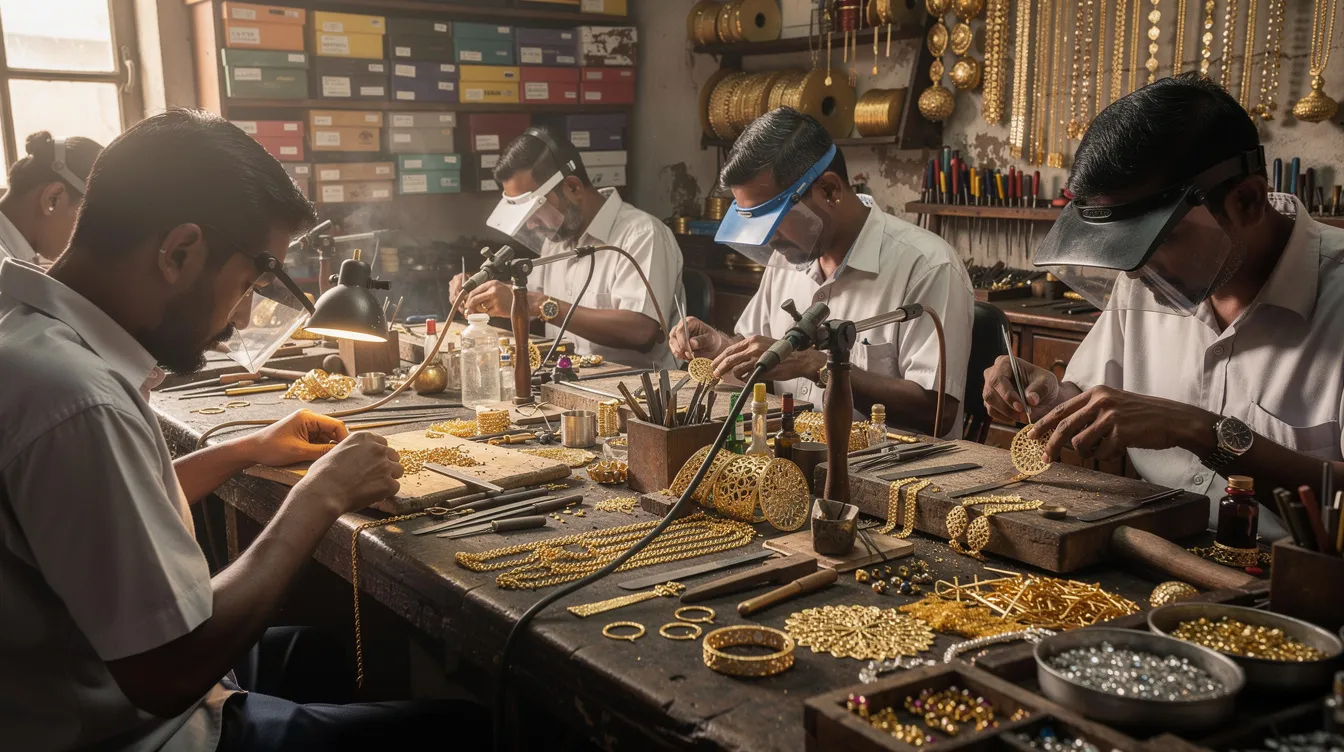
A jewellery manufacturing unit handles design, casting, polishing, stone setting, and finishing. Raw materials (gold, stones) account for 85–95% of operational costs, but gross margins of 25–40% reward scale and design premiums.
- Investment: ₹50 lakh–₹5 crore+ depending on capacity
- Profit Margin: Net 10–25%
- Target Customers: Retail brands, exporters, franchise chains
- Licenses: BIS registration, factory licence, pollution control, GST
- Growth: High-especially with export orders. There is demand for lightweight jewellery due to higher gold prices, plus an emerging trend for bespoke and customized jewellery options in the market.
For a step-by-step startup guide, read the Indian Jewellery Manufacturing Startup Guide.
2. Gold Jewellery Retail Shop
The classic physical store model built on trust and strong customer relationships. A small jewellery retail shop may require ₹10 to ₹15 lakhs to start in a Tier-2/3 city; large showrooms in metro locations can need ₹1 crore or more. The average profit margin in gold jewellery retail ranges from 10% to 20%. Jewellery retail requires BIS hallmarking certification for compliance.
- Best For: Entrepreneurs with sales experience and local market knowledge
- Key Strengths: Wedding market access, festival sales, customer loyalty
- Possible Limitations: High inventory costs, security concerns, fixed costs of rent and insurance
3. Gold Jewellery Franchise
Partnering with an established brand gives you brand recognition and a proven business model. Franchise fees vary (₹15 lakh–₹1 crore+), but you receive marketing support, training, and an established supply chain.
- Best For: First-time entrepreneurs seeking brand support
- Possible Limitations: Limited creative control, ongoing royalty payments
Learn more in the Jewellery Franchise Business Guide.
4. Gold Bullion Trading
Bullion trading involves buying and selling gold bars and coins. Investment demand hit 280.4 tonnes in 2025, making this a high-volume opportunity. Gold can be an effective hedge against market volatility and geopolitical risks, driving consistent demand from investors.
- Investment: ₹10 lakh–₹1 crore+ (mostly working capital)
- Profit Margin: 1–5% per transaction (volume-driven)
- Licenses: GST, trade licence, RBI/Reserve Bank guidelines for certain dealings
5. Gold Recycling and Refining
The circular economy concept applies to gold through recycling and reusing materials. The market for recycling old gold is growing as high gold prices increase recycling activity, and gold refining and recycling is a growing business segment. E-waste recycling can yield gold as it contains trace amounts of precious metals, opening up scrap gold recovery as a viable business line.
- Investment: ₹8 lakh (small lab) to ₹5 crore+ (large plant)
- Profit Margin: Depends on spread between scrap gold input cost and refined output value
- Licenses: Pollution control board approval, BIS standards, GST
Entrepreneurs interested in recycling-based businesses should also explore the Rare Earth Magnet Recycling Business.
6. Online Gold Jewellery Store
Online gold retail is a fast-growing segment in the gold market. An e commerce platform for gold jewellery can start with ₹1–5 lakh, covering a website, initial inventory, and digital marketing. Transparent pricing and authenticity checks are essential for gold sales platforms.
- Profit Margin: Gross 20–40%, net 10–25%
- Best For: Tech-savvy entrepreneurs with search engine optimisation and digital payment gateways experience
7–10. More High-Potential Ideas
| # | Business Idea | Investment (₹) | Profit Margin | Best For |
|---|---|---|---|---|
| 7 | Gold Hallmarking Centre | ₹25 lakh–₹1 crore | Steady B2B fees | Technical certification background |
| 8 | Gold Plating Business | ₹3–10 lakh | 30–50% gross | Electroplating knowledge |
| 9 | Handmade Jewellery Business | ₹50,000–₹2 lakh | 35–60% gross | Artisans, creative entrepreneurs |
| 10 | Bridal Jewellery Specialist | ₹20 lakh–₹1 crore+ | 15–30% | Wedding market specialists |
The demand for gold authentication and hallmark verification services is increasing, making hallmarking centres a particularly strong B2B opportunity. For handmade jewellery making, the low cost structure and high profit margins attract women entrepreneurs and online businesses.
11–26. Complete List of Gold Business Ideas
| # | Business Idea | Investment Range | Key Opportunity |
|---|---|---|---|
| 11 | Gold Coin Manufacturing & Trading | ₹10–50 lakh | Gift market, investment demand |
| 12 | Gold Export Business | ₹50 lakh+ | Middle East, UK diaspora |
| 13 | Gold Import Business | ₹1 crore+ | Supply to manufacturers |
| 14 | Gold Investment Consultancy | ₹2–5 lakh | Rising gold investing interest |
| 15 | Temple Jewellery Specialist | ₹10–30 lakh | South Indian market, exports |
| 16 | Antique Gold Jewellery | ₹15–50 lakh | Collectors, heritage buyers |
| 17 | Gold Casting Unit | ₹10–40 lakh | B2B supply to jewellers |
| 18 | Gold Chain Manufacturing | ₹20–60 lakh | High-volume daily-wear segment |
| 19 | Digital Gold Platform | ₹10–50 lakh (tech) | Digital gold allows consumers to buy fractional amounts online |
| 20 | Gold Loan Business | ₹50 lakh+ | Gold-backed lending services can generate steady demand for short-term liquidity |
| 21 | Gold Testing Laboratory | ₹15–40 lakh | Purity verification, B2B |
| 22 | Gold Packaging Business | ₹5–15 lakh | Retail and export packaging |
| 23 | Jewellery Repair & Maintenance | ₹2–8 lakh | Low investment, local demand |
| 24 | Jewellery Designing Studio | ₹5–15 lakh | CAD/CAM design services |
| 25 | Gold Ornament Manufacturing | ₹30 lakh–₹2 crore | Regional speciality pieces |
| 26 | Gold Wholesale Business | ₹50 lakh–₹2 crore+ | B2B distribution network |
Technological advancements are enabling innovative solutions in gold investment and trading, particularly for ideas 14, 19, and 20. The resale market for pre-owned gold jewelry is booming as consumers monetize old pieces, supporting ideas like repair services and old gold exchange programmes.

Quick Comparison of the Best Gold Business Ideas
| Business | Best For | Investment | Risk Level |
|---|---|---|---|
| Gold Jewellery Manufacturing | High-margin creative businesses | High | Medium-High |
| Gold Bullion Trading | Investment-focused entrepreneurs | Medium-High | Medium |
| Online Gold Store | Tech-savvy digital entrepreneurs | Low-Medium | Low-Medium |
| Gold Recycling | Environmentally conscious entrepreneurs | Medium | Medium |
| Franchise Business | First-time entrepreneurs | Medium-High | Low |
How to Choose the Right Gold Business for You
By investment capacity:
- Low (₹2–10 lakh): Online stores, handmade jewellery, repair services, consultancy
- Medium (₹10–50 lakh): Retail shops, small manufacturing, franchise, testing labs
- High (₹50 lakh+): Large manufacturing, bullion trading, refining operations, gold loan business
By skills: Technical skills suit manufacturing, refining, and hallmarking. Sales and marketing skills fit jewellery retail, online sales, and consultancy. Creative skills drive jewellery designing studios and handmade jewellery. Trading experience supports bullion trading and import/export.
By target market: B2C retail includes shops and online businesses. B2B services cover manufacturing, wholesale, hallmarking. The investment market suits bullion, coins, and digital gold. Export markets reward manufacturing for international buyers.
Investment Comparison Table
| Category | Investment (₹) | Typical Profit Margin | Risk | Scalability | Suitable For |
|---|---|---|---|---|---|
| Small | 2–10 lakh | 25–60% gross | Low | Moderate | First-timers, women entrepreneurs |
| Medium | 10–50 lakh | 15–30% gross | Medium | Good | Experienced retailers, franchise seekers |
| Large | 50 lakh+ | 10–25% net | High | High | Manufacturers, exporters, traders |
Licenses and Legal Requirements
Starting a gold business often requires compliance with strict regulatory standards. Key legal requirements include:
- GST Registration: Gold transactions attract GST at applicable rates
- BIS Hallmarking: BIS hallmarking is mandatory for gold jewellery in India; registration is free via the BIS portal
- Trade License: A trade license is required from local municipal authorities
- PMLA Compliance: Gold businesses must comply with the Prevention of Money Laundering Act
- IEC: Import Export Code for international trade via DGFT
- Factory/Pollution Control: For manufacturing and refining operations
- MSME Registration: For scheme benefits and competitive pricing on loans
Licensing requirements vary by business type and location. Exemptions from hallmarking exist for pieces under 2 grams, exports, Kundan/Polki/Jadau, and jewellers with turnover under ₹40 lakh.
Machinery and Equipment Required
Core equipment varies by business type:
- Manufacturing: Melting furnaces, casting machines, rolling mills, polishing equipment
- Design: CAD/CAM software, 3D printers (₹3.5–8 lakh for lean setups)
- Testing/Hallmarking: XRF spectrometers, fire assay equipment
- Refining: Chemical refining units (₹3–8 lakh small; ₹1.5–5 crore large)
- Security: Security systems, vaults, CCTV-essential for any gold venture handling physical inventory
Raw Materials and Sourcing
Gold bullion from authorized dealers and refineries forms the primary input. Alloy metals (silver, copper, zinc) adjust karat levels. Gemstones and diamonds source through Jaipur and Surat clusters. There is a growing emphasis on providing traceability and ethical sourcing in gold businesses. Sustainable and responsibly sourced gold is seeing increased demand among consumers, particularly in export markets.
State-wise Gold Business Opportunities
- Gujarat: Diamond cutting in Surat, export manufacturing in Ahmedabad, strong MSME ecosystem
- Maharashtra: Mumbai’s Zaveri Bazaar for trading, Pune for manufacturing
- Tamil Nadu: Temple jewellery, Chennai’s retail density, skilled artisans
- Kerala: Highest per-capita gold consumption, strong retail opportunity
- Rajasthan: Kundan, Meenakari, Polki craftsmanship; gemstone sourcing hub
- West Bengal: Cultural jewellery, Kolkata trading markets
- Karnataka: Bangalore’s tech integration for digital gold and modern design
- Uttar Pradesh and Madhya Pradesh: Growing urban demand, lower operational costs
Funding and Bank Finance Options
- Mudra Loans: Ideal for small gold businesses under ₹10 lakh (Shishu/Kishore categories). See the Gujarat Mudra Loan Guide or Telangana Mudra Loan Guide.
- CGTMSE: Collateral-free loans up to ₹2 crore for MSMEs
- Working Capital Loans: For inventory financing-critical given asset backed inventory requirements
- Term Loans: For machinery and equipment purchase
- Gold Loan vs Business Loan: A gold loan uses personal savings in gold as collateral; a business loan requires a detailed business plan and financial projections
A bankable project report with sensitivity analysis on gold rates (±10–20%) significantly improves approval chances. Always prepare realistic financial projections showing cash flow, NPV, and IRR.
Marketing Strategies for Gold Businesses
Effective marketing combines offline and digital strategies. Market segmentation is important to attract both traditional and younger customers. Consumer behaviors are shifting towards trading in old gold and using digital channels.
- Digital marketing: Social media marketing can enhance customer engagement; invest in search engine optimisation for online sales
- Loyalty programs can build a repeat customer base
- Old-gold exchange programmes help reduce replacement costs and attract customers to your store
- Email marketing can effectively reach potential customers with festival offers
- Participating in community events boosts local visibility for brick-and-mortar stores
- Influencer partnerships: Collaborate with lifestyle and wedding influencers for effective marketing
Common Mistakes to Avoid
- Skipping thorough market research and competitor analysis before launch
- Underestimating working capital-gold prices fluctuate daily based on global market conditions
- Poor inventory management leading to dead stock; always maintain inventory tracking systems
- Ignoring BIS hallmarking compliance (penalties can reach five times the value of non-hallmarked goods)
- Inadequate security systems for gold storage
- Not using accounting software for proper record-keeping
- Lack of insurance coverage for gold inventory
- Ignoring cash flow management during gold price volatility
- Poor customer service affecting repeat business
- Skipping digital marketing and online presence
- Non-compliance with GST filing deadlines
- Ignoring quality standards and supplier verification
- Overextension without maintaining a cash reserve
- Poor documentation for bank loan applications
- Ignoring export opportunities-jewellery export business can significantly boost revenue
Expert Tips from CA Manish Gugliya
Based on 20+ years of consulting gold businesses across India:
- Model gold price volatility: Always run sensitivity analysis at ±10–20%. Gold prices have experienced volatility with significant rallies followed by corrections-your business plan must account for this.
- Hedging strategies can protect against adverse price movements; explore forward contracts or phased purchasing.
- Maintaining a liquidity reserve helps manage inventory costs during price spikes. Never lock 100% of capital in variable costs like stock.
- Track wastage norms obsessively: casting, polishing, and stone setting losses add up. Industry benchmarks exist-use them.
- Inventory turnover is everything. Use old gold exchange programmes and buy-back offers to keep stock fresh.
- Compliance is non-negotiable: BIS, GST, PMLA-one violation can destroy years of trust. Structure your sole proprietorship or company for clean compliance from day one.
- Prepare for funding: A detailed business plan with market analysis, cost structure breakdown, and conservative financial projections makes securing a business loan dramatically easier.
Final Thoughts
India’s gold industry offers successful ideas at every investment level. Whether you choose selling gold through an online gold dealer model, jewellery making in a small workshop, or large-scale manufacturing for export, 2026 presents a window of sustainable growth.
The key is careful planning-picking the right business type for your capital and skills, understanding your target audience through market research, maintaining quality standards, and staying compliant. Gold prices will continue to fluctuate (driven by currency exchange rates and geopolitical factors), but the underlying consistent demand for authentic gold in India makes this sector fundamentally resilient.
Start with a bankable project report. Get your licenses in order. Build strong customer relationships. The gold business in India rewards those who plan before they invest.
Frequently Asked Questions (FAQs)
Which gold business is most profitable in India?
Gold jewellery manufacturing and handmade jewellery businesses offer the highest margins (25–60% gross). For lower risk, gold investment consultancy and hallmarking centres provide steady returns with lower capital.
Can I start a gold business with low investment?
Yes. Handmade jewellery (₹50,000–₹2 lakh), jewellery repair (₹2–8 lakh), and online stores (₹1–5 lakh) are viable low-investment options. Personal savings or a Mudra loan can cover startup costs.
Is BIS hallmarking mandatory?
Yes, BIS hallmarking is mandatory for gold jewellery sold domestically in India. Only approved fineness categories (14K, 18K, 22K, 24K etc.) with a six-digit HUID can be sold legally.
How much capital is needed for gold jewellery manufacturing?
A small unit starts at ₹30–50 lakh. Medium-scale plants need ₹1–5 crore. Raw materials dominate costs at 85–95% of operating expenditure.
Is gold recycling profitable?
Yes. Gold refining and recycling is a growing business segment supported by government schemes like the Gold Monetisation Scheme. Margins depend on the spread between scrap gold input and refined output price.
Can women entrepreneurs succeed in gold business?
Absolutely. Handmade jewellery, online stores, and designing studios are particularly suited-low fixed costs, flexible hours, and high profit margins make these ideal.
Can I get a Mudra loan for gold business?
Yes, small jewellery businesses, repair services, and online businesses qualify under PMMY Mudra loan categories (Shishu up to ₹50,000, Kishore up to ₹5 lakh, Tarun up to ₹10 lakh).
Which state is best for starting a gold business?
Gujarat, Tamil Nadu, Maharashtra, Kerala, and Rajasthan lead due to existing supply chains, skilled labour, and consumer demand. Your choice depends on your business type and target market.
How to manage gold price volatility?
Use hedging strategies, maintain a cash reserve of 15–20% of inventory value, track gold rates daily, and implement old gold exchange programmes to reduce financial risks.
What are the export opportunities?
The UAE, UK, USA, Saudi Arabia, and Singapore are key markets. Gold jewellery exports from India grew 22% in H1 FY25-26. GJEPC membership and IEC registration are prerequisites.
What insurance is required?
Comprehensive insurance covering theft, fire, transit, and third-party liability is essential. Many lenders require insurance as a loan condition.
How to source authentic gold?
Purchase only from BIS-certified refineries and authorized bullion dealers. Verify purity through XRF testing. For imports, ensure compliance with DGFT norms and customs documentation.
Is franchise better than independent store?
Franchise offers lower risk with brand support but higher ongoing costs (royalties). Independent stores offer better margins and creative freedom but require stronger marketing strategies and customer feedback management.
About the Author
CA Manish Gugliya is a Chartered Accountant with 20+ years of experience in business consulting, project finance, bank loan documentation, business valuation, startup advisory, and MSME consulting. He has helped entrepreneurs across India prepare bankable project reports, financial projections, and business plans for manufacturing, trading, service, export, and startup ventures.
Need Help Starting Your Gold Business?
Project Report Bank and CA Manish Gugliya offer:
- Detailed Project Report (DPR) Preparation for bank loans, Mudra, CGTMSE, MSME funding, and investor presentations
- Bank Loan CMA Data & Financial Projections tailored to lender requirements
- Investor-Ready Pitch Deck Preparation for startups and fundraising
- Business Valuation Services for investment, mergers, and strategic decisions
- Customized Business Plans for gold manufacturing, trading, export, and jewellery industry ventures
Explore industry-specific guides and project reports at ProjectReportBank.com.
- Integrated Value-Added Rice Products Processing Plant Project Report & DPR
- Integrated Rice Plant Bank Loan, Feasibility, ROI, IRR, Payback & Sensitivity Analysis

- Integrated Rice Processing Plant Financial Projections, Working Capital & DSCR

- Integrated Rice Products Revenue Model, Market Strategy & Profitability

- Integrated Value-Added Rice Plant Project Cost & Means of Finance

- Raw Material Procurement & Inventory Planning for Integrated Value-Added Rice Plant

- Common Utilities, Warehousing, Packaging & Material Handling for Integrated Rice Plant

- Integrated Rice Processing Plant Land, Building & Multi-Line Plant Layout – A Practical Guide for DPR & Bank Finance

- Integrated Rice Processing Plant Capacity Planning & Product Mix

- Integrated Value-Added Rice Plant Machinery & Equipment Cost – A Practical DPR-Oriented Guide

- Integrated Poha, Puffed Rice & Rice Snacks Manufacturing Process & Line Integration

- Instant Poha Manufacturing Plant Project Report & DPR – Bankable Guide by Project Report Bank

- Ready-to-Cook Rice Breakfast Mixes Manufacturing: Products, Process & Plant Setup

- Cup Poha Manufacturing, Packaging & Business Model – A Practical Guide for Entrepreneurs in India

- Instant Poha Market Potential, Pricing, Branding, Sales Channels & Distribution Strategy