West Bengal offers a diverse range of business opportunities that few Indian states can match. With over 100 million people creating a large local market, strategic port access through Kolkata and Haldia, and deep-rooted strengths in tea, jute, leather, fisheries, textiles, and food processing, this state is fertile ground for aspiring entrepreneurs.
I’m CA Manish Gugliya, and over 20 years of preparing project reports and advising MSMEs, I’ve seen West Bengal consistently emerge as one of the strongest ecosystems for low investment, high demand businesses. The IT sector in Kolkata is poised for major expansion, government support through schemes like Banglashree and Bhabishyat Credit Card is genuinely accessible, and cultural consumption patterns (fish, sweets, mustard oil) guarantee built-in market demand. Let me walk you through the best business ideas in west bengal for 2026.
How We Chose the Best Business Ideas in West Bengal
Every idea on this list was evaluated against criteria I use when preparing bankable project reports for entrepreneurs:
- Investment range: ₹1 lakh to ₹15 lakhs – accessible for first time entrepreneurs and working professionals
- Market demand: Based on local consumption patterns, cultural preferences, and rising demand trends
- Profit margins: Verified against real-world cost structures and raw materials pricing
- Government scheme eligibility: Mudra Loan, PMEGP, Banglashree, and state MSME incentives compatibility
- Scalability: Ability to grow from local retail to export via Kolkata port
- Raw material access: West Bengal is among India’s largest producers of rice, vegetables, and fish – businesses built on local supply chains have a structural cost advantage
West Bengal has strong agricultural output which supports diverse business opportunities across food processing, manufacturing, and service sectors.
Table of Contents
Top 15 Most Profitable Business Ideas in West Bengal
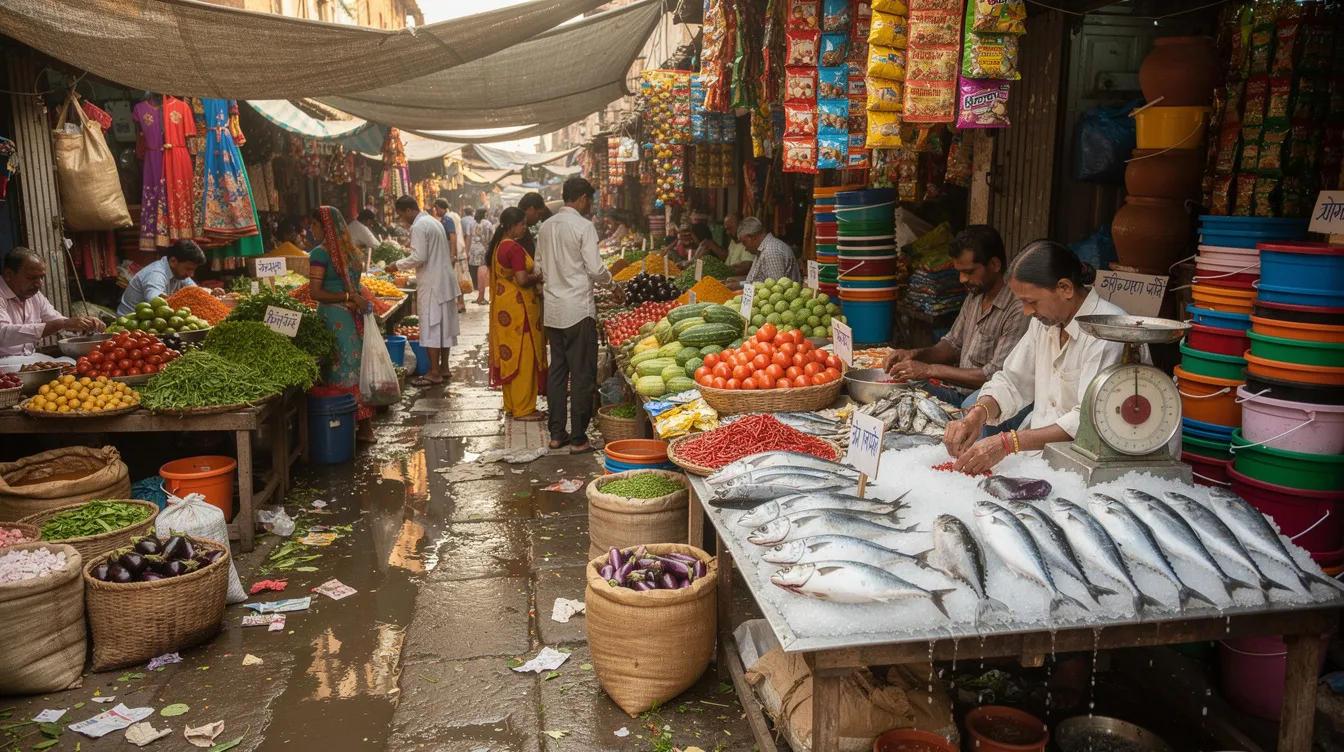
1. Fish Processing and Retail Business
Fish is a staple in Bengali cuisine, driving high demand that few other states can match. Bengal’s fish curry is a staple in every Bengali meal, and the state produced approximately 20.45 lakh metric tonnes of fish in 2022-23.
A fish retail business thrives due to high local fish consumption, and there’s serious export potential – frozen shrimp exports alone cross ₹5,000 crore annually from West Bengal.
- Best for: Entrepreneurs with ₹2-5 lakh investment near coastal or riverine districts
- Profit margin: 20-35% (higher for processed/value-added products)
- Licenses: FSSAI licence, trade license, cold storage permits
- Risk level: Medium (perishable inventory, seasonal supply variations)
- Scalability: From local retail to frozen exports; inland fisheries productivity can double from current 3 tonnes/ha to 6-8 tonnes/ha with scientific practices
Expert Tip by CA Manish Gugliya: Value-added fish processing (fillets, ready-to-cook packs) yields 2-3x better margins than raw fish retail. Budget ₹1-2 lakh extra for basic cold storage equipment.
2. Bengali Sweets and Mishti Manufacturing
Bengali sweets are essential for every occasion in West Bengal – from festivals to daily consumption. This isn’t seasonal demand; it’s cultural infrastructure.
- Best for: Food entrepreneurs with traditional recipe knowledge and ₹3-8 lakh capital
- Profit margin: 30-50% on artisanal varieties
- Licenses: FSSAI licence, local trade license, GST registration
- Risk level: Medium (shelf life management, quality consistency)
- Export potential: Strong diaspora demand across India and internationally
A small sweets shop with 4-5 signature items can break even within 8-12 months in most Bengal towns.
3. Tea Processing and Packaging Business
West Bengal produces 329.7 million kg of tea annually and is the 2nd largest tea producer in India, contributing roughly 30.3% of national output. The proximity to Darjeeling and Dooars tea gardens gives packaging and blending businesses a raw material advantage.
- Best for: Entrepreneurs in tea-growing districts with ₹5-10 lakh investment
- Profit margin: 25-40% (premium organic teas can exceed 50%)
- Licenses: FSSAI, Tea Board registration, organic certification for premium lines
- Risk level: Medium (quality control, brand building takes time)

Specialty and organic teas command export premiums. Even small-scale blending and packaging units can tap this profitable business segment with proper certifications.
4. Jute Products Manufacturing
West Bengal is the leading producer of jute in India, and jute products are in high demand due to their eco-friendly nature. Environmental regulations restricting plastic use have created a structural tailwind.
- Best for: Entrepreneurs targeting sustainable product markets with ₹3-7 lakh investment
- Profit margin: 25-45% (higher for designer/handicraft items)
- Licenses: Udyam registration, trade license, Banglashree scheme eligibility
- Products: Bags, home décor, fashion accessories, geotextiles, packaging materials
Jute bag businesses benefit from West Bengal’s status as India’s leading jute producer. The raw materials are locally abundant, and government incentives under Banglashree reduce costs significantly.
5. Mustard Oil Production Unit
Mustard oil is a staple in Bengali cuisine, ensuring consistent demand year-round. Bengali cuisine heavily relies on mustard oil for cooking – it’s non-negotiable in most households.
- Best for: Food processing entrepreneurs with ₹3-7 lakh investment
- Profit margin: 15-25% (cold-pressed/kachi ghani variants command premium)
- Licenses: FSSAI licence, AGMARK certification, pollution clearance
- Risk level: Low-Medium (seasonal raw material pricing fluctuations)
6. Handloom and Textile Business
West Bengal is known for its strong textile manufacturing heritage. The state’s handloom sector receives marketing incentives of up to 10% on average sales turnover for eligible agencies.
- Best for: Entrepreneurs with design sense and ₹5-10 lakh investment
- Profit margin: 30-50% for branded/designer products
- Key products: Tant sarees, Baluchari silk, Jamdani, contemporary fusion wear
- Support: Textile Incentive Scheme 2022, cluster development programs
Explore more textile business ideas that work well with Bengal’s artisan networks and local talent.
7. Organic Vegetable Farming and Processing
West Bengal produces over 26 million tonnes of vegetables annually. With growing demand for organic produce in metro areas, small organic farms serving Kolkata and Siliguri markets can earn premium pricing.
- Best for: Agricultural entrepreneurs with land access and ₹2-5 lakh investment
- Profit margin: 30-60% over conventional farming
- Support: Anandadhara mission, WBADMIP programs for protected cultivation
- Certification: Takes 2-3 years for full organic certification
Check out more agriculture business ideas suitable for Bengal’s climate.
8. Coaching and Education Center
Bengal’s academic culture creates consistent demand for coaching centres focused on competitive exams, board preparation, and skill development.
- Best for: Educators with subject expertise and ₹1-3 lakh investment
- Profit margin: 40-60% (low overhead, high scalability)
- Risk level: Low
- Model: Hybrid (offline + online classes increase reach)
This is among the best small business ideas for students and working professionals transitioning to entrepreneurship. Rising smartphone usage enables online expansion at minimal additional cost.
9. Leather Goods Manufacturing
West Bengal is a leading producer of leather goods in India, with established tanneries and skilled craftsmen concentrated around Kolkata and Howrah.
- Best for: Entrepreneurs with design skills and ₹5-10 lakh investment
- Profit margin: 25-40%
- Products: Bags, wallets, shoes, belts, accessories
- Export: Strong international demand via Kolkata port
- Caution: Environmental clearances from WB Pollution Control Board are mandatory
10. Rice Milling and Processing
West Bengal produces approximately 16.76 million tonnes of rice annually – about 13% of India’s total. Branded, packaged rice commands better margins than loose grain sales.
- Best for: Agri-entrepreneurs with supply chain connections and ₹7-15 lakh investment
- Profit margin: 10-20% (volume-driven)
- Working capital: Significant – budget 3-4 months of procurement costs
- Risk level: Medium (price fluctuations, storage requirements)
11. Handicrafts and Dokra Art Business
West Bengal has a rich tradition of handicrafts unique to each district. Handicrafts in West Bengal include Kantha embroidery and Shola pith craft, along with Dokra metal casting and terracotta.
- Best for: Artisan entrepreneurs with traditional skills and ₹1-3 lakh investment
- Profit margin: 40-70% for unique pieces
- Channels: E-commerce, craft fairs, export, tourism retail
- Support: GI tags, state handicraft development programs
This handicraft business category offers unique business ideas that leverage cultural arts with export potential.
12. Poultry and Egg Production
West Bengal is the largest meat producer among Indian states at approximately 1.293 million tonnes in 2023-24. Dairy products, eggs, and poultry meat show consistent urban demand.
- Best for: Agricultural entrepreneurs with ₹5-15 lakh investment
- Profit margin: 15-25% (layer farming); 10-20% (broilers)
- Break-even: 12-18 months
- Risk: Disease outbreaks, feed cost volatility
13. Solar Energy Installation and Services
Solar panel installation services tap into both government renewable energy mandates and consumer cost-saving motivations.
- Best for: Technically skilled entrepreneurs with ₹5-10 lakh investment
- Profit margin: 20-35% on installation; recurring maintenance revenue
- Growth: Government subsidies for rooftop solar, agricultural solar pumps
- Risk level: Medium (technical expertise required, high initial equipment costs)
14. Food Processing and Packaging
Kolkata’s food culture supports diverse food business opportunities. Food processing businesses in West Bengal focus on locally produced staples – think packaged muri (puffed rice), chanachur, pickles, and ready-to-eat Bengali snacks.
- Best for: Food entrepreneurs with ₹3-8 lakh capital
- Profit margin: 25-40%
- Licenses: FSSAI licence, packaging standards compliance
- Scalability: From local retail business to neighbouring states and e-commerce
A home based bakery or cloud kitchen model works well for first time entrepreneurs testing market demand before scaling.
15. Event Management and Wedding Services
Event planning and management services have growth potential in Kolkata and Siliguri, driven by Bengal’s strong cultural celebration traditions.
- Best for: Service entrepreneurs with organizational skills and ₹2-5 lakh investment
- Profit margin: 25-40% per event
- Services: Wedding planning, corporate events, cultural festivals
- Key asset: Building strong vendor networks and reputation
An event management company in Bengal benefits from year-round demand across pujas, weddings, and social platforms-driven events.
Quick Comparison of Best Business Ideas
| Business | Investment | Profit Margin | Risk | Break-Even | Mudra Eligible | Beginner Friendly |
|---|---|---|---|---|---|---|
| Fish Processing | ₹2-5L | 20-35% | Medium | 10-14 months | Yes | Yes |
| Bengali Sweets | ₹3-8L | 30-50% | Medium | 8-12 months | Yes | Moderate |
| Tea Packaging | ₹5-10L | 25-40% | Medium | 12-18 months | Yes | No |
| Jute Products | ₹3-7L | 25-45% | Low | 8-12 months | Yes | Yes |
| Mustard Oil | ₹3-7L | 15-25% | Low | 12-15 months | Yes | Yes |
| Handloom/Textile | ₹5-10L | 30-50% | Medium | 12-18 months | Yes | No |
| Organic Farming | ₹2-5L | 30-60% | Medium | 18-24 months | Yes | Moderate |
| Coaching Centre | ₹1-3L | 40-60% | Low | 4-8 months | Yes | Yes |
| Leather Goods | ₹5-10L | 25-40% | Medium | 12-18 months | Yes | No |
| Rice Milling | ₹7-15L | 10-20% | Medium | 18-24 months | Yes | No |
| Handicrafts | ₹1-3L | 40-70% | Low | 6-10 months | Yes | Yes |
| Poultry/Eggs | ₹5-15L | 15-25% | High | 12-18 months | Yes | Moderate |
| Solar Installation | ₹5-10L | 20-35% | Medium | 12-18 months | Yes | No |
| Food Processing | ₹3-8L | 25-40% | Medium | 10-14 months | Yes | Yes |
| Event Management | ₹2-5L | 25-40% | Low | 6-10 months | Yes | Yes |
West Bengal has over 100 million people as a market – virtually every business on this list has built-in local demand.
How to Choose the Right Business for Your Situation
Choose Based on Investment Capacity
- Under ₹2 Lakhs: Coaching centre, handicrafts, home based bakery, social media marketing services, street food stall
- ₹2-5 Lakhs: Fish retail, sweets shop, jute crafts, event management, flower shop, organic farming
- ₹5-10 Lakhs: Tea packaging, leather goods, handloom, solar installation, food processing
- Above ₹10 Lakhs: Rice milling, large poultry farms, integrated processing units
Choose Based on Your Skills and Experience
- Technical skills: Manufacturing, solar installation, machinery operations
- Culinary skills: Sweets manufacturing, food processing, cloud kitchen
- Agricultural background: Organic farming, poultry, dairy products
- Service orientation: Coaching, event management, consulting
Choose Based on Location and Market Access
- Business in Kolkata: Food processing, leather goods, IT services, retail business, event management
- Siliguri/North Bengal: Tea business, tourism, eco-resorts and homestays (tourism opportunities in West Bengal include eco-resorts and homestays)
- Rural areas: Agriculture, traditional ventures like handicrafts, dairy, poultry
- Industrial areas: Manufacturing, packaging, logistics
Healthcare services are in demand in West Bengal’s tier-2 cities, and demand for customized modular furniture is rising due to urbanization – both represent new business ideas worth exploring.
Which Business is Best for You?
- Choose Fish Processing if you have access to coastal areas and cold storage infrastructure
- Choose Bengali Sweets if you have food preparation skills and cultural knowledge
- Choose Tea Business if you’re in tea-growing districts (remember: West Bengal produces 329.7 million kg of tea annually)
- Choose Coaching Centre if you have educational background and teaching skills
- Choose Solar Installation if you have technical aptitude and service orientation
- Choose Handicrafts if you want a low investment entry leveraging Bengal’s arts and culture heritage
For housewives and home-based entrepreneurs, food processing, handicrafts, and online business ideas through e-commerce platforms offer the best risk-reward balance.
Government Schemes and Financial Support
West Bengal entrepreneurs can access multiple funding sources:
| Scheme | Loan Amount | Key Benefit | Best For |
|---|---|---|---|
| PM Mudra Loan | Up to ₹10 lakh | Collateral-free | Micro businesses, street food, retail |
| PMEGP | Up to ₹50 lakh (mfg) | 15-35% subsidy | Manufacturing, food processing |
| Stand-Up India | ₹10 lakh – ₹1 crore | SC/ST/Women focus | All categories |
| Banglashree | Varies | Interest subsidy, stamp duty waiver | All MSMEs |
| CGTMSE | Up to ₹5 crore | Guarantee cover | Businesses needing business loan without collateral |
| Bhabishyat Credit Card | Varies | Youth entrepreneur credit | Ages 18-45, agro/service/trading |
Pro Tip: MSME bank credit disbursement in West Bengal touched ₹70,657 crore in a single half-year period – financial institutions are actively lending. Don’t assume banks won’t fund your idea.
Startup India registration provides 3-year tax exemptions and simplified compliance. Understanding legal requirements early saves headaches later.
Importance of a Bankable Project Report
Banks don’t reject new business ideas – they reject poorly prepared applications. Every financial institution I’ve worked with requires:
- Market analysis with realistic demand projections
- CMA data covering balance sheet and profitability estimates
- Working capital assessment (typically 3-6 months of operating expenses)
- Break-even analysis showing when the project becomes self-sustaining
- DSCR (Debt Service Coverage Ratio) proving loan repayment capacity
- Cash flow projections covering at least 3-5 years
A professionally prepared project report dramatically improves approval chances. I regularly prepare bankable project reports, CMA reports, financial projections, and pitch decks for entrepreneurs across India – these documents transform a business idea into an investment-ready proposal.
Investment and Profit Analysis Tables
Best Businesses Under ₹5 Lakhs
| Business | Investment | Monthly Revenue Potential | Monthly Profit | Suitable For |
|---|---|---|---|---|
| Coaching Centre | ₹1-3L | ₹50K-1.5L | ₹30K-90K | Students, educators |
| Handicrafts | ₹1-3L | ₹30K-80K | ₹15K-50K | Artisans, women |
| Fish Retail | ₹2-5L | ₹1-3L | ₹25K-75K | Coastal area residents |
| Street Food | ₹50K-2L | ₹40K-1.2L | ₹20K-60K | Anyone with culinary skills |
| Flower Shop | ₹1-3L | ₹30K-80K | ₹15K-40K | Urban entrepreneurs |
Best Manufacturing Businesses
| Business | Investment | Monthly Revenue | Profit Margin | Equipment Needed |
|---|---|---|---|---|
| Mustard Oil | ₹3-7L | ₹2-5L | 15-25% | Oil press, filters, packaging |
| Jute Products | ₹3-7L | ₹1.5-4L | 25-45% | Looms, cutting, stitching |
| Sweets | ₹3-8L | ₹2-6L | 30-50% | Kitchen setup, packaging |
| Leather Goods | ₹5-10L | ₹3-8L | 25-40% | Cutting, stitching machinery |
Common Mistakes to Avoid in West Bengal Business
Common Mistakes to Avoid
- Underestimating working capital – Most failures I’ve seen stem from running out of cash in months 3-6. Budget 3-6 months of expenses as reserve.
- Skipping FSSAI licence for food businesses – penalties are steep and banks check compliance.
- Inadequate market research – Don’t assume local demand without talking to 50+ potential customers first.
- Poor cash flow management – Separate business and personal accounts from day one.
- Ignoring quality control – Especially in perishable goods (fish, sweets, dairy products).
- Missing government scheme deadlines – Banglashree and PMEGP have specific documentation windows.
- Overestimating initial revenue – Plan for 60% of your optimistic projection.
- No insurance coverage – Fire, theft, and product liability insurance are not optional.
- Ignoring competitive landscape – Study existing players before entering any market.
- Neglecting digital presence – Even traditional ventures need basic social media marketing today.
- Not getting Udyam registration – Free, takes 10 minutes, unlocks multiple benefits.
- Poor supplier relationships – Building reliable vendor networks takes time; start early.
- Skipping environmental clearances – Mandatory for leather, dyeing, food processing units.
- No written agreements – Every partnership, lease, and supply deal needs documentation.
- Trying to sell everything – Focus on 3-5 products initially, then expand.
Expert Business Planning Advice
From my experience advising hundreds of entrepreneurs across India:
- Select based on local demand, not trends – A profitable business in Maharashtra may not work in Bengal. Study local consumption.
- Estimate working capital conservatively – I recommend 4-6 months of operating expenses as starting capital beyond fixed investment.
- Register for GST early if turnover will exceed ₹20 lakhs (₹10 lakhs for services in some states).
- Maintain proper books from day one – this isn’t just compliance, it’s how you understand your business.
- Build relationships before you need them – Suppliers, distributors, and financial institutions respond better to entrepreneurs they already know.
- Reduce costs through local sourcing – Bengal’s strength is raw material proximity. Use it.
The entrepreneurial journey rewards preparation over speed. Take time to understand your industry, build your project report, and secure proper funding before launch.
Final Thoughts
West Bengal’s combination of natural resources, cultural consumption patterns, skilled local talent, port access, and government support creates genuine opportunities for entrepreneurs at every investment level. Whether you’re drawn to traditional ventures like handloom and sweets or new business ideas in solar energy and online business ideas, the fundamentals are strong.
The key is matching your skills, capital, and location to the right opportunity – and backing it with solid financial planning. Companies that succeed here do so because they respect both the market and the numbers.
If you need professional assistance preparing a bankable project report, CMA report, financial projections, or business valuation for your West Bengal venture, I’m available to help. Reach out for a consultation – a well-prepared document is often the difference between loan approval and rejection.

Frequently Asked Questions
Which business is most profitable in West Bengal with low investment?
Coaching centres and handicraft businesses offer the highest margins (40-70%) with investment under ₹3 lakhs. Fish retail and food processing follow closely for those comfortable with perishable inventory.
Which manufacturing business is best for beginners in West Bengal?
Jute products and mustard oil production have low entry barriers, readily available raw materials, and consistent local demand. Both qualify for Mudra Loan support.
How much investment is needed to start a food processing business?
₹3-8 lakhs for a small-scale unit. This covers equipment, FSSAI licensing, initial raw materials, and 3 months working capital.
Which businesses are eligible for Mudra Loan in West Bengal?
All 15 businesses listed qualify. Mudra covers Shishu (up to ₹50K), Kishor (₹50K-5L), and Tarun (₹5-10L) categories. Learn more about reasons for Mudra loan rejection to avoid common pitfalls.
What licenses are required to start a manufacturing business?
Udyam registration, trade license, GST registration, pollution clearance (for certain industries), and FSSAI licence (for food). Specific sectors need additional certifications.
Which business ideas work best in Kolkata vs rural areas?
Kolkata: leather goods, event management, IT services, food processing, retail. Rural: organic farming, poultry, fish farming, handicrafts, dairy. West Bengal has a high demand for fish due to its cuisine across both urban and rural markets.
How to prepare a bankable project report for a business loan?
Include market analysis, technical details, financial projections (P&L, balance sheet, cash flow), CMA data, break-even analysis, and DSCR calculation. Professional preparation by an experienced CA significantly improves approval rates.
Which businesses have highest export potential from West Bengal?
Tea (West Bengal is the 2nd largest tea producer in India), frozen fish/shrimp, leather goods, jute products, and handicrafts – all benefit from Kolkata port proximity.
What are the tax benefits for new businesses in West Bengal?
Startup India offers 3-year tax holiday. Banglashree provides stamp duty waiver and interest subsidies. MSMEs get power tariff concessions.
Which business is suitable for women entrepreneurs?
Handicrafts, food processing, handloom, organic farming, and coaching centres. The state’s RAMP program specifically supports women-led MSMEs with dedicated funding.
How to register for MSME benefits in West Bengal?
Register on the Udyam portal (free, online). Then apply through Silpa Sathi single-window for state incentives. Shilper Samadhane camps also facilitate on-ground registrations.
What is the typical time to get business loan approval?
With complete documentation and a proper project report: 2-6 weeks for Mudra loans, 4-8 weeks for PMEGP, 6-12 weeks for larger term loans.
Which businesses can be started from home in West Bengal?
Home based bakery, handicrafts, coaching, social media marketing services, and small-scale food processing (pickles, spices, snacks).
How to access government schemes for startup funding?
Start with Udyam registration → Apply through Jan Samarth portal for Mudra → Explore PMEGP through KVIC → Check Banglashree eligibility through Silpa Sathi.
What are common reasons for business loan rejection?
Incomplete documentation, no project report, poor CIBIL score, inadequate collateral, unrealistic projections, and missing FSSAI/regulatory licenses.
Which seasonal businesses work well in West Bengal?
Flower shop businesses during puja seasons, sweet manufacturing during festivals, and musical instruments retail during cultural celebrations all see demand spikes.
How to estimate working capital for a manufacturing business?
Calculate: (Monthly raw material cost + wages + overheads + loan EMI) × 3 to 6 months. This gives your minimum working capital requirement. I prepare detailed working capital assessments as part of every project report.
What insurance coverage is needed for small businesses?
Fire and allied perils, stock insurance, public liability, and product liability (for food businesses). Budget 1-2% of asset value annually.
Which businesses benefit from West Bengal’s port access?
Tea export, frozen seafood, jute products, leather goods, and processed food – all move through Kolkata and Haldia ports to international markets in neighbouring states and beyond.
How to scale a small business in West Bengal market?
Build brand presence through social platforms, secure Udyam registration for scheme access, invest in quality certifications (FSSAI, ISO), explore e-commerce channels, and consider export markets. Professional financial planning helps manage growth without cash flow stress.
- Dal Mill Power Consumption, Dryers & Utility Requirements – Complete Guide


- Dal Mill Colour Sorter, Grading, Polishing & Packaging Machinery – Types, Capacity, Cost & Selection Guide

- Pulse Conditioning, Dehusking & Splitting Process – Improving Dal Recovery

- Dal Mill Recovery Ratio, Dal Yield, Broken Percentage & Milling Losses
- Masoor Dal Processing Plant Project Report & DPR in India
- Chana Dal Manufacturing Plant Project Report & DPR in India
- Urad Dal Mill Project Report & DPR in India
- Moong Dal Processing Plant Project Report & DPR in India
- Toor Dal (Arhar Dal) Mill Project Report & DPR in India
- Fully Automatic vs Semi-Automatic Dal Mill – Cost, Efficiency & Investment Comparison
- Dal Mill Land, Building & Plant Layout Requirements in India

- Dal Mill Capacity Planning – 5 TPD, 10 TPD, 20 TPD & 50 TPD Plants
- Dal Milling Process & Flow Chart – Cleaning, Dehusking, Splitting & Packaging
- Dal Mill Machinery, Equipment & Cost – Complete Plant Guide
- Dal Mill Plant Setup Cost in India – Investment & Cost Breakdown