
Kerala offers a rare mix of natural resources, high literacy, a booming tourism industry, and a government that actively backs entrepreneurs. Whether you are a student, a working professional, a woman entrepreneur, or a farmer looking to diversify income, this guide covers the most promising business ideas in Kerala for 2026. I am CA Manish Gugliya, and in my experience helping hundreds of MSMEs secure bank finance and build sustainable ventures, Kerala consistently stands out as one of India’s strongest states for starting your own business.
Why Kerala is One of India’s Best States for Starting a Business
Kerala’s economy rests on multiple pillars that make it ideal for small businesses and startups alike.
- Tourism powerhouse: Tourism contributes nearly 10% to Kerala’s GDP, and the sector employs approximately 1 million people. In 2021, Kerala received over 75 lakh travelers. Eco-tourism visits in Kerala increased by 20% in 2023, and houseboat tourism in Alleppey grew by 15% in the same year.
- Agriculture and plantations: Kerala produces around 45% of India’s total coconut output and 70% of India’s total cardamom output. The organic spice farming sector in Kerala has a 15% annual growth rate.
- Ayurveda heritage: The state has approximately 700 Ayurvedic drug manufacturing units and an Ayurveda product industry worth about ₹1,500 crores. Globally, the Ayurvedic market is projected to reach USD 85.8 billion by 2033.
- Seafood exports: Kerala contributes nearly 10% of India’s total fish production, and India’s overall seafood exports hit a record ₹72,325 crores in FY 2025-26.
- Gulf remittances fuel local consumption, real estate, and small business investment across the state.
- Government backing: The Kerala Startup Mission offers idea grants up to ₹3 lakhs, while Kerala’s Industrial Policy 2023 provides capital investment subsidies up to 45% for micro and small units.
Kerala has a high literacy rate, benefiting educational consultancy services and ensuring a skilled workforce for nearly every sector.

Table of Contents
How We Selected the Most Profitable Business Ideas for Kerala
In my practice as a Chartered Accountant and MSME consultant, I evaluate business ideas on six factors:
- Investment requirements – Can you start under ₹5-10 lakhs?
- Market demand – Is there proven local consumer demand or export potential?
- Raw material availability – Does Kerala supply what you need locally?
- Profitability and payback – Can you recover your initial investment within 18-36 months?
- Government support – Are there government subsidies, priority sector incentives, or licensing ease?
- Scalability – Can you grow from local to domestic and international markets?
Every idea below was filtered through these criteria using real market data.
Top 10 Most Profitable Business Ideas in Kerala (2026)
1. Coconut Oil Manufacturing
Coconut oil production is arguably the most profitable business rooted in Kerala’s agricultural strength. Coconut-based products include coir mats, coconut oil, and beauty products, and coconut oil is a popular product in the global market. Coconut-derived wellness products are in high global demand, and coconut products can be made with low initial investment.
- Why It Works: Abundant raw materials – Kerala’s coconut output is massive with ~74.66 million nuts in 2024-25 across 112,520 hectares. Traditional expertise runs deep.
- Best For: Entrepreneurs with ₹5-15 lakhs investment capacity.
- Key Advantages: Steady domestic and export demand, FSSAI licensing straightforward, virgin coconut oil commands premium pricing.
- Considerations: Copra price fluctuations, quality control for export markets, packaging costs.
2. Spice Processing and Export Business
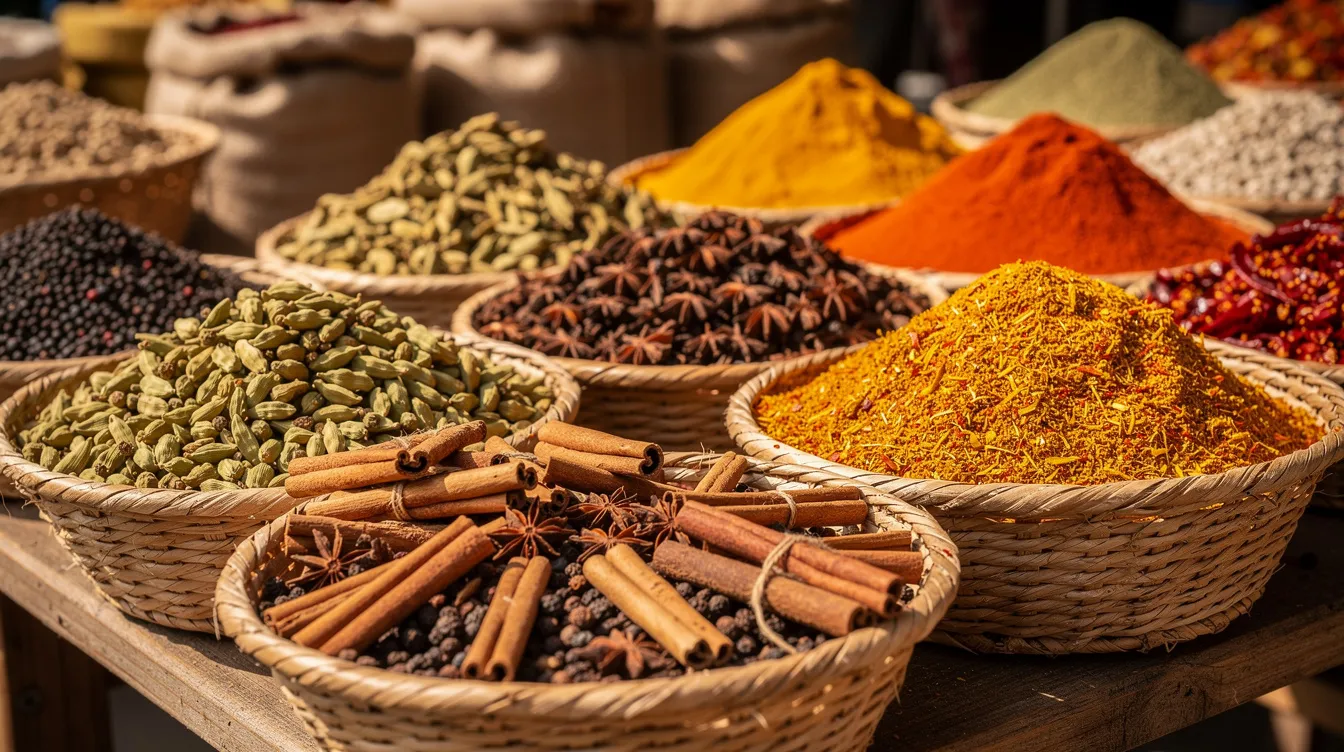
The spice export business is a high-value opportunity. In FY 2023-24, Kerala exported 15,568 metric tonnes of pepper valued at ₹649.8 crores. Oleoresin exports crossed ₹2,636 crores the same year. Kerala’s reputation for spices such as cardamom and pepper offers high growth potential, and Kerala spices command premium prices in global markets.
- Why It Works: Kerala’s pepper industry saw a 12% increase in production recently. Organic spice farms in Kerala have a 15% annual growth rate. Value-added products like curry powders and essential oils fetch higher margins.
- Best For: Experienced traders or those with export market knowledge.
- Key Advantages: Government export incentives, established supply chains, premium pricing internationally.
- Considerations: IEC license required, quality certification critical (pesticide residue rejections have affected Indian spice exports), market volatility.
3. Homestay and Eco-Tourism Business
Kerala’s global tourism appeal offers opportunities for eco-tourism and experiential travel. Tourism remains one of Kerala’s strongest industries, creating opportunities for niche experiences for both domestic and international tourists.
- Why It Works: Year-round tourist influx to backwaters, hill stations like Munnar and Wayanad. Kerala’s tourism sector contributes nearly 10% to its GDP.
- Best For: Property owners in scenic locations with ₹3-8 lakhs for conversion.
- Key Advantages: High profit margins, recurring revenue, tourism board support, wellness packages that combine stays with Ayurveda treatments.
- Considerations: Seasonal demand fluctuations, tourism license requirements, maintenance costs.
4. Ayurvedic Products Manufacturing
Kerala’s ayurvedic products manufacturing includes herbal oils and beauty products made using authentic ancient recipes. Kerala’s Ayurvedic wellness centres attract health-conscious tourists globally, and Ayurvedic tourism in Kerala has seen significant growth in recent years.
- Why It Works: ~700 manufacturing units already operate in Kerala. The global Ayurveda market is growing at ~19.7% CAGR.
- Best For: Healthcare professionals or those with Ayurvedic knowledge.
- Key Advantages: Growing wellness market, export opportunities, Ayush ministry support. Kerala’s terrain is ideal for organic cultivation of medicinal plants needed as raw materials.
- Considerations: An Ayush License is required for Ayurvedic product manufacturing in India. Quality standardization and clinical validation add cost. Even large players like Kerala Ayurveda Ltd. have faced margin pressures recently.
For detailed planning, refer to this guide on ayurvedic cosmetic manufacturing.
5. Organic Farming and Agri-Tourism
Kerala’s climate is ideal for growing organic vegetables and fruits. Organic farming in Kerala supports cultivation of spices and vegetables, and the organic farming sector has grown 15% annually. Consumers are willing to pay premium prices for organic produce, and organic farms can combine agriculture with agri-tourism for revenue.
- Best For: Landowners or those willing to lease farmland.
- Key Advantages: Dual revenue streams (produce + tourism), premium pricing for organic food, strong government subsidies.
- Considerations: Certification timeline (2-3 years for full organic), weather dependency, longer payback period.
Explore more agriculture business ideas suited for Indian conditions.
6. Coir Products Manufacturing
Kerala’s handicrafts include wood carvings and coir products, and eco-friendly products are seeing a surge in demand globally. Eco-friendly manufacturing, such as sustainable packaging, is gaining traction in Kerala.
- Why It Works: Massive coconut husk availability, skilled artisan base, growing international demand for geotextiles and eco friendly products.
- Best For: Rural entrepreneurs with ₹5-15 lakhs.
- Key Advantages: Export demand, low raw material cost, rural employment generation, government incentives through K-RIIS.
- Considerations: Labor-intensive, machinery investment for modern products, competition from synthetic alternatives.
7. Digital Marketing Agency
Kerala’s businesses need a strong digital presence for growth, but local SMEs in Kerala often lack in-house digital expertise. Digital marketing services include SEO, content, and branding. Digital marketing agencies can support local businesses in Kerala, and a digital marketing agency can start with minimal investment.
- Best For: IT professionals or marketing graduates with a portfolio.
- Key Advantages: Zero physical infrastructure needed, scalable digital services, recurring clients from tourism related businesses and retail outlets.
- Considerations: Continuous skill upgradation, client acquisition challenges initially, payment delays.
The expanding digital infrastructure in Kerala supports tech-driven business solutions, and Kerala aims to capitalize on AI and technology industries for growth in various sectors.
8. Fish Farming and Seafood Processing
Kerala’s coastline allows for seafood processing and export opportunities. Kerala’s fish farming contributes nearly 10% of India’s total fish production.
- Best For: Entrepreneurs with access to water bodies or processing facilities.
- Key Advantages: Steady protein demand, MPEDA support, export potential to domestic and international markets, cold chain infrastructure improving.
- Considerations: FSSAI compliance, cold storage requirements, supply chain management, sustainability regulations.
9. Solar Panel Installation Business
The solar business aligns perfectly with Kerala’s growing interest in renewable energy and environmental awareness.
- Best For: Electricians or those with technical background, investment ₹5-10 lakhs.
- Key Advantages: Government subsidies for rooftop solar panels, recurring maintenance income, 20-30% margins, priority sector under Industrial Policy 2023.
- Considerations: Technical certification required, seasonal installation patterns, initial working capital.

10. Traditional Kerala Food Processing
Producing packaged local snacks like banana chips is highly profitable in Kerala. Kerala has a strong agricultural sector capable of producing value-added food products. Food processing of traditional Kerala dishes, pickles, and ready-to-eat items serves both local consumption and NRI markets.
- Best For: Home cooks or food entrepreneurs with ₹2-10 lakhs.
- Key Advantages: Nostalgia marketing to NRIs via e commerce, premium pricing for traditional recipes, scalability through online business channels where you can sell online. FSSAI licensing is straightforward.
- Considerations: Shelf life challenges, packaging costs, building a distribution network.
Online sales of Kerala handicrafts and food businesses cater to NRI communities. Kerala’s traditional art forms attract both domestic and international buyers. Handicrafts in Kerala include Kasavu weaving and Aranmula metal mirrors.
Quick Comparison of Top Business Ideas in Kerala
| Business Idea | Investment Range | Best For | Payback Period |
|---|---|---|---|
| Coconut Oil Manufacturing | ₹5-15 lakhs | Agricultural entrepreneurs | 18-24 months |
| Spice Processing & Export | ₹10-25 lakhs | Export-oriented traders | 24-36 months |
| Homestay Business | ₹3-8 lakhs | Property owners in tourist areas | 12-24 months |
| Ayurvedic Products | ₹10-25 lakhs | Wellness sector professionals | 24-36 months |
| Organic Farming | ₹3-10 lakhs | Landowners with patience | 30-48 months |
| Coir Products | ₹5-15 lakhs | Rural entrepreneurs | 18-30 months |
| Digital Marketing Agency | ₹0.5-2 lakhs | Tech-savvy professionals | 3-6 months |
| Fish Farming/Seafood | ₹10-30 lakhs | Coastal entrepreneurs | 18-30 months |
| Solar Installation | ₹5-10 lakhs | Technical professionals | 12-18 months |
| Food Processing | ₹2-10 lakhs | Home cooks, food entrepreneurs | 12-18 months |
How to Choose the Right Business Idea for Kerala
Consider Your Investment Capacity
- Low investment under ₹5 lakhs: Digital marketing agency, online tutoring, small scale business like homestay conversion, mushroom farming, bakery business, mobile repair, event planning, tuition centers
- Medium investment ₹5-20 lakhs: Coconut oil manufacturing, food processing, solar installation, coir products, a profitable manufacturing business
- Higher investment above ₹20 lakhs: Spice export facility, seafood processing, Ayurvedic manufacturing – these are big business opportunities
Evaluate Your Skills and Experience
- Technical background suits solar installation, digital marketing, fish farming
- Traditional knowledge fits ayurvedic products, organic farming, spice processing
- Hospitality experience works for homestay, eco-tourism, and ayurvedic wellness centres
Assess Market Access and Location
- Tourist areas favor homestay, local crafts, guided tours near hill stations
- Agricultural regions suit coconut processing, organic farming, coir manufacturing
- Urban areas support digital services, food delivery, solar installation
Which Business Idea is Best for You in 2026?
- Choose Coconut Oil Manufacturing if you have an agricultural background and ₹10-15 lakhs
- Choose Digital Marketing Agency if you have IT skills and want zero physical infrastructure
- Choose Homestay Business if you own property in tourist locations
- Choose Spice Export if you have trade experience and can handle ₹20+ lakhs working capital
- Choose Solar Installation if you have technical skills and want a recurring income model
Kerala-Specific Business Opportunities in 2026
Kerala offers distinct advantages across multiple sectors:
- Tourism and hospitality leveraging backwaters, hill stations, medical tourism, and growing demand from international tourists
- Ayurveda and wellness industry with growing domestic and international demand for wellness packages
- Coconut and spice value addition focused on organic and premium segments for global markets
- Renewable energy including solar, biomass, and EV infrastructure (see EV spare parts project reports for related opportunities)
- Digital services supporting Kerala’s startup ecosystem and technology adoption
- Elder-care services driven by Kerala’s demographic profile
- Waste management and recycling as priority sectors for business development
- Food related businesses including cloud kitchens, ready-to-eat food, and packaged snacks
Kerala’s financial support ecosystem, combined with strong local demand, makes it viable for new business ideas across investment levels.
Government Support and Financing Options
Understanding available schemes dramatically improves your chances of getting funded:
- Udyam Registration: Mandatory for MSME benefits – subsidies, priority lending, lower electricity rates
- Kerala Startup Mission: Idea grants up to ₹3 lakhs, soft loans up to ₹15 lakhs for women entrepreneurs, incubation support
- Mudra Loan: Shishu (up to ₹50,000), Kishor (₹50,000-₹5 lakhs), Tarun (₹5-₹10 lakhs) – ideal for low investment business ventures. Learn more in our MSME Mudra Loan guide.
- PMEGP: Subsidy up to 25-35% for manufacturing and service enterprises
- CGTMSE: Collateral-free loans up to ₹2 crores with government guarantee
- K-RIIS Industrial Incentives: Electricity duty exemption for 5 years, SGST reimbursements, R&D cost subsidies, capital investment subsidy
A professionally prepared project report is essential for bank loan approval. Whether you are applying for a Mudra Loan, term loan, or working capital facility, banks evaluate your business plan, projected financials, and market research before sanctioning funds. Investing in a proper project report significantly increases your approval chances.
Final Thoughts
As a Chartered Accountant who has helped entrepreneurs across India structure their ventures, I can say that Kerala’s combination of abundant raw materials, skilled workforce, supportive government policies, and strong tourism infrastructure makes it one of India’s most profitable business environments.
But here is what separates successful entrepreneurs from the rest – proper planning before operations begin. Conduct thorough market research. Understand your licensing requirements. Build a realistic business plan with conservative financial projections. And most importantly, prepare a bankable project report before approaching any financial institution.
Whether you are exploring popular small business ideas like banana chips manufacturing or ambitious ventures like spice processing for international markets, Kerala rewards those who plan well and execute consistently. The state’s growing interest in mutual funds, investment, and entrepreneurship among its educated population means competition will increase – start now, start lean, and scale smartly.
Explore related profitable business ideas for Telangana, Tamil Nadu, Rajasthan, Maharashtra, Manipur, Kerala, Madhya Pradesh, Uttarakhand, Uttar Pradesh, Karnataka, Andhra Pradesh, Arunachal Pradesh, Goa, Chhattisgarh, Jharkhand, Gujarat, Haryana, Odisha, Bihar, Kashmir, Assam, and Himachal Pradesh on ProjectReportBank.com to get started today.
- Atta Chakki Plant Project Report – A Professional DPR & Business Plan Guide

- Atta Chakki Plant ROI, IRR, Payback & Sensitivity Analysis

- Atta Chakki Plant Feasibility Study & Project Viability

- Atta Manufacturing Financial Projections, Working Capital & DSCR

- Atta Chakki Plant Project Cost & Means of Finance (India Focus)
- Atta Chakki Plant Land, Building & Layout Requirements

- Atta Chakki Plant Capacity Planning – TPD & Production Capacity

- Atta Manufacturing Process & Flour Mill Flow Chart (Expert Guide for Plant Promoters)
- Atta Chakki Machine Price & Automatic Atta Plant Machinery Cost – A Practical Guide for Entrepreneurs

- Atta Chakki Plant Setup Cost in India – Practical Cost Guide by CA Manish Gugliya

- Roller Flour Mill Project Report & DPR: Complete Guide for Bank Finance and Project Planning

- Roller Flour Mill ROI, IRR, Payback & Sensitivity Analysis: A Practical Guide for Investors and Bankers

- Roller Flour Mill Feasibility Study & Project Viability

- Roller Flour Mill Financial Projections & Working Capital

- Roller Flour Mill Project Cost & Means of Finance