
Tamil Nadu is not just a state with rich cultural heritage and ancient temples. It is one of India’s most industrialized, export-driven, and entrepreneur-friendly economies. With the second-largest GDP among Indian states at ₹35.67 trillion, a robust network of ports, SIPCOT industrial parks, and a skilled workforce trained through programmes like Naan Mudhalvan, this state offers a rare combination of infrastructure, demand, and government support that few other regions can match.
Whether you are looking at manufacturing business ideas, low investment business opportunities, or export-oriented ventures, Tamil Nadu has something for every investment capacity. In this guide, I am sharing practical, data-backed business ideas in Tamil Nadu that I have evaluated from a financial feasibility and profitability standpoint.
Why Tamil Nadu is India’s Top Business Destination
Tamil Nadu ranks second in India’s GDP, and that number is not accidental. The state has a diverse economy with strong financial institutions, well-developed roads and ports, and Chennai’s urban infrastructure supports diverse business opportunities across IT, automobile, retail, and tourism sectors.
Key advantages that make Tamil Nadu stand out:
- Port connectivity: Four major ports (Chennai, Ennore, Kattupalli, Tuticorin) and 22 minor ports
- Industrial infrastructure: SIPCOT and SIDCO parks across districts, numerous Special Economic Zones offering tax benefits
- Automobile hub: Chennai is often called the Detroit of India
- Textile clusters: Tiruppur alone has ~13,000 knitwear units employing 6 lakh people
- Electronics manufacturing: Smartphone and electronics exports drove 13.7% export growth in FY 2025-26
- Skilled workforce: Over 10 lakh engineering students and large polytechnic/ITI base
- MSME support: ₹1,943 crore allocated to MSMEs in the 2026-27 interim budget

Table of Contents
How We Chose the Best Business Ideas for Tamil Nadu
Selecting the right business idea requires more than just gut feeling. Here is what I evaluated for each idea:
- Market demand: Local consumption patterns, domestic sales potential, and global export appetite
- Raw material availability: Whether Tamil Nadu supplies the inputs locally or depends on imports
- Skilled workforce: Availability of trained workers in specific trades
- Investment vs ROI: Capital needed versus realistic profit timelines
- Export potential: Proximity to ports and SEZ infrastructure
- Government incentives: Eligibility for subsidies under AABCS, UYEGP, PMEGP, and other schemes
- Risk factors: Seasonality, regulatory burden, technology obsolescence, and market competition
Tamil Nadu has numerous Special Economic Zones for businesses and strong transportation links with digital connectivity through Chennai, making it suitable for both domestic and export-focused ventures.
Top 10 Most Profitable Business Categories in Tamil Nadu
1. Manufacturing Business Ideas
Tamil Nadu includes strong manufacturing sectors such as textiles, EV components, and food processing. The state’s SIPCOT industrial parks provide ready infrastructure with power, water, and effluent treatment.
Opportunities: Textile manufacturing, automobile spare parts, paper cup and eco-friendly packaging (an emerging sector in Tamil Nadu), corrugated box units, plastic moulding, CNC machining, and electric vehicle spare parts manufacturing.
- Investment: ₹5 lakh to ₹50 lakh depending on scale
- Strengths: Established supply chains, skilled labor, export access
- Limitations: Higher initial capital, environmental clearances for certain industries
- Best for: Entrepreneurs with technical background and substantial capital
Tamil Nadu offers diverse profitable business opportunities based on industrial clusters. For detailed manufacturing business ideas, you can explore sector-specific options.
2. Export-Oriented Business Ideas
With exports touching US$59.3 billion in FY 2025-26, Tamil Nadu topped Indian states in export growth. The state contributes ~43% of India’s leather goods exports and ~22.6% of textile exports.
Opportunities: Spice processing for export, leather goods, engineering components, readymade garments, and import-export trading businesses.
- Investment: ₹10 lakh to ₹1 crore+
- Strengths: Port connectivity, established export documentation infrastructure, government incentives
- Limitations: International quality certifications required, currency and demand risks
- Best for: Businesses with international market knowledge and quality focus
3. Agriculture and Food Processing Ideas
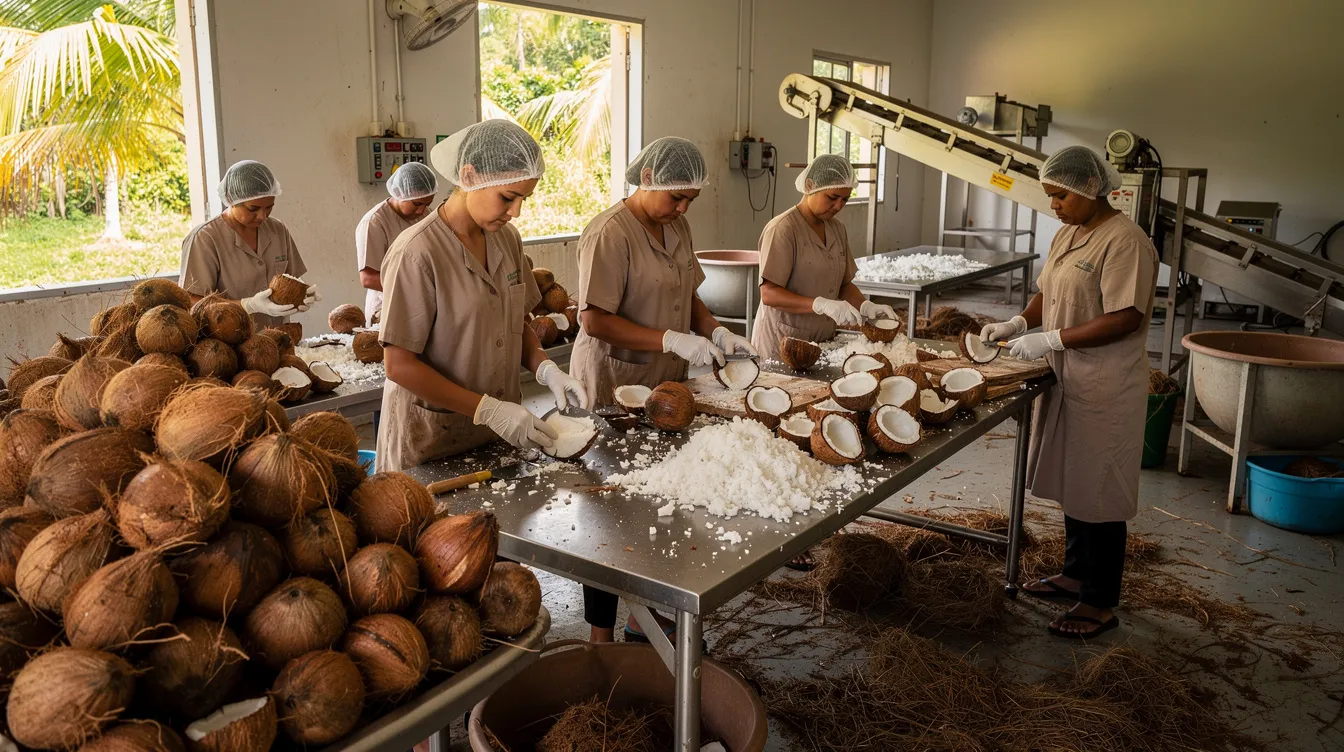
Tamil Nadu’s agricultural richness supports various food processing businesses. Local agricultural products include turmeric, coconuts, and mangoes. Tamil Nadu is a leading producer of turmeric in India.
Opportunities: Coconut oil/copra processing, rice mills, spice grinding, banana chips manufacturing, pickle production, and ready-to-eat snack units.
- Investment: ₹5-25 lakh for small processing units
- Strengths: Abundant raw materials, growing demand for packaged foods, FSSAI support
- Limitations: Seasonal raw material availability, perishable inventory management
- Best for: Entrepreneurs in rural areas with agricultural connections
Agro-processing is a key sector for small businesses in Tamil Nadu, and food services including South Indian cuisine are in high demand.
4. Technology and Digital Services
Tamil Nadu is India’s second-largest IT hub, especially in Chennai. The state is also a leading IT hub overall, with Coimbatore emerging as a secondary tech city.
Opportunities: Software services, mobile app development, digital marketing agencies offering social media management, web development firms, online tutoring platforms, and online business models.
- Investment: ₹1-5 lakh (minimal capital needed)
- Strengths: Skilled workforce of STEM graduates, low startup costs, global market access
- Limitations: High competition, continuous skill upgrades needed
- Best for: Tech-savvy aspiring entrepreneurs and working professionals with digital skills
Digital marketing services and consultancy services are especially viable for freshers who can serve local businesses.
5. Tourism and Hospitality Business
Cultural tourism is significant in Tamil Nadu, especially in temple towns. Tourism in Tamil Nadu thrives with numerous ancient temples attracting visitors from across the world. Temple tourism is a significant business opportunity.
Opportunities: Homestays (popular due to Tamil Nadu’s tourism), travel agency services, heritage tour operations, adventure tourism in hill stations, and cultural experiences packages.
- Investment: ₹10-20 lakh for homestays; lower for agency models
- Strengths: Year-round tourism, diverse attractions from Ooty to Rameswaram
- Limitations: Seasonal fluctuations, permit requirements
- Best for: People in tourist areas with hospitality interest
6. Textile and Garment Business
Tamil Nadu is known for its flourishing textile industry. The state’s textile industry is renowned for its cotton and silk production. Tiruppur contributes approximately $5.3 billion in readymade garment exports alone.
Opportunities: Garment manufacturing, handloom trading, embroidery units, yarn trading, cloth bags production, and small-scale apparel units.
- Investment: ₹5-30 lakh for small knitwear or handloom units
- Strengths: Established clusters, skilled artisans, both domestic and export markets
- Limitations: Raw cotton shortage (mills need ~120 lakh bales but local supply is only 5-6 lakh bales), labor cost increases
- Best for: Entrepreneurs with textile background and design skills
7. Renewable Energy Business
Tamil Nadu has ~24.46 GW of renewable energy installed capacity out of total 43.9 GW, making it one of India’s leaders in clean energy.
Opportunities: Solar rooftop installation services, wind energy maintenance, energy consulting, battery storage solutions, and eco friendly products related to green technology.
- Investment: ₹5-25 lakh for installation services; higher for manufacturing
- Strengths: Favorable climate, government subsidies for environment-friendly equipment, growing demand
- Limitations: Technical expertise requirements, policy changes
- Best for: Technically qualified entrepreneurs with environmental focus
8. Healthcare and Wellness Services
With increasing awareness about health and wellness, this sector shows a rising trend in Tamil Nadu’s urban and semi-urban areas.
Opportunities: Diagnostic centers, ayurvedic and herbal products, home healthcare services, fitness centers, and beauty and wellness businesses.
- Investment: ₹5-30 lakh depending on format
- Strengths: Large population with growing health consciousness, medical tourism potential
- Limitations: Regulatory approvals, insurance and compliance requirements
- Best for: Healthcare professionals and wellness enthusiasts
9. Village and Rural Business Ideas
Tamil Nadu’s rural economy offers steady income opportunities with government scheme support through UYEGP (loans up to ₹15 lakh with 25% subsidy).
Opportunities: Dairy farming, poultry farming (a significant sector due to high local demand for eggs), organic farming, mushroom cultivation, herbal farming, and agriculture-based businesses.
Poultry farming is a profitable venture in Tamil Nadu and can yield high returns with low investment. Many micro businesses in rural Tamil Nadu operate successfully with government support.
- Investment: ₹2-15 lakh
- Strengths: Low competition, government support, local market proximity
- Limitations: Limited market access, infrastructure challenges
- Best for: Rural entrepreneurs with agricultural background
10. Home-Based Business Ideas
Home-based businesses require minimal investment and risk, making them ideal for first-time entrepreneurs. Investment for a small business can range from ₹10,000 to ₹1 lakh.
Opportunities: Home based bakery, homemade snacks and online delivery, food delivery services, handicraft production, online tutoring, freelance writing, online stores, and home business ideas for women.
- Investment: Minimal investment (₹10,000-₹1 lakh)
- Strengths: Low overhead costs, flexible timing, family involvement possible
- Limitations: Scalability challenges, home space constraints
- Best for: Women entrepreneurs, students, and part-time business seekers
Event management is a growing industry in Tamil Nadu due to rising celebrations, and event planning can start from home with weekend batches for corporate events.

Quick Comparison of Business Categories
| Category | Investment Level | Profit Potential | Risk Level | Best For |
|---|---|---|---|---|
| Manufacturing | ₹5-50 lakh | High | Medium-High | Technical entrepreneurs |
| Export-Oriented | ₹10 lakh-1 crore | High | Medium-High | International market focus |
| Agriculture & Food | ₹5-25 lakh | Medium-High | Medium | Rural entrepreneurs |
| Technology & Digital | ₹1-5 lakh | High | Low-Medium | Tech-savvy professionals |
| Tourism & Hospitality | ₹10-20 lakh | Medium | Medium | Location-advantage entrepreneurs |
| Textile & Garment | ₹5-30 lakh | High | Medium | Textile background |
| Renewable Energy | ₹5-25 lakh | Medium-High | Low-Medium | Technical qualification |
| Healthcare & Wellness | ₹5-30 lakh | Medium-High | Medium | Healthcare professionals |
| Village & Rural | ₹2-15 lakh | Medium | Low-Medium | Agricultural background |
| Home-Based | ₹10K-1 lakh | Low-Medium | Low | Women, students, part-timers |
How to Choose the Right Business Idea for Tamil Nadu
Assess Your Investment Capacity
- Low investment (under ₹5 lakh): Digital marketing, online education platforms, coaching centres, food trucks, home based business
- Medium investment (₹5-25 lakh): Food processing units, small manufacturing, logistics services
- High investment (₹25 lakh+): Large manufacturing, warehouse business, industrial ventures
Always account for working capital separately. Most new venture failures I have seen in my practice stem from underestimating monthly cash flow needs.
Consider Your Skills and Background
Match your skills to the business. Technical skills suit manufacturing and IT. Agricultural knowledge suits farming and food processing. Marketing skills suit retail and services. Management experience enables scalable ventures across all age groups and backgrounds.
Evaluate Market Location and Access
Key economic hubs in Tamil Nadu include Chennai, Coimbatore, and Madurai. Urban areas favour IT services, retail, and professional services. Industrial areas near Hosur, Salem, and Erode suit manufacturing and B2B services. Rural areas work for agriculture and village services. Tourist areas like Madurai, Thanjavur, and Kodaikanal favour hospitality and local markets.
Government Schemes and Support for Tamil Nadu Entrepreneurs
Tamil Nadu offers numerous government schemes for entrepreneurs. Here are the most relevant:
- Mudra Loan: Up to ₹10 lakh for micro enterprises without collateral
- PMEGP: 15-35% margin money subsidy for non-farm micro enterprises
- AABCS: 35% capital subsidy (max ₹1.5 crore) for SC/ST entrepreneurs with 6% interest subvention
- UYEGP: Loans up to ₹15 lakh with 25% state subsidy for unemployed youth
- CGTMSE: Credit guarantee reducing collateral requirements for business loan approvals
- Startup India: Tax benefits, compliance simplification, and funding support
Women entrepreneurs can access targeted subsidy programs in Tamil Nadu, including the TWEES scheme. Public agencies provide term loans for equipment purchases, and Tamil Nadu supports MSMEs with credit-linked schemes for working capital.
Udyam registration provides access to priority sector lending, which significantly improves your chances of getting bank finance at competitive rates.
Essential Documentation and Legal Requirements
Before starting any new venture, ensure these are in place:
- Udyam/MSME Registration: Free, online, and mandatory for accessing subsidies
- GST registration: Required above threshold turnover; essential for B2B and export businesses
- Trade license: From local municipal authority
- FSSAI registration: Mandatory for any food business
- Environmental clearances: Required for manufacturing (especially leather, textiles, chemicals)
- Labour law compliance: ESI/PF registration when you hire employees
For chemical business ideas or manufacturing, environmental approvals need special attention.
How to Prepare a Bankable Project Report
In my 20+ years of preparing project reports and CMA data, I have seen that the quality of your project report directly determines your loan approval chances.
A bankable project report must include:
- Market analysis: Demand estimation, competitor mapping, pricing strategy
- Technical feasibility: Machinery list, production capacity, raw materials sourcing
- Financial projections: 5-year P&L, balance sheet, cash flow statement
- CMA Data: Working capital assessment in bank-prescribed format
- DSCR calculation: Debt Service Coverage Ratio above 1.5x preferred by banks
- Break-even analysis: Month/year when the business becomes self-sustaining
- Means of finance: Debt-equity ratio planning (typically 2:1 for MSMEs)
Professional documentation prepared by a CA significantly improves loan sanctioning speed and amount. Many local businesses and local suppliers have secured funding through properly structured MSME project reports.
Common Mistakes to Avoid When Starting Business in Tamil Nadu
- No market research: Assuming demand exists without validating with real customers
- Underestimating working capital: Most profitable business ideas fail because cash runs out in months 3-6
- Wrong location: Placing a manufacturing unit away from raw materials or markets
- Ignoring compliance: Missing GST registration, FSSAI, or labour law requirements invites penalties
- Poor pricing: Not accounting for all costs including depreciation, interest, and owner salary
- Weak online presence: Even traditional businesses need digital marketing and online stores today
- Copying without adapting: What works in Gujarat or Maharashtra may need modification for Tamil Nadu’s market
Which Business Idea Is Best for You?
- Choose manufacturing if you have technical skills and ₹15+ lakh capital
- Choose export business if you understand international quality norms and documentation
- Choose food processing if you are in rural areas with access to local suppliers and agricultural raw materials
- Choose digital services if you want a profitable venture with low investment and remote work flexibility
- Choose home-based business if you are starting part-time with minimal capital
- Choose tourism business if you are located near temple towns or hill stations
Success Stories and Case Studies
Tiruppur Knitwear Cluster: What started as small businesses has grown into India’s knitwear export capital. Over 13,000 units now employ approximately 6 lakh people, exporting $5.3 billion worth of garments annually. Many started with investments under ₹10 lakh.
Coimbatore Wet Grinder Manufacturers: A cluster of entrepreneurs leveraged government procurement schemes and built a nationally recognized product category. This shows how the right business idea combined with policy support creates long term success.
Leather Clusters (Vellore, Ambur, Ranipet): Tamil Nadu accounts for ~70% of India’s tanning capacity. Small leather goods units started with ₹10-20 lakh investments have scaled to export-quality operations serving European and American markets. Under the Kalaignar Kaivinai Thittam, 23,879 artisan applications have been approved with ₹405 crore in credit assistance.
The state has a strong industrial base and skilled workforce that these clusters demonstrate clearly.

Final Thoughts
Tamil Nadu’s combination of infrastructure, industrial parks, port access, and government support makes it one of the best states to start a profitable small business. Whether you choose a high-demand manufacturing unit or a home based bakery with doorstep pickup, success depends on thorough planning and professional execution.
My advice: before investing a single rupee, complete your market research, prepare realistic financial projections, and get a professional business plan ready. A well-prepared project report is what separates funded businesses from rejected applications. Build credibility with banks from day one.
If you need expert assistance with project reports, CMA data, business valuation, or startup advisory for your Tamil Nadu business ideas, professional CA guidance can save you months of delays and significantly improve your funding success rate.
Frequently Asked Questions
Which business is most profitable in Tamil Nadu with low investment? Digital marketing, online tutoring, and home-based food processing are among the best small business ideas requiring under ₹5 lakh. These offer a profitable venture with steady income potential.
What are the best manufacturing business ideas in Tamil Nadu? Textile manufacturing, auto components, EV spare parts, food processing, and eco-friendly packaging are the top picks given the state’s existing supply chains and equipment availability.
How much investment is needed to start a business in Tamil Nadu? It ranges from ₹10,000 for home-based businesses to ₹50 lakh+ for manufacturing. Your investment capacity should match working capital needs, not just fixed assets.
Which export business has highest potential in Tamil Nadu? Leather goods, readymade garments, spice processing, and engineering goods offer high demand in international markets with established port infrastructure.
What government schemes are available for new businesses? Mudra Loan, PMEGP, UYEGP, AABCS, CGTMSE, and Startup India are the most relevant. Each has specific eligibility and subsidy structures.
How to get a business loan for startup in Tamil Nadu? Register under Udyam, prepare a professional project report with CMA data, approach banks with a DSCR above 1.5x, and apply through relevant government schemes for margin money subsidy.
Which business is suitable for women entrepreneurs? Home based bakery, online stores, beauty services, handicrafts, and food delivery. Women entrepreneurs also get additional subsidies under TWEES and other targeted programs.
What are the best village business ideas in Tamil Nadu? Poultry farming, dairy farming, organic farming, coconut processing, and mushroom cultivation are proven profitable small business ideas in rural areas.
Which online business can be started from home? Online education, freelance writing, social media management, web development, and online delivery services can all start with minimal investment from home.
How to register MSME business in Tamil Nadu? Visit the Udyam registration portal (udyamregistration.gov.in), fill in Aadhaar-based details, provide business and investment information. Registration is free and instant.
What are the best food business ideas in Tamil Nadu? Banana chips manufacturing, spice processing, rice milling, food trucks, and South Indian snack production all leverage local raw materials and high demand.
Which business has highest demand in rural Tamil Nadu? Poultry farming, dairy products, and agro-processing units consistently show high demand due to local consumption patterns.
How to prepare project report for bank loan? Include market analysis, technical details, 5-year financial projections, CMA data, DSCR calculation, and means of finance. Professional CA-prepared reports significantly improve approval rates.
What is the minimum investment for manufacturing business? Small-scale manufacturing (paper cups, cloth bags, food processing) can start from ₹5 lakh. Larger units with automation require ₹25 lakh or more plus working capital.
Which business can generate monthly income of ₹1 lakh? Well-run food processing units, digital marketing agencies with 8-10 clients, garment manufacturing units, and established coaching centres can achieve this target within 12-18 months of operations.
Top Business Ideas in Tamil Nadu: Complete Guide for Entrepreneurs in 2026
Tamil Nadu is not just a state with rich cultural heritage and ancient temples. It is one of India’s most industrialized, export-driven, and entrepreneur-friendly economies. With the second-largest GDP among Indian states at ₹35.67 trillion, a robust network of ports, SIPCOT industrial parks, and a skilled workforce trained through programmes like Naan Mudhalvan, this state offers a rare combination of infrastructure, demand, and government support that few other regions can match.
Whether you are looking at manufacturing business ideas, low investment business opportunities, or export-oriented ventures, Tamil Nadu has something for every investment capacity. In this guide, I am sharing practical, data-backed business ideas in Tamil Nadu that I have evaluated from a financial feasibility and profitability standpoint.
Why Tamil Nadu is India’s Top Business Destination
Tamil Nadu ranks second in India’s GDP, and that number is not accidental. The state has a diverse economy with strong financial institutions, well-developed roads and ports, and Chennai’s urban infrastructure supports diverse business opportunities across IT, automobile, retail, and tourism sectors.
Key advantages that make Tamil Nadu stand out:
- Port connectivity: Four major ports (Chennai, Ennore, Kattupalli, Tuticorin) and 22 minor ports
- Industrial infrastructure: SIPCOT and SIDCO parks across districts, numerous Special Economic Zones offering tax benefits
- Automobile hub: Chennai is often called the Detroit of India
- Textile clusters: Tiruppur alone has ~13,000 knitwear units employing 6 lakh people
- Electronics manufacturing: Smartphone and electronics exports drove 13.7% export growth in FY 2025-26
- Skilled workforce: Over 10 lakh engineering students and large polytechnic/ITI base
- MSME support: ₹1,943 crore allocated to MSMEs in the 2026-27 interim budget
How We Chose the Best Business Ideas for Tamil Nadu
Selecting the right business idea requires more than just gut feeling. Here is what I evaluated for each idea:
- Market demand: Local consumption patterns, domestic sales potential, and global export appetite
- Raw material availability: Whether Tamil Nadu supplies the inputs locally or depends on imports
- Skilled workforce: Availability of trained workers in specific trades
- Investment vs ROI: Capital needed versus realistic profit timelines
- Export potential: Proximity to ports and SEZ infrastructure
- Government incentives: Eligibility for subsidies under AABCS, UYEGP, PMEGP, and other schemes
- Risk factors: Seasonality, regulatory burden, technology obsolescence, and market competition
Tamil Nadu has numerous Special Economic Zones for businesses and strong transportation links with digital connectivity through Chennai, making it suitable for both domestic and export-focused ventures.
Top 10 Most Profitable Business Categories in Tamil Nadu
1. Manufacturing Business Ideas
Tamil Nadu includes strong manufacturing sectors such as textiles, EV components, and food processing. The state’s SIPCOT industrial parks provide ready infrastructure with power, water, and effluent treatment.
Opportunities: Textile manufacturing, automobile spare parts, paper cup and eco-friendly packaging (an emerging sector in Tamil Nadu), corrugated box units, plastic moulding, CNC machining, and electric vehicle spare parts manufacturing.
- Investment: ₹5 lakh to ₹50 lakh depending on scale
- Strengths: Established supply chains, skilled labor, export access
- Limitations: Higher initial capital, environmental clearances for certain industries
- Best for: Entrepreneurs with technical background and substantial capital
Tamil Nadu offers diverse profitable business opportunities based on industrial clusters. For detailed manufacturing business ideas, you can explore sector-specific options.
2. Export-Oriented Business Ideas
With exports touching US$59.3 billion in FY 2025-26, Tamil Nadu topped Indian states in export growth. The state contributes ~43% of India’s leather goods exports and ~22.6% of textile exports.
Opportunities: Spice processing for export, leather goods, engineering components, readymade garments, and import-export trading businesses.
- Investment: ₹10 lakh to ₹1 crore+
- Strengths: Port connectivity, established export documentation infrastructure, government incentives
- Limitations: International quality certifications required, currency and demand risks
- Best for: Businesses with international market knowledge and quality focus
3. Agriculture and Food Processing Ideas
Tamil Nadu’s agricultural richness supports various food processing businesses. Local agricultural products include turmeric, coconuts, and mangoes. Tamil Nadu is a leading producer of turmeric in India.
Opportunities: Coconut oil/copra processing, rice mills, spice grinding, banana chips manufacturing, pickle production, and ready-to-eat snack units.
- Investment: ₹5-25 lakh for small processing units
- Strengths: Abundant raw materials, growing demand for packaged foods, FSSAI support
- Limitations: Seasonal raw material availability, perishable inventory management
- Best for: Entrepreneurs in rural areas with agricultural connections
Agro-processing is a key sector for small businesses in Tamil Nadu, and food services including South Indian cuisine are in high demand.
4. Technology and Digital Services
Tamil Nadu is India’s second-largest IT hub, especially in Chennai. The state is also a leading IT hub overall, with Coimbatore emerging as a secondary tech city.
Opportunities: Software services, mobile app development, digital marketing agencies offering social media management, web development firms, online tutoring platforms, and online business models.
- Investment: ₹1-5 lakh (minimal capital needed)
- Strengths: Skilled workforce of STEM graduates, low startup costs, global market access
- Limitations: High competition, continuous skill upgrades needed
- Best for: Tech-savvy aspiring entrepreneurs and working professionals with digital skills
Digital marketing services and consultancy services are especially viable for freshers who can serve local businesses.
5. Tourism and Hospitality Business
Cultural tourism is significant in Tamil Nadu, especially in temple towns. Tourism in Tamil Nadu thrives with numerous ancient temples attracting visitors from across the world. Temple tourism is a significant business opportunity.
Opportunities: Homestays (popular due to Tamil Nadu’s tourism), travel agency services, heritage tour operations, adventure tourism in hill stations, and cultural experiences packages.
- Investment: ₹10-20 lakh for homestays; lower for agency models
- Strengths: Year-round tourism, diverse attractions from Ooty to Rameswaram
- Limitations: Seasonal fluctuations, permit requirements
- Best for: People in tourist areas with hospitality interest
6. Textile and Garment Business
Tamil Nadu is known for its flourishing textile industry. The state’s textile industry is renowned for its cotton and silk production. Tiruppur contributes approximately $5.3 billion in readymade garment exports alone.
Opportunities: Garment manufacturing, handloom trading, embroidery units, yarn trading, cloth bags production, and small-scale apparel units.
- Investment: ₹5-30 lakh for small knitwear or handloom units
- Strengths: Established clusters, skilled artisans, both domestic and export markets
- Limitations: Raw cotton shortage (mills need ~120 lakh bales but local supply is only 5-6 lakh bales), labor cost increases
- Best for: Entrepreneurs with textile background and design skills
7. Renewable Energy Business
Tamil Nadu has ~24.46 GW of renewable energy installed capacity out of total 43.9 GW, making it one of India’s leaders in clean energy.
Opportunities: Solar rooftop installation services, wind energy maintenance, energy consulting, battery storage solutions, and eco friendly products related to green technology.
- Investment: ₹5-25 lakh for installation services; higher for manufacturing
- Strengths: Favorable climate, government subsidies for environment-friendly equipment, growing demand
- Limitations: Technical expertise requirements, policy changes
- Best for: Technically qualified entrepreneurs with environmental focus
8. Healthcare and Wellness Services
With increasing awareness about health and wellness, this sector shows a rising trend in Tamil Nadu’s urban and semi-urban areas.
Opportunities: Diagnostic centers, ayurvedic and herbal products, home healthcare services, fitness centers, and beauty and wellness businesses.
- Investment: ₹5-30 lakh depending on format
- Strengths: Large population with growing health consciousness, medical tourism potential
- Limitations: Regulatory approvals, insurance and compliance requirements
- Best for: Healthcare professionals and wellness enthusiasts
9. Village and Rural Business Ideas
Tamil Nadu’s rural economy offers steady income opportunities with government scheme support through UYEGP (loans up to ₹15 lakh with 25% subsidy).
Opportunities: Dairy farming, poultry farming (a significant sector due to high local demand for eggs), organic farming, mushroom cultivation, herbal farming, and agriculture-based businesses.
Poultry farming is a profitable venture in Tamil Nadu and can yield high returns with low investment. Many micro businesses in rural Tamil Nadu operate successfully with government support.
- Investment: ₹2-15 lakh
- Strengths: Low competition, government support, local market proximity
- Limitations: Limited market access, infrastructure challenges
- Best for: Rural entrepreneurs with agricultural background
10. Home-Based Business Ideas
Home-based businesses require minimal investment and risk, making them ideal for first-time entrepreneurs. Investment for a small business can range from ₹10,000 to ₹1 lakh.
Opportunities: Home based bakery, homemade snacks and online delivery, food delivery services, handicraft production, online tutoring, freelance writing, online stores, and home business ideas for women.
- Investment: Minimal investment (₹10,000-₹1 lakh)
- Strengths: Low overhead costs, flexible timing, family involvement possible
- Limitations: Scalability challenges, home space constraints
- Best for: Women entrepreneurs, students, and part-time business seekers
Event management is a growing industry in Tamil Nadu due to rising celebrations, and event planning can start from home with weekend batches for corporate events.
Quick Comparison of Business Categories
| Category | Investment Level | Profit Potential | Risk Level | Best For |
|---|---|---|---|---|
| Manufacturing | ₹5-50 lakh | High | Medium-High | Technical entrepreneurs |
| Export-Oriented | ₹10 lakh-1 crore | High | Medium-High | International market focus |
| Agriculture & Food | ₹5-25 lakh | Medium-High | Medium | Rural entrepreneurs |
| Technology & Digital | ₹1-5 lakh | High | Low-Medium | Tech-savvy professionals |
| Tourism & Hospitality | ₹10-20 lakh | Medium | Medium | Location-advantage entrepreneurs |
| Textile & Garment | ₹5-30 lakh | High | Medium | Textile background |
| Renewable Energy | ₹5-25 lakh | Medium-High | Low-Medium | Technical qualification |
| Healthcare & Wellness | ₹5-30 lakh | Medium-High | Medium | Healthcare professionals |
| Village & Rural | ₹2-15 lakh | Medium | Low-Medium | Agricultural background |
| Home-Based | ₹10K-1 lakh | Low-Medium | Low | Women, students, part-timers |
How to Choose the Right Business Idea for Tamil Nadu
Assess Your Investment Capacity
- Low investment (under ₹5 lakh): Digital marketing, online education platforms, coaching centres, food trucks, home based business
- Medium investment (₹5-25 lakh): Food processing units, small manufacturing, logistics services
- High investment (₹25 lakh+): Large manufacturing, warehouse business, industrial ventures
Always account for working capital separately. Most new venture failures I have seen in my practice stem from underestimating monthly cash flow needs.
Consider Your Skills and Background
Match your skills to the business. Technical skills suit manufacturing and IT. Agricultural knowledge suits farming and food processing. Marketing skills suit retail and services. Management experience enables scalable ventures across all age groups and backgrounds.
Evaluate Market Location and Access
Key economic hubs in Tamil Nadu include Chennai, Coimbatore, and Madurai. Urban areas favour IT services, retail, and professional services. Industrial areas near Hosur, Salem, and Erode suit manufacturing and B2B services. Rural areas work for agriculture and village services. Tourist areas like Madurai, Thanjavur, and Kodaikanal favour hospitality and local markets.
Government Schemes and Support for Tamil Nadu Entrepreneurs
Tamil Nadu offers numerous government schemes for entrepreneurs. Here are the most relevant:
- Mudra Loan: Up to ₹10 lakh for micro enterprises without collateral
- PMEGP: 15-35% margin money subsidy for non-farm micro enterprises
- AABCS: 35% capital subsidy (max ₹1.5 crore) for SC/ST entrepreneurs with 6% interest subvention
- UYEGP: Loans up to ₹15 lakh with 25% state subsidy for unemployed youth
- CGTMSE: Credit guarantee reducing collateral requirements for business loan approvals
- Startup India: Tax benefits, compliance simplification, and funding support
Women entrepreneurs can access targeted subsidy programs in Tamil Nadu, including the TWEES scheme. Public agencies provide term loans for equipment purchases, and Tamil Nadu supports MSMEs with credit-linked schemes for working capital.
Udyam registration provides access to priority sector lending, which significantly improves your chances of getting bank finance at competitive rates.
Essential Documentation and Legal Requirements
Before starting any new venture, ensure these are in place:
- Udyam/MSME Registration: Free, online, and mandatory for accessing subsidies
- GST registration: Required above threshold turnover; essential for B2B and export businesses
- Trade license: From local municipal authority
- FSSAI registration: Mandatory for any food business
- Environmental clearances: Required for manufacturing (especially leather, textiles, chemicals)
- Labour law compliance: ESI/PF registration when you hire employees
For chemical business ideas or manufacturing, environmental approvals need special attention.
How to Prepare a Bankable Project Report
In my 20+ years of preparing project reports and CMA data, I have seen that the quality of your project report directly determines your loan approval chances.
A bankable project report must include:
- Market analysis: Demand estimation, competitor mapping, pricing strategy
- Technical feasibility: Machinery list, production capacity, raw materials sourcing
- Financial projections: 5-year P&L, balance sheet, cash flow statement
- CMA Data: Working capital assessment in bank-prescribed format
- DSCR calculation: Debt Service Coverage Ratio above 1.5x preferred by banks
- Break-even analysis: Month/year when the business becomes self-sustaining
- Means of finance: Debt-equity ratio planning (typically 2:1 for MSMEs)
Professional documentation prepared by a CA significantly improves loan sanctioning speed and amount. Many local businesses and local suppliers have secured funding through properly structured MSME project reports.
Common Mistakes to Avoid When Starting Business in Tamil Nadu
- No market research: Assuming demand exists without validating with real customers
- Underestimating working capital: Most profitable business ideas fail because cash runs out in months 3-6
- Wrong location: Placing a manufacturing unit away from raw materials or markets
- Ignoring compliance: Missing GST registration, FSSAI, or labour law requirements invites penalties
- Poor pricing: Not accounting for all costs including depreciation, interest, and owner salary
- Weak online presence: Even traditional businesses need digital marketing and online stores today
- Copying without adapting: What works in Gujarat or Maharashtra may need modification for Tamil Nadu’s market
Which Business Idea Is Best for You?
- Choose manufacturing if you have technical skills and ₹15+ lakh capital
- Choose export business if you understand international quality norms and documentation
- Choose food processing if you are in rural areas with access to local suppliers and agricultural raw materials
- Choose digital services if you want a profitable venture with low investment and remote work flexibility
- Choose home-based business if you are starting part-time with minimal capital
- Choose tourism business if you are located near temple towns or hill stations
Success Stories and Case Studies
Tiruppur Knitwear Cluster: What started as small businesses has grown into India’s knitwear export capital. Over 13,000 units now employ approximately 6 lakh people, exporting $5.3 billion worth of garments annually. Many started with investments under ₹10 lakh.
Coimbatore Wet Grinder Manufacturers: A cluster of entrepreneurs leveraged government procurement schemes and built a nationally recognized product category. This shows how the right business idea combined with policy support creates long term success.
Leather Clusters (Vellore, Ambur, Ranipet): Tamil Nadu accounts for ~70% of India’s tanning capacity. Small leather goods units started with ₹10-20 lakh investments have scaled to export-quality operations serving European and American markets. Under the Kalaignar Kaivinai Thittam, 23,879 artisan applications have been approved with ₹405 crore in credit assistance.
The state has a strong industrial base and skilled workforce that these clusters demonstrate clearly.
Final Thoughts
Tamil Nadu’s combination of infrastructure, industrial parks, port access, and government support makes it one of the best states to start a profitable small business. Whether you choose a high-demand manufacturing unit or a home based bakery with doorstep pickup, success depends on thorough planning and professional execution.
My advice: before investing a single rupee, complete your market research, prepare realistic financial projections, and get a professional business plan ready. A well-prepared project report is what separates funded businesses from rejected applications. Build credibility with banks from day one.
If you need expert assistance with project reports, CMA data, business valuation, or startup advisory for your Tamil Nadu business ideas, professional CA guidance can save you months of delays and significantly improve your funding success rate.
Frequently Asked Questions
Which business is most profitable in Tamil Nadu with low investment?
Digital marketing, online tutoring, and home-based food processing are among the best small business ideas requiring under ₹5 lakh. These offer a profitable venture with steady income potential.
What are the best manufacturing business ideas in Tamil Nadu?
Textile manufacturing, auto components, EV spare parts, food processing, and eco-friendly packaging are the top picks given the state’s existing supply chains and equipment availability.
How much investment is needed to start a business in Tamil Nadu?
It ranges from ₹10,000 for home-based businesses to ₹50 lakh+ for manufacturing. Your investment capacity should match working capital needs, not just fixed assets.
Which export business has highest potential in Tamil Nadu?
Leather goods, readymade garments, spice processing, and engineering goods offer high demand in international markets with established port infrastructure.
What government schemes are available for new businesses?
Mudra Loan, PMEGP, UYEGP, AABCS, CGTMSE, and Startup India are the most relevant. Each has specific eligibility and subsidy structures.
How to get a business loan for startup in Tamil Nadu?
Register under Udyam, prepare a professional project report with CMA data, approach banks with a DSCR above 1.5x, and apply through relevant government schemes for margin money subsidy.
Which business is suitable for women entrepreneurs?
Home based bakery, online stores, beauty services, handicrafts, and food delivery. Women entrepreneurs also get additional subsidies under TWEES and other targeted programs.
What are the best village business ideas in Tamil Nadu?
Poultry farming, dairy farming, organic farming, coconut processing, and mushroom cultivation are proven profitable small business ideas in rural areas.
Which online business can be started from home?
Online education, freelance writing, social media management, web development, and online delivery services can all start with minimal investment from home.
How to register MSME business in Tamil Nadu?
Visit the Udyam registration portal (udyamregistration.gov.in), fill in Aadhaar-based details, provide business and investment information. Registration is free and instant.
What are the best food business ideas in Tamil Nadu?
Banana chips manufacturing, spice processing, rice milling, food trucks, and South Indian snack production all leverage local raw materials and high demand.
Which business has highest demand in rural Tamil Nadu?
Poultry farming, dairy products, and agro-processing units consistently show high demand due to local consumption patterns.
How to prepare project report for bank loan?
Include market analysis, technical details, 5-year financial projections, CMA data, DSCR calculation, and means of finance. Professional CA-prepared reports significantly improve approval rates.
What is the minimum investment for manufacturing business?
Small-scale manufacturing (paper cups, cloth bags, food processing) can start from ₹5 lakh. Larger units with automation require ₹25 lakh or more plus working capital.
- Dal Mill Colour Sorter, Grading, Polishing & Packaging Machinery – Types, Capacity, Cost & Selection Guide


- Pulse Conditioning, Dehusking & Splitting Process – Improving Dal Recovery

- Dal Mill Recovery Ratio, Dal Yield, Broken Percentage & Milling Losses
- Masoor Dal Processing Plant Project Report & DPR in India

- Chana Dal Manufacturing Plant Project Report & DPR in India

- Urad Dal Mill Project Report & DPR in India

- Moong Dal Processing Plant Project Report & DPR in India

- Toor Dal (Arhar Dal) Mill Project Report & DPR in India

- Fully Automatic vs Semi-Automatic Dal Mill – Cost, Efficiency & Investment Comparison

- Dal Mill Land, Building & Plant Layout Requirements in India

- Dal Mill Capacity Planning – 5 TPD, 10 TPD, 20 TPD & 50 TPD Plants

- Dal Milling Process & Flow Chart – Cleaning, Dehusking, Splitting & Packaging

- Dal Mill Machinery, Equipment & Cost – Complete Plant Guide

- Dal Mill Plant Setup Cost in India – Investment & Cost Breakdown

- Integrated Multi-Pulse Processing Plant Project Report – Tur, Moong, Urad, Chana & Masoor