Key Takeaways
- This guide explains how to plan, set up and finance a breakfast cereals and extruded foods manufacturing plant in India, covering DPR preparation, plant setup cost, capital investments and financial feasibility.
- The article addresses the breakfast cereal manufacturing process, extrusion technology, machinery and technology requirements, plant capacity planning, working capital assessment and profitability analysis relevant to a plant project report.
- Content is designed for entrepreneurs, MSMEs, manufacturers and investors evaluating a manufacturing plant project report – not for consumer recipes or generic product information.
- Project Report Bank, led by CA Manish Gugliya (FCA, DISA, ICAI), provides customised detailed project reports, CMA data preparation, financial modelling and project finance advisory for breakfast cereal and extruded food manufacturing plants across India.
Introduction – Breakfast Cereals, Extruded Foods & Ready-to-Cook Grain Projects in India
India’s processed grain foods industry has expanded considerably since 2015, driven by urbanisation, rising health consciousness and growing demand for convenience-oriented breakfast and snack products. For industrial entrepreneurs evaluating this sector, a professionally prepared Breakfast Cereals and Extruded Foods Project Report is a foundational requirement – not merely for bank finance, but for sound investment decision-making.
A Detailed Project Report (DPR) is essential for evaluating manufacturing feasibility before committing significant capital. It addresses technology selection, machinery specifications, project cost assessment (including land, building, machinery and working capital), means of finance, revenue assumptions and projected financial performance. Without this structured analysis, promoters risk overestimating demand, underestimating costs or selecting inappropriate production technology.
The product categories within this industrial cluster are diverse: corn flakes, multigrain flakes, rolled and instant oats, extruded ready to eat cereals, puffed snacks, 3D snack pellets, instant noodles and ready-to-cook grain products. Each requires a distinct manufacturing process, specific machinery, different raw material inputs and separate feasibility evaluation. This guide provides a consolidated overview of all major manufacturing projects, their operational aspects, project economics and financial analysis frameworks relevant to serious project promoters in India.
Overview of Breakfast Cereals, Extruded Foods & Ready-to-Cook Grain Manufacturing in India
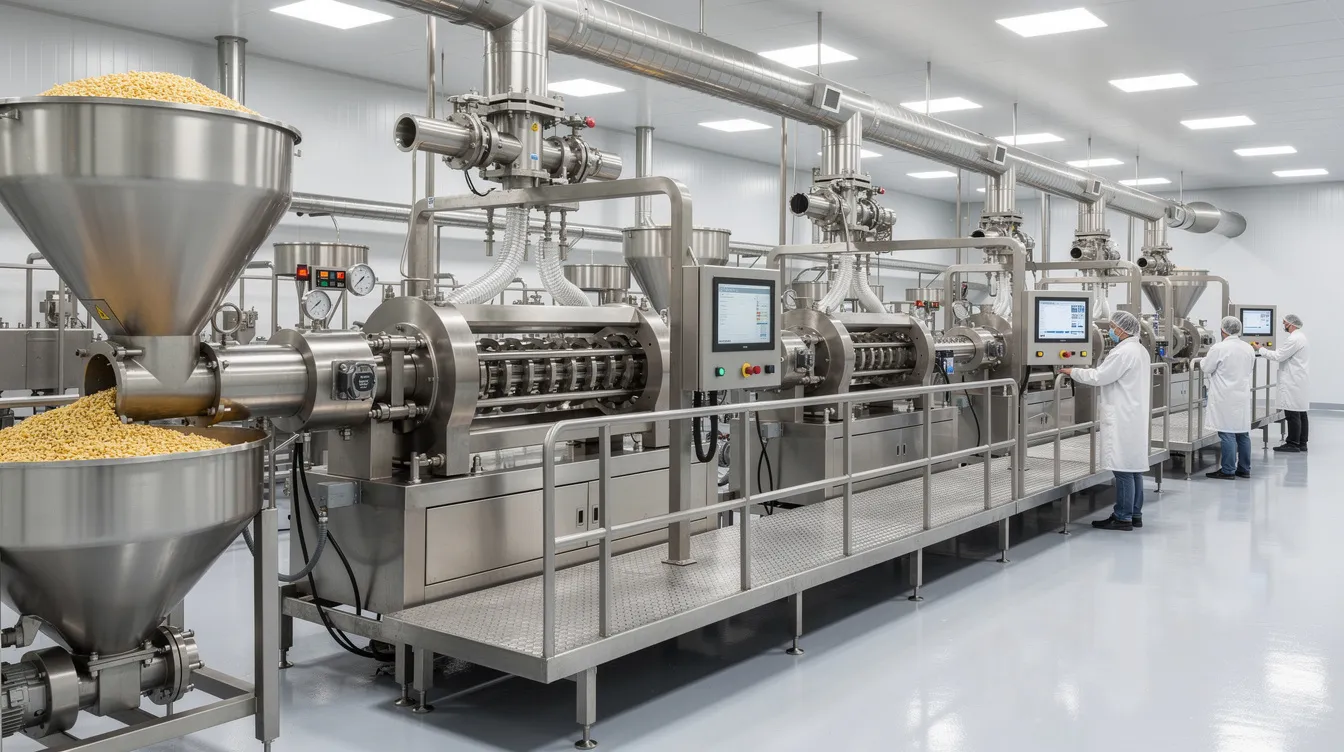
The breakfast cereal industry in India comprises branded FMCG companies, contract manufacturers serving private-label requirements for modern retail chains, and a growing number of MSME plants producing regional and niche products. The industry structure ranges from high technology organisations operating fully automated lines to smaller units producing extruded namkeen snacks and puffed cereals for local distribution.
The global breakfast cereal market was valued at USD 112.76 billion in 2025 and is expected to reach USD 154.34 billion by 2034, exhibiting a CAGR of 3.6% from 2026 to 2034. Within India, the breakfast cereal market is estimated at approximately USD 5.45–5.50 billion in 2025–26, with projections indicating substantial growth over the coming decade. Corn remains the dominant ingredient (approximately 40–41% share by value), while oats and millet-based products represent the fastest-growing segments. Market potential includes analysing consumer trends and demand for ready-to-eat products, which currently account for roughly 73–75% of the Indian breakfast cereal market by product type.
Demand for fortified cereals continues to rise due to health awareness. Urbanisation and dual-income households support steady market growth. Consumers increasingly prefer cereals that provide nutritional benefits like high-protein options, along with multigrain, high-fibre and low-sugar formulations. Modern trade holds around 60–65% of distribution channel share, while e-commerce and quick-commerce are emerging as the fastest-growing channels.
The major market concentration in India lies in West and Central India (Mumbai, Pune, Ahmedabad, Indore), contributing nearly 30% of revenue. However, tier-2 and tier-3 towns represent significant untapped potential, particularly for affordable pack sizes and regional flavour profiles. Export potential exists in neighbouring markets across South Asia, the Middle East and Africa, especially for private-label breakfast cereals and snack pellets manufactured in India.
Major Manufacturing Projects Covered Under This Industrial Cluster
This section provides a concise overview of six key manufacturing project types within the breakfast cereal and food extrusion cluster. Each sub-section explains the core technology, typical products and the type of promoter who usually invests in that specific manufacturing plant. Detailed technical and financial analysis for each category is available in dedicated plant project reports linked below.
Industrial Corn Flakes & Multigrain Flakes Manufacturing
Conventional corn flakes manufacturing involves grain conditioning, cooking in rotary steam cookers, flaking on heavy-duty roller mills, drying, toasting and optional sugar coating before packaging. Multigrain flakes may use extrusion-assisted routes where pre-cooked grits from multiple cereals are combined before flaking. The breakfast cereal production process for flakes requires careful moisture control during cooking and flaking to achieve consistent texture and bulk density.
Plant capacities commonly evaluated in India range from 3 to 10 tonnes per day, significantly influencing machinery selection, plant setup cost and overall capital costs. Larger capacities benefit from economies of scale but require higher fixed capital and broader distribution reach.
For detailed process, machinery and feasibility information, refer to the Industrial Corn Flakes & Multigrain Flakes Manufacturing Plant Project Report.
Industrial Rolled Oats & Instant Oats Processing
Oat processing follows a distinct route: raw oats cleaning, dehulling, kilning (heat treatment to inactivate enzymes and develop flavour), groat cutting, steam conditioning, flaking and drying. Instant oats require additional processing – finer rolling and sometimes partial pre-cooking – to achieve rapid rehydration for the consumer. The distinction between traditional rolled oats (regular, quick-cooking) and instant oats is important for the Indian retail and HoReCa segments, where convenience drives product selection.
Oats processing plants are often combined with other cereal production units in multi-product breakfast cereal manufacturing facilities, improving equipment utilisation and diversifying the product portfolio.
For the complete processing methodology and investment analysis, see the Industrial Rolled Oats & Instant Oats Processing Plant Project Report.
Extruded Ready-to-Eat Breakfast Cereals Manufacturing
Extruded breakfast cereals are produced through extrusion cooking – feeding formulated raw materials through twin-screw extruders under controlled temperature (typically 130–180°C), pressure (120–250 bar) and screw speeds (200–500 rpm). The high temperature short time (HTST) cooking process enables rapid gelatinisation, expansion, shaping and microbial inactivation with relatively lower nutrient loss. Shaping dies produce the characteristic loops, balls, pillows and other forms, followed by drying, cooling and optional coating.
Extruded breakfast cereals differ from corn flakes in texture, shape versatility and the manufacturing process route. This flexibility makes extrusion particularly relevant for manufacturers seeking multiple SKUs including kids’ cereals and flavoured multigrain breakfast products.
Refer to the Extruded Ready-to-Eat Breakfast Cereals Manufacturing Plant Project Report for detailed process and feasibility analysis.
Integrated Multi-Product Extruded Snack Foods Manufacturing
Integrated extrusion plants are designed to switch between corn puffs, peanut-flavoured extruded snacks, cereal-based namkeens and other puffed products using modular screw configurations and interchangeable dies. Plant design must accommodate frequent product changeovers, seasoning system flexibility and packaging format changes. Such plants are popular among Indian snack companies targeting multiple price points and regional flavour profiles across general trade and modern retail.
The Integrated Multi-Product Extruded Snack Foods Manufacturing Plant Project Report covers equipment utilisation, output diversification and commercial feasibility in detail.
Industrial 3D Snack Pellets & Ready-to-Fry Products
3D snack pellets are semi-finished, shelf-stable extruded products supplied in bulk to frying and seasoning units or B2B buyers. Key stages include dough preparation, extrusion or sheeting, two-layer 3D shaping, intermediate drying, final drying and bulk packing. The critical distinction lies between pellet manufacturing (a B2B semi-finished production model) and final fried snack manufacturing for consumer packs – these represent different business models, capital requirements and market strategies.
Detailed process and project economics are covered in the Industrial 3D Snack Pellets Manufacturing Plant Project Report.
Fully Automatic Instant Noodles & Cup Noodles Manufacturing
Instant noodle production involves premixing and dough forming, sheeting, slitting, steaming, cutting to length, frying or hot-air drying, cooling and packaging in pillow packs or cups. Cup noodle manufacturing adds complexity through synchronised cup filling, sealing and seasoning sachet preparation. Automation is critical for consistency, food safety and throughput – continuous lines with PLC/SCADA controls are standard for commercial-scale operations.
Refer to the Instant Noodles & Cup Noodles Manufacturing Plant Project Report for complete technical and investment analysis.
Comparison of Major Manufacturing Project Categories
| Product Type | Core Technology | Principal Machinery | Major Cost Drivers | Key Feasibility Considerations |
|---|---|---|---|---|
| Corn Flakes / Multigrain Flakes | Cooking, flaking, toasting | Steam cookers, flaking rolls, dryers, toasters | Grain cost, energy for drying/toasting | Brand or private-label positioning, distribution reach |
| Rolled Oats / Instant Oats | Dehulling, kilning, flaking | Dehullers, kilns, steam conditioners, flaking mills | Raw oat sourcing, kilning energy | Oat import dependence, product differentiation |
| Extruded RTE Breakfast Cereals | Twin-screw extrusion, HTST cooking | Extruders, shaping dies, dryers, coating systems | Extruder capital cost, energy, coating ingredients | SKU flexibility, brand margins |
| Integrated Extruded Snacks | Multi-product extrusion | Modular extruders, seasoning lines, multi-format packaging | Changeover efficiency, seasoning costs | Regional market access, product-range planning |
| 3D Snack Pellets | Extrusion/sheeting, 3D forming | Pellet extruders, multi-layer formers, dryers | Moisture control, B2B logistics | Buyer contracts, volume commitments |
| Instant Noodles / Cup Noodles | Sheeting, steaming, frying/drying | Continuous noodle lines, fryers, cup fillers | Oil/energy for frying, packaging automation | High capital intensity, brand competition |
Industrial Manufacturing Process and Production Technology
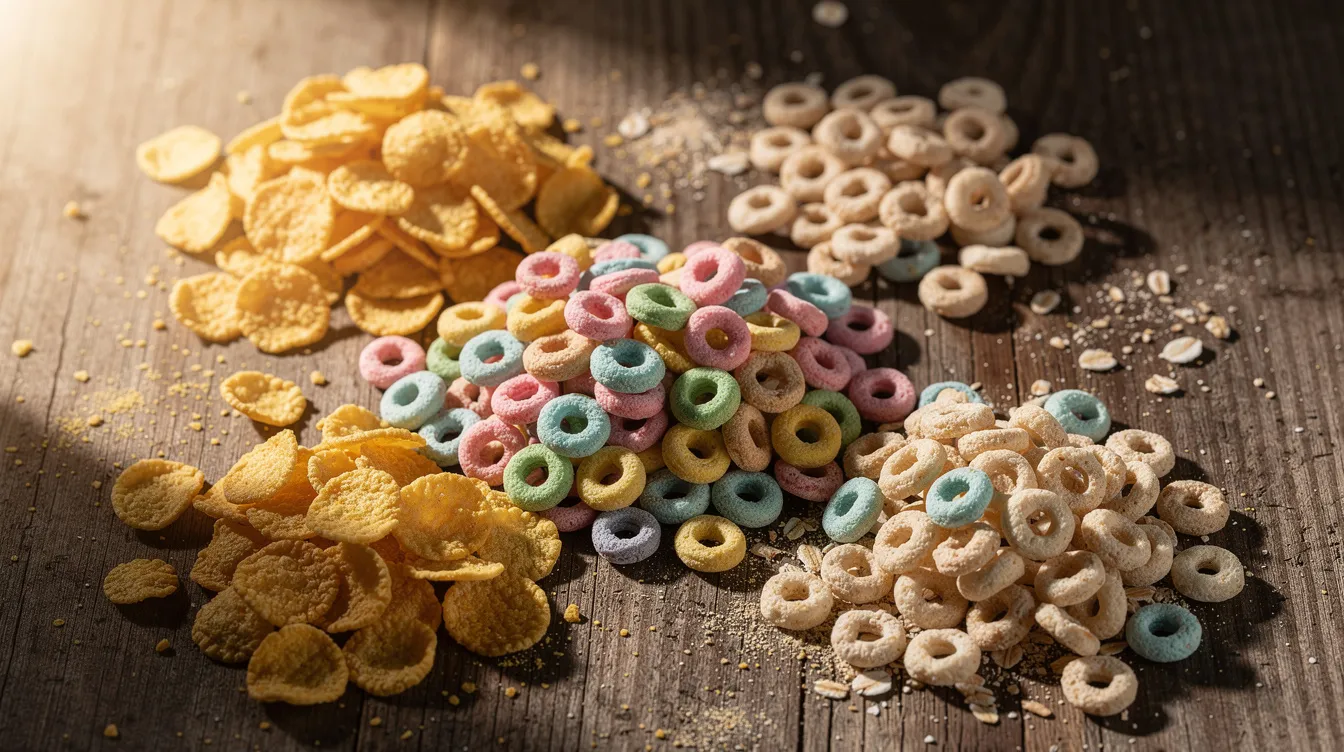
The breakfast cereal manufacturing process and extruded foods production sequence can be represented through a consolidated framework, recognising that each product category follows a distinct route through several unit operations.
General Process Chain:
Raw material procurement → quality inspection → cleaning and grading → milling or size reduction → mixing and formulation → conditioning → cooking or extrusion → forming or flaking → drying or toasting → cooling → coating or seasoning → quality inspection → weighing and packaging → finished goods storage → dispatch.
Manufacturing processes involve raw material cleaning, mixing, extrusion and packaging as core stages, though the specific cooking process varies. For flakes, the route involves cooking grains under steam pressure followed by flaking and toasting. For extruded breakfast cereals, high-temperature short-time extrusion (130–180°C barrel temperature, feed moisture 11–25%) achieves cooking, expansion and shaping in a single continuous operation. For oats, kilning and steam conditioning precede flaking. For instant noodles, sheeting and steaming replace extrusion cooking entirely.
Breakfast cereals primarily use grains like oats, corn and wheat as base ingredients. The final product characteristics are closely tied to process parameters: cereals typically contain 70–80% starch as an energy source, often contain 6–12% protein, and many are fortified with essential vitamins and minerals. Finished breakfast cereals have low moisture content, ranging from 3.94% to 9.46%, which is critical for shelf stability. Cereals can be high in sugar, especially those designed for children, making formulation an important consideration under current regulatory trends.
Quality control requires moisture testing, microbiological testing and shelf-life studies at multiple stages. Safety protocols must be implemented throughout the cereal manufacturing process – from incoming raw material inspection through various unit operations involved in cooking, drying and packaging. A well-prepared DPR should describe the manufacturing process flow diagram and unit operations clearly for bankers, investors and technical reviewers.
Plant Machinery, Production Line Selection, Layout and EPC Cost
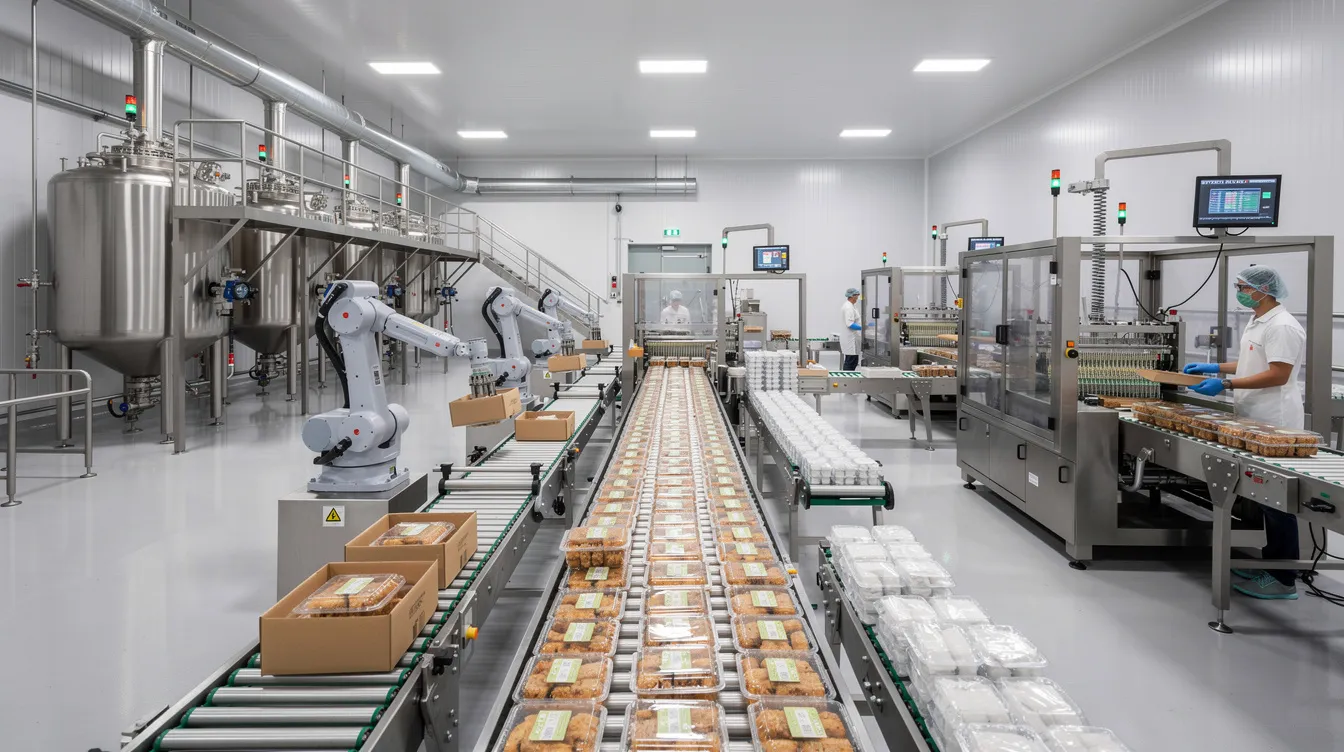
The machinery and technology requirements for a breakfast cereal or extruded food manufacturing plant vary substantially by product type. However, the main equipment groups can be categorised as follows:
- Raw material receiving and cleaning: Destoners, aspirators, magnetic separators, grain cleaners, sieves
- Milling and size reduction: Hammer mills, roller mills, groat dehullers
- Mixing and conditioning: Ribbon blenders, paddle mixers, preconditioners
- Core processing: Twin-screw extruders, steam cookers, flaking rolls, sheeting lines
- Thermal processing: Dryers (continuous belt or rotary), toasters, fryers (for noodles or pellets)
- Cooling and coating: Belt coolers, coating drums, oil-spray systems, seasoning tumblers
- Packaging: Multi-head weighers, vertical form-fill-seal machines, cartoning lines, cup-filling systems
- Utilities: Boilers or thermic fluid heaters, air compressors, water treatment plants, electrical panels and distribution, HVAC
Key equipment includes grain cleaners, mills and packaging machines as essential components across all product categories. Auxiliary systems such as conveyors, silos and intermediate storage bins support material handling and production flow.
Plant layout should follow hygienic zoning principles with unidirectional product and personnel movement to meet food safety requirements. Raw material receiving, processing, packaging and finished goods storage should be physically separated.
EPC (engineering, procurement and construction) options range from turnkey suppliers offering complete breakfast cereal manufacturing plants to separate procurement of individual machinery and utilities. Evaluation criteria for machinery suppliers should include proven installations in India, after-sales service, spare-parts availability, automation level (PLC/SCADA) and energy efficiency.
Detailed machinery specifications, layout principles and EPC cost considerations are covered in Industrial Breakfast Cereals & Food Extrusion Machinery, Plant Layout & EPC Cost in India.
Breakfast Cereals and Extruded Foods Plant Setup Cost and Capital Investment
Project cost assessment includes land, building, machinery and working capital, along with several other components that promoters frequently underestimate. The breakfast cereals and extruded foods plant setup cost must be built up systematically across the following heads:
- Land and site development
- Factory building and civil construction
- Main production machinery
- Utilities and electrical installations
- Packaging and material handling equipment
- Quality-control laboratory
- Installation, commissioning and engineering
- Preliminary and pre-operative expenses
- Contingencies
- Margin for working capital
Infrastructure and utilities requirements must be assessed for effective project setup. For plants in the 1–20 TPD capacity range, indicative capital investments (excluding land) range from approximately ₹5 crore to ₹60 crore depending on capacity, product mix, automation level and whether machinery is imported or domestically sourced. The setup timeline for a breakfast cereal plant can range from 12 to 24 months from project sanction to commercial production.
Illustrative Capital Cost Structure (Indicative Only)
| Cost Head | Approximate Share of Total Fixed Capital |
|---|---|
| Main process machinery | 45–55% |
| Civil works and building | 15–25% |
| Utilities and electrical | 8–12% |
| Land and site development | 5–10% |
| Pre-operative expenses and contingencies | 5–10% |
| Laboratory, furniture, miscellaneous | Balance |
Note: These percentages are illustrative and vary significantly with plant capacity, technology choice, location and automation level. They should not be applied universally.
Infrastructure costs, capital costs and fixed costs depend heavily on whether the plant is located in an industrial estate or on independently acquired land, the level of automation selected and the number of product lines installed.
For customised capital cost estimates and project economics, see Breakfast Cereals & Extruded Foods Plant Setup Cost, Investment & Project Economics.
Production Capacity Planning and Capacity Utilisation
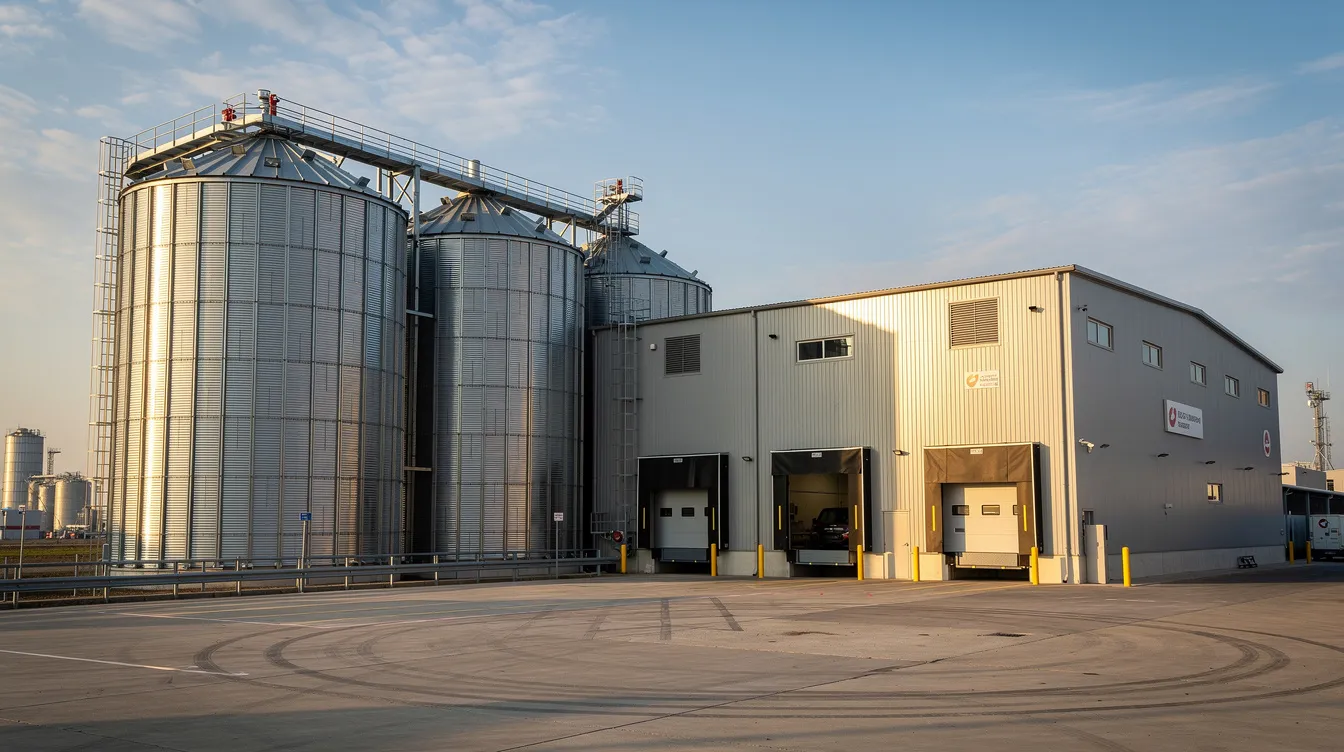
Production capacity must be realistic and based on equipment specifications and process efficiency, not aspirational targets. Rated plant capacity (expressed in kg/hour or tonnes/day) must be distinguished from practical saleable output after accounting for downtime, product changeovers and process losses.
The breakfast cereal plant capacity ranges from 15,000 to 25,000 tons annually for larger industrial installations. For a 10 TPD rated line operating 300 days per year, the theoretical annual output is 3,000 tonnes. However, realistic saleable output after accounting for utilisation ramp-up and process losses may be considerably lower.
Illustrative Capacity Calculation (Assumed Basis)
| Parameter | Assumption |
|---|---|
| Rated line capacity | 1,000 kg/hour |
| Operating hours per shift | 8 hours |
| Shifts per day | 2 |
| Daily rated output | 16,000 kg (16 TPD) |
| Operating days per year | 300 |
| Annual rated capacity | 4,800 tonnes |
| Year 1 utilisation | 60% → 2,880 tonnes |
| Year 2 utilisation | 75% → 3,600 tonnes |
| Year 3+ utilisation | 85% → 4,080 tonnes |
Specific constraints in breakfast cereal manufacturing include drying capacity, packaging speed and product-changeover downtime as potential bottlenecks. Capacity selection must follow market feasibility, distribution reach and financing capability – not only engineering possibilities.
Raw Material Requirements and Operating Economics
Breakfast cereals primarily use grains like oats, corn and wheat. Key raw materials include maize, wheat flour, rice, oats, millets, starches, sugar, salt, cocoa powder, flavours, stabilisers, vitamin and mineral premixes, edible oils and packaging materials (laminates, cartons, shrink film). Essential ingredients include sugar, flavours, vitamins and preservatives depending on the product formulation.
Raw material quality – moisture content, grain size, foreign matter – directly affects process performance, throughput and final product quality. For extrusion-based products, particle size distribution and feed moisture are particularly critical to achieving consistent expansion ratio, texture and nutritional value in the finished product.
Raw materials account for approximately 60–70% of total operating expenses in cereal production, making procurement strategy a central component of operating economics. The remaining operating costs include packaging requirements (10–20%), power and thermal energy (5–15%), labour, repairs and maintenance, quality testing, plant overheads and selling and distribution expenses. Operating costs are projected to increase significantly by the fifth year due to inflation, expanded distribution and potentially higher raw material price trends.
Reliable suppliers for raw materials are crucial for consistent production. Long-term contracts help stabilise pricing for raw materials, particularly for commodities like maize, oats and edible oils that are subject to seasonal and supply-chain fluctuations. Where feasible, backward integration or alternative ingredient sourcing can serve as hedging strategies against price volatility.
Indicative Per-Kilogram Cost Build-Up (Framework Only)
| Cost Head | Approximate Share |
|---|---|
| Raw materials (grains, oils, additives) | 40–60% |
| Packaging materials | 10–20% |
| Energy (power + thermal) | 5–15% |
| Labour and overheads | Balance |
These proportions are directional. The actual cost structure depends on product type, processing methods, raw material pricing and utility requirements at the time of project implementation.
Working Capital Requirements for Breakfast Cereals and Extruded Food Manufacturing
Working capital represents the funds required for day-to-day operations – distinct from fixed capital invested in plant setup. For a breakfast cereal manufacturing plant, the working capital cycle encompasses:
- Raw material inventory: Grains, oils and packaging materials held for production continuity (often 15–45 days depending on procurement lead times and seasonal storage)
- Work-in-progress: Materials under processing at any given time
- Finished goods inventory: Packaged products awaiting dispatch (typically 15–30 days)
- Receivables: Outstanding amounts from distributors and modern trade (commonly 30–90 days)
- Less: Supplier credit and other current liabilities
Seasonal aspects include procurement of grains during harvest periods and building stock ahead of high-demand windows such as school reopening seasons or festive periods. Human resource requirements also affect working capital through monthly salary obligations.
Common bank-financed working capital instruments in India include cash credit limits, overdrafts and bill discounting, with promoter margin requirements typically in the range of 15–30% of current assets. The distinction between total working capital requirement and the bank-funded portion is important for means-of-finance planning.
Bank Loan DPR, CMA Data and Project Finance
Banks and financial institutions require a detailed project report before sanctioning term loans and working capital limits for breakfast cereal and extruded food manufacturing plants. A well-structured DPR includes market analysis, product profile and process details alongside comprehensive financial analysis. The project report should define the proposed product range and specifications clearly.
A DPR covers technical, commercial, financial and operational aspects of the proposed investment. Key components include:
- Promoter background and company’s expertise
- Project rationale and location assessment
- Industry analysis, market research and comprehensive market overview
- Proposed products, production capacity and manufacturing process
- Plant layout, machinery list and transportation requirements
- Project cost and means of finance (term loan, promoter equity, project funding sources)
- Projected sales, cost of production and expenditure projections
- Projected profit and loss account, balance sheet and cash flow statements
- DSCR analysis, break-even assessment and sensitivity analysis
- Implementation schedule, management strategy and risk factors
CMA data is crucial for bank loan applications and financing proposals in Indian banking practice. It summarises past financials (if available), projected financials, working capital assessment and drawing power calculations.
Actual loan terms depend on each bank’s credit appraisal, security evaluation, promoter track record, project cash flows and applicable regulatory guidelines. No blanket assurances of financing approval should be assumed.
For detailed guidance on bank finance documentation, see Breakfast Cereals & Extruded Foods Bank Loan DPR, CMA Data & Working Capital.
Financial Projections, Profitability, DSCR, IRR and Break-Even Analysis
Financial modelling involves preparing detailed financial ratios and investment analyses that form the core of any bankable project report. Financial projections should include profit and loss, cash flow and balance sheet statements over a projection period typically spanning 8–10 years. Financial projections assess ROI, profitability and long-term sustainability of the proposed investment.
Key assumptions driving the financial model include:
- Plant capacity and capacity utilisation by year
- Selling prices by product (considering price trends and market segmentation)
- Raw material consumption ratios and variable costs
- Packaging cost per unit
- Energy usage and utility costs
- Labour cost and manpower requirements
- Direct and indirect costs classification
- Financing terms, interest rates and repayment schedules
The principal outputs include projected income statements, cash flow, balance sheet, DSCR profile, project IRR, equity IRR, net present value (NPV) and payback period. Break-even for a breakfast cereal business typically ranges from 3 to 6 years depending on scale, product mix, brand development and distribution margin structure. Gross profit margins for breakfast cereal manufacturing typically range from 40–50%, though this varies substantially with product positioning and pricing mechanism.
Profitability in breakfast cereal manufacturing depends on product mix, brand and distribution margins, utilisation levels, efficiency of the manufacturing process and operating expenses. A sensitivity analysis examining the impact of changes in selling price, raw material cost, capacity utilisation and interest rates on DSCR, IRR and net present value is essential for understanding risk. Operating costs are driven by raw materials, accounting for 60–70% of expenses, which makes raw material price sensitivity a critical variable.
The expected ROI and profit projections must be evaluated alongside debt-servicing capacity rather than in isolation.
For the complete financial modelling framework, see Breakfast Cereals & Extruded Foods Financial Projections, DSCR, IRR & Profitability.
Regulatory Approvals and Food Safety Compliance in India
Licenses required for food manufacturing include FSSAI registration or licence, GST registration and factory licence under relevant state labour and factory laws. Additional key regulatory procedures include:
- State Pollution Control Board consents (Consent to Establish and Consent to Operate)
- Fire safety NOC
- Boiler registration (if applicable)
- Electrical safety clearances
- Legal metrology registration for packaged food weights and measures
- Trade licence and local municipal permissions
Key certifications required for market access and institutional supply include HACCP and ISO 22000 food safety management systems. It is important to distinguish between mandatory legal requirements and voluntary certifications that enhance market acceptance and buyer confidence. Key certifications such as organic, non-GMO or allergen management involve stricter documentation and audit requirements.
Current FSSAI regulations are tightening requirements around nutritional labelling, health claims and permissible levels of sugar, salt and fat – factors that directly affect product formulation and packaging requirements. Promoters should verify specific requirements with state authorities and updated government notifications at the time of project implementation.
Market Opportunities and Distribution Strategies
Key market segments for breakfast cereals and extruded foods include branded retail packs, private-label supply to modern retail, institutional sales (hotels, airlines, hospitals), snack pellets sold B2B, and export shipments. Market forecasts for the Indian breakfast cereal market indicate continued growth, with IMARC Group projecting the market to approximately double by 2034.
Distribution channels in India include general trade through distributors, modern trade (supermarkets and hypermarkets holding approximately 60–65% channel share), e-commerce platforms and direct institutional supply contracts. The pricing mechanism, promotional schemes and trade margins significantly influence the feasibility of a new breakfast cereal brand versus contract manufacturing for established brands.
The scope for millet-based cereals and regional flavours represents a differentiated opportunity aligned with government emphasis on millets and health-conscious consumption. Industry trends also indicate growing demand for processed food products in smaller, affordable pack sizes targeting tier-2 and tier-3 markets. Technological developments in packaging and processing are supporting these market shifts.
Major Project Risks and Financial Feasibility Challenges
Risk management strategies should address raw material price fluctuations and competition from established FMCG brands. The most critical challenges for breakfast cereal and extruded food manufacturing projects include:
| Risk Category | Key Risk | Mitigation Approach |
|---|---|---|
| Raw material | Grain and oil price volatility, seasonal supply disruptions | Long-term supply contracts, buffer inventory, alternative ingredient sourcing |
| Market | Product-market mismatch, competition from major brands | Market research, pilot product testing, private-label strategy alongside own brand |
| Capacity | Underutilisation of installed capacity in early years | Phased capacity expansion, confirmed buyer contracts, flexible multi-product lines |
| Technical | Extrusion instability, textural defects, breakage, inconsistent expansion | Pilot-scale trials, trained operators, process control instrumentation, quality lab |
| Energy | High energy consumption in dryers and fryers increasing operating costs | Energy-efficient equipment, waste heat recovery, thermal insulation |
| Quality | Shelf-life failures, product recalls, packaging failure | Moisture testing, microbiological testing, shelf-life studies, HACCP implementation |
| Financial | Higher working capital need, delayed receivables, DSCR stress in initial years | Conservative projections, adequate promoter margin, phased distribution expansion |
| Regulatory | Non-compliance with FSSAI or labelling requirements | Food safety management system, regular compliance audits, updated documentation |
| Implementation | Delays in civil construction, machinery installation, commissioning | Realistic implementation schedule, experienced EPC coordination, contingency provisions |
Critical challenges should be incorporated into the DPR through downside scenario analysis, sensitivity testing and documented mitigation plans.
How to Select the Right Breakfast Cereals or Extruded Food Manufacturing Project
Selecting among corn flakes, oats, extruded breakfast cereals, snack pellets, instant noodles or a combined facility requires evaluation across several parameters rather than assumptions about which product is universally the most profitable.
Key success factors in project selection include:
- Available capital: Plant setup cost varies significantly – snack pellet plants may require lower initial investment than fully automated instant noodle lines
- Raw material access: Proximity to maize-producing regions favours corn-based products; oat processing may involve higher logistics costs
- Market access: Strong marketing capability favours branded breakfast cereals; B2B relationships favour snack pellets or contract manufacturing
- Technical capability: Extrusion requires skilled operators; flaking lines are comparatively simpler to operate
- Product margins: Higher-value branded RTE cereals may offer better contribution margins but require distribution and branding expenditure
- Financing capacity: Larger, more automated plants require higher capital investments but benefit from economies of scale
Business leaders evaluating these options should assess plant capacity selection, level of automation and product mix against realistic sales volumes and funding capacity. A professional DPR and financial modelling exercise helps compare scenarios objectively before finalising the project, addressing various aspects of feasibility including market segmentation, industry analysis and project economics.
Explore All Breakfast Cereals, Extruded Foods & Ready-to-Cook Grain Project Reports
The following specialised guides provide detailed information for individual manufacturing technologies, machinery requirements and financial planning. Each project report covers product-specific technical feasibility, investment analysis and DPR documentation requirements.
A. Manufacturing Project Reports
- Industrial Corn Flakes & Multigrain Flakes Manufacturing Plant Project Report
- Industrial Rolled Oats & Instant Oats Processing Plant Project Report
- Extruded Ready-to-Eat Breakfast Cereals Manufacturing Plant Project Report
- Integrated Multi-Product Extruded Snack Foods Manufacturing Plant Project Report
- Industrial 3D Snack Pellets Manufacturing Plant Project Report
- Instant Noodles & Cup Noodles Manufacturing Plant Project Report
B. Machinery, Plant Layout and Investment
- Industrial Breakfast Cereals & Food Extrusion Machinery, Plant Layout & EPC Cost in India
- Breakfast Cereals & Extruded Foods Plant Setup Cost, Investment & Project Economics
C. DPR, Bank Finance and Financial Feasibility
- Breakfast Cereals & Extruded Foods Financial Projections, DSCR, IRR & Profitability
- Breakfast Cereals & Extruded Foods Bank Loan DPR, CMA Data & Working Capital
Professional DPR, Project Finance and Financial Feasibility Services
Project Report Bank is a Chartered Accountant-led professional advisory platform specialising in customised detailed project reports, project finance documentation and financial feasibility analysis for industrial manufacturing projects. Professional advisory services should be customised for project-specific needs and financial assessments – not delivered as generic templates.
Core services relevant to breakfast cereal and extruded food manufacturing projects include:
- Investor-ready Detailed Project Reports (DPR)
- Bank finance DPR and loan proposal preparation
- CMA data preparation for bank loans
- Financial projections and financial modelling
- Project feasibility and viability analysis
- Capital investment and means-of-finance planning
- Working capital assessment
- DSCR, IRR, NPV and sensitivity analysis
- Project finance advisory
CA Manish Gugliya’s professional experience is applied in preparing bankable, investor-ready documentation with assumptions tailored to specific plant capacity, technology, location and product mix. Target customers include MSMEs, manufacturers and entrepreneurs planning new projects, expansion or diversification in the food processing sector. Market research worldwide and advanced materials considerations can also be incorporated where relevant to export-oriented or specialised product strategies.
Planning a Breakfast Cereals or Extruded Foods Manufacturing Project in India?
If you are evaluating a new manufacturing facility, expanding an existing food processing plant, or preparing to approach banks or investors, professional project feasibility and financial modelling can support more informed investment decisions.
CA Manish Gugliya, FCA, DISA (ICAI) ProjectReportBank.com
Contact us to discuss your proposed manufacturing project, estimated investment, planned production capacity and DPR requirements.
Frequently Asked Questions
What is typically included in a Breakfast Cereals and Extruded Foods Project Report?
A comprehensive project report covers the project overview, proposed product range and specifications, industry analysis, technical feasibility (manufacturing process, machinery list and plant layout), project cost (land, building, machinery, utilities, pre-operative expenses), means of finance, revenue and cost assumptions, projected profit and loss account, balance sheet, cash flow statements, break-even and DSCR analysis, risk assessment and implementation schedule. The document should provide sufficient detail for bankers, investors and technical reviewers to evaluate the project independently.
How long does it take to prepare a detailed project report for a breakfast cereal manufacturing plant?
The timeframe depends on data availability, project complexity and the number of product lines being evaluated. A professionally prepared DPR with financial modelling typically requires a few weeks once machinery quotations, basic design inputs and promoter assumptions are available. Projects involving multiple product categories, imported machinery or complex financing structures may require additional time for technical coordination and assumption validation. This document should have no ratings yet from the promoter – it must be verified and discussed before finalisation.
Can a single extrusion line produce both breakfast cereals and savoury snacks?
Many modern twin-screw extruders can handle multiple recipes, including sweet RTE cereals and savoury puffs, through changes in screw configuration, die sets and operating parameters. However, downstream equipment (dryers, coating systems, seasoning lines) and packaging systems may require adaptation or separate sections for different product types. The DPR should evaluate throughput for each product, changeover time, cleaning requirements and the impact on overall plant utilisation. Hot cereals and cold-extruded products may require further process modifications.
How often should the financial projections in a DPR be revisited?
Financial projections should be updated when there are significant changes in project scope, machinery specifications, raw material prices, financing terms or market strategy. At minimum, projections should be reviewed once before finalising loan proposals or investor presentations. For projects under implementation, periodic comparison of actual versus projected performance helps identify variances early and supports corrective action. Key questions addressed by this review include whether capacity utilisation, margins and working capital assumptions remain valid.
Is it necessary to have prior food-industry experience to set up a breakfast cereal manufacturing plant?
While prior experience in the food industry is helpful, promoters can mitigate knowledge gaps by engaging technical consultants for process design, hiring experienced plant managers for operations and working with professional DPR and project-finance advisors for financial structuring. The critical requirement is a realistic assessment of risk factors, a competent operational team and willingness to invest in pilot trials and process stabilisation before scaling up. Promoters without direct industry experience should particularly focus on securing reliable technical partners and ensuring conservative financial assumptions in their project report.
Conclusion and Project Planning Checklist
This guide has covered the principal considerations for entrepreneurs and investors evaluating breakfast cereal manufacturing, extrusion technology, plant setup cost, working capital planning and profitability assessment before committing capital.
Project Planning Checklist:
- Confirm market feasibility through structured market research – not assumptions alone
- Finalise preliminary product range and target market segments
- Obtain machinery quotations from proven suppliers and evaluate EPC options
- Estimate project cost across all heads including pre-operative expenses and contingencies
- Engage professional DPR and financial modelling support for bankable documentation
- Assess working capital requirements realistically, including seasonal inventory needs
- Plan bank or investor discussions with complete documentation, CMA data and sensitivity analysis
Selecting the right product mix, manufacturing technology, plant capacity and financing structure – supported by a professionally prepared Breakfast Cereals and Extruded Foods Project Report – is what separates a well-planned industrial investment from a speculative commitment. The objective is not to produce an optimistic document for submission. It is to build a financial framework that the promoter can understand, defend and act upon.
For customised DPR preparation, CMA data, financial projections and project finance advisory for breakfast cereals and extruded food manufacturing projects, connect with Project Report Bank.
CA Manish Gugliya, FCA, DISA (ICAI) ProjectReportBank.com